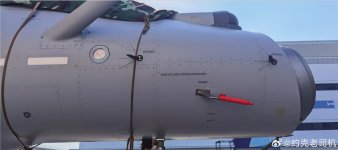
Sukhoi Su-30MKI

Boeing claimed EX will come for $80M, but the latest block costs $94M. The USAF pays $82.5M currently for the F-35A. Sure, fixing the F-35's failure will come at a cost, but that's a future cost for now. So there's nothing saved at the procurement end.

The EX is perhaps the only 4.5 combat ac that costs under $90m a pop. That's quite something. The prog has had the usual supply chain issues but it should only be a
matter of time before costs stabilize. There's really no comparison btw a 4.5G and a 5G jet in terms of opex/sustainmemt costs, even one as
mature as F-35A.

That is why the F-15EX is happening in the first place. The F-35 production numbers cannot go up without B4, so the USAF is compensating for the difference with F-15EX. The original plan was to buy 72 F-35As instead of 48 As and 24 EXs. They actually want to raise it to 100+ a year.

The Israelis have just signed up to buy both the F-35I and F-15I. This is because of the tactical benefits it brings and not just as a quid pro quo to the US. Unlike the USAF, the Isrealis are under no obligation to support Boeing.

That tells me that the F-15EX acquisition is more than just a stop gap/jobs prog at DoD expense. The IDF is perhaps the only AF in the world that the USAF actively learns from and develops tactics/doctrine with. Cannot be a coincidence that both AFs are stocking up on EX at this time.
 
The EX is perhaps the only 4.5 combat ac that costs under $90m a pop. That's quite something. The prog has had the usual supply chain issues but it should only be a
matter of time before costs stabilize. There's really no comparison btw a 4.5G and a 5G jet in terms of opex/sustainmemt costs, even one as
mature as F-35A.

Point is cost really isn't in favor anymore, even though that was what they pushed it as. The cost excuse has outlived its usefulness. And they very likely knew this was going to happen.

The Israelis have just signed up to buy both the F-35I and F-15I. This is because of the tactical benefits it brings and not just as a quid pro quo to the US. Unlike the USAF, the Isrealis are under no obligation to support Boeing.

That tells me that the F-15EX acquisition is more than just a stop gap/jobs prog at DoD expense. The IDF is perhaps the only AF in the world that the USAF actively learns from and develops tactics/doctrine with. Cannot be a coincidence that both AFs are stocking up on EX at this time.

Smaller air forces have different constraints. For example, the Israelis need the F-15 to fire off bigger bombs at longer ranges like the GBU-28. So, in that sense, both the USAF and IsAF need it in small numbers. Other ME countries bought the F-15 'cause it was the only jet available apart from the SH, the F-35 was denied to them.

USAF is forced to 'cause of the failure of FB-22.

The Israelis are not pushing the nonsense that the F-15IA is necessary in a 4th/5th mixed fleet, they want it for a specific purpose that the F-35 cannot do with stealth. Both Raam and Sufa are used for long-range, large payload strike role.

F-15EX is no longer a stopgap now, it started off as a stopgap while replacing F-15C/Ds and A-10s. Now it will replace F-15Es as well with the new order. It's not a day one aircraft, it's a post-SEAD/DEAD jet. It only has standoff utility during the SEAD/DEAD phase. So whatever tactics and doctrine they make for it will be centered around dealing with stragglers or will focus on other targets. At best, a missile truck for AAMs, although purpose-built drones could do a better job.

Pretty much everything the F-15EX is meant to do for the USAF is just an excuse. Replacing the F-15C with EX is a downgrade and replacing E with EX is a very small upgrade. They are quite literally better off replacing their entire requirement with F-35s. Overall it's useless against China and (5-year later) Russia.
 
  • Like
Reactions: Rajput Lion
The Chinese developed the J-16 'cause their indigenous JH-7 failed. They had to quickly plug this capability gap so the Flanker was chosen over a clean-sheet design that could complement the J-20.
I don't disagree. My point was that it made sense for the PLAAF since by that point they already had fully localized production of flankers and had the ws-10a/b coming out. Getting fleet strength/magazine capacity up with an improved flanker wasn't that much of a stretch considering their immediate needs. A lot of the pieces were already there.

fwiw, the J-16 is definitely a better 4th gen platform to build off than the JH-7.

While the MKI has fallen way behind in terms of configuration, the J-16 has nothing on the MKI in terms of performance. TVC matters, not just for WVR combat but overall performance, acceleration, climb, takeoff performance, med-high altitude energy management, fuel efficiency etc.

The lack of an AESA radar hurts the MKI, but it wasn't a quick-fix design like the J-16.

The Russians took the precursor to the J-16's design called Su-30MKK, gave it canards and TVC, which gave it higher dynamic climb and acceleration compared to MKK along with better energy efficiency, pretty similar to MKI, but slightly better, and offered it to the Chinese. But they decided to copy the MKK into J-16 instead.

Due to the weakness of the Flanker airframe in general, even with Bars, the MKI will consistently beat the J-16 in air combat primarily due to its significantly lower energy efficiency, as long as it carries a long range BVRAAM like Astra Mk2. The same story repeats when up against older 4th gen designs like F-16, J-10, and JF-17.
Does kinematic performance really have that much weight? Realistically it won't be mkis vs J-16s, I'd imagine the PLAAF would employ more stealthy airframes for immediate strikes and standoff munitions with their J-16s/H-6s until they wittled down the IAF and sufficiently deteroirated India's IADs (either through munition expenditure or just targeting platforms).

The J-16s would probably stay far back and launch standoff munitions until they achieve air control and then play a part dropping LGBs or whatever.

Even if the raw aircraft performance is better I'd just imagine it wouldn't make a lot of difference since there is such a large gap in sensors/ew. J-16 will eventually get an mlu with ws-10c or some other improved powerplant that will further improve its twr right?
 
  • Like
Reactions: Paro and YoungWolf
Also are we better than the Chinese or Americans that we can forge our own path??
Our aerospace defence backbone is the su-30 and the al-31. Same is true for the Chinese with the al-31 fn and the ws-10.
This forging our own path gave us the Insas, Arjun and Tejas. And we can see how well they have gone.
It's not about being better, it's just India has different constraints and needs to be realistic about what it can sustain. India doesn't 100% make the al-31 yet, it's around 60% or so at this point yea? Perhaps start with getting that to 100% and/or work more on getting kaveri up to speed. Imports are fine but if India want's to compete with super powers it needs to master the fundamentals and be self sufficient, everyone on some level (even the infamous import lobby) understands this. Funding and political willpower always slow this process down and that won't change any time soon.

IMO do the piecemeal super sukhoi upgrade and sustain whatever mkis are remaining. Super Sukhoi would be a great platform to test AMCA (which we all know will be late) and beyond technologies. Fully focus on asymmetric solutions for the next 10-20 years til aviation industry catches up. Missiles and radars are something that India does pretty well in, expand that portfolio as much as the budget will allow. Sheikh Mohammed recently said the UAE has thick skin and bitter flesh. That they'd be no easy prey. The IAF needs to adopt this mentality for a few decades.

The 20 odd years of procurement paralysis means they can't compete evenly in the air. Honestly, even if MMRCA1 and all the other proposed procurements went 100% to plan I'm not sure it'd be enough. The PLAAF is really churning out serious mass of 4.5/5th gen airframes and all the supporting platforms at a pace I think nobody thought possible.

I'm sorry I'm longwinded. Basically, we should stop pretending that the US/Chinese solutions automatically make sense for a country with a different industrial base and, frankly, a much worse execution capacity.
 
One of the vital ability that MKI has and is so often overlooked in online discussions is MKI's ability to tilt its radar on both sides to track targets 90° off its nose. How is this ability vital? Well, BVR combat isn't just about "looking first & shooting first" but also about finishing the job by guiding your BVR right up to the target. Thanks to BARS being on a repositioner, MKI can fire off Astra MK2 and immediately crank 90° away from the target while still continue to guide the missile towards the target while other PLAAF jets must keep their nose hot towards MKI in order to guide their PL-15/16s towards it. End result, MKI's BVR blows up the target while MKI itself remain survivable.

One may argue that in today's "net-centric" and "cooperative target scenario" where shooter may not be the one guiding the BVR, how effective is MKI's tilting radar? It still is vital for air-dominance, that's why Typhoon, Gripen, Su-35 all have their radars on a swashplate/repositioner. That's why Su-57 has those cheek mounted AESA radars which allows it to play the same game while maintaining its stealth.

With Virupaksha and Gandiva combo, MKI's BVR prowess will reach a whole new level even against 5th gen threats.
 
I don't think IAF will be using Su-30 in air superiority role by end of next decade. They will upgrade 5 or so squadrons to current Russian SM2 standard to keep them relevant till 2040 and then replace them with AMCA. The Indian upgraded one will be kept longer as heavier strike fighter complementing Rafale.
 
  • Like
Reactions: Ginvincible
I don't disagree. My point was that it made sense for the PLAAF since by that point they already had fully localized production of flankers and had the ws-10a/b coming out. Getting fleet strength/magazine capacity up with an improved flanker wasn't that much of a stretch considering their immediate needs. A lot of the pieces were already there.

fwiw, the J-16 is definitely a better 4th gen platform to build off than the JH-7.

Defintiely. A huge upgrade over the JH-7. It was a really good decision on part of the Chinese back then. But it worked out in our favor 'cause they didn't develop a more capable jet instead.

Does kinematic performance really have that much weight? Realistically it won't be mkis vs J-16s, I'd imagine the PLAAF would employ more stealthy airframes for immediate strikes and standoff munitions with their J-16s/H-6s until they wittled down the IAF and sufficiently deteroirated India's IADs (either through munition expenditure or just targeting platforms).

The J-16s would probably stay far back and launch standoff munitions until they achieve air control and then play a part dropping LGBs or whatever.

Even if the raw aircraft performance is better I'd just imagine it wouldn't make a lot of difference since there is such a large gap in sensors/ew. J-16 will eventually get an mlu with ws-10c or some other improved powerplant that will further improve its twr right?

For standoff, even if such weapons are launched your job is to position yourself between your base and your target so you can shoo them away with your LRAAMs and prevent them from supporting their payload with EW so your base's defenses can defeat the weapons unhindered. Best case you dealt with the problem before any could be launched at your base.

Kinematic performance matters a lot. It's in fact become even more important than it used to be 'cause of long range BVR.

Earlier, fighters needed kinematics to gain a close-in advantage over the enemy in turning fights. Although WVRAAMs (Archer) and BVRAAMs (AMRAAM, RVV-AE) shortened the combat time, kinematics still remained the most important. Now kinematics is necessary for a different reason, now it's all about positioning and repositioning where combat's become more like chess and less like checkers with the advent of stealth, LRAAMs, and networks.

So now you need to takeoff quickly (MKI advantage), climb quickly to 40000 feet (equivalent), cruise efficiently (MKI advantage, TVC), get into position quickly (MKI advantage), and then climb to higher altitudes to get BVR shots out (TVC and canards provide advantage). Any sensor advantage you have will play a part only once you get into position.

In case you have to evade, your ability to evade and reposition and get back in the fight is also determined by kinematics. You generally have to lose altitude to evade, then turn a few times, then climb to reposition and get your next shot out, all this is enhanced on the MKI over the J-16 using TVC and canards.

5th gen and 6th gen enhance kinematics with faster takeoffs, climbs, acceleration, turns, rolls, and supercruise. You are improving kinematics, just not for dogfights.

That's why AMCA's been designed with extreme performance in mind. In Indian conditions, the jet is about 30-40% superior to the Su-57 with Izd 177 and about 10-20% to the Su-57 with Izd 30. It will only be matched or exceeded by 6th gen jets. So things are only going up in terms of kinematics.

 
One of the vital ability that MKI has and is so often overlooked in online discussions is MKI's ability to tilt its radar on both sides to track targets 90° off its nose. How is this ability vital? Well, BVR combat isn't just about "looking first & shooting first" but also about finishing the job by guiding your BVR right up to the target. Thanks to BARS being on a repositioner, MKI can fire off Astra MK2 and immediately crank 90° away from the target while still continue to guide the missile towards the target while other PLAAF jets must keep their nose hot towards MKI in order to guide their PL-15/16s towards it. End result, MKI's BVR blows up the target while MKI itself remain survivable.

One may argue that in today's "net-centric" and "cooperative target scenario" where shooter may not be the one guiding the BVR, how effective is MKI's tilting radar? It still is vital for air-dominance, that's why Typhoon, Gripen, Su-35 all have their radars on a swashplate/repositioner. That's why Su-57 has those cheek mounted AESA radars which allows it to play the same game while maintaining its stealth.

With Virupaksha and Gandiva combo, MKI's BVR prowess will reach a whole new level even against 5th gen threats.

All of PLAAF's Flankers and J-10s have repositioners on their radars too.

And showing off your sides to a stealth jet isn't a good idea. You have seen the side RCS diagram of the MKI already.

This tactic worked fine against other 4th gen jets, but now you just fire and run away, let someone else take the sensor risk.
 
  • Like
Reactions: YoungWolf
I don't think IAF will be using Su-30 in air superiority role by end of next decade. They will upgrade 5 or so squadrons to current Russian SM2 standard to keep them relevant till 2040 and then replace them with AMCA. The Indian upgraded one will be kept longer as heavier strike fighter complementing Rafale.

Yep. Pretty much like the F-15EX. Strike and missile truck. But they will keep the MKIs around at least until the late 2060s or even the early 2070s. The MLU itself is pretty generic for its time.

It will be relevant as long as it carries specialized munitions like Brahmos-A. It can be strenthened to carry larger ALBMs someday.
 
All of PLAAF's Flankers and J-10s have repositioners on their radars too.

And showing off your sides to a stealth jet isn't a good idea. You have seen the side RCS diagram of the MKI already.

This tactic worked fine against other 4th gen jets, but now you just fire and run away, let someone else take the sensor risk.
AFAIK, all modern Chinese fighters(J-20,J-35, J-11, J-16, J-15 & J-10C) have fixed AESA array rather than on a repostioner. And you crank and beam almost 90° post firing your BVR, where the goal is maximum separation and energy bleed of enemy's BVR that is fired towards you while continuing to guide your missile towards the target. Your RCS matters less here as both aircrafts are supposedly aware of each other anyways.
 
  • Like
Reactions: Speedster1
I don't think IAF will be using Su-30 in air superiority role by end of next decade.
Wrong. IAF will continue to use MKI for air-superiority roles until mid 2050s.
They will upgrade 5 or so squadrons to current Russian SM2 standard to keep them relevant till 2040 and then replace them with AMCA. The Indian upgraded one will be kept longer as heavier strike fighter complementing Rafale.
Our UPG. standard is far superior to any Russian upgrade.
 
  • Like
Reactions: Shan and Speedster1
Yep. Pretty much like the F-15EX. Strike and missile truck. But they will keep the MKIs around at least until the late 2060s or even the early 2070s. The MLU itself is pretty generic for its time.
Yes the strike variants will stick around till 2060 alongside Rafales. Maybe they will even get an engine upgrade. We will have 8 squadrons of Rafale + 84? Indian upgraded Su-30 to replace Mig-23s, Mig-27s and Jaguars in tactical interdiction and Deep Strike roles. So total of approx 14 squadrons.

It will be relevant as long as it carries specialized munitions like Brahmos-A. It can be strenthened to carry larger ALBMs someday.
Rudram-3 and maybe Golden Horizon even.

Wrong. IAF will continue to use MKI for air-superiority roles until mid 2050s.

Our UPG. standard is far superior to any Russian upgrade.

IAF is going for split upgrade. They will only do that if they want to replace Su-30 from air superiority missions. Russian upgraded ones won't remain viable post 2040. We will see them getting replaced by AMCA + FCAS or Su-57.
 
AFAIK, all modern Chinese fighters(J-20,J-35, J-11, J-16, J-15 & J-10C) have fixed AESA array rather than on a repostioner. And you crank and beam almost 90° post firing your BVR, where the goal is maximum separation and energy bleed of enemy's BVR that is fired towards you while continuing to guide your missile towards the target. Your RCS matters less here as both aircrafts are supposedly aware of each other anyways.

Weridly this is the only Chinese AESA radar I could find for the J-10C and it's a fixed, angled one meant for export.
123.jpg

For J-11BG they report a higher FoV than the mechanical radar, which means it's on a better repositioner, like a digital one.

The Chinese claim the J-16's radar is the heaviest in the world, so it definitely comes with a repositioner considering that milestone.

I don't see why they will remove the repositioner design anyway.

Weirdly there are no pics available for these radars even today.
 
  • Like
Reactions: YoungWolf
Yes the strike variants will stick around till 2060 alongside Rafales. Maybe they will even get an engine upgrade. We will have 8 squadrons of Rafale + 84? Indian upgraded Su-30 to replace Mig-23s, Mig-27s and Jaguars in tactical interdiction and Deep Strike roles. So total of approx 14 squadrons.

Based on what the IAF is planning, the Phase 1 of the MLU will only begin exiting the air force from 2055. Assuming we upgrade 84 by 2040, at the claimed 12 per year, the last one will leave in 2063.

Phase 2 could take 23 years after they are upgraded too. If we opt for Russian upgrades to the airframe and perhaps a new engine with our avionics around mid-2045, we could see this second batch exiting by the early-mid 2070s.

IAF plans to retire a bunch of unupgraded MKIs by 2045-50, whether it's 2 squadrons or 4.

Rudram-3 and maybe Golden Horizon even.

RudraM-III is a standard ALBM meant for multiple jets. Yeah, I'm talking about Golden Horizon class missiles. The 800 and 1500 km versions of Brahmos. And so on.

We need to develop weapons in the same class as the GBU-28 too.

Standard MKIs can carry 1.5T on 3 hardpoints, we need to give up on performance and raise those to 2.5-3T on the wings and 4T on the centerline. We have 40 jets with a modified centerline for Brahmos. We are gonna get 20 more. I'm hoping to see those upgraded further. So yeah, about 84 jets.
 
There is still some speculation whether the RuAF SM2 std has the Bars-R or the Ibris-E radar from the Su-35S. The Bars-R is reported to be better than the IAFs existing version but inferior to the Ibris-E.

Virupaksha being a GaN AESA would no doubt beat them both hands down. I suspect the IAF would benchmark any new Russian origin AESA against Virupaksha. Heck, the Russians don't even have a GaN AESA flying as of today. SM2 has virtually nothing to offer that is otherwise not in the works for MKI UPG.

Afaik, the Russians were offering to bring up MKI to Su-35S std until recently. The Su-35SM upgrade is just vaporware at the moment. All of the latest deliveries to the RuAF have been Su-35S. So, I doubt the IAF would put much stock in Russian claims.

The early/parallel delivery argument doesn't work if there's a compromise in terms of capability, imo.
 
Weridly this is the only Chinese AESA radar I could find for the J-10C and it's a fixed, angled one meant for export.
View attachment 51630

For J-11BG they report a higher FoV than the mechanical radar, which means it's on a better repositioner, like a digital one.

The Chinese claim the J-16's radar is the heaviest in the world, so it definitely comes with a repositioner considering that milestone.

I don't see why they will remove the repositioner design anyway.

Weirdly there are no pics available for these radars even today.
You're wrong on multiple fronts. I've already posted specs of Chinese AESA radars on this thread itself few years ago. None of the Chinese fighter AESA radars are on a repositioner. Only fighter jet in PLAAF that has a swashplate is Su-35SK and it has export IRBIS-E hybrid-PESA radar.

And it is not J-16 that has the biggest Chinese AESA radar but J-20. You need to update your info buddy.
 
  • Like
Reactions: Speedster1
You're wrong on multiple fronts. I've already posted specs of Chinese AESA radars on this thread itself few years ago. None of the Chinese fighter AESA radars are on a repositioner. Only fighter jet in PLAAF that has a swashplate is Su-35SK and it has export IRBIS-E hybrid-PESA radar.

And it is not J-16 that has the biggest Chinese AESA radar but J-20. You need to update your info buddy.

Where? There's no public information.

Biggest no, heaviest radar points to the J-16 as well. The J-20 could have a bigger array 'cause if it's fixed it will have a larger diameter due to the depth. The J-20 with a fixed array makes sense, although this is also not known.
 
Where? There's no public information.

Biggest no, heaviest radar points to the J-16 as well. The J-20 could have a bigger array 'cause if it's fixed it will have a larger diameter due to the depth. The J-20 with a fixed array makes sense, although this is also not known.
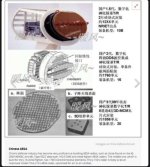
Here:

1000047239.jpg


As you can see, all are geometrically fixed and J-20 has got the biggest array with over 1800 TRMs.
 
  • Like
Reactions: batman
IAF is going for split upgrade. They will only do that if they want to replace Su-30 from air superiority missions. Russian upgraded ones won't remain viable post 2040. We will see them getting replaced by AMCA + FCAS or Su-57.
So far there are only rumours of a split upgrade. Let's see whether it becomes true or not. Also, it's hard to fathom IAF going for PESA radar to swap BARS unless Russians have promised Byelka based AESA radar with GaN TRMs.

And MKI has no replacement. It might be the best combat jet ever designed. Even when it will no longer be our tip, it shall still work as a missile truck and fighter-bomber post SEAD/DEAD. Some reports suggest IAF wants to keep MKIs running well into 2080s. Yes, you read it right;)
 
Here:

View attachment 51632


As you can see, all are geometrically fixed and J-20 has got the biggest array with over 1800 TRMs.

This is more than a decade old. The first one is the J-10B's PESA.

The second radar is on a repositioner. You can see the gap between the frontend and the backend. The entire disc moves.

This doesn't tell if the J-20's radar is also fixed 'cause we only see the front plate with tile arrays. It doesn't show the basic radar schematic like the second one.

And I don't know why you are confused between bigger and heavier. They are not the same. And slightly more TRMs doesn't indicate size either, the second one is a brick array and the third one is a tile array. The latter has smaller antennas. Uttam Mk2 has a smaller array than Uttam Mk1 but comes with more TRMs while seated in a smaller radome. Virupaksha has a bigger array than Bars but is lighter.

While you can argue that the J-20 may have a fixed radar, although that's purely speculation, there's no need for the Flanker to waste all that extra space by removing the repositioner. You can't really do anything else there.

J-20 is likely to have an LCA Mk2 class design, where the radar is angled, but also moves on a plate.