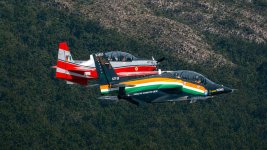
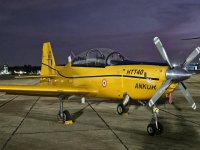
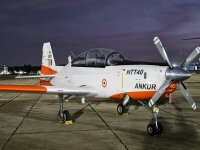
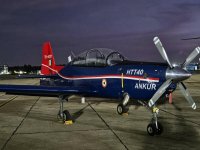
Trainer Aircraft of IAF - PC-7, HTT-40, HJT-36, BAE Hawk

(Taking longer development/design period than comparable aircraft like Woongbi, etc).

If it was of any importance, it should have been assigned to ADA not ARDC.
3 years 9 months compared to 2 years 9 months of htt40, for first flight. First series production flight in 11 years vs 12 Y.

Also the view regarding ADA and ARDC is a lot opposite, ARDC has more success

 
The interesting thing is estimated cost of procurement by IAF is Rs 15000 Cr i.e. Rs. 100 Cr per trainer or 10-12 million dollars per trainer. This is similar to 7000 Cr order to hal for 70 htt 40.

I was hoping for HLFT 42, alas F414 itself will cost around 10-12 million $.

So none of them will be able to offer ?
 
3 years 9 months compared to 2 years 9 months of htt40, for first flight. First series production flight in 11 years vs 12 Y.

Also the view regarding ADA and ARDC is a lot opposite, ARDC has more success


HTT-40 having its first flight quick doesn't mean anything if the plane flown is designed with flight characteristics like this and needs to be augmented with plenty of aero devices to become safe... Same with the production remark, they took basically the same time and what they have produced is not export quality, neither is it the best option for the IAF. I think in fact, I am even making it easier for ARDC by not bringing up the difference in WHEN the developments of KT-1 and HTT-40 happened (25 whole YEARS apart). For a better comparison, I should have compared it with the TA-20 or similar. Then you would further see the issues.


Consider reading the above link

Also, I would not call taking 20+ yrs to develop an IJT successful... And also having to get a foreign consultant for aero work... There's plenty of other examples.

The tweet you have attached is saying that the Pushpak, HT-2, Kiran are examples of successful ARDC designed aircraft, don't you think that is at least A BIT out of date perhaps?? And the Pushpak is a licensed Aeronca Chief...

By this logic the DGCA is better than ADA, for they have designed a piston training aircraft (LT-1 Swati) which the ADA hasn't!

 
Last edited:
HTT-40 having its first flight quick doesn't mean anything if the plane flown is designed with flight characteristics like this and needs to be augmented with plenty of aero devices to become safe... Same with the production remark, they took basically the same time and what they have produced is not export quality, neither is it the best option for the IAF. I think in fact, I am even making it easier for ARDC by not bringing up the difference in WHEN the developments of KT-1 and HTT-40 happened (25 whole YEARS apart). For a better comparison, I should have compared it with the TA-20 or similar. Then you would further see the issues.


Consider reading the above link

Also, I would not call taking 20+ yrs to develop an IJT successful... And also having to get a foreign consultant for aero work... There's plenty of other examples.

The tweet you have attached is saying that the Pushpak, HT-2, Kiran are examples of successful ARDC designed aircraft, don't you think that is at least A BIT out of date perhaps?? And the Pushpak is a licensed Aeronca Chief...

By this logic the DGCA is better than ADA, for they have designed a piston training aircraft (LT-1 Swati) which the ADA hasn't!
"Taking longer development/design period"

I thought you were referring to development time
 
  • Like
Reactions: Aniruddha
"Taking longer development/design period"

I thought you were referring to development time

I was.

Development time doesn't mean just time to first flight... There is a lot more to it. For me it means when the product has been fully completed and is in a competitive/world class stage.

Happy Independence day
 
HTT-40 having its first flight quick doesn't mean anything if the plane flown is designed with flight characteristics like this and needs to be augmented with plenty of aero devices to become safe... Same with the production remark, they took basically the same time and what they have produced is not export quality, neither is it the best option for the IAF. I think in fact, I am even making it easier for ARDC by not bringing up the difference in WHEN the developments of KT-1 and HTT-40 happened (25 whole YEARS apart). For a better comparison, I should have compared it with the TA-20 or similar. Then you would further see the issues.


Consider reading the above link

Also, I would not call taking 20+ yrs to develop an IJT successful... And also having to get a foreign consultant for aero work... There's plenty of other examples.

The tweet you have attached is saying that the Pushpak, HT-2, Kiran are examples of successful ARDC designed aircraft, don't you think that is at least A BIT out of date perhaps?? And the Pushpak is a licensed Aeronca Chief...

By this logic the DGCA is better than ADA, for they have designed a piston training aircraft (LT-1 Swati) which the ADA hasn't!
Do you have the paper btw?
 

contract(s) awarded in brief - Insourcing of structural assembly & supply of HTT-40 Front Fuselage and Coupling (Including all In Jig and Off Jig Activity)

Time period by which the order(s) /contract(s) is to be executed - 24 months

Broad consideration or size of the order(s) / contract(s)
Rs. 5,00,66,400/- (Rupees Five Crores Sixty-Six Thousand Four Hundred Only) (Excluding GST)
 
Insourcing as in?

contract(s) awarded in brief - Insourcing of structural assembly & supply of HTT-40 Front Fuselage and Coupling (Including all In Jig and Off Jig Activity)

Time period by which the order(s) /contract(s) is to be executed - 24 months

Broad consideration or size of the order(s) / contract(s)
Rs. 5,00,66,400/- (Rupees Five Crores Sixty-Six Thousand Four Hundred Only) (Excluding GST)
 

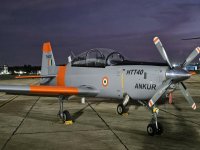
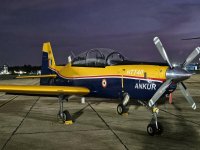
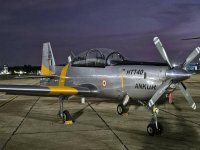
Hindustan Aeronautics Limited (HAL) is set to deliver the first batch of delayed HTT-40 basic trainer aircraft to the Indian Air Force, bolstering the air force’s capacity to meet its growing pilot training requirements, officials aware of the development said on Sunday.

Three HTT-40 (Hindustan Turbo Trainer-40) aircraft, two built at Bengaluru and one at Nashik, are ready for delivery, the officials said, asking not to be named.​
 

On the supply of the Hindustan Turbo Trainer-40 (HTT-40) basic trainer aircraft, Kumar affirmed that the state-run aerospace giant is set to deliver the entire order of 70 aircraft to the IAF within the next four to five years."In another four to five years, we should be able to complete it," Kumar said.

He added that HAL is actively outsourcing non-core manufacturing processes to private industry players across its aircraft and helicopter lines. To prevent bottlenecks, the production of the trainer has been decentralised across three divisions alongside intensive supply-chain coordination with domestic sub-suppliers.

With the Indian Air Force scouting options to eventually replace its ageing fleet of British-origin BAE Systems Hawk Advanced Jet Trainers (AJT), Kumar indicated that HAL will pitch an indigenous fighter-trainer derivative.

Kumar indicated that HAL will pitch an indigenous fighter-trainer derivative."We already have our LCA trainers. We are already working with our trainer called the LCA LIFT (Lead-in Fighter Trainer) programme. We are confident that we will be able to convince our customers," the CMD said.​
 

On the supply of the Hindustan Turbo Trainer-40 (HTT-40) basic trainer aircraft, Kumar affirmed that the state-run aerospace giant is set to deliver the entire order of 70 aircraft to the IAF within the next four to five years."In another four to five years, we should be able to complete it," Kumar said.

He added that HAL is actively outsourcing non-core manufacturing processes to private industry players across its aircraft and helicopter lines. To prevent bottlenecks, the production of the trainer has been decentralised across three divisions alongside intensive supply-chain coordination with domestic sub-suppliers.

With the Indian Air Force scouting options to eventually replace its ageing fleet of British-origin BAE Systems Hawk Advanced Jet Trainers (AJT), Kumar indicated that HAL will pitch an indigenous fighter-trainer derivative.

Kumar indicated that HAL will pitch an indigenous fighter-trainer derivative."We already have our LCA trainers. We are already working with our trainer called the LCA LIFT (Lead-in Fighter Trainer) programme. We are confident that we will be able to convince our customers," the CMD said.​
What was the original delivery schedule or is HAL making a meal out of this project too ?
 

Aircraft maker Hindustan Aeronautics Limited (HAL) may have delivered the first batch of HTT-40 basic trainers to the Indian Air Force (IAF), out of 70 on order, but a steady supply of engines by US firm Honeywell remains critical to keeping the ₹6,838-crore programme on schedule, officials aware of the matter said.

The aerospace major hopes Honeywell will resolve supply-chain bottlenecks and stabilise TPE331-12B engine deliveries from next year, the officials said.

The IAF ordered 70 basic trainers three years ago to train its rookie pilots. Under the contract, HAL was to deliver 12 trainers to the IAF in fiscal 2025-26 but failed to deliver any aircraft due to an engine shortage. Honeywell, which faced supply chain bottlenecks, began delivering the turboprop engines for the indigenous basic trainer aircraft to HAL a few months ago and assured the firm of timely supplies.

“There is an engine-related issue as Honeywell has tier-1 and tier-2 supply chain issues. The firm has promised us six engines by December. It is looking for alternative sources (to overcome supply chain bottlenecks),” HAL chairman and managing director Ravi K said in an interview.

“The supplies are expected to stabilise from next year. Aircraft production is not an issue; it’s on track,” he told HT.​
 
  • Like
Reactions: ShiroBarks