PSQR vs ASQR
- As per the defence procurement procedure (DPP) in vogue, the Air Staff Qualitative Requirements (ASQRs) were prepared and ratified by the Service Equipment Policy Committee (SEPC) in October 2009.
- Simultaneously the PSQRs issued to HAL earlier in March 2009 were also revised to align with the ASQR for BTA (Buy) and were reissued to HAL by December 2009.
- HAL submitted its first draft project report (DPR) in September 2010 based on the amended PSQRs.
- Thus, as on date, PSQRs and ASQRs are similar, the major difference being that PSQRs include both ‘essential’ and ‘desirable’ parameters whereas ASQRs include only ‘essential’ parameters.
- PSQRs being preliminary are provisional and subject to review/change during the development process.
- The desirable parameters are based on futuristic/emerging technologies whereas the essential parameters are to be of proven state-of-the-art technology available in India as also in the world market.
- The ASQRs cannot be reviewed once the request for proposal (RFP) is issued. The ASQRs are based on inputs obtained through request for information (RFI) so as to ensure a multi-vendor situation.
- The Defence Acquisition Council (DAC) then accorded acceptance of necessity (AON) for HAL in February 2010 to go ahead with the indigenous design and development of 106 BTA.
Coming to the points mentioned-
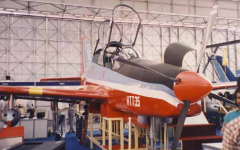
(1) 0-0 Ejection seat - It was never required by the IAF in PSQR. HAL said we can provide it and that is how it came into picture. But RFI response said only 2 vendors can give ejection seat and hence, when ASQR was formulated, 0-0 ejection seat criteria was not removed in favor of ejection seat.
(2) Cockpit Pressurization -
- Never an IAF requirement.
- In their preliminary project report (PPR) on HTT-40 in January 2008, HAL had stated that “The option of cabin pressurisation will also be looked into during the detailed design stage”.
- Accordingly, ‘cockpit pressurisation’ was included as a desirable parameter in the earlier PSQRs.
- The detailed project report (DPR) on HTT-40 submitted by HAL in September 2010 and approved by DG (Acquisition), did not include ‘cockpit pressurisation’.
(3) External vision from instructor's cockpit -
- With regard to the external vision, both the ASQR and current PSQR have identical criteria.
- In the earlier PSQRs, the seating configuration was defined as tandem arrangement and therefore, it included the requirement for external vision from rear cockpit of minus eight degrees.
- From the response to request for information (RFI) it emerged that the world market had BTA with both ‘tandem’ and ‘side-by-side’ seating.
- Accordingly, the ASQRs stipulated that “the external vision requirement should be in accordance with the relevant specification.
- Additionally, for a tandem seating design, the instructor’s cockpit in the rear should be sufficiently raised to allow safe flight instruction both by day and night.”
(4) Glide Ratio -
- Both ASQRs and the current PSQRs specify that “The aircraft should have a glide ratio better than 10:1”.
(5) In Flight Simulation -
- Both ASQRs and the current PSQRs do not specify any requirement for in-flight simulation.
- This requirement could be met with using the fixed base full mission simulator which was also being acquired and hence this requirement of a simulation panel on the aircraft was omitted as a considered decision while finalising ASQRs and the current PSQRs.
(6) Take-Off Distance -
- Both the ASQRs and current PSQRs stipulate “the takeoff distance required should be less than 1000 m”.
----
Long story short, HAL was given the sams specs for development at the Buy category. And many things were proposed by HAL themselves, and not the IAF.