Hidden in ₹3.6 Lakh Crore Approvals: The 4 MW Naval Engine
12 February 2026 by alphadefense.in
The Defence Acquisition Council (DAC) has cleared ₹3.60 lakh crore worth of capital acquisition proposals to enhance the combat readiness of the Indian Armed Forces.
This massive approval covers major platforms, weapons, and systems across the Army, Navy, and Air Force. It signals one of the largest coordinated modernisation pushes in recent years.
Yet, buried inside this mega acquisition package is a modest but strategically important line:
At first glance, it appears technical and minor. In reality, it could represent something far bigger — India’s entry into indigenous marine gas turbine capability.
However, defence capability is not built only through large platforms. It is also built through core technologies — and propulsion is one of them.
This indicates:
That makes this approval significant.
The LM500:
It is important to clarify that India is not procuring the LM500. Rather, the power band is comparable. This helps us understand the intended capability bracket.
If India intends to build an indigenous marine gas turbine ecosystem, starting at 4 MW is logical.
A smaller turbine:
A gas turbine generator is:
Developing a 4 MW turbine allows India to build:
A 4 MW marine gas turbine generator could support:
Modern missile vessels are:
Future corvettes with AESA radars and electronic warfare suites will demand higher onboard power density.
As the Navy moves toward more electric-dominant platforms, gas turbine generators become critical components.
Today, India depends on foreign suppliers for high-end marine gas turbines.
An indigenous 4 MW turbine could represent:
But propulsion capability defines strategic autonomy.
The 4 MW naval gas turbine generator may look humble. Yet it could mark the beginning of India’s structured entry into the marine gas turbine domain.
If developed successfully, this program will not merely power a ship. It will power an ecosystem.
And sometimes, in defence planning, the smallest line items carry the biggest long-term implications.
Hidden in ₹3.6 Lakh Crore Approvals: The 4 MW Naval Engine - AlphaDefense.in
12 February 2026 by alphadefense.in
The Defence Acquisition Council (DAC) has cleared ₹3.60 lakh crore worth of capital acquisition proposals to enhance the combat readiness of the Indian Armed Forces.
This massive approval covers major platforms, weapons, and systems across the Army, Navy, and Air Force. It signals one of the largest coordinated modernisation pushes in recent years.
Yet, buried inside this mega acquisition package is a modest but strategically important line:
Naval generator (04 MW Marine Gas Turbine based Electric Power Generator)
At first glance, it appears technical and minor. In reality, it could represent something far bigger — India’s entry into indigenous marine gas turbine capability.
The ₹3.6 Lakh Crore Defence Push
The DAC approval reflects:- Large-scale capital modernisation
- Focus on indigenous procurement
- Strengthening combat readiness
- Long-term force restructuring
However, defence capability is not built only through large platforms. It is also built through core technologies — and propulsion is one of them.
The 4 MW Naval Gas Turbine: Why It Matters
The proposal mentions:04 MW Marine Gas Turbine based Electric Power Generator
This indicates:
- A gas turbine in the 4 megawatt class
- Designed specifically for naval application
- Used primarily for electric power generation
- LM2500 gas turbines (US origin) on destroyers
- Earlier Ukrainian-origin marine turbines
- Diesel generator sets for shipboard power
That makes this approval significant.
Mapping the Power Class: LM500 Category
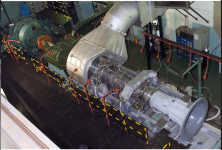
Globally, a 4–5 MW marine gas turbine falls into the same power band as the GE LM500.The LM500:
- Produces roughly 4.4–4.5 MW
- Is derived from an aircraft engine core
- Has been used on vessels like Denmark’s Flyvefisken-class patrol vessels
- Provides high power in a compact footprint
It is important to clarify that India is not procuring the LM500. Rather, the power band is comparable. This helps us understand the intended capability bracket.
Why Start at 4 MW?
If India intends to build an indigenous marine gas turbine ecosystem, starting at 4 MW is logical.
Lower Technical Risk
A smaller turbine:
- Requires less extreme thermal management
- Has lower turbine inlet temperatures
- Is easier to marinise
Easier Integration
A gas turbine generator is:
- Simpler to integrate than a propulsion turbine
- Less mechanically stressed
- More forgiving during early development
Ecosystem Building
Developing a 4 MW turbine allows India to build:
- Hot-section metallurgy expertise
- Control systems (FADEC)
- Marinisation processes
- Supply chain depth
Potential Applications in the Indian Navy
A 4 MW marine gas turbine generator could support:
Next-Generation Missile Vessels
Modern missile vessels are:
- Sensor-heavy
- Network-centric
- Electrically demanding
Advanced Corvettes
Future corvettes with AESA radars and electronic warfare suites will demand higher onboard power density.
Integrated Electric Propulsion (IEP) Ships
As the Navy moves toward more electric-dominant platforms, gas turbine generators become critical components.
A Strategic Step Toward Propulsion Sovereignty
Today, India depends on foreign suppliers for high-end marine gas turbines.
An indigenous 4 MW turbine could represent:
- Reduced external dependency
- Indigenous intellectual property
- Long-term scalability toward larger turbines
- Export potential for small combatants
The Bigger Story Behind a Small Line
In a ₹3.6 lakh crore acquisition wave, fighter jets and major warships will attract attention.But propulsion capability defines strategic autonomy.
The 4 MW naval gas turbine generator may look humble. Yet it could mark the beginning of India’s structured entry into the marine gas turbine domain.
If developed successfully, this program will not merely power a ship. It will power an ecosystem.
And sometimes, in defence planning, the smallest line items carry the biggest long-term implications.
Hidden in ₹3.6 Lakh Crore Approvals: The 4 MW Naval Engine - AlphaDefense.in