
You are using an out of date browser. It may not display this or other websites correctly.
You should upgrade or use an alternative browser.
You should upgrade or use an alternative browser.


Interesting. They have a podcast.
This Sunday on Raksha Sutra, we take you inside the Indian Air Force’s think-tank - Centre for Aerospace Power and Strategic Studies (CAPSS) - with AVM Anil Golani (Retd), Director General, as he breaks down India’s priorities, challenges and the making of future-ready air power.
Aerospace power is transforming into the most dynamic frontier of national security. From AI-driven systems and autonomous drones to hypersonic technologies and the growing militarization of space - innovations are reshaping how nations safeguard their skies, assets and strategic interests. India is at the heart of this transformation, navigating new challenges and unprecedented opportunities.
This Sunday on Raksha Sutra, we take you inside the Indian Air Force’s think-tank - Centre for Aerospace Power and Strategic Studies (CAPSS) - with AVM Anil Golani (Retd), Director General, as he breaks down India’s priorities, challenges and the making of future-ready air power.
Aerospace power is transforming into the most dynamic frontier of national security. From AI-driven systems and autonomous drones to hypersonic technologies and the growing militarization of space - innovations are reshaping how nations safeguard their skies, assets and strategic interests. India is at the heart of this transformation, navigating new challenges and unprecedented opportunities.

CATS Warrior will fly in 2027
Folks @smitaprakash ji asked : where is #FundKaveriEngine
DefSec : In 10-12 years we will see our engine. It is in process of getting finalised.
Kaveri is limited to UCAV
Info from ANI National Security Summit
In the wake of the devastation caused by Cyclone Ditwah across Sri Lanka, India swiftly launched Operation Sagar Bandhu to bolster relief efforts.
The Indian Air Force promptly deployed one C-130 and one IL-76 from Hindan Air Base on the night of 28/29 Nov 2025, airlifting 21 tonnes of relief material along with over 80 NDRF personnel and 8 Tonnes of equipment to Colombo. Essential rations and critical supplies have been delivered to support affected communities.
Reaffirming the spirit of Neighbourhood first, India stands firmly with Sri Lanka in this hour of need.
Hedging India’s Defence Bet Is A Key Strategy
Editor’s NoteAs 2025 draws to a close, India’s defence acquisition landscape stands at a critical inflection point. The year ahead is not merely about big-ticket procurements such as 4th-gen jet
 bharatshakti.in
Hedging India’s Defence Bet Is A Key Strategy
By Nitin A. GokhaleAs 2025 draws to a close, India’s defence acquisition landscape stands at a critical inflection point. The year ahead is not merely about big-ticket procurements such as 4th-gen jets, MTA, jet engines for AMCA and 5th-gen fighters, but about how New Delhi translates its multi-alignment foreign policy into hard military capability without diluting its core principle of strategic autonomy. In his take on the defence acquisition prospects for 2026, BharatShakti’s Editor-in-Chief underlines that India’s choices will be shaped as much by geopolitics as by operational necessity.
In 2026, India’s multi-alignment foreign policy will be applied and tested in the defence sector as well. India’s current and future critical defence acquisitions will be guided by a delicate politico-diplomatic balancing act, executed with a carefully thought-out strategy. Anchored in India’s long-standing policy of maintaining strategic autonomy, defence acquisitions also serve as a leverage in India’s foreign policy toolkit. It would be interesting to observe how India navigates the minefield of balancing larger strategic objectives with the need to acquire defence platforms from different countries.
Four major acquisitions from varied defence manufacturing eco-systems are in the pipeline in the coming year. The choice of platforms and the timing of decisions will depend on how geopolitical equations evolve in the coming months. These proposed acquisitions include buying 114 fourth-generation combat jets, 66 Medium Transport Aircraft (MTA), finalising the development of a jet engine for the fifth-generation Advanced Medium Combat Aircraft (AMCA), and deciding to buy an indeterminate number of fifth-generation combat jets, all for the Indian Air Force (IAF).
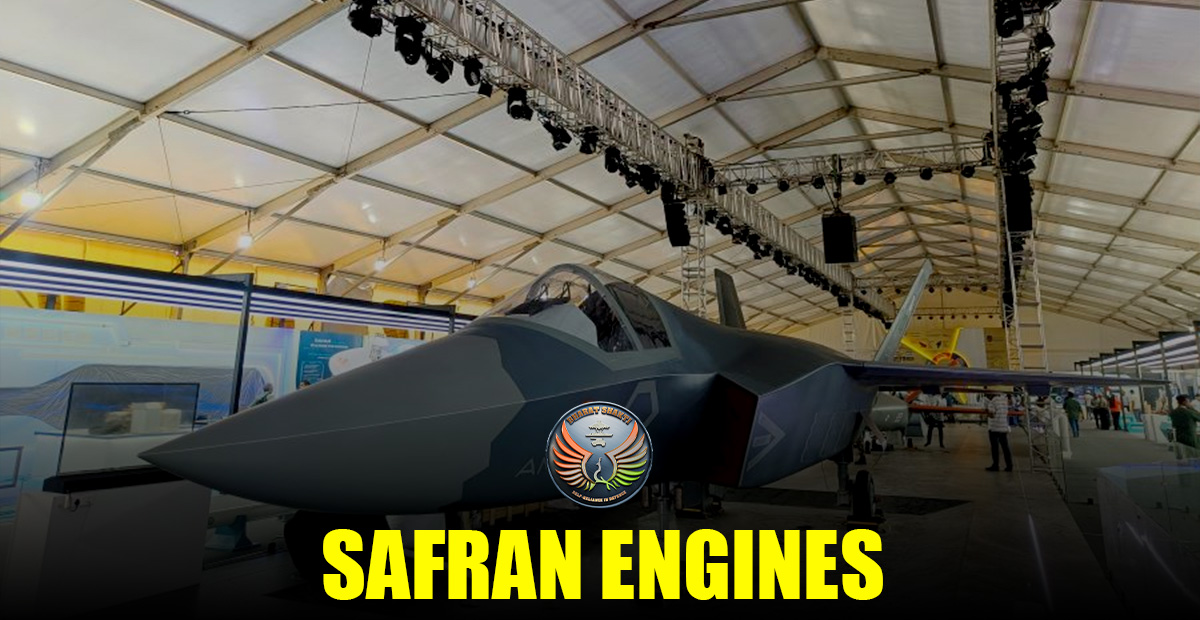
India’s Defence Research and Development Organisation (DRDO) is currently in intense talks with the Safran Group of France to develop a jet engine meant primarily for the second tranche of AMCA. The collaboration will ensure India owns the IP of the developed product. Safran and DRDO will undertake the joint project, with an overall investment of $7 billion or more, to be spent over a 7-8-year period. This completely new engine will also be available for export from India to third countries. The other contenders in this project were engine makers General Electric (US) and Rolls Royce from the UK. After years of negotiations and lobbying by these three rival companies, DRDO and IAF have zeroed in on Safran. But the other two continue to make their sales pitch.
Indirectly tied to this project is India’s quest to acquire 114 combat jets for the IAF to augment its already depleted fleet. Teams from India and France are currently discussing the possibility of India buying additional Rafale jets from Dassault Aviation. The IAF, which bought two squadrons of Rafales in 2016, is happy with its performance and would like to add more of the same aircraft for operational and functional ease. Last year, even the Indian Navy ordered two dozen Rafale Marines for its Aircraft Carrier, INS Vikrant.
The French Company, which has scaled up its operations in India of late by setting up a facility in collaboration with Tata Advanced Systems Ltd to manufacture fuselages for the aircraft, will have to set up either a joint venture or a subsidiary to establish the final assembly line for Rafale jets. Informal talks between Dassault Aviation and MoD officials to determine the extent of indigenisation in the aircraft to be manufactured in India are ongoing, even as inter-ministerial consultations within the government remain a work in progress and a final decision is awaited.
For the acquisition of the MTA, three manufacturers from the US, Europe, and Latin America are in the fray, while the US F-35 and Russia’s Su-57 are the two fifth-generation aircraft seemingly competing for IAF’s attention. The Lockheed Martin-manufactured C-130J medium transport aircraft, already seen as a force multiplier in the IAF, leads the race in the MTA, but Embraer’s C-390 Millennium aircraft is not far behind, according to available indications. Airbus, which has pitched its A-400 M transport aircraft, is the third contender.
However, in the fifth-generation combat jet space, F-35 may find itself ruled out because of restrictive clauses the US is known to impose on its deployment. That leaves the Su-57 manufactured by Russia as the possible choice. Despite two decades of rising India-US strategic partnership (now going through much turbulence, thanks to the unpredictable man in the White House), India’s armed forces have tread wearily with the Americans because of their record of denying critical defence tech to India.
The announcement of the final shape and size of these mega contracts, however, will depend on external factors such as the signing of the trade deal with the US, how the Russia-Ukraine war ends, and how India positions itself in the current global churn.
At best, India may go in for more C-130Js in a government-to-government deal, simply because integrating these aircraft into the existing inventory will be smooth. However, there is a school of thought in the IAF that the Embraer aircraft is a close competitor.

66 MTA?Hedging India’s Defence Bet Is A Key Strategy
Editor’s NoteAs 2025 draws to a close, India’s defence acquisition landscape stands at a critical inflection point. The year ahead is not merely about big-ticket procurements such as 4th-gen jet
By Nitin A. Gokhale
Hedging India’s Defence Bet Is A Key Strategy
As 2025 draws to a close, India’s defence acquisition landscape stands at a critical inflection point. The year ahead is not merely about big-ticket procurements such as 4th-gen jets, MTA, jet engines for AMCA and 5th-gen fighters, but about how New Delhi translates its multi-alignment foreign policy into hard military capability without diluting its core principle of strategic autonomy. In his take on the defence acquisition prospects for 2026, BharatShakti’s Editor-in-Chief underlines that India’s choices will be shaped as much by geopolitics as by operational necessity.
In 2026, India’s multi-alignment foreign policy will be applied and tested in the defence sector as well. India’s current and future critical defence acquisitions will be guided by a delicate politico-diplomatic balancing act, executed with a carefully thought-out strategy. Anchored in India’s long-standing policy of maintaining strategic autonomy, defence acquisitions also serve as a leverage in India’s foreign policy toolkit. It would be interesting to observe how India navigates the minefield of balancing larger strategic objectives with the need to acquire defence platforms from different countries.
Four major acquisitions from varied defence manufacturing eco-systems are in the pipeline in the coming year. The choice of platforms and the timing of decisions will depend on how geopolitical equations evolve in the coming months. These proposed acquisitions include buying 114 fourth-generation combat jets, 66 Medium Transport Aircraft (MTA), finalising the development of a jet engine for the fifth-generation Advanced Medium Combat Aircraft (AMCA), and deciding to buy an indeterminate number of fifth-generation combat jets, all for the Indian Air Force (IAF).
India’s Defence Research and Development Organisation (DRDO) is currently in intense talks with the Safran Group of France to develop a jet engine meant primarily for the second tranche of AMCA. The collaboration will ensure India owns the IP of the developed product. Safran and DRDO will undertake the joint project, with an overall investment of $7 billion or more, to be spent over a 7-8-year period. This completely new engine will also be available for export from India to third countries. The other contenders in this project were engine makers General Electric (US) and Rolls Royce from the UK. After years of negotiations and lobbying by these three rival companies, DRDO and IAF have zeroed in on Safran. But the other two continue to make their sales pitch.
Indirectly tied to this project is India’s quest to acquire 114 combat jets for the IAF to augment its already depleted fleet. Teams from India and France are currently discussing the possibility of India buying additional Rafale jets from Dassault Aviation. The IAF, which bought two squadrons of Rafales in 2016, is happy with its performance and would like to add more of the same aircraft for operational and functional ease. Last year, even the Indian Navy ordered two dozen Rafale Marines for its Aircraft Carrier, INS Vikrant.
The French Company, which has scaled up its operations in India of late by setting up a facility in collaboration with Tata Advanced Systems Ltd to manufacture fuselages for the aircraft, will have to set up either a joint venture or a subsidiary to establish the final assembly line for Rafale jets. Informal talks between Dassault Aviation and MoD officials to determine the extent of indigenisation in the aircraft to be manufactured in India are ongoing, even as inter-ministerial consultations within the government remain a work in progress and a final decision is awaited.
For the acquisition of the MTA, three manufacturers from the US, Europe, and Latin America are in the fray, while the US F-35 and Russia’s Su-57 are the two fifth-generation aircraft seemingly competing for IAF’s attention. The Lockheed Martin-manufactured C-130J medium transport aircraft, already seen as a force multiplier in the IAF, leads the race in the MTA, but Embraer’s C-390 Millennium aircraft is not far behind, according to available indications. Airbus, which has pitched its A-400 M transport aircraft, is the third contender.
However, in the fifth-generation combat jet space, F-35 may find itself ruled out because of restrictive clauses the US is known to impose on its deployment. That leaves the Su-57 manufactured by Russia as the possible choice. Despite two decades of rising India-US strategic partnership (now going through much turbulence, thanks to the unpredictable man in the White House), India’s armed forces have tread wearily with the Americans because of their record of denying critical defence tech to India.
The announcement of the final shape and size of these mega contracts, however, will depend on external factors such as the signing of the trade deal with the US, how the Russia-Ukraine war ends, and how India positions itself in the current global churn.
At best, India may go in for more C-130Js in a government-to-government deal, simply because integrating these aircraft into the existing inventory will be smooth. However, there is a school of thought in the IAF that the Embraer aircraft is a close competitor.

HC rejects petitions opposing land acquisition for new airbase | Jaipur News - The Times of India
Jodhpur: Rajasthan high court's principal seat in Jodhpur has dismissed petitions by farmers and landowners opposing land acquisition for a new airbas.
 timesofindia.indiatimes.com


Defence chief to inaugurate Car Nicobar air base's upgraded runway on Jan 2
India is set to enhance its military capabilities with the upgraded runway at Car Nicobar Air Base, a strategic location near the Malacca Strait. The modernisation aims to boost air operations and rapid mobilisation in the eastern Indian Ocean region.
The Car Nicobar Air Base, part of the 37 Wing of the Indian Air Force, plays a pivotal role in India’s forward deployment in the eastern Indian Ocean region. The upgraded runway is expected to enhance the base’s ability to support sustained air operations and rapid force mobilisation.
Along with resurfacing, the upgrade includes expanded apron areas, allowing a higher density of aircraft and quicker operational turnaround during both routine missions and contingencies.
A key feature of the upgrade is the development of a renovated taxi track capable of functioning as a secondary runway in emergency situations. This is expected to add operational resilience and flexibility, particularly during high-tempo missions or adverse conditions.
The base will also operate with a new detachment following the inauguration, further strengthening its role as a forward-operating hub for the Indian Air Force.
Following the inauguration, Su 30 MKI fighter jets are expected to spearhead strategic operations from the upgraded airfield. Mirage fighter aircraft will be inducted subsequently, sources said.
The fighters are likely to undertake long-range firing and strike exercises, aimed at sharpening combat readiness and demonstrating operational reach across the eastern theatre.

Jets, mid-air refuellers, missiles: Indian Air Force to augment arsenal with vital acquisitions
The ministry will also expedite the acquisition of 114 multi-role fighter aircraft (MRFA) from France under the “Make in India” rubric, the people added. | India News
 www.hindustantimes.com
The defence ministry has paved the way for the Indian Air Force (IAF) to acquire six Boeing 767-based mid-air refuellers from Israel and 12 airborne early warning and control (AEW&C) systems supported by platforms from Brazil and France, according to people aware of the matter, a move that will make the force a heavyweight by 2026.
The ministry will also expedite the acquisition of 114 multi-role fighter aircraft (MRFA) from France under the “Make in India” rubric, the people added.
The Defence Acquisition Council (DAC), headed by defence minister Rajnath Singh, this week also cleared the purchase of 36 more Meteor air-to-air missiles for Rafale fighters from France. This follows the approval for 280 long- and short-range missiles for the S-400 system from Russia.
A cost negotiations committee (CNC) is being constituted to fix the price of the six refuellers from Israel Aerospace Industries (IAI), with the project estimated at ₹10,000 crore, the people cited above added. The DAC has accorded acceptance of necessity (AoN), and negotiations on the total project cost have begun with IAI, the sole contender. The proposal will move to the Cabinet Committee on Security for approval once the CNC completes its task. India has operated six IL-76M Russian refuellers since 2003, but the fleet faces maintenance and turnaround issues.
Separately, the defence ministry will issue a request for proposal (RFP) to purchase six Embraer jets from Brazil to mount the DRDO-developed Netra Mk II AESA radar, which offers a 270-degree view, the people said. The radar features an enhanced electronic warfare suite and network-centric warfare capabilities.
The government has also signed a contract to upgrade six Airbus A319 aircraft by the parent company in France, installing 360-degree rotodome radars to convert them into AWACS platforms. The IAF has sought refuellers and AWACS as force multipliers, a need felt during Op Sindoor given Pakistan’s greater AWACS numbers.
Groundwork has begun for the proposed acquisition of 114 MRFA for the IAF from France, starting with decisions on indigenous content integration. With India already hosting a maintenance, repair and overhaul (MRO) facility for Rafale fighters, acquiring 114 more such platforms is seen as logical over opening a new stream.
Finally, India and Russia are working to acquire five more S-400 long-range air defence systems and the Pantsir medium-range air defence system via the government-to-government route. The former targets enemy fighters, while the latter engages unmanned combat systems, cruise missiles, loitering munitions and helicopters.

36 Meteors is a real good addition. Wonder how many were fired during Operation Sindoor requiring replenishment , if that's the case ?!Jets, mid-air refuellers, missiles: Indian Air Force to augment arsenal with vital acquisitions
The ministry will also expedite the acquisition of 114 multi-role fighter aircraft (MRFA) from France under the “Make in India” rubric, the people added. | India News
The defence ministry has paved the way for the Indian Air Force (IAF) to acquire six Boeing 767-based mid-air refuellers from Israel and 12 airborne early warning and control (AEW&C) systems supported by platforms from Brazil and France, according to people aware of the matter, a move that will make the force a heavyweight by 2026.
The ministry will also expedite the acquisition of 114 multi-role fighter aircraft (MRFA) from France under the “Make in India” rubric, the people added.
The Defence Acquisition Council (DAC), headed by defence minister Rajnath Singh, this week also cleared the purchase of 36 more Meteor air-to-air missiles for Rafale fighters from France. This follows the approval for 280 long- and short-range missiles for the S-400 system from Russia.
A cost negotiations committee (CNC) is being constituted to fix the price of the six refuellers from Israel Aerospace Industries (IAI), with the project estimated at ₹10,000 crore, the people cited above added. The DAC has accorded acceptance of necessity (AoN), and negotiations on the total project cost have begun with IAI, the sole contender. The proposal will move to the Cabinet Committee on Security for approval once the CNC completes its task. India has operated six IL-76M Russian refuellers since 2003, but the fleet faces maintenance and turnaround issues.
Separately, the defence ministry will issue a request for proposal (RFP) to purchase six Embraer jets from Brazil to mount the DRDO-developed Netra Mk II AESA radar, which offers a 270-degree view, the people said. The radar features an enhanced electronic warfare suite and network-centric warfare capabilities.
The government has also signed a contract to upgrade six Airbus A319 aircraft by the parent company in France, installing 360-degree rotodome radars to convert them into AWACS platforms. The IAF has sought refuellers and AWACS as force multipliers, a need felt during Op Sindoor given Pakistan’s greater AWACS numbers.
Groundwork has begun for the proposed acquisition of 114 MRFA for the IAF from France, starting with decisions on indigenous content integration. With India already hosting a maintenance, repair and overhaul (MRO) facility for Rafale fighters, acquiring 114 more such platforms is seen as logical over opening a new stream.
Finally, India and Russia are working to acquire five more S-400 long-range air defence systems and the Pantsir medium-range air defence system via the government-to-government route. The former targets enemy fighters, while the latter engages unmanned combat systems, cruise missiles, loitering munitions and helicopters.
This would be in addition to the ~ 200 odd Meteors we ordered along with the 36 Rafales. In between there was some news about ~ 50 odd Meteors being ordered. Wonder if these have been reduced to 36 nos ?
As far as the other acquisitions detailed in Steno Shishir's column goes it's quite evident GoI is preparing to fight China in 2040.
All I can say is Alhamdulillah !

36 Meteors is a real good addition. Wonder how many were fired during Operation Sindoor requiring replenishment , if that's the case ?!
This would be in addition to the ~ 200 odd Meteors we ordered along with the 36 Rafales. In between there was some news about ~ 50 odd Meteors being ordered. Wonder if these have been reduced to 36 nos ?
As far as the other acquisitions detailed in Steno Shishir's column goes it's quite evident GoI is preparing to fight China in 2040.
All I can say is Alhamdulillah !
Nothing in public domain (afaik) suggests that meteors were actually used during Sindoor. Will be interesting to see if anything on its performance is available if it was actually used.
Yeah that was me being sarcastic. So in addition to the ~ 200 nos we ordered with the 36 nos Rafales which we've no clue if it has been delivered & mated with the Rafales , we're now supposedly ordering 36 more.Nothing in public domain (afaik) suggests that meteors were actually used during Sindoor. Will be interesting to see if anything on its performance is available if it was actually used.
Can't tell if it's Jan 1st or April 1st !