Chinese Wuhan Virus Thread


Over 30 Indian vaccines in works for corona vaccine development, PM Modi told

The PM was told on Monday that Indian vaccine companies have come across as innovators in early stage vaccine development research and these companies are well known for their quality, manufacturing capacity and global presence.


By Aman Sharma, ET Bureau | May 05, 2020, 10.20 PM IST
1588737703299.png
ET on Monday had reported the initiation of efforts at the government level to search for a coronavirus vaccine.

NEW DELHI: Prime Minister Narendra Modi held a detailed review of efforts in India towards developing a vaccine for coronavirus and was told that over 30 Indian vaccines are in different stages of corona vaccine development, with a few going on to the trial stages.

ET had reported on Monday that the Vaccine Task Force (VTF) set up by Prime Minister’s Office (PMO) for focussed research on corona vaccines has allowed research institutions and laboratories to use patient samples for research and development (R&D) purposes. The government has also framed detailed guidelines for sharing of bio-specimen and data for such research among institutions and circulated them in April.

The PM was told on Monday that Indian vaccine companies have come across as innovators in early stage vaccine development research and these companies are well known for their quality, manufacturing capacity and global presence. “Similarly, Indian academia and start-ups have also pioneered in this area,” the government said in a statement.

The PM also reviewed the country’s efforts towards drug discovery, diagnosis and testing. “In drug development three approaches are being taken. First, the re-purposing of existing drugs; at least four drugs are undergoing synthesis and examination in this category. Secondly, the development of new candidate drugs and molecules are being driven by linking high performance computational approached with laboratory verification. Thirdly, plant extracts and products are being examined for general anti-viral properties,” the government said in a statement.

The PM was also informed that in diagnosis and testing, several academic research institutions and start-ups have developed new tests, both for the RT-PCR approach and for the antibody detection. “In addition, by linking laboratories all over the country, capacity for both these kinds of tests has been enormously scaled up,” the government said. Nearly 85,000 tests are now being conducted daily with the total tests conducted so far touching 1.2 million, the PM was told.

“The problem of importing reagents for testing has been addressed by consortia of Indian startups and industry, meeting current requirements. The current thrust also holds promise for the development of a robust long-term industry in this area. The review by the PM took note of the extraordinary coming together of academia, industry and government, combined with speedy but efficient regulatory process,” the government said.

Prime Minister Modi at the meeting said he desired that such coordination and speed should be embedded into a standard operating procedure and what is possible in a crisis should be a part of our routine way of scientific functioning. “Appreciating the scientific coming together of computer science, chemistry and biotechnology in drug discovery, the PM suggested that a hackathon be held on this subject, linking computer science to synthesis and testing in the laboratory. The successful candidates from the hackathon could be taken up by the startups for further development and scaling up,” the government statement said.

The PM added that the innovative and original manner in which Indian scientists, from basic to applied sciences, have come together with industry is heartening. “This kind of pride, originality and sense of purpose should dominate our approach going ahead. It is only then that we can be amongst the best in the world and not followers, in science,” the PM said at the meeting.

The meeting was attended by Principal Scientific Advisor to the government K. VijayRaghavan and NITI Aayog member V.K. Paul, Health Secretary Preeti Sudan and Cabinet Secretary Rajiv Gauba.

ET on Monday had reported the initiation of efforts at the government level to search for a coronavirus vaccine. In a letter to secretaries who have been asked to inform the concerned research institutes, the office of the Principal Scientific Advisor, K VijayRaghavan, has asked research institutions which have received clearances from ICMR as Covid-19 testing sites and wish to use samples for R&D, to inform the VTF, delineating the specific research intended to be undertaken.

“The joint committee (of VTF and an Empowered Technology Group set up by PMO) will examine each request where the R&D objectives and protocols are clearly presented and defined. Field applications and deployment of R&D results will need necessary subsequent approvals following due process,” the letter dated April 22, which ET accessed, has mentioned.

The Empowered Group (EWG) No.1 on ‘Medical Emergency Management Plan’, headed by NITI Aayog member VK Paul has framed guidelines which have been circulated with the letter. “The guidelines for sharing of bio-specimen and data for research related to Covid-19 framed by the EWG should be followed and the stipulated timelines for sharing or providing bio-specimen should be adhered to. This will allow those who host specimen/samples to speedily and correctly share bio-specimen for research collaboration,” the letter has added.

Over 30 Indian vaccines in works for corona vaccine development, PM Modi told - The Economic Times
 
CSIR's IGIB, Tata Sons sign MoU for knowhow of COVID-19 diagnostic kit

The CSIR's Institute of Genomics and Integrative Biology (IGIB) and Tata Sons have signed an agreement for licensing of the knowhow of a COVID-19 diagnostic kit which can be used for testing on ground by the month-end, a statement said on Tuesday.

In another development, CSIR's Centre for Cellular and Molecular Biology (CCMB), Hyderabad has tied up with a Bengaluru-based company, Eyestem Research Private Limited, to grow novel coronavirus in human cell lines, which will enable in vitro testing of potential drugs and vaccines against COVID-19.

The Council for Scientific and Industrial Research (CSIR), a premier organisation under the Ministry of Science and Technology, has 38 institutes and laboratories under it. Most of them are currently involved in developing aids linked to battling COVID-19.

The IGIB has developed FNCAS9 Editor Linked Uniform Detection Assay (FELUDA) for low cost and rapid diagnosis of COVID-19.

"The licence shall include transfer of the knowledge for scaling up the knowhow in the form of a kit that can be deployed for COVID-19 testing on ground as early as end of May," the statement added.

A completely indigenous scientific invention, FELUDA for COVID-19 has been designed for mitigating the ongoing COVID-19 situation and cater to mass testing. Its main advantages are its affordability, relative ease of use and non-dependency on expensive RT-PCR machines.

Commenting on the agreement, Banmali Agrawala, President - Infrastructure and Defence & Aerospace, Tata Sons said, "This innovative CRISPR 'Feluda' test uses cutting edge CRISPR technology for detection of genomic sequence of novel coronavirus.

"It uses a test protocol that is simple to administer and easy to interpret enabling results to be made available to the medical fraternity in relatively lesser time, as compared to other test protocols. We believe that CRISPR is futuristic technology that can also be configured for detection of multiple other pathogens in the future."

With regards to collaboration between CCMB and Eyestem, the research team will use the latter's human lung epithelial cell culture system provided as part of its Anti-COVID Screening (ACS) platform to understand the molecular and pathological characteristics of the novel coronavirus.

This will help in establishing a rational basis for testing potential drugs in vitro, CCMB scientists said.

"Culturing the virus outside the human host is a technological challenge that needs to be overcome. Eyestem's cell culture system expresses the ACE2 receptor and other genes that are key determinants of viral entry and replication.

"We hope that employing this system will allow the CCMB team led by Dr Krishnan Harshan to grow the virus predictably and thereby open up the potential for the drug screening and vaccine development strategies," said Dr. Rakesh Mishra, Director, CCMB.

 
  • Like
Reactions: Gautam

Researcher On Cusp Of COVID-19 Breakthrough Killed In Bizarre Murder-Suicide

Profile picture for user Tyler Durden

by Tyler Durden

Tue, 05/05/2020 - 23:05


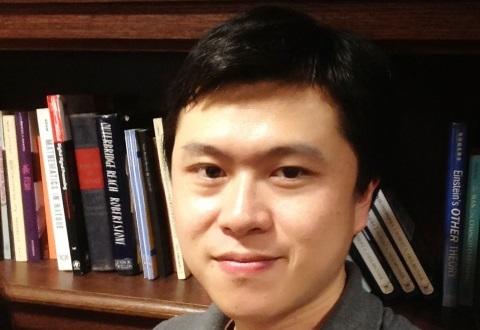
A University of Pittsburgh researcher working on a coronavirus project was fatally shot on Saturday at his home in Ross Township, while associate Hao Gu, 46, was found dead in a car approximately 100 yards away of what appeared to be a self-inflicted gunshot.
The researcher, 37-year-oild Bing Liu, was found shot multiple times in the head, neck and torso around Noon on Saturday. Nothing was stolen from the townhouse and there was no forced entry, according to the Post Gazette. He worked in the college's department of computational and systems biology at the Pitt School of Medicine.


"Bing was on the verge of making very significant findings toward understanding the cellular mechanisms that underlie SARS-CoV-2 infection and the cellular basis of the following complications," the department announced in a written statement, adding "We will make an effort to complete what he started in an effort to pay homage to his scientific excellence."

WHO announces a €7.4 billion pledge toward Covid-19 research from world leaders

Liu's expertise was developing computational models, simulation and analysis techniques to study the dynamics of biological systems - in some cases using machine learning techniques to understand cellular processes, according to his bio.

He was described as an outstanding teacher and mentor.

"He was a very talented individual, extremely intelligent and hard-working," said the head of his department, Ivet Bahar. "He has been contributing to several scientific projects, publishing in high-profile journals. He was someone whom we all liked very much, a very gentle, very helpful, kind person, very generous."

"We are all shocked to learn what happened to him. This was very unexpected," she added.

...Mr. Liu has co-authored 30-plus publications, including four in 2020. Ms. Behar said he had just begun research on the novel coronavirus.
He was just starting to obtain interesting results," she said. "He was sharing with us, trying to understand the mechanism of infection, so we will hopefully continue what he was doing.”’ -Post Gazette
"His loss will be felt throughout the entire scientific community," said the university in a statement.

The motive in the shooting is unknown and the investigation is ongoing. A formal ruling from the Allegheny County Medical Examiner’s Office regarding the cause and manner of Gu's death is pending, according to the report.
 
I wonder how is the govt planning to quarantine these people. If it's going to be a case of self quarantine, we're back to what it was in March which means we'd have to brace ourselves for another round of increased infections.

Most of these are labourers reside in dormitories & given the density of people per square foot there, they were among the worst affected who in turn added exponentially to the cases of infections in their respective countries of residence - one of the reasons why the Gulf states no longer wishes to host them.

Most of them also belong to Tier 3,4&5 cities & towns if not villages which till date hasn't seen much infections. This is where the danger of expecting them to self quarantine lies.

It's going to get worse before it gets better.
 
India is probably the only country which will have negative effect of covid19 on its economy. The recent hike in fuel prices will give over two lakh crore in taxes to central govt. which is about two months of GST collection.
 

India to supply nearly 1,000 tonnes of paracetamol raw material to Europe

India exported approximately $5.4 billion worth formulations made from paracetamol between April 2019 and January 2020

By Reuters
Last Updated at May 6, 2020 16:22 IST
1588792085748.png
Indian authorities have asked drugmakers to ensure the country is adequately stocked for up to four months of domestic requirements, Dua said.

India will supply Europe with about 1,000 tonnes of the active pharmaceutical ingredient (API) for common pain reliever paracetamol, a top exports body said, easing export controls on over-the counter medicines used to cope with COVID-19 symptoms.

The Indian government in March put a hold on exports of several drugs including paracetamol to secure supplies for its people after the coronavirus outbreak disrupted the industry's supply chain globally. COVID-19 is the respiratory disease caused by the novel coronavirus.

Europe has sought up to 800 tonnes of paracetamol APIs every month, said Dinesh Dua, chairman of the Pharmaceuticals Export Promotion Council of India (Pharmexcil).

"We have been under immense pressure from the European Union for the last 10 days," Dua said.

The European Union delegation in India did not immediately reply to an email from Reuters requesting comment on the planned shipment.

Indian authorities have asked drugmakers to ensure the country is adequately stocked for up to four months of domestic requirements, Dua said.

India, the world's main supplier of generic drugs, has shipped 1.9 million tablets and other forms of paracetamol to 31 countries, the foreign ministry said late last month, adding that consignments of anti-malaria drug hydroxychloroquine and paracetamol were being sent to 87 countries on a commercial basis.

Europe is India's biggest buyer of paracetamol APIs and imports around 12,000 tonnes annually, according to Pharmexcil estimates. The common pain reliever is also sold as acetaminophen.

The novel coronavirus outbreak has killed more than a quarter of a million people and Europe has accounted for 57% of the global death toll.

India has so far reported more than 49,000 cases of COVID-19. The outbreak has not shown any signs of slowing despite a severe lockdown that has confined its population of 1.3 billion to their homes since late March.

Health experts warn a surge of infections can overwhelm the country's medical services. Indian pharmaceutical companies get almost 70% of the active pharmaceutical ingredients (APIs) for their medicines from China, where the virus had emerged late last year.

"The country is vulnerable in terms of importing the drug's intermediates from China," Dua said.

Pharmexcil counts dozens of pharmaceutical firms such as Pfizer Ltd and Abbott among its members. The council falls under the federal commerce ministry.

 
  • Like
Reactions: BlackOpsIndia
Trump administration pushing to rip global supply chains from China
The Trump administration is “turbocharging” an initiative to remove global industrial supply chains from China as it weighs new tariffs to punish Beijing for its handling of the coronavirus outbreak, according to officials familiar with U.S. planning.

President Donald Trump, who has stepped up recent attacks on China ahead of the Nov. 3 U.S. presidential election, has long pledged to bring manufacturing back from overseas.

Now, economic destruction and the U.S. coronavirus death toll are driving a government-wide push to move U.S. production and supply chain dependency away from China, even if it goes to other more friendly nations instead, current and former senior U.S. administration officials said.

“We’ve been working on (reducing the reliance of our supply chains in China) over the last few years but we are now turbo-charging that initiative,” Keith Krach, undersecretary for Economic Growth, Energy and the Environment at the State Department told Reuters.

“I think it is essential to understand where the critical areas are and where critical bottlenecks exist,” Krach said, adding that the matter was key to U.S. security and one the government could announce new action on soon.

The U.S. Commerce Department, State and other agencies are looking for ways to push companies to move both sourcing and manufacturing out of China. Tax incentives and potential re-shoring subsidies are among measures being considered to spur changes, the current and former officials told Reuters.

“There is a whole of government push on this,” said one. Agencies are probing which manufacturing should be deemed “essential” and how to produce these goods outside of China.

Trump’s China policy has been defined by behind-the-scenes tussles between pro-trade advisers and China hawks; now the latter say their time has come.

“This moment is a perfect storm; the pandemic has crystallized all the worries that people have had about doing business with China,” said another senior U.S. official.

“All the money that people think they made by making deals with China before, now they’ve been eclipsed many fold by the economic damage” from the coronavirus, the official said.

ECONOMIC PROSPERITY NETWORK
Trump has said repeatedly that he could put new tariffs on top of the up to 25% tax on $370 billion in Chinese goods currently in place.

U.S. companies, which pay the tariffs, are already groaning here under the existing ones, especially as sales plummet during coronavirus lockdowns.

But that does not mean Trump will balk at new ones, officials say. Other ways to punish China may include sanctions on officials or companies, and closer relations with Taiwan, the self-governing island China considers a province.

Commerce on Monday launched a national security probe that could lead to new U.S. tariffs on imports of key components of power transformers, saying it needed assured domestic access to such goods to be able to respond to power disruptions.

Discussions about moving supply chains are concrete, robust, and, unusually for the Trump administration, multi-lateral.

The United States is pushing to create an alliance of “trusted partners” dubbed the “Economic Prosperity Network,” one official said. It would include companies and civil society groups operating under the same set of standards on everything from digital business, energy and infrastructure to research, trade, education and commerce, he said.

The U.S. government is working with Australia, India, Japan, New Zealand, South Korea and Vietnam to “move the global economy forward,” Secretary of State Mike Pompeo said April 29.

These discussions include “how we restructure ... supply chains to prevent something like this from ever happening again,” Pompeo said.

Latin America may play a role, too.

Colombian Ambassador Francisco Santos last month said he was in discussions with the White House, National Security Council, Treasury Department and U.S. Chamber of Commerce about a drive to encourage U.S. companies to move some supply chains out of China and bring them closer to home.

China overtook the United States as the world’s top manufacturing country in 2010, and was responsible for 28% of global output in 2018, according to United Nations data.

The pandemic has highlighted China's key role in the supply chain for generic drugs here that account for the majority of prescriptions in the United States. It has also shown China's dominance in goods like here the thermal cameras needed to test workers for fevers, and its importance in food supplies.

HARD SELL FOR COMPANIES
Many U.S. companies have invested heavily in Chinese manufacturing and rely on China’s 1.4 billion people for a big chunk of their sales.

“Diversification and some redundancy in supply chains will make sense given the level of risk that the pandemic has uncovered,” said Doug Barry, spokesman for the U.S.-China Business Council. “But we don’t see a wholesale rush for the exits by companies doing business in China.”

White House trade adviser Peter Navarro on Monday said Trump had already signed an order that could allow limits on imports of components for the U.S. power grid from Russia and China, and would soon issue a separate order that would require federal agencies to purchase U.S.-made medical products.

John Murphy, senior vice president for international policy at the Chamber of Commerce, said that U.S. manufacturers already meet 70% of current pharmaceutical demand.

Building new facilities in the United States could take five to eight years, he said. “We’re concerned that officials need to get the right fact sets before they start looking at alternatives,” Murphy said.

Trump White House pledges to punish China have not always been followed by action.

A move to block global exports of chips to blacklisted Chinese telecoms giant Huawei, for example, favored by hawks in the administration and under consideration since November, has not yet been finalized.