India's walked a fine foreign policy line during COVID-19 crisis; test ahead lies in how Modi handles Big Powers
By Sreemoy Talukdar
May 08, 2020 19:25:30 IST
The post-pandemic world will be a curious one. Not only will the virus usher in behavioral, social and political modifications at a micro level and trigger indelible domestic changes, it will also impact nation-states at a macro level. Economic vulnerabilities will be exposed, and the shifting of geopolitical sands will be accelerated. It will also level the playing field, making the global order susceptible to the rise of middle powers.
If geopolitical standing stems from a nation’s economic prowess, then one may have already seen COVID-19’s lopsided impact where the damage caused by the virus is directly proportional to a nation’s economic status. The pandemic is affecting all economies of the world but the major ones — based on the data points that we have at this stage — seem to have suffered greater damage.
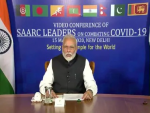 Prime Minister Narendra Modi at the SAARC Leaders video conference. ANI
Using latest IMF and World Bank data, Dhruva Jaishankar, director of the US initiative at ORF, shows the ‘
potential vulnerability’ of each major world economy and finds that “India is moderately placed on almost every criterion, with neither excessive vulnerabilities relative to others nor major causes for complacency” and posits that the pandemic may serve to actually reduce India’s current account deficit.
Though conjectures about the post-pandemic global order has so far been dominated by the relative decline or rise of the world’s superpower and its challenger and their struggle for dominance over the international system, one may do well to stop defining the world solely through the US-China prism. It is now evident that both nations will suffer considerable damage to their global standing and their power projection may be affected.
Not only may American and Chinese national power be hit by the crisis — some of it might even be
exacerbated due to increasing strategic rivalry between the two nations and likely economic decoupling.
Writing in
Foreign Affairs, former prime minister of Australia
Kevin Rudd posits that “neither a new Pax Sinica nor a renewed Pax Americana will rise from the ruins. Rather, both powers will be weakened, at home and abroad. And the result will be a continued slow but steady drift toward international anarchy across everything from international security to trade to pandemic management.”
But where Rudd sees “steady drift towards international anarchy”, it is possible to decipher
securing of interests and projection of strategic altruism by regional powers who are willing to seize the diplomatic opportunity provided by the pandemic. These middle powers appear ready to influence the material and ideational trajectory of international politics.
Foremost among powers such as France, Germany, Australia, South Korea and Japan is India, which has so far managed to both contain the scope and scale of the pandemic within its own shores and present a humanitarian face abroad — even flexing a bit of diplomatic muscle by initiating a limited, collective response.
In this, India has taken a path less travelled. While the nations of the world, including major powers, sought to tackle the virus on their own and even ran into a desperate collision with other states over critical medical equipment — nowhere has this behavior been more evident than in Europe where the pandemic ripped European ‘union’ into shreds — India resurrected a couple of moribund and obsolete platforms to present a united front against COVID-19. This was smart diplomacy.
In reviving the SAARC and holding the first summit since 2014 (though a virtual one) and creating a COVID-19 emergency fund where India pledged $10 million — more than half of the total contribution — Prime Minister Narendra Modi sent a message of regional unity that was duly noticed elsewhere.
Similarly, the NAM platform — that
Modi had ignored in the past, refusing to even attend the summits in 2016 and 2019 — was suddenly transformed from a Nehruvian and Cold War-era relic to a platform to project India’s diplomatic outreach and humanitarian response. In a virtual summit, Modi highlighted how India has promoted coordination in the immediate neighbourhood, organised online training to share India’s medical expertise with smaller neighbours and ensured medical supplies to over “
123 partner countries, including 59 members of NAM".
In shaping a collective response, dispatching consignments of anti-malarial drug hydroxychloroquine to African, Latin American and Central Asian nations including even developed economies such as France, Russia, US and the UK, in “extending online training to health care professionals in South Asia and other neighbouring countries on COVID-19 management strategies” and sending “
teams of Indian military doctors to countries like Nepal, Maldives and Kuwait”, India has shown a diplomatic outreach, political will and a capability to safeguard its own interest and of those in its sphere of influence.
As professor Harsh V Pant and Paras Ratna point out in
Livemint, “New Delhi has also played a
crucial role in evacuating stranded Indians as well as foreign nationals. Its rapid deployment of C-17 Hercules transport aircraft indicates a growing response-projection capability and a matching appetite to take on the responsibility of regional leadership.”
While this aspect of Indian diplomacy has been evident, navigating the post-pandemic world will require a more nimble-footed response when it comes to managing great power relationships. Here, India’s mettle will be tested on several parameters and sustained questions will be asked of its ability to explore strategic responses. A quick look at the trajectory of India’s bilateral relationships with China and the US is warranted.
Managing the China puzzle
While ties with China has historically involved elements of competition, cooperation and conflict, these edges may become sharper in a post-pandemic world. In absence of democracy, the legitimacy of China’s authoritarian leadership rests on economic progress for its people. The pandemic has struck at the very root of that foundation by not only slowing down economic activity but also inflicting a sustained and massive economic damage. As Rudd calculates in his
Foreign Affairs article, China’s overall “2020 growth is likely to be around zero— the worst performance since the Cultural Revolution five decades ago.”
This presents a tricky problem for the Chinese Communist Party that is also witnessing a simultaneous uptick in global antagonism towards China, and facing the prospect of large-scale exodus of foreign investment, manufacturing and exports from its shores. Japan has
already made its move, pressure is growing in the US to decouple its economy from
China-dominated global supply chain and chorus of a similar
sentiment is growing in the EU which is also looking to diversify its interests.
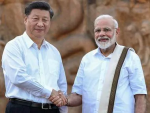 File image of Prime Minister Narendra Modi with Chinese president Xi Jinping. PTI
The collective weight of these moves will have a bearing on Chinese economy that is already under strain, and the decline in Chinese economy may translate into a frontal pressure on the CCP whose credibility may see a concomitant decay. Since China’s politics and security policy are closely tied to its economic performance — as Jaishankar points out in the piece mentioned above — this raises the possibility that China may double down on a diversionary tactic such as the one India witnessed in 1962 when conflict coincided with the calamitous ‘Great Leap Forward’.
Though both India and China have since grown more powerful, the power differential between both nations, if anything, has widened even more. The emergent crisis from the pandemic may incentivise the CCP to be more assertive and probe India’s responses to threats to its external security environment — the likes of which we saw during the Doklam crisis.
For instance, China seems to have suddenly become quite aggressive on its maritime periphery. A spate of recent incidents has come to light. These curiously timed incidents indicate an opportunistic behaviour by the Chinese that seeks to exploit perceptions of weakness or distraction in its adversaries and advance own interests through gradualism.
China sank a
Vietnamese fishing vessel, “established” new administrative districts for the contested
Spratly and Paracel island chains, raided
Taiwanese airspace in a daring nighttime flyby, forcing Taiwan to scramble its jets, a Chinese ‘fishing vessel’ collided
with a Japanese destroyer, and CCP’s cynical adventurism was on display during a
tense standoff with US Naval forces alongside Malaysia’s Borneo coast.
These behaviours, taken separately, hardly indicate a flare up of epic proportions but the pushing of envelop by “gray zone tactics” is notable. As Abraham Denmark, Charles Edel, and Siddharth Mohandas write in
War on the Rocks, “This approach reflects a maxim of Vladimir Lenin, whom the Chinese Communist Party continues to revere to this day: ‘Probe with a bayonet: if you meet steel, stop. If you meet mush, then push.’ In multiple instances, Beijing has continued to push when it perceives that its actions are unlikely to cause a significant response. But when Chinese assertiveness has been met with resolute counterpressure, Beijing’s response has not been predictably escalatory.”
Chinese behaviour here is of particular interest to India. New Delhi successfully deployed denial of access mechanism to stymie Chinese design on Bhutanese territory during the Doklam incident, and it must be ready to encounter similar misadventures as Chinese Communist Party seeks to distract disaffected population through a dose of assertive behaviour. India must continue to explore hedging and hard-balancing options while engaging the top Chinese leadership to manage the relationship.
The Trump unpredictability
This is where India’s relationship with the US assumes more importance. China is a hegemon in unipolar Asia, a competitor and threat to India, and it makes sense therefore for New Delhi to deepen its partnership with Washington in areas other than defence and strategic partnership.
For the US, developing its partnership with the world’s largest democracy with which it shares values and interests is reason enough, and ties have become increasingly more broad-based as Washington gets involved in a long-term strategic rivalry with China.
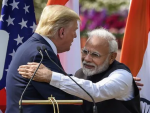 File image of Donald Trump and Narendra Modi. PTI
Along with dovetailing of India-US interests, China’s aggressive behaviour, missteps on COVID-19, attempts to rewrite the narrative on the pandemic and publicity efforts over a global health and economic crisis have made India-US cooperation easier.
There is scope for extension and deepening of the relationship, powered by mutual bipartisan goodwill and intense people-to-people connections, but the pandemic may push the relationship into some areas of discomfort. More so at a time when the US is going for presidential elections and all issues are on the table, including the issue of immigration that — along with trade — have proven to be particularly tricky to solve.
As the US economy tanks over the crisis, chorus will grow inside the US to double down on economic nationalism and the impulse will most likely be a bipartisan one during the election time. Already, four Republican senators have written to Donald Trump, asking him to
suspend all immigration work visas to the US until the unemployment caused by the coronavirus pandemic returns to “normal levels”.
There is also the possibility that a severe downturn in the Indian economy may force the hand of the Modi government in postponing arms deals with the US, drawing the ire of an unpredictable US president who places great score on these parameters.
Finally, Trump’s random mood swings may grow more frequent as elections draw near, and darker as US economy grapples with pandemic woes. So far, this White House has shown a marked inability to insure foreign policy from such unpredictable presidential behavior. That will likely be an added challenge for India.
On the flip side, India is aware of its asymmetric capacities in managing the great power relationships and has stitched a careful mosaic of
strategic partnerships in the Indo-Pacific that will allow for hedging and policy flexibility. If India remains focused on its objectives without letting domestic political compulsions come in the way, the pandemic may propel India’s rise.
If India remains focused on its objectives without letting domestic political compulsions come in the way, the COVID-19 pandemic may propel India’s rise

www.firstpost.com