

Air Engagement of Operation Sindoor : Analysis
- Thread starter Parthu
- Start date
You are using an out of date browser. It may not display this or other websites correctly.
You should upgrade or use an alternative browser.
You should upgrade or use an alternative browser.


View attachment 49415
View attachment 49416
View attachment 49417
View attachment 49418
View attachment 49419
View attachment 49420
View attachment 49421
View attachment 49422
View attachment 49423
Often downplayed or misrepresented, the short but intense military confrontation between India and Pakistan in early May 2025 was one of the sharpest clashes the two nuclear-armed rivals have fought in decades. Lasting less than four days, the conflict saw the combat debut of several of the most advanced weapon systems currently in service. Widely dismissed in much of the international media as a mere extension of the Kashmir dispute, a “large-scale cross-border skirmish,” or simply a “drone battle,” it culminated in both sides claiming victory—before being shepherded into a ceasefire through hurried diplomatic pressure from the administration of U.S. President Donald Trump. Yet behind these narratives lies a confrontation that will shape Indo-Pakistani relations for decades to come.
The crisis began on 22 April 2025, when a terrorist attack outside Pahalgam in Indian-administered Jammu and Kashmir killed 26 civilians, mostly Hindu tourists. A Pakistan-based, UN-designated terrorist organisation first claimed responsibility, then denied involvement, while Islamabad—having engineered the attack to draw global attention to Kashmir—dismissed the massacre as an Indian “false flag operation.” New Delhi responded with a series of calibrated countermeasures and, armed with irrefutable evidence of Pakistani complicity, launched precision strikes on multiple terrorist camps in the early hours of 7 May.
Determined to dictate India’s responses through nuclear threats and long-standing myths of military invulnerability, Pakistan escalated. Mortars, artillery rockets and armed unmanned aerial vehicles were fired at civilian, military and religious targets inside Indian territory. India, however, reacted with a tightly planned and proportionate operation that systematically dismantled Pakistani air defences. Over the next 48 hours, Pakistan intensified its “drone war,” only to see the majority of its systems destroyed mid-flight.
In desperation, Islamabad ordered ballistic missile strikes on 26 targets across India. New Delhi’s retaliation was swift and overwhelming. In just 90 minutes, Indian missiles crippled key Pakistani command centres, closed runways at several major PAF bases, destroyed critical aircraft hangars, and—most significantly—struck at least one, possibly two underground nuclear weapons storage sites. The message was unmistakable: India now held the upper hand.
Though rooted in the long-standing Kashmir dispute, the India–Pakistan War of May 2025 represented something far more consequential. For the first time in 80 years of hostility, India not only responded directly to a Pakistan-sponsored terrorist attack, but openly called Islamabad’s nuclear bluff, neutralised its ability to retaliate and forced Pakistani aircraft away from the international border—placing the IAF in a decisive offensive posture. Despite Islamabad’s subsequent efforts, aided by Chinese disinformation and familiar Western misconceptions, to mask the scale of its defeat and even claim victory, the strategic balance between the two nations has been irrevocably altered.
Richly illustrated with custom-drawn diagrams, detailed colour profiles and in-depth technical analysis, 88-Hours War provides the first full account of this fast-moving but poorly understood conflict. Combining background, context and a blow-by-blow narrative of the fighting from 7 to 10 May 2025, it is an indispensable reference for defence professionals, analysts and military history enthusiasts alike.
88 Hours War | Asia@War | Helion & Company
More from this publisher:
90 Years of the Indian Air Force | Asia@War | Helion & Company
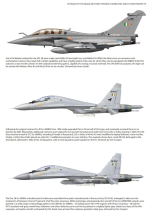
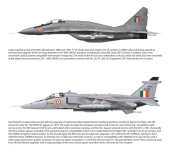
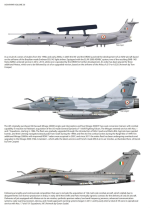
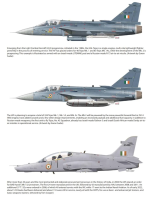
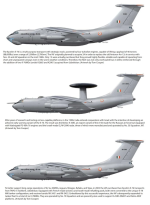
Incredible illustrations by Tom Cooper.
There are a lot of videos coming out however no way to establish if these are authentic or being spread as miscommunication or misdirection.
This video is also not clear.

If IAF wasn't worried about Chinese rapidly inducting J-20s and even actively deploying it 5:1 against our Rafales post Galwan, then do you really think that they would fret too much regarding PAF getting J-35s?
Reality is, we were in deep trouble when we pulled out of FGFA programme. That was our ONLY saving grace against Chinese VLO threat and our only chance of drawing parity. IAF bet too much on Rafale and what happened? Despite all the hype about its "active cancellation", it was fully tracked and attacked by PAF's J-10CE with PL-15s. And we even lost one Rafale. This is where IAF realized that, Rafale just can't be our tip of the spear like they hoped for and from last year's June, they are looking to procure Su-57s as a saving grace and our PLAAF/PAF VLO counter.
J-35AE, with 4 PL-15s housed in its IWB, would most definitely be a more serious threat than J-10CE doing the same as it will be able to fire PL-15s within its NEZ jeopardising our fighters even more. It even has got its own EOTS, which can hunt for our S-400 batteries and mobile TELs like F-35.
Good thing is our investment in "anti-stealth" tech. For now, that is our only saving grace.
No Rafales were lost during Sindoor.
For one, the IAF wasn't expecting the PAF to have the full spec PL-15 in their arsenal.
The IAF knew beforehand that many of the PL-15 the PAF operated came straight from PLAAF's own stocks. The Pakistanis in fact released this news themselves to act as a deterrent, which failed. Even the weapon failed.
The Spectra suite likely wasn't tuned to its signature.
Didn't matter, the PL-15 was useless against our entire air force.
The S-400s forced the PAF to operate from the backfoot so they couldn't use their BVR advantage. Funnily enough I told the Pakistanis exactly that in 2018 on PeeDF, that the S-400 will make them helpless. Maybe @safriz will remember.
That story about BS-022 being shot down was fake. All 36 survived Sindoor.

That BS-001 or something definitely was shot down imo. All proof including IAFs own language points towards the fact we lost 1 Rafale, and admissions from Indian officials to Rueters seems to make me think it was perhaps shot down by PL15.The IAF knew beforehand that many of the PL-15 the PAF operated came straight from PLAAF's own stocks. The Pakistanis in fact released this news themselves to act as a deterrent, which failed. Even the weapon failed.
Didn't matter, the PL-15 was useless against our entire air force.
The S-400s forced the PAF to operate from the backfoot so they couldn't use their BVR advantage. Funnily enough I told the Pakistanis exactly that in 2018 on PeeDF, that the S-400 will make them helpless. Maybe @safriz will remember.
That story about BS-022 being shot down was fake. All 36 survived Sindoor.

My point was that "Active Cancellation" couldn't reduce Rafale's RCS to that of a sparrow(-20dbSM or below) and PAF was able to track it along with firing from 200kms away!
The Rafales we had only carried SCALPs, so I doubt there was any need to send Rafales close to the border. They would have fired them all from lower altitudes too, well outside BVR ranges.
Jaguars fired the Rampage from low altitude too.
Overall, the IAF played it very safe, so RCS reduction wouldn't have mattered in such a scenario.

I've saying since that time that we indeed lost 1 Rafale and this fully confirms it:No Rafales were lost during Sindoor.
MKI was the only air-to-air configured jet on our side that defeated all HQ-9 SAMs and PL-15s fired towards it. Rest we indeed lost one Rafale, one Mig-29UPG., likely one M-2000 & one Heron drone.That BS-001 or something definitely was shot down imo. All proof including IAFs own language points towards the fact we lost 1 Rafale, and admissions from Indian officials to Rueters seems to make me think it was perhaps shot down by PL15.
People may say that supermanoeuvrability is now passe, but fact of the matter is, it will always remain a vital tool of air combat. Period.
Frankly, it is bizarre that Rafale will not be optimized for SEAD/DEAD until the F5 model.
People are confused about this, but it just means Rafale's getting two new weapons. A high-speed long range ARM and a glide bomb.
The Hammer used to perform DEAD alongside SCALP, but it's not enough for saturation attacks against SAMs like the S-400, hence new weapons. That's all. The glide bomb can be used in greater numbers at much lower cost than the Hammer.
A dedicated stand-off jamming pod like the Saab Arexis on German EF2000s would've been very handy.
We have such capabilities already. They don't have to be carried by the Rafale specifically.
The IAF seems to be planning to create their own Growler for SEAD using older platforms.
That BS-001 or something definitely was shot down imo. All proof including IAFs own language points towards the fact we lost 1 Rafale, and admissions from Indian officials to Rueters seems to make me think it was perhaps shot down by PL15.
At least BS001 and 022 were not shot down.

Next Generation Weapons Technology
Rafale BS-001🥰🥰 Pakistanis spread fake news regarding shooting down of Rafale BS001 without realising that BS series Rafales are deployed in Hashimara Air Base in West Bengal. They were probably not...
 www.facebook.com

BS‑022 Alive and Flying: Pakistan’s ‘We Shot Rafale’ Story Exposed in R-Day Parade
The Pakistan Air Force's assertion of downing the Indian Air Force's Rafale jet BS-022 during May 2025's Operation Sindoor was proven false when the aircraft appeared in the Indian Republic Day Parade. , India News, Times Now
Some claim 1 was lost based on the reasoning that only 35 are being upgraded to F4. But if we lost one, there's no reason to assume it was shot down during the hostilities.
I've saying since that time that we indeed lost 1 Rafale and this fully confirms it:
If we "crashed" one independent of hostilities, that's not considered being shot down by Pakistan.
People are confused about this, but it just means Rafale's getting two new weapons. A high-speed long range ARM and a glide bomb.
The Hammer used to perform DEAD alongside SCALP, but it's not enough for saturation attacks against SAMs like the S-400, hence new weapons. That's all. The glide bomb can be used in greater numbers at much lower cost than the Hammer.
The Spectra is but a self protection suite. It's power output is limited. Its ACT likely cannot be recalibrated to provide coverage for a mixed formation either.
The IAF needs a dedicated Wild Weasel Rafale variant with a podded SOJ for this reason. Perhaps something like the Israeli Sky Shield.
The Germans are introducing a dedicated EK variant of the EF2000 for this role, despite buying the F-35 at that.
I think a Su-30 variant might also be possible. I believe we had a discussion around a EW Growler like Su-30MKI. It might be easier to get a WW MKI flying. IIRC- you, me and @Rajput Lion had a conversation around the EW one on that thread.The Spectra is but a self protection suite. It's power output is limited. Its ACT likely cannot be recalibrated to provide coverage for a mixed formation either.
The IAF needs a dedicated Wild Weasel Rafale variant with a podded SOJ for this reason. Perhaps something like the Israeli Sky Shield.
The Germans are introducing a dedicated EK variant of the EF2000 for this role, despite buying the F-35 at that.
The Spectra is but a self protection suite. It's power output is limited. Its ACT likely cannot be recalibrated to provide coverage for a mixed formation either.
The IAF needs a dedicated Wild Weasel Rafale variant with a podded SOJ for this reason. Perhaps something like the Israeli Sky Shield.
The Germans are introducing a dedicated EK variant of the EF2000 for this role, despite buying the F-35 at that.
We are planning to add escort and standoff (modified escort) jammer pods to the MKI.
For now, we have chosen the indigenous Talon Shield as SPJ and Israel's Scorpius EJ for escort on the MKI. We use Knirti's SAP-14 for standoff (modified escort) with a new indigenous standoff (modified escort) jammer as replacement.
As for Rafale, SPECTRA provides both self-protection and escort. It's capable of neutralizing threats from a distance like Scorpius EJ.
LCA Mk2 will also not need an escort jammer, rather a standoff jammer for modified escort jamming will be made, if necessary. They are still deciding such things.
Modified escort is what the Growler does, ie, it stays outside the range of enemy SAMs, whereas escort jamming puts the jammer aircraft inside SAM rings. Rafale and LCA Mk2 don't need pods for that. Gripen and Typhoon do 'cause they haven't designed the jets for internal carriage of large antennas, so their wingtip jammers only provide self-protection, like the case for the MKI. And Growler is stuck with large pods 'cause they had made those pods back in the 60s for the Prowler and were forced to use the same systems.
Podded systems need more power to be effective, so they give the illusion of being better, but in reality the survivability of such jets is so bad that the extra power is necessary for them to operate from further back than what internal suites allow. It means escort jamming is more effective than modified escort, which is why a Growler type capability is not necessary for Rafale and LCA Mk2. MKI needs modified escort jammer pods due to its large RCS and low agility when carrying such pods.
True standoff jamming is currently provided by business and transport aircraft with much larger antennas to make up for the distance, but the main advantage of that is being able to carry more EW experts along with you. However cognitive EW will make them obsolete after a point. EW drones are the future.
But they are working on a standoff capability for Rafale in order to defeat SAMs from very long ranges via a podded jammer. The most modern SAMs today have ranges exceeding 400 km, up to 600 km, and in the future they will exceed 1000 km. So a pod will become necessary for jamming at such ranges. This is also essentially modified escort.
Look at the sheer size of that thing.


Air forces always plans for worst case scenerio , in this case ofcourse IAF considered pl-15 as 200 + km range. so this is unlikely to have been a intelligence failure ....this was a made up story to support pl-15 kill scenerio.I was pointing out that range figures for the full spec PL-15 are all over the place. As a rule of thumb, export sales mostly involve downgraded versions. So it is atleast a plausible theory, imo.
Besides the CDS has openly admitted that the IAF was taken by surprise on Day 1 of Op. Sindoor. For its part, the PAF has attributed all claimed kills to the PL-15, multiple expended rounds of which were recovered on our side of the border.
Afaik, no debris of HQ-9, LY-80 has been recovered. So, this would point to an A2A loss.
Besides, the PAF J-10Cs are believed to have used third-party cueing from the Erieye AEWCS to target IAF birds at standoff distances. This is another aspect that is speculated to have been the 'surprise'.
when CDS said IAF was taken by surprise ??....he talked about tactical mistake & corrected it ( most probably he was referring using hammer on rafale on first day ).
recovery of intact pl-15s hubmled its own hype created by chinese state media & now we all know its just a average chinese bvr missile , not some kind of a magical weapon as presented before this conflict.
Saab 2000 Erieye has a detection range of approx 350 km ( tracking range roughly 250 km ) & claiming its guided PL-15 100 km inside indian airspace thats add up to total 450 km ....its a funny story to tell.
i dont think theirs AWACS are even integrated with PL-15.
No SAM debries ? that means we didn't lose any Rafale & those tail and engine photos were deepfakes.
We don't hide our crashes until it's under wartime emergency. IAF won't remain so silent if Rafale simply crashed because of an accident until it was shot down by enemy fire. That's what has happened here. BS001 is gone, IMO.At least BS001 and 022 were not shot down.
Next Generation Weapons Technology
Rafale BS-001🥰🥰 Pakistanis spread fake news regarding shooting down of Rafale BS001 without realising that BS series Rafales are deployed in Hashimara Air Base in West Bengal. They were probably not...
BS‑022 Alive and Flying: Pakistan’s ‘We Shot Rafale’ Story Exposed in R-Day Parade
The Pakistan Air Force's assertion of downing the Indian Air Force's Rafale jet BS-022 during May 2025's Operation Sindoor was proven false when the aircraft appeared in the Indian Republic Day Parade. , India News, Times Nowwww.timesnownews.com
Some claim 1 was lost based on the reasoning that only 35 are being upgraded to F4. But if we lost one, there's no reason to assume it was shot down during the hostilities.
If we "crashed" one independent of hostilities, that's not considered being shot down by Pakistan.
PS: There were also reports of multiple Rafales being attacked by Pakistanis, though all of them survived the barrage and returned to base except BS001.

That one whose debris were found near airforce base Bhatinda?BS001 is gone, IMO.
Air forces always plans for worst case scenerio , in this case ofcourse IAF considered pl-15 as 200 + km range. so this is unlikely to have been a intelligence failure ....this was a made up story to support pl-15 kill scenerio.
The PL-15E is visually identical to the PL-15 (at least to a layman's eyes). Could the IAF have known what they were going up against? Yes.
But do we have conclusive evidence? No. It might have been a SAM too. But we do know from prev experience (Balakot - amraam) that Pakistani pilots have a penchant for shooting BVR at max range w/o target lock.
Last edited:
recovery of intact pl-15s hubmled its own hype created by chinese state media & now we all know its just a average chinese bvr missile , not some kind of a magical weapon as presented before this conflict.
Not all were unexploded rounds. It is a new gen BVR that compares well with its Western counterparts in terms of specs. Atleast on paper.
Saab 2000 Erieye has a detection range of approx 350 km ( tracking range roughly 250 km ) & claiming its guided PL-15 100 km inside indian airspace thats add up to total 450 km ....its a funny story to tell.
i dont think theirs AWACS are even integrated with PL-15.
Agree. The Pakee has a history of spinning legends out of yarn (MM Alam). However, Ereiye + Link 17 integration seems to be a plausible theory to my mind.
Why else would the PAF suddenly dump its Chini ZDK-03 awacs which was originally meant to support its Chinese fighters?