Brexit and Future of UK : Discussions

Bank of England Raises Interest Rates Amid Brexit Worries
merlin_141938403_91e3a746-1ba9-474c-9c18-6203ad865293-articleLarge.jpg


Before the decision, policy makers at the Bank of England voiced concern about inflation, which, at 2.4 percent, is above the bank’s 2 percent target.CreditPeter Nicholls/Reuters
By Amie Tsang

  • Aug. 2, 2018
LONDON — The Bank of England raised interest rates on Thursday to their highest levels in nearly a decade as it seeks to tamp down inflation and make preparations for a potential economic downturn as Britain exits the European Union.

Policymakers at the central bank voted unanimously to raise the benchmark interest rate a quarter of a percentage point on Thursday, to 0.75 percent, the highest it has been since February 2009.

Before the decision, they voiced concern about inflation, which, at 2.4 percent, is above the bank’s 2 percent target. And while wage growth appears to be relatively weak, the bank nevertheless anticipates an acceleration in price rises because the lowest levels of unemployment since 1975 will probably force employers to pay more to retain staff. A public sector raise announced at the end of July could also bolster wages and, by extension, inflation.

In its quarterly inflation report, which accompanied the rate-setting meeting, the Bank of England said inflation was most likely to fall slowly to about 2.1 percent in a couple of years.

But while the bank officially made the move in an effort to tackle inflation, it also clearly had another goal in mind: to give it wiggle room to cut rates in the future, particularly if Brexit, as the withdrawal from the European Union is called, deals a blow to the British economy.

Economists have warned that leaving the 28-nation bloc will hurt growth by restricting Britain’s access to its main trading partner. Those concerns have been amplified by a seeming lack of progress between London and Brussels on the post-Brexit trading relationship.


Such a “no-deal” outcome has raised alarm, sparking fears of traffic jams, shortages of food and medicine, and gridlock at ports.

As a result, the central bank has sought to add levers that can be used if some measure of stimulus is needed for the British economy.

“It’s cleaner for them to go now,” said David Owen, chief European economist at the investment bank Jefferies, referring to the rate rise. Mr. Owen said that as Britain neared its withdrawal, due in March, the Bank of England would have less time to raise rates, and that the political risks surrounding Brexit would be increased.


Like other central banks, the Bank of England has sought to dial back monetary stimulus put in place after the financial crisis.

But its efforts have been complicated by Brexit. Soon after the vote to leave the European Union in June 2016, the bank cut its benchmark interest rate to 0.25 percent, the lowest rate in its history, and increased its bond-buying program.

It eventually lifted the rate in November last year, depicting it as a response to higher prices but emphasizing that economic growth could remain sluggish. It has held back from further rises, however, after weak economic data at the beginning of the year prompted the bank’s monetary policy committee to wait and see how long such conditions would persist.

“Today’s rise in interest rates makes sense both from a short-term perspective and in terms of a sustainable long-term monetary strategy,” said Andrew Sentance, senior economic adviser at the professional services firm PwC.

source :Bank of England Raises Interest Rates Amid Brexit Worries
 
May to urge Macron to soften French stance on Brexit
Updated / Friday, 3 Aug 2018 04:43


00105d54-800.jpg
Several top British officials have been dispatched by Mrs May to help drum up support in Europe


British Prime Minister Theresa May is today intensifying efforts to win over support in Europe for her Brexit blueprint.

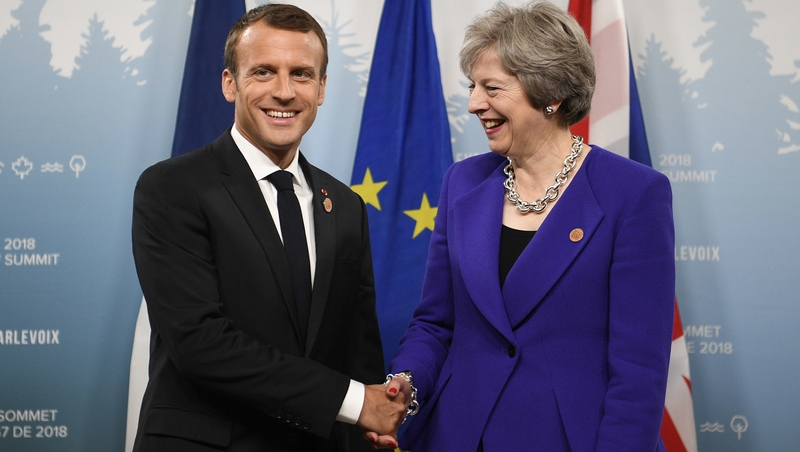
Mrs May is ending her Italian holidays early to meet the French president Emmanuel Macron in the hope of convincing one of the EU's key powerbrokers that her Brexit plans will be mutually beneficial.

Theresa May is meeting Mr Macron at his summer retreat, Fort de Bregancon, on a small island off the French Mediterranean coast.

The meeting follows talks between her Brexit Secretary Dominic Raab and his counterparts in Paris yesterday.

But the UK's former ambassador to France Peter Ricketts has warned the prime minister not to expect a Brexit breakthrough in the talks.

He said Mr Macron was "the last person" to want to break ranks with the rest of the European Union to push for a softer stance from Brussels.

Mr Macron "doesn't believe in softening" the position on Brexit as "he is a passionate pro-European", Mr Ricketts said.

And the EU's chief Brexit negotiator, Michel Barnier, warned some of Mrs May's Brexit plans would "undermine" the single market.

He said "The UK knows well the benefits of the single market. It has contributed to shaping our rules over the last 45 years.

"And yet, some UK proposals would undermine our single market which is one of the EU's biggest achievements.

"The UK wants to keep free movement of goods between us, but not of people and services.

"And it proposes to apply EU customs rules without being part of the EU's legal order.

"Thus, the UK wants to take back sovereignty and control of its own laws, which we respect, but it cannot ask the EU to lose control of its borders and laws."

source :May to urge Macron to soften French stance on Brexit
 
Britain has been increasing it's strength ever since Brexit happened don't you think? The socialist commie EU was never anthing other than an albatross arund UK's neck.

oh ha ha ha! You, my friend sound more sarcastic than sincere. Why don't you comment on some of @BMD's more recent comments.
 
UK would run out of food a year from now with no-deal Brexit, NFU warns
Farmers’ union says supply would dry up by August 2019 if Britain had to be self-sufficient

Lisa O'Carroll Brexit correspondent

Tue 7 Aug 2018 00.01 BSTLast modified on Tue 7 Aug 2018 00.40 BST

A farm in Herefordshire. Britain produces 60% of the food it needs, compared with 74% 30 years ago. Photograph: Gareth Phillips/Guardian
Britain would run out of food on this date next year if it cannot continue to easily import from the EU and elsewhere after Brexit, the National Farmers’ Union has warned.

Minette Batters, the NFU president, urged the government to put food security at the top of the political agenda after the prospect of a no-deal Brexit was talked up this week.

“The UK farming sector has the potential to be one of the most impacted sectors from a bad Brexit – a frictionless free trade deal with the EU and access to a reliable and competent workforce for farm businesses is critical to the future of the sector,” she said.

Batters’ warning comes a fortnight after the Brexit secretary, Dominic Raab, said Britain would have “adequate food supplies” after Brexit.

While Downing Street has insisted it is confident an agreement can be made in time, the international trade secretary, Liam Fox, warned over the weekend that the prospect of a no-deal Brexit was now at “60-40”, fuelling fears at the NFU and among food importers.


Food security in Britain is in long-term decline, with the country producing 60% of what it needs to feed itself, compared with 74% 30 years ago, according to figures from the Department for Environment, Food and Rural Affairs (Defra).

In a statement issued by the NFU, Batters expressed concern that Britain would not be able to meet its food needs if Brexit was mismanaged.

Research showed 7 August 2019 would be the nominal day that Britain would run out of food if it were asked to be wholly self-sufficient based on seasonal growth, the NFU said.

The temperatures of the past few weeks have put Britain’s food production capabilities into sharp focus and underlined concerns.

Batters said the consequences of there being no agreement could be mitigated if the government took immediate action and gave domestic production its “unwavering support”.

Changing eating habits over the past three decades have helped fuel the increasing reliance on food grown overseas, with perishable items such as tomatoes, lettuce and citrus fruits expected to be available all year round.

But global economics have also contributed to imbalances in foods that can be produced in the UK.

According to figures from the Agriculture and Horticulture Development Board, the UK is a net exporter of meat, but relies heavily on imports such as bacon from Denmark, which exports 90% of its pork.


Facebook Twitter Pinterest

Britain relies on other countries for staples including bacon, eggs and cheese. Photograph: HMRC/Defra
Defra statistics showed the next most vulnerable food category after fruit is fresh vegetables, with 57% of UK requirements produced in Britain, followed by pork at 61% and then potatoes, of which 25% are imported.


Britain exports more milk and cream products than it produces, and imports almost three times as much cheese as it exports, almost twice as many eggs and almost 20 times as many fresh vegetables, according to HMRC statistics for 2017.

Among the few surplus products are whisky and salmon.

The NFU said the figures showed Brexit is an opportunity for British food producers to redress the balance.

“The statistics show a concerning long-term decline in the UK’s self-sufficiency in food and there is a lot of potential for this to be reversed,” Batters said.

“And while we recognise the need for importing food which can only be produced in different climates, if we maximise on the food that we can produce well in the UK, then that will deliver a whole host of economic, social and environmental benefits to the country.”

Source :https://www.theguardian.com/politics/2018/aug/07/uk-run-out-of-food-no-deal-brexit-national-farmers-union-

Well, UK can buy it from Asia:)
 
Sturgeon warns May against making a no-deal Brexit more likely
Scotland’s first minister says ‘scare tactics’ should not be used as a negotiating ploy with the EU

Dan Sabbagh

Tue 7 Aug 2018 00.01 BSTLast modified on Tue 7 Aug 2018 00.40 BST


Scottish first minister Nicola Sturgeon says a no-deal Brexit is a ‘catastrophic prospect’. Photograph: Mark Runnacles/Getty Images
Nicola Sturgeon has accused Theresa May of making a “deeply damaging” no-deal Brexit more likely by repeatedly raising the prospect as a negotiating tactic before what is likely to be a tense summit between the two leaders.

The Scottish first minister complained that there had been “no visible progress” in the divorce talks since the Chequers plan was unveiled in July and told May that she needed to spell out the future relationship the UK sought to have with the EU.

“A no-deal Brexit would be utterly unacceptable and deeply damaging, but by talking it up as a negotiating tactic there is a very real danger it becomes a reality,” Sturgeon warned.

The SNP leader said it would not be enough to secure a simple exit agreement with the EU if it did not prove possible to complete all the divorce negotiations in time for March 2019. That would risk “a blind Brexit – which will see the UK step off the cliff edge next March without knowing what landing place will be”.

No 10 sources described Sturgeon’s response as predictable rhetoric ahead of an afternoon meeting on Tuesday between the first minister and May that was not even confirmed until lunchtime on Monday. Pinning down arrangements for meetings between the two frequently goes down to the last minute.

An exasperated Downing Street called on Sturgeon’s administration to behave constructively in an attempt to assert some authority over the first minister. A No 10 source said: “The UK government has set out a series of proposals for our future relationship with the EU in the white paper that are reasonable and will work for the whole United Kingdom. The onus is now on the Scottish government to engage constructively with those proposals to ensure the minimum disruption for people and businesses in the UK when we leave the EU in March 2019.”

Ministers, led by the prime minister, have repeatedly referred to planning for a no-deal Brexit in the last week as the UK tries to strengthen its negotiating hand, including dire warnings that plans are being drawn up to stockpile food and medicines if the country were to crash out of the EU.

But Sturgeon said that no deal was a “catastrophic prospect” and that while ministers have focused “on the scare tactics of no deal” the UK had not achieved any results beyond making the prospect more likely.

The first minister said that May had “promised a detailed statement on the future relationship with the EU alongside the withdrawal agreement, so parliament and the people would know where the UK is going”. She added: “Parliament cannot be asked to make the decision on withdrawal without details on what the future relationship will look like.”

Financial markets are taking the no deal warnings increasingly seriously. On Monday, the pound fell to its lowest level in nearly a year against the dollar, tumbling by three quarters of a cent to hit $1.2920, as the market worried about the slow pace of Brexit talks and the potential impact of a collapse in the negotiations.

Brexiters argue that concerns about a no-deal scenario have been exaggerated and that it remains in the EU’s economic interest to negotiate a divorce agreement. Sir Bernard Jenkin said there would be “rioting in the streets” in EU countries if their producers faced extra barriers trading with Britain.

The Conservative MP said: “The civil service and the government are feeding the industry and the industry is feeding the government with this diet of gloom and alarm and despondency,” and added: “Actually, it’s unnecessary and we will look back and wonder what all the fuss was about, a bit like the millennium bug.”

May is visiting Edinburgh on Tuesday to confirm £600m in previously announced research funding for Heriot-Watt, Queen Margaret and Edinburgh universities, half of which is coming from the Scottish government. She will also “experience” some of the Edinburgh arts festival although it was not confirmed in advance what the prime minister would be seeing.

source:https://www.theguardian.com/politics/2018/aug/07/sturgeon-warns-may-of-risk-of-using-threat-of-no-deal-brexit-to-pressure-eu-
 
No-deal Brexit will put public safety at risk and reduce police capacity in UK, leaders warn government

Police commissioners call on government to urgently start contingency planning for expensive and inferior alternatives to EU systems


Europol.jpg

‘These shared tools have saved many lives,' the Association of Police and Crime Commissioners’ Brexit working group says ( Getty )


A no-deal Brexit will put public safety at risk and reduce policing capacity in Britain, leaders of the Association of Police and Crime Commissioners (APCC) have warned the government.


In a letter they said the loss of key EU databases, the European arrest warrant system and full Europol membership “could pose significant risks to our local communities”.


“These shared tools, measures, initiatives and capabilities which have been developed over the last 40 years of cooperation across the EU have saved many lives,” said the document, which was seen by The Independent.

Read more


“Considerable additional resource would be required for policing to operate using non-EU tools and that such tools would be suboptimal – potentially putting operational efficiency and public safety at risk.


“It is also recognised that recruitment, vetting and training of staff to use these tools would take a substantial amount of time.”


The letter, which was sent to the Home Office last week, said ongoing Brexit negotiations come at a time when the threat posed by foreign offenders targeting the UK from abroad is increasing.


Britain risks losing access to systems including Europol, the European arrest warrant and Schengen Information System II (SIS II) – a huge database containing information on terrorists, criminals, missing people and objects, to which the police say there is “no alternative”.

Michel Barnier: UK government needs dose of “realism” about EU security cooperation post-Brexit
British officers checked it 539 million times in 2017 alone, with their equipment currently searching SIS II and the police national criminal database simultaneously.


At the end of 2017, there were 76.5 million alerts in relation to people and objects on the system, including 1.2 million from the UK.


The UK could also be excluded from the European arrest warrant system, which drives the extradition of up to 10,000 foreign offenders every year as well as allowing British criminals to be brought back to face trial.


The government has proposed a security treaty that it claims would allow information sharing to continue, but its refusal to be governed by the European Court of Justice could block transfers because of data protection laws.


UK police use EU system that may be lost post-Brexit 539m times a year

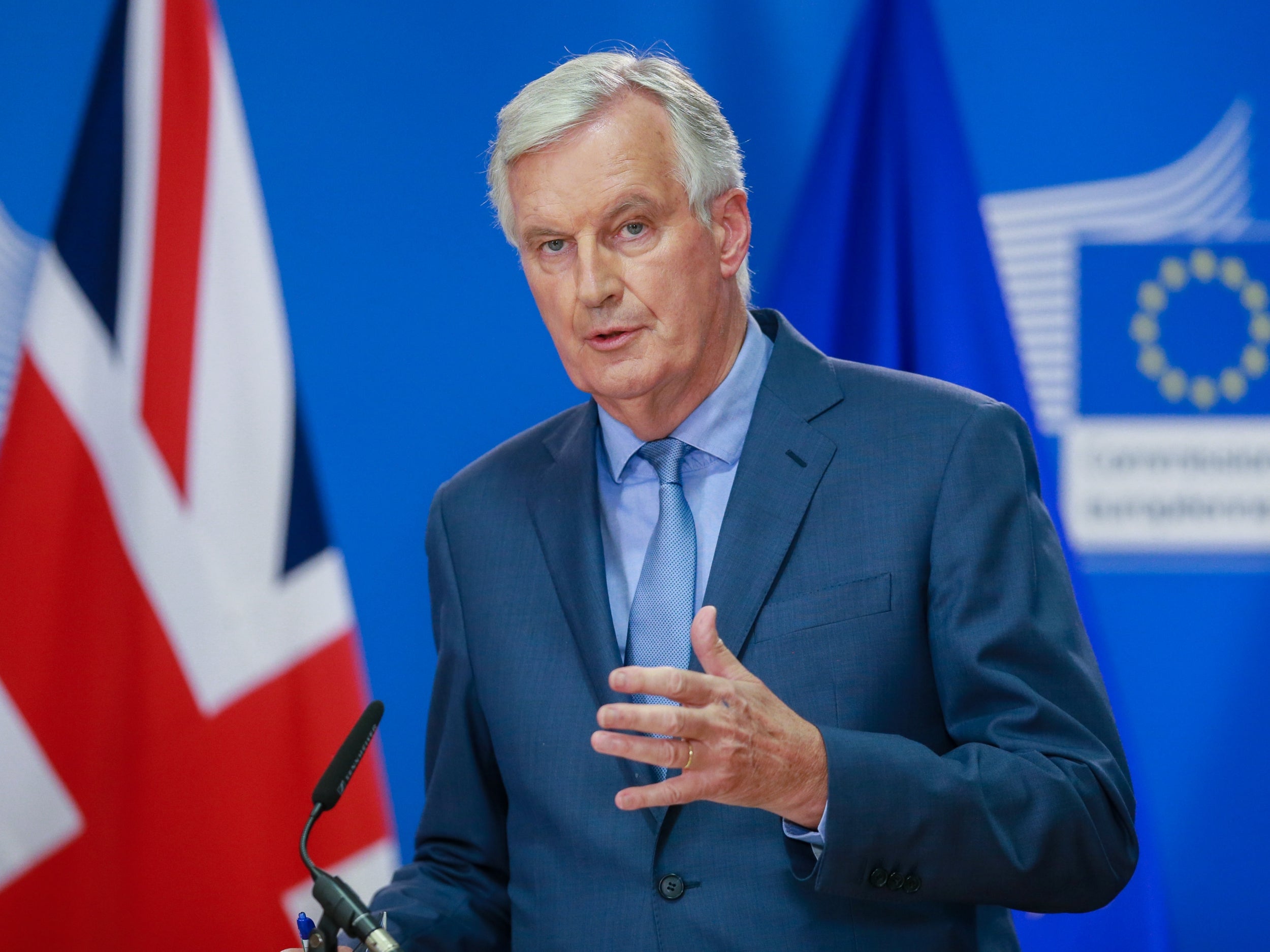
Michel Barnier, the EU’s chief Brexit negotiator, said the UK would be locked out of policing and security databases in June, adding: “If you leave this ecosystem you lose the benefits of this cooperation.”


He said that while there would still be some security cooperation, it would “rely on effective and reciprocal exchanges, but not on access to EU-only or Schengen-only databases”.


The APCC’s Brexit working group, which contains Conservative, Labour and independent commissioners, said 32 law enforcement and national security measures are currently used on a daily basis in the UK.


“Unless the government is able to negotiate the retention of these measures following the UK’s withdrawal from the EU, police and law enforcement agencies face a significant loss of operational capacity,” the group’s letter read.


“A ‘no-deal’ scenario could cause delays and challenges for UK policing and justice agencies.”


It called on the home secretary to prioritise access to EU-wide systems, while developing “effective contingency plans” for a no-deal Brexit and give the work the funding needed.

Brexit talks: Top issues facing UK on leaving EU

customs.jpg


checkpoint.jpg


barnier-brexit.jpg


home.jpg


The National Police Chiefs’ Council (NPCC) said Europe-wide systems had made British officers “better at protecting the public” and improved their response to crime and terrorism.


“For every one person arrested on a UK issued European arrest warrant, the UK arrests eight people on warrants issued by other member states,” said deputy assistant commissioner Richard Martin.


“It is in the interests of both sides to negotiate an arrangement that allows for continued close working, whether as part of existing mechanisms or negotiated alternatives.


More than 500,000 back The Independent’s Final Say on Brexit campaign

“Without such arrangements, both UK police and EU member states will lose capabilities including – identifying criminals and missing persons who cross our borders, detaining and swiftly surrendering suspects under EAWs, quickly identifying previous history of offending or the sharing biometric data.”


The NPCC said a small team is currently working on contingency plans in the event that access to some or all European systems is lost.


But Mr Martin warned: “The contingency measures we are considering will be slower and less effective, and ultimately will reduce the ability to identify risk and prevent harm on both sides of the channel.”


The letter came after the Home Affairs Committee condemned both UK and EU negotiators for putting the safety and security of their citizens at risk by refusing to cross political “red lines”.


MPs said the UK was on course for a “catastrophic” Brexit security deal that could see criminals and terrorists go free, threatening the ability to prevent serious crime and effectively secure borders.


A Home Office spokesperson said: “There is widespread recognition that the UK and EU can most effectively combat security threats when we work together. It is important we maintain operational capabilities after Brexit – and we will continue to make this case to the European Commission.


“We are confident that an ambitious agreement on future security cooperation can be reached – but it is the duty of any responsible government to prepare for every eventuality, including no-deal.


“With that in mind, we are working closely with operational partners on contingency planning so we can ensure the safety and security of our citizens in all scenarios.”
 
Einstein you wont have food to eat yet you still think the EU are the dumb merchants? You really need to extract your head out of your backside and see whats coming your way.....

I think UK will retaliate by becoming a major agrarian and diary power. I think they will become food sufficient.
 
Einstein you wont have food to eat yet you still think the EU are the dumb merchants? You really need to extract your head out of your backside and see whats coming your way.....
'You'. I thought you lived in the UK. Farmers will get a decent price for milk, we can import cheaper food from elsewhere or charge tariffs on food imported from the EU. The options are many. I'd be more concerned about what French farmers will be doing when they end up having to dump their produce. They'll probably be turning Macron over a bonfire on the end of a pitch fork.
 
Einstein you wont have food to eat yet you still think the EU are the dumb merchants? You really need to extract your head out of your backside and see whats coming your way.....

He is imagining a future Britain, which has "survived" all the short and mid term Brexit woes.
 
'You'. I thought you lived in the UK. Farmers will get a decent price for milk, we can import cheaper food from elsewhere or charge tariffs on food imported from the EU. The options are many. I'd be more concerned about what French farmers will be doing when they end up having to dump their produce. They'll probably be turning Macron over a bonfire on the end of a pitch fork.

I also worry for french farmers. They will have to dump their produce and not the subsidies at the same time. I thin europe is headed for a recession.
 
'You'. I thought you lived in the UK. Farmers will get a decent price for milk, we can import cheaper food from elsewhere or charge tariffs on food imported from the EU. The options are many. I'd be more concerned about what French farmers will be doing when they end up having to dump their produce. They'll probably be turning Macron over a bonfire on the end of a pitch fork.
I imagine you think the transition is going to be a cakewalk . Haven't I told you not to wrack your mouldy brains on complex political and economical events of great importance ?
 
'You'. I thought you lived in the UK. Farmers will get a decent price for milk, we can import cheaper food from elsewhere or charge tariffs on food imported from the EU. The options are many. I'd be more concerned about what French farmers will be doing when they end up having to dump their produce. They'll probably be turning Macron over a bonfire on the end of a pitch fork.


I do. Thats why the likes of logic thinkers like you is beyond me.
The likes of Liam "dick" Fox are driving the UK over a cliff edge and retards are happy with it.
No one voted for Brexit thinking it would cost the average Joe - I am not an average Joe and can afford it. Just feel for the thick twats from council estates that "wanted their country back" and "wanted foreigners out". Those that sign on and believe they are owed something coz their special. The only thing they are now is special needs.
 
Your milk sector woes are unlikely to see any appreciable changes. Upwards spiral of cost will not be a very welcome move.

However, I sincerely hope that you guys can get your act together and stop losing your country to East Europeans now .... :)
You're just not thinking. If EU milk imports see 35% tariffs, local farmers will have more demand and that will drive up prices.
 
I do. Thats why the likes of logic thinkers like you is beyond me.
The likes of Liam "dick" Fox are driving the UK over a cliff edge and retards are happy with it.
No one voted for Brexit thinking it would cost the average Joe - I am not an average Joe and can afford it. Just feel for the thick twats from council estates that "wanted their country back" and "wanted foreigners out". Those that sign on and believe they are owed something coz their special. The only thing they are now is special needs.
I don't think it will cost the average Joe money though. Don't forget we'll be paying £11bn less on net to the EU each year and collecting billions in tariffs. That can pay for improved public services and infrastructure and reduced taxes, or job creation elsewhere. Not to mention the jobs created replacing expensive EU imports.
 
I imagine you think the transition is going to be a cakewalk . Haven't I told you not to wrack your mouldy brains on complex political and economical events of great importance ?
The transition will be difficult but the end result will be better. For EU countries the transition will be hard and the end result will be worse. There is simply no way the EU can be better off without both UK money and UK consumers.
 
I also worry for french farmers. They will have to dump their produce and not the subsidies at the same time. I thin europe is headed for a recession.
That's the other aspect, a lot of their subsidies are paid for with UK money. They lose the exports and the money.
 
That's the other aspect, a lot of their subsidies are paid for with UK money. They lose the exports and the money.

yes. I think when they realize how much worse off they are they will finally understand how much Britain was being robbed for supporting their extravagant farmer lifestyles.