ADA AMCA - Advanced Medium Combat Aircraft

  • Thread starter Thread starter Tarun
  • Start date Start date
Which is better option for long range engagement w.r.t. PK, CAPEX+OPEX?
- AMCA launching Astr-3 SFDR.
- S-400 type of system launching long range SAM.

One thing is sure today that SAM radars being static, have to be protected as well by ShoRADS & CIWS.
They're complimentary. But if I can only pick one, I'll go the Atmanirbhar route whatever the cost.

IMHO, a question that might ruffle more feathers is whether for surface targets, do you really need AF launching A2G ordnance or is SSM better? Case in point - in spite of all the aerial stuff that was happening on May 7th, only 2 out of 9 t3rr0r training madrasas were taken out by FA. The rest 7 targets were taken out by SSMs in Op Sindoor.
 
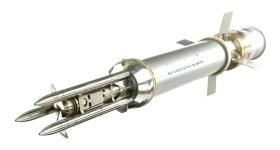
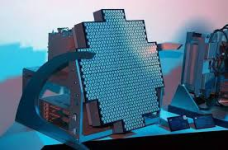
This is that seeker computer which was
Not completely indian ? And it's just russian seeker with some sort of modifications to operate at Ku bands instead of X 🥀🥀 Holy trinity . Where did you learn this utter Non sense ?
I had an EM minor back in the college days and let me tell you how does it sound to me .
It's just like "we can make a airplane out of a helicopter with some modifications since both of them can fly" .

Also qmf you're emphasizing is not a technology but a digital signal processing technique employeed in radar algorithms to discriminate between discrete targets aka rayleigh targets .
Btw I've posted the spec sheet of your favorite seeker .

First you said astra Mk1 already has the indegenous radar, and then you posted a picture of a radar which is still going for trials and meant for Astra Mk2 and Mk3. You definitely got confused between the radars.

Secondly, the Ku Band seeker design is not something which is very much Indian infact the similar radar system is developed by Vietnam as well for VCM-01 missile system in 2019, its called as VASK-03 seeker. In both context the radars have Russian components and technical influence.

The trials were basically to validate the datalink operation with the Ku band to the mission computer on aircraft and to fix the attenuation problem on Astra mk1. No one knows as of now how many Astra mk1 have got these radars integrated.

Now what Indian made radar is basically going forward with the Ku band aesa seeker and adding a more robust capability of QMF signal processing. This has changed the seeker totally including the wave guide. plumbing and dimensions. This is not just a technique but a new methodology and new algorithm of bringing in 4 channel signals and summing them. This is the brain of the seeker as you already know for more accurate target tracing. This is a different seeker. Adding to it the processor will be substituted with GaN based microchip for AI capabilites and better comms.

There are rumors that an another filter to support X band spectrum will also be added in the above. But not sure.
 
Air launched vectors any time of the day.
They're complimentary. But if I can only pick one, I'll go the Atmanirbhar route whatever the cost.

IMHO, a question that might ruffle more feathers is whether for surface targets, do you really need AF launching A2G ordnance or is SSM better? Case in point - in spite of all the aerial stuff that was happening on May 7th, only 2 out of 9 t3rr0r training madrasas were taken out by FA. The rest 7 targets were taken out by SSMs in Op Sindoor.

Static ground targets can be destroyed by SSMs, but jets/UCAVs are needed in certain scenarios like CAS (Close Air Support), Recon, CAP (Combat Air Patrol), etc.

That day is nearing when manned jet patrolling will be replaced by UCAV patrol, where
- time to get pilot ready is eliminated,
- take-off time reduced,
- OPEX reduced.

Many people globally still think about SCRamjet fighter, like SR-72/Dark-Star derivative, etc, with high CAPEX+OPEX.

So thinking even beyond that, when integrated ground & satellite recon/warning/detection system is efficient & sufficient, then even UCAV patrol won't be needed. Only reaction to hostile action.

Hence, this case is very specific where it is observed & understood that -
- the targets are fighter jets, not surface asset.
- confirmed via real-time feed from satellite, AWACS, long range ground radars, etc that they wish to launch weapons crossing or w/o crossing border.
- the moment any jet/drone/missile crosses border, it is war.
- 6gen architecture deploys Manned jet + CCA-UCAVs.
- 7gen could be 100% UCAVs.
- engine spool-up time is still up to 1min.
- Evolution path : Manned jet with Turbo-fan -> UCAV with hybrid VCE -> Re-usable Rocket with ABRE (Air Breathing Rocket Engine)
- If S-400 like SAM is static, so are the parked jets & UCAVs.

So why not replace a jet/drone with smart long range SAM, like a big Starstreak missile,
- which will launch & reach say Mach 2 at 30K-40K feet,
- fire Meteor or Astr-3 SFDR like AAM?
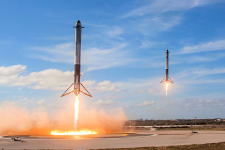
- either return like SpaceX Falcon-9booster,


So the fighter jet or UCAV becomes a reduced size Sapce-X Falcon-9 like re-usable booster.
1771576396742.png
1771576443672.png

So compared to UCAVs -
- rocket engine fires instantly. Jet engine spool-up time even for UCAV is reduced/eliminated.
- rocket travels faster to launch point than UCAVs.
- chance of enemy jets/drones making U-turn & escaping reduces drastically.

 
This is that seeker computer which was


First you said astra Mk1 already has the indegenous radar, and then you posted a picture of a radar which is still going for trials and meant for Astra Mk2 and Mk3. You definitely got confused between the radars.

Secondly, the Ku Band seeker design is not something which is very much Indian infact the similar radar system is developed by Vietnam as well for VCM-01 missile system in 2019, its called as VASK-03 seeker. In both context the radars have Russian components and technical influence.

The trials were basically to validate the datalink operation with the Ku band to the mission computer on aircraft and to fix the attenuation problem on Astra mk1. No one knows as of now how many Astra mk1 have got these radars integrated.

Now what Indian made radar is basically going forward with the Ku band aesa seeker and adding a more robust capability of QMF signal processing. This has changed the seeker totally including the wave guide. plumbing and dimensions. This is not just a technique but a new methodology and new algorithm of bringing in 4 channel signals and summing them. This is the brain of the seeker as you already know for more accurate target tracing. This is a different seeker. Adding to it the processor will be substituted with GaN based microchip for AI capabilites and better comms.

There are rumors that an another filter to support X band spectrum will also be added in the above. But not sure.
So, can you explain in simple terms whether we currently have an operational seeker tech which is 100% indigenous, do we also have indegenious seekers under research. Also can say if you know that which of our tech currently uses indian vs foreign seekers.
 
So, can you explain in simple terms whether we currently have an operational seeker tech which is 100% indigenous, do we also have indegenious seekers under research. Also can say if you know that which of our tech currently uses indian vs foreign seekers.

Yes seeker is there. India has mastered the Ku and X Band seeker technology and has developed a new targeting algorithm this year as equivalent to latest AIM 120 and even better without any foreign assistance. Not sure how many units of Astra Mk1 have got it no body can say it, these things are confidential. But Astra Mk2, Mk3, Akash NG will have it as mentioned in media reports and development won't stop here, the seeker will undergo continuous optimization as already told by Padira in previous posts.
 
Yes seeker is there. India has mastered the Ku and X Band seeker technology and has developed a new targeting algorithm this year as equivalent to latest AIM 120 and even better without any foreign assistance. Not sure how many units of Astra Mk1 have got it no body can say it, these things are confidential. But Astra Mk2, Mk3, Akash NG will have it as mentioned in media reports and development won't stop here, the seeker will undergo continuous optimization as already told by Padira in previous posts.
thats amazing, how we can develop and optimize our designs as time goes own.
 
Someone commented this under this post, "If you have paid enough attention to the research findings at IISc, you will shame yourself to tweet this.These heat exchangers will be useless and dead weight in 5 years.Go read!"

What's your take on it?
No idea about that. But here is a thread from shreedhar singh explaining its advantages.
ADA has awarded project sanction orders to BHEL for the development of state-of-the-art Pump Modules for the Liquid Cooling System (LCS), a critical component of the Environmental Control System (ECS), for both the LCA Mk2 and the 5th-Generation AMCA
We are going to use a liquid cooling system for Amca , A liquid cooling system is a method of removing heat from a machine (engine, radar, avionics, computer, etc.) by circulating a liquid coolant instead of relying only on air.
Liquid cooling for military signal processing offers advantages in high-power-density systems to dissipate heat at a higher rate than air-cooled systems and to transfer heat further away efficiently for thermal signature control
Advantages of Liquid cooling system - High cooling efficiency - Better temperature control - Supports high-energy weapons - Enables advanced stealth electronics
The liquid cooling system currently used in the F-35 Lightning II is a critical part of its Power and Thermal Management System (PTMS)

 
thats amazing, how we can develop and optimize our designs as time goes own.

Well the area is vast.

I am more interested in that method where an aerial target is tracked by an air borne platform and engaged by other by relying real time target telemetry, similar to AWACS.

Edit: Since this is AMCA thread, I would add that this capability of Radar data recycling may be a part of this project for off board targeting of aerial threats. For that you need AI supported systems as well to make the task easier.
 
Last edited:
QMF targeting logic
Uhhh.... QM (F?) is not a targeting logic per say. It sounds like radar technique.
Monopulse radar means using sum and difference of different radar channels to calculate angle

Quadrature Monopulse means it is using I and Q components of return signal(s) for calculating angular orientation (Azimuth and elevation).

Incidentally QMF also means Quadrature Mirror Filters. Something that MP3 uses breakdown audio into bands before compression.
Someone commented this under this post, "If you have paid enough attention to the research findings at IISc, you will shame yourself to tweet this.These heat exchangers will be useless and dead weight in 5 years.Go read!"

What's your take on it?
He sounds like those who say Rafales are useless now....
 
Last edited:
This is that seeker computer which was


First you said astra Mk1 already has the indegenous radar, and then you posted a picture of a radar which is still going for trials and meant for Astra Mk2 and Mk3. You definitely got confused between the radars.

Secondly, the Ku Band seeker design is not something which is very much Indian infact the similar radar system is developed by Vietnam as well for VCM-01 missile system in 2019, its called as VASK-03 seeker. In both context the radars have Russian components and technical influence.

The trials were basically to validate the datalink operation with the Ku band to the mission computer on aircraft and to fix the attenuation problem on Astra mk1. No one knows as of now how many Astra mk1 have got these radars integrated.

Now what Indian made radar is basically going forward with the Ku band aesa seeker and adding a more robust capability of QMF signal processing. This has changed the seeker totally including the wave guide. plumbing and dimensions. This is not just a technique but a new methodology and new algorithm of bringing in 4 channel signals and summing them. This is the brain of the seeker as you already know for more accurate target tracing. This is a different seeker. Adding to it the processor will be substituted with GaN based microchip for AI capabilites and better comms.

There are rumors that an another filter to support X band spectrum will also be added in the above. But not sure.
Do you even have idea bout what r u sayin ?
Shifting an entire band (X to Ku) is not an elementary school childplay . The entire antenna (possibly microstrip patch antenna) has to be redesigned (since higher frequency equates to shorter wavelength and hence lower aperture of the Rx end) . There had to be matching networks to properly plumb the generator and terminated end . Those had to be done carefully to minimize the insertion losses and zero out the reflection within the network i.e a balance of a lossless, reciprocal and matched network . Scattering parameters of any n port network chamges drastically with just a slight change of frequency, let alone shifting the whole frequency band. Also the vask03 seeking you're talkin bout is a x band seeker designed specifically for anti ship roles . It (Vask03) could be derived/copy of agat seeker (since both of them are X band) but how could be a Ku band seeker have anything to do with a X band seeker ?
Btw I'm not confused bout anything. I'm just sayin that the initial drdo developed monopulse mechanically steered seeker is operational with current Astra mk1 and your favorite seeker (phase steered aesa seeker ) is under trials .
Once again Ku is NOT X.

THANK YOU FOR ATTENTION TO THIS MATTER .
 
Shifting an entire band (X to Ku) is not an elementary school childplay . The entire antenna (possibly microstrip patch antenna) has to be redesigned (since higher frequency equates to shorter wavelength and hence lower aperture of the Rx end) .

Those had to be done carefully to minimize the insertion losses and zero out the reflection within the network i.e a balance of a lossless, reciprocal and matched network .

Did I say it has not been changed and or did I say Ku or Ka is X? You were the one who was calling the change is algorithm ( QMF) a mere code. But the reality is whole antenna size has been changed with new wave guides and new plumbing to accommodate signals arriving from four quadrants of the antenna. Spectrum may me same but this is a new seeker overall. Whole technique how the seeker functions is different now, of course you said it is not mechanically steered, hence you can't compare the DSP and screen output. The latter one is way more accurate for obvious reasons.
And no one knows to date how many seekers are onboard ( I am talking about your mechanically streed seeker) .

I am not contesting you on tech I am contesting on the statement that they have new seeker installed, and I really doubt if the new stock has got it. Well this is something which is confidential IMO, no one knows it I believe.

Also the vask03 seeking you're talkin bout is a x band seeker designed specifically for anti ship roles . It (Vask03) could be derived/copy of agat seeker (since both of them are X band) but how could be a Ku band seeker have anything to do with a X band seeker ?

Vask03 is a Ku band seeker they changed it, similar to what India will put on Brahmos, but can't tell the specifics of what kind of processing attenutes it will possess. This is why I compared the seeker development progess specifically with this particular one.

The KU VASK-03 weighs 24.5 kg, is 562 mm tall, and has a diameter of 272 mm. It uses the KU band and has a maximum target detection range of up
 
No idea about that. But here is a thread from shreedhar singh explaining its advantages.


I did do my engineering project using a similar technology to cool a heat source as opposed to the traditional air cooling methods and it was much more efficient than the traditional method, although I did use an Aluminium Oxide Nanofluid as coolant for it however distilled water worked near as good as the nanofluid when we compared the performance.
 
I did do my engineering project using a similar technology to cool a heat source as opposed to the traditional air cooling methods and it was much more efficient than the traditional method, although I did use an Aluminium Oxide Nanofluid as coolant for it however distilled water worked near as good as the nanofluid when we compared the performance.
You used AlO2 nanofluid in your.... engineering project?🤔 Are you in IIT or IISc?
You'll definitely become real Batman 1 day. (y)🤞✌️🦇
 
  • Like
Reactions: batman and Rune
  • Like
Reactions: Asmodeus
no it will not die lol. but its advantage will be significantly reduced compared to today.
It'd be as good as useless with the advent of photonic & quantum radars which should see massive deployment in another decade .

The IDF was prescient enough to make a public declaration a decade back that stealth as they knew it then vis a vis the F-35 was good enough for a decade or 2 , not beyond that.

In future you'd see more sci fi stuff like advanced active cancellation , retractable protective sheaths etc . How long will that be effective is another topic altogether !

In short all those terabytes of photographs , fan art & write ups @Bhartiya Naagrik Sainik has accumulated painstakingly over the years are already archival material.

That's precisely the reason RST never supported his arguments with such facts like the aforementioned material but indulged in R&D - read & dump . Of course there were plenty of other reasons as well which we need not get into now .