

So Tom has made a quantum move over Jerry's stealthy tactics. Now Jerry must do something.no it will not die lol. but its advantage will be significantly reduced compared to today.


So Tom has made a quantum move over Jerry's stealthy tactics. Now Jerry must do something.no it will not die lol. but its advantage will be significantly reduced compared to today.
no lol, the photonic radars still rely on RF waves for detection. The thing that changes is that fact that theyre generated using lasers and fibre optics which give insane precision. This allows them to have insanely large bandwidths which like 11Ghz at almost the same time. It also allows radars to see stealth and hold track unlike the previous where you could see the jet but it would be intermitent blips not a continuos track which makes it hard to get a lock on. It also has near 0 phase noise to Low probability of intercept.It'd be as good as useless with the advent of photonic & quantum radars which should see massive deployment in another decade .
The IDF was prescient enough to make a public declaration a decade back that stealth as they knew it then vis a vis the F-35 was good enough for a decade or 2 , not beyond that.
In future you'd see more sci fi stuff like advanced active cancellation , retractable protective sheaths etc . How long will that be effective is another topic altogether !
In short all those terabytes of photographs , fan art & write ups @Bhartiya Naagrik Sainik has accumulated painstakingly over the years are already archival material.
That's precisely the reason RST never supported his arguments with such facts like the aforementioned material but indulged in R&D - read & dump . Of course there were plenty of other reasons as well which we need not get into now .
Nah man, I didnt concentrate much on studies in my school days and relied on some web course which got sold to my parents for entrance and hence I funked my entrance and wasnt allowed to repeat and got into a tier 3 private college, however I did focus more on studies later and graduated with honours, my professor was a student from NIT and when we were shortlisted some projects for our final project, mine and another group both selected projects related to nanofluids, we had to go through a lot to finish the project because we had to source nano particles from a shop far away from college, test the weight and composition of these nanoparticles in another far away government college with better facilities, buy stuff like thermocuples and other stuff from someone from another state and heat and mold it in a workshop in location, not to mention since I didn't have funds to buy a branded heat sink for our Heat Source(CPU under heavy load), we had to either manually make the Heat Sink from some industry using copper or source the components from China, the latter of which I did and it got stopped at customs and not sent to us, so I luckily meet a guy from a computer hardware store with a youtube channel who knows a fan who talked with him on insta who had a spare system, so I rented the heat exchanger and radiator from him and tested the effiiency under various concentration of nanofluid and compare it between each other along with traditional air cooled methods. The difference in efficiency between both is night and day.You used AlO2 nanofluid in your.... engineering project?Are you in IIT or IISc?
You'll definitely become real Batman 1 day.
Nothing painful about it, just hobby since childhood. Computer/IT guys deal with multimedia in work & presentations, so writing just paragraphs like novels is not my style.In short all those terabytes of photographs , fan art & write ups @Bhartiya Naagrik Sainik has accumulated painstakingly over the years are already archival material.
Please don't dig others' past conversations, speak on their behalf, compare them.That's precisely the reason RST never supported his arguments with such facts like the aforementioned material but indulged in R&D - read & dump . Of course there were plenty of other reasons as well which we need not get into now .

Photonics radar is the preliminary step to Quantum Radars. VHF radars can already detect & track stealth, not as efficiently as desired though so Photonics radars are definitely a step up.no lol, the photonic radars still rely on RF waves for detection. The thing that changes is that fact that theyre generated using lasers and fibre optics which give insane precision. This allows them to have insanely large bandwidths which like 11Ghz at almost the same time. It also allows radars to see stealth and hold track unlike the previous where you could see the jet but it would be intermitent blips not a continuos track which makes it hard to get a lock on. It also has near 0 phase noise to Low probability of intercept.
it wont make stealth obselete but it will push the range back to around 200-300ish kms where there is plently of time to launch a missile at the jet and not get hit. Again this is only after complete development if that ever happens at all.
Just a word of advice. Cultivate a sense of humor & learn to be less uptight, be it in the real or virtual world.Nothing painful about it, just hobby since childhood. Computer/IT guys deal with multimedia in work & presentations, so writing just paragraphs like novels is not my style.
Please don't dig others' past conversations, speak on their behalf, compare them.
In a casual chat forum for time pass, i'm not seeking any support or to ARGUE. Rather DISCUSSION is a better neutral word. Everybody, from students to veterans, journalists, etc can keep their PoV as per their profiles. DoD not consulting us here.
I often wonder how many active members on Indian forums are Indian.
Just a word of advice. Cultivate a sense of humor & learn to be less uptight, be it in the real or virtual world.
Would help you a lot else the world's too full of sensitive souls feeling aggrieved at the drop of the hat . Also encourages anti social feelings as a result in such poor souls .
 Leave the world, 1st let's manage ourselves by sticking to forum topics & avoiding philosophical gossip dragging others
 . No member here is responsible for those poor soles out there.
 5 fingers different.
 same humor doesn't work with everyone.

Uhhh.... QM (F?) is not a targeting logic per say. It sounds like radar technique.
Monopulse radar means using sum and difference of different radar channels to calculate angle
Quadrature Monopulse means it is using I and Q components of return signal(s) for calculating angular orientation (Azimuth and elevation).

The Photonic radar will outdo the current stealth technology with ECCM and shape stealth. Conceptually, it's way ahead of the current generation of aircraft. I looked online to see which countries are already developing their photonic radar, and I found some info below.Photonics radar is the preliminary step to Quantum Radars. VHF radars can already detect & track stealth, not as efficiently as desired though so Photonics radars are definitely a step up.
DRDO is conducting field trials this year with the services. If all goes well this could get into mass production by the end of this decade. That certainly boosts the anti stealth capabilities of a nation's ADS.
Moreover these systems won't work in isolation. They'd be part of a larger system of systems involving Space & Air based ISR , ground based radar stations, sensor fusion etc . All put together this can compromise stealth to a great extent blunting the absolute advantage it enjoys today.
Quantum Radars should be the final nail in the coffin of stealth. China's already claiming deployment & successful detection & tracking from 300 kms away IIRC.
Then again with the Chinese how much of this information is genuine & how much is the usual propaganda is hard to say but Quantum Radars is definitely a revolution in the radar family akin to when RF was first used to detect & track planes .
| Country | Status | Key Achievement / Agency |
| China | Operational/Mass Production | In late 2025, China began mass-producing the world’s first four-channel photon detector (nicknamed the "Photon Catcher"), specifically designed to track stealth aircraft like the F-22. |
| India | Field Trials/Induction | The DRDO (LRDE) developed a fully indigenous photonic radar. Extensive field trials across diverse climates (Ladakh and the Thar Desert) were completed in late 2025, with plans to integrate them into Tejas and Rafale jets. |
| United States | Advanced Integration | Long-standing leader via DARPA and companies like RTX (Raytheon). Recent 2026 focus shifted toward "Project FROSTY," which uses photonic-assisted sensing to see through Arctic interference. |
| Italy | Pioneering Research | Italy’s PHODIR project (Photonic-based full Digital Radar) was one of the first to prove the tech in field trials at the Port of Livorno. Leonardo S.p.A. is currently integrating photonic circuits into its "Michelangelo Dome" defense system. |
| Russia | Prototype Testing | In November 2025, scientists at St. Petersburg State Electrotechnical University unveiled a photonic radar prototype capable of detecting objects as small as birds with centimeter-level precision. |
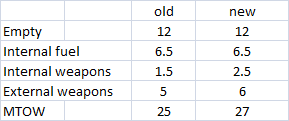
Dont change anything for now or specifically mark it as tentative, we wont know for sure until the consotium for the AMCA is selected. But yea the specs do look correctGuys, i wanna confirm present specs of AMCA, i guess it got updated recently.
Is the following correct -
View attachment 49986
Who am i to change anything, when i'm not connected with any maker.Dont change anything for now or specifically mark it as tentative, we wont know for sure until the consotium for the AMCA is selected. But yea the specs do look correct
 I'm just comparing AMCA with other jets.




 aerospaceglobalnews.com
Some components are already there. Partner/consortium will manufacture the airframe, do integration and testingQuestion regarding the prototype, I have asked this before but it's still not clear
Since ADA is giving contracts for prototype components, are the companies already building it as of now such as BEML for cooling system, and will selected partner just do final integration work when it's selected or no physical work is to be done until it's selected?
Iirc it's supposed to be selected this or next month


