

You are using an out of date browser. It may not display this or other websites correctly.
You should upgrade or use an alternative browser.
You should upgrade or use an alternative browser.


India – 777 Large Aircraft Infrared Countermeasures Self-Protection Suite
WASHINGTON, February 6, 2019 - The State Department has made a determination approving a possible Foreign Military Sale to India of two (2) 777 Large Aircraft Infrared Countermeasures (LAIRCM) Self-Protection Suites (SPS) for an estimated cost of $190 million. The Defense Security Cooperation Agency delivered the required certification notifying Congress of this possible sale today.
The Government of India has requested to buy two (2) Self-Protection Suites (SPS) consisting of AN/AAQ 24(V)N Large Aircraft Infrared Countermeasures (LAIRCM), ALQ-211(V)8 Advanced Integrated Defensive Electronic Warfare Suite (AIDEWS), and AN/ALE-47 Counter-Measures Dispensing System (CMDS) to protect two (2) Boeing-777 Head-of-State aircraft. This potential sale would include: twelve (12) Guardian Laser Transmitter Assemblies AN/AAQ-24 (V)N (6 installed and 6 spares); eight (8) LAIRCM System Processor Replacements (LSPR) AN/AAQ-24 (V)N (2 installed and 6 spares); twenty-three (23) Missile Warning Sensors (MWS) for AN/AAQ-24 (V)N (12 installed and 11 spares); five (5) AN/ALE-47 Counter-Measures Dispensing System (CMDS) (2 installed and 3 spares). Also included in this sale are Advanced Integrated Defensive Electronic Warfare Suites (AIDEWS), LAIRCM CIURs, SCAs, HCCs, and UDM cards, initial spares, consumables, repair and return support, support equipment, Self-Protection Suite (SPS) engineering design, integration, hardware integration, flight test and certification, selective availability anti-spoofing modules (SAASM), warranties, publications and technical documentation, training and training equipment, field service representatives; U.S. Government and contractor engineering, technical and logistics support services, and other related elements of logistical and program support. The total estimated cost is $190 million.
WASHINGTON, February 6, 2019 - The State Department has made a determination approving a possible Foreign Military Sale to India of two (2) 777 Large Aircraft Infrared Countermeasures (LAIRCM) Self-Protection Suites (SPS) for an estimated cost of $190 million. The Defense Security Cooperation Agency delivered the required certification notifying Congress of this possible sale today.
The Government of India has requested to buy two (2) Self-Protection Suites (SPS) consisting of AN/AAQ 24(V)N Large Aircraft Infrared Countermeasures (LAIRCM), ALQ-211(V)8 Advanced Integrated Defensive Electronic Warfare Suite (AIDEWS), and AN/ALE-47 Counter-Measures Dispensing System (CMDS) to protect two (2) Boeing-777 Head-of-State aircraft. This potential sale would include: twelve (12) Guardian Laser Transmitter Assemblies AN/AAQ-24 (V)N (6 installed and 6 spares); eight (8) LAIRCM System Processor Replacements (LSPR) AN/AAQ-24 (V)N (2 installed and 6 spares); twenty-three (23) Missile Warning Sensors (MWS) for AN/AAQ-24 (V)N (12 installed and 11 spares); five (5) AN/ALE-47 Counter-Measures Dispensing System (CMDS) (2 installed and 3 spares). Also included in this sale are Advanced Integrated Defensive Electronic Warfare Suites (AIDEWS), LAIRCM CIURs, SCAs, HCCs, and UDM cards, initial spares, consumables, repair and return support, support equipment, Self-Protection Suite (SPS) engineering design, integration, hardware integration, flight test and certification, selective availability anti-spoofing modules (SAASM), warranties, publications and technical documentation, training and training equipment, field service representatives; U.S. Government and contractor engineering, technical and logistics support services, and other related elements of logistical and program support. The total estimated cost is $190 million.


K2412 | Boeing 737-2A8(Adv) | 23036 | JetPhotos
JetPhotos.com is the biggest database of aviation photographs with over 6 million screened photos online!

K2412 | Boeing 737-2A8(Adv) | 23036 | JetPhotos
JetPhotos.com is the biggest database of aviation photographs with over 6 million screened photos online!www.jetphotos.com
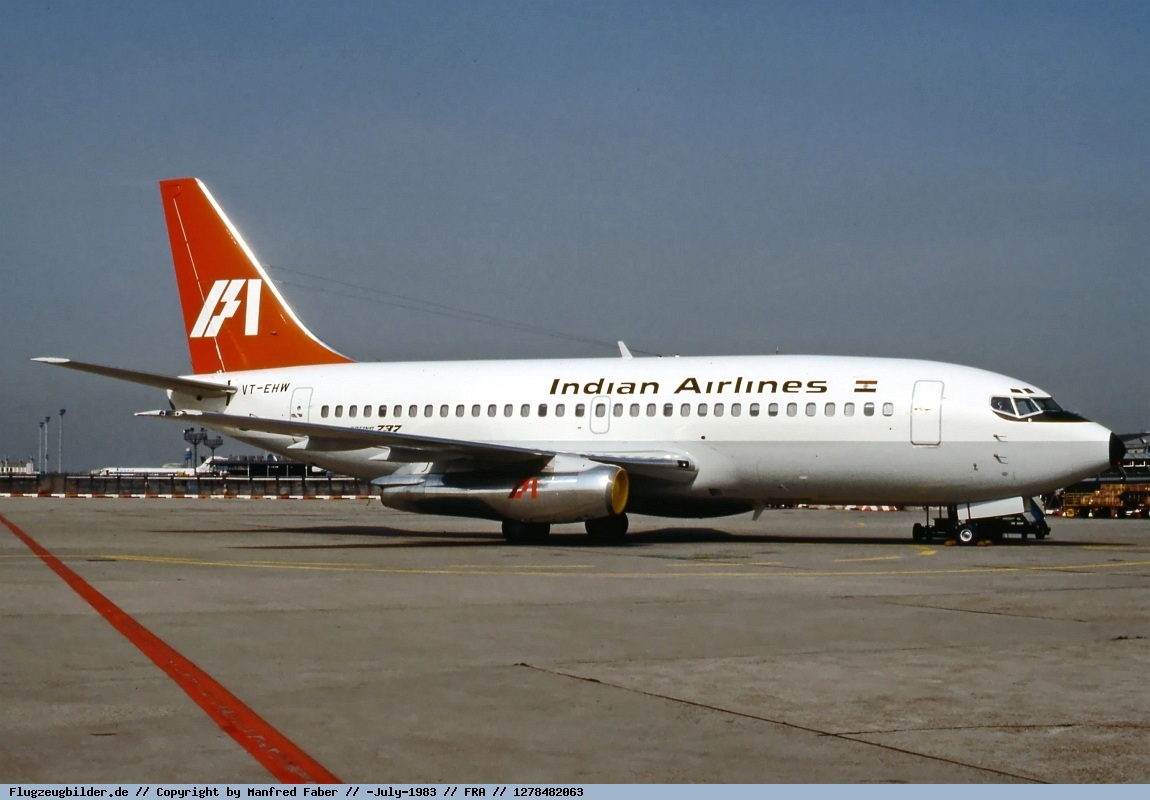
Ex Indian Airlines, 37 year old. There is a world of difference between these and the modern 737 BBJs.

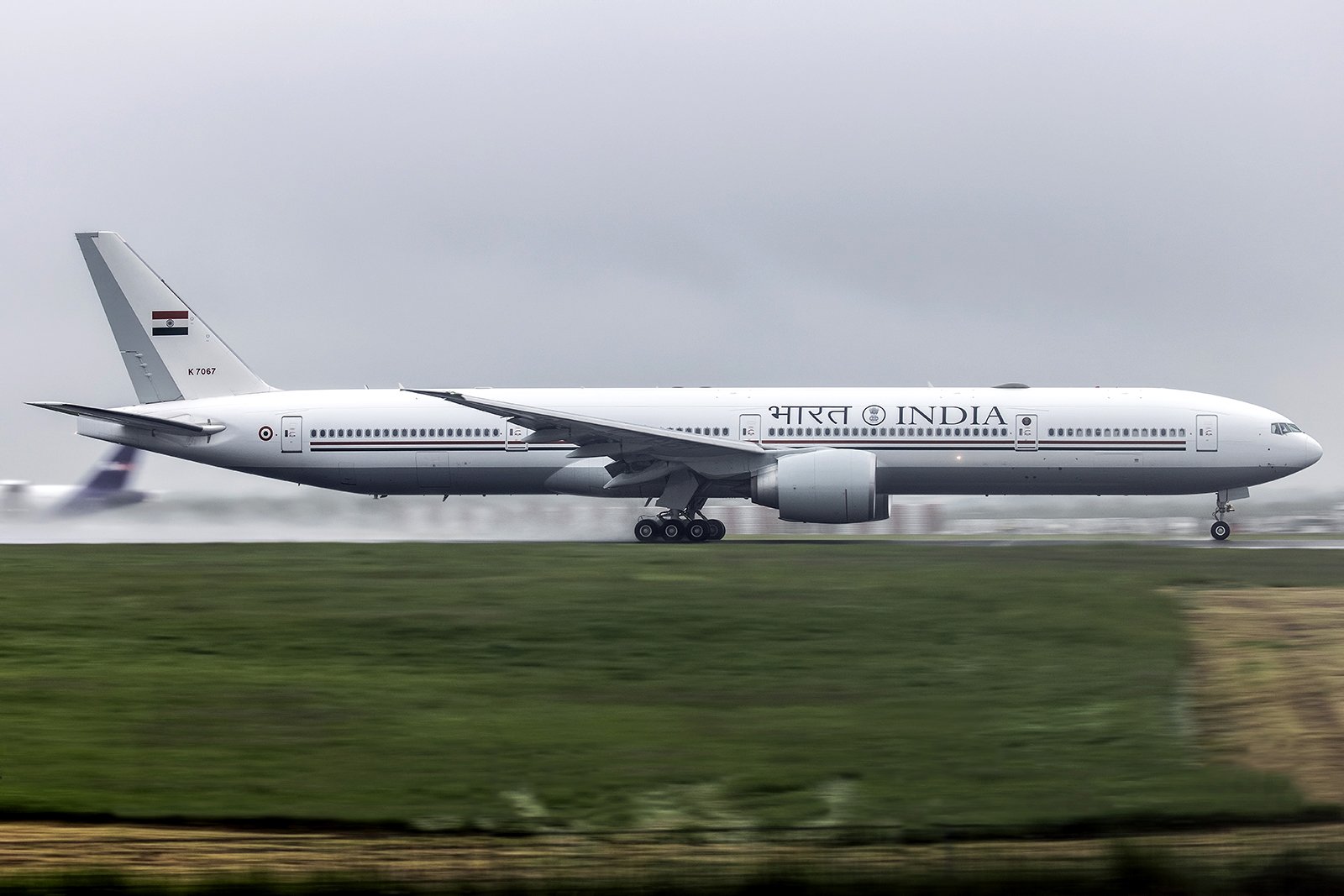

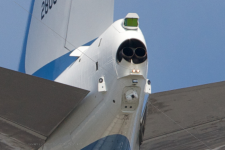
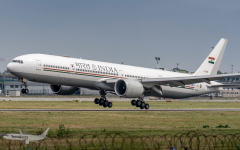
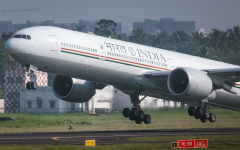
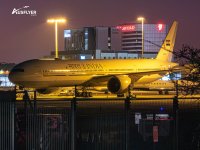
I tried to look at photos & videos of this Boeing-777 but could not find any SAM defence or even warning equiment like MAWS, DIRCM, CMDS, LWR, RWR, etc. There are Boeing-737 jets named Rajhans, Rajamal, Rajdoot which have some sensors visible like MAWS, not sure about CMDS, no DIRCM.

How visible are these systems on Air Force One for example? From my understanding, these aircraft are like unmarked police cars with these systems being well hidden.I tried to look at photos & videos of this Boeing-777 but could not find any SAM defence or even warning equiment like MAWS, DIRCM, CMDS, LWR, RWR, etc. There are Boeing-737 jets named Rajhans, Rajamal, Rajdoot which have some sensors visible like MAWS, not sure about CMDS, no DIRCM.
When the aircraft is a non-stealthy civil airliner then there is no point in making these sensors & counter-measures stealthy with retractable hatches or blended design. It adds mechanical complexity which even Air-Force-1 didn't do. On AF1 the MAWS, DIRCM & dazzlers are very much visible, positioned near heat exhausts of APU & engines, but they cover only rear & side sectors. They are not seen facing up, down & front. I also can't confirm chaff/flare dispensers, all other inlets & vents are of standard 747 design, but CMDS can be attached easily. Some EW antennas can be embedded in wing edges & tail, enough volume there. However, on every military jet & helicopters the antenna & sensor positions are either marked or painted differently for maintenance crews to locate & service them without damage.How visible are these systems on Air Force One for example? From my understanding, these aircraft are like unmarked police cars with these systems being well hidden.



In service for 20 years, IAF's Embraer VIP jets set for complete facelift
After being in service for about 20 years, the Indian Air Force’s Embraer-135 business jets that are used for transporting the nation’s top civilian and military leaders are set to undergo a complete facelift.
The works to be undertaken involve complete repainting of the aircraft as well as a total overhaul and refurbishment of the cockpit and the passenger cabin. This will include changing internal fittings and panels, polishing surfaces, and replacing all furnishings, upholstery, curtains, shades, and flooring.
According to sources, one aircraft will be refurbished at a time to ensure that three aircraft are available for operations, sources said. The entire project will be completed within a period of two years, with work on one aircraft expected to take about five months. The IAF has approached a Gurugram-based aviation firm to carry out the work.
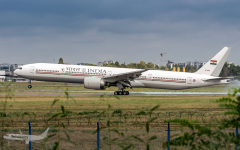
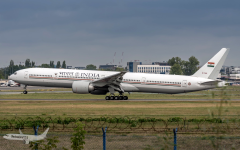
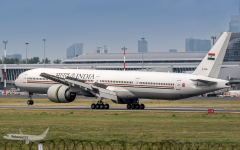
The IAF has four Embraer jets that are deployed with the Air Headquarters Communications Squadron base at Palam in New Delhi. The squadron also operates two large Boeing 777 jetliners for use by the President, Vice-President and Prime Minister, three Boeing 737 Business Jets and six modified Mi-17 helicopters.
Manufactured by Brazil, the Embraers entered IAF in September 2005 and are extensively used by top leaders on official visits. These have a range of 7,500 km and a cabin capacity of 14 passengers.
The twin-engine Embraer jet replaced the aged HS-748 Avro twin turboprop engine that was of British origin. Bearing ‘K’ series registration numbers, these aircraft are christened Meghdoot, Vayudoot, Nabhdoot and Gagandoot.
The Air Wing of the Border Security Force (BSF) also has one Embraer-135 on its fleet strength for the Ministry of Home Affairs, which replaced its previous Avro aircraft.
In addition, three Netra Airborne Early Warning aircraft (AEW) used the Embraer-135 as the platform. These were extensively modified by the Defence Research and Development Organisation (DRDO) with an externally mounted overhead radar system, electronic warfare and navigation equipment, and work consoles.
There are also reports that the IAF is acquiring six used Embraer-145 jets for conversion into AEW aircraft by the DRDO in collaboration with Embraer. These would be more advanced and capable variants of the existing Netra.
The Brazilian aerospace major, which manufactures several types of military and civilian aircraft, is looking at expanding its footprint in India. The company has nearly 50 aircraft of 11 different types currently operating in India.
It has established a subsidiary in India to expand its presence in defence, commercial aviation, and business aviation sectors. The company is also exploring opportunities for Maintenance, Repair and Overhaul (MRO) facilities in India.
Beyond maintenance, the company is also partnering with Mahindra Defence Systems to bid for the IAF’s Medium Transport Aircraft (MTA) program with the C-390 Millennium, potentially involving 40–80 aircraft. This bid includes plans for local assembly, maintenance, repair, and overhaul (MRO), and technology transfer, indicating a long-term commitment to India’s aerospace ecosystem.
Tender was published on Thursday.There exists a possibility that it might end up like that. The tender is certainly timed well (if it was pushed out post May). When was it posted? I more curious about the specifics that they are looking at. It might help us piece together things better.
Attachments
Looking at the tender, this appears to be a new requirement rather than a replacement.Tender was published on Thursday.
• Minimum 19 passengers (VIP/VVIP configuration)
• Long-range capability with good payload-range performance
• High-altitude operations capability
• Semi-prepared airfield operations
• ECM/ECCM integration feasibility
• EDTO (Extended Diversion Time Operations) capability
• Procurement quantity: 4-6 aircraft
It can be any in the market like Gulfstream G650ER, Global 7500, Falcon 8X.

IAF begins process to replace VIP transport fleet, issues RFI for new long-range business jets
The Indian Air Force (IAF) has begun the formal process to replace its ageing VIP transport fleet by issuing a ‘request for information’ (RFI) for the procurement of four to six Long Range Business Jets (LRBJs).
The aircraft are intended to provide secure, rapid and reliable transport for senior military leadership and government dignitaries.
The RFI is the initial stage in the acquisition process, aimed at identifying potential vendors and assessing available technology before proceeding to a formal procurement.
The plan is focused on modernising the Air Headquarters Communication Squadron based at Palam in New Delhi, which currently operates the VIP transport fleet.
The current fleet consists of four Embraer Legacy 600 aircraft, which were inducted on September 21, 2005.
The aircraft, named Meghdoot, Vayudoot, Nabhdoot and Gagandoot, have been in service for over two decades and are now set for phased replacement.
According to the RFI, the proposed LRBJs will be used in VIP transport roles and must have a minimum passenger capacity of 19.
The IAF stated that it plans to procure approximately four to six such aircraft and has invited original equipment manufacturers (OEMs) and authorised vendors to submit details of suitable platforms.
The LRBJs are distinct from the specially modified aircraft operated for the country’s top three constitutional authorities — the President, Vice-President and Prime Minister.
Those aircraft include the Boeing 777-300ER platform operated as ‘Air India One’, which is equipped with enhanced security features and dedicated for exclusive VVIP use.
The proposed business jets will be used for travel by senior government functionaries, including the Defence, Finance, Home and External Affairs ministers, as well as the chiefs of the Indian Army, Navy and Air Force.


BBJ is undergoing maintenance.