
Wasnt there a proposal of Hawk I program by HAL?Yes, it is to replace the older AJT Hawks
Stage III is of that class only... Aircraft included in this category are HALHawk MK132, Leonardo M-346, KAI T-50...
Sad the HJT-36 is only stage II
But anyways Hawk-i or T-50 is very urgent need... The Chinese cadets have been getting unsimulated BVR practice and realistic training from the 2020 batch itself, with the highly advanced JL-10s...
Since Hawk is out of production, less likely to get that
Trainer Aircraft of IAF - PC-7, HTT-40, HJT-36, BAE Hawk
- Thread starter Ashwin
- Start date
You are using an out of date browser. It may not display this or other websites correctly.
You should upgrade or use an alternative browser.
You should upgrade or use an alternative browser.


Hawk is out of production from 2020 and all the supporting industries which made the manufacturing of that plane possible have either been dissolved or bought out by others. Only spares are being provided now.Wasnt there a proposal of Hawk I program by HAL?
It's over engineered for an AJT & then again there's the cost factor plus it's an unproven aircraft when it was offered.
HAL has to keep iterating the HTT-40 while they're in serial production if they really want to optimise performance else it'd be a sub par piece going by the information you've put out. It's not an insurmountable task .
Fine we design it for our own use then . Besides what's wrong with the solution ? The LCA was never meant to be a trainer or a LIFT platform which is the reason you'd want to downgrade it & also make it cost competitive.
In any case I personally don't think we'd be going in for imports. It's either what I've suggested - a completely stripped down version or the Mk-1a minus some avionics.
As it is GoI is going to spend a bomb on imports from Rafale to MTA to potentially 2 squadrons of Su-57. They'd be damned if they're going to import support platforms like AJTs too especially when we've covered the basic , intermediate & LIFT profiles with indigenous offerings.
HAL has to keep iterating the HTT-40 while they're in serial production if they really want to optimise performance else it'd be a sub par piece going by the information you've put out. It's not an insurmountable task.
Good idea on paper but you have to also see that in the name of making it a trainer aircraft with docile handling, they have made it have the aero characteristics of a flying bus.
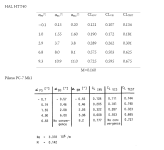
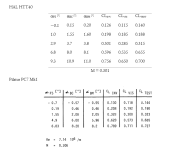
You are speculating too much, these aren't things that you can iterate on to make the aircraft suitable for any other future role other than training.
It cannot be made to go faster, have a better payload, or any other significant changes apart from software or avionics. That's a possible avenue.
Fine we design it for our own use then . Besides what's wrong with the solution ? The LCA was never meant to be a trainer or a LIFT platform which is the reason you'd want to downgrade it & also make it cost competitive.
The current LCA Trainer is an operational conversion trainer, its job is to take a pilot who has already learned to fly jets and transition them onto the LCA operational fighter, rather than serve as the dedicated advanced jet trainer for developing those skills in the first place. Doesn't mean it cannot fully do that, but just saying.
There's also a difference in what you're trying to teach. LCA is designed to reduce pilot workload and make the aircraft predictable and easy to control, allowing the pilot to devote more attention to sensors, tactics and battlespace management. That's exactly what you want in an operational fighter, but it isn't necessarily the ideal philosophy for the earlier stages of advanced training, where you want the student to develop deep fundamentals in manual flying, energy management, aircraft handling and workload management. I guess this is what you mean from downgrade and simplification of the LCA, but again, these aren't things you can iterate on and change. They are inherently there in the design of the aircraft.
A LCA twin-seater could perform the AJT role. The question is whether it's the most appropriate or economical aircraft to do it. Given the role of a dedicated trainer, there's a good reason an Air Force would prefer a purpose built AJT rather than using a fighter for thousands of training hours.
In any case I personally don't think we'd be going in for imports. It's either what I've suggested - a completely stripped down version or the Mk-1a minus some avionics.
Well that would be great if possible, but realistically the timeline is too constrained to develop those modifications...
I think the T-50 or M-346 are coming...
They'd be damned if they're going to import support platforms like AJTs too especially when we've covered the basic , intermediate & LIFT profiles with indigenous offerings.
That's a similar argument to why we need to import diesel submarines when we know how to make nuclear ones... Not exactly the same, but I think you understand what I mean...
HJT-36 still is stagnant by the way...
I think a procurement should have been made to try to have this kind of flow: Pipistrel Virus → HTT-40 → HJT-36 → Hawk Mk132 → Operational Fighters
Currently we are trying to replace the Hawk part of that with this RFI, but we don't have the HJT-36 (Stage II) part of it fulfilled in the first place, there's only the Kiran aircrafts. I think because the development dragged on with the HJT-36, the IAF's overall training philosophy shifted. Not particularly aware of this, but feels like they are evaluating if they should entirely bypass a dedicated Stage 2 jet trainer in favor of a direct jump from modern turboprops to Stage 3 (AJT)/LIFT.
This is somewhat similar to what China is doing but at a more extreme level. China skips the turboprop BTA stage in favour of a less intensive training in the CJ-6 before going to JL-8 IJT and JL-10 AJT...
Instead of the IL-214 that exists only on paper, HAL should try buying out the Yak-130 design and spin off a desi version. M346, L15 (albiet twin engine) show that it can be done in 5 yrs or less.


What about the import lobby slogan? YAK is a "VIDESHI" platform, right?Instead of the IL-214 that exists only on paper, HAL should try buying out the Yak-130 design and spin off a desi version. M346, L15 (albiet twin engine) show that it can be done in 5 yrs or less.

A new advanced trainer is perfect opportunity for Kaveri rebirth. The performance requirement is within the Kaveri's original design envelope. We should be able to achieve this without external assistance.
The trainer design can be made swappable with GE404-102/103 for initial test phase and exports. Comparable designs are T-7 Red Hawk, TAI Hürjet and T-50. Around 10 ton of MTOW and ~74 Kn engine.
The trainer design can be made swappable with GE404-102/103 for initial test phase and exports. Comparable designs are T-7 Red Hawk, TAI Hürjet and T-50. Around 10 ton of MTOW and ~74 Kn engine.
Instead of the IL-214 that exists only on paper, HAL should try buying out the Yak-130 design and spin off a desi version. M346, L15 (albiet twin engine) show that it can be done in 5 yrs or less.
Funny idea lol
Yak-130 and M346 were made together in a partnership and only have minor differences w.r.t design elements like wing strakes and other similar stuff. Avionics and engine are different of course. And the JL-10 had Yakovlev as the technical and scientific consultant...
You have written "albeit twin engine"? What do you mean? All the planes you have mentioned here are twin engine.
5yrs or less is a pipedream.
M346 and JL-10 (L15) both were designed with significant contribution from the foundational work that Yakovlev did in aviation... And for the M-346, the funding provided by the Italians was also significant. Hence the fast design/development process.
There is no push for them to sell the design to us, either we can get consultancy or some JV prospect to assemble the plane. But both of these are heavy speculation, HLFT-42 is more likely.
A new advanced trainer is perfect opportunity for Kaveri rebirth. The performance requirement is within the Kaveri's original design envelope. We should be able to achieve this without external assistance.
The trainer design can be made swappable with GE404-102/103 for initial test phase and exports. Comparable designs are T-7 Red Hawk, TAI Hürjet and T-50. Around 10 ton of MTOW and ~74 Kn engine.
It is a good opportunity but is it feasible to capitalize on it considering the strict timelines that the IAF has set forward? I don't think so.
Last edited:
There is no urgent requirement for Hawk replacement. We have the most recent production run and we can easily extend the life till late 2040.It is a good opportunity but is it feasible to capitalize on it considering the strict timelines that the IAF has set forward? I don't think so.
Kaveri core is already proven today with KDE program. We just need to get the afterburner and overall testing iteration right. Very much possible within 6-8 years.

There is no urgent requirement for Hawk replacement. We have the most recent production run and we can easily extend the life till late 2040.
Kaveri core is already proven today with KDE program. We just need to get the afterburner and overall testing iteration right. Very much possible within 6-8 years.
I mean, considering the current state of R&D willingness, this just seems difficult... Hope it does happen though
HAL's handling of the HJT-36 program does not inspire confidence in its ability to develop a new trainer from scratch. The IAF has spent scarce funds on Sitara's D&D for 2+ decades and is yet to see some ROI.What about the import lobby slogan? YAK is a "VIDESHI" platform, right?
Despite its pedigree, HLFT-42 is still a paper design. It's yet another attempt by HAL to push a half baked design as it did with HTT-40 (vs the superior, in-service PC-7) which is entering service only now.
HAL's handling of the HJT-36 program does not inspire confidence in its ability to develop a new trainer from scratch. The IAF has spent scarce funds on Sitara's D&D for 2+ decades and is yet to see some ROI.
Despite its pedigree, HLFT-42 is still a paper design. It's yet another attempt by HAL to push a half baked design as it did with HTT-40 (vs the superior, in-service PC-7) which is entering service only now.
It's yet another attempt by HAL to push a half baked design as it did with HTT-40 (vs the superior, in-service PC-7) which is entering service only now.
HTT-40 is superior in the things the IAF actually requires for a BTA, certainly not a "half-baked design"... I guess I have seen enough about it to confidently say that much...
Trainer Aircraft of IAF - PC-7, HTT-40, HJT-36, BAE Hawk
Points from the same article he has quoted Damn! Difficult time create strong men. Strong men create easy times. Easy times create weak men. Weak men create difficult times. Difficult times gives us Manohar Parrikar sir. Hopefully the rot and rust will be cleared from all defense...
 www.strategicfront.org
This analysis by me doesn't take into account the good parts of the design, but it shows how they have compromised the wing design to get a plane which flies in a more suitable way for ab-initio uses. Leading to the worse performance when comparing raw numbers and lift coefficient data.
I don't have anything to say about the HJT-36 issues, that's on HAL... Well it's a usable design at this point though, too bad it took so long that IAF has changed the training doctrine.
Last edited:
Well, if HAL thinks it can develop a new medium transport ac with the Russians quickly enough to compete in a tender that's already underway, why not take the same approach with the AJT bid which is still farther away?Funny idea lol
Yak-130 and M346 were made together in a partnership and only have minor differences w.r.t design elements like wing strakes and other similar stuff. Avionics and engine are different of course. And the JL-10 had Yakovlev as the technical and scientific consultant...
Yakovlev, for one, will only be too happy to oblige.
Heck, even the mighty Boeing chose to partner with SAAB on the T-7 program. HAL credibility is so dented in the IAFs eyes, perhaps an int'l design partner could help salvage it a bit.
My bad. I mixed it up with the EADS Mako which kinda looks like M346/L15 front some angles.You have written "albeit twin engine"? What do you mean? All the planes you have mentioned here are twin engine.
Yeas, no confidence. Those who advocating ADA & HAL should send to concentration camps. Sadly we don't have any concentration camps in India.HAL's handling of the HJT-36 program does not inspire confidence in its ability to develop a new trainer from scratch. The IAF has spent scarce funds on Sitara's D&D for 2+ decades and is yet to see some ROI.
Despite its pedigree, HLFT-42 is still a paper design. It's yet another attempt by HAL to push a half baked design as it did with HTT-40 (vs the superior, in-service PC-7) which is entering service only now.

Bruh, HAL had to seek outside help to fix weight issues and other problems with spin/stall, etc. The IAF is still cautious about ordering the bird. All of this is well documented.Yeas, no confidence. Those who advocating ADA & HAL should send to concentration camps. Sadly we don't have any concentration camps in India.
Let's not be melodramatic.

I'd put it down to HAL taking the safe route by not optimising the design given time constraints & possibly the inexperience of the design team thus resulting in a sub optimal design which nonetheless meets the IAF's SQRs & slightly surpasses it.Good idea on paper but you have to also see that in the name of making it a trainer aircraft with docile handling, they have made it have the aero characteristics of a flying bus.
View attachment 53527View attachment 53528
As to why did HAL choose such a path , the answer lies in the bitter tussle between HAL & Vayu Bhawan on the prospects of introduction of a HAL mfgd Basic Trainer by getting IAF or rather MoD to cancel further procurement of the Pilatus.
The bad blood may have been accentuated given IAF's experience with the IJT which still hasn't been certified. Hence the urgency to get the design , validate it post haste , construct the prototype & get the certification done ASAP.
All other considerations like opening up the flight envelope , optimization of the design to get the maximum out of it etc weren't a consideration for this project .
Then whatever iteration is possible on the parameters you've listed. I was thinking more in terms of a Counter Drone role or an UAS for a counter drone role / CI operations. Not sure with the design limitations if such a role is possible but if it is we must explore it.You are speculating too much, these aren't things that you can iterate on to make the aircraft suitable for any other future role other than training.
It cannot be made to go faster, have a better payload, or any other significant changes apart from software or avionics. That's a possible avenue.
Then the LCA can't be repurposed to fit into the AJT role . We'd require a brand new design for the AJT perhaps drawing inspiration from the BAe Hawk more than the LCA although the avionics S/w etc from existing projects can feature in such a design.The current LCA Trainer is an operational conversion trainer, its job is to take a pilot who has already learned to fly jets and transition them onto the LCA operational fighter, rather than serve as the dedicated advanced jet trainer for developing those skills in the first place. Doesn't mean it cannot fully do that, but just saying.
There's also a difference in what you're trying to teach. LCA is designed to reduce pilot workload and make the aircraft predictable and easy to control, allowing the pilot to devote more attention to sensors, tactics and battlespace management. That's exactly what you want in an operational fighter, but it isn't necessarily the ideal philosophy for the earlier stages of advanced training, where you want the student to develop deep fundamentals in manual flying, energy management, aircraft handling and workload management. I guess this is what you mean from downgrade and simplification of the LCA, but again, these aren't things you can iterate on and change. They are inherently there in the design of the aircraft.
A LCA twin-seater could perform the AJT role. The question is whether it's the most appropriate or economical aircraft to do it. Given the role of a dedicated trainer, there's a good reason an Air Force would prefer a purpose built AJT rather than using a fighter for thousands of training hours.
Please do inform which tender in the history of MoD leave aside the IAF has delivered on time.Well that would be great if possible, but realistically the timeline is too constrained to develop those modifications...
Nope. You don't know the MoD & the way the Indian defense establishment operates then .I think the T-50 or M-346 are coming...
A diesel powered SSK is a frontline asset . Not so an AJT . It's very much a support system. Besides we should've launched the Project 76 on yesterday's basis.That's a similar argument to why we need to import diesel submarines when we know how to make nuclear ones... Not exactly the same, but I think you understand what I mean...
Instead the IN wanted to have its way with the long pending Project 75 I first before we ventured into our own indigenous program .
However that's a different story & if we dwell too much on it we'd derail the discussion here.
Hopefully it should be certified this FY. It's the most long drawn out project in the history of international aviation leave aside the history of Indian aviation for an aircraft of its class.HJT-36 still is stagnant by the way...
Shows you both - the extent to which HAL hasn't quite recovered from the loss of its design team to ADA & their incompetence in getting a new one to deliver for the past 3 decades.
Who knows what the exact inside story is ? But in such cases the project hasn't had supervision from the top management else it would'nt have languished for the amount of time it has.
Further evidence that HAL is an unweidly organization which is into everything that flies with no core competencies. But that's an argument for another day .
I think a procurement should have been made to try to have this kind of flow: Pipistrel Virus → HTT-40 → HJT-36 → Hawk Mk132 → Operational Fighters
Isn't the BAe Hawk Mk-132 already in service ?
They've already gone in for a 2 stage training program if I'm not mistaken. The various versions of the HJT Kiran may have undergone various life enhancements bringing it to the end of its life by now or maybe a few years ago .Currently we are trying to replace the Hawk part of that with this RFI, but we don't have the HJT-36 (Stage II) part of it fulfilled in the first place, there's only the Kiran aircrafts. I think because the development dragged on with the HJT-36, the IAF's overall training philosophy shifted. Not particularly aware of this, but feels like they are evaluating if they should entirely bypass a dedicated Stage 2 jet trainer in favor of a direct jump from modern turboprops to Stage 3 (AJT)/LIFT.
Moreover in the interim ever since the HPT Deepak Basic Trainers were retired owing to them having reached the end of their life with no suitable replacements , the HJT Kiran took on the role of both Basic & Intermediate Jet Trainers till the Pilatus arrived further adding to fatigue of the airframe.
Be that as it may , this tender of 150 nos is something I don't see going the way of imports. It's going to be another protracted program which may see fruition in the 2040s .This is somewhat similar to what China is doing but at a more extreme level. China skips the turboprop BTA stage in favour of a less intensive training in the CJ-6 before going to JL-8 IJT and JL-10 AJT...
Till then the BAe Hawk will have to hold fort which I'm confident they will after life enhancing MLU .
If MoD & HAL have learnt anything from history which I very much doubt especially with the former since they run the show at HAL , all this talk of Maharatna status notwithstanding they ought to get cracking with developing an AJT .
The HLFT -42 doesn't fit the bill . A design derivative from the BAe Hawk will. To get it from concept to design to prototype to certification in another 10 years beginning now should be the mandate of both these entities. Preferably using the Kaveri 2.0 which is being developed as the power plant
For that we require a dynamic technocrat like MP in the seat of the Raksha Mantri . What we have instead is a placeholder. What that also means is since all forthcoming projects AMCA onwards is conceived of as being handled by a new consortium in the Pvt Sector ( we don't know if the LCA Mk-2 will be handled by HAL exclusively or be divided between HAL & the Pvt Sector ) , HAL will fight tooth & nail to bag this project for its very survival is at stake.
They'd , in all probability , receive a favourable audience in the MoD , Raksha Mantri & the PMO given the import heavy top dollar programs being implemented / proposed implementation viz Rafale , MTA for the IAF.
Thanks for all the valuable inputs & insights . Sure helps to have a professional here with an insider's view of things.
Logical option is M346, as long as Russian Ukraine is not come to an end there won't be a Yak aircraft seeing in IAF color.Well, if HAL thinks it can develop a new medium transport ac with the Russians quickly enough to compete in a tender that's already underway, why not take the same approach with the AJT bid which is still farther away?
Yakovlev, for one, will only be too happy to oblige.
Heck, even the mighty Boeing chose to partner with SAAB on the T-7 program. HAL credibility is so dented in the IAFs eyes, perhaps an int'l design partner could help salvage it a bit.
My bad. I mixed it up with the EADS Mako which kinda looks like M346/L15 front some angles.
T-7 of Boeing & T50 of soko is an overkill for IAF requirment, more over both aircraft brings more F404 inventory to India which i beleive isn't a good thing. Only because we don't have a plan to an indian unit for that engine like F414. An additional problem with T50 is, the damage it gonna bring to Tejas in international market.
Imo, the IAF could just be scoping out the market in the same way as the aewc RfI it launched some months back. The Hawk fleet still has plenty of life left in it.Logical option is M346, as long as Russian Ukraine is not come to an end there won't be a Yak aircraft seeing in IAF color.
T-7 of Boeing & T50 of soko is an overkill for IAF requirment, more over both aircraft brings more F404 inventory to India which i beleive isn't a good thing. Only because we don't have a plan to an indian unit for that engine like F414. An additional problem with T50 is, the damage it gonna bring to Tejas in international market.
I'd have expected AHQ to upgrade part of the Hawk fleet with new VR/AR training aids similar to those adopted by the UK RAF and others.
I'd say the biggest gap in the training structure currently is IJT/Stage 2. Let's see.
Remaining service life of the Hawks is irreverent if the IAF thinks that they are insufficient to train pilots for newer generation of fighters. The wording in the RFI points to the same thing.