On Russia, I think you are mixing two different things: resilience and superiority.This isn't some uniquely Chinese path. Both American and Soviet jet aviation started out as copies of German designs — same goes for rocketry, right down to the V-2. The reason they eventually got the MiG-15 and the F-86, the Atlas and the R-7, was that they built up their own capabilities and invested heavily.
The reason China's copies are garbage is because China itself was weak. Of course a copy is garbage — but that garbage is irreplaceable. You've got to use what you've got. When the shooting starts, it's not going to be a case of three knock-offs somehow losing to two originals. This isn't like picking a wife — it doesn't have to be perfect, and there's no need for it to be.
The J-20, J-11, J-16 — they may be garbage, but they're still a damn sight better than the J-10.
Was the F-16A garbage? Ukraine keeps them tucked away in the rear, using them carefully, and they've survived a good long while.
The T-62 has been absolutely brilliant in Ukraine — light (something the M1A2 doesn't have), packing high-explosive shells (again, the M1A2 doesn't have that), and capable of lobbing shells out to 10 kilometers (the M1A2 doesn't do that either). Electronics a bit lacking? No problem — just correct with an FPV drone.
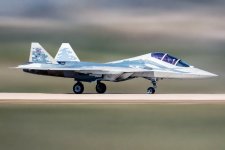
Is the WS-10 garbage? Absolute garbage. Two of them don't give enough thrust? Fine — stuff three of them into the JH-36. No one's going to pull a Cobra maneuver in that thing anyway. The common folk see it up there and cheer.
All industrial products — cars, motorcycles, phones, robot vacuums — technology is built on copying. We're all the same.
The Ukrainian liberation operations (the Dnieper crossing operation, the Cherkasy Pocket, Right-Bank Ukraine offensive) — casualties: 1.69 million (420,000 killed).
The Belarusian counter-offensive — casualties: 770,000 (180,000 killed).
East Prussia — casualties: 580,000 (130,000 killed).
The Battle of Berlin — casualties: 360,000 (80,000 killed).
From 1945 to 1955, the post-war suppression of bandits in Ukraine — 40,000 Soviet troops, police, and Party members sacrificed.
All of the above were sacrifices sustained under conditions of overwhelming and victorious momentum.
The Soviet military, and the current Russian military high command, clearly understand the intensity of war and the price of victory far better than the Western world does. By comparison, of course, the scale and impact of the current Russia-Ukraine war amount to little more than the intensity of playing house.
The political propaganda from the West, distorting the Russian General Staff's assessments of actual military force commitment, loss projections, and the war's duration — all to hype Russia up only to cut it down — is especially ludicrous. After all, from start to finish, there has been no announcement from the Russian side of a "quick victory," nor any declaration of an intention to "occupy Kyiv." It would seem as though fabricating a non-existent objective for Russia and then refuting it is somehow supposed to weaken Russia.
As for Russian aviation forces being severely restricted in Ukraine — I have seen no signs of this. Almost half the year has passed, and according to statistics compiled through Gemini:
On January 4th and 9th, one Su-30SM2 each suffered a single-engine malfunction and made emergency landings.
On January 12th, one Mi-8 crashed near the Arctic Circle.
On January 28th, one Su-34/30 was shot down by Ukraine.
On January 28th, one Su-34 crashed due to mechanical failure in Kursk.
On March 31st, one An-26 flew into a mountain.
On March 31st, one Su-34 was shot down.
On May 14th, one Mi-8 made an emergency landing in the Caucasus.
(I'm not sure how to count the incident from a couple of days ago, where a Ukrainian spy group attacked two decommissioned Tu-142 anti-submarine aircraft at a Russian aircraft repair plant — aircraft that originally belonged to Ukraine and were being used for spare parts stripping.)
Meanwhile, in 2025 alone, at least 14 Su-34s have been delivered, and Russia is simultaneously continuing to fulfill orders supplying aircraft, including the Su-57E, to other countries.
At Ukraine's pace, it would take several years to destroy just one year's worth of Russian aircraft production.
Take 2020 as an example: Russia produced 10 MiG-29Ms delivered to Egypt, 4 MiG-35s for its own use, 4 Su-30SMs for Belarus and 8 for Kazakhstan, and, additionally, equipped itself with 4 Su-34s and 10 Su-35S. It also manufactured 22 Su-35s destined for an Egyptian order (which were retained for domestic use and are now being prepared for transfer to Iran).
—And all of this was merely "peacetime production volume."
The Russian Air Force is a good example. Counting aircraft losses alone is not the right metric. A force can lose few aircraft because it is operating cautiously, from stand-off ranges, under air-defence constraints. The massive use of glide bombs does not prove complete freedom of action; it proves adaptation to a contested airspace.
If Russian aviation had full freedom of action over Ukraine, it would not need to rely so heavily on stand-off glide bombs launched from safer airspace. The fact that it does so is evidence of constraint, not evidence of unrestricted dominance.
The same applies to T-62s. A T-62 can still be useful. Old weapons are not automatically useless. A cheap gun platform can fire HE, support infantry, or be corrected by drones. But saying that an old system remains useful is not the same as saying it is superior to a modern system. It only proves that in a long war, armies use everything that can still produce some effect.
That is also the lesson for India.
India should not blindly trust France, Russia, or the United States. India should build autonomy. But autonomy is not built only by crude reverse engineering. It can also be built by selecting the right partner, demanding industrial depth, integrating national weapons, and progressively taking control of the ecosystem.
That is why Rafale makes sense.
Not because Europe is perfect. Not because France gives everything. Not because India should depend on anyone.
It makes sense because it gives India a modern, combat-proven, maintainable, upgradable platform that can be progressively Indianised. It gives India immediate operational value while building the industrial base for future Indian systems.
So the real choice is not “foreign purchase” versus “self-reliance.”
The real choice is between:
- buying old systems and trying to copy them painfully;
- buying modern systems passively and remaining dependent;
- absorbing a mature system through local production, MRO, ICDs and national weapons integration.