

Indian Economy : News,Discussions & Updates
- Thread starter Butter Chicken
- Start date
-
- Tags
- indian defence forum
You are using an out of date browser. It may not display this or other websites correctly.
You should upgrade or use an alternative browser.
You should upgrade or use an alternative browser.


Modi’s A-Team Sets the Stage for an Encore in 2026
By Menaka Doshi
January 1, 2026, at 12:10 PM GMT+5:30
How the prime minister and his bureaucrats salvaged the economy in 2025.

Indian Prime Minister Narendra Modi found his reform feet in 2025. Photographer: Anindito Mukherjee/Bloomberg.
Happy new year dear readers. This week I look at what 2026 brings for Modi and India, the A-Z of 2025 and a chart to remember.
The Second Act
2025 belonged to a small army of five bureaucrats who helped salvage India’s economy.
It was a year in which everything that could go wrong … did. A slowing economy was further hit by a 50% US tariff, an armed conflict with Pakistan, and China’s cold shoulder.
It was also the year in which many things that could be set right…were. Income and consumption tax cuts, monetary easing, legislative reforms, trade pacts, deregulation, and delicate diplomacy.
With its back against the wall, Prime Minister Narendra Modi’s government was forced to awaken from its post-pandemic-boom complacency. After 2024’s underwhelming national mandate, a few state election wins also seem to have helped Modi find his reform feet.
And so, his A-team went to work.
Reserve Bank of India Governor Sanjay Malhotra hit the ground running at Mumbai’s Mint Street by slashing interest rates, restoring liquidity and easing banking norms. His explicit pro-growth agenda combined with a non-dogmatic regulatory approach has breathed some fresh air into a sometimes stodgy central bank. Malhotra ends the year with mega foreign investments in local banks, but has yet to achieve more effective transmission of lower rates.
Following him from the federal finance ministry in Delhi was Tuhin Kanta Pandey, whose primary task as chairperson of SEBI has been to return the markets regulator to its old ways — a more amiable, bureaucratic-style work culture after his predecessor ruffled feathers with her private-sector-style assertiveness and micromanagement. He’s also reduced the frequency of regulatory changes but not enough, one might say — I’ve counted at least five amendments to mutual fund regulations in 2025.
Meanwhile in Delhi, Cabinet Secretary TV Somanathan, who is credited with holding the line on fiscal discipline, has spent the year on a deregulation mission. He’s driving ease-of-doing-business reforms, especially with state governments, such as decriminalization of offenses, fewer licensing requirements, land use changes and more flexible labor rules. It’s gotten off to a promising start — 16 state governments have implemented 38 reforms in the year, according to an Axis Bank report in November.
States Focus on Ease of Doing Business
16 states implemented 38 reforms in 2025
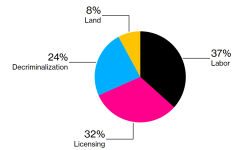
Source: Axis Bank Nov. 21 report
At NITI Aayog, the government’s policy think tank, Rajiv Gauba has an expansive mandate ranging from employment generation to regulatory reform. The former cabinet secretary made a start by advising the withdrawal of dozens of Quality Control Orders that have often worked as non-tariff barriers to trade and protected select domestic manufacturers from import competition. Reportedly, he’s also been instrumental in pushing through the new labor codes. Next on the agenda seems to be cutting red tape for small businesses.
Finally, there’s Shaktikanta Das, who moved last year from central bank chief to Principal Secretary–2 to the prime minister. Das works behind the scenes, so there’s no stated public agenda. But he’s emerged as the chief architect of a broader economic policy framework that covers areas from India–US trade negotiations to rare earth supplies and shipbuilding incentives, Debjit Chakraborty, Bloomberg’s Delhi bureau chief, tells me.
Modi’s penchant for reliance on a small group of trusted bureaucrats is not new. But two things are somewhat different with this lot, as Chakraborty, economists and policy experts describe it. It’s a mix of seasoned, old guard and young(er) blood (Das is 68, Malhotra is 57). Also, the lived experience of top bureaucrats is very different today than it was in previous generations. They are open to challenging the status quo and see themselves less as doers and more as enablers, as one expert says.
So, will this reform intensity continue in 2026?
There’s definitely a need for it. Of the 30 pending reforms tracked by the US-based Center for Strategic and International Studies, only one is complete and one is partially complete, according to Senior Adviser Richard Rossow.
I fear that this year, with three high-stakes state elections, Modi will be focused on consolidating his rule at all costs. That eliminates any scope for big-ticket items like agriculture reform. Any change involving a budget hit has only a slim chance after last year’s tax cuts, continuing free grain supplies to 800 million people, and mounting state election freebies. But the prospects seem bright for politically uncontroversial, low-expenditure yet enduring stuff such as deregulation — also painstaking work that takes years to produce results.
Chakraborty is more hopeful that the reform work will sustain. Three terms in, Modi has demonstrated his political strength; now he must prove his mettle as an economic reformer, he said. What’s your bet?
https://www.bloomberg.com/news/news...economy-from-trump-trauma-sets-stage-for-2026
By Menaka Doshi
January 1, 2026, at 12:10 PM GMT+5:30
How the prime minister and his bureaucrats salvaged the economy in 2025.
Indian Prime Minister Narendra Modi found his reform feet in 2025. Photographer: Anindito Mukherjee/Bloomberg.
Happy new year dear readers. This week I look at what 2026 brings for Modi and India, the A-Z of 2025 and a chart to remember.
The Second Act
2025 belonged to a small army of five bureaucrats who helped salvage India’s economy.
It was a year in which everything that could go wrong … did. A slowing economy was further hit by a 50% US tariff, an armed conflict with Pakistan, and China’s cold shoulder.
It was also the year in which many things that could be set right…were. Income and consumption tax cuts, monetary easing, legislative reforms, trade pacts, deregulation, and delicate diplomacy.
With its back against the wall, Prime Minister Narendra Modi’s government was forced to awaken from its post-pandemic-boom complacency. After 2024’s underwhelming national mandate, a few state election wins also seem to have helped Modi find his reform feet.
And so, his A-team went to work.
Reserve Bank of India Governor Sanjay Malhotra hit the ground running at Mumbai’s Mint Street by slashing interest rates, restoring liquidity and easing banking norms. His explicit pro-growth agenda combined with a non-dogmatic regulatory approach has breathed some fresh air into a sometimes stodgy central bank. Malhotra ends the year with mega foreign investments in local banks, but has yet to achieve more effective transmission of lower rates.
Following him from the federal finance ministry in Delhi was Tuhin Kanta Pandey, whose primary task as chairperson of SEBI has been to return the markets regulator to its old ways — a more amiable, bureaucratic-style work culture after his predecessor ruffled feathers with her private-sector-style assertiveness and micromanagement. He’s also reduced the frequency of regulatory changes but not enough, one might say — I’ve counted at least five amendments to mutual fund regulations in 2025.
Meanwhile in Delhi, Cabinet Secretary TV Somanathan, who is credited with holding the line on fiscal discipline, has spent the year on a deregulation mission. He’s driving ease-of-doing-business reforms, especially with state governments, such as decriminalization of offenses, fewer licensing requirements, land use changes and more flexible labor rules. It’s gotten off to a promising start — 16 state governments have implemented 38 reforms in the year, according to an Axis Bank report in November.
States Focus on Ease of Doing Business
16 states implemented 38 reforms in 2025
Source: Axis Bank Nov. 21 report
At NITI Aayog, the government’s policy think tank, Rajiv Gauba has an expansive mandate ranging from employment generation to regulatory reform. The former cabinet secretary made a start by advising the withdrawal of dozens of Quality Control Orders that have often worked as non-tariff barriers to trade and protected select domestic manufacturers from import competition. Reportedly, he’s also been instrumental in pushing through the new labor codes. Next on the agenda seems to be cutting red tape for small businesses.
Finally, there’s Shaktikanta Das, who moved last year from central bank chief to Principal Secretary–2 to the prime minister. Das works behind the scenes, so there’s no stated public agenda. But he’s emerged as the chief architect of a broader economic policy framework that covers areas from India–US trade negotiations to rare earth supplies and shipbuilding incentives, Debjit Chakraborty, Bloomberg’s Delhi bureau chief, tells me.
Modi’s penchant for reliance on a small group of trusted bureaucrats is not new. But two things are somewhat different with this lot, as Chakraborty, economists and policy experts describe it. It’s a mix of seasoned, old guard and young(er) blood (Das is 68, Malhotra is 57). Also, the lived experience of top bureaucrats is very different today than it was in previous generations. They are open to challenging the status quo and see themselves less as doers and more as enablers, as one expert says.
So, will this reform intensity continue in 2026?
There’s definitely a need for it. Of the 30 pending reforms tracked by the US-based Center for Strategic and International Studies, only one is complete and one is partially complete, according to Senior Adviser Richard Rossow.
I fear that this year, with three high-stakes state elections, Modi will be focused on consolidating his rule at all costs. That eliminates any scope for big-ticket items like agriculture reform. Any change involving a budget hit has only a slim chance after last year’s tax cuts, continuing free grain supplies to 800 million people, and mounting state election freebies. But the prospects seem bright for politically uncontroversial, low-expenditure yet enduring stuff such as deregulation — also painstaking work that takes years to produce results.
Chakraborty is more hopeful that the reform work will sustain. Three terms in, Modi has demonstrated his political strength; now he must prove his mettle as an economic reformer, he said. What’s your bet?
https://www.bloomberg.com/news/news...economy-from-trump-trauma-sets-stage-for-2026
Honestly I didn't Know that these are 2 SEPARATE BANKS 


From last month regarding base year revision in February.

 www.indiatoday.in
Today the first advance estimates will be released, most likely GDP would be ~₹360 trillion. This would be final estimates based on old base year. 2nd advance estimates can touch ~₹400 trillion assuming no upward revision in GDP in older base year data that might increase it further apart from the new base year revision. Upcoming financial starting April 2026, we can hopefully touch ₹450 trillion at 10-11% nominal growth meaning $5 trillion GDP at constant USD-INR exchange rates of $1 ≈ ₹90.
Again, this is hopium. Hoping for the best.
How India’s GDP is set to get a new base and what it means
A GDP base year shift from 2011-12 to 2022-23 will redraw the map of the Indian economy by capturing a decade of digital, renewable and service-sector transformation that old statistics missed
The shift, officials say, will make the economy appear 8-12 per cent larger, adding roughly Rs 30 trillion, or about $400 billion, without a single new factory or kilometre of highway. The change is not creative accounting but a correction that captures a decade of transformation invisible in the old data, one marked by digital payments, green manufacturing, app-based services and a deep formalisation of economic activity.
The announcement came just after India clocked 8.2 per cent growth in the first half of FY26, the fastest pace among major economies. Yet that number was built on a statistical framework frozen in time—one that barely recognises the platform economy or the explosion of fintech and digital services.
The International Monetary Fund’s (IMF) recent assessment of India’s national accounts, which graded them a disappointing ‘C’, was a blunt reminder that the world’s fastest-growing major economy was using outdated deflators and missing much of its new wealth. The rebasing is a response to that criticism, and also a bid to align with global norms under the IMF’s Special Data Dissemination Standard Plus, which requires more frequent updates and granular sectoral data.
The last time India revised its base year, from 2004-05 to 2011-12, the economy instantly looked bigger by over 10 per cent, and past growth rates were revised upwards by nearly a percentage point. Economists expect something similar this time. If nominal GDP rises by even 8 per cent after the shift, India’s economic size could climb from around Rs 165 trillion in the first half of FY26 to between Rs 178 and Rs 185 trillion.
On a full-year basis, that means between Rs 385 trillion and Rs 400 trillion or roughly $4.3 trillion to $4.5 trillion, depending on exchange rates at that time. That’s enough for India to leapfrog Japan’s $4.28 trillion economy and become the world’s fourth largest, just behind Germany.
Agriculture and traditional manufacturing would appear smaller. The per-capita income, currently about Rs 1.96 lakh ($2,900), is expected to climb past Rs 2.15 lakh ($3,200), moving India closer to the World Bank’s upper-middle-income threshold.
Today the first advance estimates will be released, most likely GDP would be ~₹360 trillion. This would be final estimates based on old base year. 2nd advance estimates can touch ~₹400 trillion assuming no upward revision in GDP in older base year data that might increase it further apart from the new base year revision. Upcoming financial starting April 2026, we can hopefully touch ₹450 trillion at 10-11% nominal growth meaning $5 trillion GDP at constant USD-INR exchange rates of $1 ≈ ₹90.
Again, this is hopium. Hoping for the best.
Last edited:
its almost guarenteed to increase by 10%+ since the last revision was in 2011. so assuming india is 4.2 trillion in 2026 march according to old calcs then we would be 4.7-4.8 trillion after the base is revised. 5 trillion by FY26 is almost guarenteed unless some truly absurd events happenFrom last month regarding base year revision in February.
How India’s GDP is set to get a new base and what it means
A GDP base year shift from 2011-12 to 2022-23 will redraw the map of the Indian economy by capturing a decade of digital, renewable and service-sector transformation that old statistics missed
Today the first advance estimates will be released, most likely GDP would be ~₹360 trillion. This would be final estimates based on old base year. 2nd advance estimates can touch ~₹400 trillion assuming no upward revision in GDP in older base year data that might increase it further apart from the new base year revision. Upcoming financial starting April 2026, we can hopefully touch ₹450 trillion at 10-11% nominal growth meaning $5 trillion GDP at constant USD-INR exchange rates of $1 ≈ ₹90.
Again, this is hopium. Hoping for the best.
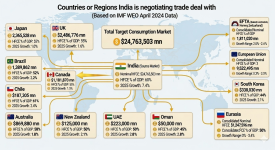
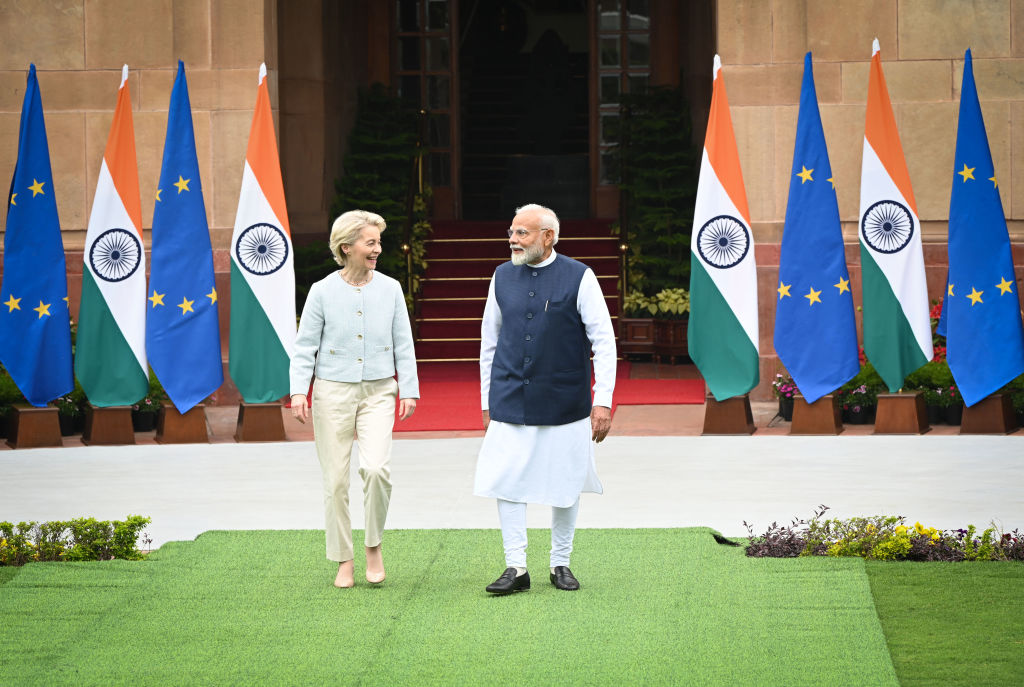
EXCLUSIVE: EU-India trade deal will exclude agriculture, von der Leyen says | Euractiv
The EU plans to sign the agreement on 27 January in New Delhi
 www.euractiv.com


India To Get AI-Powered National Tax Analytics Platform Under Rs 3,000-Crore CBDT Project
Indian technology company LTIMindtree on Friday (16 January) said it has secured a Rs 3,000-crore contract from the CBDT
 swarajyamag.com

NooooooIndia To Get AI-Powered National Tax Analytics Platform Under Rs 3,000-Crore CBDT Project
Indian technology company LTIMindtree on Friday (16 January) said it has secured a Rs 3,000-crore contract from the CBDT
Why such reaction lmao? Is this company bad or something?Noooooo
Indian technology company LTIMindtree on Friday (16 January) said it has secured a Rs 3,000-crore contract from the Central Board of Direct Taxes (CBDT) to build an artificial intelligence-powered programme for modernising India's national tax analytics platform.
Im of the beleif from experience, that A.I. is not at that level where it can take care for the nuance in this type of work, specifically Indian companies.
Why such reaction lmao? Is this company bad or something?
Im of the beleif from experience, that A.I. is not at that level where it can take care for the nuance in this type of work, specifically Indian companies.
Ah!Indian technology company LTIMindtree on Friday (16 January) said it has secured a Rs 3,000-crore contract from the Central Board of Direct Taxes (CBDT) to build an artificial intelligence-powered programme for modernising India's national tax analytics platform.
Im of the beleif from experience, that A.I. is not at that level where it can take care for the nuance in this type of work, specifically Indian companies.
Ofcourse, you are correct. I doubt it's as magical as an actual AI maintaining the tax analytics though.
At best an upgrade through AI agents for some purposes. You know, adding a function or two. Increasing processing efficiency etc
I believe what you are referring to is AI working as a central node/brain. That's a thing that even Google, OpenAI haven't mastered yet.
Well, I also don't want them to master that.I believe what you are referring to is AI working as a central node/brain. That's a thing that even Google, OpenAI haven't mastered yet.

PLI push planned for small aircraft manufacturing, announcement likely in FY27 Budget
The proposed scheme is being structured for a six-year period beginning 2026-27 and is expected to be in the range of Rs 12,000 crore to Rs 15,000 crore....
They should have brought this 2-3 years back. But, better late than never.
The proposed scheme is being structured for a six-year period beginning 2026-27 and is expected to be in the range of Rs 12,000 crore to Rs 15,000 crore....
They should have brought this 2-3 years back. But, better late than never.
India adds 4–5 GW power capacity monthly; plans $3.03 trillion push on smart meters
India boosts power capacity by 4 to 5 GW monthly, aiming for 100 GW nuclear by 2047. Manohar Lal Khattar and Pankaj Agarwal highlight major grid, renewable, and storage expansions.
By Abhimanyu Sharma
January 15, 2026, 10:09:18 PM IST (Published)
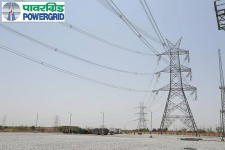
India is adding 4 to 5 GW of power capacity every month to augment the current power capacity of 514 GW, as national power demand is expected to double by 2040. Recently, India successfully met peak power demand of 250 GW during solar hours and 237 GW during non-solar hours.
Stating that India has moved from dealing with power shortages to ensuring universal access to energy, Union Minister of Power and Housing & Urban Affairs Manohar Lal Khattar said that smart meters are being rolled out across the country with an outlay of $3.03 trillion to reduce losses for discoms and help them move towards profitability. The minister added that the SHANTI Bill will help India achieve the target of 100 GW nuclear capacity by 2047.
India operates one of the largest synchronous grids in the world, with an inter-regional transfer capacity of 120 GW. The country has added over 178 GW of renewable capacity since 2014, which mainly includes 130 GW of solar capacity, 32.9 GW of wind capacity, and 9.9 GW of large hydro capacity.
Power Secretary Pankaj Agarwal said that India will soon have 5 lakh circuit kilometres (ckm) of transmission lines. In the past decade, India has added 2.05 lakh circuit kilometres (ckm) of transmission lines, 852 GVA of transmission capacity and 84.34 GW of inter-regional capacity, even as the Power Ministry estimates $345 billion of investment potential in electricity generation, $68.22 billion in transmission and distribution, and $35 billion in energy storage.
Under the Inter-State Transmission System (ISTS) alone, 48 GW of renewable energy transmission capacity has been commissioned, 172 GW is under construction, and 18 GW is under bidding.
The country has identified pumped storage project (PSP) potential of 258 GW to date, of which 7 GW has been commissioned and more than 17 GW is expected to be added by 2030. As part of encouraging battery storage, India has approved viability gap funding for 43 gigawatt hours (GWh). The minister and the secretary were speaking at the curtain-raiser of the Bharat Electricity Summit 2026, slated to be held from March 19 to 22 in New Delhi.
India adding 4–5 GW power capacity/month, to spend $3.03 trillion on smart meters for efficiency - CNBC TV18
India boosts power capacity by 4 to 5 GW monthly, aiming for 100 GW nuclear by 2047. Manohar Lal Khattar and Pankaj Agarwal highlight major grid, renewable, and storage expansions.
By Abhimanyu Sharma
January 15, 2026, 10:09:18 PM IST (Published)
India is adding 4 to 5 GW of power capacity every month to augment the current power capacity of 514 GW, as national power demand is expected to double by 2040. Recently, India successfully met peak power demand of 250 GW during solar hours and 237 GW during non-solar hours.
Stating that India has moved from dealing with power shortages to ensuring universal access to energy, Union Minister of Power and Housing & Urban Affairs Manohar Lal Khattar said that smart meters are being rolled out across the country with an outlay of $3.03 trillion to reduce losses for discoms and help them move towards profitability. The minister added that the SHANTI Bill will help India achieve the target of 100 GW nuclear capacity by 2047.
India operates one of the largest synchronous grids in the world, with an inter-regional transfer capacity of 120 GW. The country has added over 178 GW of renewable capacity since 2014, which mainly includes 130 GW of solar capacity, 32.9 GW of wind capacity, and 9.9 GW of large hydro capacity.
Power Secretary Pankaj Agarwal said that India will soon have 5 lakh circuit kilometres (ckm) of transmission lines. In the past decade, India has added 2.05 lakh circuit kilometres (ckm) of transmission lines, 852 GVA of transmission capacity and 84.34 GW of inter-regional capacity, even as the Power Ministry estimates $345 billion of investment potential in electricity generation, $68.22 billion in transmission and distribution, and $35 billion in energy storage.
Under the Inter-State Transmission System (ISTS) alone, 48 GW of renewable energy transmission capacity has been commissioned, 172 GW is under construction, and 18 GW is under bidding.
The country has identified pumped storage project (PSP) potential of 258 GW to date, of which 7 GW has been commissioned and more than 17 GW is expected to be added by 2030. As part of encouraging battery storage, India has approved viability gap funding for 43 gigawatt hours (GWh). The minister and the secretary were speaking at the curtain-raiser of the Bharat Electricity Summit 2026, slated to be held from March 19 to 22 in New Delhi.
India adding 4–5 GW power capacity/month, to spend $3.03 trillion on smart meters for efficiency - CNBC TV18
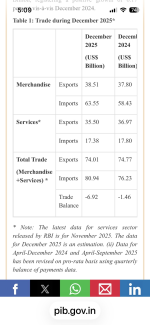
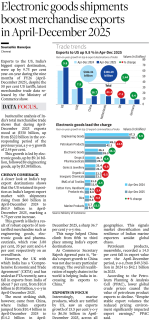
The PLI in Electronics have given the govt a shot in the arm. They really tried hard earlier too but it didn't take off.
But now one took off splendidly and we are seeing EV sector, Semi-Conductor, Mining and many more adopting similar model. Semi-Conductor already showing huge promise.
