
Indian Economy : News,Discussions & Updates
- Thread starter Butter Chicken
- Start date
-
- Tags
- indian defence forum
You are using an out of date browser. It may not display this or other websites correctly.
You should upgrade or use an alternative browser.
You should upgrade or use an alternative browser.


Just copying this from the other forum. Just for a more clearer picture some additional info. Assuming IMF is using WB data, WB data looks like this on enterprise survey 2022.
These are national averages. few states will be doing well and others very poorly bringing national averages down.
View attachment 48066View attachment 48067
Also if you look at some states there are insufficient data. So that also effect the avg.

I was sure that there's something fishy. Turns out it's cherry picking to run narrative. Take one pic out of full report. Wah! And he is apparently in journalism too.
 ..
..
Today people were spreading that IMF giving India C bs on X. I checked that report and India got an overall B. Infact India got As in some areas too. All because of The Hindu's clickbait headline. People don't even bother reading what inside the article before spreading bs unfortunately. Neither they bother reading the actual report. If you want to raise some issues atleast read the god damn report first.. anyways the government has started the process for changing the base year for calculating GDP. Once it's done the grading on that front would improve..I was sure that there's something fishy. Turns out it's cherry picking to run narrative. Take one pic out of full report. Wah! And he is apparently in journalism too.


The report in question. Do read it.
Today people were spreading that IMF giving India C bs on X. I checked that report and India got an overall B. Infact India got As in some areas too. All because of The Hindu's clickbait headline. People don't even bother reading what inside the article before spreading bs unfortunately. Neither they bother reading the actual report. If you want to raise some issues atleast read the god damn report first.. anyways the government has started the process for changing the base year for calculating GDP. Once it's done the grading on that front would improve..
There needs to be action against false or misleading information being spread like this. Even the report button is for decorative purposes.
From APIs to innovation: India’s bulk drug makers ramp up CDMO bets

 www.livemint.com

From APIs to innovation: India’s bulk drug makers ramp up CDMO bets | Mint
India’s API makers are moving up the value chain, investing in R&D and contract development to capture global pharma opportunities as companies look beyond China.
www.livemint.com
Perhaps GoI is doing too good of a work at controlling inflation. But then again I wouldn't want 5-6% inflation like sometimes back. Maybe they need reach a balance.

 www.orfonline.org
India’s 8.2% GDP Growth Signals the Success of Sustained Reforms
India’s 8.2% GDP Growth Signals the Success of Sustained Reforms
Last edited:
Thread by @EACtoPM on Thread Reader App
@EACtoPM: Long-term consumption pattern of Indian households have changed significantly from 2011-12 to 2023-24. Particularly, expenditure on Durable Goods is increasing and ownership of key durable assets has become...…
 threadreaderapp.com
Thread by @EACtoPM on Thread Reader App
@EACtoPM: Long-term consumption pattern of Indian households have changed significantly from 2011-12 to 2023-24. Particularly, expenditure on Durable Goods is increasing and ownership of key durable assets has become...…
So vehicles are up. Electronics are up. Construction is up. That means factories are also up. We all know that but i am pointing out that all the sectors are very energy intensive and also produces significant pollutants. The rise in vehicle ownership alone tells the story.
And that's what bugs me. Every nation has gone through this during their developmental cycle. All the green energy talk is good. But energy aside... Current western led Green practices are the luxury of rich nations who don't have to take care of the very basics first and create value to grow more.
India should aim to become the frontrunner in Sustainable & Green practices that cost effective at mass scale. We have all the pieces. We have problem! We have initial tech developed in other parts of world. We are still growing, so the demand is gonna grow only. And we have the vultures feeding narrative that should give urgency towards green innovation. We have jugaad oriented but science led engineers in substantial numbers. Don't need every college kid to be scientist. The base means, even 1% or 0.1% of them will outnumber tiny nations leading currently.
So, INDIA AI , Quantum India, iDex, hackathon, and other such initiatives can be modeled for this vertical too. With focus on either developing solutions for new projects or closing gaps in existing. Support it with better enforcement policies towards industrial waste that are already in place, along with the infrastructure needed, so industry can utilise the alternatives. An example will be 'GIFT CITY' for infrastructure part.
First part should be up. Hopefully from any state govt atleast.
Note: It's from a policy making perspective. Don't ask me to go and invent tech
 . I can only recommend on ways to promote and encourage to foster the environment.
Note 2: We did it in DPI. So, theres precedent in innovation+ existing tech. At SCALE.
Don't be a P. Chidambaram and discourage and underestimating India's spirit. This is for some brown sepoys.. who may be watching in the forum.
Agreed. I had the same thought in my mind. One positive thing though is that we are already focusing heavily on Solar, Wind, Nuclear, etc. which not only help with energy security but also help with tackling pollution. What I am very excited about is Nuclear power..if we can hopefully master fusion it would be game changer. Thorium & SMRs too.So vehicles are up. Electronics are up. Construction is up. That means factories are also up. We all know that but i am pointing out that all the sectors are very energy intensive and also produces significant pollutants. The rise in vehicle ownership alone tells the story.

With the 8th pay commission coming perhaps the income in the private sector could also get a hike. What India needs is a national health insurance law for smooth processing of insurance.
Insurance and telecom sector are set to see some reforms and strengthening of regulations. Not Red tape, but upgrading the concerned body to have enough capacity and capabilities to monitor insurance, since it's finance. The bill to completely open the sector is tabled I believe. It should be followed by change in regulations too.With the 8th pay commission coming perhaps the income in the private sector could also get a hike. What India needs is a national health insurance law for smooth processing of insurance.
This has to do with India-EFTA Trade pact. I remember, this topic being discussed in relevant thread, the Trade pact calls for India opening up the sector , which will require not only smooth but robust( zero loopholes) regulations and monitoring.
As for pvt sector.. salaries are due for hikes.. corporate India haven't transferred their sucess lower down the chain value as much as would've been appreciated. Raising concerns. But sadly, low level position has more supply than demand... But higher skilled ones have little supply.. perils of slave like software industry setting the direction of higher education for long.

India signs FTA with Oman, receives zero duty access on 99% of its exports
India exported $4.06 billion worth of merchandise to Oman in 2024-25, which made up 0.93% of India’s total exports that year. It imported $6.5 billion worth of goods from Oman, comprising 0.91% of India’s total imports in 2024-25.
Updated: December 18, 2025, 05:11 pm IST
NEW DELHI
T.C.A. Sharad Raghavan
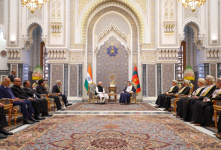
In this image received on December 18, 2025, Prime Minister Narendra Modi with Sultan of Oman Haitham bin Tarik during a bilateral meeting, in Muscat, Oman. PMO via PTI
India and Oman signed a Comprehensive Economic Partnership Agreement (CEPA) on Thursday (December 18, 2025), under which Oman will provide India duty-free access to 98.08% of its tariff lines, which covers 99.38% of what India exports to Oman.
India, on the other hand, has offered liberalised tariffs on 77.79% of its total tariff lines, covering 94.81% of what India imports from Oman. Apart from the tariff removal on merchandise exports, the deal also includes several concessions that are expected to benefit India’s service sector, including in terms of mobility of workers.
The deal was signed in Muscat by Commerce and Industry Minister Piyush Goyal and Oman’s Minister of Commerce, Industry and Investment Promotion Qais bin Mohammed Al Yousef in the presence of Prime Minister Narendra Modi and Sultan Haitham bin Tarik.
India exported $4.06 billion worth of merchandise to Oman in 2024-25, which made up 0.93% of India’s total exports that year. It imported $6.5 billion worth of goods from Oman, comprising 0.91% of India’s total imports in 2024-25.
Gateway to new opportunities
“The CEPA will infuse the India-Oman partnership in the 21st century with renewed faith and energy,” Mr. Modi said earlier in the day while speaking at the India-Oman Business Forum. “This is a blueprint for our future. It will give our trade new vigour and new trust for investments and will open the doors of new opportunities in every sector.”
This is the first bilateral agreement that Oman has signed with any country since it signed a deal with the U.S. in 2006. It is also the second deal India has signed with a country in the Gulf Cooperation Council (GCC), the first one being with the U.A.E. signed in February 2022.
Mr. Goyal had also pointed out that a trade deal with Oman also serves as a gateway for India to the Gulf Cooperation Council region, eastern Europe, central Asia, and to Africa.
Benefit to labour-intensive sectors
The Prime Minister added that CEPA will create new opportunities for growth, employment and innovation for the youth of both countries.
Taking to X soon after the signing of the deal, Mr. Goyal said that the deal would “significantly benefit” labour-intensive sectors, generating employment and strengthening MSMEs, artisans, and women-led enterprises.
According to the government’s press release, labour-intensive sectors such as gems & jewellery, textiles, leather, footwear, sports goods, plastics, furniture, agricultural products, engineering products, pharmaceuticals, medical devices, and automobiles will receive full tariff elimination under the deal.
“This is a balanced and ambitious agreement that will boost bilateral trade, strengthen supply chains, create employment, and deepen long-term economic partnership, in line with India’s vision of inclusive and sustainable growth,” Mr. Goyal had said about the deal earlier in the day.
India has kept sensitive products such as agricultural products, including dairy, tea, coffee, rubber, and tobacco products, gold and silver bullion, jewellery, and other labour-intensive products such as footwear, sports goods, and the scrap of many base metals out of the deal.
“For Indian industry, the CEPA with Oman enhances market access and trade facilitation while creating an enabling framework for services, investment, technology collaboration, and mobility of professionals,” Chandrajit Banerjee, Director General of the Confederation of Indian Industry said.
Enhanced mobility of workers
According to the release, a major highlight of the CEPA is the enhanced mobility framework for Indian professionals.
“For the first time, Oman has offered wide-ranging commitments under Mode 4, including a notable increase in the quota for Intra-Corporate Transferees from 20% to 50%, together with a longer permitted duration of stay for Contractual Service Suppliers — extended from the existing 90 days to two years, with the possibility of a further two-year extension,” the release said.
The agreement also provides for more liberal entry and stay conditions for skilled professionals in key sectors such as accountancy, taxation, architecture, medical and allied services, supporting deeper and more seamless professional engagement, the release added.
Boost to services sector
The agreement features a “comprehensive and forward-looking services package”, the government said, with Oman providing substantial commitments across a broad spectrum of sectors including computer related services, business and professional services, audio-visual services, research and development, education, and health Services.
“These commitments are expected to unlock significant new opportunities for Indian service providers, promote high-value job creation, and support expanding commercial engagement between the two countries,” the release said.
Oman currently imports about $12.52 billion worth of services from across the world, of which services from India comprises 5.31%.
“The CEPA further provides for 100% Foreign Direct Investment by Indian companies in major services sectors in Oman through commercial presence, opening a wide avenue for India’s services industry to expand operations in the region,” the release said.
Both sides have also agreed to hold future discussions on social security coordination once Oman’s contributory social security system is implemented.
Petroleum and mineral-based trade
India’s bilateral trade with Oman is currently dominated by petroleum products, oil, fertilizers and, to an extent, mineral products. Petroleum products accounted for 35.1% of India’s $4.06 billion worth of exports to Oman in 2024-25. Processed minerals accounted for another 9.2%.
The other major export categories include aircraft, spacecraft and parts (4.3%), cosmetics and toiletries (3.6%), and basmati rice (3.6%). Together, these five categories accounted for about 55% of India’s exports to Oman in 2024-25.
Crude oil and petroleum gases together accounted for 38% of India’s imports from Oman in 2024-25. Mineral or chemical fertilisers accounted for another 16.3%, acyclic alcohols 6.6%, and ammonia 5.8%. Together, these five categories accounted for a little more than two-thirds of India’s imports from Oman.
https://www-thehindu-com.cdn.ampproject.org/v/s/www.thehindu.com/business/Economy/india-oman-free-trade-agreement/article70411281.ece/amp/?amp_gsa=1&_js_v=a9&usqp=mq331AQIUAKwASCAAgM%3D#amp_tf=From%20%251%24s&aoh=17660638183575&referrer=https%3A%2F%2Fwww.google.com&share=https%3A%2F%2Fwww.thehindu.com%2Fbusiness%2FEconomy%2Findia-oman-free-trade-agreement%2Farticle70411281.ece
India exported $4.06 billion worth of merchandise to Oman in 2024-25, which made up 0.93% of India’s total exports that year. It imported $6.5 billion worth of goods from Oman, comprising 0.91% of India’s total imports in 2024-25.
Updated: December 18, 2025, 05:11 pm IST
NEW DELHI
T.C.A. Sharad Raghavan
In this image received on December 18, 2025, Prime Minister Narendra Modi with Sultan of Oman Haitham bin Tarik during a bilateral meeting, in Muscat, Oman. PMO via PTI
India and Oman signed a Comprehensive Economic Partnership Agreement (CEPA) on Thursday (December 18, 2025), under which Oman will provide India duty-free access to 98.08% of its tariff lines, which covers 99.38% of what India exports to Oman.
India, on the other hand, has offered liberalised tariffs on 77.79% of its total tariff lines, covering 94.81% of what India imports from Oman. Apart from the tariff removal on merchandise exports, the deal also includes several concessions that are expected to benefit India’s service sector, including in terms of mobility of workers.
The deal was signed in Muscat by Commerce and Industry Minister Piyush Goyal and Oman’s Minister of Commerce, Industry and Investment Promotion Qais bin Mohammed Al Yousef in the presence of Prime Minister Narendra Modi and Sultan Haitham bin Tarik.
India exported $4.06 billion worth of merchandise to Oman in 2024-25, which made up 0.93% of India’s total exports that year. It imported $6.5 billion worth of goods from Oman, comprising 0.91% of India’s total imports in 2024-25.
Gateway to new opportunities
“The CEPA will infuse the India-Oman partnership in the 21st century with renewed faith and energy,” Mr. Modi said earlier in the day while speaking at the India-Oman Business Forum. “This is a blueprint for our future. It will give our trade new vigour and new trust for investments and will open the doors of new opportunities in every sector.”
This is the first bilateral agreement that Oman has signed with any country since it signed a deal with the U.S. in 2006. It is also the second deal India has signed with a country in the Gulf Cooperation Council (GCC), the first one being with the U.A.E. signed in February 2022.
Mr. Goyal had also pointed out that a trade deal with Oman also serves as a gateway for India to the Gulf Cooperation Council region, eastern Europe, central Asia, and to Africa.
Benefit to labour-intensive sectors
The Prime Minister added that CEPA will create new opportunities for growth, employment and innovation for the youth of both countries.
Taking to X soon after the signing of the deal, Mr. Goyal said that the deal would “significantly benefit” labour-intensive sectors, generating employment and strengthening MSMEs, artisans, and women-led enterprises.
According to the government’s press release, labour-intensive sectors such as gems & jewellery, textiles, leather, footwear, sports goods, plastics, furniture, agricultural products, engineering products, pharmaceuticals, medical devices, and automobiles will receive full tariff elimination under the deal.
“This is a balanced and ambitious agreement that will boost bilateral trade, strengthen supply chains, create employment, and deepen long-term economic partnership, in line with India’s vision of inclusive and sustainable growth,” Mr. Goyal had said about the deal earlier in the day.
India has kept sensitive products such as agricultural products, including dairy, tea, coffee, rubber, and tobacco products, gold and silver bullion, jewellery, and other labour-intensive products such as footwear, sports goods, and the scrap of many base metals out of the deal.
“For Indian industry, the CEPA with Oman enhances market access and trade facilitation while creating an enabling framework for services, investment, technology collaboration, and mobility of professionals,” Chandrajit Banerjee, Director General of the Confederation of Indian Industry said.
Enhanced mobility of workers
According to the release, a major highlight of the CEPA is the enhanced mobility framework for Indian professionals.
“For the first time, Oman has offered wide-ranging commitments under Mode 4, including a notable increase in the quota for Intra-Corporate Transferees from 20% to 50%, together with a longer permitted duration of stay for Contractual Service Suppliers — extended from the existing 90 days to two years, with the possibility of a further two-year extension,” the release said.
The agreement also provides for more liberal entry and stay conditions for skilled professionals in key sectors such as accountancy, taxation, architecture, medical and allied services, supporting deeper and more seamless professional engagement, the release added.
Boost to services sector
The agreement features a “comprehensive and forward-looking services package”, the government said, with Oman providing substantial commitments across a broad spectrum of sectors including computer related services, business and professional services, audio-visual services, research and development, education, and health Services.
“These commitments are expected to unlock significant new opportunities for Indian service providers, promote high-value job creation, and support expanding commercial engagement between the two countries,” the release said.
Oman currently imports about $12.52 billion worth of services from across the world, of which services from India comprises 5.31%.
“The CEPA further provides for 100% Foreign Direct Investment by Indian companies in major services sectors in Oman through commercial presence, opening a wide avenue for India’s services industry to expand operations in the region,” the release said.
Both sides have also agreed to hold future discussions on social security coordination once Oman’s contributory social security system is implemented.
Petroleum and mineral-based trade
India’s bilateral trade with Oman is currently dominated by petroleum products, oil, fertilizers and, to an extent, mineral products. Petroleum products accounted for 35.1% of India’s $4.06 billion worth of exports to Oman in 2024-25. Processed minerals accounted for another 9.2%.
The other major export categories include aircraft, spacecraft and parts (4.3%), cosmetics and toiletries (3.6%), and basmati rice (3.6%). Together, these five categories accounted for about 55% of India’s exports to Oman in 2024-25.
Crude oil and petroleum gases together accounted for 38% of India’s imports from Oman in 2024-25. Mineral or chemical fertilisers accounted for another 16.3%, acyclic alcohols 6.6%, and ammonia 5.8%. Together, these five categories accounted for a little more than two-thirds of India’s imports from Oman.
https://www-thehindu-com.cdn.ampproject.org/v/s/www.thehindu.com/business/Economy/india-oman-free-trade-agreement/article70411281.ece/amp/?amp_gsa=1&_js_v=a9&usqp=mq331AQIUAKwASCAAgM%3D#amp_tf=From%20%251%24s&aoh=17660638183575&referrer=https%3A%2F%2Fwww.google.com&share=https%3A%2F%2Fwww.thehindu.com%2Fbusiness%2FEconomy%2Findia-oman-free-trade-agreement%2Farticle70411281.ece

While India has shown a lot of economic progress, this economist explains why India is not meeting it's true potential compared to China:
- Unique political structure (i.e. babudom) and Dysfunctional Local Governments
- Understaffing: India's local governments are terribly understaffed compared to China.
- Quotas: Government vacancies are intentionally left open if candidates are only from higher castes, leading to severe understaffing and inability to spend allocated funds for infrastructure.
- Local government officials elected by sspecal interest groups tend to reward their voters with subsidies or specific benefits rather than investing in public services for all.
- India's well-connected business tycoons did not spend borrowed money productively, leading to corporate failures and heavy debt.