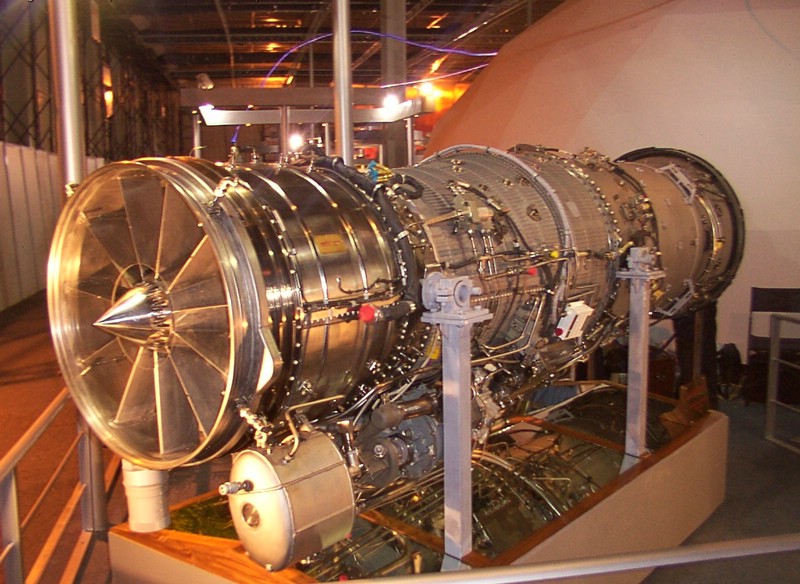
GTRE Kaveri Engine

The jv engine for amca with Safran will be same dimension as f414, basically a next gen. Analog of f414.


F414 is slightly bigger in size than f404 & you can't just downsize a engine somewhat without needing to do extensive redesign.
That's why Kaveri 2.0 with 85+kn afterburner thrust target (f404 size) is in discussion instead of discussion on derating amca jv to use in Tejas mk1/mk1a in future.


Its not.


Current Kaveri development and its targeted 82kn afterburner thrust will be somewhat underpowered compared to f404 ins20, that's Kaveri 2.0 with 85+kn targeted thrust( slightly more than f404 ins20 ) is in discussion after current Kaveri is certified.
Your point on the incremental development of the Kaveri derivatives we're undertaking is well taken but my larger point was we ought to develop both the analogues for the F-404 & F-414 using the baseline Kaveri instead of depending on the 120 KN TF JV.

How else will GTRE develop their skills & get the necessary confidence for future projects we may have to undertake on our own ?!


Is that the end goal or do we intend to become like RR which from an OEM has now been relegated to a sub contractor for components on the F-35 program only for it to try & discover it's lost mojo by developing the TF for the GCAP that too in a JV with Japanese cos ?
 
  • Like
Reactions: batman
Your point on the incremental development of the Kaveri derivatives we're undertaking is well taken but my larger point was we ought to develop both the analogues for the F-404 & F-414 using the baseline Kaveri

We will need an entirely new design if want a f414 analog other than jv engine.
Kaveri's design & core is not up to that task.


How else will GTRE develop their skills & get the necessary confidence for future projects we may have to undertake on our own ?!
AFAIK,Plan is JV engine for amca, they have betted our future engine development in-house capabilities on jv engine for amca.
Along with also some talks ongoing with rolls Royce, finally releasing funds for in-house infra and test facilities creation, Kaveri 2.0 discussions.
 
We will need an entirely new design if want a f414 analog other than jv engine.
Kaveri's design & core is not up to that task.
Then we ought to develop the analogue for the F-404 using the baseline Kaveri & launch s fresh program using those learnings to develop a F-414 analogue without getting into the 120 KN TF JV . That's how we build up knowledge & capabilities.
AFAIK,Plan is JV engine for amca, they have betted our future engine development in-house capabilities on jv engine for amca.
Along with also some talks ongoing with rolls Royce, finally releasing funds for in-house infra and test facilities creation, Kaveri 2.0 discussions.
Use the learnings from the 120 KN TF JV to develop 130 KN TF + versions we'd need for future programs.
 
Then we ought to develop the analogue for the F-404 using the baseline Kaveri & launch s fresh program using those learnings to develop a F-414 analogue without getting into the 120 KN TF JV . That's how we build up knowledge & capabilities.
Well, GTRE,drdo, goi babus have a different plan.


Use the learnings from the 120 KN TF JV to develop 130 KN TF + versions we'd need for future programs.
The jv engine is intended for 120-140kn range.
But yes the capabilities this program will create will form our base for any future jet engine development.
 
Any reliable source for these numbers? 90-100kn thrust.
Forget about 90-100KN, these are somewhat tentative numbers. Target is to have a parallel 'know how' and 'know why' of our own working jet engines along with having an engine JV with a foreign partener. Once we get going, soon this 100KN figure would change into 120+KN. Just wait for more details as they will slowly percolate out from "reliable sources" ;)
 
Forget about 90-100KN, these are somewhat tentative numbers. Target is to have a parallel 'know how' and 'know why' of our own working jet engines along with having an engine JV with a foreign partener. Once we get going, soon this 100KN figure would change into 120+KN. Just wait for more details as they will slowly percolate out from "reliable sources" ;)
I mean, its not a secret.

Ongoing talks with rolls Royce, KDE, Kaveri 2.0 discussions, infra setup etc, all made it pretty clear.
 
I mean, its not a secret.

Ongoing talks with rolls Royce, KDE, Kaveri 2.0 discussions, infra setup etc, all made it pretty clear.

I mean F414 produces 98KN.

India might opt for F414 EPE which produces 110-120 KN thrust.

At the very least, we need a 98 KN engine to power Tejas MK2 as an alternative to F414.

Safran-DRDO engine with 120 KN thrust for 6-7 Billion USD.

Kaveri 2.0 might seek Rolls Royce Collab to improve upon existing core technology.

Forget about 90-100KN, these are somewhat tentative numbers. Target is to have a parallel 'know how' and 'know why' of our own working jet engines along with having an engine JV with a foreign partener. Once we get going, soon this 100KN figure would change into 120+KN. Just wait for more details as they will slowly percolate out from "reliable sources" ;)

Kaveri 1.0 is already 250 kgs overweight. We also lag behind in core technology. It is also underpowered.

Reducing weight and mastering core technology is more difficult than increasing power in Kaveri 2.0
 
Kaveri 1.0 is already 250 kgs overweight. We also lag behind in core technology. It is also underpowered.

Reducing weight and mastering core technology is more difficult than increasing power in Kaveri 2.0
Everything is there . problem is that we dont have machines for reducing weight e.g for blisks we need 20000T isothermal forge that is in process this will reduce weight of fan stage by 30 % and then we need 50000T presses for powder metellurgy etc . We have the knowledge but lack testing and infrastructure
 
Everything is there . problem is that we dont have machines for reducing weight e.g for blisks we need 20000T isothermal forge that is in process this will reduce weight of fan stage by 30 % and then we need 50000T presses for powder metellurgy etc . We have the knowledge but lack testing and infrastructure
Without proving it on a real engine how can you say "everything is there"? These are theoretical not proven thus "not there".
 
Any reliable source for these numbers? 90-100kn thrust.

Post 85.

Older Kaveri 2.0 was expected to be in the 85 kN range, but that turned out to be false information. Or at least the goal has been changed to something more relevant, 55-58 kN.

Check out post 1254 and 1260.

Switching DMD4 to DMS4 should help achieve 55-58 kN.
 
GE-F414 has pushed up 20% to EPE.
M-88-2 has pushed up 20% to TREX.
Ultimately the new Kaveri should be pushed up like them.

And then there was Ganga, perhaps we should revive it officially -
The elusive "Ganga" engine. GTRE in the early 2010s began work to develop a turbofan with a higher bypass ratio than the Kaveri with the same Kabini core. The proposed engine was called the "Ganga" & was supposed to be as powerful as the Su-30MKI's Al-31FP. The project was never mentioned by MoD in any of its publications as an ongoing program.
 
Forget about 90-100KN, these are somewhat tentative numbers. Target is to have a parallel 'know how' and 'know why' of our own working jet engines along with having an engine JV with a foreign partener. Once we get going, soon this 100KN figure would change into 120+KN. Just wait for more details as they will slowly percolate out from "reliable sources" ;)
So we are progressing from the older kaveri which was underpowered to a dry kaveri derivative which could actually power our drones and then made a better afterburner with brahmos which has made the newer engine probably produce like 75-80KN thrust although we don't know the weight or twr as of yet and now we are going for the kaveri 2.0 which could probably power the tejas mk2 if all goes right and maybe even the AMCA mk1 if done right. Looks like we are making steady progress in this department. Now all we need is secure proper funds for testing infra and flying test bed and maybe hire some experts for review.
 
  • Like
Reactions: Rajput Lion
Forget about 90-100KN, these are somewhat tentative numbers. Target is to have a parallel 'know how' and 'know why' of our own working jet engines along with having an engine JV with a foreign partener. Once we get going, soon this 100KN figure would change into 120+KN. Just wait for more details as they will slowly percolate out from "reliable sources" ;)
I also wanna ask, most 4th and 5th gen jet engines have a bypass ratio of anywhere from 0.3 to 0.6, so why was the Kaveri initially designed with a 0.16 when no one else did it? Was it because of India's weather conditions? Although this will help with better acceleration and thrust but it would decrease the range, a higher br would have helped increase the range and helped keep the engine cooler since we werent there yet with material science back then.

Originally Kaveri's Overall Pressure Ratio 21.5-23 is also lower than most 4th(23-30) and 5th(26-32) gen engines and this has resulted in weaker thrust and probably weaker high altitude performance not to mention lower fuel efficiency and lower range. Did we design it lower because higher pressure ratio will cause extreme heat and our materials werent ready to handle it back then?

Initially Turbine inlet temperature also seems lower compared to other engine probably due to materials gap.

Our Dry and Wet Thrust seems similar to the GE f404 and Saffran M88 engine now, so if we can decrease the weight 100-150kg, we can probably actually start using this engine on our platforms.
So my question to anyone who knows to speak on this matter is that,

1. How much of these current short comings have we already addressed and helped fixed or improved on our newer Kaveri Engine?

2. Have we actually started employed blisk, TBC etc on the newer engine and is the weight now within usable range?

3. How much of more modern technology have we already developed which we havent employed in Kaveri yet?

4. Just asking for a general opinion, what do you think of the possibility of a completely new and redesigned core with better engine parameters like I mentioned being done here being possible.

Anyone can answer here to any part part of this thread they would like to open about.

Bhartiya Naagrik Sainik, randomradio, screambowl, Tatvamasi, Ashwin, Rajput Lion, TARGET, darshan978, padira, STEPHEN COHEN, Bon Plan, Gautam, spice, sinhirak, jmaxwell_, YoungWolf, redpanda, ShiroBarks, Sathya, lcafanboy, South block, darshan978, babablacksheep, STEPHEN COHEN, marich01, murtyn459, Saaho

Also, this is kinda a dumb question but what is the easiest way to tag multiple people on this forum? Not sure on how to do it.

 
why was the Kaveri initially designed with a 0.16 when no one else did
Meanwhile, GTRE has made progress on the Kaveri engine, India’s indigenous turbofan for fighter aircraft. The engine’s bypass ratio has been increased to 0.20—a key metric that measures the proportion of air bypassing the engine core.


Was it because of India's weather conditions? Although this will help with better acceleration and thrust but it would decrease the range, a higher br would have helped increase the range and helped keep the engine cooler since we werent there yet with material science back then.
Limitationa in Materials, design, infra, funds etc.


Originally Kaveri's Overall Pressure Ratio 21.5-23 is also lower than most 4th(23-30) and 5th(26-32) gen engines and this has resulted in weaker thrust and probably weaker high altitude performance not to mention lower fuel efficiency and lower range. Did we design it lower because higher pressure ratio will cause extreme heat and our materials werent ready to handle it back then?
Limitations in Compressor design, Compressor rpm, stages, lighter materials like blisk, equipment like bigger forging press etc.


Initially Turbine inlet temperature also seems lower compared to other engine probably due to materials gap.
Most yeah, but other factors noted above were also responsible.


How much of these current short comings have we already addressed and helped fixed or improved on our newer Kaveri Engine
Bypass ratio increased to 0.2, overall pressure ration decreased to 20.5


Have we actually started employed blisk, TBC etc on the newer engine and is the weight now within usable range?
Just asking for a general opinion, what do you think of the possibility of a completely new and redesigned core with better engine parameters like I mentioned being done here being possible.
Discussions are ongoing.
 
Meanwhile, GTRE has made progress on the Kaveri engine, India’s indigenous turbofan for fighter aircraft. The engine’s bypass ratio has been increased to 0.20—a key metric that measures the proportion of air bypassing the engine core.
Yeah, I know it has been improved to 0.2 now but I was asking why it was designed so low in the first place.
Limitationa in Materials, design, infra, funds etc.
sad
Limitations in Compressor design, Compressor rpm, stages, lighter materials like blisk, equipment like bigger forging press etc.
Sad, didnt know about lower rpm till now, thanks. Hope we can improve it in future versions.
Bypass ratio increased to 0.2, overall pressure ration decreased to 20.5


Discussions are ongoing.
Increasing Bypass Ratio was a good move but why are they moving backwards with lower pressure ratio?