Australian tracking terminal commissioned for India’s historic human spaceflight program
9 July 2026
Australia is playing a vital role in India’s push to send astronauts into space.
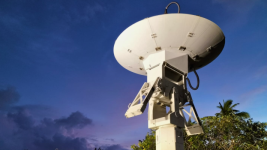
Coordinated by the Australian Space Agency, the key space tracking infrastructure is now operational in the Cocos (Keeling) Islands to support India’s historic Gaganyaan Human Spaceflight Program.
The commissioning was announced today as part of the joint statement between Prime Minister Albanese and Prime Minister Modi at the Third Australia–India Annual Summit in Melbourne.
"The Prime Ministers highlighted the importance of strengthening space cooperation, including industry-to-industry partnerships.
"The Leaders welcomed Australia’s continued support for India’s Gaganyaan Human Space Flight Program, including commissioning of a temporary space tracking terminal on Cocos (Keeling) Islands, and expressed hope to further deepen collaboration between the Indian Space Research Organization (ISRO) and the Australian Space Agency."
~Joint statement between Prime Minister Albanese and Prime Minister Modi
Located in the Indian Ocean, the newly commissioned terminal will provide mission-critical tracking support for four planned missions led by ISRO.
The first uncrewed test flight is expected to launch soon from India’s Satish Dhawan Space Centre.
 Aussie expertise backing India’s space ambitions
Australia’s contribution, led by the Australian Space Agency, highlights the strength of the Australia–India partnership, particularly in science, innovation and advanced technology.
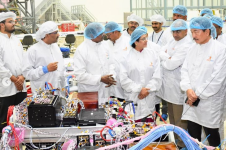
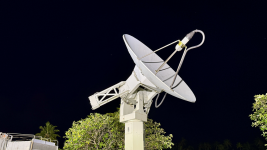
The Agency worked with other government agencies and Australian defence and space company Nova Systems to establish temporary telemetry terminals in the Cocos (Keeling) Islands to track the four Gaganyaan missions.
In a media release issued today, the Assistant Minister for Science, Technology and the Digital Economy, Dr Andrew Charlton, highlighted how the collaboration reflects the importance of Australia’s relationship with India and the opportunities created by growing cooperation in the space sector.
“India is one of Australia’s most important economic partners, with its ambitious national space program and rapidly growing commercial space sector a key driver strengthening our relationship.
“This collaboration highlights Australia’s role as a trusted partner in space and reaffirms our commitment to advancing science, innovation and international cooperation across the global space sector.”
~ Assistant Minister for Science, Technology and the Digital Economy, Dr Andrew Charlton
The commissioning demonstrates Australia’s unique geographic advantages and growing capability as a trusted partner in space mission support across the Indo-Pacific.
Head of the Australian Space Agency Enrico Palermo said Australia’s support for Gaganyaan underscores the depth of bilateral cooperation and the important role Australia can play in human spaceflight missions.
"Our unmatched geographic advantages make Australia a desirable partner for space launches and returns – with our wide-open ranges, coastlines and access to targeted orbits – but also for critical space tracking capability, thanks to our distinctive and clear view of the sky.”
~ Head of the Australian Space Agency Enrico Palermo

Advancing space exploration
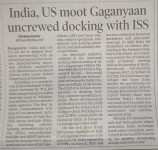
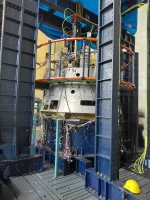
Gaganyaan – Sanskrit for “Sky Craft” – will send three astronauts into low Earth orbit for a three-day mission before returning them safely to Earth.
The upcoming mission will make India only the fourth nation to send astronauts into space through its own national program.
Australia and India are also exploring potential cooperation on search and rescue operations for controlled landings in waters off Western Australia, expanding the partnership beyond launch tracking to broader mission support.
“This is a proud moment for the region, underscoring the strategic importance of the Cocos (Keeling) Islands to Australia and the world.”
~ Minister for Regional Development, Local Government and Territories of Australia, Kristy McBain
Australia’s support for the Gaganyaan mission reflects the growing scale and ambition of the Australia–India relationship, and the role both countries are playing in advancing regional and global space capability.
https://www.space.gov.au/news-and-m...for-historic-indian-human-spaceflight-program