
Defence Research and Development Organisation (DRDO) : News and Updates
- Thread starter Ashwin
- Start date
You are using an out of date browser. It may not display this or other websites correctly.
You should upgrade or use an alternative browser.
You should upgrade or use an alternative browser.


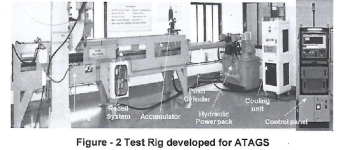
Could not think of where to post, ATAGS recoil system test rig. Based on this they are to make the 105mm light tank gun test rig.
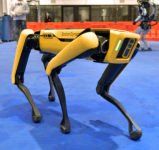
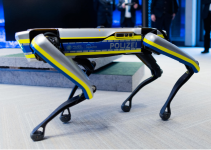
I know a few companies in south working on robotics since 2014 or so.. This will be good for them. Hopefully, babudom doesn't prevail here
DRDO begins Phase-2 of its Stratospheric Airship testing in Sheopur
Sheopur is emerging as a key high-altitude testing hub, chosen for its ideal weather, open terrain & minimal air-traffic perfect for stratospheric experiments up to 17 km altitude.
The trials aim to validate airship stability, sensor calibration & data transmission at extreme heights.
The first test in May 2025 reached 17 km for 62 min marking India’s entry into indigenous stratospheric ISR tech.
Sheopur is emerging as a key high-altitude testing hub, chosen for its ideal weather, open terrain & minimal air-traffic perfect for stratospheric experiments up to 17 km altitude.
The trials aim to validate airship stability, sensor calibration & data transmission at extreme heights.
The first test in May 2025 reached 17 km for 62 min marking India’s entry into indigenous stratospheric ISR tech.

Military Combat Parachute System, indigenously developed by DRDO, successfully tested at 32,000 feet altitude
Posted On: 15 OCT 2025 8:34PM by PIB DelhiMilitary Combat Parachute System (MCPS), indigenously developed by DRDO, has successfully undergone a combat freefall jump from an altitude of 32,000 feet. The jump was executed by the test jumpers of the Indian Air Force showcasing the efficiency, reliability, and advanced design of the indigenous system. This achievement makes the MCPS the only parachute system currently in operational use by the Indian Armed Forces capable of deployment above 25,000 feet.
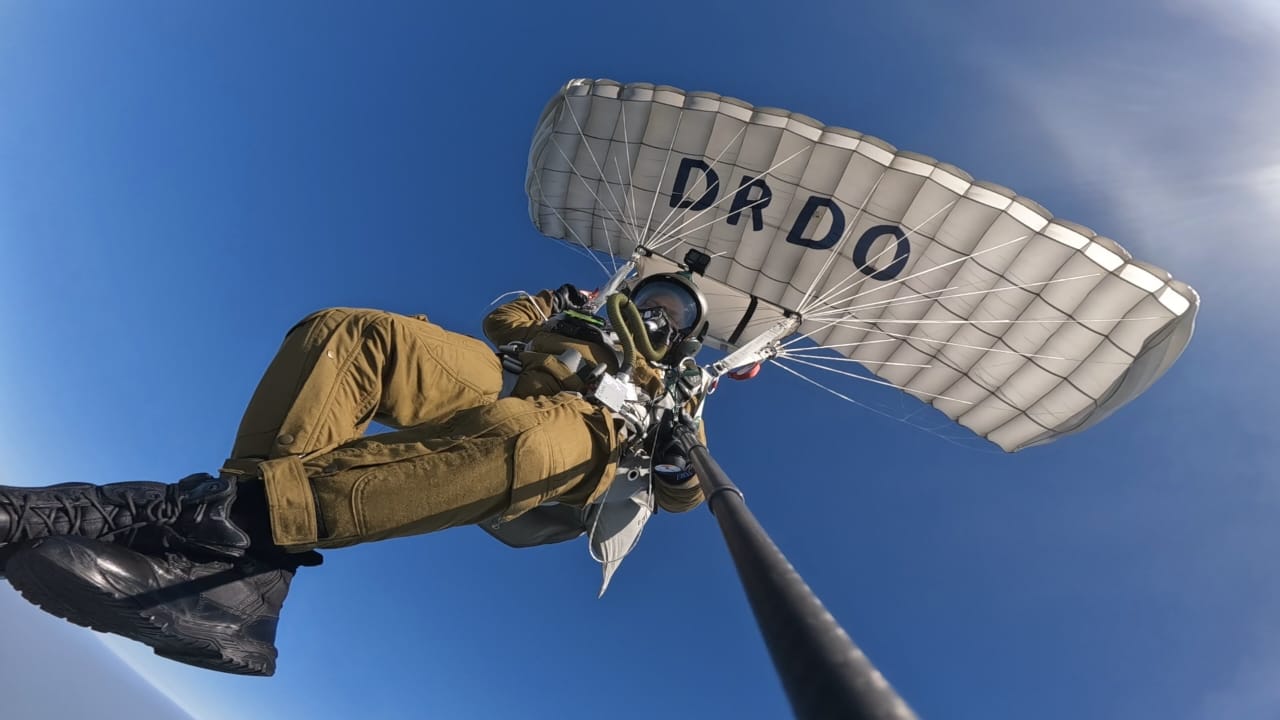
The MCPS was developed by DRDO laboratories - Aerial Delivery Research and Development Establishment, Agra and Defence Bioengineering and Electromedical Laboratory, Bengaluru. It incorporates several enhanced tactical features, including a lower rate of descent and superior steering capabilities, enabling paratroopers to safely exit aircraft, deploy parachutes at predetermined altitudes, navigate accurately, and land at designated zones. The system has compatibility with Navigation with Indian Constellation, also providing the freedom of use against any adversary of our choice and is not susceptible to interference/denial of service by outside parties/nations.
The success of this system has opened doors for induction of Indigenous parachute systems. This will ensure maximum utility of parachute system over its lifetime due to least turnaround time for routine maintenance and repair compared to imported equipment. This will also reduce dependency on other nations for its serviceability during times of conflict and war.

The Consultative Committee meeting at Pune, chaired by the Hon’ble Raksha Mantri (RM) on 16th October 2025, centered around the theme "Emerging Technologies and DRDO." During the meeting, members were given a comprehensive briefing on the latest advancements in emerging technologies and the ongoing R&D initiatives of the Defence Research and Development Organisation (DRDO). Hon’ble Members of Parliament (MPs) on the committee showed significant interest in the DRDO-developed products and technologies showcased through the exhibition and demonstration by Armament and Combat Engineering cluster laboratories.
some good photos in there
RM is really something, standing inside the tank holding the machine gun barrel like standing in a bus.
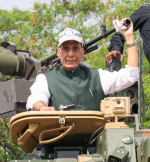
best ever meme material given by him
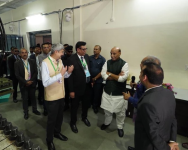
some good photos in there
RM is really something, standing inside the tank holding the machine gun barrel like standing in a bus.
best ever meme material given by him


Raksha Mantri-led Consultative Committee on Defence visits ARDE, a premier armament laboratory of DRDO, in Pune
New Delhi 16 October :- The Consultative Committee for Ministry of Defence, headed by Raksha Mantri Rajnath Singh, visited Armament Research & Development Establishment (ARDE), Pune, a premier laboratory of DRDO under the aegis of Armament & Combat Engineering Systems (ACE) cluster, on October...
 insightpulse.news
Raksha Mantri-led Consultative Committee on Defence visits ARDE, a premier armament laboratory of DRDO, in Pune
Inspects state-of-the-art products developed by labs of Armament & Combat Engineering Systems cluster
Emerging tech are a necessity in today’s times; Govt committed to integrating it into the security apparatus: Shri Rajnath Singh
“We should not only be the users of technology; we should also be the creators”
“Aatmanirbharta in defence is not just a goal, it is the strongest shield for national security”
Posted On: 16 OCT 2025 5:28PM by PIB DelhiThe Consultative Committee for Ministry of Defence, headed by Raksha Mantri Shri Rajnath Singh, visited Armament Research & Development Establishment (ARDE), Pune, a premier laboratory of DRDO under the aegis of Armament & Combat Engineering Systems (ACE) cluster, on October 16, 2025. During the visit, the committee inspected the state-of-the-art products developed by different laboratories of the cluster. The notable products demonstrated include Advanced Towed Artillery Gun System, PINAKA Rocket System, Light Tank ’Zorawar’, Wheeled Armoured Platform and AKASH-New Generation missile.
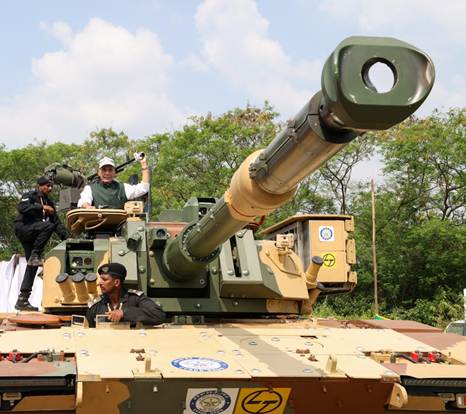
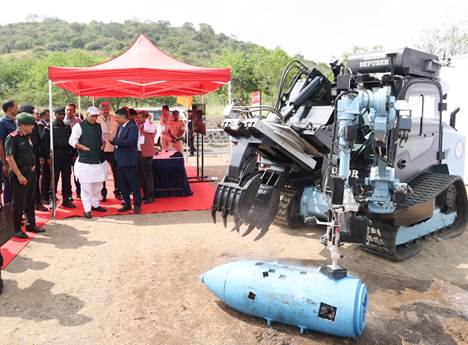
The committee was also apprised of the status of the technologies being developed in the fields of Robotics, Rail Gun, Electromagnetic Aircraft Launch System, High-Energy Propulsion Materials etc. A detailed future roadmap of the cluster was also presented.
Addressing the meeting on the topic ‘Emerging Technologies and DRDO’, Raksha Mantri stressed on the need to understand and adapt to the transformation taking place in the defence sector & the evolving nature of warfare. He termed advanced technologies as a necessity in the rapidly-changing world, voicing the Government’s commitment to integrating this necessity into the security apparatus.
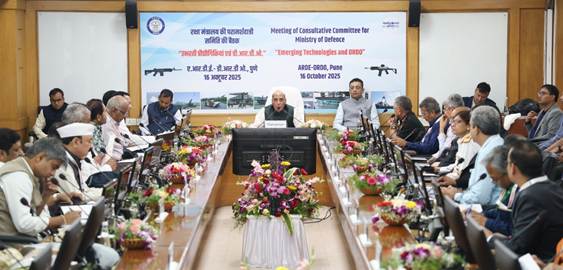
“Today is an era of technological dominance. The nation that prioritises science and innovation will lead the future. Technology is no longer limited to labs; it has become the foundation of our strategic decisions, defence system and future policies. Our goal is not only to achieve Aatmanirbharta in defence, but also to develop a culture that inspires future generations and establishes India as a global defence innovation hub,” said Shri Rajnath Singh.
Raksha Mantri underlined the essentiality of adopting future changes as a national mission and view it not just as a technical upgradation. “We should not only be the users of technology; we should also be the creators. To achieve this, there is a need to accelerate our self-reliance efforts. Aatmanirbharta in defence is not just a goal, it is the strongest shield for national security,” he said.
Shri Rajnath Singh reiterated Prime Minister Shri Narendra Modi-led Government’s unwavering resolve to achieve self-reliance in defence, asserting that India cannot depend on import of technologies to safeguard national interests. “The scope of cutting-edge tech is very restricted. Sometimes, some countries resort to protectionism when it comes to disruptive technologies. Sometimes, they do not share information with other countries. India has challenged these limitations. We have shown that if our intentions are clear and policies are unambiguous, we can become self-reliant in any field. Today, India is not only meeting its own needs, but is also becoming a trusted defence partner for the world,” he added.
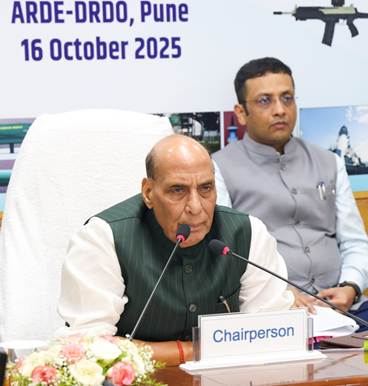
Raksha Mantri appreciated DRDO for developing technologies that were previously imported and making a mark in futuristic products that are just beginning to be discussed globally. On the supportive environment being created in the country for R&D, he stated that DRDO, in collaboration with industry, academia, and start-ups, has taken steps towards creating a new ecosystem. This endeavour, he said, is no longer just a Government effort, but has become a national effort, where all stakeholders are moving forward together in pursuit of a common goal.
“DRDO, public sector enterprises, private industries, start-ups and academia are together setting new benchmarks in defence innovation. Our youth are continuously making breakthroughs in areas like Artificial Intelligence, Cyber Security, Robotics, Quantum Communication, and Space Technology. India is becoming a technology leader due to the hard work and talent of our people. Emerging technologies not only modernise the forces but also open up new opportunities for the youth,” said Shri Rajnath Singh.
Other members of the committee expressed satisfaction over the achievements & work being carried out by the ACE cluster, and provided valuable suggestions for future policy making. They urged the officials to tread faster and more methodically in their future plans for safeguarding national interests. Raksha Mantri assured the members that their suggestions will be given due consideration.

GRSE lays keel for advanced acoustic research ship
NEW DELHI: Garden Reach Shipbuilders and Engineers (GRSE) Ltd on Wednesday laid the keel for an advanced Acoustic Research Ship (ARS) that it is building for th
Garden Reach Shipbuilders and Engineers (GRSE) Ltd on Wednesday laid the keel for an advanced Acoustic Research Ship (ARS) that it is building for the Naval Physical and Oceanographic Laboratory (NPOL), a unit of the Defence Research and Development Organisation (DRDO).
GRSE, in a statement, said, "The capabilities of the ARS will include deployment, towing and retrieval of various equipment such as acoustic modules, carrying out temporal and/or spatial high-resolution surveys of sound velocity profiles and collection of ocean tides/current information to be used for survey optimisation, design of underwater moorings and offshore deployments." The research vessel will also carry out meteorological surveys to understand the influence of atmospheric parameters in sound propagation studies and undertake shallow water acoustic reverberation studies.
It will also be capable of launching, mooring and maintaining standalone buoys and collecting data from them. Its wide speed range will allow the ship to operate at multiple speed regimes to carry out acoustic systems trials, while maintaining silence.
The ARS will be capable of speeds ranging from 4 knots to 12 knots. At top speed, the ship will have an endurance of 30 days or 4,500 nautical miles in a single mission. It will have a complement of 120 personnel. The ARS will also have a dynamic positioning system that will allow it to maintain position in intact condition up to Sea State 4.
The vessel will have diesel-electric propulsion, and three deck cranes will be fitted on board to handle research equipment. The contract for the advanced ARS was signed between GRSE and NPOL in October 2024.
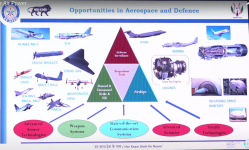
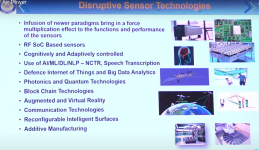
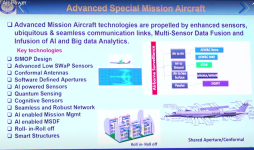
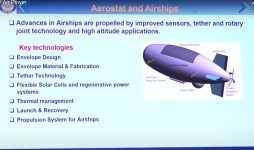
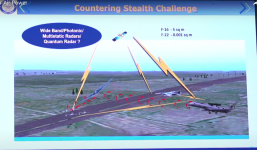
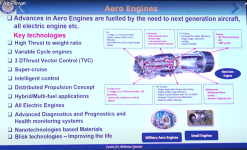
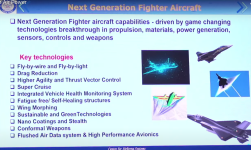
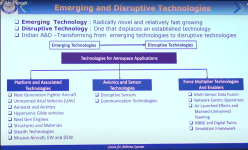
There is nothing interesting from general pov, but if want to understand other aspects like where indigenous subsystem development need to happen etc.


Indigenously developed system to boost submarine operations | Pune News - The Times of India
Pune: India's submarines now have an edge in communication and safety at sea, with the Defence Research and Development Organisation (DRDO)'s High Ene.
 timesofindia.indiatimes.com
The system, handed over to the Indian Navy on Sept 1, will be inducted on Kalvari-class submarines, enhancing their operational effectiveness. Submarine missions demand stealth, precision and the ability to communicate discreetly with surface forces. This developed system is tailored to these needs. Designed to be ejected from a submarine's signal ejector, it rises through the water column and activates on reaching the surface. Once ignited, it produces an intense, star-like light visible to surface ships and aircraft over long ranges, even at night or in poor weather conditions.
"For submarines that operate deep below the surface, this capability is crucial as it gives them the ability to connect discreetly with the ground units," said a senior DRDO scientist. "A red flare acts as a distress or emergency locator, guiding rescue units to a submarine in difficulty. A green flare, on the other hand, allows submarines to identify themselves to friendly vessels or mark positions during complex fleet manoeuvres — all without breaking radio silence or compromising their location to adversaries," he added.
The system's robust, pressure-resistant casing ensures reliable functioning in high-pressure underwater environments. Its hydrostatic mechanism activates automatically at the surface, while specially formulated pyrotechnics generate brilliant red or green signals with long burn times. This combination ensures that the flare remains visible to surface units for long enough to facilitate effective recognition and response, DRDO scientists said.

New directors appointed for the missile cluster labs
ASL , he did work on DCR (used for air launched HCM) and thruster used in missiles.

 defence.newsd.in
ARDE director A Raju got the DRDL director role, kind of interesting. He was interviewed on Chakra news few months ago.

 telanganatoday.com
ASL , he did work on DCR (used for air launched HCM) and thruster used in missiles.
Dr. M Raghavendra Rao takes charge as new Director of DRDO’s ASL Hyderabad
DRDO ASL Hyderabad Director: Dr. M Raghavendra Rao has become the new Director of the Advanced Systems Laboratory (ASL)
defence.newsd.in
ARDE director A Raju got the DRDL director role, kind of interesting. He was interviewed on Chakra news few months ago.
Ankathi Raju appointed head of DRDL Hyderabad
Distinguished scientist Ankathi Raju has been appointed Director of the Defence Research and Development Laboratory (DRDL) in Hyderabad. With over three decades of experience in missile propulsion systems, Raju has played a pivotal role in several key defence projects, including Prithvi, Agni...