
Unfortunately, this is true as well to a certain extent. I had read a few articles by Bharat Karnad. If you take out the ranting, he wrote that over the decades what he saw and read from reports left him deeply disheartened and unsatisfied with both the MoD (GoI) and procurement officials of the IAF.IAF isn't ever happy with anything desi, tomorrow if someone offers them a similar 160km range AAM from a foreign vendor, they will procure it in a heartbeat if the decision was left with them.
Astra Series Air to Air Missiles
- Thread starter Fatalis
- Start date
You are using an out of date browser. It may not display this or other websites correctly.
You should upgrade or use an alternative browser.
You should upgrade or use an alternative browser.


So 10 years to deliver current order? Thats not the real story. It takes years to ramp up.Order size is directly proportional to production output.
Order more, get more.
25 is a surprise. I would have pegged the no. at 50 and a delivery time of 5 years for the lot size ordered as per the PO. The lower production nos. kind of provide the basis of importance placed by the customer. Interesting.View attachment 47038
No one is talking about production rate of Astra. Its just 25 per year apparently.

This reminds me. There’s a lot more nuance to the “the British gave us railways” argument than most people realize. The first push for railway lines in India didn’t come as some act of colonial generosity — it was largely driven and financed by Indian capitalists and elites who lobbied for the network to facilitate trade and connectivity. The British didn’t build railways as a gift; they saw it as a profitable business venture to extract resources and move goods efficiently for their own benefit.Seriously ?
For a start Brits could at least give the same pay package , perks and respect to the soldiers they recruited from this sub-continent for the 2 WW events they fought alongside white skinned soldiers. Instead till this day Gurkhas do not get the same pay structure, perks or other stuff equal to what a white skinned service person in the Royal army would get. They are not allowed to be member of some veterans clubs, events organised but another white veteran would while both have had the exact same ranks during their service.
During the WWII itself, the white soldiers has separate tents & field hospitals and the Indian troops had their separate ones. Worse still, each white skinned soldier had own spoon & plate to eat from. Since plenty of injury many people would not be in a condition to eat himself due to loss of hands , limbs etc. Missionary volunteers had to feed them. So while in the Brit field hospital everyone had own spoons thereby more missionaries could field each individually, in the Indian side there was one single spoon and plate reserved for the Indian troops. This means while there are 60-80 or more injured people waiting for their turn to be fed, they could only be fed one after another by the volunteer. Despite repeated application by both dying troops, missionaries, and even some Scottish officer rank who felt the issue, the top brass always rejected provision for more plates & spoons.
This is Royal Army treatment for you.
A lot of you are willfully ignorant of actual event & facts and then when pointed out choose to ignore the issue. I am sure white Americans will be equally grateful when another race wipes about 80-85% of them out in future. Keep no hard feelings.
In fact, much of the physical railway infrastructure was built by Indian laborers and funded through Indian revenues. What’s often overlooked is that the network the British left behind by the mid-20th century was far from a modern, functioning asset, it had become a fragile and overburdened, heavily damaged and under-maintained system after World War II.
The railway system India has today is the result of decades of investment, expansion, and modernization made after independence. In short, the British may have initiated the railways for their own commercial and strategic motives, but it was Indians who built it, paid for it, and ultimately turned it into the backbone of the nation.
Last edited:

I wonder if the ground based SFDR TD can be used as a long range air defence system?
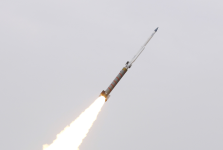

Can be, but solid rocket, specifically multi pulse.I wonder if the ground based SFDR TD can be used as a long range air defence system?
View attachment 47039
Provides much better end game performance and allow relatively higher maneuverability.
Now, relatively lower end game performance and maneuverability of SFDR can be some what compensated, but then it gets lot more trickier and a hassle to solve those.
Main advantage of SFDR or ramjet in general is relatively low weight & compact size for the range they provide.
These aspects( w.r.t A2A or G2A missiles) are more important when the missile is to carried by a fighter aircraft rather than it being used by ship or ground based launcher.
Even for A2A missiles, russia, US, even china now are going for solid rocket motor with multiple pulses instead of ramjet.
I believe they are discussing a new version, and the original Mk2 has already been tested. Otherwise, dont expect to see Mk2 in production anytime soon.

Once you prove a certain technology via this technology demonstrator phase, you can use it in any application as long as it is feasible & affordable. A TD phase proves the core tech that can be propulsion based, even the electronic items like seeker etc has its own TD phase done by other labs. A missile generally is collective application of many enabling tech, starting from airframe material, radome to warhead to navigation-guidance-control mechanism, propulsion etc. Each single enabling tech is developed that way and once multiple such tech baseline is available a weapon config system can be chosen accordingly and can be varied/tweaked due to mastery over those tech basics.I wonder if the ground based SFDR TD can be used as a long range air defence system?
So like 2 pulse, 3 or multi pulse, we are also developing various ramjets , fuels for those, there is even hybrid motor developed by HEMRL that can give higher Isp and used as the booster stage. You got tech demo approved for wire infusion into solid rocket motor to increase the burn rate thereby giving better performance due to enhanced burn area (instead of adding burn rate modifier chemicals). So several new technology once proven can be used to create newer gen missile systems. Like many other domain, this is also a highly dynamic field of study.


What's the point of announcement of 700 numbers, if Mk2 is going to be developed.
For aircrafts it make sense to know the total numbers planned.
For missiles, this 700 is enough?
For aircrafts it make sense to know the total numbers planned.
For missiles, this 700 is enough?
Just an optimistic assumption. Maybe it's the 160km variant they are ordering in small quantities first? Perhaps the 200km+ variant let's call it Astra Mk2-ER will get order after development and trials of it are completed.What's the point of announcement of 700 numbers, if Mk2 is going to be developed.
For aircrafts it make sense to know the total numbers planned.
For missiles, this 700 is enough?

How much would be enough? Depends on Inventory Management, War fighting tactics, Aerial Platforms available and other financial factors. This question has been raised multiple times and can be answered only when a multitude of factors is taken into consideration. The same goes for other SOWs as well. The production capabilities and expected frequency of orders also play their part in whether scaling up can be done within a reasonable timeline. No answer within a traditional scope of understanding like a fixed lot size A or B can be given without adequate data. I would not second guess the PO quantity without complete exposure to client requirements and ops.What's the point of announcement of 700 numbers, if Mk2 is going to be developed.
For aircrafts it make sense to know the total numbers planned.
For missiles, this 700 is enough?
The issue with this pov is that there is definite instance that go against this. Why?IAF isn't ever happy with anything desi, tomorrow if someone offers them a similar 160km range AAM from a foreign vendor, they will procure it in a heartbeat if the decision was left with them.
1. Weapon system design process is very exhaustive because it is not only the hardware, rather the entire package of hardware, software, detection method, communication, engagement, replenishment, long term storage, sustenance everything. This is why it is called weapon system complex, a multi domain & multi dimensional operation involving trained manpower right from manufacturing stage to end user. Every aspect of it need well trained people, every single missile has its own log book to keep storage & use recorded, every MLS needs high level maintenance prior & post of use; every loading crane needs to be in fit condition because you are handling articles that are highly explosive in nature with live warhead.
2. So such a complex operation involving expert manpower from technician to soldier to logistics to maintenance can not be built in a single effort. Every weapon system thus go through many iteration mk1 mk2 etc because at every stage you are going to get issues with so many factors like lru replacement, something not working as it meant to be, mechanical electrical or component level failure, glitch in software, non availability of good training manual. spare not available, parts imported got stuck in delay, need alternative source.
This is just for the main missile , but the same issues exist for supporting system too. Better carrier vehicle, better replenishment vehicle for ease of operation, radar improvement, improved warhead, comm system, infusion of new gen tech, integration with central command structure all can be named. Each element is vital to the entire operation. All this is developed over period of 30,40, 50 years and kept in operational use for another 20-30 years of life or more. Along with this development cycle, core knowledge & industrial expertise also builds up that a country needs to carry on & persist with.
Case in point, Akash missiles protect IAF bases as part of layered AD grid. Once you have layered system, you need multiple option under a single chain of command. So why it is not discarded? because it offers protection , cost benefit is good & indigenous manufactured & serviced over entire life cycle then refurbishment is done for life extension.
We as a country did not make many (read as ANY) indigenous weapons that was meant for conventional use. Due to lack of strong industrial bases and demand, plus the restricted defence sector, meant for us the development of a truly complex weapon system like Akash took a long time to learn and develop, then get mature enough for operational use & now it is getting iterative development. This much time taken is mandatory for a successful project. We have to accept it. USA Uk France all went through this cycle of learning experience & they persisted with it.
Now for your point of BVR, imagine Astra for Akash. Making a bvr missile is a different ball game where the threshold has shifted every decade, very few countries have made successful operational BVR systems. So Astra itself has to be given the same long development cycle to mature its technology level that was afforded to Akash. Since Astra is our first made weapon system for long range engagement which needed development of long range comm datalink seeker algorithm power supply miniaturised avionics everything, its evolution process also need time only in this case DRDO have much more experience in development so the development cycle is comparatively shorter.
Today we have Astra training simulator , digital checkout system, launcher , long storage method, training manual, on hand expertise for integration with different radars & jets, testing validation all developed in house. This means as a weapon complex system design process our knowledge level from conceptual stage to dev cycle, testing & proving then manufacturing & supply to user all have gone thru a revolutionary process. It has matured well that from a sub system builder we have progressed to full system integration level.
So this part so far is related to development.
Question is what IAF would have done for the time taken to establish this Astra system as fully proven & reliable? IAF could not stand still so import cases did proceed and different missile systems get inducted which gets even more complex due to diverse jets IAF use. There was no domestic system available so reliance over foreign procurement is still persisting. Astra itself is only just getting into the groove, outside of Su30 no complete integration on other jets or large inventory available yet. So it would take another 10-15 years for the entire process involving many domestic companies under lead integrator.
Akash got inducted in 2007 and today in 2025 it protects our skies successfully. Astra would do the same over a far longer time. Thereby both the points that
a. IAF needed imported solutions of all types
b. IAF also procured & deployed indigenous systems
are valid at the same time. Due to budget & operational use as multi option based strategy you always need multiple inventory options to add flexibility. Issue is you rely on export controlled weapon systems that would not be as good as what the original system that is used by the country of origin. Every export controlled weapon system is watered down version. Then you got geopolitics involved esp with USA, a lead weapon manufacturer.
This validates the logic behind multi layered approach. In case of a BVR, our option is somewhat limited compared to Akash like ad system. We rely on russian missiles because other options are both costly & not allowed to be integrated on russian platforms in some cases. So if tomorrow someone offered a new BVR at affordable cost & integration with jets we use without much additional baggage, what is wrong with buying the same?
We know there are always some caveat.
a. That bvr missile would be costly so enough numbers can not be bought sadly.
b. Sustaining those missiles during entire shelf life with spares etc will cost huge.
c. integration with radar system of various jets is a complex process anyway
d. We sometimes make it even more complex by asking for tot or source codes
e. Very small but vital use opportunities over the whole service life
f. Each missile system you can draw some unique feature use experience and learn from it, mode of operation digitally can vary.
So all these basic reasons are faced by the user and they are aware of the risk yet they go with buying because it helps in case of operational use. Now whether something promised and yet undelivered or unavailable, that is separate issue. As a buyer IAF tried to make provisions for many situations, what they call wargaming or something. Some arrived some did not, it does not reflect their lack of trying. Rather it shows they are much more professional & open minded. The fact that a mature desi system is not available at the right time of need is not their fault or concern entirely.
Another thing, range of a BVR never defines its utility. Neither does the cowardly rapid firing of BVR missiles from distance then running away like Pak do every single time defines a BVR fight. Its a throw dirt to wall & see what sticks method that is highly unprofessional.
Air to air engagement between jets rely on various other factors. Read about it in the below well explained thread.
How the f**k do you achieve full operational maturity without inducting the fking platform.
@3:03 onwards...
Its for those tubelight brained members.
Maybe it's a question too difficult for AI generated room temp IQ numbnut and its idiotic followers to comprehend.


Perhaps a truck should run over you. A life would unfortunately be lost but in the end it does mean 1 less chuitya in the world.Many great changes in the world order are brought about through difficult and hard means. It's a matter of perspective, we can see it the way we want to.
E.g., Churchill is blamed for Bengal famine which resulted in 2 - 4 million deaths (which was cruel). But the other side to it is, had that not happened, India would have 9 - 18 million or more people. These numbers are not big in Indian context but still it would have added more fuel to the struggle of survival.
Recent example: The Op Sindoor became a reality only after some people had to pay the price of their lives.

Alas, your wish will remain unfulfilled for a very long period of time even if you start praying for it.Perhaps a truck should run over you. A life would unfortunately be lost but in the end it does mean 1 less chuitya in the world.

@3:03 onwards...
Its for those tubelight brained members.
This YouTube channel is I D R W daily news collection in case u didn't know.
This chanel known to be fan boybfor desi weapon, yet they had spoken the truth on 200 km claim by DRDO.This YouTube channel is I D R W daily news collection in case u didn't know.
Claim?  .. It's literally ' developing' not 'developed'. So there's no claim it's making. Developing means it's a process with undecided outcome.
.. It's literally ' developing' not 'developed'. So there's no claim it's making. Developing means it's a process with undecided outcome.