New year, new cockpit?

Both will have same cockpit?


If India builds a engine on its own wouldnt Rafale lose its market , why would they help us and lose future sales ?The Ministry of Defence has recommended a strategic collaboration with France to co-develop next-generation fighter jet engines, marking a major breakthrough for a high-value project that promises to bring advanced design and manufacturing technologies to India — a critical step towards self-reliance in defence, according to The Economic Times.
Citing official sources, the report said the decision followed a detailed consultative process involving stakeholders and a high-level technical committee that thoroughly examined various aspects of fighter jet engine manufacturing. The French proposal emerged as more beneficial for India, leading to the ministry's recommendation in its favour.
The Rs 61,000 crore project aims to jointly develop a 120kN thrust engine that will power future combat platforms, including the indigenous Advanced Medium Combat Aircraft (AMCA). Defence Minister Rajnath Singh has played a key role in pushing forward plans to establish an indigenous engine development and manufacturing ecosystem, the report noted.
The ministry had assessed competing offers from France's Safran and the UK’s Rolls Royce, with a detailed evaluation of technical parameters and cost implications. Safran's proposal, which includes full technology transfer, aligns with AMCA’s development timeline and had been under consideration earlier as well.
As per the current plan, the first AMCA squadrons are likely to be powered by US-made GE-414 engines, while efforts will continue in parallel to develop a fully indigenous propulsion system. Fighter jet engines are among the most complex components in aerospace manufacturing, and only a handful of nations possess the necessary expertise.
India is projected to require over 250 next-gen engines in the next decade. Currently, all Indian fighter jets are equipped with foreign-origin engines. A significant portion of a fighter jet’s cost goes towards the engine and its long-term maintenance.
They can not help us and loose the present sale too.If India builds a engine on its own wouldnt Rafale lose its market , why would they help us and lose future sales ?
 ) and that's way too scary. So, happy thoughts!
We're also working on a fully domestic 130KN next-gen engine based on our experience of Kaveri. This project is different from engine JV for AMCA.If India builds a engine on its own wouldnt Rafale lose its market , why would they help us and lose future sales ?
This engine development program is not a loss for France as far as Rafale is concerned because 1) India will be largest operator of Rafale after France, 2) Technical qualification and evaluation for France's next gen engine for 6 th gen fighter through this engine without spending huge money, hence their own next gen engine will be cost effective, 3) Even France can consider this JV engine in their Rafale F5 or F6 version as it'll be easily integrable, lower production cost in India, less pressure on French Production line of Safran, 4) Having India as a strategic ally in Indo-Pacefic ( even much closer influence than USA) will enhance the geo-strategic position of France against Russia & China, 5) In future India can collaborate in development of a CATOBAR aircraft carrier on nuclear propulsion with France as they have expertise in this field too.If India builds a engine on its own wouldnt Rafale lose its market , why would they help us and lose future sales ?
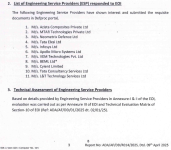
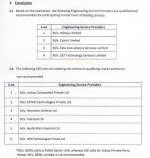
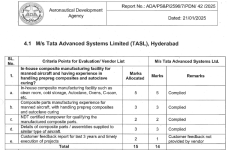
How come Tata Elxsi not meet the minimum qualifications criteria?
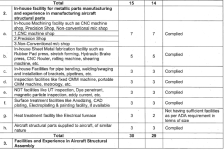
Don't know, their evaluation was not explained. In the structural parts tender and for TASL there was full breakup was shown but in this tender it is not given. A team usually visit for evaluation.How come Tata Elxsi not meet the minimum qualifications criteria?
Fellas, I think we are slowly losing this guy. Amen.We're also working on a fully domestic 130KN next-gen engine based on our experience of Kaveri. This project is different from engine JV for AMCA.


Don't know about that but, there plans for a jet engine for heavy fighter jets.Fellas, I think we are slowly losing this guy. Amen.
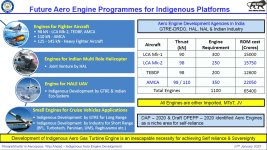
The GTRE's 130KN jet-engine facility will host slew of new engines, some based on Kaveri, some all new.Don't know about that but, there plans for a jet engine for heavy fighter jets.
The plan will probably move to 150+kn given how amca's 110kn moved to 120kn

If the GTRE themselves are projecting a need of a 125-145 KN TF can somebody explain why's it they've designed a test facility with a max thrust of 130 KN ?The GTRE's 130KN jet-engine facility will host slew of new engines, some based on Kaveri, some all new.

If India builds a engine on its own wouldnt Rafale lose its market , why would they help us and lose future sales ?


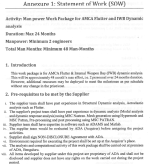
why tf they are outsourcing every thing? what the hell permanent employees are doing?
hehe how do you think work happens ?why tf they are outsourcing every thing? what the hell permanent employees are doing?
typical babu style of development.
this way we will never be able to develop top secret aircraft.