
I have read in multiple society pages that he was miffed at not being made a lord. You can't come to any conclusion basis this.
Brexit and Future of UK : Discussions
- Thread starter Vergennes
- Start date
You are using an out of date browser. It may not display this or other websites correctly.
You should upgrade or use an alternative browser.
You should upgrade or use an alternative browser.





Hunt: We would regret no-deal Brexit for generations
The foreign secretary has been visiting Denmark, Latvia, and Finland
Foreign Secretary Jeremy Hunt has said a no-deal Brexit "would be a mistake we would regret for generations", after a working tour of northern Europe.
But he said he believed that other countries wanted to "engage seriously" to try to get a "pragmatic outcome".
He also told ITV News he did not rule out the UK accepting EU environmental and social legislation, in order to help get a free trade deal.
It comes as Brexit talks resumed in Brussels between UK and EU officials.
There has been growing speculation about the possibility of the UK leaving the European Union without a deal in March 2019.
He was criticised as "the high priest of Project Fear" by Tory MP Jacob Rees-Mogg, who leads the Tory pro-Brexit European Research Group.
International Trade Secretary Liam Fox, a leading Brexiteer, has put the chance of failing to come to an agreement at "60-40", blaming the "intransigence" of the European Commission.
Mr Hunt told ITV he believed the government's plan was the "framework on which I believe the ultimate deal will be based".
But he said, although the UK must be "prepared for all outcomes", if the UK were to leave without a negotiated deal: "It would be a mistake we would regret for generations, if we were to see a fissure, if we had a messy, ugly divorce.
"Inevitably that would change British attitudes towards Europe."
He also said it was his job as foreign secretary to tell other governments that "the implications of not getting a deal are profound in terms of our friendship and corporation with foreign countries across a whole range of areas".
Asked if the UK would consider EU proposals that the UK should accept EU environmental and social legislation he said: "I think we have to see what their proposal was, some of those things can have an impact on the level playing field, some won't."
The government has been touting its plans for Brexit agreed in July at Chequers - the prime minister's country residence in Buckinghamshire - to the EU and its leaders, including the French President Emmanuel Macron, whom Theresa May met at his summer retreat.
But the EU's chief negotiator Michel Barnier appeared to rule out a key UK proposal - allowing the UK to collect EU customs duties on its behalf - in July.
Liam Fox said earlier this month: "It's up to the EU27 to determine whether they want the EU Commission's ideological purity to be maintained at the expense of their real economies."
Brexit talks resumed in Brussels this week between UK and EU officials, focused on the Irish border - a key sticking point - and future relations.
A European Commission spokesman said: "As this week's round is at technical level there won't be a meeting between Michel Barnier and Dominic Raab.
"We will confirm in due course whether a subsequent meeting has been arranged."
No-deal Brexit 'a regret for generations'
The foreign secretary has been visiting Denmark, Latvia, and Finland
Foreign Secretary Jeremy Hunt has said a no-deal Brexit "would be a mistake we would regret for generations", after a working tour of northern Europe.
But he said he believed that other countries wanted to "engage seriously" to try to get a "pragmatic outcome".
He also told ITV News he did not rule out the UK accepting EU environmental and social legislation, in order to help get a free trade deal.
It comes as Brexit talks resumed in Brussels between UK and EU officials.
There has been growing speculation about the possibility of the UK leaving the European Union without a deal in March 2019.
- Carney: No-deal Brexit risk 'high'
- What is the 'no deal' WTO option?
- What would no-deal Brexit mean for food and medicine?
He was criticised as "the high priest of Project Fear" by Tory MP Jacob Rees-Mogg, who leads the Tory pro-Brexit European Research Group.
International Trade Secretary Liam Fox, a leading Brexiteer, has put the chance of failing to come to an agreement at "60-40", blaming the "intransigence" of the European Commission.
Mr Hunt told ITV he believed the government's plan was the "framework on which I believe the ultimate deal will be based".
But he said, although the UK must be "prepared for all outcomes", if the UK were to leave without a negotiated deal: "It would be a mistake we would regret for generations, if we were to see a fissure, if we had a messy, ugly divorce.
"Inevitably that would change British attitudes towards Europe."
He also said it was his job as foreign secretary to tell other governments that "the implications of not getting a deal are profound in terms of our friendship and corporation with foreign countries across a whole range of areas".
Asked if the UK would consider EU proposals that the UK should accept EU environmental and social legislation he said: "I think we have to see what their proposal was, some of those things can have an impact on the level playing field, some won't."
The government has been touting its plans for Brexit agreed in July at Chequers - the prime minister's country residence in Buckinghamshire - to the EU and its leaders, including the French President Emmanuel Macron, whom Theresa May met at his summer retreat.
But the EU's chief negotiator Michel Barnier appeared to rule out a key UK proposal - allowing the UK to collect EU customs duties on its behalf - in July.
Liam Fox said earlier this month: "It's up to the EU27 to determine whether they want the EU Commission's ideological purity to be maintained at the expense of their real economies."
Brexit talks resumed in Brussels this week between UK and EU officials, focused on the Irish border - a key sticking point - and future relations.
A European Commission spokesman said: "As this week's round is at technical level there won't be a meeting between Michel Barnier and Dominic Raab.
"We will confirm in due course whether a subsequent meeting has been arranged."
No-deal Brexit 'a regret for generations'
In Ireland, lines are blurring because of Brexit – either a disaster or a full unification is on the horizon
When you travel to Derry, as I did this week, and listen to what people are actually saying about Brexit and the British government, it’s not entirely what you’d expect
If you take a plane from the UK mainland to Belfast, you could believe that everything is roughly as it been since the Good Friday Agreement 20 years ago. It may be difficult, occasionally tense, but not impossible and, crucially, not at war.
There are “peace walls” topped with coiled barbed wire, kerbstones painted in rival colours and rival flags flying at what are called the “interfaces”. But this year, as the police noted, was the first in four decades that there were no bonfires in Belfast to mark the 8 August anniversary of internment. While hotter weather-wise, this summer has so far been cooler in other respects than many.
Say goodbye to Belfast, however, and take the bus west-northwest, to the city now called Derry-Londonderry (by those who prefer not to take sides), and you will soon be enveloped in a rather different vibe.
The bus – linking Northern Ireland’s two major cities – takes two hours, with an extra 15 minutes at present for roadworks. The train takes a little longer. Either way, it will take you longer to traverse the distance between Northern Ireland’s two biggest cities than it takes to fly from anywhere in the mainland to Belfast.
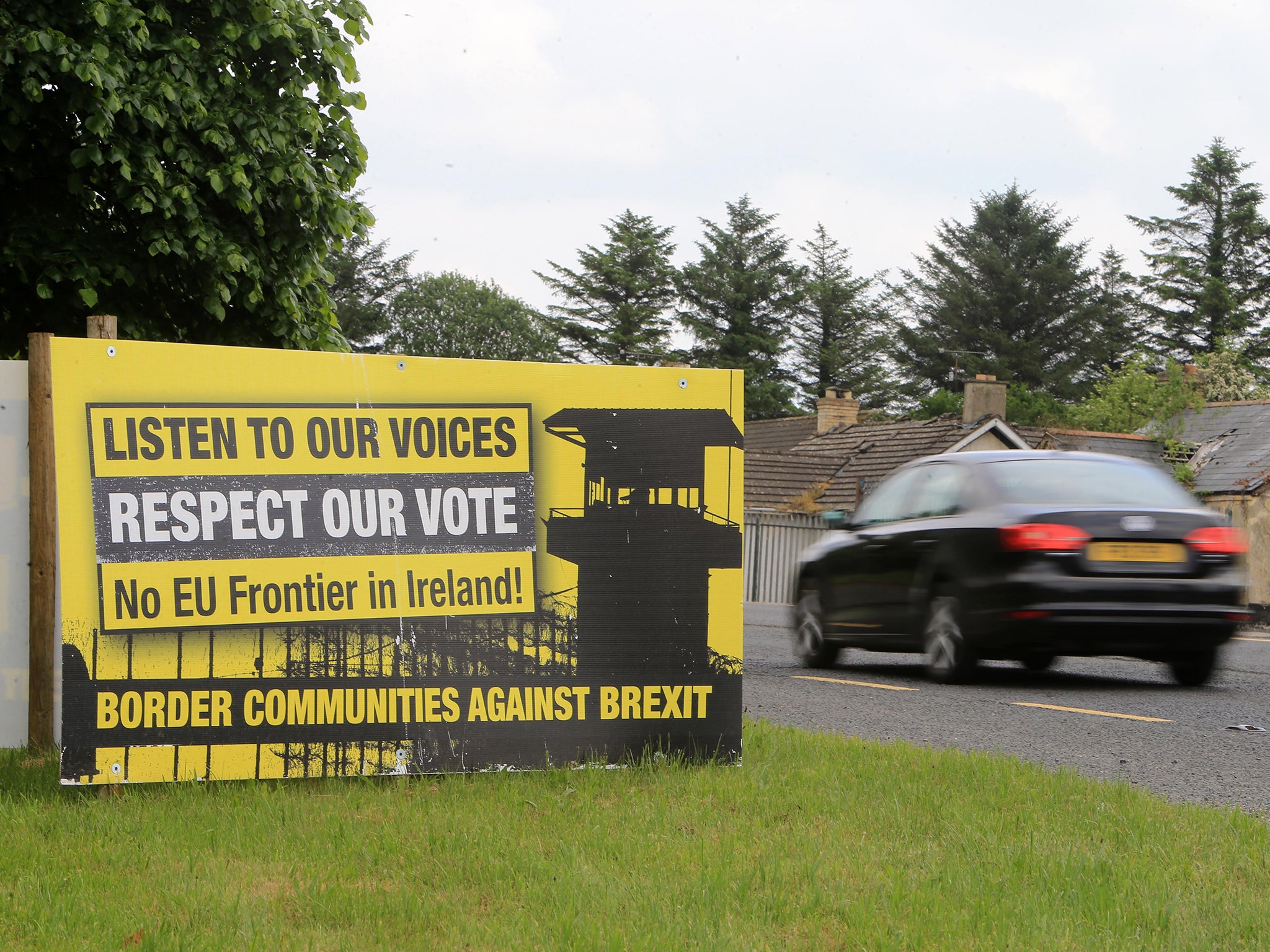
Traffic passes anti-Brexit signs on the County Derry/Londonderry Northern Ireland and County Donegal in the Irish Republic. Northern Ireland could be given joint EU and UK status and a 'buffer zone' on its border with the Republic, under new plans being drawn up by David Davis, according to reports. (EPA)
And when you look at the road and rail map of Northern Ireland, you can partly see why. There are reminders here of just-united Germany or, say, Washington DC – places whose fractured transport infrastructure betrays dislocation of a more profound kind. The lines may once have been intended to join up, but they don’t – and not just because the money ran out.
I went to Northern Ireland in the hope of catching something of the mood at what seems a rather crucial time in a place that is – potentially – the Brexit frontline. As it turned out, I was following, unwittingly, hard on the heels of some very important guests.
The previous 10 days had seen Theresa May give a speech in Belfast to defend her already moribund Chequers “deal”. It was a speech that pressed many loyalist buttons, while also recognising that many claimed Irish identity. But it was noted in the province for something else: in her speech, May had used the formulation “Derry-Londonderry” – apparently becoming the first British prime minister to do so from a public stage. This went unremarked on the mainland.
Northern Ireland police chief says he is taking responsibility for coordinating all of the difficulties with the border
A few days later, Philip Hammond, the chancellor, had made a separate trip to Derry-Londonderry to hold out the prospect of a so-called City Deal – an arrangement already widespread elsewhere in the UK, that gives local authorities more say in how central government money is spent. Belfast is still finalising its own City Deal, but Northern Ireland’s second city is now in line for one, too.
And third – belatedly, in the view of some – had come Karen Bradley, the Northern Ireland secretary, who toured the areas of both cities where street violence had erupted, seemingly out of the blue, in early July. Police blame the rioting on “new IRA” “dissidents” and it seemed to die down as suddenly as it had flared – suggesting that someone somewhere had the power to switch it on and off – but 70-plus petrol bombs in one night in the Derry Bogside, with children as young as eight involved, cannot be dismissed as nothing.
Was such a procession of senior British ministers to Northern Ireland unusual, I asked. Yes, it was – and it stirred memories for me of how senior UK politicians had rushed to Scotland 10 days before the 2014 referendum after a poll suddenly showed a turn towards independence. “Panic? What panic” was the official mantra then, and it could apply again.
So is the Westminster government finally waking up to the dangers that Brexit could present to Northern Ireland – and not just to Northern Ireland, but to the uneasy peace that prevails there, and even to the current composition of the United Kingdom? Arch-Brexiteers argue that there is no risk – indeed, that the whole issue is being inflated out of all proportion by Remainers in their flailing attempts to frustrate Brexit. Boris Johnson is reported to have applied the same profane dismissal to the concerns of Northern Ireland as he applied to the expressions of alarm from UK business.
I would respectfully recommend that they follow me past Belfast (which hogs the bulk of Westminster subventions to the province and stands to survive any adverse Brexit effect better than the rest) to Derry – I’m dropping the Londonderry for practical not political considerations – and just listen to what people say. It would not necessarily be what they expect.
Once upon a time you might have been struck by the sectarian divide, here as in Belfast, which would have split opinion on everything. This August, that was not my first, or overwhelming, impression. The alignments of Protestant/unionist/loyalist on the one side and Catholic/republican/nationalist on the other seem less clear than they were.
Whether you talk to engaged observers, such as Michael Gove’s much maligned “experts” or local journalists, to businesspeople, or to concerned individuals of the sort who crammed into talks organised for this – the 26th – year’s Feile (community festival), even if you just eavesdrop on people chatting among themselves in the walled city’s cafes and bars, you will not have to wait long before you hear such terms as “disaster”, “destruction”, “devastation”.
This is what they fear from a hard Brexit, from a no-deal Brexit, or from pretty much any Brexit that entails the reinstatement, however partial or “technical”, of the border that wends its way just a few miles/kilometres from their city. And they understand, with a stark clarity that seems totally lacking on the mainland, that when (not if) the UK leaves the European Union, there will be a land border with the Republic of Ireland, which will become a fully foreign country.
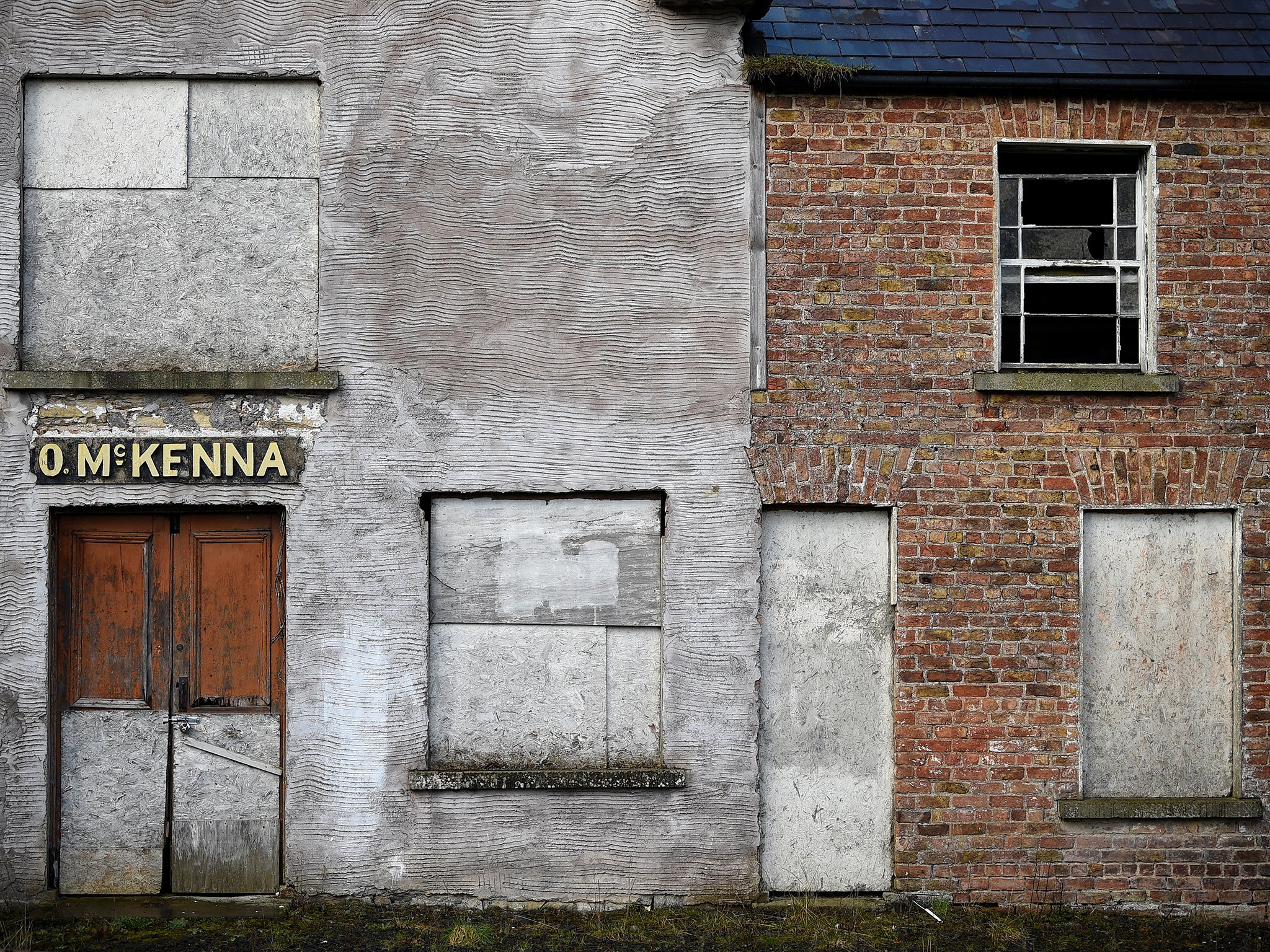
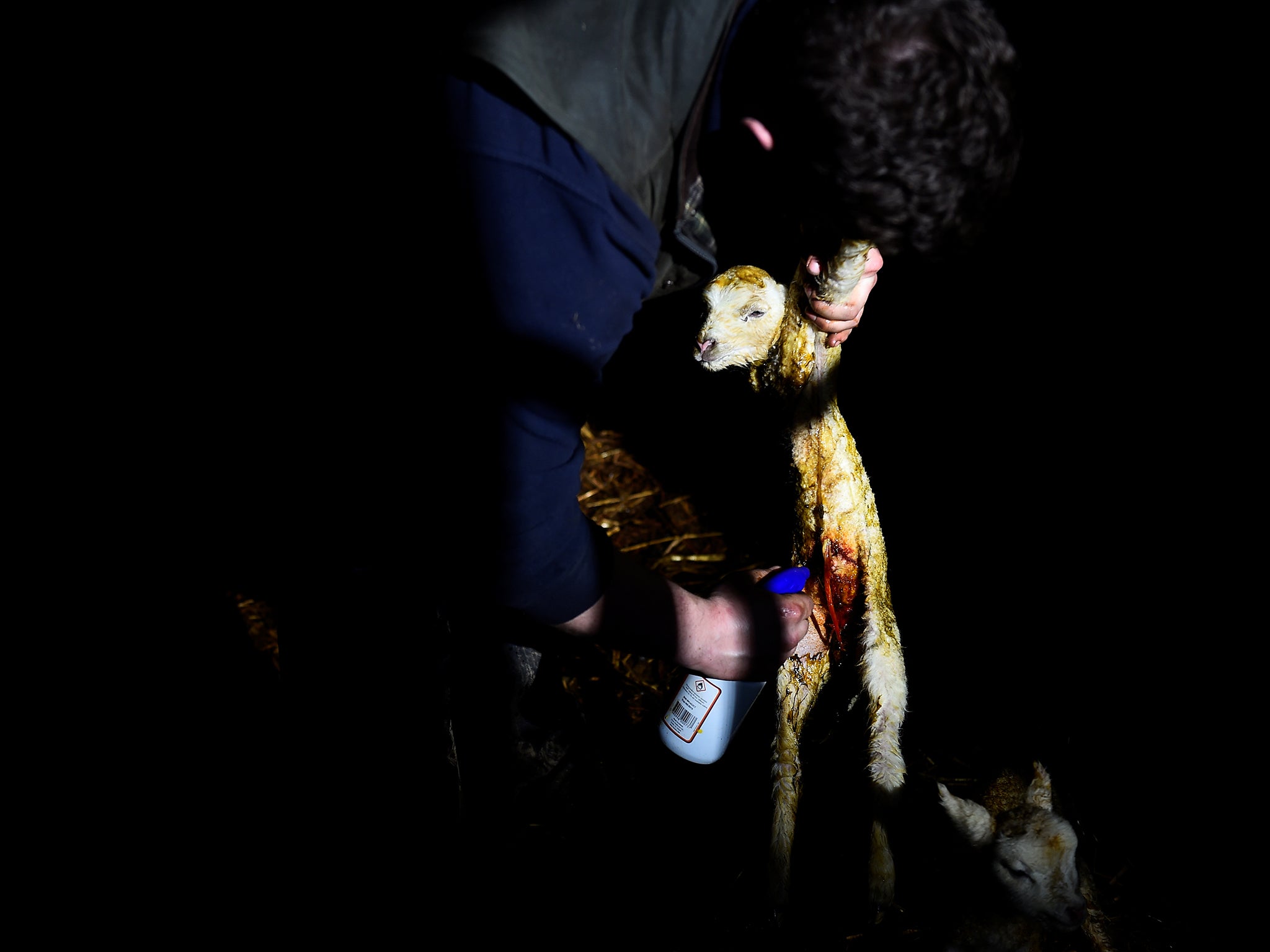
Brexit threatens life on the Irish border: in pictures

For younger people, this will be for the first time in living memory.
You can talk about special “bilateral” arrangements as much as you like, about sophisticated Customs technology, or – wistfully – about drawing a new Customs border down the Irish Sea. But no one, it seemed to me, has any illusions. The Good Friday “fudge” that allowed the border to be visible for those who wanted to see it and invisible to those who did not, that allowed Northern Ireland’s population to choose to be British or Irish or both, is coming to an end.
Now you might object that this alarm – and it is alarm – stems largely from the fact that the UK government has not been doing a sufficiently good job of reassurance. Maybe. But if the UK government in Westminster isn’t profoundly worried by now about the Brexit effect on Northern Ireland, then it should be.
The economic writing is already on the wall. The fall in the pound against the euro is not benefiting Northern Ireland. It is sending skilled EU workers home, or across the border. Uncertainty is killing investment. And it is not as though Northern Ireland was flourishing to start with. The Good Friday dividend never really arrived north of the border, and the comparative deprivation beyond Belfast is a shocking indictment of decades of poor government from London and Stormont. The northwest feels as abandoned by the UK as it ever has.
Which is partly why the political writing is on the wall, too. The rioting that broke out early last month – in places where rioting tends to break out – was passed over as an unfortunate little local difficulty. Well, maybe. But levels of violence can also be a gauge of something else: morale, discontent, frustration. What was the trigger? Will it recur? And one reason why local politicians took such a dim view of the Northern Ireland secretary’s tardiness in visiting was that the leader of the DUP, Arlene Foster, and the members of the currently defunct Stormont Assembly and the Irish foreign minister, Simon Coveney, had made a joint visit to the area more than a week before. What does that say about the engagement of the “mother country”?
But something else is happening, too, which casts a slightly different light on this otherwise depressing scene. Late last month, after the week of riots, after the procession of UK visitors, the former DUP leader, now elder statesman, Peter Robinson used a conference speech just across the Irish border to reopen the taboo question of a united Ireland. In remarks received furiously by some fellow unionists, Robinson said he did not think Northern Ireland would vote to leave the UK, but people should “prepare” for the possibility and “accept the result”.
Read more
It turned out that he was giving public voice to a discussion that had already begun, and that discussion exposes very different concerns from the past. It used to be that the power of the Catholic Church was the overriding objection. With the reputation of the church tarnished by child abuse scandals and social attitudes, both among the public and enshrined in law, more liberal than in much of the north, the arguments now are about the place of the British legacy, the economy, and… the NHS (that is, keeping a health service that is “free at the point of delivery”).
It is not clear where this might go. But the conversation now is not just about whether, but how. And allegiances appear to be more fluid, perhaps a lot more fluid, than they were – thanks to generational change in the north, social and economic change in the Republic, and, of course, Brexit.
The size of the majority for Remain in the EU referendum in Northern Ireland showed that it crossed the Catholic/Protestant, republican/unionist divide. A hard border, even the prospect of a hard border, could push the line even further. The result, in the event of a referendum on unification, may not be as predictable as it once was.
What the UK has cooked up, courtesy of our Brexit vote, the ill-advised election that gave the Northern Ireland DUP a casting vote in Westminster, and some cack-handed negotiation with Brussels, is widely seen in the province as a disaster in the making, presaging penury or a return to violence, or both. Or, it could spell the end of the Union and pave the way – Dublin willing – for a united Ireland. Even a year ago, that would have been inconceivable. No longer.
'A united Ireland is closer than ever because of Brexit'
When you travel to Derry, as I did this week, and listen to what people are actually saying about Brexit and the British government, it’s not entirely what you’d expect
If you take a plane from the UK mainland to Belfast, you could believe that everything is roughly as it been since the Good Friday Agreement 20 years ago. It may be difficult, occasionally tense, but not impossible and, crucially, not at war.
There are “peace walls” topped with coiled barbed wire, kerbstones painted in rival colours and rival flags flying at what are called the “interfaces”. But this year, as the police noted, was the first in four decades that there were no bonfires in Belfast to mark the 8 August anniversary of internment. While hotter weather-wise, this summer has so far been cooler in other respects than many.
Say goodbye to Belfast, however, and take the bus west-northwest, to the city now called Derry-Londonderry (by those who prefer not to take sides), and you will soon be enveloped in a rather different vibe.
The bus – linking Northern Ireland’s two major cities – takes two hours, with an extra 15 minutes at present for roadworks. The train takes a little longer. Either way, it will take you longer to traverse the distance between Northern Ireland’s two biggest cities than it takes to fly from anywhere in the mainland to Belfast.
Traffic passes anti-Brexit signs on the County Derry/Londonderry Northern Ireland and County Donegal in the Irish Republic. Northern Ireland could be given joint EU and UK status and a 'buffer zone' on its border with the Republic, under new plans being drawn up by David Davis, according to reports. (EPA)
And when you look at the road and rail map of Northern Ireland, you can partly see why. There are reminders here of just-united Germany or, say, Washington DC – places whose fractured transport infrastructure betrays dislocation of a more profound kind. The lines may once have been intended to join up, but they don’t – and not just because the money ran out.
I went to Northern Ireland in the hope of catching something of the mood at what seems a rather crucial time in a place that is – potentially – the Brexit frontline. As it turned out, I was following, unwittingly, hard on the heels of some very important guests.
The previous 10 days had seen Theresa May give a speech in Belfast to defend her already moribund Chequers “deal”. It was a speech that pressed many loyalist buttons, while also recognising that many claimed Irish identity. But it was noted in the province for something else: in her speech, May had used the formulation “Derry-Londonderry” – apparently becoming the first British prime minister to do so from a public stage. This went unremarked on the mainland.
Northern Ireland police chief says he is taking responsibility for coordinating all of the difficulties with the border
A few days later, Philip Hammond, the chancellor, had made a separate trip to Derry-Londonderry to hold out the prospect of a so-called City Deal – an arrangement already widespread elsewhere in the UK, that gives local authorities more say in how central government money is spent. Belfast is still finalising its own City Deal, but Northern Ireland’s second city is now in line for one, too.
And third – belatedly, in the view of some – had come Karen Bradley, the Northern Ireland secretary, who toured the areas of both cities where street violence had erupted, seemingly out of the blue, in early July. Police blame the rioting on “new IRA” “dissidents” and it seemed to die down as suddenly as it had flared – suggesting that someone somewhere had the power to switch it on and off – but 70-plus petrol bombs in one night in the Derry Bogside, with children as young as eight involved, cannot be dismissed as nothing.
Was such a procession of senior British ministers to Northern Ireland unusual, I asked. Yes, it was – and it stirred memories for me of how senior UK politicians had rushed to Scotland 10 days before the 2014 referendum after a poll suddenly showed a turn towards independence. “Panic? What panic” was the official mantra then, and it could apply again.
So is the Westminster government finally waking up to the dangers that Brexit could present to Northern Ireland – and not just to Northern Ireland, but to the uneasy peace that prevails there, and even to the current composition of the United Kingdom? Arch-Brexiteers argue that there is no risk – indeed, that the whole issue is being inflated out of all proportion by Remainers in their flailing attempts to frustrate Brexit. Boris Johnson is reported to have applied the same profane dismissal to the concerns of Northern Ireland as he applied to the expressions of alarm from UK business.
I would respectfully recommend that they follow me past Belfast (which hogs the bulk of Westminster subventions to the province and stands to survive any adverse Brexit effect better than the rest) to Derry – I’m dropping the Londonderry for practical not political considerations – and just listen to what people say. It would not necessarily be what they expect.
Once upon a time you might have been struck by the sectarian divide, here as in Belfast, which would have split opinion on everything. This August, that was not my first, or overwhelming, impression. The alignments of Protestant/unionist/loyalist on the one side and Catholic/republican/nationalist on the other seem less clear than they were.
Whether you talk to engaged observers, such as Michael Gove’s much maligned “experts” or local journalists, to businesspeople, or to concerned individuals of the sort who crammed into talks organised for this – the 26th – year’s Feile (community festival), even if you just eavesdrop on people chatting among themselves in the walled city’s cafes and bars, you will not have to wait long before you hear such terms as “disaster”, “destruction”, “devastation”.
This is what they fear from a hard Brexit, from a no-deal Brexit, or from pretty much any Brexit that entails the reinstatement, however partial or “technical”, of the border that wends its way just a few miles/kilometres from their city. And they understand, with a stark clarity that seems totally lacking on the mainland, that when (not if) the UK leaves the European Union, there will be a land border with the Republic of Ireland, which will become a fully foreign country.
Brexit threatens life on the Irish border: in pictures
For younger people, this will be for the first time in living memory.
You can talk about special “bilateral” arrangements as much as you like, about sophisticated Customs technology, or – wistfully – about drawing a new Customs border down the Irish Sea. But no one, it seemed to me, has any illusions. The Good Friday “fudge” that allowed the border to be visible for those who wanted to see it and invisible to those who did not, that allowed Northern Ireland’s population to choose to be British or Irish or both, is coming to an end.
Now you might object that this alarm – and it is alarm – stems largely from the fact that the UK government has not been doing a sufficiently good job of reassurance. Maybe. But if the UK government in Westminster isn’t profoundly worried by now about the Brexit effect on Northern Ireland, then it should be.
The economic writing is already on the wall. The fall in the pound against the euro is not benefiting Northern Ireland. It is sending skilled EU workers home, or across the border. Uncertainty is killing investment. And it is not as though Northern Ireland was flourishing to start with. The Good Friday dividend never really arrived north of the border, and the comparative deprivation beyond Belfast is a shocking indictment of decades of poor government from London and Stormont. The northwest feels as abandoned by the UK as it ever has.
Which is partly why the political writing is on the wall, too. The rioting that broke out early last month – in places where rioting tends to break out – was passed over as an unfortunate little local difficulty. Well, maybe. But levels of violence can also be a gauge of something else: morale, discontent, frustration. What was the trigger? Will it recur? And one reason why local politicians took such a dim view of the Northern Ireland secretary’s tardiness in visiting was that the leader of the DUP, Arlene Foster, and the members of the currently defunct Stormont Assembly and the Irish foreign minister, Simon Coveney, had made a joint visit to the area more than a week before. What does that say about the engagement of the “mother country”?
But something else is happening, too, which casts a slightly different light on this otherwise depressing scene. Late last month, after the week of riots, after the procession of UK visitors, the former DUP leader, now elder statesman, Peter Robinson used a conference speech just across the Irish border to reopen the taboo question of a united Ireland. In remarks received furiously by some fellow unionists, Robinson said he did not think Northern Ireland would vote to leave the UK, but people should “prepare” for the possibility and “accept the result”.
Read more
- Why hasn’t the NHS been prioritised in Brexit negotiations?
- Labour Leave voters are ditching Brexit, claims Gordon Brown
- Why has John McDonnell’s constituency changed its mind on Brexit?
- Senior Conservative asks constituents if they want new Brexit vote
- A no-deal Brexit would be a disaster for cities like Liverpool
It turned out that he was giving public voice to a discussion that had already begun, and that discussion exposes very different concerns from the past. It used to be that the power of the Catholic Church was the overriding objection. With the reputation of the church tarnished by child abuse scandals and social attitudes, both among the public and enshrined in law, more liberal than in much of the north, the arguments now are about the place of the British legacy, the economy, and… the NHS (that is, keeping a health service that is “free at the point of delivery”).
It is not clear where this might go. But the conversation now is not just about whether, but how. And allegiances appear to be more fluid, perhaps a lot more fluid, than they were – thanks to generational change in the north, social and economic change in the Republic, and, of course, Brexit.
The size of the majority for Remain in the EU referendum in Northern Ireland showed that it crossed the Catholic/Protestant, republican/unionist divide. A hard border, even the prospect of a hard border, could push the line even further. The result, in the event of a referendum on unification, may not be as predictable as it once was.
What the UK has cooked up, courtesy of our Brexit vote, the ill-advised election that gave the Northern Ireland DUP a casting vote in Westminster, and some cack-handed negotiation with Brussels, is widely seen in the province as a disaster in the making, presaging penury or a return to violence, or both. Or, it could spell the end of the Union and pave the way – Dublin willing – for a united Ireland. Even a year ago, that would have been inconceivable. No longer.
'A united Ireland is closer than ever because of Brexit'


What Brexit would mean for food and medicine is that we make more food locally and find cheaper international suppliers too. For medicine we have some of the largest drug producing companies right here - GSK, AstraZeneca and if it was such a dire problem we could easily void tariffs on medical imports. Some people literally spew illogical garbage right, left and centre to fear-monger.
The Irish border - very few people live in ROI and even less in NI, we would happily institute a no hard border policy even in the event of no deal. For the pitiful amount of tariffs involved, it simply isn't worth it. And anyone familiar with the infrastructure knows that there simply isn't the capacity for other countries to try doing an end run around customs via Ireland.
The Irish border - very few people live in ROI and even less in NI, we would happily institute a no hard border policy even in the event of no deal. For the pitiful amount of tariffs involved, it simply isn't worth it. And anyone familiar with the infrastructure knows that there simply isn't the capacity for other countries to try doing an end run around customs via Ireland.
Hunt: We would regret no-deal Brexit for generations
The foreign secretary has been visiting Denmark, Latvia, and Finland
Foreign Secretary Jeremy Hunt has said a no-deal Brexit "would be a mistake we would regret for generations", after a working tour of northern Europe.
But he said he believed that other countries wanted to "engage seriously" to try to get a "pragmatic outcome".
He also told ITV News he did not rule out the UK accepting EU environmental and social legislation, in order to help get a free trade deal.
It comes as Brexit talks resumed in Brussels between UK and EU officials.
There has been growing speculation about the possibility of the UK leaving the European Union without a deal in March 2019.
Bank of England governor Mark Carney said this month the possibility of the UK and EU failing to reach agreement on the terms of departure was "uncomfortably high".
- Carney: No-deal Brexit risk 'high'
- What is the 'no deal' WTO option?
- What would no-deal Brexit mean for food and medicine?
He was criticised as "the high priest of Project Fear" by Tory MP Jacob Rees-Mogg, who leads the Tory pro-Brexit European Research Group.
International Trade Secretary Liam Fox, a leading Brexiteer, has put the chance of failing to come to an agreement at "60-40", blaming the "intransigence" of the European Commission.
Mr Hunt told ITV he believed the government's plan was the "framework on which I believe the ultimate deal will be based".
But he said, although the UK must be "prepared for all outcomes", if the UK were to leave without a negotiated deal: "It would be a mistake we would regret for generations, if we were to see a fissure, if we had a messy, ugly divorce.
"Inevitably that would change British attitudes towards Europe."
He also said it was his job as foreign secretary to tell other governments that "the implications of not getting a deal are profound in terms of our friendship and corporation with foreign countries across a whole range of areas".
Asked if the UK would consider EU proposals that the UK should accept EU environmental and social legislation he said: "I think we have to see what their proposal was, some of those things can have an impact on the level playing field, some won't."
The government has been touting its plans for Brexit agreed in July at Chequers - the prime minister's country residence in Buckinghamshire - to the EU and its leaders, including the French President Emmanuel Macron, whom Theresa May met at his summer retreat.
But the EU's chief negotiator Michel Barnier appeared to rule out a key UK proposal - allowing the UK to collect EU customs duties on its behalf - in July.
Liam Fox said earlier this month: "It's up to the EU27 to determine whether they want the EU Commission's ideological purity to be maintained at the expense of their real economies."
Brexit talks resumed in Brussels this week between UK and EU officials, focused on the Irish border - a key sticking point - and future relations.
A European Commission spokesman said: "As this week's round is at technical level there won't be a meeting between Michel Barnier and Dominic Raab.
"We will confirm in due course whether a subsequent meeting has been arranged."
No-deal Brexit 'a regret for generations'
Privately Hunt is shitting himself. He is not wrong the country will suffer chronically in the subsequent decades due to Brexit - perhaps to a level they may never recover from. The rest of the world will gallop ahead making strategic gains and the UK will dream on Winston Churchshit and think of the empire.
Even Brexit lovers are jumping ship and realising the consequences.
Next time keep your thieves better locked up, we're not your garbage collectors.
You certainly are acting as one. There is a reson why all thieves and pedophiles Running to Brittan in 1st opportunity.
Yes, unfortunately due process takes ages, even with terrorists, never mind thieves. .
About the incompetency of your country to deal with terrorists, I agree. 22 British children got blown up to pieces just because of that.
Mosque sermon 'called for armed jihad'
Watch the above video, this jihadi/Imam went to Lybia to fight Jihad (probably funded by MI5/6), returned to UK, continued radicalization program in Britain, 22 kids got blown up, and he still walks free. lol
Last edited:
We did not ask you for your trash, we cannot help having a good country that people are attracted too.You certainly are acting as one. There is a reson why all thieves and pedophiles Running to Brittan in 1st opportunity.
About the incompetency of your country to deal with terrorists, I agree. 22 British children got blown up to pieces just because of that.
Mosque sermon 'called for armed jihad'
Watch the above video, this jihadi/Imam went to Lybia to fight Jihad (probably funded by MI5/6), returned to UK, continued radicalization program in Britain, 22 kids got blown up, and he still walks free. lol
The recording was acquired after the incident but made before the incident.
I've seen it and this is why we shouldn't allow any of these people back but you know what the EU and ECHR are like. The sooner we get rid of them the better.
Why, because we took during a period of history that was better recorded than for other empires?yes, especially if due process means returning ill gotten money...we're still waiting for you to return all your loot.

You should ask your clansmen that . Particularly , the ones in NI.Why, because we took during a period of history that was better recorded than for other empires?
We did not ask you for your trash, we cannot help having a good country that people are attracted too.
Murder of Hannah Foster - Wikipedia
There was a time I believed scum like him should've been extradited without "due process ".
Today , I say , he shouldn't be .
Why couldn't you prevent this garbage from leaving your shores ? Bombay Police and public opinion once considered the former the best in the world after Scotland Yard . Only to see the latter reach the pits.
How come Londinistan is the home of all the fugitives of the world ?
Why's it that the Russians , Chinese , Indians , Africans and Latin Americans think London is the new safe haven of offenders. Then you complain like women when the Russians violate you.
Why, because we took during a period of history that was better recorded than for other empires?
My crime is better documented so I should not be sent to prison. How dare you charge me with murder , surely you have dna evidence now but isn’t it true that many people have managed to get away with murder before it?
We did not ask you for your trash, we cannot help having a good country that people are attracted too.
Flies do get attracted to garbage.Thats why criminals from all across the World using London as their base.British government is tactically protecting them. More criminals means more criminal money.
The recording was acquired after the incident but made before the incident.
I've seen it and this is why we shouldn't allow any of these people back but you know what the EU and ECHR are like. The sooner we get rid of them the better.
British intelligence can't be that incompetent not to know that thousands of its citizens fighting jihad all across the World. They surely are not incompetent not to know about the jihad call going on in the mosques all across the British cities.
British intelligence agencies used those jihades in its regime change programme in Libya and middle East, few dozen British casualties are just acceptable collateral damage.
If it was a matter of flies, surely they would go where there is faeces festering bare in the streets.
You would be surprised how many of these cockroaches there are. British intelligence focuses primarily on UK security and stops about 100 terror attacks for ever one that get through.
You would be surprised how many of these cockroaches there are. British intelligence focuses primarily on UK security and stops about 100 terror attacks for ever one that get through.
Don't pull that shit. Here's where it started, same instigators every time. They should have been banned a long time ago. You are either biased or illiterate, possibly both.@mods . Why is thread created and what is going on ? The butthurt britshits are pooping all over the thread with zealously and racial hatred for not being slaves to them. Their hatred has no match to anything in world even Nazis looks cool infront of these animals .
ISRO to send Indian into space by 2022
ISRO to send Indian into space by 2022
ISRO to send Indian into space by 2022
So you see the usual suspects started to introduce the BBC and Britain into the thread long before I arrived here.