
You are using an out of date browser. It may not display this or other websites correctly.
You should upgrade or use an alternative browser.
You should upgrade or use an alternative browser.


Air Marshal Anil Chopra (retd) Aerospace Advisor SIDM says, “The document is like a ready reckoner for the industry.”
The IAF is targeting critical, high technology spares that in military parlance are called ‘lines replaceable units’ (LRUs) where import reliance still poses a strategic vulnerability.
Aero-engines, Avionics and Electronic Warfare remains the highest criticality area. “While airframes can be built locally, jet engine technology and advanced aviation grade raw materials are major chokepoints,” says the document.
The fast-moving critical spares like bearings, spark plugs and filters are the focus area. IAF is partnering with academia for material testing and developing Al-based health monitoring tools for aircraft to predict failures beforehand and refine maintenance periodicity.
Already the IAF is actively exploring the "Plant-in-Plant" concept with an industry partner. Under this model, private industry partners bring their workforce and operate directly within the secure facilities of the IAF's Base Repair Depots (BRD’s) to accelerate indigenous Repair and Overhaul (ROH) and spare production.
The IAF has established Nodal Technology Centres at various Base Repair Depots to collaborate with IlTs and DRDO. Some 300 projects have been undertaken by Nodal Technology Centres (NTCs) of various BRDs for overcoming supply chain issues from foreign manufacturers for critical spares for BRD supported fleets, now it wants the domestic private industry come in.
Arun T Ramchandani, President of the SIDM, said, “Let me assure the IAF that the industry is prepared to contribute not only in depot level maintenance, but also through predictive maintenance technology, digital engineering, additive manufacturing, composite parts, advanced repair processes and indigenous replacement of critical assets.”

 www.tribuneindia.com
The IAF is targeting critical, high technology spares that in military parlance are called ‘lines replaceable units’ (LRUs) where import reliance still poses a strategic vulnerability.
Aero-engines, Avionics and Electronic Warfare remains the highest criticality area. “While airframes can be built locally, jet engine technology and advanced aviation grade raw materials are major chokepoints,” says the document.
The fast-moving critical spares like bearings, spark plugs and filters are the focus area. IAF is partnering with academia for material testing and developing Al-based health monitoring tools for aircraft to predict failures beforehand and refine maintenance periodicity.
Already the IAF is actively exploring the "Plant-in-Plant" concept with an industry partner. Under this model, private industry partners bring their workforce and operate directly within the secure facilities of the IAF's Base Repair Depots (BRD’s) to accelerate indigenous Repair and Overhaul (ROH) and spare production.
The IAF has established Nodal Technology Centres at various Base Repair Depots to collaborate with IlTs and DRDO. Some 300 projects have been undertaken by Nodal Technology Centres (NTCs) of various BRDs for overcoming supply chain issues from foreign manufacturers for critical spares for BRD supported fleets, now it wants the domestic private industry come in.
Arun T Ramchandani, President of the SIDM, said, “Let me assure the IAF that the industry is prepared to contribute not only in depot level maintenance, but also through predictive maintenance technology, digital engineering, additive manufacturing, composite parts, advanced repair processes and indigenous replacement of critical assets.”
IAF lists indigenous spares needed for Russian-origin Sukhoi-30 and MiG-29 jets - The Tribune
Faced with a changed geo-political scenario, the Indian Air Force (IAF), in partnership with the domestic industry, on Thursday, has come up a list of equipment and spares needed to be made indigenously for its largely Russian-origin fleet of fighter jets and helicopters.

Breaking: Laboratory evaluations conducted by the DRDO and the IAF have identified the radar emissions, frequency-agility logic, and data-link formats of the Chinese PL-15E missile used by Pakistan. This data has been integrated into threat databases and translated into profiles usable by onboard systems. Direct access to the hardware resolved previous uncertainties regarding the missile's detection and tracking modes by providing measured, reproducible parameters...
Software updates are now being rolled out across India's fighter fleets. The indigenous electronic warfare systems on the Tejas Mk1A and Su-30MKI, as well as the Rafale’s SPECTRA system, have received new jamming logic specifically designed to counter the PL-15E.
Software updates are now being rolled out across India's fighter fleets. The indigenous electronic warfare systems on the Tejas Mk1A and Su-30MKI, as well as the Rafale’s SPECTRA system, have received new jamming logic specifically designed to counter the PL-15E.
Some say those missiles were actually the PL-15 and not the PL-15E, regardless, shouldn't the radar, seekers, data-links and software work the same in both since only the range might be capped in both?Breaking: Laboratory evaluations conducted by the DRDO and the IAF have identified the radar emissions, frequency-agility logic, and data-link formats of the Chinese PL-15E missile used by Pakistan. This data has been integrated into threat databases and translated into profiles usable by onboard systems. Direct access to the hardware resolved previous uncertainties regarding the missile's detection and tracking modes by providing measured, reproducible parameters...
Software updates are now being rolled out across India's fighter fleets. The indigenous electronic warfare systems on the Tejas Mk1A and Su-30MKI, as well as the Rafale’s SPECTRA system, have received new jamming logic specifically designed to counter the PL-15E.
I don't know...Some say those missiles were actually the PL-15 and not the PL-15E, regardless, shouldn't the radar, seekers, data-links and software work the same in both since only the range might be capped in both?

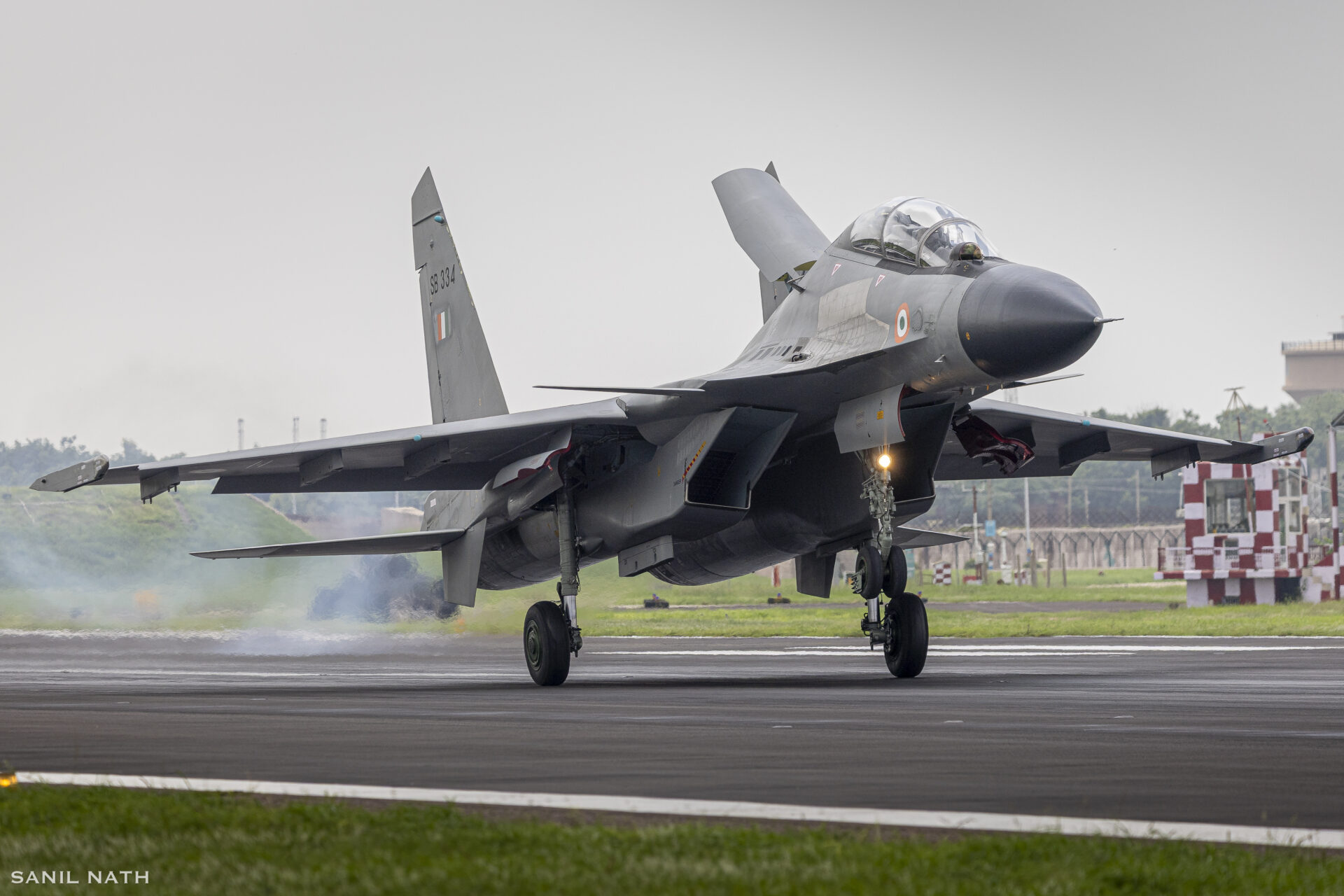
India Slams the Door on Russia's Su-57 Stealth Fighter as Defence Secretary Confirms "No New Sukhois" - Defence Security Asia
India rejects Russia's Su-57 stealth fighter, backing the indigenous "Super Sukhoi" Su-30MKI upgrade, Rafale MRFA and AMCA — reshaping Indo-Pacific air power.
 defencesecurityasia.com
Defence Secretary Rajesh Kumar Singh's blunt "no" to new Sukhoi variants concentrates India's air-power capital on the indigenous "Super Sukhoi" Su-30MKI upgrade, the Rafale MRFA, and the AMCA — a calculated hedge against Russian dependency, sanctions risk, and Indo-Pacific stealth escalation.
(DEFENCE SECURITY ASIA) — India’s Defence Secretary Rajesh Kumar Singh has effectively foreclosed near-term acquisition of Russia’s Su-57 stealth fighter, declaring in late July 2026 that New Delhi is not pursuing new Sukhoi variants and will instead modernise its combat-proven Su-30MKI fleet.Singh cast the licence-built Su-30MKI as a proven backbone rather than a legacy liability, signalling that scarce capital will now flow decisively toward sustainment and capability upgrades rather than an unproven foreign fifth-generation stealth platform.
“No, we have not thought about Sukhois,” Singh stated flatly when pressed on new-variant procurement, adding that India was “actively looking at upgrading the existing Sukhois which we have been producing under licence from the Russians.”
That declaration crystallises a doctrinal pivot in which the Indian Air Force privileges indigenous-heavy modernisation, industrial self-reliance under Atmanirbhar Bharat, and sovereign fifth-generation development over the geopolitical dependency inherent in importing Moscow’s flagship low-observable air-superiority fighter.
The strategic consequence is immediate: Russia’s persistent Su-57E export campaign, personally championed by President Vladimir Putin, now confronts a hardened Indian refusal that narrows Moscow’s shrinking pool of prospective fifth-generation customers amid sanctions-constrained defence-industrial throughput.
Singh’s July position marks a measurable hardening from March 2026, when he characterised the fighter question as open, confirming that no final call had been taken on Russian, American, or additional French offers then under active governmental evaluation.
The reversal recalibrates the Indo-Russian defence relationship, which remains anchored by a ten-year military cooperation framework signed in December 2025, even as India diversifies suppliers and hedges against single-source dependency for critical long-range air-power capabilities.
Central to New Delhi’s calculus is the “Super Sukhoi” mid-life upgrade, a capability-injection programme intended to transform roughly 260 fourth-generation airframes into a networked 4.5-plus-generation force built around indigenous active electronically scanned array radar and long-range precision weapons.
The decision unfolds against acute force-structure stress, with the Indian Air Force fielding roughly 29 to 31 combat squadrons against a sanctioned strength near 42, a shortfall aggravated by MiG-21 retirements and steady airframe attrition.
To restore mass, India is advancing the Multi-Role Fighter Aircraft competition centred on additional Rafales, potentially up to 114 jets, alongside the indigenous Advanced Medium Combat Aircraft as the sovereign pathway to genuine fifth-generation stealth capability.
Operation Sindoor, the May 2025 clash with Pakistan, validated the Su-30MKI as an air-defence and strike node employing air-launched BrahMos missiles, reinforcing arguments for upgrading proven mass rather than diverting funds toward an untested foreign import.
This feature dissects the strategic mechanism, industrial logic, and geopolitical signalling behind India’s Sukhoi decision, examining how force posture, logistics footprint, and technology sovereignty converge to reshape the Indo-Pacific fighter balance across the coming decade.
From “No Call Yet” to an Unambiguous “No” — Anatomy of India’s Su-57 Rejection
Singh’s July 2026 language represents a decisive tightening from his March posture, when he confirmed India had signalled in-principle willingness to advance the MRFA programme around Rafale while explicitly reserving judgement on competing Russian and American fighter proposals.
In that earlier framing, New Delhi conditioned any Rafale expansion on high indigenous content, domestic manufacturing, and Indian weapon integration, demanding at minimum interface control documents where full source-code access to mission systems remained commercially or politically unavailable.
Singh’s March insistence that “no final call” had been taken on advanced Sukhoi, Su-57, or American offers preserved negotiating leverage across multiple suppliers, keeping Moscow and Washington competing for a potentially decisive Indo-Pacific fighter contract.
By late July that ambiguity collapsed into categorical rejection, with Singh confirming India had not “thought about Sukhois” in any new-build sense while affirming the licensed fleet as “a success story” worthy of further investment.
India Slams the Door on Russia's Su-57 Stealth Fighter as Defence Secretary Confirms "No New Sukhois" - Defence Security Asia
India rejects Russia's Su-57 stealth fighter, backing the indigenous "Super Sukhoi" Su-30MKI upgrade, Rafale MRFA and AMCA — reshaping Indo-Pacific air power.
defencesecurityasia.com
The news of India rejecting Su-57 has reached russian internet & the meltdown is crazy. Read the comment section

 ria.ru


------------------------------------------------------------------------------------------------------------------------------
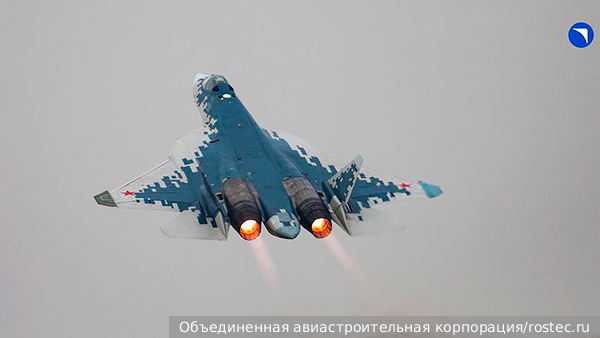
 vz.ru
vz.ru


---------------------------------------------------------------------------------------------------------------
The biggest of them all[200+ comments]:
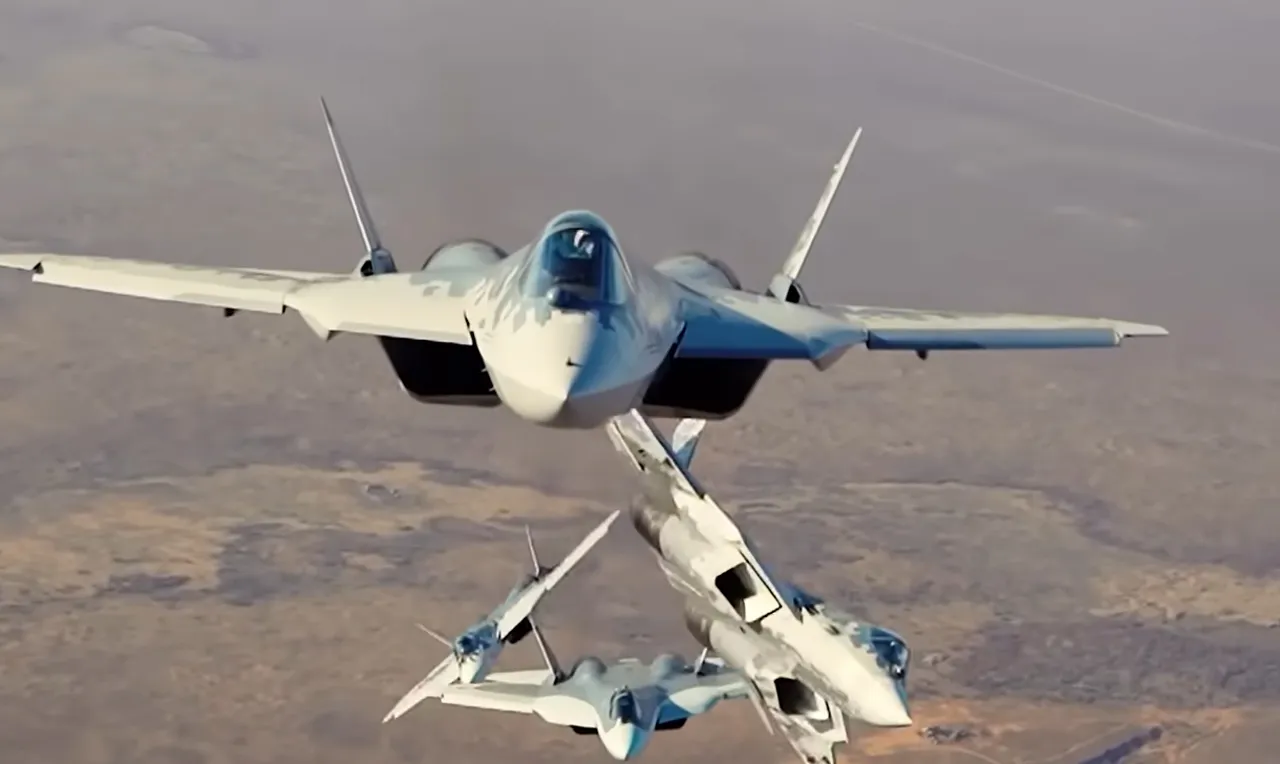
 topwar.ru


I cant even add all the screenshots from this one as the limit is 10 photos per post.
I hope all the russian bootlickers see this
В Индии сделали заявление о российских истребителях
Индия не будет закупать российские истребители Су-57 и намерена сосредоточиться на обновлении парка самолетов Су-30МКИ, заявил заместитель министра обороны... РИА Новости, 05.08.2026
------------------------------------------------------------------------------------------------------------------------------
Defence Security Asia: Индия решила не закупать российские Су-57Э
Нью-Дели принял окончательное решение не приобретать российские истребители пятого поколения Су-57Э, сделав ставку на модернизацию уже имеющегося парка боевой авиации, заявил представитель индийского минобороны Раджеш Кумар Сингх.
---------------------------------------------------------------------------------------------------------------
The biggest of them all[200+ comments]:
Минобороны Индии заявило, что отказывается от покупки российских Су-57
Индия приняла окончательное решение по вопросу приобретения Су-57. Решение это состоит в отказе от закупок российского самолёта 5-го поколения. Речь идёт о версии Су-57Э, которая предлагалась Нью-Дели российской стороной. Как сообщает Defence Security Asia со ссылкой на секретаря министерства
topwar.ru
I cant even add all the screenshots from this one as the limit is 10 photos per post.
I hope all the russian bootlickers see this
Last edited:


Russian delusion about their sense of self & their country is hilarious. Its so funny to read it all. Delusions of a dead empire grasping in desperation.

Most of them are Chinese intelligence bots.The news of India rejecting Su-57 has reached russian internet & the meltdown is crazy. Read the comment section
В Индии сделали заявление о российских истребителях
Индия не будет закупать российские истребители Су-57 и намерена сосредоточиться на обновлении парка самолетов Су-30МКИ, заявил заместитель министра обороны... РИА Новости, 05.08.2026
View attachment 53369View attachment 53370View attachment 53371View attachment 53372
------------------------------------------------------------------------------------------------------------------------------
Defence Security Asia: Индия решила не закупать российские Су-57Э
Нью-Дели принял окончательное решение не приобретать российские истребители пятого поколения Су-57Э, сделав ставку на модернизацию уже имеющегося парка боевой авиации, заявил представитель индийского минобороны Раджеш Кумар Сингх.
View attachment 53373View attachment 53374View attachment 53375
---------------------------------------------------------------------------------------------------------------
The biggest of them all[200+ comments]:
View attachment 53376View attachment 53377View attachment 53378Минобороны Индии заявило, что отказывается от покупки российских Су-57
Индия приняла окончательное решение по вопросу приобретения Су-57. Решение это состоит в отказе от закупок российского самолёта 5-го поколения. Речь идёт о версии Су-57Э, которая предлагалась Нью-Дели российской стороной. Как сообщает Defence Security Asia со ссылкой на секретаря министерства
I cant even add all the screenshots from this one as the limit is 10 photos per post.
I hope all the russian bootlickers see this
Looks like irdw gossip. Whats the source??Breaking: Laboratory evaluations conducted by the DRDO and the IAF have identified the radar emissions, frequency-agility logic, and data-link formats of the Chinese PL-15E missile used by Pakistan. This data has been integrated into threat databases and translated into profiles usable by onboard systems. Direct access to the hardware resolved previous uncertainties regarding the missile's detection and tracking modes by providing measured, reproducible parameters...
Software updates are now being rolled out across India's fighter fleets. The indigenous electronic warfare systems on the Tejas Mk1A and Su-30MKI, as well as the Rafale’s SPECTRA system, have received new jamming logic specifically designed to counter the PL-15E.
Sure. The upvotes are chinese bots too.Most of them are Chinese intelligence bots.
Defenders of russians have already assembled.Missiles are More Stealthy and Faster than Any Stealth Aircraft
When the Enemy's Air Defences and Airbases are Neutralised with Hundreds of Missiles ,.then you can bomb anything and everything with
even the Second Tier aircraft like Mirages and Tejas and Jaguars
We need More and More Missiles , both Air Defence and For Saturation attacks
When the Enemy's Air Defences and Airbases are Neutralised with Hundreds of Missiles ,.then you can bomb anything and everything with
even the Second Tier aircraft like Mirages and Tejas and Jaguars
We need More and More Missiles , both Air Defence and For Saturation attacks

Sorry, you're barking up the wrong tree. Do you know,the ill press of op sindoor was done by Chinese using the Pakistanis as the obvious front?Looks like irdw gossip. Whats the source??
Sure. The upvotes are chinese bots too.
Do you know intelligence agencies have separate divisions of cyber warriors whose job have increasingly sophisticated?
That laughter emoji is misplaced. No russophile here.
Losing the IAF as an almost captive customer (almost) has been a bitter pill for the Russians to swallow. Heck, IN Naval Aviation was completely Russian supplied at one point in time (from LRMP to ASW helos).
New IFV designs from DRDO will also likely displace them from the last major niche they occupy - mechanised infantry/armour.
So the frustration is understandable. Apart from Su-57 and SSN tech, the Russians know they have precious little to offer India in terms of next gen hardware. Co-development programs too appear to have stalled since the start of the Ukraine war.
Imo, Su-57 can be considered, if the Russians are willing to give us the IPR. After all, we'd need to invest huge sums of money to bring it up to IAF standards.
Besides, this could be the only way for India to bypass US/Western sanctions/tarrifs. If the Russians prohibit third party sales (like they've evidently done with the Sino Flanker variants), so be it.
New IFV designs from DRDO will also likely displace them from the last major niche they occupy - mechanised infantry/armour.
So the frustration is understandable. Apart from Su-57 and SSN tech, the Russians know they have precious little to offer India in terms of next gen hardware. Co-development programs too appear to have stalled since the start of the Ukraine war.
Imo, Su-57 can be considered, if the Russians are willing to give us the IPR. After all, we'd need to invest huge sums of money to bring it up to IAF standards.
Besides, this could be the only way for India to bypass US/Western sanctions/tarrifs. If the Russians prohibit third party sales (like they've evidently done with the Sino Flanker variants), so be it.
Okay. my apologies.Sorry, you're barking up the wrong tree. Do you know,the ill press of op sindoor was done by Chinese using the Pakistanis as the obvious front?
Do you know intelligence agencies have separate divisions of cyber warriors whose job have increasingly sophisticated?
That laughter emoji is misplaced. No russophile here.
I dont understand why you are bringing chinese bots into the picture here. These are actual russians, posting in russian language, lashing out at India. If you think otherwise, you can present your proof on the basis of which you have come to that conclusion. Otherwise, stop trying to find conspiracies in everything. Why are you trying to blame russian malice on chinese??? The russians are more than capable of that.
------------------------------------------------------------------------------------------------------------------------------------------------------
Coming to Russians, I found another website with even bigger meltdown. 346 comments at the time of posting. Oh My!! Endless supply of salt. Dont have the time to post screenshots. look at it yourself.
For finding more websites, just type "Индия; Су-57" in google search.

Interesting, did not know this...
The use of the word "цыгане" (tsygane, the Russian word for "gypsies" or the Roma people) as a derogatory term for Indians on Russian-language online forums stems from actual historical & genetic connection that the Roma (Gypsies) actually originated from Northern India. Modern linguistics and DNA studies have conclusively proven that the Romani language is rooted in Indo-Aryan languages (closely related to Hindi and Punjabi), and genetic markers trace the Roma lineage directly to South Asia.
Because both Indians and Roma people share South Asian physical traits (darker complexions, black hair, distinct facial features), users on Russian forums weaponize this visual resemblance combining it with local anti-Roma prejudices to mock or insult Indians online. The word цыгане is associated in popular Russian slang with negative stereotypes: petty crime, scams, fortune-telling schemes, unhygienic living conditions, and chaotic behavior.
The use of the word "цыгане" (tsygane, the Russian word for "gypsies" or the Roma people) as a derogatory term for Indians on Russian-language online forums stems from actual historical & genetic connection that the Roma (Gypsies) actually originated from Northern India. Modern linguistics and DNA studies have conclusively proven that the Romani language is rooted in Indo-Aryan languages (closely related to Hindi and Punjabi), and genetic markers trace the Roma lineage directly to South Asia.
Because both Indians and Roma people share South Asian physical traits (darker complexions, black hair, distinct facial features), users on Russian forums weaponize this visual resemblance combining it with local anti-Roma prejudices to mock or insult Indians online. The word цыгане is associated in popular Russian slang with negative stereotypes: petty crime, scams, fortune-telling schemes, unhygienic living conditions, and chaotic behavior.

I get what you are trying to say, my point was it needs better scrutiny to determine if they are actually Russians or someone else pretending to be Russians.Okay. my apologies.
I dont understand why you are bringing chinese bots into the picture here. These are actual russians, posting in russian language, lashing out at India. If you think otherwise, you can present your proof on the basis of which you have come to that conclusion. Otherwise, stop trying to find conspiracies in everything. Why are you trying to blame russian malice on chinese??? The russians are more than capable of that.
------------------------------------------------------------------------------------------------------------------------------------------------------
Coming to Russians, I found another website with even bigger meltdown. 346 comments at the time of posting. Oh My!! Endless supply of salt. Dont have the time to post screenshots. look at it yourself.
For finding more websites, just type "Индия; Су-57" in google search.
If they are actual Russians, I couldn't ever bother to spare an internet forum comment about them. Screw 'em. Buy technology from them in INR. End of story.
