China’s “String of Pearls” and India's Two Front War Predicament : Analysis

If you were given a money printing press, tell me, would you use it with restraint? I think that as long as you still have a shred of human nature in you, you absolutely would not.
Therefore, that first path is completely unfeasible. As for the population, when will it hit rock bottom? There is absolutely no historical precedent for a recovery among advanced nations. Consequently, whether it is China or India, there will be no rebound. Survival is a fundamental human instinct, but destruction is a fundamental human instinct as well

The Indus Valley Civilization is the only civilization known that has decreased income inequality with increased prosperity.


At least in India, the Nationalists follow this culture. Modi and many of the Nationalist leaders chosen to lead the party do not have wealth or intend to have families and children to prevent dynasties, nepotism, and corruption.

Once people become educated and civilized, they feel a profound sense of responsibility toward their offspring. If you maintain the current system of ownership—where wealth is passed from father to son, and from son to grandson—then the naturally logical strategy to ensure the next generation lives a better life is to have fewer children. This should be a universal consensus among all parents.
Having more children is for oneself; having fewer children is for the sake of the children.
Therefore, population collapse has nothing to do with economic levels; it has to do with human nature. This process is irreversible.
Unless, as I just mentioned, this entire system of ownership is completely razed to the ground and the state steps in to raise your children, it is absolutely impossible for the population to rebound

This is true, but the threshold is still high. When people become educated and civilized, they tend to have 2-3 children, even 5 at times, not 10-15.

2-3 children is the norm. What forces them to end up with 1 is career advancement and financial pressure. Women have been tempted away from having children in exchange for a career. But if a girl child grows up in a well-adjusted family and has a responsible husband, she will end up with more than 1 child.

In developed countries, especially in the West, large companies have bought family homes and inflated rent. This forces parents to divert money away from children, so they end up having just one. So it's a governance problem. If companies are kicked out of the 2 and 3 bedroom markets and housing construction is deregulated, parents will have more kids. But the Western govts don't want to do that 'cause Bolsheviks are in control.

In India, both homes and schools are expensive. Homes can't be helped at the moment due to rapid urbanization. But wealth growth is somewhat commensurate with growth in real estate. Once urbanization stabilizes, only with good governance can society ensure homes are affordable. The other factor is private schools. Half the children in India today go to private schools and many in cities have very high fees. Modi has deregulated private schools, so in time it could get cheaper as more and more schools come up in neighborhoods that currently lack schools. So these two have to stabilize for families to grow.

But whether your country is developing or developed, good governance is the key. Education, housing, and access to credit are the key metrics for having children. This requires common and gender-specific education, private property and land ownership, deregulated banking and housing sectors. The US used to have all of this until the 1980s, after education and housing reforms. It's also when they started their climate change rhetoric. This is essentially when the Bolshevik takeover began. After seeing how the real estate bubble damaged Japan, they recreated those conditions in the US, India, and China.
 
The Indus Valley Civilization is the only civilization known that has decreased income inequality with increased prosperity.


At least in India, the Nationalists follow this culture. Modi and many of the Nationalist leaders chosen to lead the party do not have wealth or intend to have families and children to prevent dynasties, nepotism, and corruption.
You should take whatever politicians say with a grain of salt—and the same goes for celebrities. You might think they're unmarried, but in reality, they often have multiple wives and a bunch of kids; it's just that legally, none of it is tied to their name.
This is true, but the threshold is still high. When people become educated and civilized, they tend to have 2-3 children, even 5 at times, not 10-15.

2-3 children is the norm. What forces them to end up with 1 is career advancement and financial pressure. Women have been tempted away from having children in exchange for a career. But if a girl child grows up in a well-adjusted family and has a responsible husband, she will end up with more than 1 child.

In developed countries, especially in the West, large companies have bought family homes and inflated rent. This forces parents to divert money away from children, so they end up having just one. So it's a governance problem. If companies are kicked out of the 2 and 3 bedroom markets and housing construction is deregulated, parents will have more kids. But the Western govts don't want to do that 'cause Bolsheviks are in control.

In India, both homes and schools are expensive. Homes can't be helped at the moment due to rapid urbanization. But wealth growth is somewhat commensurate with growth in real estate. Once urbanization stabilizes, only with good governance can society ensure homes are affordable. The other factor is private schools. Half the children in India today go to private schools and many in cities have very high fees. Modi has deregulated private schools, so in time it could get cheaper as more and more schools come up in neighborhoods that currently lack schools. So these two have to stabilize for families to grow.

But whether your country is developing or developed, good governance is the key. Education, housing, and access to credit are the key metrics for having children. This requires common and gender-specific education, private property and land ownership, deregulated banking and housing sectors. The US used to have all of this until the 1980s, after education and housing reforms. It's also when they started their climate change rhetoric. This is essentially when the Bolshevik takeover began. After seeing how the real estate bubble damaged Japan, they recreated those conditions in the US, India, and China.


In developed countries, the middle class generally caps their family size at two children, with the vast majority having only one. The logic is incredibly simple: if your only child marries another only child, the resulting family structure becomes an 8-4-2-1 inverted pyramid. The wealth of ten elders will eventually be concentrated and passed down to you. While this might not single-handedly guarantee a leap into a higher social stratum, it ensures that your daily life will be largely free of major financial strain.

If you are the parent of an only child, you absolutely would not want your child to marry someone from a family with multiple siblings. Of course, it's a completely different story if you have more money than you could ever spend, but those people are the exception. This reality is fundamentally dictated by the dynamics of wealth distribution and inheritance relations.
 
In developed countries, the middle class generally caps their family size at two children, with the vast majority having only one. The logic is incredibly simple: if your only child marries another only child, the resulting family structure becomes an 8-4-2-1 inverted pyramid. The wealth of ten elders will eventually be concentrated and passed down to you. While this might not single-handedly guarantee a leap into a higher social stratum, it ensures that your daily life will be largely free of major financial strain.

If you are the parent of an only child, you absolutely would not want your child to marry someone from a family with multiple siblings. Of course, it's a completely different story if you have more money than you could ever spend, but those people are the exception. This reality is fundamentally dictated by the dynamics of wealth distribution and inheritance relations.

This is inherently a Chinese problem where there is no land ownership. In India and democratic economies, land ownership is your ticket to financial freedom due to its stability and high growth rate.

In India, all you have to do is save up enough money to buy some land when your kid is born, by the time the kid is an adult, the land price will take care of the kid's future. Land is very expensive in highly urbanised areas but in the outskirts you get good deals. And because India's urbanizing, the outskirts become part of the main city by the time the kids grow up. That's effectively retirement too.

The stock market in India is more volatile, but at least it's fair, unlike in China. Investing in a large corporate firm that deals with energy or high-end construction for the long term will ensure stable growth for your stock if you aren't interested in taking risks. Western stock markets and exchange rates are even better.

Chinese neither have land ownership nor good stocks to invest in. The only good place to invest is in apartments, and that's one of the worst places to invest in for anything except rent.

To put it in perspective, I recently bought some land for 9 million INR, I negotiated it down from 10m. In 3 months, the value will go up to 12m. Doubling from initial investment is expected in less than 2 years. That's how fast growth can be. Just 1 month ago it was 8.5m. But last year I booked an apartment for 9m and it's only 10m after almost a year. It will take a long time to double, but it will give good rent.
 
  • Like
Reactions: PhotonVish
This is inherently a Chinese problem where there is no land ownership. In India and democratic economies, land ownership is your ticket to financial freedom due to its stability and high growth rate.

In India, all you have to do is save up enough money to buy some land when your kid is born, by the time the kid is an adult, the land price will take care of the kid's future. Land is very expensive in highly urbanised areas but in the outskirts you get good deals. And because India's urbanizing, the outskirts become part of the main city by the time the kids grow up. That's effectively retirement too.

The stock market in India is more volatile, but at least it's fair, unlike in China. Investing in a large corporate firm that deals with energy or high-end construction for the long term will ensure stable growth for your stock if you aren't interested in taking risks. Western stock markets and exchange rates are even better.

Chinese neither have land ownership nor good stocks to invest in. The only good place to invest is in apartments, and that's one of the worst places to invest in for anything except rent.

To put it in perspective, I recently bought some land for 9 million INR, I negotiated it down from 10m. In 3 months, the value will go up to 12m. Doubling from initial investment is expected in less than 2 years. That's how fast growth can be. Just 1 month ago it was 8.5m. But last year I booked an apartment for 9m and it's only 10m after almost a year. It will take a long time to double, but it will give good rent.
In the vast majority of countries, land is under a system of private ownership. Even in South Korea and Japan, where the population crisis is most severe, this has still failed to rescue their birth rates. The exact same logic applies to real estate transactions and the stock market
 
  • Like
Reactions: batman
In the vast majority of countries, land is under a system of private ownership. Even in South Korea and Japan, where the population crisis is most severe, this has still failed to rescue their birth rates. The exact same logic applies to real estate transactions and the stock market

Korea and Japan have difficult working conditions. All the students there do is study and then work 996+overtime. And both have high housing costs and child education expenses.

The Dotcom bubble killed Korea and the real estate bubble killed Japan. Their position is worse than in the US.

Their only real solution is to slowly push corporate offices out of Tokyo and Seoul and spread them into other underdeveloped towns. Instead of centralizing in two or three cities, they should have spread everything out properly. This would have dropped housing costs and childcare expenses.
 
500km is just a rough estimate. As a heavy fighter, the J-15 has a combat radius of about 1250km.
View attachment 47361
Taking the dual-carrier battle group displayed by China as an example, the escort ships include three 055s and six 052Ds.It can carry up to 720 HQ9B or 1440 HQ9C
I think it would be easy to deal with 20 to 30 BrahMos missiles
Oh, the F-14's combat radius is 370 kilometers at Mach 1.4 while carrying four Phoenix missiles, whereas your J-15 has a combat radius of 1,250 kilometers

Strange, if I split my reply into two parts will I be considered AI?
Moreover, the Soviet Union used a large number of supersonic anti-ship missiles to penetrate the aircraft carrier air defense network at low altitude in the 1970s. The Americans responded with two main methods:
1. F14A intercepted Soviet missiles and bombers;
2. Developed the Aegis system.
3.With the progress of the new era, the United States has also begun to use CEC capabilities to guide SM-3/6 to intercept supersonic targets at ultra-long distances.
China has all these capabilities and does them better
1、The F-14A could only intercept missiles launched by the Tu-16; it couldn't even detect the bomber itself.
2、the Aegis Combat System? A SM-3 stationed on land fails to intercept Iranian missiles, yet you expect it to defend against Indian missiles when placed on a ship less than 20 meters wide?
3、Since the Aegis system entered service, f I remember correctly, its very first interception test against two simultaneous low-altitude targets didn't happen until the 2000s or 2010s, let alone handling a larger swarm of targets. Meanwhile, the absolute limit for the fire control radars on the Type 052, 052C, and 052D is guiding 8 missiles to engage 4 targets in a single direction.

What the Americans can achieve, the Chinese cannot; yet what the Chinese can achieve, the Americans are capable of doing as well.
 
Last edited:
  • Like
Reactions: batman
Korea and Japan have difficult working conditions. All the students there do is study and then work 996+overtime. And both have high housing costs and child education expenses.

The Dotcom bubble killed Korea and the real estate bubble killed Japan. Their position is worse than in the US.

Their only real solution is to slowly push corporate offices out of Tokyo and Seoul and spread them into other underdeveloped towns. Instead of centralizing in two or three cities, they should have spread everything out properly. This would have dropped housing costs and childcare expenses.
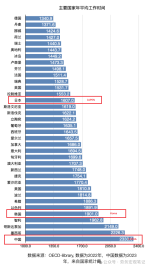
Japan and South Korea? Compared to China, their jobs look like a vacation65aad1e5c3681.png

Up until date India hasn't initiated any of the wars it has fought. Nobody & I mean nobody in the world leave aside anyone in India foresees India waging a war against China except the CCP & their Han slaves.

Check out Operation Snow Leopard , the reasons it was undertaken & more importantly where it was undertaken.

There are no "Siachen Glacier Forces." It's manned on a voluntary basis by different regiments of the Indian Army most if not all of whom look forward to this assignment as it's a true test of challenging their abilities in an extremely hostile environment .

This assignment in turn stands them in good stead manning positions across the LAC. I've lost count of the number of times people here have had to literally school you.

Anybody else would've been embarassed about it & done his homework before commenting here. Not a Wumao though. That thick skin is what has helped them endure a century + 80 years of humiliation I guess.


So why did China withdraw from most positions before confirming a peace deal same time in 2024 in a meeting between Modi & Great Helmsman 2 ?

Are you suggesting China offered its own territory to India ? That's humiliation. You'd pay dearly for your comments if your supervisor in the MSS reads this codswallop.

You'd lose all your social credit points , be banned from accessing the internet , would most likely be sent to re education camps or even disappeared.
What's so bad about waging war? A love for peace is just the coping mechanism of the weak and the losers.
 
Last edited:
In terms of nuclear weapons, this is undoubtedly the case.
In terms of the army, India has the largest scale in the world, but most of its troops are ordinary light infantry. The armored forces are mainly distributed in the India-Pakistan border for confrontation, and they do not pose a great threat to China.
In terms of navy and air force, Japan, even South Korea and Taiwan, pose a greater threat to China than India.
What if the Indians deployed a few suicide motorboats packed with second-hand (or more like eighteenth-hand) Yamaha engines into the Malacca Strait? What on earth would you do then?
 
Japan and South Korea? Compared to China, their jobs look like a vacationView attachment 52028

Sure. And with increased working conditions came the drop in child births. We were comparing the US to Japan and Korea. China is just an extension of Japan and Korea, just poorer but degradation is faster.

The US has poor political climate that's leading to a downward trajectory. Japan, China, and Korea have good political climates, but different societal rules and poor working conditions. American children go home after school, not to a coaching center. And American professionals work only 955. But over the last 30 years, they have stopped receiving good quality school education and college is pushing them into extreme debt. This debt prevents them from buying their own homes. So now they have college debt, high rent from houses owned by companies and rich landlords, and no money for children. Freely printing money has eroded the strength of the dollar and they are not exporters, so that's increased inflation, further reducing disposable income. The net result is the generation that's supposed to have kids do not have the wealth necessary to have kids. And this is further made worse by feminism in all these countries, encouraging women to chase after pointless careers instead of finding husbands thereby decreasing wages.

China's problem is further compounded by lack of wealth generation options for the middle class and lower, that's why 2% control 80% of the wealth.

In India, young adults are discouraged from having kids but school children are being encouraged to become parents. So we have good political and economic climate at the moment. Our factory workers do not work for more than 8 hours. And the govt wants to make changes that allow a 994 system for both factories and service industry. Currently IT industry is working 995+overtime, the govt wants to reduce the service industry's workload and make factories more competitive with 12-hour shifts but 4 days work week. Employees will be able to choose between 955 and 994.
 
Sure. And with increased working conditions came the drop in child births. We were comparing the US to Japan and Korea. China is just an extension of Japan and Korea, just poorer but degradation is faster.

The US has poor political climate that's leading to a downward trajectory. Japan, China, and Korea have good political climates, but different societal rules and poor working conditions. American children go home after school, not to a coaching center. And American professionals work only 955. But over the last 30 years, they have stopped receiving good quality school education and college is pushing them into extreme debt. This debt prevents them from buying their own homes. So now they have college debt, high rent from houses owned by companies and rich landlords, and no money for children. Freely printing money has eroded the strength of the dollar and they are not exporters, so that's increased inflation, further reducing disposable income. The net result is the generation that's supposed to have kids do not have the wealth necessary to have kids. And this is further made worse by feminism in all these countries, encouraging women to chase after pointless careers instead of finding husbands thereby decreasing wages.

China's problem is further compounded by lack of wealth generation options for the middle class and lower, that's why 2% control 80% of the wealth.

In India, young adults are discouraged from having kids but school children are being encouraged to become parents. So we have good political and economic climate at the moment. Our factory workers do not work for more than 8 hours. And the govt wants to make changes that allow a 994 system for both factories and service industry. Currently IT industry is working 995+overtime, the govt wants to reduce the service industry's workload and make factories more competitive with 12-hour shifts but 4 days work week. Employees will be able to choose between 955 and 994.
yt61b4am4e191.jpg
Using your translation software to browse...


“In India, young adults are discouraged from having kids but school children are being encouraged to become parents”

I don't quite understand what you just said; I've read it over several times.
Particularly the first half of your statement
—if that is the case for India, then they aren't far behind from following in China's footsteps. In 15 to 20 years at most, their problems will erupt in a concentrated explosion. This has absolutely nothing to do with whether a country is a democracy or not.
 
View attachment 52053
Using your translation software to browse...

This is a system created by Marx-Lenin. It doesn't work.

Yes, you have to make some people rich, but the follow-on system needs to be free for the rich to now distribute their wealth with profits in mind. But in China, if I set up a company I also need to allow CCP to sit inside the company, and if they like the business they can take it away. And I can't take the CCP to court.

Money has to be redistributed wilfully. If there's forceful redistribution, then you are taking money away from people with talent and giving it to people who have no talent with money. That's why communism and socialism always fail. It's like taking the mic away from a nightingale and giving it to a donkey and expecting the same result. We can see the effect in Zimbabwe, Uganda, Venezuela, Argentina, and South Africa.

So you end up in a situation where the rich cannot redistribute wealth, and the rest of the population stays poor.

In India, we created laws that prevent the rich from taking advantage of their political connections. For example, a vendor using Amazon cannot own 25% of the sales through the Amazon app. If they cross 25%, they are banned from selling on Amazon. This applies to all e-commerce platforms and this creates a fair environment. So they cannot be as predatory as Jack Ma was in China.

  • Anti-competitive agreements — Bans cartels, price-fixing, market sharing, etc. (Any agreement that harms competition is void).
  • Abuse of dominant position — Stops big companies from misusing their market power (e.g., unfair pricing, denying market access).
  • Combinations (Mergers & Acquisitions) — Reviews big mergers to ensure they don’t harm competition.

None of this exists outside paper in China.

"In India, young adults are discouraged from having kids but school children are being encouraged to become parents”

I don't quite understand what you just said; I've read it over several times.
Particularly the first half of your statement
—if that is the case for India, then they aren't far behind from following in China's footsteps. In 15 to 20 years at most, their problems will erupt in a concentrated explosion. This has absolutely nothing to do with whether a country is a democracy or not.

Today India doesn't need more kids, so the 18-30 demographic are discouraged from having kids. But in the future India will need kids, so students in the 6+ demographic are being taught to have children so when they become 20-30 they will start having kids.

The logic is simple, if the education and family system tells young girls to grow up and chase after careers, they chase after careers. but if they are told to chase after marriage and motherhood, they dream of that instead. And men react to what women want.

That's what you have in Israel. They maintain high birth rate, 2.9-3, because their economy and family values support child birth. They finish their military training, come to India for pilgrimage and stay for many months and then return and have children. They produce 170,000 children every year and about 80,000-100,000 come to India every year.