
Pentagon audit questions sustainability of F-35 programme
The Department of Defense Inspector General has concluded that the US Department of Defense’s sustainment arrangements for the F-35 fighter aircraft suffer from inadequate oversight. The findings indicate problems that go beyond individual performance or managerial shortcomings, pointing instead to broader systemic weaknesses that are directly affecting the operational effectiveness of the United States’ most advanced combat aircraft programme.
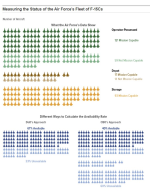
The audit indicates that F-35 fleet was almost fifty-fifty grounded as average Air Vehicle Availability was approximately 50 percent. This also means that the force could fly only one aircraft out of two for operational tasking at any given time. This figure conflicts with initial Joint Fighter idea as having one main airframe with various designs for different missions aimed bypassing the readiness thresholds. This figures fall below the minimum availability expectations established by the US Air Force, Navy and Marine Corps.
Despite these shortfalls, the Department of Defense paid approximately $1.7 billion to Lockheed Martin without applying any economic adjustment. The Inspector General noted that payments continued even though key performance indicators — including Full Mission Capable, Mission Capable and overall availability rates — failed to meet contractual and service-level requirements. It is also interesting to note that the program lacks measurable performance criteria. This absence prevents the government from imposing financial penalties on the contractor. TurDef questions whether this gap is a deliberate one. It can be seen that the audit identified shortcomings in the readiness benchmarks set by the F-35 Joint Program Office, weak oversight of government-owned property and insufficient on-site monitoring.
The report recommends revising sustainment contracts to include enforceable performance targets and strengthening base-level oversight authority. On the other hand it also reflects a recurring pattern. It therefore can be said that problems are acknowledged and documented, however corrective action remains limited.
The F-35 is widely regarded as the most complex and one of the most expensive defence programmes in modern military aviation history. It is known that with total acquisition, operating and sustainment costs may exceed $2 trillion. The aircraft achieved Initial Operational Capability and Full Operational Capability in 2015 and 2018. It has been almost a decade since first F-35A entered sustained operational service. It is not productive to give some time to solve problems as the aircraft does not face inevitable early-service challenges.
It should be remembered that a flying aircraft is better than grounded one as they are built for it. This question can be materialized through F-35A and A-10 Thunderbolt II comparisons. The A-10 lacks fifth-generation survivability and it is unsuitable for high-threat environments. It has proven his predictable availability and high sortie generation in low-to-medium threat scenarios. It can be therefore claim that in certain mission sets, the ability to operate on demand can outweigh superior technological sophistication.
One may question whether the audit allege bribery or conventional corruption. It does not. Instead, it highlights a systemic accountability gap. Were the deficiencies the result of individual misconduct, disciplinary action or legal remedies might plausibly reset the system. What emerges instead is a structural condition in which a programme considered “too big to fail” becomes effectively insulated from meaningful penalties. Oversight mechanisms formally exist, but enforcement remains limited in practice.
Taken together, the findings point to a broader structural dynamic within the US defence ecosystem, where the Pentagon, Congress and the defence industry are closely intertwined. Within this framework, the United States can absorb inefficiencies by procuring additional aircraft to compensate for low availability. For allies and partners, however, the consequences are far more severe. Acquiring a platform with high sustainment costs and deep dependence on US-controlled logistics, software and supply chains means inheriting these systemic vulnerabilities from the outset.
The audit indicates that readiness shortfalls are currently being mitigated not through transformative improvements in sustainment efficiency, but by expanding fleet size to offset limited availability. This places the F-35 at the centre of a persistent paradox: exceptional technological capability paired with constrained operational sustainability.
Ultimately, the report raises a question that extends beyond contract management or technical performance. If the problem is embedded within the system itself, can meaningful improvement reasonably be expected from that same system? The Inspector General offers no definitive answer. As a conclusion, the audit makes clear that the assumption that some issues will gradually resolve themselves over time is a void claim. The debate surrounding the F-35 has already evolved into a wider discussion about sustainable combat power, procurement sovereignty and the long-term risks associated with structural dependence.
The Department of Defense Inspector General has concluded that the US Department of Defense’s sustainment arrangements for the F-35 fighter aircraft suffer from inadequate oversight. The findings indicate problems that go beyond individual performance or managerial shortcomings, pointing instead to broader systemic weaknesses that are directly affecting the operational effectiveness of the United States’ most advanced combat aircraft programme.
The audit indicates that F-35 fleet was almost fifty-fifty grounded as average Air Vehicle Availability was approximately 50 percent. This also means that the force could fly only one aircraft out of two for operational tasking at any given time. This figure conflicts with initial Joint Fighter idea as having one main airframe with various designs for different missions aimed bypassing the readiness thresholds. This figures fall below the minimum availability expectations established by the US Air Force, Navy and Marine Corps.
Despite these shortfalls, the Department of Defense paid approximately $1.7 billion to Lockheed Martin without applying any economic adjustment. The Inspector General noted that payments continued even though key performance indicators — including Full Mission Capable, Mission Capable and overall availability rates — failed to meet contractual and service-level requirements. It is also interesting to note that the program lacks measurable performance criteria. This absence prevents the government from imposing financial penalties on the contractor. TurDef questions whether this gap is a deliberate one. It can be seen that the audit identified shortcomings in the readiness benchmarks set by the F-35 Joint Program Office, weak oversight of government-owned property and insufficient on-site monitoring.
The report recommends revising sustainment contracts to include enforceable performance targets and strengthening base-level oversight authority. On the other hand it also reflects a recurring pattern. It therefore can be said that problems are acknowledged and documented, however corrective action remains limited.
The F-35 is widely regarded as the most complex and one of the most expensive defence programmes in modern military aviation history. It is known that with total acquisition, operating and sustainment costs may exceed $2 trillion. The aircraft achieved Initial Operational Capability and Full Operational Capability in 2015 and 2018. It has been almost a decade since first F-35A entered sustained operational service. It is not productive to give some time to solve problems as the aircraft does not face inevitable early-service challenges.
It should be remembered that a flying aircraft is better than grounded one as they are built for it. This question can be materialized through F-35A and A-10 Thunderbolt II comparisons. The A-10 lacks fifth-generation survivability and it is unsuitable for high-threat environments. It has proven his predictable availability and high sortie generation in low-to-medium threat scenarios. It can be therefore claim that in certain mission sets, the ability to operate on demand can outweigh superior technological sophistication.
One may question whether the audit allege bribery or conventional corruption. It does not. Instead, it highlights a systemic accountability gap. Were the deficiencies the result of individual misconduct, disciplinary action or legal remedies might plausibly reset the system. What emerges instead is a structural condition in which a programme considered “too big to fail” becomes effectively insulated from meaningful penalties. Oversight mechanisms formally exist, but enforcement remains limited in practice.
Taken together, the findings point to a broader structural dynamic within the US defence ecosystem, where the Pentagon, Congress and the defence industry are closely intertwined. Within this framework, the United States can absorb inefficiencies by procuring additional aircraft to compensate for low availability. For allies and partners, however, the consequences are far more severe. Acquiring a platform with high sustainment costs and deep dependence on US-controlled logistics, software and supply chains means inheriting these systemic vulnerabilities from the outset.
The audit indicates that readiness shortfalls are currently being mitigated not through transformative improvements in sustainment efficiency, but by expanding fleet size to offset limited availability. This places the F-35 at the centre of a persistent paradox: exceptional technological capability paired with constrained operational sustainability.
Ultimately, the report raises a question that extends beyond contract management or technical performance. If the problem is embedded within the system itself, can meaningful improvement reasonably be expected from that same system? The Inspector General offers no definitive answer. As a conclusion, the audit makes clear that the assumption that some issues will gradually resolve themselves over time is a void claim. The debate surrounding the F-35 has already evolved into a wider discussion about sustainable combat power, procurement sovereignty and the long-term risks associated with structural dependence.