
Why is the mechanism so bulky? Why is that they don't iterate it?
Pinaka Multi Barrel Rocket Launching System
- Thread starter Gautam
- Start date
You are using an out of date browser. It may not display this or other websites correctly.
You should upgrade or use an alternative browser.
You should upgrade or use an alternative browser.

What do you think can be done here? Would love to know. ThanksWhy is the mechanism so bulky? Why is that they don't iterate it?


Good News
TATA and DRDO working together for Longer Range PINAKA
TATA and DRDO working together for Longer Range PINAKA
It does not have the premium paintjob and sleek look that folks often find with equipment coming from Western Europe. That's pretty much the crux of it. I remember someone telling me that apart from the Brahmos having a cold launch they found it unappealing when it comes to its 'aesthetics'. Our military often places functionality and ruggedness over such things. Many design cues are taken from the days of the U.S.S.R and till they do not settle on a particular way of doing things or develop their own design philosophy these things will remain. SoKo and the Japanese are also good at well.... 'good overall packaging'. The Americans are in their own league so I will not bring them into this argument. An industrial designer working on overall system design can perhaps provide a constructive answer that can lead to the development of the 2.0 looking sleeker.What do you think can be done here? Would love to know. Thanks
More details about SuryaAstra contract from Elbit.
An initial emergency procurement contract has already been signed, covering two launchers, spare parts, munitions, and a comprehensive support package. Delivery of these systems is expected to be followed by live-fire demonstrations in the coming months. Successful trials are anticipated to enable follow-on contracts at the regiment level.
https://www.elbitsystems.com/blog/puls-makes-its-debut-indias-republic-day
An initial emergency procurement contract has already been signed, covering two launchers, spare parts, munitions, and a comprehensive support package. Delivery of these systems is expected to be followed by live-fire demonstrations in the coming months. Successful trials are anticipated to enable follow-on contracts at the regiment level.
https://www.elbitsystems.com/blog/puls-makes-its-debut-indias-republic-day

Just shows how expensive this system is, for a cost of Rs.292 crore we have got 2 launchers, spares, support and a few munitions.More details about SuryaAstra contract from Elbit.
An initial emergency procurement contract has already been signed, covering two launchers, spare parts, munitions, and a comprehensive support package. Delivery of these systems is expected to be followed by live-fire demonstrations in the coming months. Successful trials are anticipated to enable follow-on contracts at the regiment level.
https://www.elbitsystems.com/blog/puls-makes-its-debut-indias-republic-day
2 launchers is not even enough to complete a singular MBRL battery, let alone a regiment which has 3 batteries.
By comparison, IA signed a contract worth Rs.2580 crore for 6 Pinaka regiments, so that roughly translates to Rs.430 crore per regiment or Rs.143 crore per battery.
Now we can obviously debate endlessly on firepower and range and what not but it just shows how expensive foreign systems are.

Just shows how expensive this system is, for a cost of Rs.292 crore we have got 2 launchers, spares, support and a few munitions.
2 launchers is not even enough to complete a singular MBRL battery, let alone a regiment which has 3 batteries.
By comparison, IA signed a contract worth Rs.2580 crore for 6 Pinaka regiments, so that roughly translates to Rs.430 crore per regiment or Rs.143 crore per battery.
Now we can obviously debate endlessly on firepower and range and what not but it just shows how expensive foreign systems are.
No, the cost math u are using for pinaka is fundamentally flawed.. The Rs 2580 crore contract u are quoting was only for launchers vehicles, command posts and support systems, supplied on 8×8 Tata / BEML / Ashok Leyland platforms nd zero rockets included.. That deal was issued to Tata Power + L&T with BEML vehicles not to ammunition makers..
The actual Pinaka rockets were ordered separately in 2025 under a much larger contract of Rs ~10000 crore issued to EEL and MIL.. nd those rockets are unguided Pinaka Mk1 enhanced variants with 40 km class range meant for massed area saturation..not long range precision strike like PULS.
So comparing guided long range (300km) PULS launchers+ some rockets with unguided Pinaka regiment is apples to oranges as one number excludes ammunition entirely.. the other includes at least some guided munitions..
Now, if you do a fair comparison using guided rockets.. the gap narrows sharply. A realistic cost of one unguided 40km range Pinaka regiment with launchers plus unguided rockets works out to roughly Rs 2000–2200 crore per regiment (~Rs 430 crore launchers + Rs 1600–1700 crore ammunition). Now compare that to PULS with guided 300 km rockets using the Netherlands 2023 PULS deal as a benchmark which caited roughly $305 million (Rs 2700–2800 crore) for 20 launchers plus guided rockets, training and support which works out to ~Rs 400–450 crore per battery equivalent with long range (up to 300 km) precision guided munitions.. So, if the Indian Army were to field a Pinaka regiment with PULS class 300 km guided rockets the cost would not be ₹430 crore per regiment as u hv mentioned..it would likely exceed or match per regiment of PULS once guided rockets are included as unguided pinaka is already costing 2000crore+ per regiment.
^ Cost of Guided Pinaka was around 78lakhs in 2020. LRGR-120 and 300 will likely cost more than a crore. So the PULS deal with the rockets for testing is fine in comparsion.
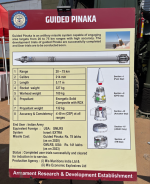
^ Cost of Guided Pinaka was around 78lakhs in 2020. LRGR-120 and 300 will likely cost more than a crore. So the PULS deal with the rockets for testing is fine in comparsion.
View attachment 49370
DAC recently cleared Rs 2500 crore aquisition for Pinaka 120km.. assuming that cost would be for one regiment than the cost of one regiment of PULS (150km,300km) nd Pinaka 120km are roughly in same ballpark..
I guess Army will induct one or max two regiment of PULS till the time both the pinaka variants (120km/300km) are ready for mass induction.


Extra and Predator Hawk long range rockets at NIBE Ltd
Extra and Predator Hawk long range rockets at NIBE Ltd
Maybe Nibe will also end up making Rampage.
They only make launchers as far as i know. Do they make rockets?Maybe Nibe will also end up making Rampage.
They only make launchers as far as i know. Do they make rockets?
No not currently.
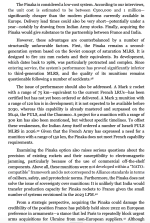
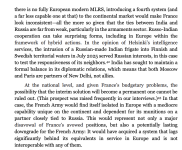
A paper comparing MBRL for French requirements.
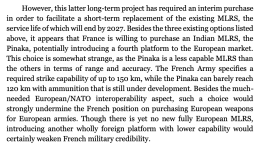
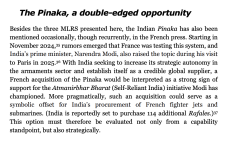
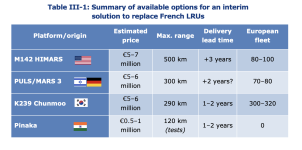
@Picdelamirand-oil @randomradio @Parthu @Gautam @Shan @spice @marich01
@Picdelamirand-oil @randomradio @Parthu @Gautam @Shan @spice @marich01

Other than the fact it's not a 122mm Soviet but a unique 214mm system I don't see anything wrong in it, infact it is filled with lots and lots of painful truths.A paper comparing MBRL for French requirements.
View attachment 50297
View attachment 50298
View attachment 50299
View attachment 50300
View attachment 50301
@Picdelamirand-oil @randomradio @Parthu @Gautam @Shan @spice @marich01
1. 120 km variant is still under development
2. Even the 2030 timeline is very very optimistic
3. It's development has indeed been very protracted
4. Indian Armed Forces have indeed not ordered any Guided Pinaka till date (I Am not sure about this, so correct me if I am wrong)
5. As the author noted Indian Army has in fact ordered Israeli PULS system and from a prospective buyer's perspective it does not look good.
6. His points about precision and electronic jamming are correct too, (It has a CEP of 60m)
Last edited:
Other than the fact it's not a 122mm Soviet but a unique 214mm system I don't see anything wrong in it, infact it is filled with lots and lots of painful truths.
1. 120 km variant is still under development (AFAIK not even a single test fire of the 120 km version has happened)

DRDO successfully tests 120-km strike range Pinaka rockets
DRDO successfully tests the 120-km range Pinaka rocket, enhancing India's indigenous rocket artillery capabilities and operational readiness.
Other than the fact it's not a 122mm Soviet but a unique 214mm system I don't see anything wrong in it, infact it is filled with lots and lots of painful truths.
1. 120 km variant is still under development(AFAIK not even a single test fire of the 120 km version has happened)
2. Even the 2030 timeline is very very optimistic
3. It's development has indeed been very protracted
4. Indian Armed Forces have indeed not ordered any Guided Pinaka till date (I Am not sure about this, so correct me if I am wrong)
5. As the author noted Indian Army has in fact ordered Israeli PULS system and from a prospective buyer's perspective it does not look good.
6. His points about precision and electronic jamming are correct too, (It has a CEP of 60m)
Look Frenchies are never going to seriously buy our gear, those news are just idle gossip & were intended for their deals to speed up. Even if they do some token buy it would be never be seriously taken by them, rather they would see it as obliging partial offset clause that we place in our deals. If Indonesians can get into national ego issue that led to Tata Motors & Mahindras having to play down the order suspension talk issue, you can guess what sort of raucous it would cause within France to buy military gear from us. This was probably an offer by us , a Brazil like give and take proposal which they will never seriously consider or use.
First point is, the current Pinaka is MBRL an area weapon, Its role is to neutralise an area of approx 1km x 1 km/ 800 meter whatever.
Frenchies are looking for a precision MLRS where it is for pinpoint strike role at longer distance with 1 or 2 rockets, maybe 5-6 together. Current pinaka is large volume based as primary battlefield weapon system.
At present we offer only the 75-80km version round where major lrus of the gnc kit gps-ins module come from EU via Israel, sometimes from France. So from their perspective it makes little sense for them while we want to get a foothold in EU market. Two different priorities.
Until the new variants are ready & established , we are unlikely to get any serious traction beyond the 122mm grad consumables ie rockets.
DRDO initiated the long range guided rocket project much behind than others , and pinaka being developed by ARDE, a non missile cluster lab (not under DG MSS, but under DG ACE) , the same LRGR was entrusted to them. Today we have ARDE director promoted to DRDL director role so this means their previous year work has been good. Easily a missile cluster lab could have got the development work for this but ARDE became lead due to existing pinaka group continuing their work while RCI make the gnc module. Given that guided rounds and different warhead options are still under active testing by this Pinaka group at ARDE , it means LRGR will be based on mature tech & can take lesser development time.
IA ordering PULS is to gain experience on such a long range MLRS , features from it will be incorporated into our LRGR like systems. Without hands on training & use, army can not even write a GSQR properly, PSQR can be written as a fantasy weapon system like they do every time, often stretches the feasibility of a weapon system. Mil gears no one will demo full capability for you.
About the precision & jamming part, so in high jamming & spoofing environment the author can doubt the Indian system but not the EU/usa made one, we can guess why. Is it any surprise why gps co-ordinate fed bombs started failing in Ukraine once high ew was deployed. Our module is designed with multi redundant channel so when gps is denied it switched to ins and cep remains very good now that precision of ins has become better than before. This was always need of the hour for us because we face ew degraded environment, therefore none of our missile ever rely on external signal. Very basic usp of ins being dead reckoning in nature.
Lastly, show me one MBRL/MLRS made by western oems that flies at speed > 4 mach class. (I genuinely do not know).
Guided pinaka flies mach 3.4 i think, anything with guidance kit need to fly at reduced speed.