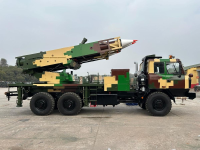
Pinaka Multi Barrel Rocket Launching System

120 KM rocket, which was tested the other day , will take at least a few months to enter mass production
When did that ever happen? What are you being active on the forum for so long.

Its the first ever test. Meaning Few more years of testing then order then few more years to mass production.

So another Israeli maal getting indigenous sticker.

Now it will eat up the orders of pinaka & will participate under iddm category.

That's how indigenous systems are killed.

NOTHING COMPARABLE EXIST, SO NO POINT COMPLAINING.

Now, go sit in the corner and cry.

Sad Anthony Anderson GIF
 
When did that ever happen? What are you being active on the forum for so long.

Its the first ever test. Meaning Few more years of testing then order then few more years to mass production.

In case you remember that During China Standoff , Nirbhay missile ,.though Still under testing was Deployed as an
AD HOC or Interim measure along LAC

The same thing can be done here

It all depends on the sense of urgency and the costs involved of NOT having a 120 km Area weapon

I read a LONG list of targets in Pakistan which could be targeted by 120 km Rockets

So it can be pushed through

NIBE and PULS can be a separate acquisition

Army needs the Ability to operate without Air cover
 
In case you remember that During China Standoff , Nirbhay missile ,.though Still under testing was Deployed as an
AD HOC or Interim measure along LAC

The same thing can be done here

It all depends on the sense of urgency and the costs involved of NOT having a 120 km Area weapon

I read a LONG list of targets in Pakistan which could be targeted by 120 km Rockets

So it can be pushed through

NIBE and PULS can be a separate acquisition

Army needs the Ability to operate without Air cover
So you are wrong about mass production?

Nirbhay was never deployed. The stenographer from the south block wrote it for propaganda purposes.
 
So you are wrong about mass production?

Nirbhay was never deployed. The stenographer from the south block wrote it for propaganda purposes.

We will never know the Truth about Nirbhay

And why should we complain ,.given that The PLA was effectively
Stone walled

Anyway I believe 120 KM range Rockets are a very good weapon

There should be some kind of Accelerated Development and Induction process for it

The kind of Juicy Targets that can be knocked out without resorting to BM or CMs is itself a Big motivator
 
  • Like
Reactions: Aniruddha
We will never know the Truth about Nirbhay

And why should we complain ,.given that The PLA was effectively
Stone walled

Anyway I believe 120 KM range Rockets are a very good weapon

There should be some kind of Accelerated Development and Induction process for it

The kind of Juicy Targets that can be knocked out without resorting to BM or CMs is itself a Big motivator
So you are like the go with the flow kind of guy. You should start tweeting.
 
^ Another thing to add is that this will help the army to replace the old 6x6 BM-21 launchers with a pod base 122mm system. Logistically it will be far easier to reload and operate.

RFI for 6x6 MLRS from May 2025
We already have 122mm under development and the old ones are upgraded.

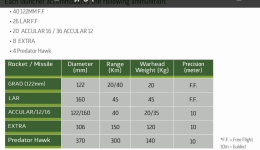
This procurement is not based on the RFI above but a brochure purchase. You cant put 7.6 meter (read Smerch) on a 6x6. EXTRA is 4.7 meter.
 
The 6x6 chasis works well for Israel / ME / Desert and urban condition. Will it be as effective in high altitude operation with sharp rounds & corners turn while road being in muddy slippery condition? This was one condition for Pinaka launcher development and many other MLS vehicle that VRDE make tbh.
 
  • Like
Reactions: redpanda
Pathetic state of procurement. In the name of emergency purchase, buy without any trials if it is a foreign system but if it is an Indian system try the heck out of it. IA could have collaborated with DRDO for the development of 150km and 300km rockets long ago but they didnt had the vision or requirements that time.
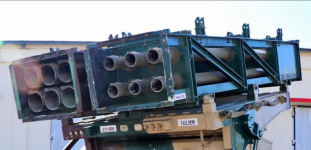
I think it is a good procurement , a small batch to learn the intricacies of long range artillery targeting. China also buy small dose of many Rus system later to make copy of those.

We have to consider that DRDO even tho made missiles, the long range artillery with miniature gnc is a different kind of tech to master, and that includes not only propulsion, but the guidance, small lectrical electronic items, fuzes, initiators, pyro activated mechanism, delay fuze, warhead, precision targeting over long arty range 150 - 300km, digital mission planning, integration of live battlefield map, update feature, live view of enemy threat zones all in networked manner, all of this is huge. Then even everything is made, you also have to ready technical manual to teach the user because if you just give the rockets in a vehicle, the user would not learn it by themselves. You have to train the manpower.

For all the IA colab with DRDO part, read up in above post how even in 2014 DRDO was struggling with keeping control of the rocket fired , I have attached the letter pdf in above post. Every building base pillars of a successful long range MLRS is not with DRDO yet in 2026. Who knows IA might internally jugaad this system with their own BM21 batch grad rockets and have a more useful system later and then try to use the same feature GSQR to improve upon the LRGR batch? The fully digitised L-70 guns example show IA need to use many different modern products then create in house solution by adding technologically feasible elements that improve the overall system immensely from its existing form.

Pinaka was and still is mainly an area denial weapon, to devastate an area of 1km x 800m . From this spec we are now looking at precision strike ability with <10m level accuracy demand by firing 2-4 rockets, with full digital mission planning in software console, different firing mode done digitally, large area moving map of the battlefield showing all heights and water field, integration with AD element, other IA asset. This is unbelievable jump in terms of technology infusion.

There is absolutely no way DRDO can build that many spec without any prior experience, and army will have to use an existing product to learn about such features first then have to come up with own PSQR set so DRDO can build one. Nobody would show such mil grade systems easily without buying themselves.
 
Its right in the definition why the two systems we are discussing here, that buying one can not harm the chance for the other. PULS hawk and extra are precision target weapon with low volume on launch, while Pinaka was conceived as higher calibr Grad type use with unguided rocket with high volume in launch. Precision targeting a very small building/HQ vs area denial/area neutraliser over a large zone , the solutions have to differ in some manner.

Now if you have used the former, you can import certain modern technology from a PULS like system onto an old gen system like GRAD/unguided pinaka with better targeting & mission planning software, auto positioning adjust & aim by better hydraulics, able to optimise the ballistic flight trajectory via software to have a very compact target zone (still ballistic but better accuracy less cep in the target zone) then you are also improving your old gen in service systems. This is what IA do very well. Dhanush gun, L-70 system upgrade, many example. Such improvement capability can not be conjured upon from thin air, or by reading in paper/interview of other user forces.

Without on hand experience army can not come out with requirement for such upgrade , and if you ask DRDO to come up with such spec based upgrades, they will ask for a baseline first or come up with something rather average because in L1 based process you can not have very high spec stuff. Just the user interface in the mfd , it will be like something drawn on MS paint by hand vs a proper high end graphic interface used.
 
  • Like
Reactions: YoungWolf and spice
India's Strategic Response to Long-Range Rocket Threats

• Following Pakistan's operational deployment of Fateh-2 rockets, India's interception highlighted the need for proportionate counters to long-range guided rockets, which fall between artillery and missiles.

• While precision BrahMos strikes demonstrated escalation dominance, their high cost and strategic implications limit their use as a routine counter-fire weapon, necessitating a conventional, land-based deep-strike capability below strategic thresholds.

• India is strategically pursuing long-range rocket artillery parity by adopting universal rocket launcher systems that can accommodate multiple calibres, enhancing flexibility and survivability for ground forces.

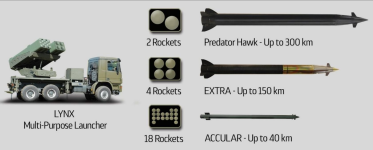
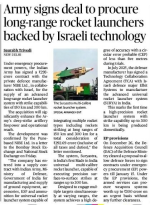
• Interim solution from PULS involve 306mm rockets with 150km range and 370mm rockets with 300km range, mirroring Pakistan's Fateh-2 and China's long-range rocket artillery to remove asymmetries and enable proportional responses. These systems act as placeholders that close immediate capability gaps. They also allow operational familiarisation with universal launcher concepts.

• India's long-term strategy focuses on indigenous development, with DRDO testing 120km range rockets and developing 300km range systems, complemented by the Pralay missile's induction, to create a layered and integrated ground-based strike capability.
 
IA could have collaborated with DRDO for the development of 150km and 300km rockets long ago but they didnt had the vision or requirements that time.
Late CDS Bipin Rawat pushed the development for prahar & pranash to fill the gap between SRBM & rocket artillery, wanted to create indian rocket force in the smilliar line of Chinese rocket force,
After his demise the project got stalled, and only pralay got Greenlight, cause after the galwan, everyone realised we desperately need a tactical ballistic missiles, and pralay perfectly suited the role, the forces then didn't gave importance to prahar & Pranash,

Now after the operation sindoor the forces again realised that they need 150-300km rockets,
It's not that we didn't had solutions for the upcoming problems, we did but as usual the force ignored it and now we are back to square one,