India-Russia Relations

If possible, one of the most valued collaborations could be between India and Russia on a passenger aircraft that can accommodate around 150 passengers. We can ask to collaborate on a larger version of the Sukhoi Superjet and work with RR to obtain the required engine.

View attachment 45761
Now this is called a dream fulfilled. Finally, we will have passenger jet manufacturing. We should try to use the GE engine and ask GE to set up an offshore assembly unit in India.

The Office Crying GIF


We need to increase our exports to russia, its becoming a one way traffic. With oil and weapons deal deficit is not just widening its totally lopsided.
We are negotiating an FTA with the whole Eurasian block to solve this issue. The main challenge we have faced when exporting to these soviet countries is their strict import control measures. For example Russia has huge demand for shrimp, yet we don't export as much as we can to them because they have rather stringent QC. Whether that is intentional or systematically natural or both hard to tell. But with an FTA a lot of those problems can be solved.


India's ONGC moves closer to keeping 20% stake in Russia's Sakhalin-1 project, sources say

By Nidhi Verma
December 5, 20258:13 PM GMT+5:30
1765018041772.png
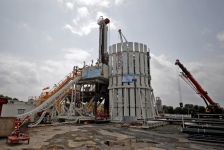
An oil rig manufactured by Megha Engineering and Infrastructures Limited (MEIL) at an Oil and Natural Gas Corp (ONGC) plant, during a media tour of the plant in Dhamasna village in the western state of Gujarat, India, August 26, 2021. REUTERS/Amit Dave

NEW DELHI, Dec 5 (Reuters) -
India's Oil and Natural Gas Corp (ONGC), will pay into Russia's Sakhalin-1 oil and gas field abandonment fund in roubles, using Indian companies' frozen dividends to retain its 20% stake in the project, three sources familiar with the matter said.

ONGC Videsh Ltd, the overseas investment arm of India's top explorer ONGC, and other state-run Indian companies have not been able to repatriate about $800 million in dividends from stakes in Russian energy assets due to sanctions, the industry sources said.

Ahead of Russian President Vladimir Putin's visit to New Delhi this week, the Indian companies agreed to give ONGC Videsh a loan from those stuck dividends so it can make a contribution to the abandonment fund, the sources added.

"ONGC would not like to respond to market speculations," the company said in response to a Reuters email.

Other Indian companies did not respond to Reuters' requests for comment, nor did Rosneft, whose Sakhalinmorneftegaz-shelf subsidiary now operates Sakhalin-1.

An abandonment fund is used for decommissioning activities to ensure that wells are properly shut in and that the process will not affect the environment.

A raft of Western sanctions, imposed over Russia's invasion of Ukraine in February 2022, has made it difficult for ONGC Videsh to transfer funds to Russia in dollars, and payment in roubles requires approval from the Russian authorities.

ONGC Videsh has been trying to retain its 20% stake in the Sakhalin-1 project since October of that year, when Putin ordered the seizure of the project and allowed the Russian government to decide foreign investors' ownership rights in the project.

Russia has allowed ONGC Videsh to contribute roubles to the fund using the pending dividends of Indian companies, said the sources, who spoke on condition of anonymity as they are not authorised to speak to the media.

In August Putin signed a decree that allowed foreign investors to regain shares in the Sakhalin-1 oil and gas project.

The decree stipulated that foreign shareholders must undertake actions to support the lifting of Western sanctions if they want to regain their share.

They must also conclude contracts for supplies of necessary foreign-made equipment to the project, and transfer funds to Sakhalin-1 project accounts.

https://www.reuters.com/business/en...as-sakhalin-1-project-sources-say-2025-12-05/
 
  • Like
Reactions: spice and redpanda
Former deep-cover Russian spy leads Moscow campaign to co-opt Indian tech

By Catherine Belton

Russia is hoping to use India’s booming tech sector to challenge the West and China for IT supremacy.
1765052311227.png
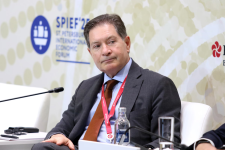
Andrei Bezrukov participates in a panel session at the St. Petersburg International Economic Forum on June 18. (Maksim Konstantinov/SOPA Images/Reuters)

Russia is working to co-opt part of India’s booming tech sector to forge a technological alliance to counter the West and boost its standing with China, in a campaign led by a former U.S.-based deep-cover spy, documents show.

As Russian President Vladimir Putin makes his first visit to India since the invasion of Ukraine, Russia has offered technology transfers to allow India to produce its Su-57 stealth fighter jet. In the background, a cohort of top former Russian foreign intelligence operatives have also mounted an effort to expand Russia’s influence into India’s cybersecurity and information technology sectors, according to documents obtained by a European intelligence service and reviewed by The Washington Post.

The efforts are led by Andrei Bezrukov, the Russian spy whose double life in Boston posing as business consultant Donald Heathfield became the inspiration for the TV show “The Americans.” Bezrukov now serves as the head of the Russian Association for the Export of Technological Sovereignty and, according to European security officials, still works closely with Russian foreign intelligence.

“India and Russia should embark into a privileged strategic partnership and collaborate to build advanced technologies which are sustainable and independent of the West,” one of the documents written by Bezrukov’s team states. The “effort would be to build technologies which can also be taken to countries in Global South and create a common technology base for BRICS nations going forward, thus tracing a path to technological sovereignty,” the document stated.

The BRICS group of major emerging economies, which originally consisted of Brazil, Russia, India, China and South Africa, is seen by Moscow as a way of expanding its global influence and counteracting the West.

For Bezrukov, the effort to undermine the West appears to be a continuation of his two decades operating against the United States, or the “main adversary,” under deep cover as part of Russia’s storied illegals program — in which operatives assume the identity of private citizens in targeted countries and have no perceivable links to the Russian government.

“We have to create our own technological economic space in order to ensure our security. We have to do this, otherwise we will be crushed,” Bezrukov said in a recent public lecture in Russia. “We can’t do this on our own. We need allies, and it is easier for us to unite with those who are close: with Iran, with India and with Southeast Asia.”

In text messages with The Post, Bezrukov denied that he still worked with Russian intelligence or that the initiative could pose any security risk for cooperating countries. “IT promotion is normal business for any country or business association,” he said. “The West is dominating IT space for decades, it is natural we want technology sovereignty.”

Bezrukov was returned to Russia in 2010 when the FBI arrested him and nine other intelligence operatives. The group was sent back to Moscow as part of a spy swap, their covers blown after intensive FBI surveillance that compromised their communications back to “the Center,” Russia’s foreign intelligence headquarters.

1765052698599.png
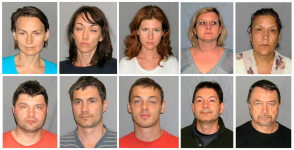
Andrey Bezrukov, bottom row, second from right, is included in booking photos of Russian intelligence operatives arrested by the FBI and returned to Russia in 2010. (U.S. Marshals/AP)

In the years since Russia’s invasion of Ukraine, Bezrukov has become a pivotal player in Kremlin efforts to export Russian cybersecurity and other IT systems across the expanding BRICS alliance. But the documents also show that Bezrukov’s efforts are aimed at opening the way for Russia to infiltrate these countries’ systems.

As part of the attempt to export Russia’s own cyber products, Bezrukov has teamed up with another senior former foreign intelligence officer, Valentin Makarov, who previously served in Moscow’s delegation to UNESCO and now heads the Russoft association of software developers, which is at the forefront of Russia’s efforts to offer an alternative to Western software.

The two men view India, which has a long-standing tradition of defense cooperation with Russia dating back to Soviet times, as central to their efforts because of the countries’ historical partnership, the documents show.

But even as Makarov and Bezrukov have sought to promote the cooperation as boosting India’s independence from the West, in private exchanges with Russian associates Makarov has indicated that the joint development of projects is a way for Russia to gain control over part of India’s tech sector, as well as to boost Russia’s position in relation to China.

“What’s important is that the transfer of technology from Russia will mean dependence on development, production and the training of personnel … and the potential to cut off these systems if these friendly countries violate agreements,” Makarov told one of Bezrukov’s associates, the documents show. “The achievement of India working together with Russia is reaching parity with China.”

Makarov did not respond to requests for comment.

The collaboration has focused on joint development of cybersecurity projects and quantum cryptography, as well as Russian proposals for the use of its Elbrus processor, a computer system developed by Russia for use by its military, to create an “independent” and “secure” Indian national processor or supercomputer.

Makarov and Bezrukov have also forwarded proposals for India to deploy Russia’s BasAlt operating system for the joint production of laptops together with India’s OptimusLogic Systems Ltd., to be used by government agencies, including the Indian Defense Ministry.

Some of the projects have garnered support from the Indian government, including the signing of preliminary agreements to construct the plants to build those laptops. At the end of last year, a Russo-Indian technological hub was established involving Makarov’s Russoft as well as Russia’s Innopraktika, a Russian tech company headed by Putin’s daughter, Katerina Tikhonova.


Spokespeople for the Indian prime minister and the Defense Ministry did not respond to requests for comment.

Makarov has discussed the plans for deepening cooperation with India, including in the field of quantum cryptography, with a top Chinese science and technology official, Guan Shaonan, the documents show, further highlighting the security risks for India.

Analysts said that while Russia’s advanced technologies in some fields such as cybersecurity could present India with an opportunity to boost its independence from the West, many of the projects represented potential security risks.

“Russia does provide certain technological expertise and capabilities, particularly in cybersecurity and secure communications such as cryptography,” said Pia Hüsch, a research fellow in cyber, technology and national security at the Royal United Services Institute in London. “But for India it does hold certain risks,” she said, including the project for joint laptop production, which could open the way for “potential back doors and security weaknesses.”

The U.S. Treasury has imposed sanctions on several Russian cybersecurity firms for collaborating with Russian military and intelligence agencies. Dmitri Alperovitch, chairman of the Silverado Policy Accelerator, a U.S. national security think tank, said India’s recent standoff with the Trump administration over tariffs could encourage it to deepen its relationship with Russia.

For Bezrukov, the battle to forge an alliance of countries capable of countering Western technological dominance could provide a degree of revenge after the U.S. authorities so extensively monitored his own communications when he operated out of Boston for nearly a decade. The FBI installed in his family’s Cambridge, Massachusetts, home a plethora of cameras, bugs and other devices to intercept communications.

“I would think there would be some degree of professional anger and embarrassment,” said one former U.S. official familiar with Bezrukov’s case, speaking on the condition of anonymity because of the sensitivity of the issue.

Western officials have downplayed any operational successes Bezrukov may have notched up undercover out of Boston. The charges filed against him noted that he had “established contact” with a former high-ranking U.S. government national security official, as well as with an official working at a government research facility on the U.S. nuclear bunker-buster program.

“I don’t think anyone thought they were on the verge of … sharing confidences or providing information which might be used to influence them or let alone compromise them,” the former official said.

Ever since Russia’s full-scale invasion of Ukraine in February 2022, Bezrukov’s role back in Moscow has become more important, particularly through his promotion of “technological sovereignty” across the Global South, said Andrei Soldatov, an expert on the Russian security services.

“Now maybe it’s the best part of his life. He is actually doing something,” he said.

https://www.washingtonpost.com/world/2025/12/05/russia-india-tech-cooperation-bezrukov/

 
  • Haha
Reactions: Subgradewalker
Former deep-cover Russian spy leads Moscow campaign to co-opt Indian tech

By Catherine Belton

Russia is hoping to use India’s booming tech sector to challenge the West and China for IT supremacy.
View attachment 48186
Andrei Bezrukov participates in a panel session at the St. Petersburg International Economic Forum on June 18. (Maksim Konstantinov/SOPA Images/Reuters)

Russia is working to co-opt part of India’s booming tech sector to forge a technological alliance to counter the West and boost its standing with China, in a campaign led by a former U.S.-based deep-cover spy, documents show.

As Russian President Vladimir Putin makes his first visit to India since the invasion of Ukraine, Russia has offered technology transfers to allow India to produce its Su-57 stealth fighter jet. In the background, a cohort of top former Russian foreign intelligence operatives have also mounted an effort to expand Russia’s influence into India’s cybersecurity and information technology sectors, according to documents obtained by a European intelligence service and reviewed by The Washington Post.

The efforts are led by Andrei Bezrukov, the Russian spy whose double life in Boston posing as business consultant Donald Heathfield became the inspiration for the TV show “The Americans.” Bezrukov now serves as the head of the Russian Association for the Export of Technological Sovereignty and, according to European security officials, still works closely with Russian foreign intelligence.

“India and Russia should embark into a privileged strategic partnership and collaborate to build advanced technologies which are sustainable and independent of the West,” one of the documents written by Bezrukov’s team states. The “effort would be to build technologies which can also be taken to countries in Global South and create a common technology base for BRICS nations going forward, thus tracing a path to technological sovereignty,” the document stated.

The BRICS group of major emerging economies, which originally consisted of Brazil, Russia, India, China and South Africa, is seen by Moscow as a way of expanding its global influence and counteracting the West.

For Bezrukov, the effort to undermine the West appears to be a continuation of his two decades operating against the United States, or the “main adversary,” under deep cover as part of Russia’s storied illegals program — in which operatives assume the identity of private citizens in targeted countries and have no perceivable links to the Russian government.

“We have to create our own technological economic space in order to ensure our security. We have to do this, otherwise we will be crushed,” Bezrukov said in a recent public lecture in Russia. “We can’t do this on our own. We need allies, and it is easier for us to unite with those who are close: with Iran, with India and with Southeast Asia.”

In text messages with The Post, Bezrukov denied that he still worked with Russian intelligence or that the initiative could pose any security risk for cooperating countries. “IT promotion is normal business for any country or business association,” he said. “The West is dominating IT space for decades, it is natural we want technology sovereignty.”

Bezrukov was returned to Russia in 2010 when the FBI arrested him and nine other intelligence operatives. The group was sent back to Moscow as part of a spy swap, their covers blown after intensive FBI surveillance that compromised their communications back to “the Center,” Russia’s foreign intelligence headquarters.

View attachment 48187
Andrey Bezrukov, bottom row, second from right, is included in booking photos of Russian intelligence operatives arrested by the FBI and returned to Russia in 2010. (U.S. Marshals/AP)

In the years since Russia’s invasion of Ukraine, Bezrukov has become a pivotal player in Kremlin efforts to export Russian cybersecurity and other IT systems across the expanding BRICS alliance. But the documents also show that Bezrukov’s efforts are aimed at opening the way for Russia to infiltrate these countries’ systems.

As part of the attempt to export Russia’s own cyber products, Bezrukov has teamed up with another senior former foreign intelligence officer, Valentin Makarov, who previously served in Moscow’s delegation to UNESCO and now heads the Russoft association of software developers, which is at the forefront of Russia’s efforts to offer an alternative to Western software.

The two men view India, which has a long-standing tradition of defense cooperation with Russia dating back to Soviet times, as central to their efforts because of the countries’ historical partnership, the documents show.

But even as Makarov and Bezrukov have sought to promote the cooperation as boosting India’s independence from the West, in private exchanges with Russian associates Makarov has indicated that the joint development of projects is a way for Russia to gain control over part of India’s tech sector, as well as to boost Russia’s position in relation to China.

“What’s important is that the transfer of technology from Russia will mean dependence on development, production and the training of personnel … and the potential to cut off these systems if these friendly countries violate agreements,” Makarov told one of Bezrukov’s associates, the documents show. “The achievement of India working together with Russia is reaching parity with China.”


Makarov did not respond to requests for comment.

The collaboration has focused on joint development of cybersecurity projects and quantum cryptography, as well as Russian proposals for the use of its Elbrus processor, a computer system developed by Russia for use by its military, to create an “independent” and “secure” Indian national processor or supercomputer.

Makarov and Bezrukov have also forwarded proposals for India to deploy Russia’s BasAlt operating system for the joint production of laptops together with India’s OptimusLogic Systems Ltd., to be used by government agencies, including the Indian Defense Ministry.

Some of the projects have garnered support from the Indian government, including the signing of preliminary agreements to construct the plants to build those laptops. At the end of last year, a Russo-Indian technological hub was established involving Makarov’s Russoft as well as Russia’s Innopraktika, a Russian tech company headed by Putin’s daughter, Katerina Tikhonova.


Spokespeople for the Indian prime minister and the Defense Ministry did not respond to requests for comment.

Makarov has discussed the plans for deepening cooperation with India, including in the field of quantum cryptography, with a top Chinese science and technology official, Guan Shaonan, the documents show, further highlighting the security risks for India.

Analysts said that while Russia’s advanced technologies in some fields such as cybersecurity could present India with an opportunity to boost its independence from the West, many of the projects represented potential security risks.

“Russia does provide certain technological expertise and capabilities, particularly in cybersecurity and secure communications such as cryptography,” said Pia Hüsch, a research fellow in cyber, technology and national security at the Royal United Services Institute in London. “But for India it does hold certain risks,” she said, including the project for joint laptop production, which could open the way for “potential back doors and security weaknesses.”

The U.S. Treasury has imposed sanctions on several Russian cybersecurity firms for collaborating with Russian military and intelligence agencies. Dmitri Alperovitch, chairman of the Silverado Policy Accelerator, a U.S. national security think tank, said India’s recent standoff with the Trump administration over tariffs could encourage it to deepen its relationship with Russia.

For Bezrukov, the battle to forge an alliance of countries capable of countering Western technological dominance could provide a degree of revenge after the U.S. authorities so extensively monitored his own communications when he operated out of Boston for nearly a decade. The FBI installed in his family’s Cambridge, Massachusetts, home a plethora of cameras, bugs and other devices to intercept communications.

“I would think there would be some degree of professional anger and embarrassment,” said one former U.S. official familiar with Bezrukov’s case, speaking on the condition of anonymity because of the sensitivity of the issue.

Western officials have downplayed any operational successes Bezrukov may have notched up undercover out of Boston. The charges filed against him noted that he had “established contact” with a former high-ranking U.S. government national security official, as well as with an official working at a government research facility on the U.S. nuclear bunker-buster program.

“I don’t think anyone thought they were on the verge of … sharing confidences or providing information which might be used to influence them or let alone compromise them,” the former official said.

Ever since Russia’s full-scale invasion of Ukraine in February 2022, Bezrukov’s role back in Moscow has become more important, particularly through his promotion of “technological sovereignty” across the Global South, said Andrei Soldatov, an expert on the Russian security services.

“Now maybe it’s the best part of his life. He is actually doing something,” he said.

https://www.washingtonpost.com/world/2025/12/05/russia-india-tech-cooperation-bezrukov/
Entire technology sector especially the electronics and software is dominated by the west not bcos they are just good at it but also bcos they form alliances, define the protocols, protect the IP's and disallow any non western competition.

There is literally no point in trying to chase the technology created by the west. It will always keep moving ahead while we keep trying to catch up. They will keep denying the latest tech as they dont need to.

Instead we should focus on creating our own alternate block with like minded countries which shares the technology and also see us as equals. Problem is obviously the economics, long gestation period and uncertainty. Good example is aviation sector, instead of building our own aircrafts we keep importing every stuff for defence and civilian areas. We have a huge market and certainly can manage to have 20-25 years gestation period to make it economically viable.

For example china took the lead in 6g network development , they are actually defining the protocol and setting the standards.

Aviation sector would be a good sector to start with, we can develop a MTA and greatly reduce the cost of air transport.
 
Former deep-cover Russian spy leads Moscow campaign to co-opt Indian tech

By Catherine Belton

Russia is hoping to use India’s booming tech sector to challenge the West and China for IT supremacy.
View attachment 48186
Andrei Bezrukov participates in a panel session at the St. Petersburg International Economic Forum on June 18. (Maksim Konstantinov/SOPA Images/Reuters)

Russia is working to co-opt part of India’s booming tech sector to forge a technological alliance to counter the West and boost its standing with China, in a campaign led by a former U.S.-based deep-cover spy, documents show.

As Russian President Vladimir Putin makes his first visit to India since the invasion of Ukraine, Russia has offered technology transfers to allow India to produce its Su-57 stealth fighter jet. In the background, a cohort of top former Russian foreign intelligence operatives have also mounted an effort to expand Russia’s influence into India’s cybersecurity and information technology sectors, according to documents obtained by a European intelligence service and reviewed by The Washington Post.

The efforts are led by Andrei Bezrukov, the Russian spy whose double life in Boston posing as business consultant Donald Heathfield became the inspiration for the TV show “The Americans.” Bezrukov now serves as the head of the Russian Association for the Export of Technological Sovereignty and, according to European security officials, still works closely with Russian foreign intelligence.

“India and Russia should embark into a privileged strategic partnership and collaborate to build advanced technologies which are sustainable and independent of the West,” one of the documents written by Bezrukov’s team states. The “effort would be to build technologies which can also be taken to countries in Global South and create a common technology base for BRICS nations going forward, thus tracing a path to technological sovereignty,” the document stated.

The BRICS group of major emerging economies, which originally consisted of Brazil, Russia, India, China and South Africa, is seen by Moscow as a way of expanding its global influence and counteracting the West.

For Bezrukov, the effort to undermine the West appears to be a continuation of his two decades operating against the United States, or the “main adversary,” under deep cover as part of Russia’s storied illegals program — in which operatives assume the identity of private citizens in targeted countries and have no perceivable links to the Russian government.

“We have to create our own technological economic space in order to ensure our security. We have to do this, otherwise we will be crushed,” Bezrukov said in a recent public lecture in Russia. “We can’t do this on our own. We need allies, and it is easier for us to unite with those who are close: with Iran, with India and with Southeast Asia.”

In text messages with The Post, Bezrukov denied that he still worked with Russian intelligence or that the initiative could pose any security risk for cooperating countries. “IT promotion is normal business for any country or business association,” he said. “The West is dominating IT space for decades, it is natural we want technology sovereignty.”

Bezrukov was returned to Russia in 2010 when the FBI arrested him and nine other intelligence operatives. The group was sent back to Moscow as part of a spy swap, their covers blown after intensive FBI surveillance that compromised their communications back to “the Center,” Russia’s foreign intelligence headquarters.

View attachment 48187
Andrey Bezrukov, bottom row, second from right, is included in booking photos of Russian intelligence operatives arrested by the FBI and returned to Russia in 2010. (U.S. Marshals/AP)

In the years since Russia’s invasion of Ukraine, Bezrukov has become a pivotal player in Kremlin efforts to export Russian cybersecurity and other IT systems across the expanding BRICS alliance. But the documents also show that Bezrukov’s efforts are aimed at opening the way for Russia to infiltrate these countries’ systems.

As part of the attempt to export Russia’s own cyber products, Bezrukov has teamed up with another senior former foreign intelligence officer, Valentin Makarov, who previously served in Moscow’s delegation to UNESCO and now heads the Russoft association of software developers, which is at the forefront of Russia’s efforts to offer an alternative to Western software.

The two men view India, which has a long-standing tradition of defense cooperation with Russia dating back to Soviet times, as central to their efforts because of the countries’ historical partnership, the documents show.

But even as Makarov and Bezrukov have sought to promote the cooperation as boosting India’s independence from the West, in private exchanges with Russian associates Makarov has indicated that the joint development of projects is a way for Russia to gain control over part of India’s tech sector, as well as to boost Russia’s position in relation to China.

“What’s important is that the transfer of technology from Russia will mean dependence on development, production and the training of personnel … and the potential to cut off these systems if these friendly countries violate agreements,” Makarov told one of Bezrukov’s associates, the documents show. “The achievement of India working together with Russia is reaching parity with China.”


Makarov did not respond to requests for comment.

The collaboration has focused on joint development of cybersecurity projects and quantum cryptography, as well as Russian proposals for the use of its Elbrus processor, a computer system developed by Russia for use by its military, to create an “independent” and “secure” Indian national processor or supercomputer.

Makarov and Bezrukov have also forwarded proposals for India to deploy Russia’s BasAlt operating system for the joint production of laptops together with India’s OptimusLogic Systems Ltd., to be used by government agencies, including the Indian Defense Ministry.

Some of the projects have garnered support from the Indian government, including the signing of preliminary agreements to construct the plants to build those laptops. At the end of last year, a Russo-Indian technological hub was established involving Makarov’s Russoft as well as Russia’s Innopraktika, a Russian tech company headed by Putin’s daughter, Katerina Tikhonova.


Spokespeople for the Indian prime minister and the Defense Ministry did not respond to requests for comment.

Makarov has discussed the plans for deepening cooperation with India, including in the field of quantum cryptography, with a top Chinese science and technology official, Guan Shaonan, the documents show, further highlighting the security risks for India.

Analysts said that while Russia’s advanced technologies in some fields such as cybersecurity could present India with an opportunity to boost its independence from the West, many of the projects represented potential security risks.

“Russia does provide certain technological expertise and capabilities, particularly in cybersecurity and secure communications such as cryptography,” said Pia Hüsch, a research fellow in cyber, technology and national security at the Royal United Services Institute in London. “But for India it does hold certain risks,” she said, including the project for joint laptop production, which could open the way for “potential back doors and security weaknesses.”

The U.S. Treasury has imposed sanctions on several Russian cybersecurity firms for collaborating with Russian military and intelligence agencies. Dmitri Alperovitch, chairman of the Silverado Policy Accelerator, a U.S. national security think tank, said India’s recent standoff with the Trump administration over tariffs could encourage it to deepen its relationship with Russia.

For Bezrukov, the battle to forge an alliance of countries capable of countering Western technological dominance could provide a degree of revenge after the U.S. authorities so extensively monitored his own communications when he operated out of Boston for nearly a decade. The FBI installed in his family’s Cambridge, Massachusetts, home a plethora of cameras, bugs and other devices to intercept communications.

“I would think there would be some degree of professional anger and embarrassment,” said one former U.S. official familiar with Bezrukov’s case, speaking on the condition of anonymity because of the sensitivity of the issue.

Western officials have downplayed any operational successes Bezrukov may have notched up undercover out of Boston. The charges filed against him noted that he had “established contact” with a former high-ranking U.S. government national security official, as well as with an official working at a government research facility on the U.S. nuclear bunker-buster program.

“I don’t think anyone thought they were on the verge of … sharing confidences or providing information which might be used to influence them or let alone compromise them,” the former official said.

Ever since Russia’s full-scale invasion of Ukraine in February 2022, Bezrukov’s role back in Moscow has become more important, particularly through his promotion of “technological sovereignty” across the Global South, said Andrei Soldatov, an expert on the Russian security services.

“Now maybe it’s the best part of his life. He is actually doing something,” he said.

https://www.washingtonpost.com/world/2025/12/05/russia-india-tech-cooperation-bezrukov/
Case of pot calling the kettle black. Pity those who take this on face and side with west over this.
 
  • Like
Reactions: spice and redpanda
Another one of those feel good statements by Indian govt. They act as if they discovered russia in 2024. Once the sanctions hit russsia, western firms exited and the chinese took over their place. Meanwhile India dint even bother to aggressively compete with china , they were more afraid of uncle sam. But once uncle sam showed India its place they are now rushing to find new markets.

If India has to increase its exports or get technology it has to fight tooth & nail for every market instead of kowtowing to EU & US . Our bureaucracy which has been totally compromised by west will never allow any actions to taken in our best interest. Modi talks about "Macaulay" in education but conveniently forgets about "curzons" in bureaucracy.
 
  • Like
Reactions: CATS @hunter