Sukhoi Su-30MKI

You can't fight 5th gen with a 4.5 gen aircraft and expect a win, maybe the win may come once in a lifetime,

The weapons on pylon, the engine configuration, less stealth shaping, will give away your position by hundreds of kilometres, unless you doge all the BVR missiles somehow, there's no chance of survival,

Or bulid your network IACCS so strong that, you can get the cuing on target from your Radar & space assets, so you get a firing solution & stand a chance against them,


UCAV Ghatak as the top of the sword moving towards adversary. But optimised for sensors and guidance tech, which locks on target and guides Astra/Gandiva fired from sukhoi at standoff distance.

Feasible ?
 
Martin Scorsese Cinema GIF

The state of this forum......!!!!:LOL:

When it comes to reducing an aircraft's radar cross section, the most important factor is stealth shaping. Stealth shaping is used in conjunction with Radar Absorbing Structure (RAS) [where RAMs are embedded in the polymeric composite matrix] to achieve optimal results. Using just the radar absorbing structures without any change in shaping has marginal effect on the overall RCS of any aircraft. Otherwise what was the point of 5th gen aircraft???? which are expensive to develop & buy but also expensive to maintain.

here is some literature to read on this topic..............

I dont think you have thought your point through here. If it was so easy to reduce RCS of an a/c by just changing the materials used then everyone would have continued building the same old F-18s or Su-30s with these materials instead of investing billions into optimally shaped aircraft. The biggest factors for such a large RCS on Su-30s are its exposed turbine inlets, spherical canopy & body hotspots. None of that changes when you apply composites, so what are you talking about???


The Office Smile GIF

the cringe i felt while reading that sentence.
To suggest fighting chinese 5th gen a/c with an upgraded su-30.....just incredible!!!!
People will write wildest fantasies on here.
Lol obviously Sukhoi will either be shot down or if DRFM and EW is strong it can spoof and retreat if its a sole one on one contest with 5th gen. But now it's networks vs networks as I said. Sukhois, Tejas Mk2 and Mk1As armed with Astra Mk2 ER and Gandivas and networked with AWACS, ground radars, sats and with each other with very strong datalinks will absolutely stand a chance and go head to head with 5th generation fighters. Especially with Gandiva type BVRM as no 5th generation jet is capable of keeping such massive BVRMs in their IWB, which means they can only stealthily strike up to 250 km or they have to sacrifice stealth and reveal themselves with pylon based BVRMs.

VHF, S band based AESA radars on the ground further complicates things especially for China which for some reason has a very poor diversity of SEAD standoff weapons. Their best sead standoff weapons has a range of less than 200 km, their other standoff weapons is some ALBM which shine like Christmas tree on radar. Thus, powerful ground radars must also be linked to AWACS and fighter jets for better thwarting enemy formations.
 
UCAV Ghatak as the top of the sword moving towards adversary. But optimised for sensors and guidance tech, which locks on target and guides Astra/Gandiva fired from sukhoi at standoff distance.

Feasible ?
That's a long way away unfortunately but when Ghatak and CATS warriors does come and complete their years long myriad of tests it will change the game altogether as they can go close to enemy lines and either conduct precision strikes/SEAD or they can sacrifice themselves by quickly turning on their radars (hence alerting enemy) but achieving location track of enemy 5th gens and sending the data back to the friendly network. The friendly network can thus take the ISR supplied by the UCAV or CCA and fuse it with data from AWACS, ground radars and other fighters to try and get fire control solution on enemy fighters.
 
Martin Scorsese Cinema GIF

The state of this forum......!!!!:LOL:

When it comes to reducing an aircraft's radar cross section, the most important factor is stealth shaping. Stealth shaping is used in conjunction with Radar Absorbing Structure (RAS) [where RAMs are embedded in the polymeric composite matrix] to achieve optimal results. Using just the radar absorbing structures without any change in shaping has marginal effect on the overall RCS of any aircraft. Otherwise what was the point of 5th gen aircraft???? which are expensive to develop & buy but also expensive to maintain.

here is some literature to read on this topic..............

I dont think you have thought your point through here. If it was so easy to reduce RCS of an a/c by just changing the materials used then everyone would have continued building the same old F-18s or Su-30s with these materials instead of investing billions into optimally shaped aircraft. The biggest factors for such a large RCS on Su-30s are its exposed turbine inlets, spherical canopy & body hotspots. None of that changes when you apply composites, so what are you talking about???


The Office Smile GIF

the cringe i felt while reading that sentence.
To suggest fighting chinese 5th gen a/c with an upgraded su-30.....just incredible!!!!
People will write wildest fantasies on here.
You don't need to cringe, either understand or ignore. The latter isn't tough either.

Now regarding your materials vs shaping analogy for stealth. Ask yourself why F-22 and F-35 despite far less stealth shaping than F-117(perfect diamond shape) have far better stealth than the Nighthawk? Answer lies in the material they use.

We are not trying to make MKI VLO as it is not possible. But reducing its clean and air-to-air loaded RCS to between -20dBsm & -10dBsm isn't out of realms. However, if we combine these modern CNT RAM materials with stealth planform alignment, we get RCS of between -40dBsm and -50dBsm which far exceeds MKI. AMCA will be just that.

Now on to your second premise regarding MKI can't take on 5th gen jets. Well, US DoD just published their annual defence report which I posted in this thread itself, where it talks about F-15EX, with help of on-board and off-board sensors defeating even 5th gen jets. MKI UPG. will also achieve that.

In a neutral territory without AWACS & IACCS support, maybe J-20 will have upper hand. But MKI UPG. with help of its onboard(Virupaksha/Dual-Band IRST/GaN Based Digital RWR(1-40GHz band coverage)/GaN based ECM) and offboard sensors like data-links with AWACS & IACCS will form such a BARCAP that no VLO jet will be able to penetrate and shall get destroyed in trying that.

PS: About you finding my posts too optimistic or cringe: Well dude I am the same guy who predicted plenty of stuff that have happened literally. So maybe I am not that optimistic rather a realist;)
 
Using just the radar absorbing structures without any change in shaping has marginal effect on the overall RCS of any aircraft
While I do agree both shaping and stealth material is needed, based on current material tech.
But I wouldn't call the effect of stealth materials as just marginal.
Just like I also wouldn't call the effect of just shaping marginal.

Both have quite a significant effect on stealth of a fighter jet.
Based on current possible tech, Combination of both is absolutely necessary in achieving the current standard of stealth to be a effective stealth fighter in current times.

Both methods achieve stealth through different means but effect are quite comparable, with stealth materials having slightly more effect.

Though as tech advances over decades IMO materials will start to significantly outshine shaping.
 
Well dude I am the same guy who predicted plenty of stuff that have happened literally. So maybe I am not that optimistic rather a realist;)
When you make a lot of predictions, some of them are bound to be right. Highlight those correct predictions, while ignoring the rest and people will think you're always right.
 
While I do agree both shaping and stealth material is needed, based on current material tech.
But I wouldn't call the effect of stealth materials as just marginal.
Just like I also wouldn't call the effect of just shaping marginal.

Both have quite a significant effect on stealth of a fighter jet.
Based on current possible tech, Combination of both is absolutely necessary in achieving the current standard of stealth to be a effective stealth fighter in current times.

Both methods achieve stealth through different means but effect are quite comparable, with stealth materials having slightly more effect.

Though as tech advances over decades IMO materials will start to significantly outshine shaping.
Hey, you're spot on that both techniques matter. But actually shaping usually does the heavy-lifting (we are talking like 40-50 dB reductions just from geometry) while RAM adds in the supplementary gains (10-20 dB accd to freq). but you're right that RAM is far from marginal and it's critical for handling all those problem areas like edges and gaps that you just can't fix with shape alone. here are some nice papers for that , in case u want to get into the details :
Paper 1 , Paper 2 , Paper 3 , Paper 4
 
Hey, you're spot on that both techniques matter. But actually shaping usually does the heavy-lifting (we are talking like 40-50 dB reductions just from geometry) while RAM adds in the supplementary gains (10-20 dB accd to freq). but you're right that RAM is far from marginal and it's critical for handling all those problem areas like edges and gaps that you just can't fix with shape alone. here are some nice papers for that , in case u want to get into the details :
Paper 1 , Paper 2 , Paper 3 , Paper 4
I disagree.

If we're just gonna go with no. Then in real life, current time of 5th gen stealth planes, Shaping does 10-20dbsm reduction, while material does 15-25dbsm.


The degree of reduction in rcs, materials achieve is measured by a standard of perfectly reflecting surface/metal as a base, then effect of reduction by applying the material.


But There's no standard for shape, you can use an object shaped in a way to have as much rcs return as possible as base, and shaping then can achieve 40-50dbsm reduction or even more.
Plus you can just ignore every other requirement and create a shape purely for stealth.
But real life doesn't work that way, 5th gen stealth planes still need to fly, to house a pilot, systems etc.

But non stealth planes while not designed for stealth are also not designed to reflect as much radar waves back as possible.

The real life base to see the effect of Shaping are 4th gen planes.

Typical frontal median rcs of a clean old 4th gen plane like older mig29 is 3-5m2.
It does not use composite coating on its surface, its metal.


This is probably the best open/public rcs simulation for f35.


Even without the RAM on outer skin surface, and without leading edge and trailing edge treatment, the F-35 model is able to achieve the median RCS value of only 0.06 m2 in X-band.

The reduction from 3-5m2 from mig29 to 0.06m2 of f35 is of 17-19dbsm.
Based on shaping mainly..

Also that 15-25dbsm reduction by stealth materials is based on real life effect stealth materials have.

Like theoretically we can use a very thick layer of stealth jet level RAM and achieve 30-50 dbsm of reduction in rcs, but then the plane will be to heavy to fulfill its aerodynamic goals or even fly , plus plethora of all other problems that will emerge.

( x band frequency as typical).


As for long term, materials hold more potential for stealth than shaping.

 
Last edited:
VHF, S band based AESA radars on the ground further complicates things especially for China which for some reason has a very poor diversity of SEAD standoff weapons. Their best sead standoff weapons has a range of less than 200 km, their other standoff weapons is some ALBM which shine like Christmas tree on radar. Thus, powerful ground radars must also be linked to AWACS and fighter jets for better thwarting enemy formations
How do you know this? China's most outdated YJ-91 and YJ-83 missiles also have a range of 190-280 km.
Not to mention, China publicly displayed the AKF98A and KD-88C at the Zhuhai Air Show, and the YJ-15, YJ-17, YJ-19, and YJ-20 at the Victory Parade.

Lol obviously Sukhoi will either be shot down or if DRFM and EW is strong it can spoof and retreat if its a sole one on one contest with 5th gen. But now it's networks vs networks as I said. Sukhois, Tejas Mk2 and Mk1As armed with Astra Mk2 ER and Gandivas and networked with AWACS, ground radars, sats and with each other with very strong datalinks will absolutely stand a chance and go head to head with 5th generation fighters. Especially with Gandiva type BVRM as no 5th generation jet is capable of keeping such massive BVRMs in their IWB, which means they can only stealthily strike up to 250 km or they have to sacrifice stealth and reveal themselves with pylon based BVRMs
This tactic was simulated by China in 2017, when two J-20 attacked a formation consisting of 10 J-10C/J-11, one KJ2000, and one Y8 electronic warfare aircraft.
The result was a 10-0 victory.This is news reported by the CCP official newspaper
This also verifies the ineffectiveness of China's tactical conception of facing F22 without J20.
 
Last edited:
How do we know this? China's most outdated YJ-91 and YJ-93 missiles also have a range of 190-280 km.
Not to mention, China publicly displayed the AKF98A and KD-88C at the Zhuhai Air Show, and the YJ-15, YJ-17, YJ-19, and YJ-20 at the Victory Parade.
they are all cruise missiles not anti radar. even India with its limited funds has a large inventory of such missiles.
what we are taking about are anti radar missiles like the rudram1(about 150km),2(300~km),3(550+km)

Yj-91 is the current SEAD/DEAD weapon of the PLAAF and its sort of just a slightly improved version of the kh-31P. a good missile but not really comparable to western systems at the moment. its range is also similar to the KH31P at about 110km but since its improved it could be upto 150km putting it roughly on par with the rudram 1 but the rudram 1 has much better guidance and KP.

I do not know of any other ARM weapons being developed by china at the moment so any info would be appreciated =).

This tactic was simulated by China in 2017, when two J-20 attacked a formation consisting of 10 J-10C/J-11, one KJ2000, and one Y8 electronic warfare aircraft.
The result was a 10-0 victory.This is news reported by the CCP official newspaper
This also verifies the ineffectiveness of China's tactical conception of facing F22 without J20.
I thought this result was obvious??? The j10/11s didnt have any support from ground based air defences or radars and faced agianst a j20 at range? a single y8 at such long ranges isnt going to really help. This is a very one sided battle because it was meant to be one. Not even a VHF or a S band radar?

china(if it ever attacks india) will face india on land where india will have a plethora of anti stealth systems in a networked environment(this is the situation today not in the future where it will be even harder for china compared to the mass neglect and stupidity of the IAF today). Its not this simple lol. Even the F22 will struggle to do shit over the chinese mainland or within the range of the radars from the mainland.

The above battle is only really replicable over the ocean. unless im really mistaken in which case i would like scenarios.
 
they are all cruise missiles not anti radar. even India with its limited funds has a large inventory of such missiles.
what we are taking about are anti radar missiles like the rudram1(about 150km),2(300~km),3(550+km)

Yj-91 is the current SEAD/DEAD weapon of the PLAAF and its sort of just a slightly improved version of the kh-31P. a good missile but not really comparable to western systems at the moment. its range is also similar to the KH31P at about 110km but since its improved it could be upto 150km putting it roughly on par with the rudram 1 but the rudram 1 has much better guidance and KP.

I do not know of any other ARM weapons being developed by china at the moment so any info would be appreciated =).
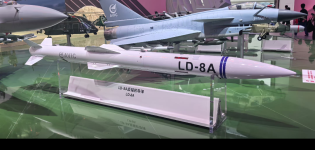
I understand what you mean. According to some reliable information, China has already produced a new generation of anti-radiation missiles using the PL-15 production line that is about to be phased out.
Screenshot_2025-10-27-16-00-36-111_com.sina.weibo.png
These missiles can be easily placed in the J-20/35 and GJ-11 magazines
 
I understand what you mean. According to some reliable information, China has already produced a new generation of anti-radiation missiles using the PL-15 production line that is about to be phased out.
View attachment 47324
These missiles can be easily placed in the J-20/35 and GJ-11 magazines
im struggling to find reliable info about this missile. could you please link reliable sources?? all the info I find has a trillion different range and seeker estimates lol.

from i can see i can tell that this missile exists and might go into production soon but i need more info before amking any educated guesses
 
I thought this result was obvious??? The j10/11s didnt have any support from ground based air defences or radars and faced agianst a j20 at range? a single y8 at such long ranges isnt going to really help. This is a very one sided battle because it was meant to be one. Not even a VHF or a S band radar?

china(if it ever attacks india) will face india on land where india will have a plethora of anti stealth systems in a networked environment(this is the situation today not in the future where it will be even harder for china compared to the mass neglect and stupidity of the IAF today). Its not this simple lol. Even the F22 will struggle to do shit over the chinese mainland or within the range of the radars from the mainland.

The above battle is only really replicable over the ocean. unless im really mistaken in which case i would like scenarios.
You can ask Luoyang Air-to-Air Missile Research Institute about these.
Here is his email address, good luck
[email protected]
 
You can ask Luoyang Air-to-Air Missile Research Institute about these.
Here is his email address, good luck
[email protected]
im sorry but im extremely hesitant about emailing random people or institutes that i do not know of. It would be a lot better if you could simply explain this to me yourself but if this is not possible then we can simply let the matter rest.
 
  • Like
Reactions: RationalGuy
I thought this result was obvious??? The j10/11s didnt have any support from ground based air defences or radars and faced agianst a j20 at range? a single y8 at such long ranges isnt going to really help. This is a very one sided battle because it was meant to be one. Not even a VHF or a S band radar?

china(if it ever attacks india) will face india on land where india will have a plethora of anti stealth systems in a networked environment(this is the situation today not in the future where it will be even harder for china compared to the mass neglect and stupidity of the IAF today). Its not this simple lol. Even the F22 will struggle to do shit over the chinese mainland or within the range of the radars from the mainland.

The above battle is only really replicable over the ocean. unless im really mistaken in which case i would like scenarios.
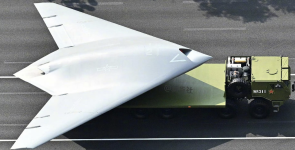
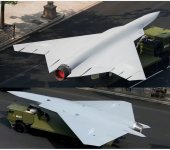
I think you misunderstood the use of the fifth-generation fighter. The J20 will not directly attack the enemy's air defense network like a reckless man.These are the things that unmanned wingmen and CCA do.Just like the drones that China displayed in the victory parade
Screenshot_2025-10-27-16-06-40-179_com.miui.gallery.pngScreenshot_2025-10-27-16-05-57-404_com.miui.gallery-edit.jpg
At the same time, you have another mistake. The Y8 electronic jammer is very powerful. It is a powerful weapon for suppressing enemy communications and data links outside the defense zone and interfering with enemy radars.
Screenshot_2025-10-27-16-03-45-530_com.miui.gallery-edit.jpg
 
im sorry but im extremely hesitant about emailing random people or institutes that i do not know of. It would be a lot better if you could simply explain this to me yourself but if this is not possible then we can simply let the matter rest.
Don't joke, even if I knew this, I wouldn't tell anyone, or I'd be sentenced to more than two years in prison for leaking secrets.
 
I think you misunderstood the use of the fifth-generation fighter. The J20 will not directly attack the enemy's air defense network like a reckless man.These are the things that unmanned wingmen and CCA do.Just like the drones that China displayed in the victory parade
View attachment 47325View attachment 47326
At the same time, you have another mistake. The Y8 electronic jammer is very powerful. It is a powerful weapon for suppressing enemy communications and data links outside the defense zone and interfering with enemy radars.
View attachment 47327
i understand that in the future the role of a loyal wingman would be be precisely high risk jobs such as this but this still doesnt really help until the late 2020s . they are also going to be detected at relatively long ranges but given the fact that they are expendable they might be used in a riskier manner.

as for the y-8 it is certainly powerful but at the end of the day india also has enough countermeasures to prevent such degradation of the datalinks and its own EW craft(not as powerful and smaller in size but significant in their on right)


lol well then this discussion has no reliable info to move forward
Don't joke, even if I knew this, I wouldn't tell anyone, or I'd be sentenced to more than two years in prison for leaking secrets.
 
i understand that in the future the role of a loyal wingman would be be precisely high risk jobs such as this but this still doesnt really help until the late 2020s . they are also going to be detected at relatively long ranges but given the fact that they are expendable they might be used in a riskier manner.

as for the y-8 it is certainly powerful but at the end of the day india also has enough countermeasures to prevent such degradation of the datalinks and its own EW craft(not as powerful and smaller in size but significant in their on right)


lol well then this discussion has no reliable info to move forward
I don't know why you think they don't have obvious help, judging by the appearance, They generally adopt tailless layout and lambda wing or large delta wing
A drone with this layout has a significantly smaller RCS value than any fifth-generation fighter.This means they are almost impossible to detect
The GJ-11 was first publicly displayed at the 2019 National Day military parade, and recently the Americans discovered that it was deployed in large numbers at the Shigatse base.
If a war breaks out now, these drones could be useful
 
I disagree.

If we're just gonna go with no. Then in real life, current time of 5th gen stealth planes, Shaping does 10-20dbsm reduction, while material does 15-25dbsm.


The degree of reduction in rcs, materials achieve is measured by a standard of perfectly reflecting surface/metal as a base, then effect of reduction by applying the material.


But There's no standard for shape, you can use an object shaped in a way to have as much rcs return as possible as base, and shaping then can achieve 40-50dbsm reduction or even more.
Plus you can just ignore every other requirement and create a shape purely for stealth.
But real life doesn't work that way, 5th gen stealth planes still need to fly, to house a pilot, systems etc.

But non stealth planes while not designed for stealth are also not designed to reflect as much radar waves back as possible.

The real life base to see the effect of Shaping are 4th gen planes.

Typical frontal median rcs of a clean old 4th gen plane like older mig29 is 3-5m2.
It does not use composite coating on its surface, its metal.


This is probably the best open/public rcs simulation for f35.


Even without the RAM on outer skin surface, and without leading edge and trailing edge treatment, the F-35 model is able to achieve the median RCS value of only 0.06 m2 in X-band.

The reduction from 3-5m2 from mig29 to 0.06m2 of f35 is of 17-19dbsm.
Based on shaping mainly..

Also that 15-25dbsm reduction by stealth materials is based on real life effect stealth materials have.

Like theoretically we can use a very thick layer of stealth jet level RAM and achieve 30-50 dbsm of reduction in rcs, but then the plane will be to heavy to fulfill its aerodynamic goals or even fly , plus plethora of all other problems that will emerge.

( x band frequency as typical).


As for long term, materials hold more potential for stealth than shaping.
I kindoff see where that argument is coming from, but i think it's based on a fundamental mix-up in what's being measured.
the statement that "there's no standard for shape" isn't quite right; in engineering, the standard baseline is always a "worst-case" target, like a flat plate or a corner reflector. A 4th gen fighter, with all its right angles and flat surfaces, is actually full of these "worst-case" features.
Shaping reduces the the mirror-like specular "glint" , and thats what provides the bigger reduction , but to iterate again : from the reference , NOT the baseline .

Materials, like ram and ras, are the essential "cleanup" crew. Their job : to absorb the much weaker, secondary scattering that shaping can't fix, like energy diffracting from edges or traveling along the skin. This role is what accounts for the final 10-20 db of attenuation. The f-35 simulation that was mentioned actually proves this. The fact that a PEC F35 model (which also adds another uncertainty), with no ram, already achieves such a tiny signature shows that shaping alone did almost all the work

But again I would like to repeat, because i think i was not clear in my previous answer, please excuse me for that : The numbers I mentioned is from a standard reference as in all the papers I cited . not from the baseline , which in your case would be the aircraft . Including the aircraft would mean a comparison between the techniques is essentially nulled.

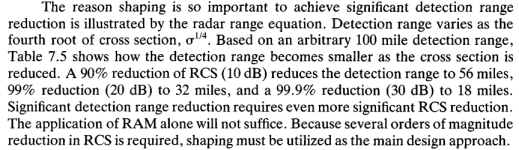
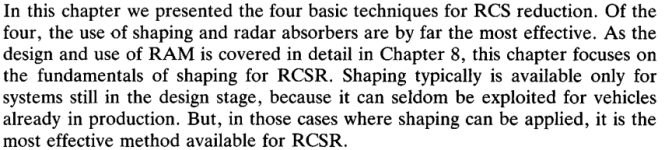
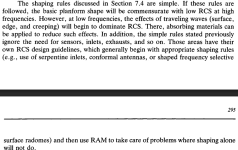
From the book : Radar Cross Section (DOI)
See Last line :
1761553773474.png

The tradeoff : (again see last line) . Some disadvantages of shaping which also needs to be said .
1761553919094.png

HF vs LF , again last line :

1761554088040.png

So after all of this , I would like to keep the following points : BOTH Shaping and RAM/RAS are important , and the best is if used together . I also partially agree with your statement that materials are the future, because they are relatively less 'explored' . but this does not mean that shaping techniques are saturated. Also if you are talking about improving the 'current' baseline structures, then I actually agree with you completely . Everything I said earlier and above , is only valid in the design stages .
 
  • Like
  • Informative
Reactions: marich01 and Shan
didnt know they were deployed in decent numbers.
I don't know why you think they don't have obvious help, judging by the appearance, They generally adopt tailless layout and lambda wing or large delta wing
A drone with this layout has a significantly smaller RCS value than any fifth-generation fighter.
The GJ-11 was first publicly displayed at the 2019 National Day military parade, and recently the Americans discovered that it was deployed in large numbers at the Shigatse base.
If a war breaks out now, these drones could be useful

anyway for the gj11 you need to give me some time to pile up the info. wait a bit.