Indian Hypersonic Propulsion Developments

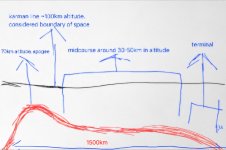
When you are flying a long distance to strike very high value asset that is also mobile over the oceans , at least 2 primary conditions need to be met
first , the flight altitude should be where enemy seaborne AD/bmd can not reach ie greater than 25km altitude. Most area ad/LRSAM systems won't be able to climb 25-30km at all esp the ones on ship.
2nd, since a very long distance covered to fetch and strike over general sea area , the endgame phase needs a seeker else it is impossible to precision target.

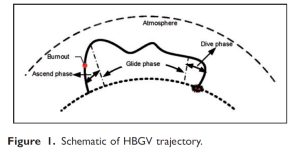
aka the HBGV general config would be (for majority of the flight after the boost phase)

View attachment 44751
Will our AD AH systems be capable of going beyond 25-30 km altitude? BtwbI heard THAAD can engage targets at around 40 km but cannot go higher due to some heat around cone causing issues for its seeker (not sure if that was the exact reason quoted).
 
Will our AD AH systems be capable of going beyond 25-30 km altitude? BtwbI heard THAAD can engage targets at around 40 km but cannot go higher due to some heat around cone causing issues for its seeker (not sure if that was the exact reason quoted).

THAAD can intercept at 100 + km altitude.The seeker portion has a heat shield fairing which is ejected before engagement.
 
Will our AD AH systems be capable of going beyond 25-30 km altitude? BtwbI heard THAAD can engage targets at around 40 km but cannot go higher due to some heat around cone causing issues for its seeker (not sure if that was the exact reason quoted).
Even PDV MK1 can intercept Ballistic Missiles at an altitude of 180kms+. PDV MK2(A-SAT) can do so at even higher altitude.

AD-AH is designed to intercept HGVs, which don't go too high in the atmoshphere so their apogee isn't that much(below 50kms AFAIK). So intercept altitude of 25-50 kms is on par for the job.
 
THAAD can intercept at 100 + km altitude.The seeker portion has a heat shield fairing which is ejected before engagement.
Systems like that are for high altitude , which is where the Dr Reddy quote is valid, that this missile flies like some hcm.
When high alt interceptor is deployed it is to deal with much higher altitude threats where you track it, the RCS of the target is for quite large size objects , IRBM ICBM class. In comparison the HGV-KV of this has a much smaller RCS signature.

1750603858477.png

it also flies in a way where it will appear over the local horizon much later, and compared to something coming from outer space, it will come in parallel flight to surface thereby both exceeding by speed and maneuver. it will be able to mimic cruise flight in glide phase itself. So it will draw out considerable enemy AD/BMD action that will still fail to go anywhere close to it.

1750604136389.png
Will our AD AH systems be capable of going beyond 25-30 km altitude? BtwbI heard THAAD can engage targets at around 40 km but cannot go higher due to some heat around cone causing issues for its seeker (not sure if that was the exact reason quoted).
Not much is known about the AD series yet other than the bmd specific roles. So we have to see what comes out.
 
Even PDV MK1 can intercept Ballistic Missiles at an altitude of 180kms+. PDV MK2(A-SAT) can do so at even higher altitude.

AD-AH is designed to intercept HGVs, which don't go too high in the atmoshphere so their apogee isn't that much(below 50kms AFAIK). So intercept altitude of 25-50 kms is on par for the job.
There was some chatter of Pakistan getting DF ZF glide vehicle, so India should speed up AD AH and have it ready by 2033 latest.
 
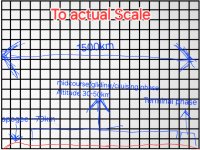
Trying to catch the incoming projectile that has way smaller RCS sig, while staying well below radar horizon , put the appropriate value in the calculator & see for yourself where the tiny 495mm dia projectile comes in the radar coverage and from that point distance to target location, ie how much time available to react for the enemy AD grid. Entire battery empty their stock but to no avail.
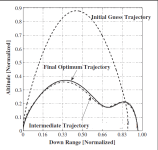
Also , simple conservative estimate gives ~ 20% more distance covered , and that is one single phase of flight optimised.

1750658515394.png

 
Trying to catch the incoming projectile that has way smaller RCS sig, while staying well below radar horizon , put the appropriate value in the calculator & see for yourself where the tiny 495mm dia projectile comes in the radar coverage and from that point distance to target location, ie how much time available to react for the enemy AD grid. Entire battery empty their stock but to no avail.
Also , simple conservative estimate gives ~ 20% more distance covered , and that is one single phase of flight optimised.

View attachment 44778

What about thermal signature of hypersonic missiles, with satellites in space.
 
Even PDV MK1 can intercept Ballistic Missiles at an altitude of 180kms+. PDV MK2(A-SAT) can do so at even higher altitude.

AD-AH is designed to intercept HGVs, which don't go too high in the atmoshphere so their apogee isn't that much(below 50kms AFAIK). So intercept altitude of 25-50 kms is on par for the job.

One DRDO slide mentions PDV interception altitude as >70 km.

Another slide shows PDV int alt as 130 km.

Don’t think PDV can interception envelope extends to 180 km.
Will our AD AH systems be capable of going beyond 25-30 km altitude? BtwbI heard THAAD can engage targets at around 40 km but cannot go higher due to some heat around cone causing issues for its seeker (not sure if that was the exact reason quoted).

THAAD cannot intercept missiles below 50 or 40 km.

Iranians have utilised this weak point in some of their new missiles. Like our decade and a half old K-15, their Kheybar Sheikhan series flies at around 40 km alt. So that THAAD can’t do anything.
 
What about thermal signature of hypersonic missiles, with satellites in space.
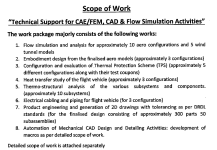
That is why ablative coating is applied and the FV is tuned for performance wrt thermodynamic loading. Read the general description part in the DRDO paper above in the picture. Thermodynamic loading is one of the primary constraints when you are building the guidance algorithm, this parameter affects the optimisation very much, which is why the entire scheme is so much program exhaustive and complex. All 3 phases of flight ie boost phase, midcourse and terminal phase are all with different guidance scheme implemented.

First of all the flight vehicle is made with certain degree of instability. This is important, if the FV aerodynamic design is too stable, it will not be able to produce very high G maneuver without aid of extra fuel spending + heat overload + loss of acceleration as well as payload size would be lesser to compensate the above factors. Hence the design is made so the airframe in flight is unstable to veer off here & there without guidance scheme.

Next, thermodynamic load increases when moving thru atmosphere, lower altitude flight you get more heating in skin. So there are sensors which send data to OBC in flight and once threshold reached or near tolerance limit, program accurately change other parameter to compensate and trajectory is slightly optimised again. This adds the unpredictability part more.

Further, you need to also protect airframe and inside component from heat overload. So ablative coating is applied which can protect the airframe by sacrificing itself, the coating will burn out bit by bit at max loading but protect the airframe. This is where the glide trajectory also play significant that the heat overload is far less acute than directly steep dive. If the airframe approach the atmospheric layer at certain degree/AoA, the thermal loading on skin is far less than if straight dive down plus the lift generated compensate energy needed for maneuvering even in that phase.

So overall, yes the vehicle will have thermal signature but all effects combined will be very hard for any existing AD system to successfully engage.

 
That is why ablative coating is applied and the FV is tuned for performance wrt thermodynamic loading. Read the general description part in the DRDO paper above in the picture. Thermodynamic loading is one of the primary constraints when you are building the guidance algorithm, this parameter affects the optimisation very much, which is why the entire scheme is so much program exhaustive and complex. All 3 phases of flight ie boost phase, midcourse and terminal phase are all with different guidance scheme implemented.

First of all the flight vehicle is made with certain degree of instability. This is important, if the FV aerodynamic design is too stable, it will not be able to produce very high G maneuver without aid of extra fuel spending + heat overload + loss of acceleration as well as payload size would be lesser to compensate the above factors. Hence the design is made so the airframe in flight is unstable to veer off here & there without guidance scheme.

Next, thermodynamic load increases when moving thru atmosphere, lower altitude flight you get more heating in skin. So there are sensors which send data to OBC in flight and once threshold reached or near tolerance limit, program accurately change other parameter to compensate and trajectory is slightly optimised again. This adds the unpredictability part more.

Further, you need to also protect airframe and inside component from heat overload. So ablative coating is applied which can protect the airframe by sacrificing itself, the coating will burn out bit by bit at max loading but protect the airframe. This is where the glide trajectory also play significant that the heat overload is far less acute than directly steep dive. If the airframe approach the atmospheric layer at certain degree/AoA, the thermal loading on skin is far less than if straight dive down plus the lift generated compensate energy needed for maneuvering even in that phase.

So overall, yes the vehicle will have thermal signature but all effects combined will be very hard for any existing AD system to successfully engage.
Ain't we are going the same above route for detecting the Hypersonic vehicles, pixxel have been awarded the contract for launching hyperspectral imaging MWIR payloads in the space for tracking the Hypersonic vehicles, also with combination of hyperspectral imaging and MWIR, tracking & identify the vechile,
 

Attachments

  • Screenshot_2025-06-23-01-14-21-20_4159553c7f58296d2732e906959db560.jpg
    Screenshot_2025-06-23-01-14-21-20_4159553c7f58296d2732e906959db560.jpg
    267.6 KB · Views: 4
One DRDO slide mentions PDV interception altitude as >70 km.

Another slide shows PDV int alt as 130 km.

Don’t think PDV can interception envelope extends to 180 km.
Even good ol' PAD had intercept window of 85km+. PDV when it was developed and deployed was far better than its predecessor. 150kms intercept altitude was known way back in 2017. Take a look here:
However, while PAD was essentially a high endo-atmospheric system with a ceiling of around 85 km, PDV is a true blue exo-atmospheric interceptor capable of destroying targets at altitudes of up to 150 km.
Source: https://delhidefencereview.com/2017...fully-demonstrated-drdos-pdv-interceptor/amp/
If the link is broken you can use google search to read this:
1000020203.jpg

This was in 2017. Now in 2025, I'll say that it's lot more capable in terms of both speed, accuracy and altitude. Just leave it at that;)
 
Won't say how or why because I do not have full information available, but that sort of steep dive is for fixed land target, ships are hit broadside generally even if its a big carrier. So 80deg + steep attack unlikely for a moving target. To engage a carrier size (slow) moving and heavily defended object successfully , very specific & precise engagement mode is needed.

The rv needs to get released so its up to user how to make it fly.

Isn't it required to go high to gather kinetic energy to be used at the time of descent.
 
Lrashm has minimum speed of Mach 6+, during terminal.
Even without warhead, it's deadly for any ship.
It Doesn't need to climb.

I think the terminal phase is unpowered. So when the warhead section is released, it should have a very high kinetic energy to compensate the drag and yet maintain hypersonic speed in terminal phase. Alternatively, glide phase can be very short so that it doesn't encounter much drag. However, this increases the chance of interception in mid-course.
 
  • Like
Reactions: Rajput Lion
I think the terminal phase is unpowered. So when the warhead section is released, it should have a very high kinetic energy to compensate the drag and yet maintain hypersonic speed in terminal phase. Alternatively, glide phase can be very short so that it doesn't encounter much drag. However, this increases the chance of interception in mid-course.
Glide phase is the longest here.
In terminal phase it slows down from around mach 8 to mach 6+ due to drag while also getting help from gravitational acceleration.
It's a rocket-sustained missile, not a glider.
The way it flies in midcourse is more similar to pralay, or a scramjet cruise missile( though scramjet missiles are "expected" to fly at lower altitude around 20-30km) than a glider.
1000013469.jpg

1000013471.jpg
 
Isn't it required to go high to gather kinetic energy to be used at the time of descent.
For a glide vehicle the initial kinetic thrust gained is its currency for the midcourse journey. Aerodynamic lift generated will keep it within certain altitude bracket (ie defying gravity pull, else it would have dropped down in ballistic curve) but won't increase the velocity, instead the velocity will continue to decrease. Now its up to the scientists to decide at what velocity induced kinematic performance is suitable for the terminal phase. It is certain to retain a good amount of velocity for the terminal phase even without the rocket motor firing. (rocket motor ie the rocket motor inside the HGV-KV)
 
Glide phase is the longest here.
In terminal phase it slows down from around mach 8 to mach 6+ due to drag while also getting help from gravitational acceleration.
It's a rocket-sustained missile, not a glider.
The way it flies in midcourse is more similar to pralay, or a scramjet cruise missile( though scramjet missiles are "expected" to fly at lower altitude around 20-30km) than a glider.
View attachment 44835

View attachment 44836

I agree with you except that it doesn't go much higher. I believe that it will go higher to take the advantage of Gravity at the time of descent.