

India - United States Relations
- Thread starter Butter Chicken
- Start date
You are using an out of date browser. It may not display this or other websites correctly.
You should upgrade or use an alternative browser.
You should upgrade or use an alternative browser.

India is a developed country guys.. celebrate
India, China no longer 'developing nations', won't let them take 'advantage' from WTO: Donald Trump

Yep. It means Indians will soon get visa-free access to the US.

44 US lawmakers urge Trump admin to reinstate preferential status for India
The Trump administration terminated India’s designation as a beneficiary developing nation under the Generalized System of Preferences (GSP) in June.
Updated: Sep 18, 2019 09:38 IST
HT Correspondent.
Hindustan Times, Washington.
 The GSP is the largest and oldest US trade preference programme and is designed to promote economic development by allowing duty-free entry for thousands of products from designated beneficiary countries.(AP Photo)
The Donald Trump administration has been urged by a group of 44 influential lawmakers to reinstate India as a beneficiary of the duty-free import scheme for developing nations.
The United States had suspended India from the list of beneficiaries under the Generalized System of Preferences (GSP) in June.
The House members wrote a letter to US Trade Representative Robert Lighthizer. The group of lawmakers, led by Congressmen Jim Himes and Ron Estes, has been signed by 26 Democrats and 18 Republicans. This clearly shows the bipartisan support for extending the trade benefits back to India.
The lawmakers said that after the termination of GSP to India the costs for their constituents are growing every day. Latest data by the Coalition for GSP shows that India losing the trade preferential status meant that American companies lost about $30 million in July.
India has been the largest beneficiary of the GSP programme, which allows certain imports from 120 countries to enter the United States at zero tariff. India sold an estimated $6.3 billion worth of goods to the US under this programme in 2018.
The GSP is the largest and oldest US trade preference programme and is designed to promote economic development by allowing duty-free entry for thousands of products from designated beneficiary countries.
Observing that the United states has legitimate concerns against India, the lawmakers wrote those policies negatively affect US companies trying to access its market, including a number of longstanding issues that have been subject to intergovernmental talks for years.
“As you know, several US industries filed petitions under GSP’s market access criterion, which were accepted for review in April 2018. Ultimately, failure to make sufficient progress on the issues led to termination of India’s GSP eligibility on June 5, 2019,” they said.
(With PTI inputs).
44 US lawmakers urge Trump to reinstate India’s preferential trade status
The Trump administration terminated India’s designation as a beneficiary developing nation under the Generalized System of Preferences (GSP) in June.
Updated: Sep 18, 2019 09:38 IST
HT Correspondent.
Hindustan Times, Washington.
The Donald Trump administration has been urged by a group of 44 influential lawmakers to reinstate India as a beneficiary of the duty-free import scheme for developing nations.
The United States had suspended India from the list of beneficiaries under the Generalized System of Preferences (GSP) in June.
The House members wrote a letter to US Trade Representative Robert Lighthizer. The group of lawmakers, led by Congressmen Jim Himes and Ron Estes, has been signed by 26 Democrats and 18 Republicans. This clearly shows the bipartisan support for extending the trade benefits back to India.
The lawmakers said that after the termination of GSP to India the costs for their constituents are growing every day. Latest data by the Coalition for GSP shows that India losing the trade preferential status meant that American companies lost about $30 million in July.
India has been the largest beneficiary of the GSP programme, which allows certain imports from 120 countries to enter the United States at zero tariff. India sold an estimated $6.3 billion worth of goods to the US under this programme in 2018.
The GSP is the largest and oldest US trade preference programme and is designed to promote economic development by allowing duty-free entry for thousands of products from designated beneficiary countries.
Observing that the United states has legitimate concerns against India, the lawmakers wrote those policies negatively affect US companies trying to access its market, including a number of longstanding issues that have been subject to intergovernmental talks for years.
“As you know, several US industries filed petitions under GSP’s market access criterion, which were accepted for review in April 2018. Ultimately, failure to make sufficient progress on the issues led to termination of India’s GSP eligibility on June 5, 2019,” they said.
(With PTI inputs).
44 US lawmakers urge Trump to reinstate India’s preferential trade status

“Today, under Modi’s iron-fisted regime, Christians, Dalits, Muslims, Sikhs, and every Hindu who disagrees with the hate, violence, and supremacy of the RSS lives in fear of their lives,”.. where is this happening by the way... I don't see Suhasini Haider or barkha Dutt... running around in fear for their lives..
It's that Islamic Jihadi apologist Mehdi Hassan. Every time he's asked to pronounce it & condemn Salafi Jihadis his tongue develops paralysis & out comes a turbid explanation much like Burkha on why the Kashmiri Pandits were genocided. Basically a more sophisticated nuanced version of Zakir Naik minus the Chapter Verse etc“Today, under Modi’s iron-fisted regime, Christians, Dalits, Muslims, Sikhs, and every Hindu who disagrees with the hate, violence, and supremacy of the RSS lives in fear of their lives,”.. where is this happening by the way... I don't see Suhasini Haider or barkha Dutt... running around in fear for their lives..


Trade talks stall as US raises bar on market access in India
2 min read . Updated: 25 Sep 2019, 11:00 PM IST D. Ravi Kanth
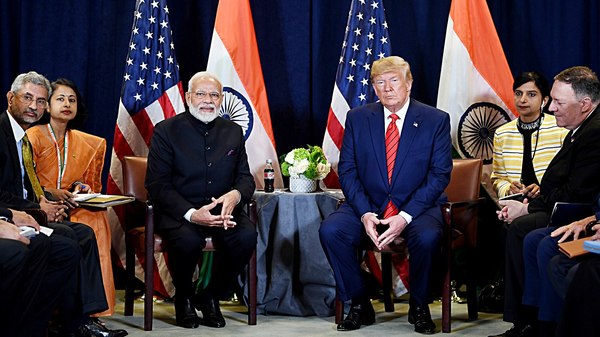
Indian Prime Minister Narendra Modi with US President, Donald Trump, on the sidelines of the United Nations (UN) session, in New York on Tuesday (Photo: ANI)
Geneva: Trade talks between India and the US on Tuesday broke down for the time being after Washington made asymmetrical demands for market access in India, while refusing to restore benefits accorded to Indian exporters under the Generalized System of Preferences (GSP), analysts said.
“Lack of parity, reciprocity and asymmetrical demands from the US stalled the trade talks that could have resulted in an interim agreement on Tuesday," said a US-based person familiar with the discussions, requesting anonymity.
The US raised the bar very high for market access in India, covering a whole lot of tariff-reductions for American products, including the removal of duties India had placed in retaliation for steel and aluminium products that the US had imposed under section 232 provisions last year, and changes in Indian rules, including sanitary and phyto-sanitary provisions. The US also demanded sweeping changes to e-commerce laws, including storing of the data as well as for access to cloud-computing, the analyst added.
The list of tariff reductions sought by the US include a range of agricultural products, dairy products, pricing of pharmaceutical stents used by cardiac patients and knee implants, among others medical devices, and information and technology products.
In return, Washington was willing to restore only 50% of the benefits accorded to Indian exporters under the GSP scheme that was terminated by President Trump on 5 June.
India maintained that it was improper to link the removal of the retaliatory tariffs on American products that were imposed in response to the US’s action last year, to the partial restoration of the GSP benefits, according to several people familiar with the talks.
Under the World Trade Organization (WTO) rules, India is entitled to impose retaliatory tariffs on American products, following withdrawal of the GSP scheme, as it was inconsistent with the US’s obligations under the Enabling clause of WTO rules, said a person familiar with the discussions.
But India did not impose retaliatory measures in response to the termination of the GSP scheme. India had imposed retaliatory duties on American products in response to the US’ tariffs on steel and aluminium under Section 232 provisions. Therefore, the US’ insistence to link the removal of benefits accorded under the GSP scheme to India’s retaliatory duties on American products in response to the Section 232 tariffs on steel and aluminium was asymmetrical.
Moreover, at a time when the US is currently engaged in a trade dispute with India over the tariffs on Information Technology Agreement (ITA) products at WTO along with the European Union and Taipei among others, the US negotiators pressed India to eliminate tariffs on various ITA products for concluding the interim agreement, analysts said.
“It is a classic case of US’s trade negotiating strategy where in Washington raises the bar so high that it would become difficult other parties to agree to even a quarter of their demands," said an European analyst, who asked not to be identified.
If the negotiations on the interim deal are any indication, India will have tough time negotiating a bilateral trade agreement with the US, given the long list of demands that the US had delivered to India, several analysts said.
Trade talks stall as US raises bar on market access in India
2 min read . Updated: 25 Sep 2019, 11:00 PM IST D. Ravi Kanth
- US asks India to remove retaliatory tariffs imposed on American products
- US demanded sweeping changes in the e-commerce laws, including storing of the data as well as for access to cloud computing, an analyst said
Indian Prime Minister Narendra Modi with US President, Donald Trump, on the sidelines of the United Nations (UN) session, in New York on Tuesday (Photo: ANI)
Geneva: Trade talks between India and the US on Tuesday broke down for the time being after Washington made asymmetrical demands for market access in India, while refusing to restore benefits accorded to Indian exporters under the Generalized System of Preferences (GSP), analysts said.
“Lack of parity, reciprocity and asymmetrical demands from the US stalled the trade talks that could have resulted in an interim agreement on Tuesday," said a US-based person familiar with the discussions, requesting anonymity.
The US raised the bar very high for market access in India, covering a whole lot of tariff-reductions for American products, including the removal of duties India had placed in retaliation for steel and aluminium products that the US had imposed under section 232 provisions last year, and changes in Indian rules, including sanitary and phyto-sanitary provisions. The US also demanded sweeping changes to e-commerce laws, including storing of the data as well as for access to cloud-computing, the analyst added.
The list of tariff reductions sought by the US include a range of agricultural products, dairy products, pricing of pharmaceutical stents used by cardiac patients and knee implants, among others medical devices, and information and technology products.
In return, Washington was willing to restore only 50% of the benefits accorded to Indian exporters under the GSP scheme that was terminated by President Trump on 5 June.
India maintained that it was improper to link the removal of the retaliatory tariffs on American products that were imposed in response to the US’s action last year, to the partial restoration of the GSP benefits, according to several people familiar with the talks.
Under the World Trade Organization (WTO) rules, India is entitled to impose retaliatory tariffs on American products, following withdrawal of the GSP scheme, as it was inconsistent with the US’s obligations under the Enabling clause of WTO rules, said a person familiar with the discussions.
But India did not impose retaliatory measures in response to the termination of the GSP scheme. India had imposed retaliatory duties on American products in response to the US’ tariffs on steel and aluminium under Section 232 provisions. Therefore, the US’ insistence to link the removal of benefits accorded under the GSP scheme to India’s retaliatory duties on American products in response to the Section 232 tariffs on steel and aluminium was asymmetrical.
Moreover, at a time when the US is currently engaged in a trade dispute with India over the tariffs on Information Technology Agreement (ITA) products at WTO along with the European Union and Taipei among others, the US negotiators pressed India to eliminate tariffs on various ITA products for concluding the interim agreement, analysts said.
“It is a classic case of US’s trade negotiating strategy where in Washington raises the bar so high that it would become difficult other parties to agree to even a quarter of their demands," said an European analyst, who asked not to be identified.
If the negotiations on the interim deal are any indication, India will have tough time negotiating a bilateral trade agreement with the US, given the long list of demands that the US had delivered to India, several analysts said.
Trade talks stall as US raises bar on market access in India

If you guys want parity, reciprocity and symmetry, then you're never going to have a deal with the US.“Lack of parity, reciprocity and asymmetrical demands from the US stalled the trade talks that could have resulted in an interim agreement on Tuesday," said a US-based person familiar with the discussions, requesting anonymity.