

India - United States Relations
- Thread starter Butter Chicken
- Start date
You are using an out of date browser. It may not display this or other websites correctly.
You should upgrade or use an alternative browser.
You should upgrade or use an alternative browser.
They gave boot to totalization agreement and free movement of labor. But they are interested in signing this agreement as it will enable them to sell more downgraded military goods. Looks like we are not standing up.

We will never stand up , we have no guts at all. Didnt u hear what EAM said in his speech? Not western barriers but dogmas are stopping New DelhiThey gave boot to totalization agreement and free movement of labor. But they are interested in signing this agreement as it will enable them to sell more downgraded military goods. Looks like we are not standing up.

They gave boot to totalization agreement and free movement of labor. But they are interested in signing this agreement as it will enable them to sell more downgraded military goods. Looks like we are not standing up.
High altitude, long range with endurance Sea Guardian armed drones for all three services IA IAF and IN, spy plane for IN, NASAM for Air defense.

Tiger Triumph: US-India Military Relations Get More Complex
A new exercise has reinforced the trend of deepening defense collaboration between the two sides.
By Rajeswari Pillai Rajagopalan.
November 15, 2019
Credit: Flickr/meaindia
The Indian and U.S. militaries are engaged in their maiden joint tri-services humanitarian assistance and disaster relief (HADR) exercise, which they are calling “Tiger Triumph,” in Visakhapatnam and Kakinada in the southern Indian state of Andhra Pradesh. This represents an improvement over the type of joint military exercises that the two countries have held to date, and is an indication that defense relations between the two sides are steadily deepening.
The U.S. and Indian militaries have been engaged in a number of different military exercises since the early 1990s, including Yudh Abhyas and Vajra Prahar (army), Malabar and RIMPAC (multilateral, navy) and Red Flag (air force). This followed the big boost to U.S.-India defense relations with the Kicklighter proposals in 1991, which included service-to-service exchanges between India and the United States.
The first India-U.S. military exercise codenamed “Teak Iroquois” took place between the two armies in February 1992; the first naval exercise named Malabar-I in May 1992. In addition to generating interoperability, these exercises have been great familiarization opportunities for the two militaries to understand each other’s strategic and security perspectives. With each iteration, these exercises have grown in terms of the number of personnel and platforms involved, and the exercises themselves have become much more complex and useful.
This week, we saw another indication of the increasing complexity of U.S.-India exercises with the holding of Tiger Triumph, the maiden tri-service HADR exercise. The exercises, which started on November 13, should last a week. It is taking place on the India’s eastern seaboard with the participation of all three Indian services along with the U.S. Navy and Marines.
Indian naval ships Jalashwa, Airavat, and Sandhayak; Indian Army troops from 19 Madras and 7 Guards; and Indian Air Force MI-17 helicopters and Rapid Action Medical Team (IAF-RAMT) are participating in it from the Indian side. The United States has sent the USS Germantown and troops from the U.S. 3rd Marine Division. The U.S. Marine Corps Forces, Pacific, is leading the efforts on the U.S. side. There are a total of 1,200 Indian and 500 U.S. men and women from different services participating in the first-ever U.S.-India tri-service exercise.
The exercise, focused on HADR aspects, is meant to be an annual event from now on, bolstering the already-strong military-to-military collaboration between India and the United States.
The exercise is aimed at building and nurturing better and more effective interoperability between the services of the two militaries. It is because the two militaries have held specific service-led military exercises for more than a decade that the Indian and the U.S. militaries were able to respond to the 2005 Indian Ocean tsunami in a prompt and coordinated fashion. Interoperability is the mantra, especially for a region that is characterized by a high number of natural disasters on a fairly periodic basis to which multiple countries respond.
According to an Indian government press release, the exercise will begin with a Harbor Phase at Vishakapatnam, which will be followed by a Sea Phase conducted in Kakinanda, where “the landing of Relief Forces would be undertaken to the Exercise scenario.” A Joint Command and Control Centre will be established by the Indian Army and U.S. Marines. The HADR area will also have a medical facility camp, established by the IAF-RAMT and the U.S. Navy Medical team, that will cater to the “victims” who would have been shifted to the facility by air and road. The exercise, with a goal of helping capacity-building for both the militaries, will simulate a full scenario involving field training and moving humanitarian assistance and disaster relief from ship to shore. The exercise will end with a closing ceremony on board the U.S. naval vessel Germantown on November 21.
Beyond Tiger Triumph itself, the trend of increasing complexity of U.S.-India exercises is rooted in broader strategic dynamics. These exercises are the result of the growing convergence between American and Indian strategic interests with the changing strategic dynamics in the Indo-Pacific and beyond. In this context, there is a recognition on both sides that more capable powers such as India and the United States have to join forces to prevent the possibility of a hegemonic Asia.
This has manifested itself in how both sides have been talking about each other within their broader strategic approaches. There have been repeated assertions from the United States on the importance of India in their Indo-Pacific strategy, and this is asserted in the U.S. National Security Strategy document as well as the U.S. Department of Defense’s 2019 Indo-Pacific Strategy Report. India does not bring out formal, official strategy papers, but statements by senior government officials and the upgrading of the Quad talks to ministerial level are a demonstration of similar sentiments on the Indian side too. And the idea of a free, open, and inclusive Indo-Pacific was reiterated by Prime Minister Narendra Modi at the Shangri La Dialogue in 2018.
Engagements such as Tiger Triumph are also a demonstration of the fact that despite the occasional irritants in the relationship, U.S.-India ties are still deepening amid these wider strategic dynamics.
Tiger Triumph: US-India Military Relations Get More Complex
A new exercise has reinforced the trend of deepening defense collaboration between the two sides.
By Rajeswari Pillai Rajagopalan.
November 15, 2019
Credit: Flickr/meaindia
The Indian and U.S. militaries are engaged in their maiden joint tri-services humanitarian assistance and disaster relief (HADR) exercise, which they are calling “Tiger Triumph,” in Visakhapatnam and Kakinada in the southern Indian state of Andhra Pradesh. This represents an improvement over the type of joint military exercises that the two countries have held to date, and is an indication that defense relations between the two sides are steadily deepening.
The U.S. and Indian militaries have been engaged in a number of different military exercises since the early 1990s, including Yudh Abhyas and Vajra Prahar (army), Malabar and RIMPAC (multilateral, navy) and Red Flag (air force). This followed the big boost to U.S.-India defense relations with the Kicklighter proposals in 1991, which included service-to-service exchanges between India and the United States.
The first India-U.S. military exercise codenamed “Teak Iroquois” took place between the two armies in February 1992; the first naval exercise named Malabar-I in May 1992. In addition to generating interoperability, these exercises have been great familiarization opportunities for the two militaries to understand each other’s strategic and security perspectives. With each iteration, these exercises have grown in terms of the number of personnel and platforms involved, and the exercises themselves have become much more complex and useful.
This week, we saw another indication of the increasing complexity of U.S.-India exercises with the holding of Tiger Triumph, the maiden tri-service HADR exercise. The exercises, which started on November 13, should last a week. It is taking place on the India’s eastern seaboard with the participation of all three Indian services along with the U.S. Navy and Marines.
Indian naval ships Jalashwa, Airavat, and Sandhayak; Indian Army troops from 19 Madras and 7 Guards; and Indian Air Force MI-17 helicopters and Rapid Action Medical Team (IAF-RAMT) are participating in it from the Indian side. The United States has sent the USS Germantown and troops from the U.S. 3rd Marine Division. The U.S. Marine Corps Forces, Pacific, is leading the efforts on the U.S. side. There are a total of 1,200 Indian and 500 U.S. men and women from different services participating in the first-ever U.S.-India tri-service exercise.
The exercise, focused on HADR aspects, is meant to be an annual event from now on, bolstering the already-strong military-to-military collaboration between India and the United States.
The exercise is aimed at building and nurturing better and more effective interoperability between the services of the two militaries. It is because the two militaries have held specific service-led military exercises for more than a decade that the Indian and the U.S. militaries were able to respond to the 2005 Indian Ocean tsunami in a prompt and coordinated fashion. Interoperability is the mantra, especially for a region that is characterized by a high number of natural disasters on a fairly periodic basis to which multiple countries respond.
According to an Indian government press release, the exercise will begin with a Harbor Phase at Vishakapatnam, which will be followed by a Sea Phase conducted in Kakinanda, where “the landing of Relief Forces would be undertaken to the Exercise scenario.” A Joint Command and Control Centre will be established by the Indian Army and U.S. Marines. The HADR area will also have a medical facility camp, established by the IAF-RAMT and the U.S. Navy Medical team, that will cater to the “victims” who would have been shifted to the facility by air and road. The exercise, with a goal of helping capacity-building for both the militaries, will simulate a full scenario involving field training and moving humanitarian assistance and disaster relief from ship to shore. The exercise will end with a closing ceremony on board the U.S. naval vessel Germantown on November 21.
Beyond Tiger Triumph itself, the trend of increasing complexity of U.S.-India exercises is rooted in broader strategic dynamics. These exercises are the result of the growing convergence between American and Indian strategic interests with the changing strategic dynamics in the Indo-Pacific and beyond. In this context, there is a recognition on both sides that more capable powers such as India and the United States have to join forces to prevent the possibility of a hegemonic Asia.
This has manifested itself in how both sides have been talking about each other within their broader strategic approaches. There have been repeated assertions from the United States on the importance of India in their Indo-Pacific strategy, and this is asserted in the U.S. National Security Strategy document as well as the U.S. Department of Defense’s 2019 Indo-Pacific Strategy Report. India does not bring out formal, official strategy papers, but statements by senior government officials and the upgrading of the Quad talks to ministerial level are a demonstration of similar sentiments on the Indian side too. And the idea of a free, open, and inclusive Indo-Pacific was reiterated by Prime Minister Narendra Modi at the Shangri La Dialogue in 2018.
Engagements such as Tiger Triumph are also a demonstration of the fact that despite the occasional irritants in the relationship, U.S.-India ties are still deepening amid these wider strategic dynamics.
Tiger Triumph: US-India Military Relations Get More Complex
U.S. Congressman supports NDAA amendment to include India in NATO plus five countries
By PTI
Washington:, December 13, 2019 11:08 IST
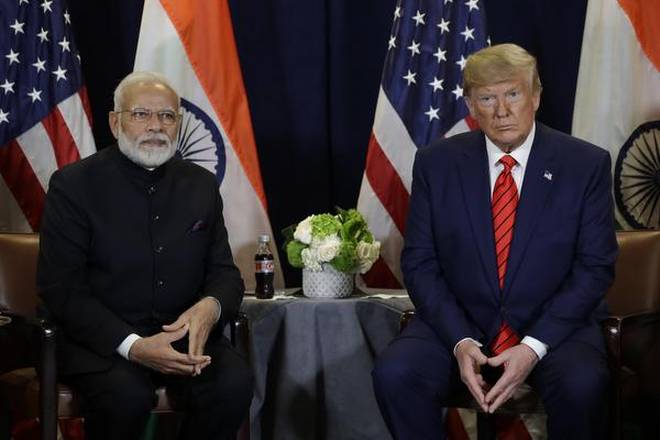
President Donald Trump meets with Indian Prime Minister Narendra Modi at the United Nations General Assembly, in New York | Photo: AP
Our defence ties with India is growing. We conduct more joint exercises with India than any other country. We are of course selling more defense items to India, said Congressman Brad Sherman, the outgoing Chairman of the House Foreign Affairs Sub committee on Asia Pacific, the Pacific, and Non-Proliferation.
A top US lawmaker has pushed for strong defence ties with New Delhi by supporting an amendment to the National Defense Authorization Act (NDAA) to include India in the NATO plus five countries.
The move comes months after the U.S. Senate passed a legislative provision that brings India at par with America’s NATO allies and countries like Israel and South Korea for increasing defence cooperation.
Our defence ties with India is growing. We conduct more joint exercises with India than any other country. We are of course selling more defense items to India, said Congressman Brad Sherman, the outgoing Chairman of the House Foreign Affairs Sub committee on Asia Pacific, the Pacific, and Non-Proliferation.
In his address to an event on Thursday at the US Capitol to celebrate Hanukah, Congressman Sherman told the select audience of influential Indian-Americans and members of the Jews community that early this year he joined his Congressional colleague Joe Wilson in introducing a bill to expedite arm sales to India by putting India in the same category as America’s closest allies: NATO, Australia, New Zealand, Japan, South Korea, and Israel.
Such a move, being pushed by a group of Indian-Americans led by US India Security Council, would bring India at par with NATO countries in terms of defence trade and technological transfers.
A legislative change in this regard in NDAA would have a permanent and lasting impact on India-US defence ties.
And soon India should be in that category, Mr. Sherman, who is a well-known friend of India for decades, said.
However, a large section of the Indian-American community has been quite upset with him after he presided over a October 22 Congressional hearing on Kashmir which ended up becoming a platform to criticize India.
Mr. Sherman was supported by influential members of the Jewish-American and Indian-American community, who asserted that it is high time for the necessary legislative changes in the NDAA to bring India at par with NATO allies.
We have worked successfully with the US India Security Council (USISC) for the passage of the US-India civil nuclear agreement and now with USISC for the inclusion of an amendment to the NDAA, expanding NATO plus five to NATO plus six to include India, said Peter R. Rosenblatt, Member of the Board of Governors of American-Jewish Committee (AJC).
Eminent Indian-American Bharat Barai applauded the support of AJC to include the amendment in the National Defense Authorization Act of NATO plus five to NATO plus six.
Boston-based USISC president Ramesh V Kapur asserted that legislative changes in NDAA would institutionalize India-US defence relationship.
Now we are trying to get India to be NATO plus six. Now, it’s NATO plus five. What we’re trying to do is very simple. We are trying to keep 375 million Americans safe and 1.3 billion Indians safe. And once this is passed, it will be on a permanent basis, Mr. Kapur said.
U.S. Congressman supports NDAA amendment to include India in NATO plus five countries
By PTI
Washington:, December 13, 2019 11:08 IST
President Donald Trump meets with Indian Prime Minister Narendra Modi at the United Nations General Assembly, in New York | Photo: AP
Our defence ties with India is growing. We conduct more joint exercises with India than any other country. We are of course selling more defense items to India, said Congressman Brad Sherman, the outgoing Chairman of the House Foreign Affairs Sub committee on Asia Pacific, the Pacific, and Non-Proliferation.
A top US lawmaker has pushed for strong defence ties with New Delhi by supporting an amendment to the National Defense Authorization Act (NDAA) to include India in the NATO plus five countries.
The move comes months after the U.S. Senate passed a legislative provision that brings India at par with America’s NATO allies and countries like Israel and South Korea for increasing defence cooperation.
Our defence ties with India is growing. We conduct more joint exercises with India than any other country. We are of course selling more defense items to India, said Congressman Brad Sherman, the outgoing Chairman of the House Foreign Affairs Sub committee on Asia Pacific, the Pacific, and Non-Proliferation.
In his address to an event on Thursday at the US Capitol to celebrate Hanukah, Congressman Sherman told the select audience of influential Indian-Americans and members of the Jews community that early this year he joined his Congressional colleague Joe Wilson in introducing a bill to expedite arm sales to India by putting India in the same category as America’s closest allies: NATO, Australia, New Zealand, Japan, South Korea, and Israel.
Such a move, being pushed by a group of Indian-Americans led by US India Security Council, would bring India at par with NATO countries in terms of defence trade and technological transfers.
A legislative change in this regard in NDAA would have a permanent and lasting impact on India-US defence ties.
And soon India should be in that category, Mr. Sherman, who is a well-known friend of India for decades, said.
However, a large section of the Indian-American community has been quite upset with him after he presided over a October 22 Congressional hearing on Kashmir which ended up becoming a platform to criticize India.
Mr. Sherman was supported by influential members of the Jewish-American and Indian-American community, who asserted that it is high time for the necessary legislative changes in the NDAA to bring India at par with NATO allies.
We have worked successfully with the US India Security Council (USISC) for the passage of the US-India civil nuclear agreement and now with USISC for the inclusion of an amendment to the NDAA, expanding NATO plus five to NATO plus six to include India, said Peter R. Rosenblatt, Member of the Board of Governors of American-Jewish Committee (AJC).
Eminent Indian-American Bharat Barai applauded the support of AJC to include the amendment in the National Defense Authorization Act of NATO plus five to NATO plus six.
Boston-based USISC president Ramesh V Kapur asserted that legislative changes in NDAA would institutionalize India-US defence relationship.
Now we are trying to get India to be NATO plus six. Now, it’s NATO plus five. What we’re trying to do is very simple. We are trying to keep 375 million Americans safe and 1.3 billion Indians safe. And once this is passed, it will be on a permanent basis, Mr. Kapur said.
U.S. Congressman supports NDAA amendment to include India in NATO plus five countries
Indian-American Community Feels ‘Betrayed, Cheated’ by Pramila Jayapal's Resolution on Kashmir
Members of the Indian-American community say they feel betrayed, cheated and saddened by Indian-American Democratic Congresswoman Pramila Jayapal, who has introduced a Congressional resolution on Kashmir, saying that the lawmaker is "pandering for political advantage through it.
Jayapal on Friday introduced a Congressional resolution urging India to end the restrictions on communications in Jammu and Kashmir as swiftly as possible and preserve religious freedom for all residents.
The Indian-American community, which has strongly supported the Democrats in the US over the decades, is voicing anger and hurt over Jayapal moving ahead with introducing the legislation even though Indian-Americans had urged her against it.
In a strong criticism of Jayapal, Indian-American attorney Ravi Batra told PTI that "her resolution mocks America and interferes in a bilateral relationship between India and the US.
I look upon as Pramila Jayapal as completely unprincipled, un-American, anti-Hindu and pro-terror, who is shamelessly pandering for political advantage, Batra said.
Quoting the American Declaration of Independence, Batra said the historic document sequentially talks about preservation of life, liberty and pursuit of happiness. She has introduced this resolution about rights, Batra said, adding that America's Founding Father Thomas Jefferson wrote in the Declaration of Independence that first comes the preservation of lives, then comes liberty and only when there is freedom, can there be rights.
The (Narendra) Modi government passed the laws based on the Constitution of India. What is her problem, he said.
Stressing that security is important, Batra added that it is critical for a nation to be terror free, then we need to have public safety. Only then can freedom and rights mean anything. I hope she will stop embarrassing all Americans of Indian ancestry.
Seattle-based Debadutta Dash, founder and co-chair of Washington State India Trade Relations Action Committee, a non-profit advocacy group promoting trade and cultural relations between India and Washington state, also voiced his disagreement with the resolution brought by Jayapal and Republican Congressman Steve Watkins from Kansas.
Dash, who had voted for Jayapal when she ran for Washington State Legislature, Washington State Senate and Congress, said that Jayapal appears to have lost track and has been misled and totally influenced by the negative media reporting about Kashmir in mainstream American news organizations.
Dash said it is very opportunistic and biased" for Jayapal to bring this resolution. It is hard to understand why she is doing so, representing only a couple of people in her constituencies, undercutting the issues of the Kashmiri Pandits.
The members of the Indian-American community also feel even though they have traditionally supported the Democratic Party throughout, actions such as those of Jayapal and extreme left wing of the Party will make the community look at the Republican Party as a protector and promoter of their interests.
Dash said members of the community will definitely be very careful about who they vote for next time because they will be watching what steps the lawmakers are taking in terms of issues like Kashmir.
It is absolutely unfortunate. It appears that she is looking for some opportunistic career move in the Democratic Party. I'm baffled by this resolution, he said stressing that Kashmir is India's internal issue and the Indian government doesn't take any action in the Indian Parliament based on what is happening in the US.
Echoing similar sentiment, Massachusetts-based Pawan Roy, a board member of several US-India focussed non-profit organisations, said that "suddenly we have this Imran Khan Niazi-narrative being played out primarily by the Democrats in the US. They are brazenly peddling the Pakistan narrative and completely ignoring the plight of Kashmiri Pandits and Kashmiri Hindus.
He said that what makes this harder for the Indian-Americans is that they have largely been a solid supporter of the Democratic party. With many of his own family members and friends having traditionally voted Democrat, Roy said there is a sense of betrayal and sadness by the fact that the US House of Representatives, particularly the Democrats, are so keen on bringing up hearing after hearing on Kashmir.
Vibhuti Jha, Executive Director and board member of NGO Nalanda International USA, said Jayapal is trying to sermonise the human rights challenge and suspension of communications in Jammu and Kashmir.
Human life takes precedence over human rights. When you misrepresent a challenge as a human rights challenge, you ignore the human life challenge that India faces in that area, especially when we have a very na-pak country as a our neighbour and whose Prime Minister at the UN General Assembly called for nuclear war and blood bath," Jha said.
He added that the Democratic party has lost its mooring. It has tilted so much to the left of centre, to the extreme left that it is almost difficult to have a discussion with them because they blame everything as human rights issue.
Jha said that Democrats such as Jayapal have no locus standii to interfere in India's internal affairs.
He said he would appeal to Jayapal that she should not insult her original homeland with a myopic point of view.
Indian-American Community Feels ‘Betrayed, Cheated’ by Pramila Jayapal's Resolution on Kashmir
Members of the Indian-American community say they feel betrayed, cheated and saddened by Indian-American Democratic Congresswoman Pramila Jayapal, who has introduced a Congressional resolution on Kashmir, saying that the lawmaker is "pandering for political advantage through it.
Jayapal on Friday introduced a Congressional resolution urging India to end the restrictions on communications in Jammu and Kashmir as swiftly as possible and preserve religious freedom for all residents.
The Indian-American community, which has strongly supported the Democrats in the US over the decades, is voicing anger and hurt over Jayapal moving ahead with introducing the legislation even though Indian-Americans had urged her against it.
In a strong criticism of Jayapal, Indian-American attorney Ravi Batra told PTI that "her resolution mocks America and interferes in a bilateral relationship between India and the US.
I look upon as Pramila Jayapal as completely unprincipled, un-American, anti-Hindu and pro-terror, who is shamelessly pandering for political advantage, Batra said.
Quoting the American Declaration of Independence, Batra said the historic document sequentially talks about preservation of life, liberty and pursuit of happiness. She has introduced this resolution about rights, Batra said, adding that America's Founding Father Thomas Jefferson wrote in the Declaration of Independence that first comes the preservation of lives, then comes liberty and only when there is freedom, can there be rights.
The (Narendra) Modi government passed the laws based on the Constitution of India. What is her problem, he said.
Stressing that security is important, Batra added that it is critical for a nation to be terror free, then we need to have public safety. Only then can freedom and rights mean anything. I hope she will stop embarrassing all Americans of Indian ancestry.
Seattle-based Debadutta Dash, founder and co-chair of Washington State India Trade Relations Action Committee, a non-profit advocacy group promoting trade and cultural relations between India and Washington state, also voiced his disagreement with the resolution brought by Jayapal and Republican Congressman Steve Watkins from Kansas.
Dash, who had voted for Jayapal when she ran for Washington State Legislature, Washington State Senate and Congress, said that Jayapal appears to have lost track and has been misled and totally influenced by the negative media reporting about Kashmir in mainstream American news organizations.
Dash said it is very opportunistic and biased" for Jayapal to bring this resolution. It is hard to understand why she is doing so, representing only a couple of people in her constituencies, undercutting the issues of the Kashmiri Pandits.
The members of the Indian-American community also feel even though they have traditionally supported the Democratic Party throughout, actions such as those of Jayapal and extreme left wing of the Party will make the community look at the Republican Party as a protector and promoter of their interests.
Dash said members of the community will definitely be very careful about who they vote for next time because they will be watching what steps the lawmakers are taking in terms of issues like Kashmir.
It is absolutely unfortunate. It appears that she is looking for some opportunistic career move in the Democratic Party. I'm baffled by this resolution, he said stressing that Kashmir is India's internal issue and the Indian government doesn't take any action in the Indian Parliament based on what is happening in the US.
Echoing similar sentiment, Massachusetts-based Pawan Roy, a board member of several US-India focussed non-profit organisations, said that "suddenly we have this Imran Khan Niazi-narrative being played out primarily by the Democrats in the US. They are brazenly peddling the Pakistan narrative and completely ignoring the plight of Kashmiri Pandits and Kashmiri Hindus.
He said that what makes this harder for the Indian-Americans is that they have largely been a solid supporter of the Democratic party. With many of his own family members and friends having traditionally voted Democrat, Roy said there is a sense of betrayal and sadness by the fact that the US House of Representatives, particularly the Democrats, are so keen on bringing up hearing after hearing on Kashmir.
Vibhuti Jha, Executive Director and board member of NGO Nalanda International USA, said Jayapal is trying to sermonise the human rights challenge and suspension of communications in Jammu and Kashmir.
Human life takes precedence over human rights. When you misrepresent a challenge as a human rights challenge, you ignore the human life challenge that India faces in that area, especially when we have a very na-pak country as a our neighbour and whose Prime Minister at the UN General Assembly called for nuclear war and blood bath," Jha said.
He added that the Democratic party has lost its mooring. It has tilted so much to the left of centre, to the extreme left that it is almost difficult to have a discussion with them because they blame everything as human rights issue.
Jha said that Democrats such as Jayapal have no locus standii to interfere in India's internal affairs.
He said he would appeal to Jayapal that she should not insult her original homeland with a myopic point of view.
Indian-American Community Feels ‘Betrayed, Cheated’ by Pramila Jayapal's Resolution on Kashmir
Operation Dolphin's Nose exposes espionage links with Pakistan, 8 arrested
Amaravati: Operation Dolphin's Nose exposed the espionage links with Pakistan in India.
The Andhra Pradesh Intelligence along with the Central Intelligence Agencies and Naval Intelligence have unearthed an espionage racket having links with Pakistan, informed the AP DGP D. Gautam Sawang's office in a statement on Friday.
In a shocking development, the intelligence sleuths have registered an FIR and 7 personnel of Navy along with a hawala operator have been arrested from different parts of the Country.
The statement informed that some more suspects are being questioned on the issue. And the investigation is in progress.
Link :Operation Dolphin's Nose exposes espionage links with Pakistan, 8 arrested
Amaravati: Operation Dolphin's Nose exposed the espionage links with Pakistan in India.
The Andhra Pradesh Intelligence along with the Central Intelligence Agencies and Naval Intelligence have unearthed an espionage racket having links with Pakistan, informed the AP DGP D. Gautam Sawang's office in a statement on Friday.
In a shocking development, the intelligence sleuths have registered an FIR and 7 personnel of Navy along with a hawala operator have been arrested from different parts of the Country.
The statement informed that some more suspects are being questioned on the issue. And the investigation is in progress.
Link :Operation Dolphin's Nose exposes espionage links with Pakistan, 8 arrested


Akshay Naidu (@akkiiboy) Tweeted:
This is just superb from our Nation...
We have a Stand now, n people have to listen to us...
Thank you @DrSJaishankar
‘Have No Interest In Meeting Her’: S Jaishankar Cancels US Meet Over Inclusion Of Anti-India Pramila Jayapal ‘Have No Interest In Meeting Her’: S Jaishankar Cancels US Meet Over Inclusion Of Anti-India Pramila Jayapal via @swarajyamag ( )
This is just superb from our Nation...
We have a Stand now, n people have to listen to us...
Thank you @DrSJaishankar
‘Have No Interest In Meeting Her’: S Jaishankar Cancels US Meet Over Inclusion Of Anti-India Pramila Jayapal ‘Have No Interest In Meeting Her’: S Jaishankar Cancels US Meet Over Inclusion Of Anti-India Pramila Jayapal via @swarajyamag ( )
Ahh......America, the land of the brave and free.
You see this Endiyans ? This is how a proper democracy works.
Mike Bloomberg Exploited Prison Labor to Make 2020 Presidential Campaign Phone Calls
You see this Endiyans ? This is how a proper democracy works.
Mike Bloomberg Exploited Prison Labor to Make 2020 Presidential Campaign Phone Calls
Seema Sirohi (@seemasirohi) Tweeted:
Jaishankar and Jayapal: The Meeting That Didn’t Happen and the aftermath J+J Meeting That Didn’t Happen ( )
Jaishankar and Jayapal: The Meeting That Didn’t Happen and the aftermath J+J Meeting That Didn’t Happen ( )

Why Both India And The US Are Equally Keen For Defense Collaboration Via Industrial Security Annex ?
The Second India-U.S. 2+2 Ministerial Dialogue took place in Washington on December 18 where the two sides reached a number of agreements and reaffirmed to intensify their strategic partnership.
India and the US also signed the Industrial Security Annex (ISA) that allowed American companies to partner Indian state-owned companies and share sensitive defence technologies.
As reported by the EurAsian Times earlier, It was the first time New Delhi has entered into such a pact with any country, although the United States has such agreements in place with several countries.
India close to concluding a trade package with US: Shringla
PTI | Updated: Jan 4, 2020, 12.04 PM IST
By Lalit K Jha

WASHINGTON: India and the US are close to concluding a trade package that would provide enhanced market access to both countries, India's outgoing Ambassador to the US Harsh Vardhan Shringla has said.
Shringla made the comments while addressing a group of Indian-American entrepreneurs during a farewell lunch on Friday organised for him by TiE DC, a regional chapter of the global non-profit membership and mentoring organization for entrepreneurs.
"We are close to concluding a trade package that would provide enhanced market access to both countries," Shringla said during the event.
The outgoing Ambassador, who would take up his new assignment as India's next foreign secretary later this month, however, did not give an exact date for the inking of the much anticipated trade deal.
The trade deal was first announced by US President Donald Trump when he met Prime Minister Narendra Modi in New York in September on the sidelines of the UN General Assembly.
Trump on September 24 said his country will soon have a trade deal with India to boost economic ties between the two nations.
Shringla said the signing of the trade package would pave the way for a much bigger bilateral trade deal between the two largest democracies of the world, which will only benefit the companies of the two countries.
"We see a lot of openings," he said.
Shringla, who is scheduled to leave for India later this month, said that the India- US bilateral trade has increased significantly in the last one decade and it is expected to be over USD160 billion by 2019.
Noting that there are a lot of complementarities between the Indian and the US economy, the Ambassador said that Indian-American entrepreneurs and in particular organizations like TiE DC play an important part in strengthening these bilateral ties, not only people to people but also economic and strategic relationship.
Ravi Puli, an entrepreneur from TiE DC, said that in just about an year, Shringla has made a great impact on India-US relationship.
"As an ambassador, he has taken the US- India relations to a level that all of us are feeling very proud and we are looking forward to take it even further with his leadership as a foreign secretary of India," he said.
The event was attended by eminent Indian-American entrepreneurs from in and around Washington DC and leaders of other chapters from various parts of the country.
India close to concluding a trade package with US: Shringla
PTI | Updated: Jan 4, 2020, 12.04 PM IST
By Lalit K Jha
WASHINGTON: India and the US are close to concluding a trade package that would provide enhanced market access to both countries, India's outgoing Ambassador to the US Harsh Vardhan Shringla has said.
Shringla made the comments while addressing a group of Indian-American entrepreneurs during a farewell lunch on Friday organised for him by TiE DC, a regional chapter of the global non-profit membership and mentoring organization for entrepreneurs.
"We are close to concluding a trade package that would provide enhanced market access to both countries," Shringla said during the event.
The outgoing Ambassador, who would take up his new assignment as India's next foreign secretary later this month, however, did not give an exact date for the inking of the much anticipated trade deal.
The trade deal was first announced by US President Donald Trump when he met Prime Minister Narendra Modi in New York in September on the sidelines of the UN General Assembly.
Trump on September 24 said his country will soon have a trade deal with India to boost economic ties between the two nations.
Shringla said the signing of the trade package would pave the way for a much bigger bilateral trade deal between the two largest democracies of the world, which will only benefit the companies of the two countries.
"We see a lot of openings," he said.
Shringla, who is scheduled to leave for India later this month, said that the India- US bilateral trade has increased significantly in the last one decade and it is expected to be over USD160 billion by 2019.
Noting that there are a lot of complementarities between the Indian and the US economy, the Ambassador said that Indian-American entrepreneurs and in particular organizations like TiE DC play an important part in strengthening these bilateral ties, not only people to people but also economic and strategic relationship.
Ravi Puli, an entrepreneur from TiE DC, said that in just about an year, Shringla has made a great impact on India-US relationship.
"As an ambassador, he has taken the US- India relations to a level that all of us are feeling very proud and we are looking forward to take it even further with his leadership as a foreign secretary of India," he said.
The event was attended by eminent Indian-American entrepreneurs from in and around Washington DC and leaders of other chapters from various parts of the country.
India close to concluding a trade package with US: Shringla