

United States Navy (USN) : News & Discussions
- Thread starter Nick
- Start date
You are using an out of date browser. It may not display this or other websites correctly.
You should upgrade or use an alternative browser.
You should upgrade or use an alternative browser.


New Beach Landing Vessel For The Marine Corps Breaks Cover (Updated)
The Ancillary Surface Craft is part of a growing fleet of new amphibious vessels that is helping lay the groundwork for future Marine island-hopping operations.

New Beach Landing Vessel For The Marine Corps Breaks Cover (Updated)
The Ancillary Surface Craft is part of a growing fleet of new amphibious vessels that is helping lay the groundwork for future Marine island-hopping operations.
 www.twz.com
Liberator: Understanding the U.S. Navy’s New Seabed Carrier Killer
Liberator: Understanding the U.S. Navy's New Seabed Carrier Killer - Naval NewsLiberator has emerged from the U.S. Navy’s budget as a high-end standoff capability for uncrewed undersea vehicles (UUVs), enabling the deployment of heavyweight torpedoes on the seafloor.
In 2025, the U.S. Navy quietly unveiled its Liberator program as an effort focused on developing, testing, and fielding a containerized heavyweight torpedo for expeditionary and contested environments.
The system is intended to serve as an extension of the U.S. Navy’s Orca Extra Large Uncrewed Undersea Vehicle (XLUUV) submarine as a stealthy, covert insertion tool for further employment of the service’s Mark 48 Advanced Capability (ADCAP) heavyweight torpedo. The deployable system, with its containerized (and encapsulated) ADCAP, appears to be designed around the Orca’s 10-meter-long multi-purpose payload module based on an attached requirement for Hunter — a known Orca payload delivery system — which, according to the budget documents, depends on Liberator’s development and testing to be tested and fielded.
In operational environments, Liberator could covertly be deployed from Orcas or other platforms to the seafloor of contested or denied waters some time in advance to patiently await high-value adversary submarines and surface ships.
Orcas and other XLUUVs could drop dozens of Liberator payloads in maritime chokepoints or hostile waters — all wielding ship-killing heavyweight torpedoes that have long been used as the final death blow during SINKEX ship-sinking test events.
US Navy Awards Castelion $90M for Blackbeard Hypersonic Weapon EOC
US Navy Awards Castelion $90M to Advance Blackbeard Hypersonic WeaponThe US Navy has awarded Castelion an $89.9M contract to advance the Blackbeard hypersonic strike weapon toward Early Operational Capability (EOC) by 2028.
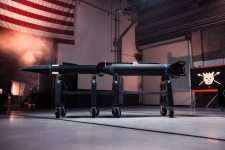
**920km actually.Blackbeard is a compact, low-cost long-range hypersonic strike weapon designed specifically for high-rate mass production. Blackbeard features vertically integrated propulsion and guidance systems optimized to achieve speeds exceeding Mach 5 with an operational strike range of up to 500 nautical miles (approx. 800 km).**
While initially tested for land-based platforms, Blackbeard has quickly become a pivotal element of U.S. Navy carrier aviation strategy. The Navy is heavily prioritizing the weapon for integration onto the F/A-18E/F Super Hornet fleet, providing carrier air wings with a rapid-response, standoff hypersonic capability to penetrate modern anti-access/area-denial (A2/AD) bubbles.
95lb warhead seems to be the rumour.Blackbeard trades heavy warhead payload for unit affordability—aiming for production costs under $500,000 per round. By enabling high-volume magazine capacity on aircraft carriers, Blackbeard aims to compress enemy decision-making timelines and offer the U.S. Navy scalable, conventional strike volume across contested maritime environments.
Last edited:
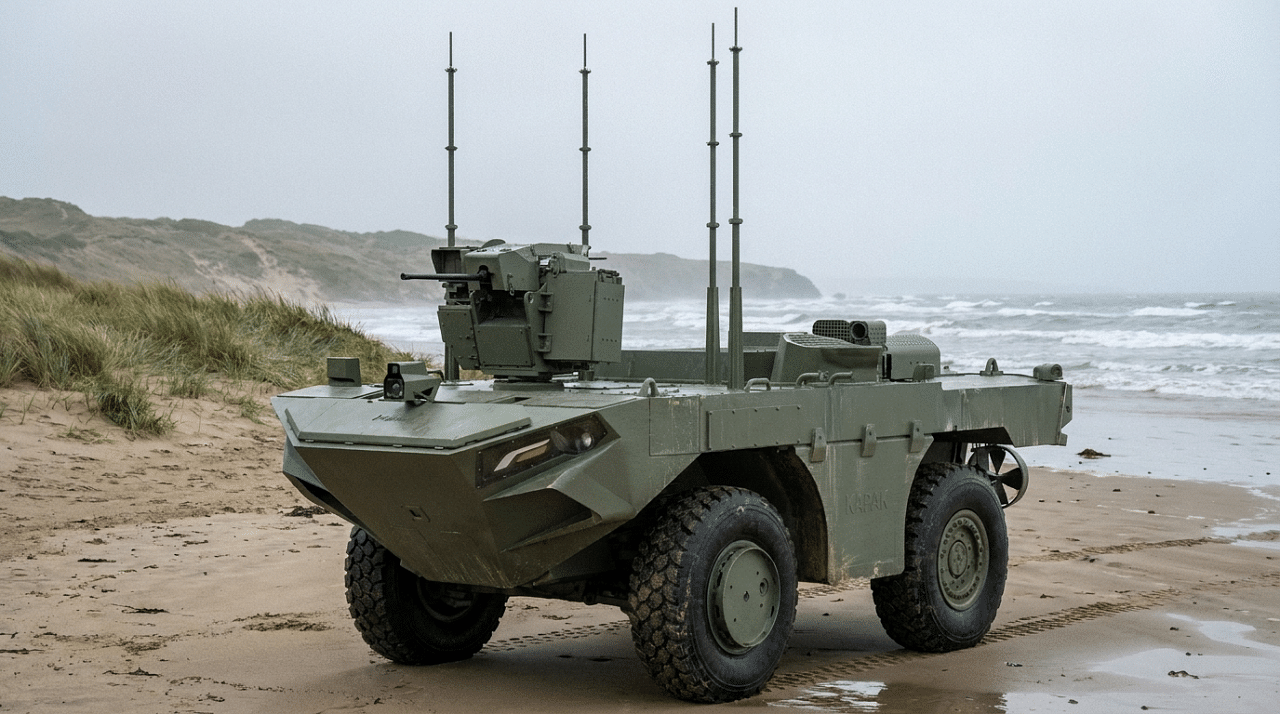
FNSS Unveils U-MAV Unmanned Amphibious Vehicle
FNSS Unveils U-MAV Unmanned Amphibious Vehicle - Naval News
FNSS has unveiled the U-MAV Multi-Purpose Modular Unmanned Amphibious Vehicle (known as ZAHA) at TEKNOFEST Mavi Vatan.
 www.navalnews.com
The 8-ton platform transits from sea to shore without interruption, reaching 7 knots ashore and 70 km/h on land. Its modules can be changed in the field in approximately 40 minutes allowing ten different mission variants, from Fire Support and Mine Clearance to Electronic Warfare (EW) and Casualty Evacuation (CASEVAC).
US Navy RFI Details Plans for Carrier-Based Collaborative Combat Aircraft (CCA)

U.S. Navy RFI Details Plans for Carrier Collaborative Combat Aircraft
The US Navy officially issued an RFI for carrier-based Collaborative Combat Aircraft (CCA) to boost air wing mass alongside F/A-18E/F and F-35C fighters.
www.navalnews.com
The US Navy officially issued an RFI for carrier-based Collaborative Combat Aircraft (CCA) to boost air wing mass alongside F/A-18E/F and F-35C fighters.
SubSea Craft Unveils Modular Payload Cassettes for MARS USV
SubSea Craft Unveils Modular Payload Cassettes for MARS USV - Naval NewsSubSea Craft (SSC) has unveiled a new modular payload cassette system for MARS, their compact Unmanned Surface Vessel (USV), enabling the delivery of mission-configurable effects in contested environments.
Potential payload cassettes include loitering munitions, miniature torpedoes, Unmanned Aerial Vehicles (UAVs), sonobuoys and other mission-specific equipment, all delivered from the same core platform.
The payload cassette system has already supported the successful integration of the Anduril ALTIUS loitering munition, demonstrating MARS’ ability to rapidly integrate and deploy new effectors through a simple cassette exchange without modification to the vessel itself.

does it have seeker to target moving target ? or current one is only for static one ?US Navy Awards Castelion $90M for Blackbeard Hypersonic Weapon EOC
US Navy Awards Castelion $90M to Advance Blackbeard Hypersonic Weapon
**920km actually.
95lb warhead seems to be the rumour.
View attachment 53686
And is it glide vehical ? and is second stage powered (it definitely looks like it) ?
500k USD is pretty low cost against radars, TEL with so less reaction time.
Do we know about its MTOW ? or how many a F/A-18 SH can carry them ?Liberator: Understanding the U.S. Navy’s New Seabed Carrier Killer
Liberator: Understanding the U.S. Navy's New Seabed Carrier Killer - Naval News
US Navy Awards Castelion $90M for Blackbeard Hypersonic Weapon EOC
US Navy Awards Castelion $90M to Advance Blackbeard Hypersonic Weapon
**920km actually.
95lb warhead seems to be the rumour.
View attachment 53686
Second stage is powered, on the terminal seeker - possibly IIR, unconfirmed.does it have seeker to target moving target ? or current one is only for static one ?
And is it glide vehical ? and is second stage powered (it definitely looks like it) ?
500k USD is pretty low cost against radars, TEL with so less reaction time.
Do we know about its MTOW ? or how many a F/A-18 SH can carry them ?
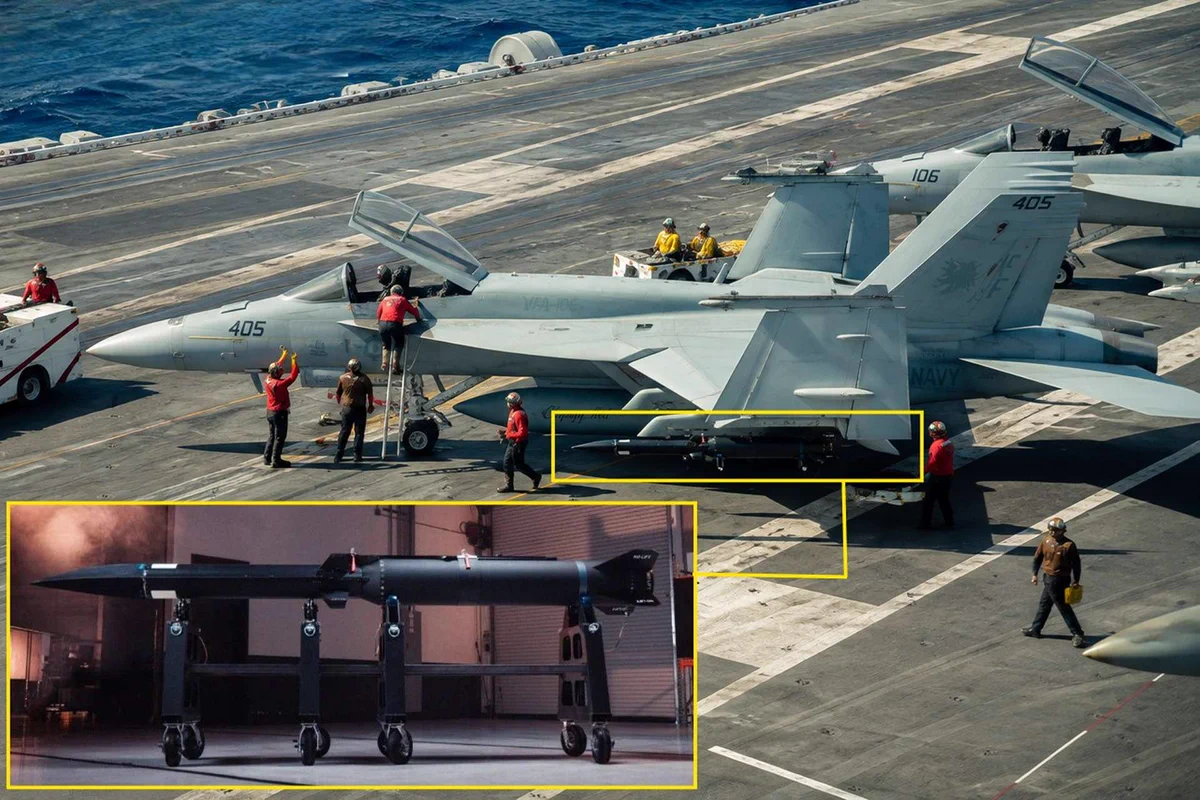
US Navy Tests Blackbeard Hypersonic Missile on F/A-18 Super Hornet - Defence Security Asia
Blackbeard hypersonic missiles appear beneath an F/A-18 Super Hornet as the US Navy accelerates affordable mass-strike capability for Indo-Pacific warfare.
 defencesecurityasia.com
Weight is unknown but the US Navy's requirements stated a missile under 1,250kg and <5.4m long.


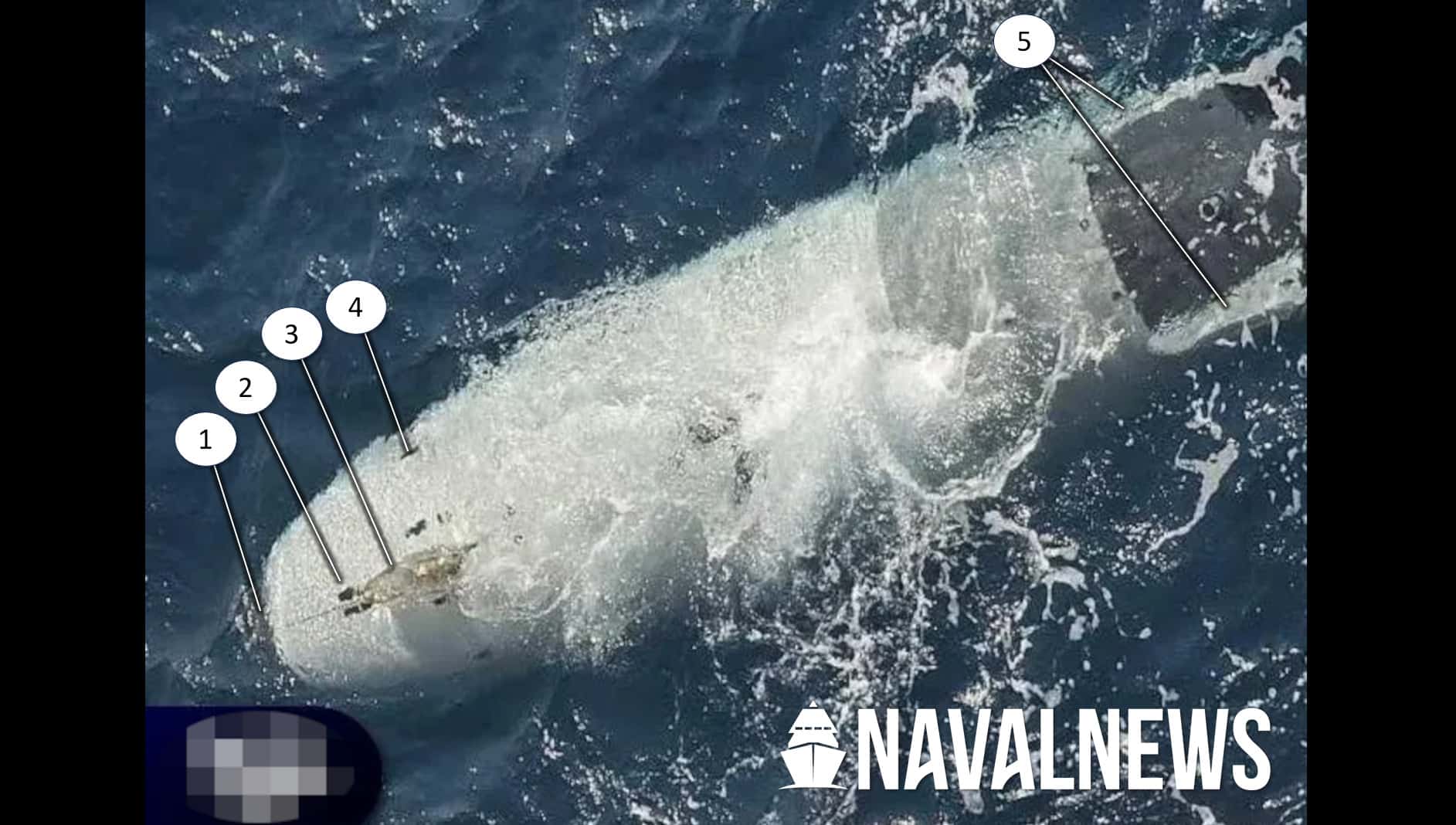
Underwater Drone Captured By Iran Matches American Anduril Model - Naval News
An underwater drone shown by Iran closely matches the American-designed Anduril Dive-LD model. The large AUV (autonomous underwater vehicle) was reportedly captured in the Straits of Hormuz earlier today.
www.navalnews.com
The drone is extremely small by UUV standards, only 5.8m long.Underwater Drone Captured By Iran Matches American Anduril Model - Naval News
An underwater drone shown by Iran closely matches the American-designed Anduril Dive-LD model. The large AUV (autonomous underwater vehicle) was reportedly captured in the Straits of Hormuz earlier today.

Dive-LD | Anduril
Dive-LD is a large diameter autonomous undersea vehicle with modular payloads, 10-day endurance, and 6,000m depth for defense and commercial use.
Everything We Know About The U.S. Navy's Submersible Drone Iran Just CapturedAnduril's Dive-LD uncrewed underwater vehicle falling into Iranian hands is significant, but the system was designed to be risked in contested waters.
Video: Saildrone Surveyor USV Fires Lockheed Martin JAGM during RIMPAC
Video: Saildrone Surveyor USV Fires Lockheed Martin JAGM during RIMPAC
U.S. Transfers Ocean Aero Tritons to Philippine Navy USV Unit
U.S. Transfers Ocean Aero Tritons to Philippine Navy USV Unit - Naval News
The world’s only autonomous underwater and surface vehicle:
The Triton
The TRITON — Ocean Aero
View attachment 52504
Castelion Moves Blackbeard into Production with U.S. Navy Order Valued Up to $200 Million
Castelion Moves Blackbeard into Production with U.S. Navy Order Valued Up to $200 Million - Castelion
Castelion today announced a production delivery order from the U.S. Navy, with a total value of up to $200 million, to manufacture, assemble, test, and deliver an initial lot of Blackbeard Hypersonic Weapons to the fleet. Awarded by Portfolio Acquisition Executive Aviation (PAE(A)) through its...
 www.castelion.com
does it have seeker to target moving target ? or current one is only for static one ?
Ku-Band Affordable Resiliently Manufactured AESA (KARMA)
Castelion’s proposed Ku-band Affordable Resiliently Manufactured AESA (KARMA) starts where other SBIR efforts finish – with a proof-of-concept demonstration of a low-cost seeker designed for our 7in hypersonic missile. With KARMA, Castelion takes a page from Freedom’s Forge to design a seeker using commercial suppliers vs. commercial parts. By tapping into the automotive electronics market, we enter a highly competitive and fairly standardized marketplace. Use of standard industry “plug-and-play” sizes results in a seeker that is about 30% larger than its purely defense-industry counterparts, but dramatically lowers supply-chain risk and reduces cost. In this effort, Castelion leverages its ready-to-build 7-in seeker design to demonstrate functionality of the commercial-grade components and put it through a series of tests, including near-field chamber, far-field chamber, and thermal performance testing. Then, over the course of a 20-month period of performance, Castelion will identify the key requirements necessary for a “low-cost, multi-function radar system for attritable airborne platforms” and adapt the design to meet the SWaP and cost constraints outlined in topic AF244-D010. We are currently estimating that a 25% reduction in elements will allow us to meet performance, SWaP, and cost constraints, while maintaining the rest of the design. The effort will also include SAR data collection, algorithm development, and data link development. These additional steps will allow Castelion to fully model the performance of the seeker hardware. KARMA leverages technology developed under DARPA’s Shared Spectrum Access for Radar and Communications (SSPARC) program which allows coordination and communications between weapons simultaneously with radar operation. Castelion will test this capability with waveforms that include such modulations and demonstrate the radar-scene-radar communication path.
Compact Hypersonic Missile/Effector Reactive Material (CHyMERA) Warhead Prototype & Demonstration
Castelion’s Compact Hypersonic Missile/Effector Reactive Material (CHyMERA) Warhead Prototype & Demonstration, developed in close cooperation with MATSYS, will prototype and test a new type of warhead – showcasing the effectiveness of reactive material warheads for hypersonic weapons. The use of a reactive material warhead provides dual benefits to the platform. These multifunctional warheads allow for its advanced structural case material to provide (a) kinetic defeat mechanisms upon fragmentation and engagement with the target, and (b) highly energetic incendiary and blast events upon breakup of each frag within target due to the extremely rapid combustion of the reactive material alloy. These combined effects provide unmatched target defeat at a smaller payload than traditional warheads. This makes it ideal for the new class of “affordable mass” weapons that are being sought by the Government. CHyMERA is being developed for Castelion’s Blackbeard family of hypersonic weapons which requires a compact, but high performing, warhead that can be accommodated in the common 7-in diameter kill vehicle. This Direct-to-Phase 2 (DP2) effort will prototype the CHyMERA warhead and demonstrate its effectiveness in an arena test against a Castelion-built solid rocket motor (SRM). With novel threats emerging, such as hypersonic vehicles, there is an urgent need for payloads offering multiple defeat mechanisms, such as those offered by high density reactive materials (HDRM) warheads. The proposed effort will demonstrate CHyMERA’s effectiveness against specific components of “live” target surrogates. This research is critically needed to support MDA’s missile defense mandate. The proposed demonstration provides MDA with valuable insights into the expected damage created by a reactive materials warhead against an incoming hypersonic missile threat. It also advances Castelion’s Blackbeard missile line – which can be used as an offensive or defensive weapon – by not only maturing the warhead subsystem, but by beginning insensitive munitions testing of our SRM design.
On April 5, 2025, Castelion received a $1.39 million Phase II award for an advanced radar system. In May 2025, the company was selected for an AFWERX Strategic Funding Increase, aligning approximately $15 million in Air Force SBIR funding with $30 million in private investment and additional government funding to support transition from prototype to operational use. Across the STRATFI portfolio, 63.5% of supported companies have transitioned to Phase III.
Capabilities developed through these efforts informed the design and manufacturability of Castelion’s hypersonic missile system, which is undergoing integration with Army and Navy platforms. Government-coordinated testing included prototype vehicle launches at Dugway Proving Grounds, Utah, on Nov. 6, 2025, and at San Nicolas Island within the Point Mugu Sea Range, California, on Dec. 5, 2025, to collect performance data under operationally relevant conditions.
@Photon Vish
Seems like there's an A2G and A2A version, so I guess that answers question on moving targets.
 www.fw-mag.com
Seems like there's an A2G and A2A version, so I guess that answers question on moving targets.
FW-MAG Future Warfare Magazine - BLACKBEARD, the "affordable" hypersonic missile, is now also headed to the US Navy
BLACKBEARD, the "affordable" hypersonic missile, is now also headed to the US Navy
www.fw-mag.com
While the US Army specifically mentions a ground-launched variant and gives us a clear indication of the platforms from which it intends to launch it, we know very little about the US Navy's plans. An air launched version of BLACKBEARD already exists, and back in 2024 the US Navy had awarded Castellion a study contract regarding the feasibility of developing an air-to-surface hypersonic weapon with a maximum length of 5.4 meters (212 inches) and a maximum launch weight of approximately 1250 kg (2,750 pounds). The same contract also requested a smaller air-to-air weapon, approximately 3.65 meters long and about 18 cm (7 inch) diameter: basically, a weapon compatible with the dimensions of the AMRAAM.
Pretty impression to be honest.@Photon Vish
Seems like there's an A2G and A2A version, so I guess that answers question on moving targets.
FW-MAG Future Warfare Magazine - BLACKBEARD, the "affordable" hypersonic missile, is now also headed to the US Navy
BLACKBEARD, the "affordable" hypersonic missile, is now also headed to the US Navy
USN has been doing amazing with all the weapon programs, in just few year we got AIM 174b, Aim 260, Aim 424 and now this Blackbeard missile.
On length, I have since found out that it's actually only ~4m and fits in F-35A/C IWB.Pretty impression to be honest.
And Dark Eagle. Probably also ARRW too but not revealed yet.USN has been doing amazing with all the weapon programs, in just few year we got AIM 174b, Aim 260, Aim 424 and now this Blackbeard missile.