Ukraine - Russia Conflict
- Thread starter randomradio
- Start date
You are using an out of date browser. It may not display this or other websites correctly.
You should upgrade or use an alternative browser.
You should upgrade or use an alternative browser.

Preliminary figures for last night's combined missile and drone attack on Ukraine:
~30 Kh-101 cruise missiles launched,
~10 intercepted.
~24 Iskander-M ballistic missiles launched,
~6 intercepted.
~12 Zircon hypersonic cruise missiles launched, 0 intercepted.
~6 Kalibr cruise missiles launched, 6 intercepted.
~2 Kh-59/69 cruise missiles launched, 2 intercepted.
~74 missiles total, ~24 intercepted (~6/24 ballistics, ~18/50 cruise missiles).

Russian military forces carried out another large-scale missile and drone attack on Kyiv and several regions of Ukraine, including Dnipropetrovsk, Poltava, Cherkasy, Chernihiv, and Kyiv region. According to the available information, the strikes hit a wide range of industrial and infrastructure facilities in Kyiv that were used to produce drones employed by Ukraine in deep-strike attacks on Russian oil facilities.
RADIONIX radio-electronics plant
ATLON AVIA UAV production facility
Antonov aviation enterprise
Kyiv Radio Plant / TRIMEN-UKRAINE electronics manufacturer
MLP-Chayka logistics and storage hub
Kyiv-3 fuel depot
Gas distribution infrastructure supporting industrial energy supply
RADIONIX radio-electronics plant
ATLON AVIA UAV production facility
Antonov aviation enterprise
Kyiv Radio Plant / TRIMEN-UKRAINE electronics manufacturer
MLP-Chayka logistics and storage hub
Kyiv-3 fuel depot
Gas distribution infrastructure supporting industrial energy supply
On the night of July 2, Russian forces launched a massive strike against Ukrainian defense industry facilities and fuel and energy complexes in Kyiv and the Kyiv region. The strike included Kh-101, Kalibr, Iskander-M, and Tsirkon missiles. This marks the first recorded use of a Russian S8000 Banderol cruise missile in a strike against Kyiv. Geran drones were also used.
And residential buildings.On the night of July 2, Russian forces launched a massive strike against Ukrainian defense industry facilities and fuel and energy complexes in Kyiv and the Kyiv region. The strike included Kh-101, Kalibr, Iskander-M, and Tsirkon missiles. This marks the first recorded use of a Russian S8000 Banderol cruise missile in a strike against Kyiv. Geran drones were also used.
Russian Blood and Treasure: The Ballooning Costs of Putin’s War

Russian Blood and Treasure: The Ballooning Costs of Putin’s War
Russia has suffered approximately 1.4 million casualties and 450,000 fatalities in Ukraine for only marginal territorial gains, according to new CSIS data. In addition, Ukraine has conducted deep strikes into Russian territory, including with AI-enabled drones.
In addition, Russia’s monthly casualty rates of over 30,000 per month in 2026 have likely exceeded Russia’s recruitment rates of roughly 27,000 new recruits per month. The Russia-Ukraine casualty rate has likely risen to nearly 8:1 in the first half of 2026, up from between 2:1 and 3:1 for much of the war, in large part due to Ukraine’s use of drones—including AI-enabled drones—as part of its aggressive air interdiction campaign.
Russia's basically using attacks on oil and gas infratsructure to justify hitting residential complexes.
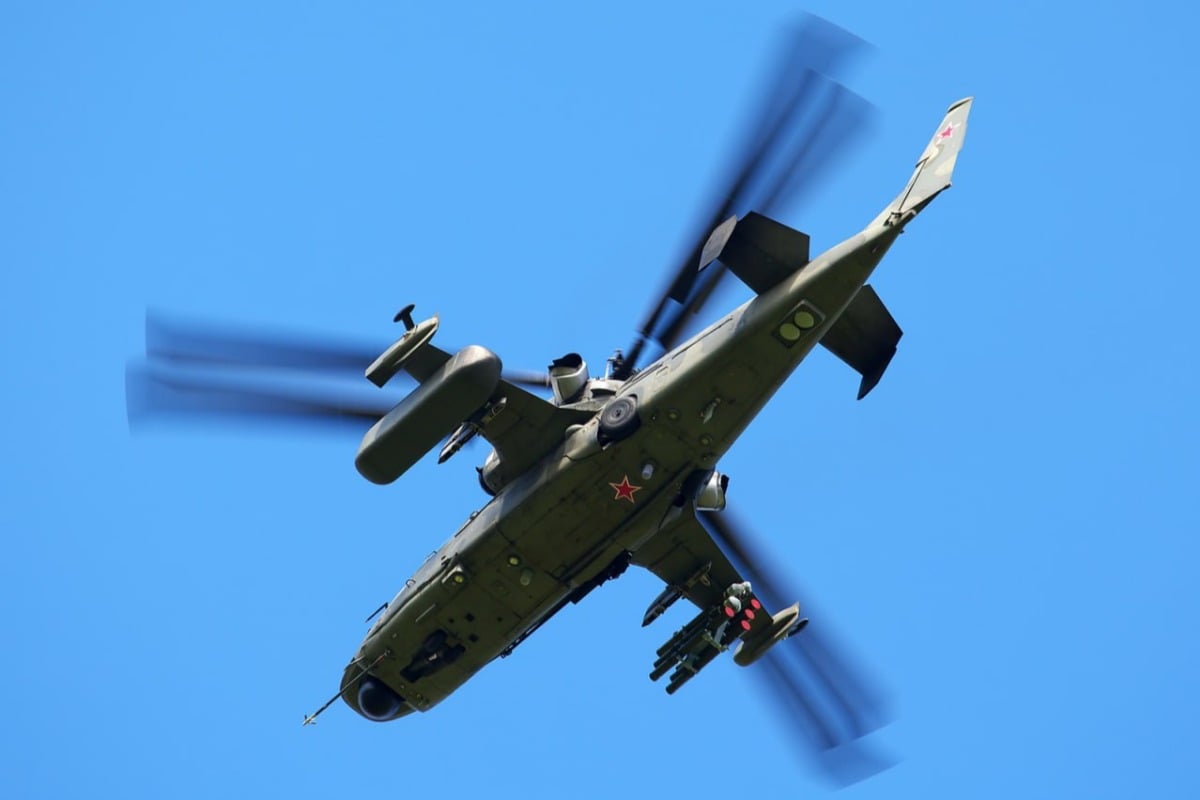
Russia’s most-lost helicopter reportedly downed again
 defence-blog.com
Russia’s most-lost helicopter reportedly downed again
Russia’s most-lost helicopter reportedly downed again
Russian military bloggers with close ties to the country's armed forces are reporting the loss of another Ka-52 "Alligator" attack helicopter, a claim that, if confirmed, would add one more airframe to what is already the single heaviest helicopter loss

Footage of five Ukrainian naval drones being destroyed by Russian Lancet drones, small arms, and anti-tank missiles. The video was filmed in the Black Sea, presumably near the coast of Crimea, as evidenced by the ATGM firing. The type of Ukrainian naval drones is unknown.
The Russian army has begun using tear gas-armed drones to assault Ukrainian positions. The video shows drone strikes in Ukraine using tear gas warheads. The use of such drones helps reduce casualties during assaults on fortified positions, bunkers, and other underground structures. Some Ukrainian units have begun using gas masks, as shown at the end of the video.
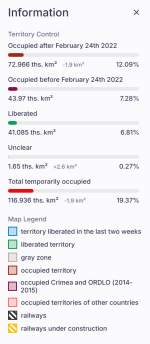
Russia lost territory yesterday, as well as having several refineries set on fire.

 deepstatemap.live
DeepStateMAP | Map of the war in Ukraine
News of russia's war against Ukraine on the map
Footage of a confrontation between Russian soldier Andrei Rezikov and five Ukrainian army FPV drones. The video was filmed near the village of Novopidgorodne in the Dnipropetrovsk region. The soldier was advancing toward the assembly point of a detachment of the 443rd Motorized Rifle Regiment of the 27th Guards Motorized Rifle Division of the Center group. There were five drone attacks, with the soldier firing back, dodging, and throwing an assault rifle at the drone. As a result of the engagement, the soldier sustained a leg wound. He bandaged the wound and made it to the assembly point.

Hardened Aircraft Shelters At Russian Air Base In Crimea Damaged From Ukrainian Drone Strikes (Updated)
The drone attacks on Saki Air Base are part of Ukraine's latest campaign to make Crimea as uninhabitable for Russian forces as possible.
 www.twz.com