Transport Aircraft of IAF - C-130J, C-17 Globemaster, C295: Updates & Discussions

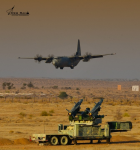
Why only 2 missile s
The photo is from an old exercise. The third missile was fired off.
and yellow glow in it's rear too?
That's a cap. Don't remember the technical term for it. But it is used in solid rocket motors to prevent the fuel inside from coming in contact with air. It will burn away when the missile is fired.
Why most often the trailer vehicle is missing?
Notice the fencing on the ground just below the aircraft ? This is a makeshift air field. In airfields the Akash missile is used for static AD, not mobile. The missiles are fired remotely from a central base defence command and control.
 
  • Informative
Reactions: Ashutosh and Sathya
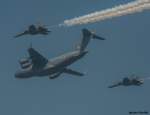
What's that on the tail ?

Aerial-refuelling pods.

UPAZ -1 refueling pod (the length of the hose deployed in the airflow is about 26 m, the hose inner diameter is 52 mm, the fuel transfer rate is up to 2300 l/min); two pods are mounted under the tanker wings for aerial refueling of “light” aircraft, and one pod is mounted on the left side of the IL-78 (78M) fuselage tail for refueling of “heavy” aircraft (Tu-160, Tu-95MC, A-40, A-50 and IL-80).

UPAZ and UPAZ-1 aerial-refueling systems | AO "NPP "ZVEZDA"

 
  • Informative
Reactions: Gautam
Sniffing C295 Deal Headway, Airbus Seeks Break From Indian Defence Jinx

By Shiv Aroor.
Nov 06 2019-11:32 am
1573096948769.png

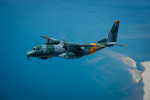
In a market strewn with the debris of failed Airbus campaigns for lucrative Indian defence contracts, the European giant is sniffing its first — and much-needed — win in a country that every senior company executive describes, always with a wry chuckle, as ‘not easy’. The leadership at Airbus Defence said this week that despite prolonged delays, the Indian MoD was likely to soon sign a $2 billion deal for 56 C295 transport aircraft, 40 of which will be built in India by Airbus’s joint venture with the Tata Group. The first 16 will be built at an Airbus Defence & Space facility in Seville, Spain.

In the wake of fresh optimism that contract signature could be on the horizon is a graveyard of campaigns that Airbus has either lost — or won, only to see the contest aborted by the Indian government at the last minute. This includes two separate flight refueling tanker contests, three separate light utility helicopter contests and a nail-biting campaign to sell naval multirole helicopters. Seeking to replace the Indian Air Force’s HS748 Avros with new generation C295 transport aircraft is now front and centre in Airbus’s India effort.

“The Avro-replacement with the C295 is such a convincing story, so I’m surprised it has taken so long. But I think we’re on track to conclude the contract soon,” says Airbus Defence & Space CEO Dirk Hoke. “It’s not easy, and yes, it has taken a lot of time. We talk about campaigns that have been on for more than a decade. But yes, I believe they will happen — especially the Avro-replacement contract [for the C295]. It’s super important for us and India because it’s a real Make in India project in the true sense.”

Hoke was speaking to a group of international journalists during a briefing as part of the Airbus Trade Media Briefing 2019 in Manching, Germany.

The Indian Air Force received an MoD go-ahead to scout for a replacement for its vintage Avro transports in 2012. In 2014, despite tenders sent to several companies, including Lockheed-Martin, Saab, Alenia Aeronautica, Ilyushin and Embraer, the only incoming bid was from the Airbus-Tata partnership, proposing the C295. Negotiations began between the Indian MoD and Airbus-Tata in early 2017, but are understood to have slowed entirely on the issue of cost, a serious stumbling block amidst squeezed budgets. Earlier concerns about a ‘single tender’ contracting process were overruled recognising that no other vendors had bids to send on the Indian specifications. By this time, the Indian Coast Guard had also expressed interest in a small fleet of C295s rigged for near-shore maritime missions.

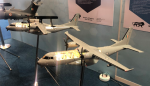
Anticipating an imminent C295 production line in India, India’s DRDO has also envisaged an airborne early warning platform around the aircraft type — seen for the first time at the Aero India show in Bengaluru earlier this year, in addition the Multi-Mission Maritime Aircraft (MMMA) that it is developing for the Coast Guard requirement.
1573097009553.png

“The market in India is much bigger than 56 — we think there’s a market for 150 and beyond, and then there’s export,” says Hoke.

In an unexpected twist last year, India’s Hindustan Aeronautics Ltd (HAL), which license built Avros back in the day, made an unsolicited offer to upgrade the IAF’s Avros with new engines and avionics. This was widely seen as HAL’s bid to stay in the game, especially since the Avro-replacement had been designed upwards to build capacity in India’s private sector, and not add to HAL’s military airframing monopoly in India. Sources indicate HAL’s offer has since evaporated after it was found to be far from feasible by the Indian Air Force. This was mostly due to requirements for a militarised transport with a rear ramp and other features, unlike the more commercial aircraft-style build of the Avro. HAL’s irritation with the Avro replacement program has been manifest from the start. It didn’t help that the program accelerated the end of the proposed joint Multirole Transport Aircraft (MTA) program between HAL and Russia’s Ilyushin to develop a new, modified version of the Il-214 twin jet.

With those hiccups behind it, Airbus and Hoke hope the decks stand cleared for a decision. They also, importantly, make the effort to emphasise the Make in India core of the program — literally the vitality of why negotiations haven’t simply decayed as they have so many times in the past.

The Indian Air Force operates a mix of C-17 Globemaster III, C-130J, upgraded An-32, Avro and Do-228 transports. It is hoping for the C295 not just to replace the Avros, but augment and progressively replace the An-32 as well. Earlier this year, MBDA revealed it had egged on the C295 program by proposing a possible MARTE ER anti-ship missile fit for the aircraft.

“The offering of the C295 is a perfect offering for the market and customer and strong benefit for society,” says Hoke, who took over as chief Airbus’s defence business in 2016. “We are creating the basis for a real aerospace ecosystem in India. This will be the first aircraft of its kind fully built in India. And it isn’t an aircraft that is at the end of its life.”

“It has taken a while, but I’m an optimist,” Alberto Gutierrez, head of military aircraft at Airbus Defence & Space tells Livefist. “I was in India last week for meetings, and I can tell you I’m feeling quite optimistic.”

Asked why things have remained stalled for nearly three years after negotiations reached the final lap, Gutierrez says, “The reason why it’s taking so long, better to ask the Government of India. We’ve supplied all the data we were asked for. I understand the process takes a while. The last election in India didn’t help in speeding up the process. I know first hand that all the administrative processes have been fulfilled. We are moving towards a final decision. Nothing can make us believe the contract isn’t going to happen.”

It isn’t surprising that Airbus is hoping heavily for the Avro-replacement program to be the door-opener it needs in a rich defence market that has been a consistent disappointment thus far. Not only is the C295 package the only one on offer to replace the old Avro fleet, but is a far more substantive, layered program than the direct supply defence contracts Airbus has largely vied for in the past. Airbus hopes that a compelling package on the shoulders of a trusty conglomerate like the Tatas, could provide a desperately needed foot in the door.

To be sure, the choice to partner with an Indian firm isn’t a choice at all — the structure of India’s new procurement policy demands it. But it also provides Airbus with the chance to step away from an erstwhile commercial procurement dynamic that wore nasty last-minute surprises almost like a badge of honour, leaving in its wake leagues of executives and procurement campaigns with nothing but the aftershocks of unexpected decisions amidst a near-total lack of transparency.

Sister firm Airbus Helicopters has similarly tied up with India’s reputed Mahindra Group to offer to build the H135M and H225M Caracal in India in response to large Indian Navy requirements for 111 shipboard utility and medium multirole helicopters respectively.


https://www.livefistdefence.com/201...bus-seeks-break-from-indian-defence-jinx.html

 
  • Like
Reactions: GuardianRED
C-295 transport plane clears cost negotiations

Tata-Airbus aircraft to replace Air Force’s ageing fleet of Avros
The Defence Ministry has concluded cost negotiations with Tata and Airbus for the purchase of Airbus C-295 transport aircraft as part of the long-delayed Avro replacement programme of the Indian Air Force (IAF).

“Cost negotiations for the C-295 deal have been completed. It is now being processed to put it up for clearance from the Cabinet Committee on Security (CCS). It is expected to be signed in the next few months,” a senior Defence official said.

Initially, after the completion of cost negotiations, it was felt that a waiver from the Defence Acquisition Council (DAC) would be needed on some technical issues. But Defence sources said the issue “has now been resolved.”

The IAF has 56 Avro transport aircraft which are in urgent need of replacement. A further six aircraft for a maritime mission role for the Indian Coast Guard have been added taking the total number required to 62, estimated to cost upwards of $3 billion.

Funds crunch
While sources expressed optimism that the deal would be signed in this financial year, it is contingent on the availability of funds. The IAF has a situation where committed liabilities for this year are more than the capital allocation in the budget and few big ticket deals are on the agenda. For instance, the IAF recently concluded a deal for five additional Akash Surface-to-Air systems and a deal for 83 Light Combat Aircraft (LCA)-MK1A is expected to be concluded this fiscal.

As part of the deal, 16 aircraft will be built by Airbus at its manufacturing facility and delivered in fly away condition and the remaining will be built locally by the Tata-Airbus joint venture under transfer of technology.

The sole bid by Airbus and Tata with the C-295 aircraft for the Avro replacement programme was approved by the DAC in May 2015, but the contractual negotiations have been repeatedly delayed. The Request For Proposal (RFP) was issued to global firms in May 2013.

This deal has become even more critical as a separate project to jointly co-develop and produce a Medium Transport Aircraft (MTA) of 20 tonnes with Russia to replace the An-32s in service was scrapped after initial design discussions.

While the An-32s are being upgraded and are not due for immediate replacement as they have residual air frame left, the IAF has no future MTA lined up. In the absence of a new MTA development project, there is discussion on making the C-295 the replacement for the An-32 fleet in future.

 
C-295 transport plane clears cost negotiations

Tata-Airbus aircraft to replace Air Force’s ageing fleet of Avros
The Defence Ministry has concluded cost negotiations with Tata and Airbus for the purchase of Airbus C-295 transport aircraft as part of the long-delayed Avro replacement programme of the Indian Air Force (IAF).

“Cost negotiations for the C-295 deal have been completed. It is now being processed to put it up for clearance from the Cabinet Committee on Security (CCS). It is expected to be signed in the next few months,” a senior Defence official said.

Initially, after the completion of cost negotiations, it was felt that a waiver from the Defence Acquisition Council (DAC) would be needed on some technical issues. But Defence sources said the issue “has now been resolved.”

The IAF has 56 Avro transport aircraft which are in urgent need of replacement. A further six aircraft for a maritime mission role for the Indian Coast Guard have been added taking the total number required to 62, estimated to cost upwards of $3 billion.

Funds crunch
While sources expressed optimism that the deal would be signed in this financial year, it is contingent on the availability of funds. The IAF has a situation where committed liabilities for this year are more than the capital allocation in the budget and few big ticket deals are on the agenda. For instance, the IAF recently concluded a deal for five additional Akash Surface-to-Air systems and a deal for 83 Light Combat Aircraft (LCA)-MK1A is expected to be concluded this fiscal.

As part of the deal, 16 aircraft will be built by Airbus at its manufacturing facility and delivered in fly away condition and the remaining will be built locally by the Tata-Airbus joint venture under transfer of technology.

The sole bid by Airbus and Tata with the C-295 aircraft for the Avro replacement programme was approved by the DAC in May 2015, but the contractual negotiations have been repeatedly delayed. The Request For Proposal (RFP) was issued to global firms in May 2013.

This deal has become even more critical as a separate project to jointly co-develop and produce a Medium Transport Aircraft (MTA) of 20 tonnes with Russia to replace the An-32s in service was scrapped after initial design discussions.

While the An-32s are being upgraded and are not due for immediate replacement as they have residual air frame left, the IAF has no future MTA lined up. In the absence of a new MTA development project, there is discussion on making the C-295 the replacement for the An-32 fleet in future.

Huge potential for this Frames - Fingers and toes crossed!!! (y)
 
We must use C 295 for Making More AWACS and Dedicated EW planes ,

We need more mini AWACS and EW planes in several sectors
Along the entire IB and LOC
ALL at once
To totally Confuse and Jam the Pakistani Radars
 
Airbus C-295 should also be selected to replace the ageing Antonov An-32 fleet thereby reducing the logistics cost. Also we should acquire 10-15 C-295 for our AWACS program. C-295 has capability of carrying EL/W-2090 radar dome which was demonstrated as far back as 2011. Acquiring turbo-fan AWACS is simply too expensive as we need 15-20 AWACS to guard our borders. Airbus A330 MRTT that is selected by DRDO for the AWACS program cost $300 million apiece. Compare that to the C-295 which cost around $50 million. I am not saying we should not acquire A330 as an AWACS platform, it is just that if we want numbers then a turbo-prop aircraft like C-295 is the only feasible option.
 
IAF requires 'at least' 150 C295 medium transport aircraft: Airbus

The Defence Acquisition Council had cleared the IAF's plan to buy 56 C295s in 2015

November 20, 2019 11:58 IST
1574436053055.png
Pan-European aerospace manufacturer Airbus is confident of closing a long-pending deal to supply India with its C295 multi-role transport aircraft.

In a report on FlightGlobal.com, Airbus officials were optimistic of progress in the deal to supply 56 C295 transport variant to the Indian Air Force. The Indian Coast Guard is also buying six maritime patrol variants of the C295.

The C295 is a multi-role transport aircraft that can carry a maximum payload of 9.25 tonnes. It has a range of 2,000 nautical miles when carrying 6 tonnes; it can carry up to 71 troops. According to Airbus, a total of 209 C295 aircraft have been ordered by 28 countries across the world. As its dimensions are smaller than the Indian Air Force's existing fleet of C-130J, C-17 and IL-76 transport aircraft, the C295 can take off and land at a wider variety of airfields.

The Defence Acquisition Council had cleared the Indian Air Force's plan to buy 56 C295 aircraft in 2015, with the Coast Guard order following later. The Indian Air Force selected the C295 as the replacement for its ageing fleet of Avro 748 transport aircraft. The Indian Air Force has a total fleet of over 50 Avro 748 aircraft. The first Avro aircraft for the Indian Air Force flew in 1961.

The C295 aircraft was pitched to India jointly by Airbus and Tata Advanced Systems Limited. The two companies plan to build the first 16 aircraft at an Airbus facility in Spain and the remainder would be built by Tata Advanced Systems Limited near Bengaluru. However, progress in the deal has been slow.

In March this year, the ministry of defence concluded price negotiations with Airbus and Tata Advanced Systems Limited; the estimated value of the contract for 62 aircraft is $3.15 billion.

Speaking to FlightGlobal.com, Dirk Hoke, CEO of Airbus Defence & Space, said he believed the Indian Air Force's requirement for the C295 could grow to “at least 150 [aircraft] and beyond".

Hoke also foresaw the possibility of exports of the C295 from India, calling it a "real Make-in-India" project. Alberto Gutierrez, another Airbus official, told FlightGlobal.com that all "administrative processes" for the C295 purchase are being fulfilled, adding "there is nothing to make us think that the contract isn’t going to happen".

While the C295 is being projected as the Indian Air Force's replacement for its Avro fleet, the aircraft is also considered a contender to replace the fleet of Antonov An-32 transport aircraft bought from the Soviet Union in the 1980s. The Indian Air Force currently operates around 100 An-32 aircraft. The upgrade programme for the An-32 has been stalled by the tension between Ukraine and Russia in recent decades.

Airbus touts the C295 as being capable of multiple roles including anti-submarine warfare, air-to-air refuelling and a platform for airborne early warning radar. Airbus also has a 'gunship' variant of the C295, armed with guns and air-to-ground missiles for the purpose of providing air support to ground troops.

During the Aero India airshow in February, DRDO unveiled plans for a maritime patrol variant of the C-295 and an airborne early warning variant for the Indian Air Force, which would use the same radar as used by the indigenous 'Netra' system.

IAF requires 'at least' 150 C295 medium transport aircraft: Airbus
 
IAF requires 'at least' 150 C295 medium transport aircraft: Airbus

The Defence Acquisition Council had cleared the IAF's plan to buy 56 C295s in 2015

November 20, 2019 11:58 IST
View attachment 11504
Pan-European aerospace manufacturer Airbus is confident of closing a long-pending deal to supply India with its C295 multi-role transport aircraft.

In a report on FlightGlobal.com, Airbus officials were optimistic of progress in the deal to supply 56 C295 transport variant to the Indian Air Force. The Indian Coast Guard is also buying six maritime patrol variants of the C295.

The C295 is a multi-role transport aircraft that can carry a maximum payload of 9.25 tonnes. It has a range of 2,000 nautical miles when carrying 6 tonnes; it can carry up to 71 troops. According to Airbus, a total of 209 C295 aircraft have been ordered by 28 countries across the world. As its dimensions are smaller than the Indian Air Force's existing fleet of C-130J, C-17 and IL-76 transport aircraft, the C295 can take off and land at a wider variety of airfields.

The Defence Acquisition Council had cleared the Indian Air Force's plan to buy 56 C295 aircraft in 2015, with the Coast Guard order following later. The Indian Air Force selected the C295 as the replacement for its ageing fleet of Avro 748 transport aircraft. The Indian Air Force has a total fleet of over 50 Avro 748 aircraft. The first Avro aircraft for the Indian Air Force flew in 1961.

The C295 aircraft was pitched to India jointly by Airbus and Tata Advanced Systems Limited. The two companies plan to build the first 16 aircraft at an Airbus facility in Spain and the remainder would be built by Tata Advanced Systems Limited near Bengaluru. However, progress in the deal has been slow.

In March this year, the ministry of defence concluded price negotiations with Airbus and Tata Advanced Systems Limited; the estimated value of the contract for 62 aircraft is $3.15 billion.

Speaking to FlightGlobal.com, Dirk Hoke, CEO of Airbus Defence & Space, said he believed the Indian Air Force's requirement for the C295 could grow to “at least 150 [aircraft] and beyond".

Hoke also foresaw the possibility of exports of the C295 from India, calling it a "real Make-in-India" project. Alberto Gutierrez, another Airbus official, told FlightGlobal.com that all "administrative processes" for the C295 purchase are being fulfilled, adding "there is nothing to make us think that the contract isn’t going to happen".

While the C295 is being projected as the Indian Air Force's replacement for its Avro fleet, the aircraft is also considered a contender to replace the fleet of Antonov An-32 transport aircraft bought from the Soviet Union in the 1980s. The Indian Air Force currently operates around 100 An-32 aircraft. The upgrade programme for the An-32 has been stalled by the tension between Ukraine and Russia in recent decades.

Airbus touts the C295 as being capable of multiple roles including anti-submarine warfare, air-to-air refuelling and a platform for airborne early warning radar. Airbus also has a 'gunship' variant of the C295, armed with guns and air-to-ground missiles for the purpose of providing air support to ground troops.

During the Aero India airshow in February, DRDO unveiled plans for a maritime patrol variant of the C-295 and an airborne early warning variant for the Indian Air Force, which would use the same radar as used by the indigenous 'Netra' system.

IAF requires 'at least' 150 C295 medium transport aircraft: Airbus


Will C295 become the best replacement for An32 once Tata makes it?
 
Will C295 become the best replacement for An32 once Tata makes it?
Given the current readiness levels of the An32 and the spares and services problems, the IAF might see merit in getting the C295 to replace the An32. Some seems to suggest that we are already planning to do so. May be that's why the Airbus folks are optimistic.
 
  • Like
Reactions: Sathya