South Korean KAI KF-21 Boramae Developments

I believe those facilities have been set up with the help of and the toolings are sourced from several US and European companies like (also mentioned on the first page itself)
Curtiss-Wright
Even the AESA radar testing is being done by some South African Company.(HANSOLDT or Reutech Group perhaps)
PS: Interestingly Calspan wind tunnel test facility was where LCA testing was done during the initial design phase.

Very much possible. In fact, the flight control laws that we speak of today were tested on the F-16 VISTA platform and on the NT-33 simulator. Before this it was tested on a simulator of BAe.
 
Very much possible. In fact, the flight control laws that we speak of today were tested on the F-16 VISTA platform and on the NT-33 simulator. Before this it was tested on a simulator of BAe.
We need something like VISTA FTB too apart from our already existing static test facility at ADA. It still is extensively used by LM for testing new control laws.

160830-F-JG201-005.JPG


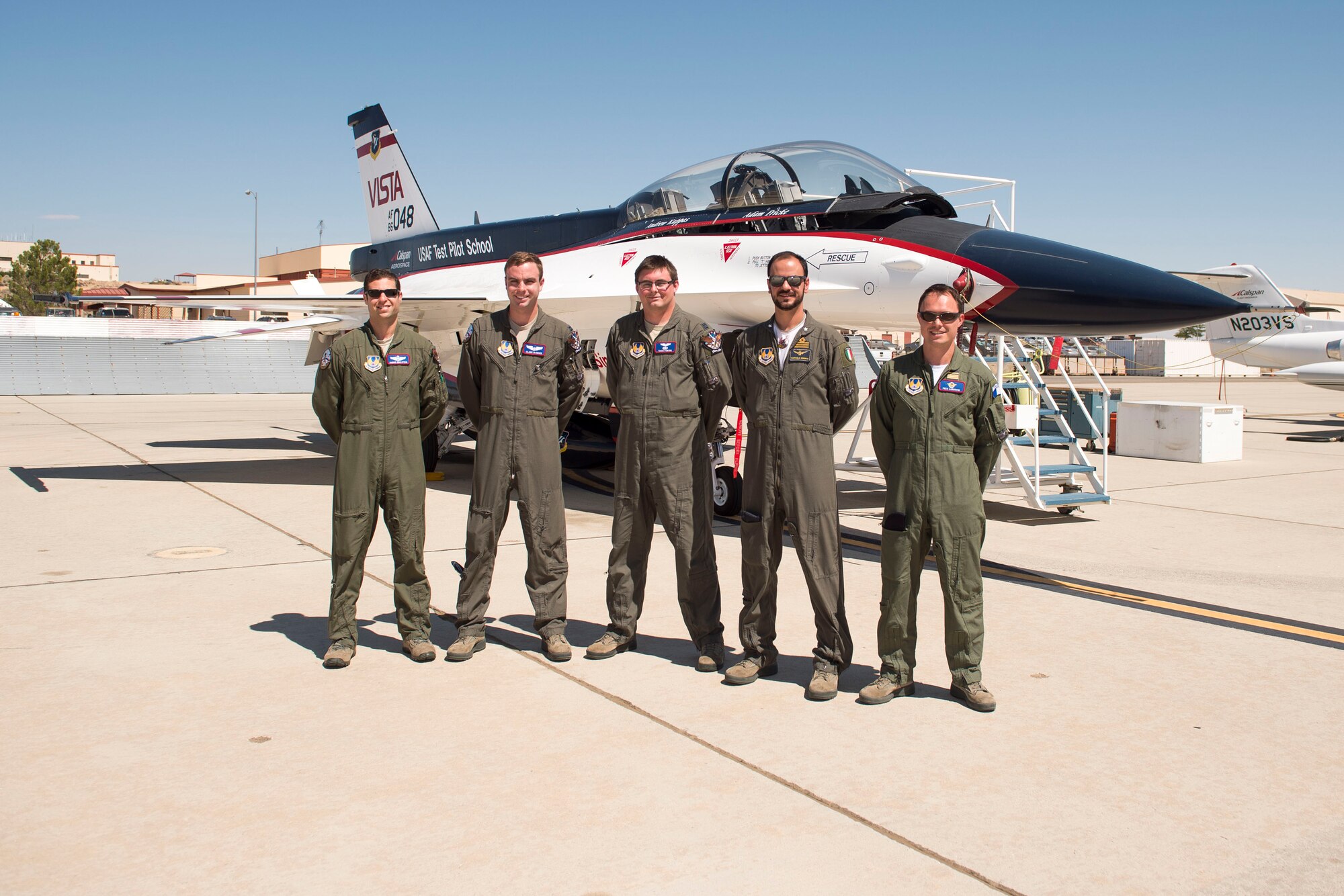
Students at the U.S. Air Force Test Pilot School recently completed testing of an innovative aircraft control system that is intended to add a margin of safety to aviation.


The L1 Adaptive Control System is a software system that, when installed as a backup system in any fly-by-wire aircraft, can quickly learn the aircraft’s flying characteristics and then assist the aircraft in case of a control surface or system failure.


It was designed and built by a professor and two graduate students from the University of Illinois, Urbana Champaign and tested here by a team of TPS students from class 16A.


The TPS team consists of staff advisor Dr. Chris Cotting and five students – test pilots Capt. Daniel Edelstein, Italian Air Force Capt. Raffaele Odesco, French Air Force Maj. Nicolas Langevin and flight test engineers Capt. Craig Porter and Capt. Clark McGehee.


Test Pilot School students earn a master of science degree in flight testing after completing the one-year course.


“In order to get a master's, you need to do a project of some sort,” Cotting said. “Typically you do a master’s thesis. We have our students do a group project. The idea is we want them to take the lessons they’ve learned in how to plan and execute a flight test and actually go do that.”


Since the controller is adaptive, and designed to function on any fly-by-wire aircraft, the traditional flight test process could have been expensive and time consuming. So the class opted to test the system using the NF-16 Variable-stability In-flight Simulator Test Aircraft, known as VISTA.


VISTA is a highly modified F-16 that can simulate the flight characteristics of many other aircraft.


For example, if the aircraft is configured as a C-17, when the pilot operates the flight controls, the aircraft will respond like a C-17, not an F-16.


“We can make the aircraft fly like anything we want within its performance envelope. We have safety trips on it so if the aircraft goes to an attitude we’re uncomfortable with it will trip off and a safety pilot will have the original aircraft to fly safely,” Cotting said.


"This allows us to put research flight control laws on there without having to go through the normal flight test process so we can literally go from basic design, test in a simulator and go fly all in the same day, as opposed to the months it would take to go through normal process," Cotting said. "From a researcher’s point of view, you can see where that could be very advantageous.”


According to Cotting, the L1 controller is a somewhat novel idea in that it doesn’t have to know what the airplane is like that you’re putting it on.


“You give it some basic information about the airplane and the adaptive controller should be able to configure itself to make the aircraft fly like anything I tell it I want to fly like,” he said.


"So in our case we use something called a reference model which is a set of dynamics we would like the airplane to fly," he said. "We tell it some information about the aircraft, but not a lot, and then it goes and sorts out how to make the aircraft fly like the reference set of dynamics.”


Part of the process was to install the controller on VISTA and see if the team's performance predictions were accurate. “We also wanted to test some different configurations of VISTA that are normally unsafe to fly and see how well this controller can recover the aircraft back to a reference set of dynamics that we do think is safe to fly,” Cotting said.


The adaptive control system is designed to work on any fly-by-wire aircraft. Some of the fly-by-wire aircraft at Edwards include the C-17 Globemaster II, the F-16 Falcon, the F-22 Raptor and the F-35 Lightning II. Many aircraft companies, including Boeing and Airbus, are building fly-by-wire aircraft for commercial use as well.


(This article is part two of a series about the L1 Adaptive Control System.)

 
Last edited:
  • Agree
Reactions: Asterion Moloc
Right now HAL uses manual method of composite manufacturing like GROB
which is highly time consuming and prone to defects

Nowadays the Aerospace industry has moved on to automated AFP technology
like LM it is using KUKA industrial robots.

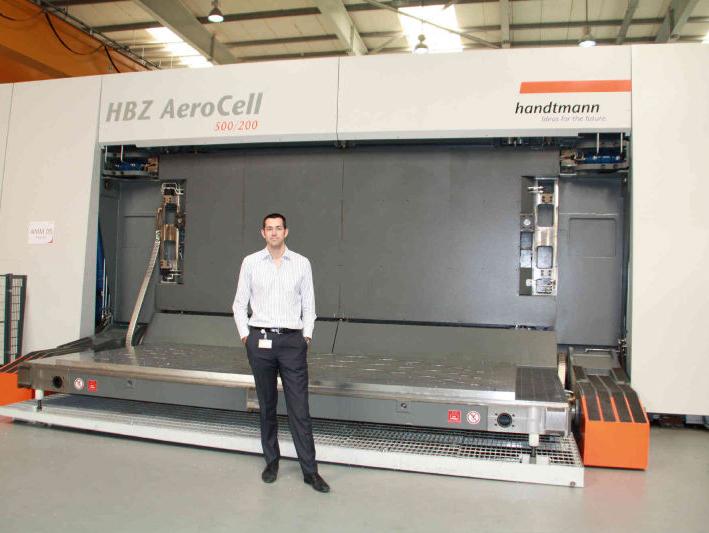
just look at the gigantic autoclaves used by Airbus for composite manufacturing.

This is the exact same KAI is using for KF21


PS: All of the above tools are available commercially in open markets and can be easily purchased by agencies like HAL
 
Last edited:
We need something like VISTA FTB too apart from our already existing static test facility at ADA. It still is extensively used by LM for testing new control laws.

160830-F-JG201-005.JPG


Students at the U.S. Air Force Test Pilot School recently completed testing of an innovative aircraft control system that is intended to add a margin of safety to aviation.


The L1 Adaptive Control System is a software system that, when installed as a backup system in any fly-by-wire aircraft, can quickly learn the aircraft’s flying characteristics and then assist the aircraft in case of a control surface or system failure.


It was designed and built by a professor and two graduate students from the University of Illinois, Urbana Champaign and tested here by a team of TPS students from class 16A.


The TPS team consists of staff advisor Dr. Chris Cotting and five students – test pilots Capt. Daniel Edelstein, Italian Air Force Capt. Raffaele Odesco, French Air Force Maj. Nicolas Langevin and flight test engineers Capt. Craig Porter and Capt. Clark McGehee.


Test Pilot School students earn a master of science degree in flight testing after completing the one-year course.


“In order to get a master's, you need to do a project of some sort,” Cotting said. “Typically you do a master’s thesis. We have our students do a group project. The idea is we want them to take the lessons they’ve learned in how to plan and execute a flight test and actually go do that.”


Since the controller is adaptive, and designed to function on any fly-by-wire aircraft, the traditional flight test process could have been expensive and time consuming. So the class opted to test the system using the NF-16 Variable-stability In-flight Simulator Test Aircraft, known as VISTA.


VISTA is a highly modified F-16 that can simulate the flight characteristics of many other aircraft.


For example, if the aircraft is configured as a C-17, when the pilot operates the flight controls, the aircraft will respond like a C-17, not an F-16.


“We can make the aircraft fly like anything we want within its performance envelope. We have safety trips on it so if the aircraft goes to an attitude we’re uncomfortable with it will trip off and a safety pilot will have the original aircraft to fly safely,” Cotting said.


"This allows us to put research flight control laws on there without having to go through the normal flight test process so we can literally go from basic design, test in a simulator and go fly all in the same day, as opposed to the months it would take to go through normal process," Cotting said. "From a researcher’s point of view, you can see where that could be very advantageous.”


According to Cotting, the L1 controller is a somewhat novel idea in that it doesn’t have to know what the airplane is like that you’re putting it on.


“You give it some basic information about the airplane and the adaptive controller should be able to configure itself to make the aircraft fly like anything I tell it I want to fly like,” he said.


"So in our case we use something called a reference model which is a set of dynamics we would like the airplane to fly," he said. "We tell it some information about the aircraft, but not a lot, and then it goes and sorts out how to make the aircraft fly like the reference set of dynamics.”


Part of the process was to install the controller on VISTA and see if the team's performance predictions were accurate. “We also wanted to test some different configurations of VISTA that are normally unsafe to fly and see how well this controller can recover the aircraft back to a reference set of dynamics that we do think is safe to fly,” Cotting said.


The adaptive control system is designed to work on any fly-by-wire aircraft. Some of the fly-by-wire aircraft at Edwards include the C-17 Globemaster II, the F-16 Falcon, the F-22 Raptor and the F-35 Lightning II. Many aircraft companies, including Boeing and Airbus, are building fly-by-wire aircraft for commercial use as well.


(This article is part two of a series about the L1 Adaptive Control System.)
Such adaptive flight control has been developed for AMCA.
 
  • Like
Reactions: AbRaj and Raptor
Perhaps you misunderstood but I never said that

There’s nothing fancy about their looks. It’s how proper testing facilities and tools look like. It’s same argument INSAS loving Army fanboys say for anything remotely modern like M4,HK416,Sig 716, and even for modern AK rifles that can use proper aiming and magnification sights and other essential accessories, and for other modern infantry gears like Head protection,NVDs, comms and eye and ear protection, knee pads and sides arms etc etc.

Aviation and Military industry is not a labour intensive industry where you can substitute precision tools with cheap manual labour. Otherwise you will keep importing Ultra expensive Mirages and Rafale and all those expensive US origin military weapons for eternity.
A micrometer level error can cost you a war.

In Precision Manufacturing, excessive labour availability is useless beyond a certain level.
You keep wandering off from the subject and keep extrapolating from unrelated examples.

Aircraft are not built by OFB and there is zero correlation between manufacturing automation and importing rafales.
 
Any link to read about that ?
There is no open source paper but a program was sanctioned.

Non-linear reconfigurable control of aircraft operating at high angles-of-attack (ADA,
Phase I & Phase II).


Now same Algorithms are being developed for ghatak and supersonic UCAV.
 
  • Like
Reactions: AbRaj
Two months after its much-ballyhooed April 9 unveiling, the KF-21 Boramae is being dismantled, raising awkward questions about the true readiness of the prototype of Korea's first indigenously developed fighter jet.

In stark contrast with its glossy grey appearance at the April ceremony, the prototype has reportedly already been stripped of its engine and various components, leaving it nearly exposed to its underlying frame and propped up on supporting beams.

“Even if [the dismantling] is in preparation for a ground test, a wholesale disassembly is difficult to comprehend,” said a retired Air Force general who spoke on the condition of anonymity.

“Normally, the unveiling of a prototype takes place before the final ground test and test flight,” he added, suggesting that the prototype was not, in fact, flight-worthy before its unveiling.


That's weird.
 
Two months after its much-ballyhooed April 9 unveiling, the KF-21 Boramae is being dismantled, raising awkward questions about the true readiness of the prototype of Korea's first indigenously developed fighter jet.

In stark contrast with its glossy grey appearance at the April ceremony, the prototype has reportedly already been stripped of its engine and various components, leaving it nearly exposed to its underlying frame and propped up on supporting beams.

“Even if [the dismantling] is in preparation for a ground test, a wholesale disassembly is difficult to comprehend,” said a retired Air Force general who spoke on the condition of anonymity.

“Normally, the unveiling of a prototype takes place before the final ground test and test flight,” he added, suggesting that the prototype was not, in fact, flight-worthy before its unveiling.


That's weird.
@kor4116