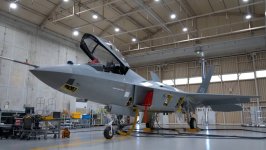
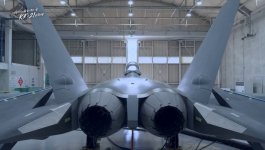
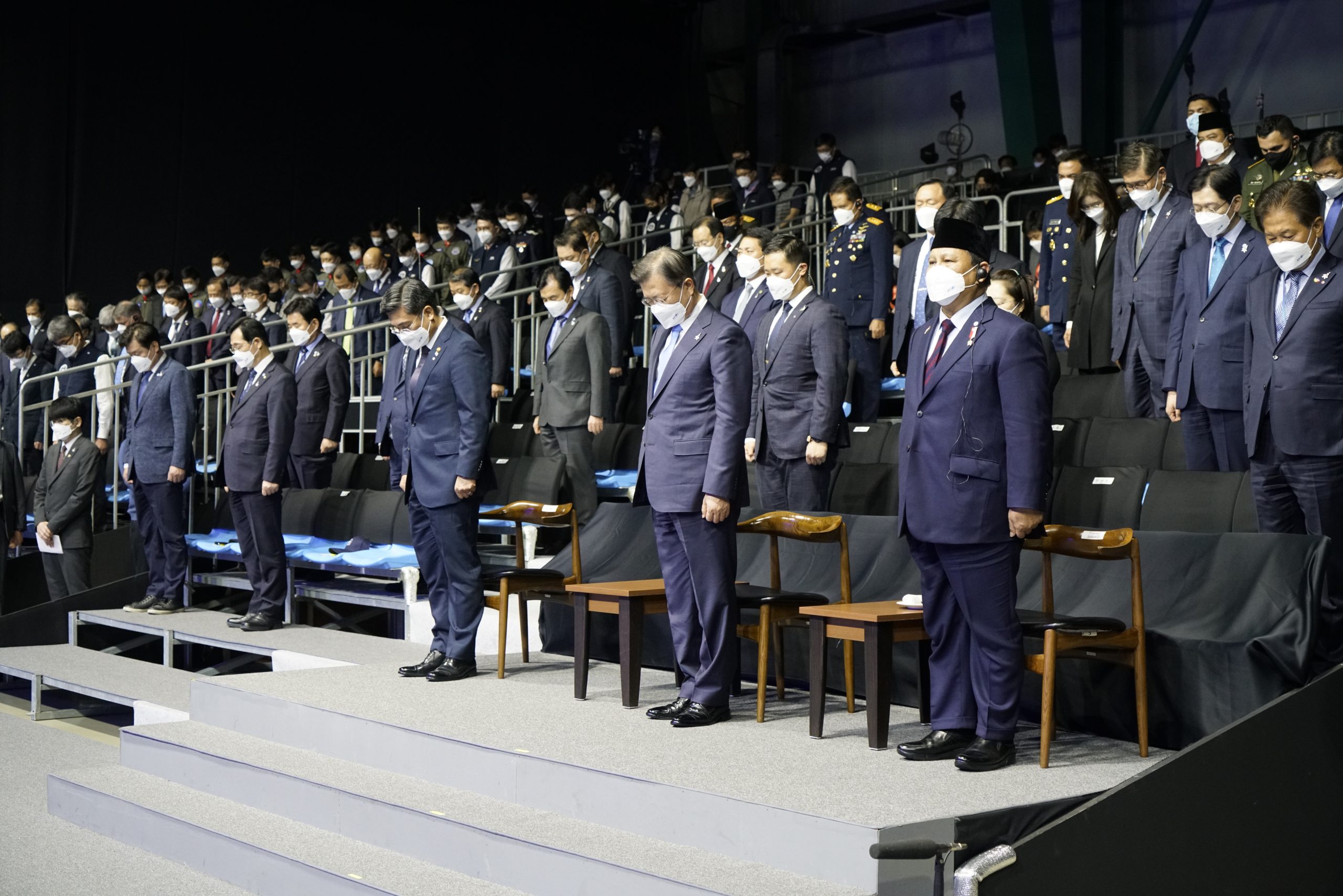
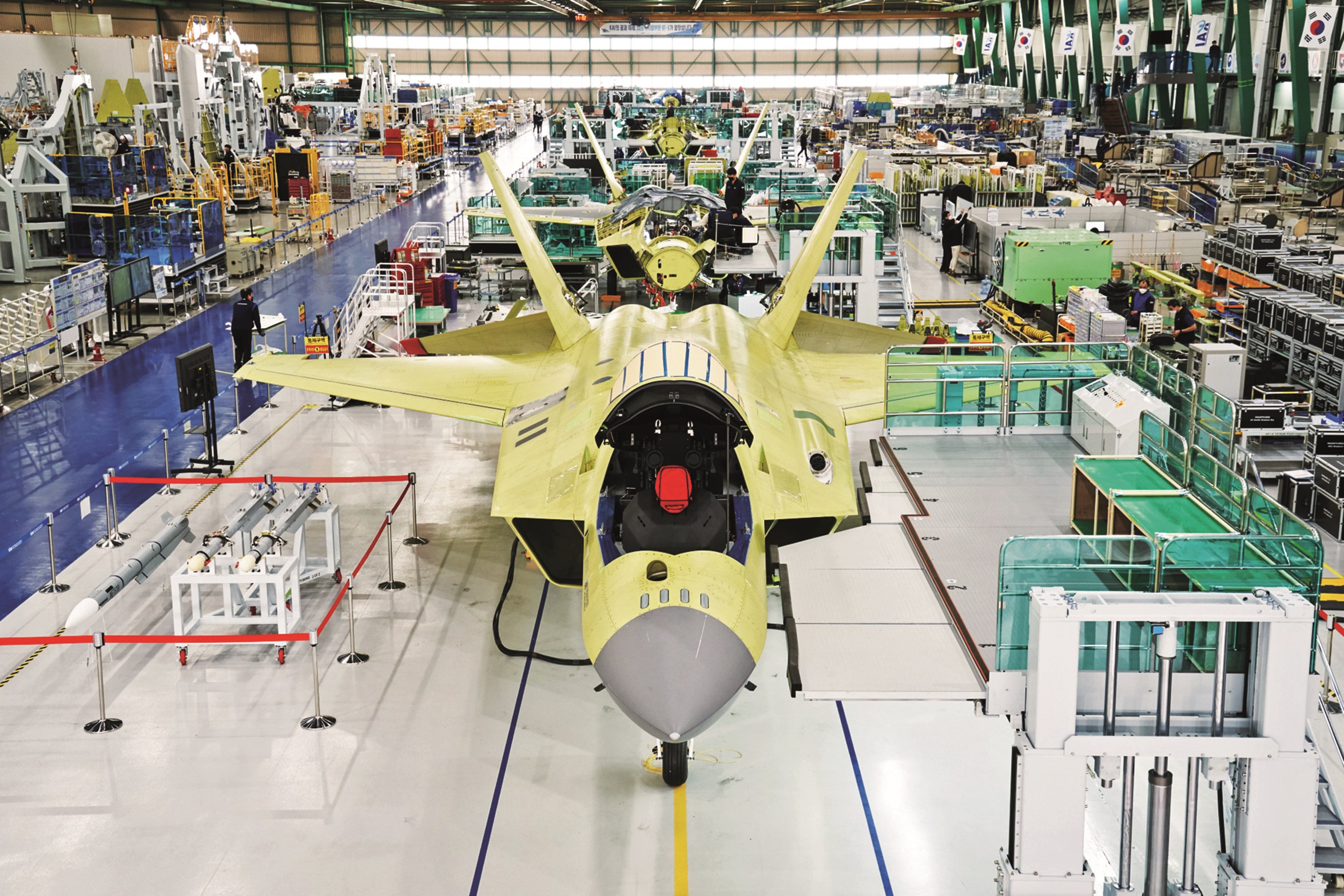
South Korean KAI KF-21 Boramae Developments

Korean Air wins contract to develop low-visibility technologies for UAVs​

01 OCTOBER 2021

by Alessandra Giovanzanti

placeholder-16-9.jpg


A stealthy, tailless UAV demonstrator developed by KAL that made its first test flight in the mid-2010s. On 30 September Korean Air announced that it has been awarded a contract to continue developing technologies for low-visibility UAVs. (Korean Air)
Korean Air (KAL) announced on 30 September that it has been selected to support the local development of low-visibility unmanned aerial vehicles (UAVs).
The contract, awarded on 16 September by the Korea Research Institute for Defense Technology Planning and Advancement (KRIT) as part of the “low-visibility UAV technology research” project, involves the development of radar-absorbent structures and surface current control technology that will then be tested and applied to the next generation of UAVs.


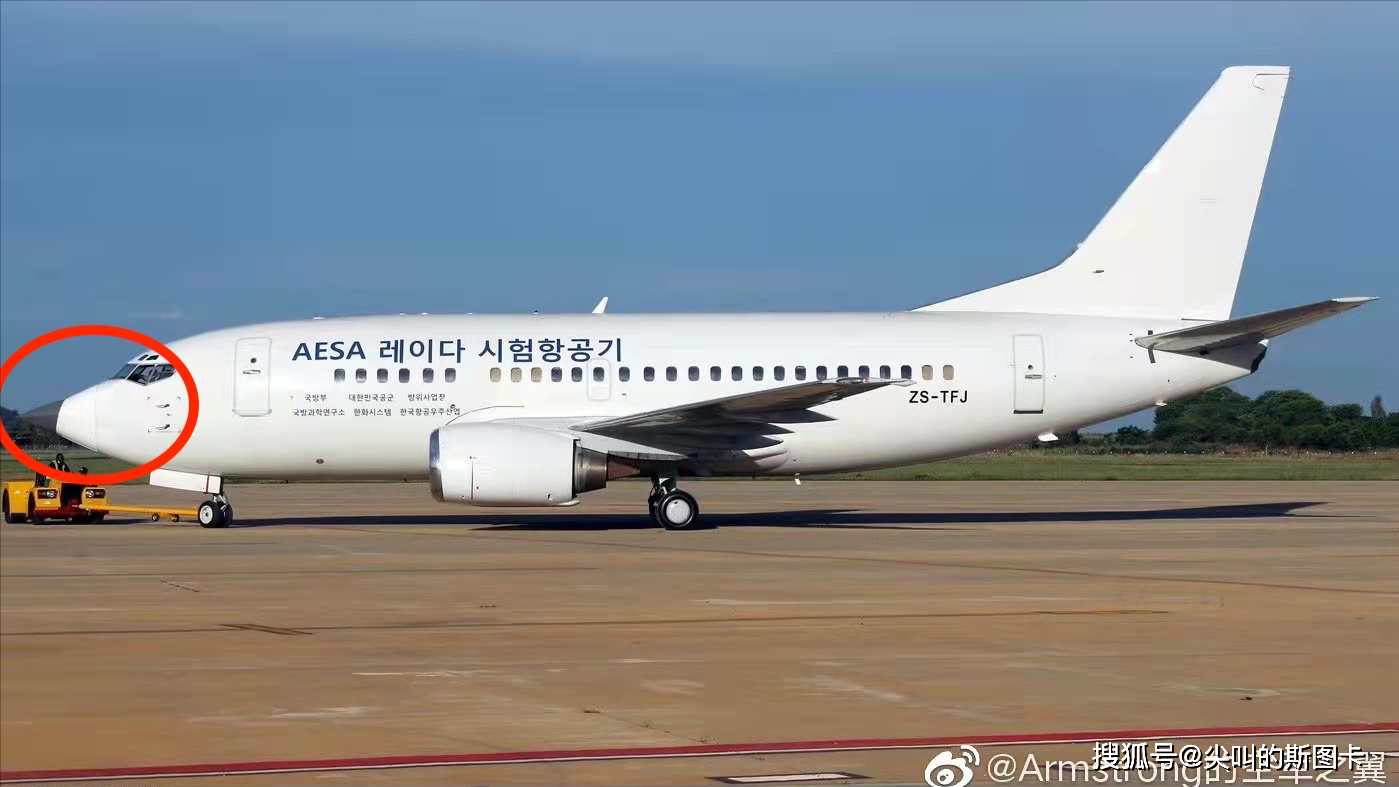
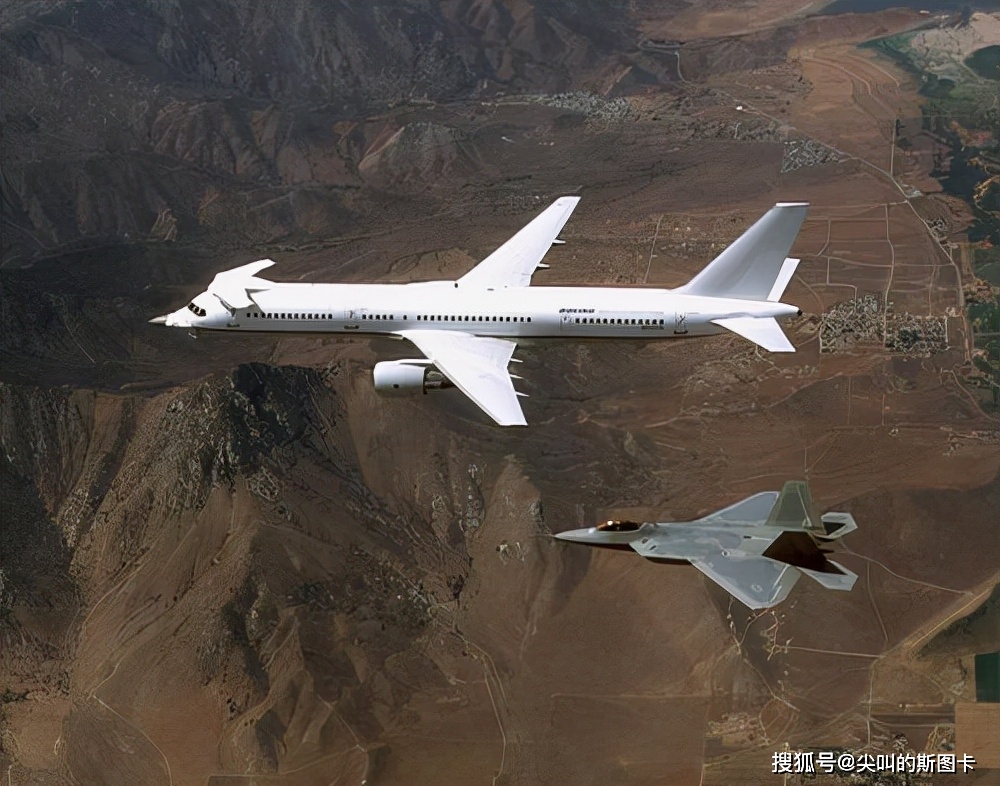
South Korea’s 4.5-generation aircraft has a new action. The KF21 nose is installed on a Boeing 737. Why is it modified in South Africa? _Test_Proceed_Avionics System​

2021-12-06 04:08:05 Published in International by the Screaming Stuka18

South Korea’s 4.5-generation machine KF-21 seems to have fallen silent for some time after the noise when the first prototype went offline. Many people say that it has been dismantled like a Japanese "Mind", and even the project may be discontinued. . But in fact, disassembling the first prototype on the ground is the only way for countries with weak aviation foundations to develop new types of fighters. It does not mean that it ends here and will eventually have to be reassembled. In fact, the development of South Korea's KF-21 is still proceeding step by step, and even new moves have been made recently.
The development of KF21 is still proceeding step by step
38393c39f4f34a6980d1c9efddeec3f1.png

1641166942031.png
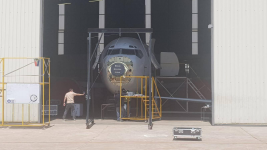
Yes, this Boeing 737 is the latest effort of South Korea’s KF-21. In fact, it has been unveiled as early as the first ten days of November, and the KF-21 airborne active phased array radar has recently been installed in preparation for avionics system testing. Having said that, everyone understands that it is the integrated avionics flight test platform (FTB) of South Korea’s KF-21. It is the same as the international practice. It is modified on a passenger or transport aircraft. It can be used for four takeoffs. Up to 5 hours of testing, more space, longer battery life, and faster test progress.
Boeing 737 before changing the KF21 nose
55a5f38c0cdb4728820a7149c81ed0f1.png

However, it is interesting that the place where this Boeing 737 appeared is not South Korea, but South Africa, which is thousands of miles away. This can be seen from the topography of the airport, where is such a place like Pingchuan in South Korea? And this is why the KF-21 integrated avionics flight test platform is making its first flight in South Africa. After all, the airspace in Northeast Asia is narrow and the routes are busy. As soon as this Boeing 737 starts up, maybe the entire Seoul Seoul) will be suspended.
KF-21 Integrated Avionics Flight Test Platform
efe5d95a127e4bd5b533d0a3ff3f85e2.jpeg

Inside the cabin of this Boeing 737
cebab3d8df3c409f9bf5302f05c9f6dd.jpeg

Display and control terminal of KF21 test platform
aef30cccac754602b78b116333fab7c0.jpeg

On the other hand, the reason is that South Korea's KF-21 has some cooperation with South Africa in terms of electronic systems, and the modification project also requires technical support from South Africa. Although the airborne radar is owned by the domestic LIG Nex1 company, foreign aid is indispensable in other aspects. This is the current reality in South Korea. For example, it is planned to fly the KF-21 Block2 for the first time from 2026 to 2028, and even the buried bomb bay developed by the United Kingdom will be used. However, because South Korea can't handle this system, many sensors will continue to be exposed until KF-21 Block3 can completely solve the problem of the domestically-made embedded bomb bay and reach the level of "Falcon Eagle".
South Korea still can't handle it by itself
1641166968114.png
df8e3a5d72ec4aa79565e1e5c2d04ee1.jpeg

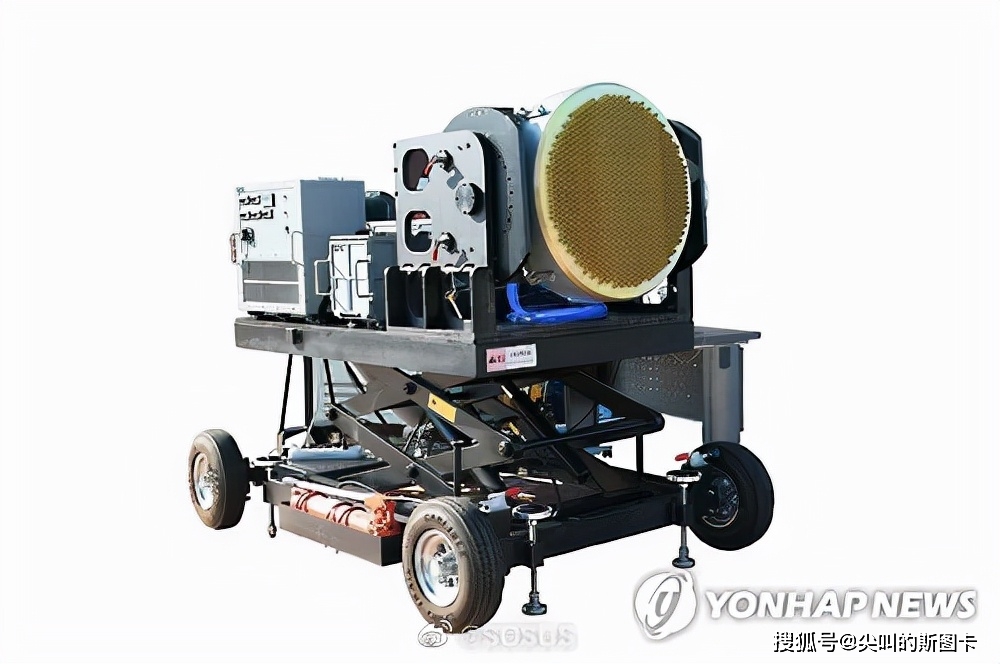
The airborne radar is from South Korea’s LIG Nex1
6cb6743a1f524b25bd86ca711bd3d648.jpeg

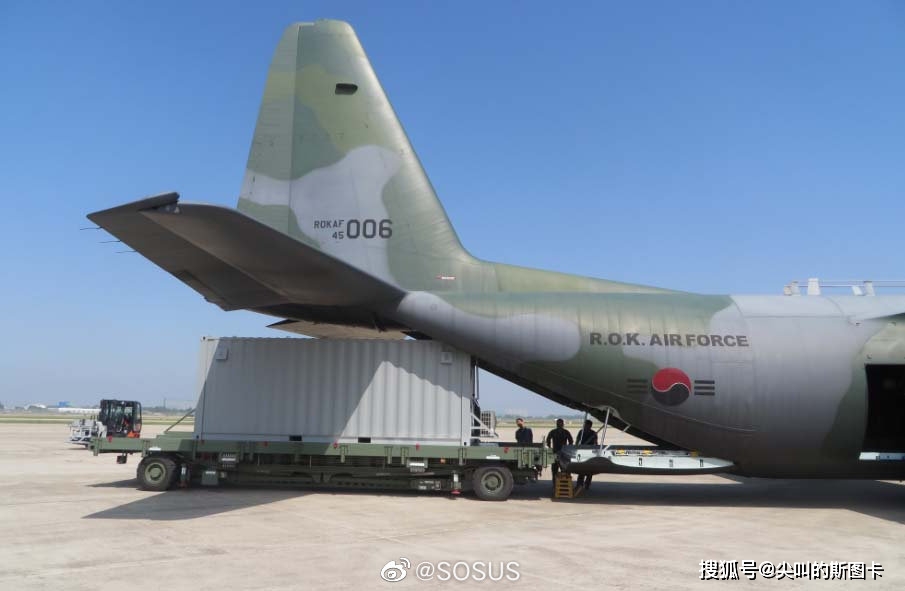
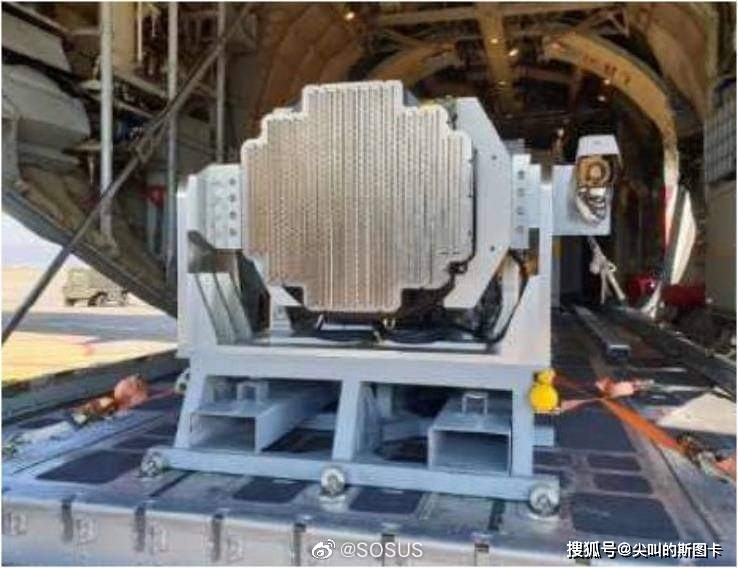
According to the current progress, this KF-21 integrated avionics flight test platform should have achieved its first flight in South Africa. Of course, it will return to Korea for testing in the future. Prior to this, South Korea had already modified a C-130H transport aircraft locally to test the airborne active phased array radar of the Korea National Defense Science Institute and LIG Nex1, and it had also tested the radar beam stabilization function, and measured Ground clutter interference, and conducted air-to-air/air-to-ground model tests.
Previously, South Korea changed a C130H
14fdc20942ae4db6871bcb8c9a5f4980.jpeg

This way of playing is too amateur
d840e805f9f44ee6bf14f4de96c0bf7a.jpeg

This C130H also tested a lot of things
911d8043ebc44b33b64fcc9591c7430c.jpeg

It's considered to be a native method
b2c9f61f004d4ef29046aa1aa7bf8365.jpeg

However, this method of stuffing the radar with a mobile trolley into the belly of a military transport aircraft, opening the stern door during flight, and pushing the radar out is really unprofessional. That's why this Boeing 737 was born. In fact, when the US F22, F35, Russian Su 57, and my country’s F-20 were developed, there were one or two similar aerial test platforms for avionics. These are key equipment as important as wind tunnels. With the help of South Africa, South Korea It is a preliminary climb to this technology tree. But the problem is that after so many years of reverse elimination, South Africa's own level is no longer good.
F35 radar electronic test platform
b7bd02d3d6ed4f41a02eee7e84ea400e.jpeg

F22's avionics test flight platform
2668ccda04be46598c570621e6f9cfd5.jpeg

According to South Korea, ground testing of the KF-21 No. 1 prototype should begin later this year, and the first flight will be in July 2022. Now that the distance is very close, in the next time, what kind of news it will explode, let's wait and see.
I really don’t understand this picture, so let’s give it to everyone as it is
dc2afebc3ffe4ac3b7e74db77da0f783.jpeg


Wow. Well doe this must have taken a bit to post I now know more about Korea's KFX than I ever did because of you. I salute you sir.
FXi0.gif

KFX reminds me of the fighter versions missing link. Feels like that is what a true 4.5 gen fighter should be. It should have been the 90s fighter.
 
 
Wow. Well doe this must have taken a bit to post I now know more about Korea's KFX than I ever did because of you. I salute you sir.
View attachment 22411

KFX reminds me of the fighter versions missing link. Feels like that is what a true 4.5 gen fighter should be. It should have been the 90s fighter.
My intention was to show what it took South Korea which is a new entrant in Combat Aviation like India (although they are far ahead in terms of Industrialisation and automation), to develop a Good 4.5+ Gen fighter aircraft.
Just looking at the amount of hand holding done by US companies and the research,prototyping, testing and manufacturing infrastructure, it seems quite a lot.

I highly doubt ADA and HAL in India have such sophisticated testing and manufacturing facilities to build a 4.5 gen plane, let alone their claims of making a true 5th gen fighter jet in the category of F22 or F35.
@Gautam @randomradio what do you think where we stand right now compared to SoKo. And let’s leave the extensive involvement of US companies here.

IMO I’ve never seen such level of airframe testing being done by ADA or HAL during LCA prototype testing.

And have a look at their manufacturing assembly line video and notice the level of automation and use of industrial robots, tools used and their management. Very similar to what we seen in a Hyundai and Kia assembly plants.
There Airframe and Composite manufacturing is much more sophisticated.
Even the rivets they are using is different than what we use @Comrade Bhartiya

Compared to that HAL assembly line looks like a sweat shop with all manual work. Explains why there is so much inconsistency in built quality of LCA.
 
Last edited:
  • Like
Reactions: Asterion Moloc
My intention was to show what it took South Korea which is a new entrant in Combat Aviation like India (although they are far ahead in terms of Industrialisation and automation), to develop a Good 4.5+ Gen fighter aircraft.
Just looking at the amount of hand holding done by US companies and the research,prototyping, testing and manufacturing infrastructure, it seems quite a lot.
I highly doubt ADA and HAL in India have such sophisticated testing and manufacturing facilities to build a 4.5 gen plane, let alone their claims of making a true 5th gen fighter jet in the category of F22 or F35.
@Gautam @randomradio what do you think where we stand right now compared to SoKo. And let’s leave the extensive involvement of US companies here.
IMO I’ve never seen such level of airframe testing being done by ADA or HAL during LCA prototype testing.
SO basically, you admire how good they are taking help and pity that We do things of our own ?
 
  • Like
Reactions: Chain Smoker
SO basically, you admire how good they are taking help and pity that We do things of our own ?
I’m sorry if you inferred by comments that way. It doesn’t look pretty, but keeping the foot on grounds and be rational with our expectations is the right approach.
And also what needs to be done to build similar aircraft in India. And if that means taking help from some US or French or Swedish companies, we should not hesitate to reach out to them for help. It’s not like we haven’t took help from them, infact we took a lot of help for LCA right from designing phase and even today more than 50% of the LCA by value is of foreign origin.
So we are NOT doing anything Alone.

PS: Let’s not unnecessarily stretch this foreign help vs going solo approach here please.
Discuss about KAI-KF21 development and also where we are standing and what needs to be done. And the progress in recent years.
I’d love to see we replicate what and how we have done in Automobile industry, keeping in mind that some Indian automakers outsource a lot of parts like Fiat multi-jet engine and transmission and thousands of other small components from across the globe, for different models.
 
Last edited:
I’m sorry if you inferred by comments that way. It doesn’t look pretty, but keeping the foot on grounds and be rational with our expectations is the right approach.
And also what needs to be done to build similar aircraft in India. And if that means taking help from some US or French or Swedish companies, we should not hesitate to reach out to them for help. It’s not like we haven’t took help from them, infact we took a lot of help for LCA right from designing phase and even today more than 50% of the LCA by value is of foreign origin.
So we are NOT doing anything Alone.

PS: Let’s not unnecessarily stretch this foreign help vs going solo approach here please.
Discuss about where we are and what needs to be done. And the progress in recent years
Did you checked the recent finish quality of Tejas.
 
Did you checked the recent finish quality of Tejas.
Don’t matter what I have seen or think. Believe in what it’s customers have to say about it. It’s definitely needs improvement, if we compare it with western standards of manufacturing.
And also it’s well established that a automated assembly line using high precision industrial robots makes products with high build quality and with lesser inconsistencies.
PS: Guys please don’t just pounce on me like a “Saccha Deshbhakt” (Sorry for maligning the word). Read posts and watch the videos in the thread before questioning or attacking me.
One needs an Eye Checkup if he/she can’t appreciate the difference in build quality between Tata Indica V2 and Volkswagen Polo Fifth Gen.
 
Last edited:
I’m sorry if you inferred by comments that way. It doesn’t look pretty, but keeping the foot on grounds and be rational with our expectations is the right approach.
And also what needs to be done to build similar aircraft in India. And if that means taking help from some US or French or Swedish companies, we should not hesitate to reach out to them for help. It’s not like we haven’t took help from them, infact we took a lot of help for LCA right from designing phase and even today more than 50% of the LCA by value is of foreign origin.
So we are NOT doing anything Alone.
All these depend on what program we are discussing. Past or future, LCA or AMCA.

For LCA I would agree we should have gone with more partnerships and linking Kaveri with the program was a bad idea. But then again nuclear tests cut off most of the western help on the program.

Calling 50% LCA is imported somewhat negates your point. But again, All core systems are Indian designed and developed.

On AMCA, Because of the can-do approach we took with the LCA development, we have all the necessary skills and test infra to do it ourselves. Example basic design and flight control system. The entire design of KF-X is done by LM. Remember this is their second fighter project after T-50. Now, guess who designed it?

On a side note, SK is a developed nation. The defense R&D and procurement budget are bigger than ours with a far better industrial ecosystem.
 
  • Like
Reactions: Chain Smoker
Calling 50% LCA is imported somewhat negates your point. But again, All core systems are Indian designed and developed.
Isn’t it true that almost 56% of subsystems by value are still of Foreign origin ?
And I do understand that not every subsystem worth producing locally due to availability and cost. I’m not complaining but just saying for clarity.
On AMCA, Because of the can-do approach we took with the LCA development, we have all the necessary skills and test infra to do it ourselves. Example basic design and flight control system. The entire design of KF-X is done by LM. Remember this is their second fighter project after T-50. Now, guess who designed it?
I believe ADA have acquired capability to design a good 4.5 gen fighter jet and other fundamental building blocks like FCS avionics etc by themselves.

My point was do we have proper testing and validation tools like shown in the KAI and other Korean research labs ? Because I’ve never seen such a sophisticated tools of airframe testing. or that indoor electromagnetic signature testing site and those radar testing tools etc.

On a side note, SK is a developed nation. The defense R&D and procurement budget are bigger than ours with a far better industrial ecosystem.
Agreed on budget and industrial might of SK. But IMO they have even lesser experience in designing a fighter aircraft than us if you look at the portfolio of KAI. So I don’t believe why we can not be at least as good as KAI provided we follow the best practices and not brush everything under the carpet of “It’s our first time” or “ We are doing it all alone”.
Also I believe Industrial automation is essential to produce higher quality products. So either HAL should invest in it or let those conglomerates do the job who either have or willing to invest in such modern facilities.
It’s not that costly and not even fully automated IMO. Have a look


Isn’t it true that almost 56% of subsystems by value are still of Foreign origin ?
And I do understand that not every subsystem worth producing locally due to availability and cost. I’m not complaining but just saying for clarity.
Which somewhat negates your original point that LCA does not have enough foreign contribution. 🤷‍♂️

My point was do we have proper testing and validation tools like shown in the KAI and other Korean research labs ? Because I’ve never seen such a sophisticated tools of airframe testing. or that indoor electromagnetic signature testing site and those radar testing tools etc.
You make a judgment from the output, not from fancy-looking lab equipment. We have everything maybe not this good-looking.

Agreed on budget and industrial might of SK. But IMO they have even lesser experience in designing a fighter aircraft than us if you look at the portfolio of KAI. So I don’t believe why we can not be at least as good as KAI provided we follow the best practices and not brush everything under the carpet of “It’s our first time” or “ We are doing it all alone”.
Also I believe Industrial automation is essential to produce higher quality products. So either HAL should invest in it or let those conglomerates do the job who either have or willing to invest in such modern facilities.
It’s not that costly and not even fully automated IMO. Have a look
Altogether different subject. We have cheap excess manpower thus less inclination towards automation.
 
Which somewhat negates your original point that LCA does not have enough foreign contribution. 🤷‍♂️
Perhaps you misunderstood but I never said that
You make a judgment from the output, not from fancy-looking lab equipment. We have everything maybe not this good-looking.
There’s nothing fancy about their looks. It’s how proper testing facilities and tools look like. It’s same argument INSAS loving Army fanboys say for anything remotely modern like M4,HK416,Sig 716, and even for modern AK rifles that can use proper aiming and magnification sights and other essential accessories, and for other modern infantry gears like Head protection,NVDs, comms and eye and ear protection, knee pads and sides arms etc etc.
Altogether different subject. We have cheap excess manpower thus less inclination towards automation.
Aviation and Military industry is not a labour intensive industry where you can substitute precision tools with cheap manual labour. Otherwise you will keep importing Ultra expensive Mirages and Rafale and all those expensive US origin military weapons for eternity.
A micrometer level error can cost you a war.

In Precision Manufacturing, excessive labour availability is useless beyond a certain level.
 
Last edited:
  • Like
Reactions: Asterion Moloc

 
For reference here is the Hyundai assembly lines and notice the similar level of automation
Ulsan, SK
Chennai
In USA
European line

Kia Motors
India
Kia Motors | India Plant
USA
The New Kia Plant In Georgia
Europe
Kia Production Plant Zilina, Slovakia – Ceed, ProCeed, Sportage, Venga


Last edited:
😝 reminds me of conspiracy theories that come from another country
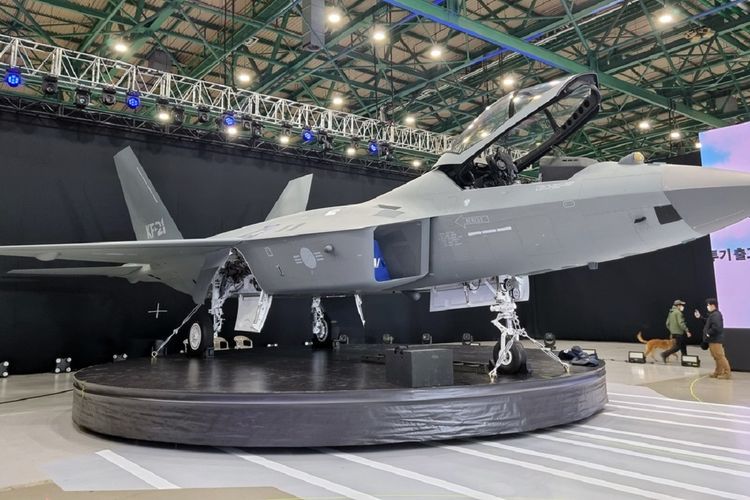
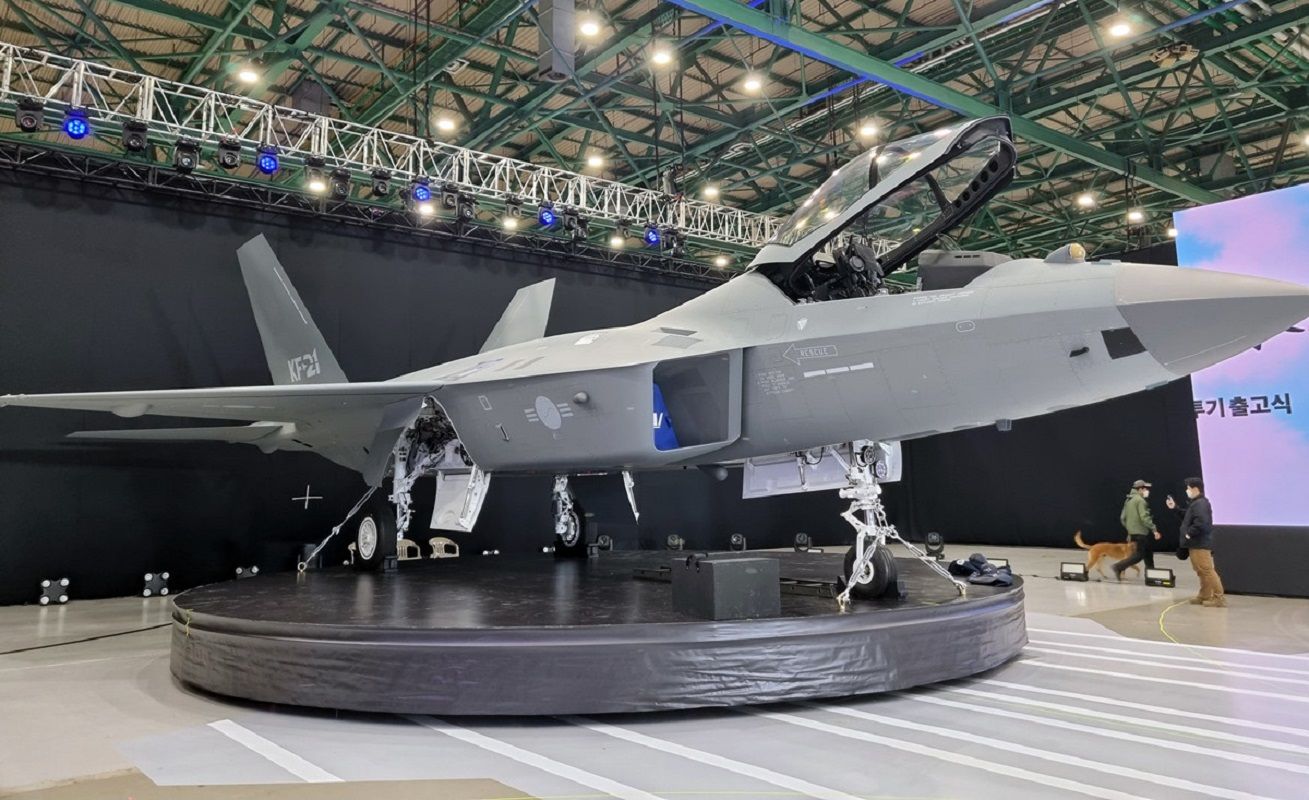
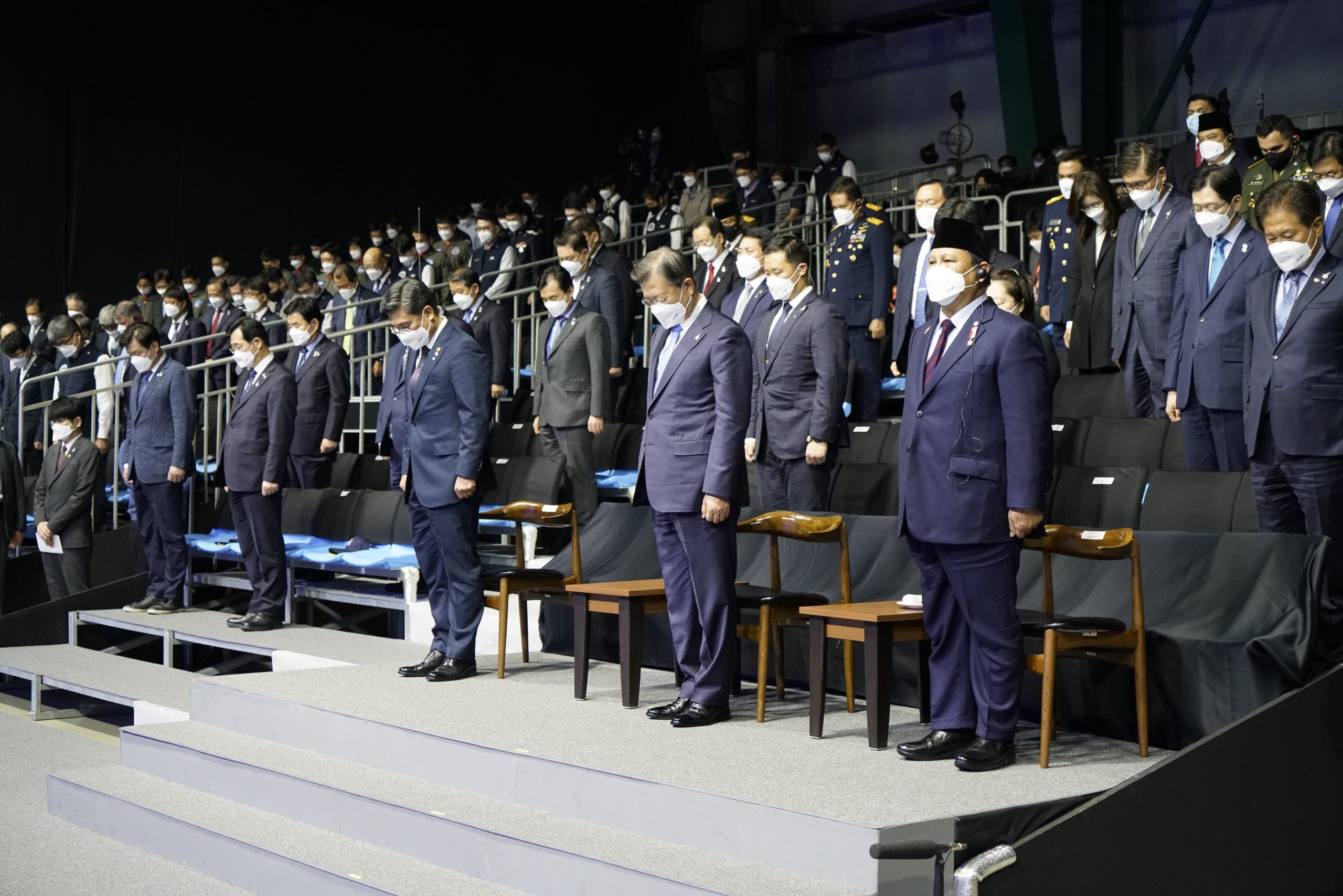
The United States does not accept and is suspected of wanting to thwart Indonesia, which wants to create the KF-21 Boramae​

Donna Lia Suhervina
- January 3, 2022, 10:38 WIB
KF-21 Boramae fighter jet scheduled to arrive in 2026

The KF-21 Boramae fighter jet is scheduled to arrive in 2026 /Asian Military Review


LINGKAR KEDIRI – As previously reported, Indonesia wants to develop its own fighter jet, the KF-21 Boramae .
Even in creating the KF-21 Boramae , Indonesia cooperated with South Korea .
However, it seems that Indonesia's desire to create the KF-21 Boramae fighter jet is not easy, because it requires a very big struggle.
Read also: Indonesia is increasingly admired, KF-21 Boramae made by Indonesia is said to be able to defeat the Rafale and F-16
But if the KF-21 Boramae can be created by Indonesia , then Indonesia can become a country capable of developing its own fighter jet.

However, as information has circulated that in the manufacture of the KF-Boramare, the Indonesian engineers were set aside by the United States .
This is because the United States does not want its fighter jet technology to be under Indonesian control .
"Frankly, the Indonesian delegation was prohibited from accessing many parts of the KF-X technology and studies, especially those related to the US ," said an engineer from Korea Aerospace Industries (KAI) who did not want to be named, quoted from Defense News in 2018.
In this case, Washington even deployed its engineers to South Korea , aiming to secure its key technology.
The Korean Aerospace Industries engineer also said that the US engineers deployed to the KAI headquarters tend to be very sensitive about the possibility of leaking US technology to Indonesian workers .

Also read: Russia does not want to send the J-20 engine that China wants to buy, apparently this is the reason

With what the United States has done, it makes Indonesia feel insecure about the capabilities of the KF-21 Boramae that will be created in the future.

“Given that Indonesia provided one-fifth of the cost of developing the KF-X, it would make sense in some ways that Indonesian engineers could feel cramped about engineering excellence through a joint program,” he said.

The act of the United States, apparently, Uncle Sam's country did not accept it and envied Indonesia, which would independently create the KF-21 Boramae .

The US is worried that the KF-21 Boramae will sell well in the market because the price of this Indonesian-made fighter jet is reportedly priced relatively cheaper than the US -made F-35 , so that it will automatically turn off the F-35 market.


Thus, the US very selfishly decided to do everything possible to thwart the creation of the KF-21 Boramae Indonesia .

Disclaimer : This article was originally published on zonajakarta.tangan-rakyat.com under the title " AS is Envy Seeing Indonesia Able To Independently Produce KF-21 Boramae ".

Visit our official website directly at Circlekediri. Mind-rakyat.com to get other interesting and latest information.***
 
  • Like
Reactions: TARGET
My intention was to show what it took South Korea which is a new entrant in Combat Aviation like India (although they are far ahead in terms of Industrialisation and automation), to develop a Good 4.5+ Gen fighter aircraft.
Just looking at the amount of hand holding done by US companies and the research,prototyping, testing and manufacturing infrastructure, it seems quite a lot.

I highly doubt ADA and HAL in India have such sophisticated testing and manufacturing facilities to build a 4.5 gen plane, let alone their claims of making a true 5th gen fighter jet in the category of F22 or F35.
@Gautam @randomradio what do you think where we stand right now compared to SoKo. And let’s leave the extensive involvement of US companies here.

IMO I’ve never seen such level of airframe testing being done by ADA or HAL during LCA prototype testing.

And have a look at their manufacturing assembly line video and notice the level of automation and use of industrial robots, tools used and their management. Very similar to what we seen in a Hyundai and Kia assembly plants.
There Airframe and Composite manufacturing is much more sophisticated.
Even the rivets they are using is different than what we use @Comrade Bhartiya

Compared to that HAL assembly line looks like a sweat shop with all manual work. Explains why there is so much inconsistency in built quality of LCA.

Great work on the thread. Need sometime to go through it.

HAL's LCA production is also automated. What you are looking at is the final assembly line, which is still the tried and tested manual work due to their manpower heavy structure. Subcontractors are producing the core parts of the jet.

IAF hopes to bring in new tech for AMCA through the private industry, with a non-HAL owned assembly line in Sulur, although HAL has done their best to scuttle that.
 
My point was do we have proper testing and validation tools like shown in the KAI and other Korean research labs ? Because I’ve never seen such a sophisticated tools of airframe testing. or that indoor electromagnetic signature testing site and those radar testing tools etc.

Yes we do. Most probably, better than the Koreans. HAL and DRDO have their own labs for the same. In fact, we are now at a stage where private sector is being called in to setup facilities for testing which will be made available for production units and users. A total of 8 different testing categories were identified and of this if I am not mistaken majority are towards aerospace and everything 'E'.

@Milspec

P.S : Nice thread!
 
Yes we do. Most probably, better than the Koreans. HAL and DRDO have their own labs for the same. In fact, we are now at a stage where private sector is being called in to setup facilities for testing which will be made available for production units and users. A total of 8 different testing categories were identified and of this if I am not mistaken majority are towards aerospace and everything 'E'.

@Milspec

P.S : Nice thread!
I believe those facilities have been set up with the help of and the toolings are sourced from several US and European companies like (also mentioned on the first page itself)
Curtiss-Wright
Even the AESA radar testing is being done by some South African Company.(HANSOLDT or Reutech Group perhaps)
PS: Interestingly Calspan wind tunnel test facility was where LCA testing was done during the initial design phase.
 
Last edited:
  • Informative
Reactions: Asterion Moloc