
Small Turbojet Engine Developments in India for UCAV & Missile Applications
- Thread starter Himanshu
- Start date
You are using an out of date browser. It may not display this or other websites correctly.
You should upgrade or use an alternative browser.
You should upgrade or use an alternative browser.


DeepPropulse Aerospace has secured ₹25 crore in seed funding led by IAN Alpha Fund to build the future of high-speed flight: Indigenous Rotating Detonation Engines (RDE):
View attachment 49324
India Finally has a Startup working on Futuristic Rotating detonation Engine (RDE). D-Propulse, has already demonstrated a 5kN demonstrator. TRL 4 has been achieved,based in IITM.
View attachment 49325
View attachment 49326
Now we have 2 companies developing RDEs:
View attachment Prime Toolings RDE.mp4
DRDO's ATGG for the NASM-MR:
Advanced Turbo Gas Generator (ATGG) utilizes advanced blisk or bling technology to improve efficiency, reduce weight, and lower manufacturing costs in gas turbines, often employing Inconel 939 high-temperature durability.
Removing joints can result in a 30% reduction in weight for the rotor component.
Reduced stress concentrations allow for smaller, more efficient, and lighter designs.
Methods like joining pre-formed, annular blade rings to rotors simplify production compared to traditional, labor-intensive assembly.
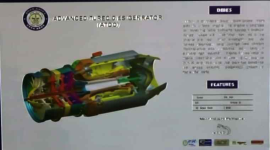
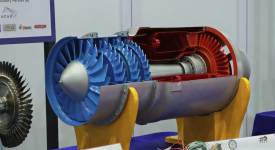
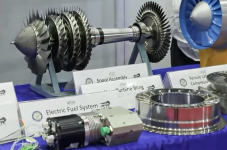
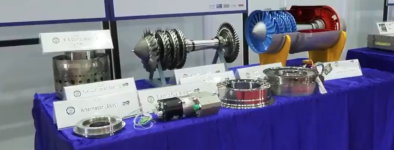
Advanced Turbo Gas Generator (ATGG) utilizes advanced blisk or bling technology to improve efficiency, reduce weight, and lower manufacturing costs in gas turbines, often employing Inconel 939 high-temperature durability.
Removing joints can result in a 30% reduction in weight for the rotor component.
Reduced stress concentrations allow for smaller, more efficient, and lighter designs.
Methods like joining pre-formed, annular blade rings to rotors simplify production compared to traditional, labor-intensive assembly.

Probable specs of the ATGG:
Designer: GTRE-DRDO
Type: Single spool high pressure turbojet
Compressor: 4-stage axial
Combustor: Annular
Turbine: 1-stage axial
Weight: < 44 kgs
Max thrust: 3.2 kN
Diameter (Intake): 250 mm
SFC: <1.175 kg/daN/hr
Designer: GTRE-DRDO
Type: Single spool high pressure turbojet
Compressor: 4-stage axial
Combustor: Annular
Turbine: 1-stage axial
Weight: < 44 kgs
Max thrust: 3.2 kN
Diameter (Intake): 250 mm
SFC: <1.175 kg/daN/hr

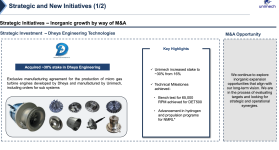
Unimech to manufacture micro gas turbine engines.
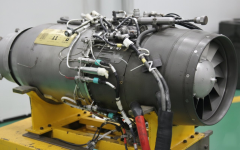

Lets come back and see if they can really integrate it into the missile, until then it is just a prototype.Manik-STFE:
View attachment 49868

Lets come back and see if they can really integrate it into the missile, until then it is just a prototype.
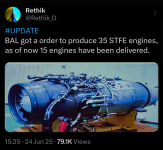

"BrahMos Aerospace has been a production agency for the STFE with its unit in Thiruvananthapuram augmenting its production capacity up to 18 engines per annum"
I think the first test of STFE was in 2020. I wonder if the order is large enough for Nirbhay. Does the SLCM use the same engine? If the Navy places an order for the SLCM, we will probably see it.
The point of ITCM project was to validate this engine. The entire family will use the same STFE engine.I think the first test of STFE was in 2020. I wonder if the order is large enough for Nirbhay. Does the SLCM use the same engine? If the Navy places an order for the SLCM, we will probably see it.

How exactly is it derived?If I'm not mistaken, the ITCM-derived NASM-MR uses a turbojet engine.
How exactly is it derived?
Nasm- mr is a natural evolution of the Nirbhay technology base wrt nav, guidance and onboard electronics. The airframe is quite similar too, except the cruciform fins and fixed air intake on the former.
Another example is Astra Mk1 > NGARM > QRSAM.
That's just reusing technologies. With that logic all homegrown made missiles are derived.Nasm- mr is a natural evolution of the Nirbhay technology base wrt nav, guidance and onboard electronics. The airframe is quite similar too, except the cruciform fins and fixed air intake on the former.
Another example is Astra Mk1 > NGARM > QRSAM.
That's just reusing technologies. With that logic all homegrown made missiles are derived.
The fixed scoop intake on NASM-MR was first seen on an AL Nirbhay prototype at ADE, iirc. Pralay was adapted nearly as is from the SMART ASW missile.
First of all, there is no AL Nirbhay. One has to test to claim existence otherwise its just designs. All are just validation through Wind tunnel and in labs.The fixed scoop intake on NASM-MR was first seen on an AL Nirbhay
Secondly, derived should mean it adopts something core from the system/design. It can be the entire missile repurposed for different usecase or core tech like propulsion.
Example, VLSRSAM is derived from Astra. SCLM is derived from Nirbhay.
NASM-MR is half the size of Nirbhay family and its not reusing the core tech which is the engine.
Not necessarily. As tech evolves, it is common for core components like guidance, nav and even propulsion systems to change across variants over time. It is part of obsolescence mgmt.
For example, the Brahmos-NG reportedly has a new miniaturised ramjet engine vs the 1980s-era 3D55 engine on the vanilla Brahmos.
Another example, a new compact version of Germany's Taurus ALCM is reportedly under development with a new engine from Japan's Kawasaki vs US Williams Int'l.
For example, the Brahmos-NG reportedly has a new miniaturised ramjet engine vs the 1980s-era 3D55 engine on the vanilla Brahmos.
Another example, a new compact version of Germany's Taurus ALCM is reportedly under development with a new engine from Japan's Kawasaki vs US Williams Int'l.
Brahmos-NG you can say its derived because its concept is the same. NASM-MR is similar to Harpoon, and Nirbhay is similar to Tomahawk. They belong to an entirely different class of missiles not derived but use similar components.Not necessarily. As tech evolves, it is common for core components like guidance, nav and even propulsion systems to change across variants over time. It is part of obsolescence mgmt.
For example, the Brahmos-NG reportedly has a new miniaturised ramjet engine vs the 1980s-era 3D55 engine on the vanilla Brahmos.
Another example, a new compact version of Germany's Taurus ALCM is reportedly under development with a new engine from Japan's Kawasaki vs US Williams Int'l.
Taurus case is obviously a new version not a new missile!.
