
The United Aircraft Corporation delivered a new batch of Su-34 fighter-bombers to the Russian Ministry of Defense in November. This is the sixth batch of Su-34 aircraft this year. The Su-34 can carry 8 tons of combat payload, distributed across 12 hardpoints. The aircraft can also be used for aerial reconnaissance missions. The Su-34 crew is protected by 17 mm of armor. The Su-34 fighter-bomber "confirmed its status as the best aircraft in its class."
Russian Military Technology : Updates and Discussions
- Thread starter Ashwin
- Start date
You are using an out of date browser. It may not display this or other websites correctly.
You should upgrade or use an alternative browser.
You should upgrade or use an alternative browser.
The Russian army has begun actively using heavy Italmas drones. They were first reported in 2023, but technical information was scant. The drone, "Izdeliye-54" or "Italmas," is the name of a flower. Ukrainian sources refer to the drone as the BM-35. The Italmas drone was developed by Aeroscan, a member of the ZALA Aero group, the developer of the Lancet drone. The Italmas drone has a composite fuselage with easily removable fuel tanks in the wings. The drone can be used for reconnaissance and group operations; it is equipped with a night vision camera and can direct artillery fire in real time. The drone can be launched into autonomous flight and set to search for a specific target, or it can be controlled by an operator. The drone is approximately 2 meters long and has a wingspan of 1.8 meters. It is equipped with an internal combustion engine and can reach speeds of up to 200 km/h at an altitude of up to 4,000 meters. The drone has a range of over 200 km and can carry a payload of up to 40 kg. Flight time is up to 2 hours. The drone can be launched from a catapult or a mobile platform. The estimated price of the Italmas drone is 5 million rubles (US$55,000).

Russian company LazerBuzz unveiled a "Posoh" laser system designed to destroy FPV drones. The "Posoh" laser can already automatically destroy UAVs in 0.5 seconds. Technical details are scarce, but it is known that the company's goal was to create an inexpensive, compact air defense system to destroy FPV drones. Judging by the video, the air defense system is targeted using an optical channel. The "staff" laser, with a power of 3 kW, can already destroy drones at a range of up to 700 meters. According to the developer, further increasing the laser's power could significantly increase its cost. The system is powered by batteries that can be charged by a generator in the field. The "staff" air defense system is designed to protect critical infrastructure from drones. The project is ready, but requires funding for production.
Russian and Sri Lankan military personnel practiced their skills during the first joint exercise, "Wolverine Trail 2025." The exercise is taking place at the Sri Lanka Ground Forces Training Center.
The main goal of these exercises is to practice combating illegal armed groups and to exchange unique experience: Russian soldiers will share new tactics and learn the intricacies of conducting operations in tropical jungle conditions from Sri Lankan troops. Judging by the video, Russian units also brought Kurier NRTK robotic systems to Sri Lanka.
The main goal of these exercises is to practice combating illegal armed groups and to exchange unique experience: Russian soldiers will share new tactics and learn the intricacies of conducting operations in tropical jungle conditions from Sri Lankan troops. Judging by the video, Russian units also brought Kurier NRTK robotic systems to Sri Lanka.
Russia conducted a test launch of the Yars intercontinental ballistic missile. The RS-24 Yars is a Russian strategic missile system with a solid-fuel mobile and silo-based intercontinental ballistic missile, developed by the Moscow Institute of Thermal Technology and first tested in 2007. Yars missiles are manufactured by the Votkinsk Plant in Udmurtia. The Barguzin rail-mobile missile system is based on the Yars.
The RS-24 Yars missile system's launcher is mounted on the chassis of a MAZ-MZKT-7922 tractor. It has a speed of up to 45 km/h and a range of up to 500 km. MAZ truck drivers undergo special training. The RS-24 Yars is based on the Soviet Topol-M missile system. The service life of the Yars missiles is 1.5 times longer than that of the Topol-M. Russia currently has an estimated 180 mobile RS-24 Yars missiles and approximately 24 silo-based missiles, with the number of missiles growing due to rearmament. The system also includes a decoy battalion with inflatable missile mock-ups and engine simulators. Mobile Yars missiles, with their escorts, typically travel up to 100 kilometers in uninhabited areas, constantly being tracked by satellites.
Currently, modern missile defense systems are unable to predict the missiles' flight trajectory. Active countermeasures and false targets are used during the missiles' flight. The three-stage RS-24 missile is 17.8 meters long, 1.86 meters in diameter, and weighs 46 tons. It is armed with four multiple independently targetable warheads with a yield of up to 500 kilotons each. For comparison, the yield of the Hiroshima bomb was 15 kilotons. The missile's circular error from the target is 120-150 meters. The RS-24 Yars missile has a range of up to 12,000 km. Launch preparation time is a few minutes.
The RS-24 Yars missile system's launcher is mounted on the chassis of a MAZ-MZKT-7922 tractor. It has a speed of up to 45 km/h and a range of up to 500 km. MAZ truck drivers undergo special training. The RS-24 Yars is based on the Soviet Topol-M missile system. The service life of the Yars missiles is 1.5 times longer than that of the Topol-M. Russia currently has an estimated 180 mobile RS-24 Yars missiles and approximately 24 silo-based missiles, with the number of missiles growing due to rearmament. The system also includes a decoy battalion with inflatable missile mock-ups and engine simulators. Mobile Yars missiles, with their escorts, typically travel up to 100 kilometers in uninhabited areas, constantly being tracked by satellites.
Currently, modern missile defense systems are unable to predict the missiles' flight trajectory. Active countermeasures and false targets are used during the missiles' flight. The three-stage RS-24 missile is 17.8 meters long, 1.86 meters in diameter, and weighs 46 tons. It is armed with four multiple independently targetable warheads with a yield of up to 500 kilotons each. For comparison, the yield of the Hiroshima bomb was 15 kilotons. The missile's circular error from the target is 120-150 meters. The RS-24 Yars missile has a range of up to 12,000 km. Launch preparation time is a few minutes.
Kazakhstan's press service published footage of an honor guard of Russian Su-35S fighter jets escorting Kazakh President Kassym-Jomart Tokayev's Airbus A321-211. The escort extended from the Kazakh border to Moscow. The Su-35S were armed with R-77-1 air-to-air missiles. The R-77-1 medium-range missile was adopted by Russia in 1994 and upgraded to the RVV-SD version.
Russian robotic systems, such as the Kurier robotic system with the Ignis laser mine-clearing system, are already being successfully used in Russia's Kursk region. The rapid adoption of this new system by the army is noteworthy. The system has demonstrated high effectiveness in clearing anti-tank and anti-personnel mines from various countries, anti-tank grenade launcher ammunition, projectiles, and portable anti-tank guided missiles. For the first time, engineers demonstrated munitions cleared by the Kurier robot.
Uralvagonzavod Concern delivered a batch of TOS-1A Solntsepek combat vehicles to the Russian Armed Forces. This batch of TOS-1A Solntsepek vehicles is equipped with a new anti-drone system. Rostec reported that this system remains one of the most effective modern Russian weapons systems, with no direct equivalents. It's worth noting that the specific anti-drone system used was not disclosed.
The TOS-1A Solntsepek combat vehicles are based on the T-72 tank chassis. Their firing range can vary from hundreds of meters to 15 kilometers when using TOS-2 (Tosochka) ammunition. A full salvo from the TOS-1A Solntsepek can cover an area of up to 40,000 square meters.
The TOS-1A Solntsepek combat vehicles are based on the T-72 tank chassis. Their firing range can vary from hundreds of meters to 15 kilometers when using TOS-2 (Tosochka) ammunition. A full salvo from the TOS-1A Solntsepek can cover an area of up to 40,000 square meters.
North Korean Army personnel have returned to Russia's Kursk region, according to military correspondent Alexander Kots. Soldiers of the Korean People's Army, along with Russian sappers, are participating in mine clearance operations in the border area of Russia's Kursk region. The DPRK sappers are also undergoing additional training at training centers of the Russian engineering troops. Russian sappers have organized specialized training for their Korean counterparts, including Russian language instruction for professional communication. The Russian Uran-6 and Stalker-IV robotic systems are being used for mine clearance operations; a review of these systems is available in the video's link and comments. The sappers also use the OVR-2-02 combined arms mine clearance kit and IMP-3 metal detectors. A three-tier inspection system is in place, with two more waves following the first. It is currently unknown how long the North Korean sappers will remain in Russia's Kursk region.

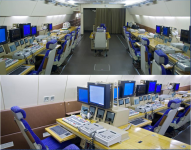
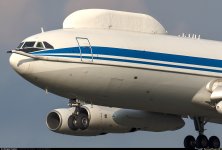
Rare inside Image of Ilyushin Il-80VKP 'Doomsday' plane airborne command post.
Servicemen from the 47th Tank Division of Russia's Western Group of Forces have begun training on the multifunctional robotic system "Courier." The video also shows the robot's battery being replaced. The remotely controlled tracked systems "Courier" are currently in active use by the Russian Army; they are the first fully operational robotic system. Operators of the combat robots "Courier" are trained to perform fire support, engineering support, and logistics missions.
The first footage of the Russian Belogor heavy mine-clearing vehicle being tested has been released. No further information on the vehicle's performance is available yet. The Belogor mine-clearing vehicle is believed to weigh approximately 25 tons, is remotely controlled via radio, and is equipped with a milling and demolition flail. Unlike most mine-clearing vehicles currently on the market, the Belogor was designed from the outset to clear not only anti-personnel mines but also anti-tank mines. It's worth noting that the Russian military still lacks vehicles capable of remotely clearing anti-tank mines.
A new Russian VTOL interceptor drone was unveiled in Moscow. The drone was developed with the support of the People's Front's Kulibin Club, an organization dedicated to the selection, testing, and serial production support of the best Russian engineering projects. The drone's name has not yet been announced, but the first batches of hundreds of drones have already been produced for testing, and serial production is being prepared.
The drone does not compete with large air defense systems, but rather complements them. Its role is to quickly intercept small and medium-sized targets as they approach, once they have entered the drone's patrol zone. The interceptor drone is equipped with a warhead; it automatically flies along preset target data at a range of 10-15 kilometers. An onboard computer then assists it in target acquisition, pursuit, and destruction. The drone is equipped with entirely Russian-made software.
The drone does not compete with large air defense systems, but rather complements them. Its role is to quickly intercept small and medium-sized targets as they approach, once they have entered the drone's patrol zone. The interceptor drone is equipped with a warhead; it automatically flies along preset target data at a range of 10-15 kilometers. An onboard computer then assists it in target acquisition, pursuit, and destruction. The drone is equipped with entirely Russian-made software.
During a demonstration flight at the Dubai Airshow 2025, the Russian Su-57E fighter jet displayed its internal weapons bays. The fighter opened its main weapons bay, housing two Kh-58UShK anti-radar missiles. The aircraft also carries RVV-MD2 short-range air-to-air missiles, an export version of the R-73M RMD-2 missiles. The RVV-MD2 missile has a forward range of up to 40 km. As it approaches its target, the missile can change its angle of attack, including attacking the rear hemisphere. Simply put, the missile can turn and hit a target located behind the Su-57 fighter. Deflecting an attack from such a missile is nearly impossible due to its proximity to the launch site. The RVV-MD2 missile is guided by a multispectral warhead, using infrared and ultraviolet wavelengths, ensuring resistance to modern heat traps. During flight, the missile can be redirected to another target. The RVV-MD2 missile weighs approximately 115 kg, has a warhead of approximately 8 kg, is approximately 2.9 meters long, and has a flight speed of up to 4,568 km/h.
Joint naval exercises between Russia and the Republic of Myanmar, dubbed "Marumex 2025," concluded in the Andaman Sea. The Russian Ministry of Defense released footage from the event. The main objective of the exercise was to develop and strengthen naval cooperation, as well as to practice ensuring the safety of civilian shipping and maritime economic activity. During the exercise, Russia deployed the frigate Marshal Shaposhnikov, the corvette Gremyashchy, and the tanker Boris Butoma. Myanmar's participating ships included the landing and helicopter dock ship Muttammah, the frigate Kyansittha, the corvette Tabinshwethi, and the submarine Mynye Thein Kha Tu. The Russian and Myanmar ships practiced joint maneuvering and following submarines. Combat exercises involving artillery fire and anti-submarine weapons were also conducted. During the exercise, anti-terrorist groups practiced freeing a vessel that had been captured by "pirates."
The Russian Ministry of Defense has received a batch of new Su-30SM2 multirole fighters. Thanks to the powerful Irbis-E radar, the Su-30SM2 can detect targets at a range of up to 400 km, as shown on the screen. When operating against low-observable targets with an RCS of approximately 0.1 m², the detection range is approximately 90-120 km, placing the radar on par with the best Western 4++ generation models.
A full-scale mockup of the Russian-made 177S aircraft engine, featuring improved performance compared to previous-generation powerplants, was unveiled for the first time at the Dubai Airshow 2025 in the Middle East. The fifth-generation 177S turbofan engine is designed for operational and tactical aircraft. The 177S engine generates up to 14.5 tons of thrust and has a service life three times longer than the previous generation, reaching 6,000 hours. Fuel consumption has been reduced by 7%. The engine outperforms its foreign counterparts in a number of key characteristics. Its dimensions and weight match those of the serial AL-31F/FP engines, making it suitable for installation on Sukhoi Design Bureau aircraft, including the Su-27, Su-30, Su-33, and Su-34.
At the conclusion of the Dubai Airshow 2025 international aerospace exhibition, Rostec unveiled close-up footage of the Il-76MD-90A military transport aircraft. The Russian-made Il-76MD-90A heavy transport aircraft is a major upgrade of the Il-76MD. The aircraft is designed for the transport and parachute drop of military equipment, personnel, and cargo, as well as the evacuation of the wounded, sick, and other personnel. The aircraft is highly efficient and capable of operating in challenging climates from unprepared airstrips. Its maximum payload is 60 tonnes, and its range with a 40-tonne payload is approximately 6,500 kilometers. It is powered by four PS-90A-76 engines, and its cruising speed is 770-800 km/h.
The Russian company Neiry introduced the PJN-1 pilotable "biodron pigeons"—live birds with a chipped brain. The PJN-1 biodrone pigeon has a brain implant, with the electronics stored in a mini backpack on the pigeon's chest. Thanks to the neurochip, the biodrone operator can control the bird by loading it with flight instructions, just like a conventional drone. Through neurostimulation of brain areas, the bird navigates in the desired direction. Biodrones differ from conventional drones in their long operating time and operational range. While in use, the bird lives a normal life, no different from other birds. The pigeon's attached electronics are powered by solar panels. Electrodes are implanted using a special device that allows for precise placement of electrodes in the desired areas of the brain without the need for expensive CT or MRI scans. These devices can also be used on birds of other species.
Units of the Russian Forces Group "West" received new Ulan-2 tactical heavy-duty all-terrain vehicles and demonstrated their performance. Previously, we reviewed the Ulan-1 all-terrain vehicles; the Ulan-2 version is built on the chassis of the GAZ Sobol all-wheel drive vehicle. Assembled from Russian components, the Ulan-2 all-terrain vehicles demonstrate ease and reliability in operation. The vehicle is designed for the delivery of ammunition and food, patrols, cargo transportation, evacuation of the wounded, and other missions. The all-terrain vehicle is now equipped with a full windshield. The interior has been equipped with ports for various equipment, including electronic warfare systems. The all-terrain vehicle has a four-wheel drive transmission with a five-speed manual gearbox. The Ulan-2 all-terrain vehicle has a speed of up to 120 km/h and a payload capacity of up to 1.5 tons. Learn more in the video.