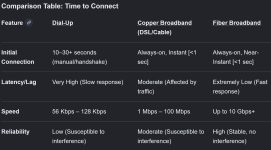
What are you talking about? That's not what I'm saying at all. With FBL, we won't have inter-link switching modules. That makes the connection much, much, much faster than using a module with copper
This is flat-out wrong.
The Kawasaki P1, the only production aircraft in the world using true fly-by-optics for primary flight controls since 2013 and still the only one in 2026, does replaces copper wires with optical fiber,
.But it absolutely requires optical interconnect infrastructure: star couplers, wavelength-division multiplexers, passive optical routers, and fault-tolerant distribution networks to achieve the triplex/quad redundancy, deterministic timing, signal fan-out, and cross-channel monitoring that safety-of-flight certification demands.
You cannot run a flightcontrol system as a simple point-to-point daisy-chain of raw fiber, the P1's own design (documented in Kawasaki technical reviews and JMSDF disclosures) and every historical NASA FLASH program testbed or SAE AIR4982 / AS5653 optical avionics standard explicitly include these optical "modules" (couplers and active/passive switches).
The speed of light advantage of photons over electrons in copper is real, but on aircraft wiring runs of 10–50 m the propagation delay difference is microseconds — negligible compared to the dominant latencies from actuator response, software fusion loops, and redundancy voting.
F-35 already runs its high-bandwidth sensor fusion on a Fibre Channel optical backbone with 32-port switched fabrics aggregating ~24 Gbps; its flight controls stay on deterministic IEEE 1394B electrical buses precisely because full optical switching for primary controls isn't mature enough for certification yet.
Claiming "no modules at all" is wishful thinking at best right now.
No one is saying anything about free space losses either.
You literally opened the original thread by tying FBL directly to "FBL to satellite to drone is a direct connection" and contrasting it with FBW intermediaries.
Free-space losses (atmospheric attenuation, scintillation, beam divergence, pointing jitter) are physics, not optional.
Internal FBL has zero bearing on external wireless links — whether RF (MADL) or free-space laser. You can't wave that away now.
You are looking at sensor data and fire control in isolation, a fighter jet doesn't work like that.
This is projection.
The entire counter has been about integrated loops: the F-35's Integrated Core Processor already fuses aircraft state (INS/air data) directly into the APG-81 radar, DAS, and EOTS using its optical Fibre Channel backbone with sub-10 ms closed-loop motion compensation (Kalman filters, phase/Doppler correction) during exactly the Mach 0.9 zoom-climb scenario you described.
The P1's FBL does the same internally for its sensors. No isolation here, architecture was designed for tight coupling from day one.
That's why you are stuck. With FBL there is no such transition, the receiver is a photon detector, not an antenna. For now, the transition to electron will be conducted for processing, but even that will switch over to photonic computers.
This is the most fundamentally incorrect claim.
In any real FBL system (P1 included): Pilot inceptors output electrical signals----->electro-optic converter turns them into photons.
Fiber carries photons--->photodetector at the flight control computer or actuator performs O/E conversion back to electrons.
The FCC runs on electronic processors for general-purpose logic, redundancy , & control-law computation.
Actuators are electro-hydrostatic or electro-mechanical — they need current to drive valves/motors.
Those E/O and O/E transitions are mandatory, they exist in the P1 today.
The "receiver is a photon detector, not an antenna" confuses internal wired fiber with external wireless comms: antennas are for RF, FBL uses photodetectors but the conversion still happens.
As for "photonic computers" eliminating the electron stage: PhotonDelta's 2026 outlook, DARPA/ONERA photonic accelerator programs, and the latest photonic quantum computing reviews (PsiQuantum, Xanadu, Quandela) show adoption only in niche areas:-->data-center interconnects, LiDAR, telecom, or specific AI optimization tasks.
No safety-critical flight-control computer in any aircraft (or even flight test) runs on all-optical or photonic logic. Certification authorities won't touch it yet because photonic processors lack the general-purpose determinism, error correction, and radiation-hardened maturity required for DO-178C Level A flight controls.
"Soon" is not 2026–2035.
it's aspirational at best right now, no concrete step taken in research that say it will be ready to implement in 6th gen jet in 2035-40+ timeline or even being pursued right now.