Non-renewable energy in India: News, Updates & Discussions.

India Aims to Block New Coal Power Proposals​

India is seeking to amend its National Electricity Policy to end the construction of new coal power plants.

The world’s third-biggest emitter of carbon dioxide after China and the United States, India is highly dependent on coal power, with a capacity of 205 gigawatts. If its federal cabinet approves the proposed policy update, the 28 gigawatts of coal projects currently under construction will continue to move forward, but the government will block proposals for additional coal power, Reuters reports.

“After months of deliberations, we have arrived at a conclusion that we would not need new coal additions apart from the ones already in pipeline,” a government source, who declined to be identified, told Reuters.

In international climate negotiations, India and China, which together account for some 80 percent of coal projects now underway, have resisted calls to phase out coal. If India moves to halt new projects, it would leave China as the only major emitter open to major additions of coal power.

India’s proposed policy update reportedly also calls for extending the life of existing coal plants until costs drop for energy storage, which is needed to balance out wind and solar.
 
Reliance Industries Ltd. and its partner bp Plc on Friday announced the start of production from the MJ oil and gas field in the KG-D6 block, scaling up India’s natural gas output to more than 100 million cubic metres a day. MJ is the third and the last set of under-seabed gas reserves discovered in the KG-DWN-98/3 or KG-D6 block Together, the three sets of discoveries at their peak production will account for a third of all gas produced in the country and make up for 15% of India’s demand


Adani Total Gas Ltd, the joint venture of billionaire Gautam Adani's group and French energy giant TotalEnergies, will invest Rs 18,000 crore to Rs 20,000 crore in the next 8 to 10 years to expand infrastructure for retailing CNG to automobiles and piping gas to households and industries

 
  • Like
Reactions: Ironhide and Gautam
Singareni Collieries Company Ltd (SCCL) has decided to commence coal production in Naini (Odisha) block from this September and in VK, Rompedu opencast and Goleti opencast mines from this December.

 
ISPRL seeks private firms to build 2.5 mn tonnes petroleum reserve at Padur

Reuters, NEW DELHI
Last Updated: Jan 06, 2025 | 4:33 PM IST

In 2021, India overhauled its policy to allow part of SPRs to be used commercially, mirroring a model adopted by countries such as Japan and South Korea that allows private lessees, mostly oil majors
1736303914099.png
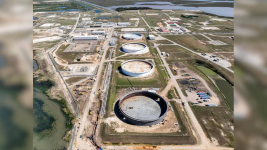
India is also planning to build a 4-million-ton SPR at Chandikhol in eastern Odisha state. | Photo: Bloomberg

India is seeking private companies to build and operate a 2.5 million metric ton store for petroleum reserves at Padur in southern Karnataka state, according to a tender posted on the website of Indian Strategic Petroleum Reserve Ltd (ISPRL).

Bids are invited to establish "commercial cum strategic petroleum reserves" including a single point mooring and associated infrastructure on a "design, build, finance, operate and transfer basis", the notice says.

ISPRL, which manages federal oil inventories, operates three strategic petroleum reserves (SPRs) in southern India with a combined capacity of about 5 million tons. Part of that capacity is used for commercial operations by companies including Abu Dhabi National Oil Co (ADNOC).

In 2021, India overhauled its policy to allow part of SPRs to be used commercially, mirroring a model adopted by countries such as Japan and South Korea that allows private lessees, mostly oil majors, to re-export crude.

A pre-bid meeting for the new Padur facility will be held on Jan. 10 and the tender will close on Feb. 3.

India, the world's third-biggest oil importer and consumer, imports over 80% of its oil needs and is raising its SPR capacity to protect against any global supply disruption.

India is also planning to build a 4-million-ton SPR at Chandikhol in eastern Odisha state.

(Only the headline and picture of this report may have been reworked by the Business Standard staff; the rest of the content is auto generated from a syndicated feed.)

https://www.business-standard.com/i...etroleum-reserve-at-padur-125010600697_1.html
 
India’s Average Electricity Supply Rises: 22.6 Hours in Rural Areas, 23.4 Hours in Urban Areas

By Kuldeep Negi
Feb 22, 2025, 09:19 AM | Updated 09:19 AM IST
1740762852147.png

Union Power Minister Manohar Lal Khattar has said that average electricity supply in rural areas has increased from 12.5 hours in 2014 to 22.6 hours in 2025 and in urban areas to 23.4 hours in 2025.

Addressing a press conference in New Delhi on Friday (21 February), Khattar informed that with the help of initiatives like Deeen Dayal Upadhyay Gram Jyoti Yojana (DDUGJY), PM Sahaj Bijli Har Ghar Yojana (SAUBHAGYA), Pradhan Mantri Janjati Adivasi Nyaya Maha Abhiyan for Particularly Vulnerable Tribal Groups (PVTG), the accessibility to power has increased significantly in the last 10 years.

He said that the government is aiming for 100 per cent electrification of households across the country.

“It is our goal to make power accessible to everyone and all times and the government is aiming for 100 per cent electrification of households across the country,” Khattar said.

He informed that fossil-based power capacity has increased from 168 GW in 2014 to 246 GW in January 2025, which shows an increase of around 46 percent.

Further, the non-fossil-based power capacity has increased from around 80GW in 2014 to around 220 GW in 2025 (as of 31 January 2025) which is around 180 percent increase, he added.

The minister further said that the transmission network has increased from 2.91 lakh circuit km (ckm) in 2014 to 4.92 lakh ckm in 2025.

The minister informed that India has become net exporter of power and the net export in 2025 amounts to 1,625 MU. He added that in 2014 India was a net importer of power.

The energy shortage in the country has reduced from 4.2 per cent in 2014 to 0.1 per cent in 2025, and steps are being taken to overcome the current energy shortage, the minister said.

On Power Distribution Companies (Discoms) losses, the minister said that aggregate technical and commercial (AT&C) losses have reduced from 22.62 per cent in 2014 to 15 per cent in 2025, and this will be further reduced to 10 per cent by 2030.

https://swarajyamag.com/news-brief/indias-average-electricity-supply-rises-226-hours-in-rural-areas-234-hours-in-urban-areas#:~:text=News%20Brief-,India's%20Average%20Electricity%20Supply%20Rises%3A%2022.6%20Hours%20In%20Rural%20Areas,23.4%20Hours%20in%20Urban%20Areas&text=Union%20Power%20Minister%20Manohar%20Lal,to%2023.4%20hours%20in%202025.
 
First dual-fuel foreign vessel named by Indian godmother

The vessel Albert Maersk runs on methanol and alternative fuel; company keen to procure green fuels from India

Published - February 28, 2025, 09:12 pm IST
MUMBAI
By Lalatendu Mishra
1740901443991.png
In the backdrop of the name-giving ceremony, Maersk announced that it would invest about $5 billion in ports and terminals as well as landside infrastructure development in India. | Photo Credit: Special Arrangement.

A.P. Moller- Maersk on Friday organized the name-giving ceremony of its newest dual-fuel methanol container vessel at APM Terminal, Jawaharlal Nehru Port Authority (JNPA) in Mumbai reiterating its commitment to India.

The vessel, named Albert Maersk, is the eleventh vessel in Maersk’s fleet capable of operating on methanol, the green fuel as part of its commitment to go net zero by 2040.

1740901596031.png

At a traditional name-giving ceremony, Union Minister Raksha Khadse turned godmother for the vessel which was on its maiden voyage to India.

“Maersk continues to take firm steps towards decarbonizing shipping with the addition of one more dual-fuel vessel to its fleet”, said Vincent Clerc, CEO, A.P. Moller - Maersk.

79321-adi5103-1.webp

“India is among the world’s fastest-growing major economies and Maersk looks forward to partnering with India on various aspects, such as exploring the potential sourcing of alternative fuels for low-emissions shipping and activities involving ship repairs and shipbuilding in the future that align well with the Indian Government’s ambitions to promote the shipping sector,” he said.

Speaking on the occasion Union Shipping & Ports Minister Sarbananda Sonowal said, “With the demand for green vessels rising, India has the potential to become a major producer and supplier of green methanol, ammonia, and hydrogen-based fuels.”

1740764068079.jpeg

“Maersk’s decision to focus on green fuel production in India is a welcome step that will accelerate our journey towards a sustainable maritime future. This vessel naming is more than just a tradition—it is a symbol of trust, collaboration, and a shared vision for the future,” he added.

In the backdrop of the name-giving ceremony, Maersk announced that it would invest about $5 billion in ports and terminals as well as landside infrastructure development in India.

Keith Svendsen, CEO, APM Terminals, said, “We believe we can play a role in reducing the cost of logistics by ensuring that our customers access all their supply chain needs in one place – from all modes of transportation to port handling to warehousing and distribution,” he said.

1740764067672.jpeg

“As APM Terminals, we are ready to invest more in developing ports with low emissions and great efficiency that will help businesses grow and connect India with the global markets,” he added.

‘Albert Maersk’ is part of a series of 18 large dual-fuel methanol vessels scheduled for delivery in 2024 and 2025. Built at Hyundai Heavy Industries in Ulsan, South Korea, she can carry 16,592 standard containers (TEU).

Bio- and e-methanol can reduce GHG emissions by at least 65% compared to conventional fossil fuels such as bunker oil (depending on the feedstock and production process of the methanol, calculated on a life cycle basis), the company said.

79323-1740742332448-1.webp
Dual -fuel engine powering Albert Maersk

With the vessel technologies available, Maersk has been urging the International Maritime Organisation (IMO) member states to adopt strong regulations to push the industry forward towards its climate targets.

“Maersk believes it is critically important that IMO regulation is fuel-agnostic, allowing for a multi-fuel future for shipping as well as making the low-emission transport choice viable and competitive by closing the price gap between fossil and alternative fuels,” the company said.

First dual-fuel foreign vessel named by Indian godmother
 
India’s state-run refiners will fully commission the world’s longest liquefied petroleum gas pipeline by June, a key development that will sharply cut fuel transportation costs and help prevent deadly road accidents.
......
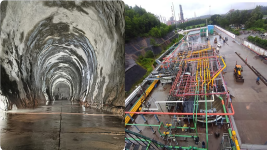
Indian Oil, Bharat Petroleum Corp. and Hindustan Petroleum Corp. have jointly formed IHB to lay the 2,800-kilometer-long pipeline from Kandla on the west coast to the northern city of Gorakhpur. The first phase will be commissioned in March and will be fully operational from the middle of this year, said Kumar, who is also the chairman of the joint venture.

The network will be capable of annually transporting about 8.3 million tons of LPG, or about 25% of India’s total demand. It’s likely to significantly reduce transportation costs in the world’s third-largest consumer as about 70% of bottling plants still get it by trucks. The country’s Petroleum and Natural Gas Regulatory Board has been pushing refiners to build more pipelines to tackle increased volumes and avoid any major road disasters.

Local use of the fuel, mainly needed for home cooking, has surged four-fifths over the past decade to 29.6 million tons in the fiscal year ended in March 2024, outpacing a 47% expansion in demand for refined oil products. The spurt in sales has been helped by discounts by Prime Minister Narendra Modi’s government to wean off low-income households from burning polluting biomass for cooking.

https://www.business-standard.com/i...june-to-cut-costs-mishaps-125022801434_1.html
 
India plans new strategic oil reserves at six sites to boost energy security: Report

Move aims to raise crude backup to 90 days amid West Asia tensions. EIL preparing feasibility reports

Moneycontrol News
June 26, 2025 / 08:04 IST
1751220327147.png
India is also looking to partner with more global energy majors.

In a fresh push for energy security, India is planning to set up strategic petroleum reserves (SPRs) at six new locations to guard against global oil supply shocks, Mint reported, citing people familiar with the development.

The government has tasked Engineers India Ltd (EIL), a public sector engineering consultancy, to prepare detailed feasibility reports for the proposed reserves, which are aimed at expanding the country’s crude oil backup capacity. The initiative comes at a time when geopolitical instability in West Asia, particularly the recent Israel-Iran conflict, has put global oil flows at risk.

According to Mint, one of the proposed sites is in the Mangalore Special Economic Zone in Karnataka, while another is in Bikaner, Rajasthan, where salt caverns are being explored for underground storage. The remaining four sites are located near coastlines and refineries to ensure easy access and transport, and the feasibility reports are expected to be submitted by year-end.

“The plan is to take India’s reserve capacity to 90 days. That’s the basic requirement,” one of the people told Mint, requesting anonymity.

Moneycontrol could not independently verify this report.

Why this matters

India imports around 85 percent of its crude oil and consumes nearly 5.5 million barrels per day. Any disruption, such as a potential closure of the Strait of Hormuz, which handles about 20 percent of global oil shipments and a large chunk of India-bound crude, can severely impact energy supplies and the economy.

During the recent West Asia flare-up, this vulnerability was once again in focus. “The information sought is confidential in nature, considering the present environment,” Indian Strategic Petroleum Reserves Ltd (ISPRL) managing director L.R. Jain told Mint via email.

EIL confirmed to Mint that feasibility studies are in the advanced stages and that the Mangalore and Bikaner sites are part of the plan. “Above information is correct to our knowledge,” a company spokesperson said.

Current status and expansion plan

India’s existing SPRs, located at Visakhapatnam (1.33 mmt), Mangaluru (1.5 mmt), and Padur (2.5 mmt), hold a total of 5.33 million metric tonnes of crude oil. This covers just about 9.5 days of the country’s needs. Including oil maintained by state-run refiners, total strategic reserves currently cover around 77 days of net imports. For comparison, International Energy Agency (IEA) member nations maintain at least 90 days of emergency reserves.

The second phase of India's SPR programme, also underway, includes new storage facilities of 6.5 mmt in Chandikhol (Odisha) and an expansion in Padur (Karnataka), both in a public-private partnership mode. The six newly planned locations will be in addition to these.

Global tie-ups and costs

India is also looking to partner with more global energy majors. The UAE’s ADNOC has already leased capacity in the Indian reserves. According to Mint, building a 1 million tonne reserve requires about Rs 2,500 crore in capital expenditure.

India had previously tapped into its SPR during global oil shocks. In November 2021, it released 5 million barrels to help cool international prices, coordinating with countries like the US, China, and Japan. During the 2020 crash, the government bought crude at just $19 a barrel, saving nearly $685 million by filling its reserves.

Exploring alternate oil routes

Given the fragile security of the Strait of Hormuz, India is also developing alternate sourcing strategies. These include tapping two major pipelines that bypass the strait, one operated by ADNOC (Habshan-Fujairah pipeline with 1.5 mbpd capacity) and the other by Saudi Aramco (East-West pipeline with 5 mbpd capacity).

The idea, according to government sources cited by Mint, is to de-risk the crude supply chain while continuing to buy from around 39 oil-exporting countries.

https://www.moneycontrol.com/news/b...to-boost-energy-security-report-13179993.html
 
EIL successfully delivers India’s 1st underground LPG storage cavern for HPCL

EIL has successfully executed the development of India’s largest underground rock cavern for LPG storage, for HPCL in Mangalore, Karnataka

PSU Watch Bureau
Published on:
05 Sep 2025, 9:41 am
1757271099886.png
EIL successfully delivers India’s 1st underground LPG storage cavern for HPCL.

New Delhi:
Engineers India Limited (EIL) has successfully executed the development of India’s largest underground rock cavern for LPG storage, for Hindustan Petroleum Corporation Limited (HPCL) in Mangalore, Karnataka.

The cavern is located within the premises of an existing LPG plant and has a storage capacity of 80,000 MT of LPG, making it the single largest LPG cavern in India. What makes this project even more remarkable is its first-of-its-kind design, with the cavern excavated beneath pre-existing surface facilities. This innovative approach allows for dual usage of land, significantly optimizing space utilization and setting a benchmark for future infrastructure projects.

EIL served as the EPCM Consultant undertaking project management and coordination of all activities, basic and detailed engineering of the cavern and associated facilities, Construction Supervision to ensure adherence to safety, quality, and timelines and commissioning assistance, leading to successful “gas-in” of the facility.

“This project is a shining example of engineering excellence and collaborative execution of a complex mega project. The successful completion of this cavern will significantly strengthen India’s LPG storage infrastructure and ensure energy security for the nation”, CMD EIL Vartika Shukla remarked while speaking on this achievement.

EIL successfully delivers India’s 1st underground LPG storage cavern for HPCL