

Next Generation Launch Vehicle (NGLV) / Project Soorya: News & Updates
- Thread starter Gautam
- Start date
You are using an out of date browser. It may not display this or other websites correctly.
You should upgrade or use an alternative browser.
You should upgrade or use an alternative browser.


Engines are said to be producing 240tons each. So, this won't be powered by the LME-1100. Instead, this will be the engine:

Engines are said to be producing 240tons each. So, this won't be powered by the LME-1100. Instead, this will be the engine:
View attachment 46096
Apparently, we will have LME-2400 before LME-3000:


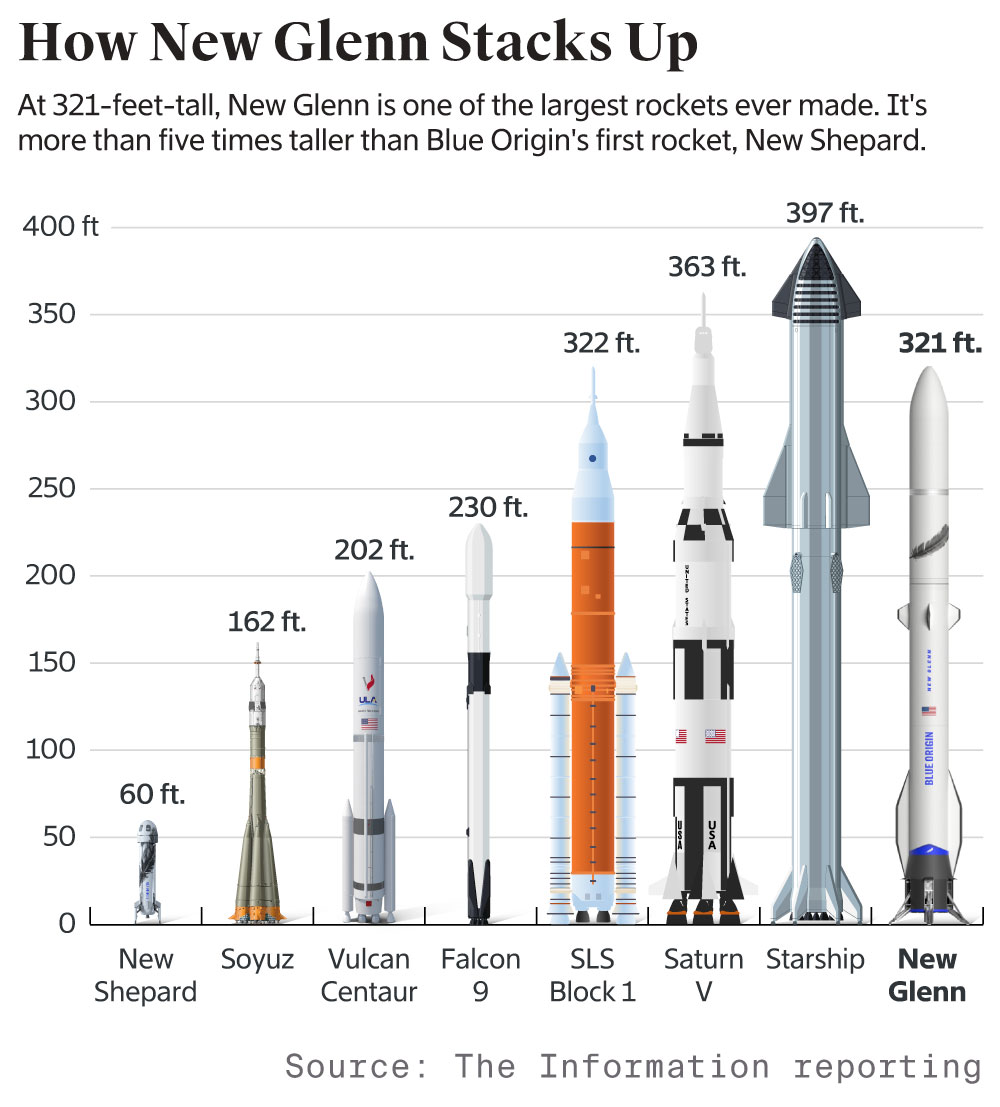
These numbers and configuration are very close to blue origin's New Glenn rocket.
I don't think it's possible to develop and prove the LME2400 engine within the current time frame they are projecting. Maybe we should consider getting the BE-4 engine from Blue Origin as a stopgap solution?.


do we know the payload details? Its looks like there are no concrete details out there and so many websites have conflicting opinions
The configuration isn't fixed yet. ISRO started the NGLV design to make a partially re-usable heavy lift launch vehicle with max dia. of 5 m & a gross lift off mass of ~700 tons. The 1st variant was comparable with the Araine-6 or the Falcon 9 Heavy in size & payload capacity.do we know the payload details? Its looks like there are no concrete details out there and so many websites have conflicting opinions
GoI had then set a target for ISRO to have a human moon landing in the 2040s. In preparation for the manned landing, un-crewed lunar descent & return missions have to start by around 2033-35. ISRO initailly thought they would design a separate rocket for the lunar missions called LMLV. Now they seem to have merged the NGLV & the LMLV into a single project.
A lunar manned mission will require a super heavy lift rocket. That's why the NGLV's base variant is getting bigger. From 5m dia & 700-ton GLOM, the design has evolved to 6.5 m dia & 1200-ton GLOM. The rocket is now comparable in size to the Blue Origin's New Glen. Look at post #27 for payload details of the latest configuration. I think they are under playing the payload capacity. As the design gets more refined those numbers will get updated.
NGLV is supposed to have its 1st flight around 2031. A variant of the NGLV (with 3x liquid Stage-1 boosters) will be used for these lunar missions.
On the engine side, ISRO was initially going for LME-110, a GG based Methalox engine. That engine won't produce enough thrust for the latest design of the rocket. So, ISRO will probably convert the SCE-200 into a Methalox engine. They are calling it the LME-240. Later they will uprate this engine to ~3MN class & call it LME-300.
LME-240 has to be ready for flight within the next 5 years. The speed of progress of the SCE-200 isn't very encouraging.


But this is pre the NGLV expansion so the specs especially the engines are now off.

I have posted about this before. One production bottleneck we had in India was the capability to make aerospace grade Aluminum & Titanium alloys rings of 5+m dia. This had restricted the design of the NGLV. ISRO had to keep the initial NGLV designs at 5 m dia or less.
These rings form the interstage of rockets & are load bearing components. A lower dia means a lower stiffness & lower buckling resistance. Thus, restricting the dia means increasing the wall thickness of the interstage rings to survive the same Max Q. That in turn reduces the payload of the LV.
ISRO has thus been investing to get this production bottleneck removed. Over the last year we saw the NGLV concept designs go from 5m dia to 5.4m then to 6.5m.
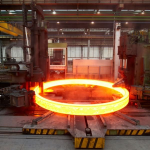
Recently, Balu Forge has acquired a ring rolling machine capable of producing 6.7 m dia rings weighing up to 18 tons. BF & Godrej are also in the fray for this:
I get a feeling that the NGLV will eventually end up having a dia of 7-7.5m. That would be necessary to accommodate a cluster of 9x LME-240/LME-300 engines. The height of the LV was 73m initially, now its 105m. That will also probably increase another 10-15 m.
The final NGLV would probably be equivalent to the New Glen's super heavy variant in size & payload.
These rings form the interstage of rockets & are load bearing components. A lower dia means a lower stiffness & lower buckling resistance. Thus, restricting the dia means increasing the wall thickness of the interstage rings to survive the same Max Q. That in turn reduces the payload of the LV.
ISRO has thus been investing to get this production bottleneck removed. Over the last year we saw the NGLV concept designs go from 5m dia to 5.4m then to 6.5m.
Seems like with the recent increase in the 1st stage propellant loading of the NGLV, the diameter of the stage has increased from 5m to 5.4m. Previously the dia of the whole rocket was 5m. Dr. S. Somanath said in an interview that the production of aerospace quality Aluminum & Titanium alloy rings of dia >5m was an issue in India.
That was the reason the NGLV's dia was restricted to 5m. A restriction on the diameter would result in a much taller rocket which is not ideal for aerodynamic stability. Maybe some of the production issues are being sorted out.
View attachment 45896
View attachment 45897
The configuration isn't fixed yet. ISRO started the NGLV design to make a partially re-usable heavy lift launch vehicle with max dia. of 5 m & a gross lift off mass of ~700 tons. The 1st variant was comparable with the Araine-6 or the Falcon 9 Heavy in size & payload capacity.
GoI had then set a target for ISRO to have a human moon landing in the 2040s. In preparation for the manned landing, un-crewed lunar descent & return missions have to start by around 2033-35. ISRO initailly thought they would design a separate rocket for the lunar missions called LMLV. Now they seem to have merged the NGLV & the LMLV into a single project.
A lunar manned mission will require a super heavy lift rocket. That's why the NGLV's base variant is getting bigger. From 5m dia & 700-ton GLOM, the design has evolved to 6.5 m dia & 1200-ton GLOM. The rocket is now comparable in size to the Blue Origin's New Glen. Look at post #27 for payload details of the latest configuration. I think they are under playing the payload capacity. As the design gets more refined those numbers will get updated.
NGLV is supposed to have its 1st flight around 2031. A variant of the NGLV (with 3x liquid Stage-1 boosters) will be used for these lunar missions.
On the engine side, ISRO was initially going for LME-110, a GG based Methalox engine. That engine won't produce enough thrust for the latest design of the rocket. So, ISRO will probably convert the SCE-200 into a Methalox engine. They are calling it the LME-240. Later they will uprate this engine to ~3MN class & call it LME-300.
LME-240 has to be ready for flight within the next 5 years. The speed of progress of the SCE-200 isn't very encouraging.
Recently, Balu Forge has acquired a ring rolling machine capable of producing 6.7 m dia rings weighing up to 18 tons. BF & Godrej are also in the fray for this:
I get a feeling that the NGLV will eventually end up having a dia of 7-7.5m. That would be necessary to accommodate a cluster of 9x LME-240/LME-300 engines. The height of the LV was 73m initially, now its 105m. That will also probably increase another 10-15 m.
The final NGLV would probably be equivalent to the New Glen's super heavy variant in size & payload.
