Opinion New QUAD Begins to Take Shape in the Middle East (US, India, Israel & UAE)

Parthu

Gessler
Team StratFront
Dec 1, 2017
2,437
6,572
Hyderabad, TG


Why US and India are taking on China with a ‘Middle Eastern Quad’​


China has been wooing Israel and the UAE. Now they both seem to have been pulled away to be part of a second Quad, or the first murmurings of a new world order.​


By JYOTI MALHOTRA for The Print​

quad-west.JPG

It’s a crowded foreign policy week this week, with Indian officials participating in the Moscow-led round of talks with the Taliban on 20 October and External Affairs minister S. Jaishankar in Israel to update the relationship with the new Naftali Benett-Yair Lapid government.

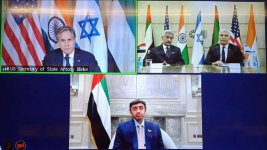
And then there was, Monday late evening, the part-virtual, part-in person summit between the foreign ministers of India, Israel, UAE, and the US, a startling idea of an informal Quad on this side of the globe.

So, who was the elephant in the Zoom room this time? No prizes for guessing again. China.


As China reorganises the world in her own image, from South Asia to Canada and Europe – via Israel and Gulf kingdoms like the UAE – it seems as if the US is gaining fuller clarity about its role as a big power, after having divested itself from its millstone called Afghanistan.

To protect its own position from China snapping at its heels, seeking to become world number one, the US is clearly exploring new arrangements, alliances and coalitions. At the end of the day, give or take a military nuance or two, it all amounts to the same principle: Who is your Enemy Number One?

That’s the principle on which the Quad – whose members are the US, Australia, Japan and India – is built. That is also the principle on which Quad 2, or the “Middle Eastern Quad” – US, Israel, UAE, and India – is being nurtured.


What is truly surprising is the supersonic speed with which the US is moving. Less than a week ago, on 13 October, US Secretary of State Antony Blinken met his counterparts from the UAE, Sheikh Abdullah bin Zayed, and from Israel, Yair Lapid, in Washington DC. They agreed to set up two working groups – on religious coexistence, said to be the UAE’s idea, and on water management and energy issues, said to be Israel’s idea.

The meeting in DC was to celebrate the first anniversary of the Abraham Accords, signed a year ago between Israel, the UAE and Bahrain, which opened up parts of the Gulf to Israel and vice-versa, ending decades of mistrust between the two. In the year since, Israel has opened embassies in UAE and Bahrain, an unprecedented 130,000 Israelis arrived in the UAE as tourists and the UAE-Israel Business Council was set up.

On Monday, as India was added as the fourth leg to stabilise the table, the message was clear: UAE capital plus Israeli technology plus inexpensive Indian labour is being stirred in a potpourri by the US, whilst offering each country the flexibility to move as fast-slow as its domestic politics allows it to go.


90

Former Israeli Prime Minister Benjamin Netanyahu​

That’s the beauty of the first Quad anyway. When it was first thought up, the Japanese believed it should have a security dimension, but India has since shied away from that idea and believes “non-military determinants” are the way forward – vaccine development and delivery, for example, and climate change.

Significantly, the linchpin for Quad 2, like for Quad 1, is the US. Meaning, the US still wields the power to bash several heads together in order to persuade them to arrive at a solution that best takes on China.

Considering both Israel and the UAE have been determinedly wooed by China these last few years – before the pandemic and definitely during it – one must hand it to America’s single-minded pursuit of its goals and the ability to influence others to follow.

Interestingly, the China-Israel relationship grew by leaps and bounds during the decade of Benjamin Netanyahu – believed to be one of Prime Minister Narendra Modi’s closest friends. Netanyahu signed a comprehensive partnership with China in 2017, weeks before Modi’s visit to Israel and the Doklam standoff in Bhutan.


A determined US decided to act​


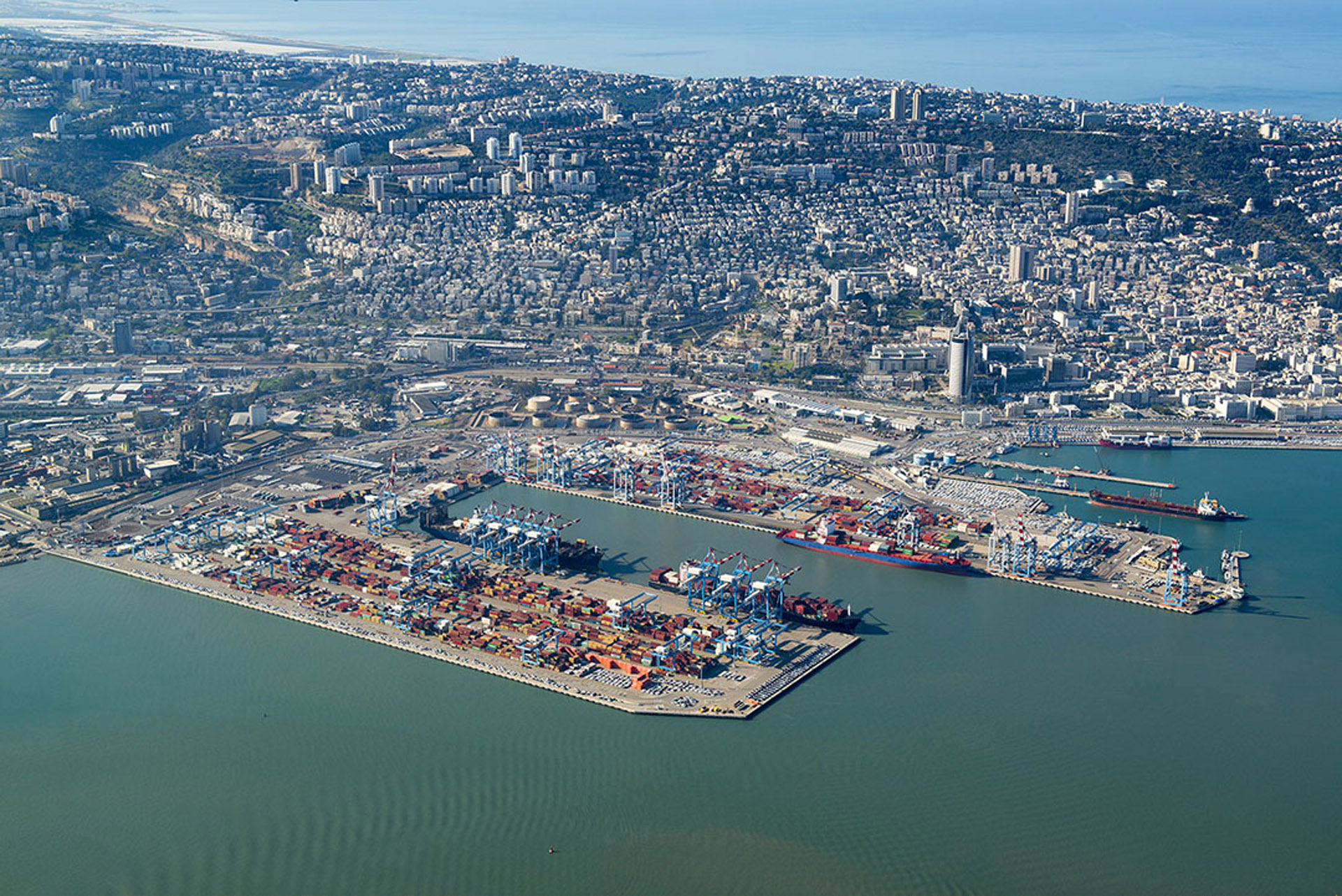
But the US was not content to watch when it believed its interests were threatened by its closest ally, Israel, and its closest competitor, China. So three years after Netanyahu sold a section of the very busy commercial Haifa port to Shanghai International Port Group in 2015, the US Navy objected to the sale because its 6th Fleet uses an adjacent Israeli navy base where nuclear weapons-capable submarines are housed.

In 2020, Netanyahu further refused the US Coast Guard permission to inspect the port for Chinese surveillance capabilities.


vwa9139.jpg

Port of Haifa​

The Joe Biden administration, concerned that Iran had become China’s go-to nation to buy oil, quickly got into the act. Only a few months ago, Dubai’s DP World and Israel Shipyards Industries – part of Israel’s military-industrial complex – won the project to develop a section of the Haifa port that lies directly opposite the Chinese-owned section “to create a US-friendly harbor at this critical future transportation hub,” reported The Diplomat.

Meanwhile, the Israeli-Emirati JV “is also working on the Med-Red pipeline project, which will link Eilat port on the northern tip of the Red Sea to Ashkel on the Mediterranean, allowing Gulf oil to circumvent the Suez Canal,” The Diplomat added.

The Abraham Accords seems to have already fulfilled part of their mission – to disrupt China-Israel relations. Meanwhile, there was the UAE, a key US ally in the Gulf, which has been warming up to the Chinese in recent years.

So, when the pandemic hit the world in 2020, Sheikh Tahnoon bin Zayed al-Nayhan, national security advisor and younger brother to the de facto ruler Mohammed bin Zayed al-Nayhan (known as MBZ), established a joint venture with the Chinese firm BGI to open a coronavirus lab in Abu Dhabi and conduct trials for a vaccine, reported Financial Times. The first vaccines available in the UAE were Chinese; the US’ Pfizer vaccine has become available only recently.

So MBZ’s trusted lieutenant Khaldoon al-Mubarak wrote to Honeywell asking for PPE kits, but because PPE exports were banned from the US, Honeywell asked Beijing to allow its subsidiary in China to export kits to the UAE; China agreed, then tied up with UAE state fund Mubadala to manufacture PPE kits in the Gulf nation.


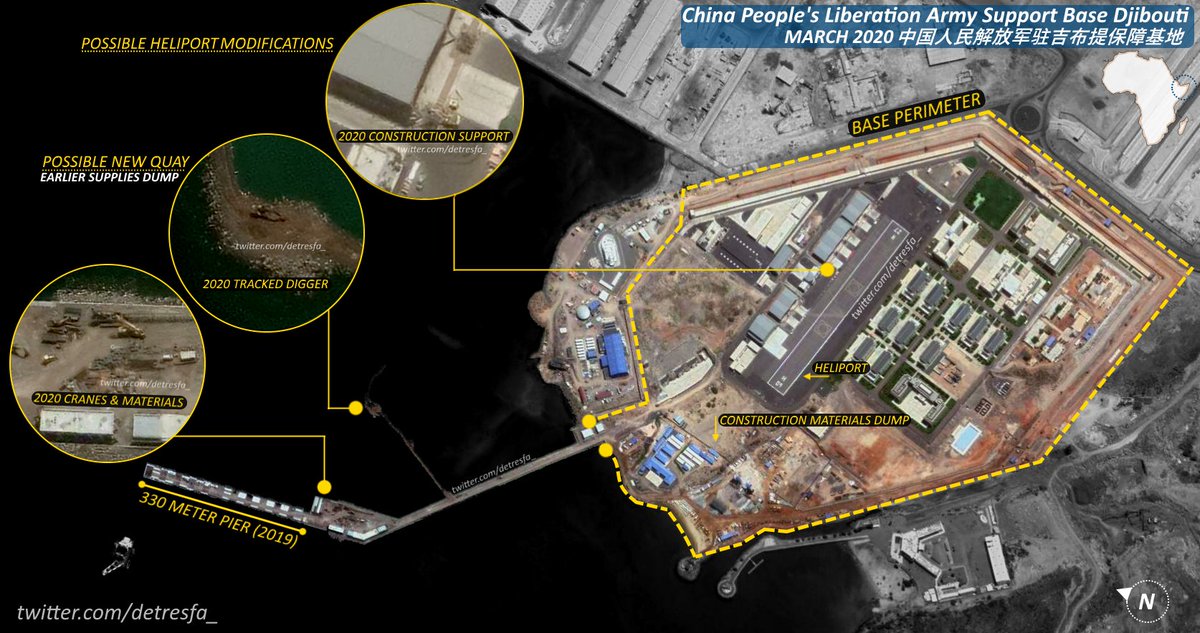
More recently, a Pentagon report on China’s military power listed the UAE among nations China may be considering for “military logistics facilities.” It obviously helps that the Gulf states have never publicly criticised China for its internment of its Uighurs and that when MBZ visited Beijing in 2018, soon after Jamal Khashoggi’s murder, he was warmly welcomed by Xi Jinping.

EXloAMHU8AAd7m7.jpg

Chinese support/logistics base in Djibouti, on the mouth of the Red Sea​

UAE’s presidential advisor Anwar Gargash admitted earlier this month that economic and strategic competition between the US and China is forcing Gulf nations to choose, making them pawns in a new Cold War. “That is bad news for all of us,” Gargash said.

According to Bloomberg, UAE’s top trading partners in 2020 were China, India, Japan, the US and Saudi Arabia. The aforementioned Mubadala, UAE’s state investor, invested $853 million in the Indian Reliance Industries’ retail division last October, besides paying $1.25 billion for a 1.85 per cent stake in the same conglomerate's Jio Platforms telecommunication & tech division in June.

Clearly, as the US emerged from its Afghan nightmare, it found that the China challenge was far tougher than it seemed. A leaders summit of the Quad nations in Washington DC last month underlined that thought. Small wonder the US has sought to create a second Quad in the Arab world, with reliable partnerships shoring up the core.

One such exceptional tie is the one between India and Israel, which has proved its worth not just in the security sphere, but also in areas like water and agriculture that directly benefit Indian farmers. Experts in the Israel embassy in New Delhi serve 29 centres of agricultural excellence set up by Israel across the country.


How does India benefit?​


So, what does Quad 2 or the “Middle Eastern Quad” do for India?

First, it connects India even more closely to key nations on its western front, across the Gulf and Middle East. Second, the US has not just shaken up the region with the Abraham Accords, it is providing the glue that binds an expanding coalition of like-minded nations – and while India may not be part of the Accords, it certainly agrees with the spirit that ties these countries together.

Third, it is a measure of the Modi government’s ambition on the foreign policy front that it is seeking to reconcile with groups as diverse as Taliban on the one hand and expand ties with older friends like Israel and the UAE.

Being part of two Quad coalitions allows India to spread its wings in a variety of ways — from the Indo-Pacific to the Mediterranean landmass — never seen before. It’s not a new world order yet, not by a long chance, but the first murmurings are apparent.

Jyoti Malhotra is a senior consulting editor at ThePrint. She tweets @jomalhotra. Views are personal.​


Last edited:
This also needs to be looked at through the lens of the proposed Arab-Mediterranean Trade Corridor proposed by India some years ago, but until the Abraham Accords were signed, it didn't seem practical - but now it seems to be the most pragmatic thing around.


Beautifully summarized in detail by Caspian Report in this video, the corridor in question is covered from 8:35 onward:


UAE, US, Israel and India meet to boost four-way co-operation​

US Secretary of State Antony Blinken met his counterparts from the UAE, India and Israel in a first-of-its-kind conference on Monday as the nations work to strengthen their four-way ties.

UAE Minister of Foreign Affairs and International Co-operation Sheikh Abdullah bin Zayed, Israel's Foreign Minister Yair Lapid and India's Minister for External Affairs Subrahmanyam Jaishankar attended Monday's meeting.

In a statement, the State Department said the meeting focused on expanding economic and political co-operation in the Middle East and Asia.

Such expansion would be "through trade, combating climate change, energy co-operation and increasing maritime security," State Department spokesman Ned Price said.

During the meeting, Mr Blinken reiterated the Biden administration's support for the Abraham Accords.

Last week, the first trilateral summit between the UAE and Israel was held in Washington, during which the formation of working groups on religious co-existence, water and energy issues was announced.

Mohammed Soliman, a non-resident scholar at the Middle East Institute, saw Monday’s meeting as augmenting the rise of the “Indo-Abrahamic bloc".

“This meeting stems from consequential geopolitical moves: the Abraham Accords and the realignment between Israel and India,” Mr Soliman, author of an Indo-Abrahamic alliance study published in July, told The National.

“Regional actors understand that because of the US pivot to the Indo-Pacific, they need to build their own regional security architecture while capitalising on India’s centrality.”

Read More
Blinken confirms US will move forward with reopening its Palestinian mission in Jerusalem
Yousef Al Otaiba: Biden team supportive of Abraham Accords and progress is irreversible
US stresses Nato interoperability as Turkey pushes F-16 sale
India’s Minister for External Affairs Subrahmanyam Jaishankar is currently visiting Foreign Minister Lair Yapid. The trip is the highest level for New Delhi to Israel since Naftali Bennett became prime minister in June.


Alon Ushpiz, director of the Israeli Ministry for Foreign Affairs, told The Times of India that the visit looked to incorporate India into emerging opportunities in the region while investing in the Abraham Accords.

Very productive talks today with APM and FM @YairLapid.

Discussed a wide range of regional and global issues.

Agreed to resume FTA negotiations next month.

Agreed in principle on mutual recognition of Covid vaccination certification. pic.twitter.com/sir0QDYzx3
— Dr. S. Jaishankar (@DrSJaishankar) October 18, 2021
Asked about the US interest in participating in these talks, Mr Soliman pointed to efforts to counter China.

“The Abraham Accords allows regional actors such as the UAE and Israel to act in unison when it comes to global challenges … while allowing Washington to do more [while doing] less in the Middle East,” he said.

He argued that co-ordinating on mutual security challenges such as cyber, maritime, 5G and missile defence are all incentives for the US to invest in a bloc between Middle Eastern partners and a rising Asia-Pacific.

The US has launched alliances around the four-way dialogues before, notably the Quadrilateral Security Dialogue (Quad) which Washington formed in 2007 and includes India, Japan and Australia.

Mr Biden last month hosted the Quad leaders in Washington.

An Indo-Abrahamic alliance on the rise: How India, Israel, and the UAE are creating a new transregional order | In his latest, @ThisIsSoliman analyzes how last year’s normalization agreements have led to a newly emerging Indo-Abrahamic alliance. An Indo-Abrahamic alliance on the rise: How India, Israel, and the UAE are creating a new transregional order
— Middle East Institute (@MiddleEastInst) August 9, 2021
Updated: October 19th 2021, 1:39 PM

The Israel-UAE-India-US partnership is a quiet revolution - analysis​

This week’s visit of Indian Foreign Minister Subrahmanyam Jaishankar and a subsequent virtual meeting with US Secretary of State Antony Blinken, UAE Foreign Minister Sheikh Abdullah Bin Zayed Al Nahyan and Foreign Minister Yair Lapid marks a new stage in Israel’s diplomatic relations. It represents a rare example of Israel as part of a group of countries, as opposed to the usual bilateral relationships that Jerusalem usually enjoys.

The meeting is also important because it represents the quiet formation of a group of like-minded countries. Added to this list should also be Greece, France, Cyprus, Bahrain, Egypt, Jordan and some other countries that share common interests, either in the Eastern Mediterranean or as part of a bloc of stability and moderation.

It is important to note that Lapid was just in Washington, where his visit went well. This is part of a growing series of visits not only by Lapid, but also by other key Israeli officials. The US-Israel relationship is not new, though; what is new is adding on to it a series of other relationships.

This is special because in the past, even when Israel had close ties with countries like the US, these were often ties that were not always seen as part of America’s larger goal in the region.

That is why Israel was part of the US’s European Command for many years and separated from the region in many international circles due to opposition by the Arab League, Iran or other states. That began to change decades ago with the end of the Cold War, but the change has been slow.

Public meetings between former prime minister Benjamin Netanyahu or his team with officials in Jordan or Egypt were almost unheard of, despite the stories of “good relations behind the scenes.” Countries can’t conduct foreign policy “behind the scenes” forever. NATO wouldn’t have been able to operate if it was just a “secret” alliance behind the scenes.
 FOREIGN MINISTER Yair Lapid with US Secretary of State Antony Blinken at a joint news conference at the State Department las week. (credit: ANDREW HARNIK/POOL VIA REUTERS)
FOREIGN MINISTER Yair Lapid with US Secretary of State Antony Blinken at a joint news conference at the State Department las week. (credit: ANDREW HARNIK/POOL VIA REUTERS)

Groups of countries function well together when they are robust and open about their work and project power and influence. When they cease to do that or become too large, then they become unremarkable and large organizations, such as the Organization of American States or the Organization of African Unity.

Israel is at a crossroads – a time of pivot in the region and internationally. Consider that Israel is also hosting the Blue Flag exercise this week, with participants from around the world, including the US, Germany, France, Italy, India, the UK and Greece. When we look at that group, we again can see India, the US, Greece and Israel, as well as France, Germany and Italy.


France and Israel have good relations with Greece, and they share interests in the Mediterranean. Israel also shares interests via the Eastern Mediterranean gas forum and potential East Med pipeline. France and Greece recently signed a new defense pact.

India and Israel have enjoyed strategic relations for years. There is also a close relationship between Israel’s defense industry and India. However, that relationship can be leveraged with the US, and Israel’s new ties with the UAE, to become a stronger relationship. Of course, each country enjoys other relationships that may not always be unified.

For instance, India has amicable relations with Iran, while Israel and China have had decent relations over the years. The US has increased its objections to Israel-China ties, concerned over Beijing investment in Israel or how that might impact close defense and intelligence ties between Israel and the US. Meanwhile, India and China have often been at odds.

What might come next in this story? There are economic and defense-industry advantages to the new ties and the ability to synergize the network of ties between Washington, Jerusalem, Abu Dhabi and New Delhi. That means the whole can be more than the sum of its parts.

“Around this virtual table, there is a unique set of capabilities, knowledge and experience that can be used to create the network that we all want to see created,” Lapid said at the meeting.

More important meetings will occur soon. The Knesset speaker will be in Athens on October 20, according to reports. He will have meetings with his Greek counterpart, the head of the Greek parliament’s Greece-Israel Friendship Group and the chairman of parliament’s Standing Committee on National Defense and Foreign Affairs. Other important meetings will take place.

India’s foreign minister was also in Greece in June. This illustrates how close ties already intersect between Israel, Greece, India and the UAE, as well as the US and France.

The concept of a four-country partnership is enshrined in the existing “quad” countries – India, Japan, Australia and the US. These countries have conducted joint naval drills and work together on other issues. Meanwhile, the US, Australia and UK have signed on to Aukus, another pact; and the US, UK, New Zealand, Canada and Australia together form the “Five Eyes” intelligence network.

Foreign Ministry Director-General Alon Ushpiz praised the idea of having India more involved in opportunities in the region, and he praised the Abraham Accords as a “strategic earthquake,” The Times of India reported. The article mentioned potential cooperation on vaccines, emerging technology, climate change and security. That could also mean new frontiers, such as artificial intelligence and big data, Ushpiz said.

Times of India thought a “second Quad” might be forming. It remains to be seen if this is the case. What matters is that the first steps toward this widened understanding of a partnership that links India and Israel with the US and UAE and potentially Greece, Cyprus, Jordan, Bahrain, Egypt, France and others is a key to the stability of the region and an arc of stability running from Washington via Paris and Athens to Jerusalem via the Gulf to New Delhi and on to Australia and Japan.

Considering Israel’s movement into Central Command this year, it might also be worthwhile noting that the arc of countries sketched out here contrasts with the 2004 book The Pentagon’s New Map, by Thomas P.M. Barnett.

In that book of grand strategy, written during the height of the global war on terrorism, he characterized the “functioning core” of the world as being North America, Europe, Japan, Australia, China, India, South Africa, Brazil, Argentina, Chile and Russia. The unstable part of the world, or “non-integrated gap,” consisted of a swath of countries from the Middle East to Central Asia and parts of Africa.

Nowadays, if you look at the line that connects Greece and Cyprus to Israel, Egypt, Jordan, the Gulf and India, what you find is a key set of countries that may finally turn the corner in terms of this concept of a “gap” of stability. The gap has meant extremism and challenges.

It is also where US global hegemony appears to have run aground, as symbolized by the US leaving Afghanistan, and where near-peer rivals, such as Russia and China, as well as regional states that oppose US policy, such as Iran and Turkey, are growing in power.

That may be where the US-UAE-Israel-India connection comes together most of all in presenting a moderate alternative to the aggressive, extremist and authoritarian countries.
 

Why India Is Joining Another Quad​

What’s Behind the ‘New Quad’?

India, Israel, the United Arab Emirates, and the United States began a new quadrilateral economic forum this week focused on trade, climate change, energy, and maritime security—all issues emphasized by the more established Quadrilateral Security Dialogue among Australia, India, Japan, and the United States.


You can support Foreign Policy by becoming a subscriber.

Subscribe Today


The two Quads are quite different in other ways. The so-called new Quad is not as focused on countering China’s rise as the original one, and because it lacks a strong, shared purpose, its future trajectory is more uncertain. But it could serve Indian foreign-policy goals: The arrangement enables New Delhi to expand its role on the world stage, to engage more deeply in the Middle East, and to strengthen cooperation with the United States.


The new Quad appears to stem from rapidly growing cooperation among its member countries. Last year, a normalization agreement between Israel and the UAE resulted in a flurry of new accords focused on investment, energy, and health care. Meanwhile, India has strengthened ties with Israel. In 2017, Narendra Modi became the first Indian prime minister to visit the country—a significant step given New Delhi’s long association with the Palestinian cause. Finally, U.S.-India relations have continued to deepen.


India’s joining the new Quad first reflects a desire to play a greater role on the world stage and to respond to criticism from observers—including its own national security advisor—that it punches below its weight. The forum provides New Delhi with an opportunity to move closer to key partners without compromising its policy of strategic autonomy: As with the other Quad, this arrangement is a loose grouping, not an alliance.


New Delhi also sees the Middle East as strategically significant. It depends heavily on its energy imports, and nearly 9 million Indian workers live in the Persian Gulf. India has ramped up diplomacy with many regional players, including Saudi Arabia, but Israel and the UAE have long been key targets. A 2019 survey of Indian foreign-policy and security professionals found that the two countries were regarded as India’s two most important partners in the Middle East.


Israel and the UAE each boast advantages that can benefit India. Already a major arms supplier to India, Israel also has cutting-edge agricultural technologies that could help enhance water management. Meanwhile, the UAE can provide India with much-needed infrastructure financing. In 2015, the two countries announced a $75 billion infrastructure fund, but only $3 billion has been used so far. India can leverage the new Quad to make more progress operationalizing the fund—a goal the UAE says it supports.


Furthermore, the new Quad delivers a boost to New Delhi’s relations with Washington. It expands the geographic scope of the two countries’ cooperation beyond Asia, adding to their pool of multilateral partners. The new arrangement does not represent any type of competition to the original Quad: The two groups are distinct entities with different geographical remits, although their areas of cooperation may overlap.


Unlike the original Quad, the new economic forum is not fueled by a collective desire to counter China. In recent months, Israel and the UAE have strengthened their commercial cooperation with China, especially in the shipping sector. Instead, the country that comes closest to bringing the four new Quad members together is Iran—a bitter rival of Israel and the United States. But both the UAE and India are still keen to find ways to engage with the Iranians, despite territorial disputes and reduced energy ties.


That doesn’t mean China is a nonfactor in the arrangement. The United States likely sees the new Quad as an opportunity to convince Israel and the UAE to wean themselves off Chinese investment. That goal dovetails with India’s interests, as it would welcome a reduced Chinese footprint in a region where it’s keen to expand its presence.


The new Quad will occupy midlevel importance for Washington as it balances multilateral arrangements. Its lack of a unifying cause means it will likely struggle to achieve the success of the original Quad. But its members’ commitment to deep levels of cooperation should enable it to outlast the arrangement among Afghanistan, Pakistan, the United States, and Uzbekistan launched just a month before the Taliban takeover.


The new Quad’s trajectory is uncertain, but it has considerable potential because of the warm relations among the parties. It will face two initial tests: sustainability and substance. Is the group prepared to hold regular, high-level meetings, as the original Quad does? And can the new Quad take steps—forming working groups, identifying negotiators—to produce new initiatives? If not, it risks becoming a flash in the pan.


The Week Ahead

Friday, Oct. 22:
The Wilson Center hosts a virtual session on the China-Pakistan Economic Corridor with Asad Umar, Pakistan’s planning and development minister.


Saturday, Oct. 23: Pakistani Prime Minister Imran Khan visits Saudi Arabia.


What We’re Following

Evictions in Assam.
The Indian state of Assam has become a flash point for communal tensions. Last week, police evicted Muslim families from their homes on government land, and a man died after being shot and beaten by police and a photographer retained by the force. The effort by the state government, led by the ruling Bharatiya Janata Party, has displaced thousands of Muslim villagers in recent days.


The evictions follow another state government campaign targeting Muslims in Assam. In recent years, authorities have demanded that all residents provide documents proving their citizenship to compile a registry of citizens. People who can’t produce documents are excluded from the registry and at risk of being deported or detained. This policy disproportionately affects many Muslim migrants, many of whom lack such documents.


Meanwhile, a 2019 citizenship law provides fast-track citizenship for religious minorities who have fled to India from neighboring countries, but it excludes Muslims. All of this likely makes some of the families targeted in the recent eviction campaign especially vulnerable to detention or deportation.


Religious violence in Bangladesh. This week, Bangladesh suffered its worst communal violence in years. The clashes and protests, which began during the Hindu holy festival of Durga Puja, were triggered by images on social media that showed a copy of the Quran positioned at the foot of a statue in a Hindu temple in the city of Comilla. Mobs have attacked temples in several cities, and at least two people have been killed. Hindus make up around 10 percent of Bangladesh’s 165 million people.


In Dhaka, hundreds of people have protested against the violence, and the government has condemned the attacks and met with Hindu leaders. Authorities have already arrested hundreds of suspects, and precedent suggests they will crack down hard on the perpetrators. After the hard-line Islamist group Hefazat-e-Islam staged violent protests during Modi’s visit to Dhaka this year, the government arrested the group’s top leaders.


It’s still unclear if a group is behind the current violence. Some observers blame Jamaat-e-Islami, an Islamist opposition party. But Dhaka often levels allegations of violence against the opposition to justify crackdowns on dissent.


Indian stocks at record highs. Indian stocks have closed at record-high prices in recent days, a trend also seen during several weeks in September. Experts attribute this performance to both international and domestic factors: perceptions that the U.S. Federal Reserve won’t raise interest rates, as well as reassurance that India is turning the corner on the coronavirus pandemic and surging confidence about economic recovery.


But even amid a sustained period of gains, Indian stocks remain prone to volatility. Prices did fall on Tuesday, largely due to the performance of metals after China’s announcement that it will lower global coal prices.


Zalmay Khalilzad, then the U.S. special representative on Afghanistan reconciliation, arrives for a House Foreign Affairs Committee hearing on Capitol Hill in Washington on May 18.MANDEL NGAN/AFP via Getty Images

Zalmay Khalilzad resigns. The U.S. special representative for Afghanistan reconciliation, Zalmay Khalilzad, stepped down on Monday, months after the Taliban takeover of Kabul. Khalilzad, an Afghan American and a former U.S. ambassador to Afghanistan, was a controversial figure within the country. Former Afghan National Security Advisor Hamdullah Mohib once accused him of trying to delegitimize the Afghan government and of pursuing his own political ambitions in Afghanistan.


Commentators have criticized Khalilzad for the agreement he negotiated with the Taliban in February 2020, which excluded the Afghan government and called for the departure of all U.S. troops—without requiring much of the Taliban in return. The agreement will certainly define his legacy, but Khalilzad was dealt a bad hand, put in the difficult position of negotiating with the Taliban as they seized large amounts of territory and gained the upper hand.


In his resignation letter, Khalilzad said he “plan to contribute to the discussion and debate” on recent developments in Afghanistan and what’s next. It sounds like a book is in the offing. He will be succeeded by his deputy, Thomas West.


Under the Radar

If you have $125,000 to spare, the Conrad Maldives luxury resort is offering a special Thanksgiving package to spend the holiday underwater. The resort is advertising the opportunity to spend five days in the world’s “first underwater villa,” a 6,000-square-foot structure that includes three bedrooms, a gym, an infinity pool, a relaxation deck, and a dining room, where a five-course Thanksgiving meal will be served.


But the vacation may be in poor taste. The Maldives is one of the world’s most climate-vulnerable countries. The World Bank predicts rising sea levels could cause the country to become completely submerged by 2100. In fact, the government famously held an underwater cabinet meeting in 2009 to bring attention to the threat.


Regional Voices


Journalist Ranga Jayasuriya blasts Sri Lankan President Gotabaya Rajapaksa’s plan to introduce a new constitution and electoral system next year in the Daily Mirror. “The fixation to fiddle with the constitution amidst a raging economic crisis can only be explained in the egoistic fantasies that have already done so much damage to the country,” he argues.


In the Indian Express, lawyer Ramya Subramaniam laments the low representation of women in India’s legal profession. “Surveys have to be undertaken by the government across courts to understand and improve the representation of women across the bench,” she writes. “Elevating more women to the bench will definitely lead to more women in the bar.”


An Express Tribune editorial expresses concern about Pakistan’s recent decision to raise fuel prices. “No matter what the rationale is for increasing petrol, gas, and electricity prices, in response to their escalating price tag on the international level, the government has succumbed and has no plan to do some critical balancing to keep the lot of the common man afloat,” it says.
 

An Indo-Abrahamic alliance on the rise: How India, Israel, and the UAE are creating a new transregional order​

There is a new and little noticed geostrategic alliance on the rise. India, Israel, and the United Arab Emirates (UAE) have had surface-level, transactional relations for a long time. However, last year’s normalization agreements between Israel and several Arab states — chief among them, the UAE — along with Turkey's bid to return as the leader of a Muslim order and the growing distance between the UAE and Pakistan have created an unlikely and unprecedented “Indo-Abrahamic“ transregional order. This emerging multilateral pact may fill the gap the United States is leaving in the Middle East and has the potential to transform the region's geopolitics and geoeconomics.


It used to be about history and religion


In the global order that followed World War II, India, Israel, and the UAE were each stuck in a very complicated course of relations because of history and religion — two fundamental and foundational principles for the three centers of power.


In the middle of the last century, as a result of the partition of British India and the creation of Pakistan, India sought to appeal to Muslim nations. New Delhi supported the Palestinian right to self-determination and sided with the Arab nations in their conflict with Israel. India had strong relations with Egypt under President Gamal Abdel Nasser because of the two countries’ shared struggle against British occupation, the history of their nations, and the involvement of their leaders, President Nasser and Prime Minister Jawaharlal Nehru, at the forefront of the Non-Aligned Movement (NAM).


However, in response to the pan-Arabism championed by Nasser’s Egypt and the Cairo-based League of Arab States, Saudi Arabia established the Jeddah-based Organization of the Islamic Conference (now the Organization of Islamic Cooperation, OIC) to assert Saudi — and by extension, the Gulf countries’ — leadership of Muslim causes around the world, including the long-standing dispute between India and Pakistan over Jammu and Kashmir.


For several decades, the UAE and Pakistan maintained a very close and strong partnership. The UAE hosts a sizable Pakistani diaspora that sends substantial remittances back to Pakistan, in addition to providing financial aid and loans. In return for its largesse, the UAE had strategic relations with the Muslim world’s sole nuclear power, and received critical security and military support and training from Pakistan.


For its part, Israel had limited ability to make inroads with NAM members, including India and many other African, Asian, and Latin American countries, because of the Palestinian cause, the broader conflict with the Arab states, and anti-Americanism in the developing world.


The end of the Cold War and the dawn of an era of transactional relations


Following the collapse of the Soviet Union and the end of the Cold War, Israel succeeded in establishing diplomatic relations with India in 1992 and forged informal ties with many Gulf nations in the 1990s. Over the following two decades, transactional relations between India, Israel, and the UAE slowly grew. India wanted access to the UAE labor market and oil and the UAE recognized India’s status as an emerging global power. In an era of great power competition, New Delhi was central to Abu Dhabi’s ambitions for strategic autonomy. On another front, Israel wanted to make inroads with its neighbors in the region and the UAE saw it as a key channel to Washington. Despite India’s condemnation of Israeli actions in the West Bank and Gaza, the two countries shared mutual security and strategic concerns.


More than a normalization agreement — an alliance


The shared anxieties in Tel Aviv and Abu Dhabi — from Islamist movements to Tehran’s and Ankara's expansionist foreign policy — created an incentive to push forward with an unpreceded move: an agreement to normalize relations between Israel and two Gulf states. The Trump administration sponsored the so-called Abraham Accords between Israel, Bahrain, and the UAE, building on decades of informal relations as well as a more recent geostrategic rapprochement. Saudi Arabia, the traditional Gulf hegemon, signaled its "silent" approval of the agreements.


Since the signing of the Abraham Accords, Israeli and Emirati leaders have pledged further defense cooperation, including Israeli support for the U.S. sale of F-35 planes to the UAE. Furthermore, trade between Israel and the UAE has significantly increased and more than 200,000 Israelis have visited the UAE in this short period. One notable announcement has been the UAE’s $3 billion Abraham Fund, which focuses on investing in priority areas for cooperation like trade, technology, infrastructure, and energy. Finally, Abu Dhabi and Tel Aviv are working together on building a new digital regional order, one in which the two states will partner more closely than ever in developing emerging technologies and cyber capabilities.


Despite the deteriorating situation in Gaza, the eviction of Palestinians in East Jerusalem, and the transition from Benjamin Netanyahu to the Naftali Bennett-Yair Lapid coalition, the UAE has made it very clear that the Abraham Accords are a strategic and sovereign choice that is independent from the Palestinian/Israeli situation and the nature of government in Israel itself. In fact, shortly after the formation of the Bennett-Lapid coalition, Foreign Minister Lapid paid a historic two-day visit to the UAE. Lapid opened an Israeli embassy in Abu Dhabi and a consulate in Dubai, making the UAE the first Gulf state visited by an Israeli cabinet minister since the Accords.


The normalization agreements between Israel and Arab nations — the UAE, Bahrain, Sudan, and Morocco — are not a cold peace like the U.S.-sponsored deals with Cairo in 1979 and Amman in 1994. They go beyond the Palestinian question and its centrality to Arab-Israel relations since the 1940s and focus more on shared security concerns about Ankara and Tehran and their encirclement of Israel and the UAE, and the Gulf states more broadly.


Pakistan’s alignment with a Turkey-led Muslim order


The alignment between Israel and the UAE in the eastern Mediterranean and the Middle East was happening in parallel with other major changes in regional dynamics, including growing relations between the Gulf and Narendra Modi’s India and re-alignment between Pakistan and Turkey. The geostrategic competition between Turkey on one side and the UAE and Israel on the other was not confined to the Middle East, North Africa, and the eastern Mediterranean. It expanded to the rest of the Muslim world, of which Ankara presents itself as the leader in an effort to displace Saudi Arabia. In December 2019, Malaysia's then-Prime Minister Mahathir Mohamad invited Muslim leaders, clerics, and thinkers from 52 countries, including Turkey, Qatar, and Iran, to a summit in Kuala Lumpur to discuss the challenges facing the Muslim world. In the Gulf the Kuala Lumpur Summit was broadly viewed as a Turkey-led effort to undermine the Saudi/Gulf leadership of the Muslim world and the decades-old tradition of discussing Muslim affairs under the umbrella of the Jeddah-based OIC. Riyadh and Abu Dhabi compelled Pakistan and its prime minister, Imran Khan, not to attend the summit and to avoid a photo-op with Turkish President Recep Tayyip Erdoğan and Iranian President Hassan Rouhani, both of whom are rivals of Saudi Arabia and the UAE.


Even though Pakistan eventually pulled out of the summit, there has been a growing rift between Islamabad and its Gulf allies, especially over the Kashmiri and Palestinian questions. Pakistan's foreign minister, Shah Mehmood Qureshi, pushed Saudi Arabia to show leadership on the Kashmir issue in response to Riyadh's reluctance to back Pakistan's call for an OIC foreign ministers' meeting. Qureshi said, "It's right. I'm taking a position despite our good ties with Saudi Arabia." And Kashmir is not the only issue of contention between the Gulf and Pakistan. Although he did not explicitly criticize the UAE's normalization with Israel, Prime Minister Khan stressed that Pakistan would not recognize Israel. He said if Pakistan recognized Israel at the expense of Palestinian rights, "we will have to give up Kashmir as well then." The relationship between Abu Dhabi and Islamabad subsequently hit rock bottom, with the UAE imposing restrictions on Pakistani expatriates.


Islamabad has also drifted away from Riyadh and Abu Dhabi because of its broader realignment with Ankara. The most significant sign of a geostrategic alliance between Turkey and Pakistan is Ankara's negotiations with the United States and NATO over a potential Turkish role in operating and securing Kabul's international airport following the U.S. military withdrawal. The success of Ankara's ambitious mission in Kabul is tied to Islamabad's support and cooperation, given Pakistan's influence in Afghanistan, which could ease the Taliban's opposition to the plan. Although Pakistan has reassured the Gulf countries that its support of a Turkish-led Muslim order is no concern, strategic cooperation between Islamabad and Ankara in Afghanistan will likely exacerbate the UAE’s distrust. The political rift between Islamabad and Abu Dhabi may have grown large enough to surpass their past friendship.


Modi vs. Erdoğan


India and Turkey have had cold and distrustful relations since the establishment of bilateral ties in 1949. During the Cold War, New Delhi and Ankara were at odds geopolitically, as India was a leader of the NAM leaning toward the Soviet camp while Turkey guarded the Eastern gate against the Soviet Union. After the Cold War, there was a genuine effort to break the ice between New Delhi and Ankara, which resulted in a substantial increase in bilateral trade and investment and mutual high-level visits by leaders of both countries. However, growing economic ties could not bridge the gap between Indian and Turkish strategic interests or overcome the rise of their two polar opposite ideological leaders, Prime Minister Modi and President Erdoğan.


Turkish President Erdoğan's brand as a champion of a global political Islam collides with Indian Prime Minister Modi's Hindu nationalism and emboldens India’s rivals. Unsurprisingly, Turkey has intensified its support for Pakistan on the Kashmir issue since Erdoğan’s rise to power. During the 2019 U.N. General Assembly, Erdoğan criticized India for revoking the autonomy of Jammu and Kashmir. In return, Modi canceled a scheduled trip to Turkey. Furthermore, beyond just the Kashmir issue, Pakistan also looks to Turkey as a reliable security partner and arms supplier, especially after Turkish intervention in Libya and Azerbaijan and the rise of Turkish drones. Turkey also supports Pakistan's membership of the Nuclear Suppliers Group and previously opposed India's membership in the organization at Pakistan’s request. In response to this growing threat, New Delhi has looked to the eastern Mediterranean and Arab Gulf to counter Turkish influence through cooperation with its main opponents, Greece and the UAE. In the eastern Mediterranean, India supports Greece’s position against Turkey’s gunboat diplomacy. New Delhi and Athens have also intensified military coordination and cooperation. Earlier in July, Greece and India conducted a naval exercise in the eastern Mediterranean — as a show of solidarity with Greece in its struggle with Turkey’s maritime ambitions.


Simply put, the more Ankara and Islamabad expand their strategic partnership, the more Turkey becomes India’s geopolitical rival rather than an economic partner


India between Israel and the Gulf


At the close of the Cold War, New Delhi pursued bilateral relations with Tel Aviv, yet remained careful not to sabotage its ties with the Arab states. More recently, the personal affection between Modi and then-Israeli Prime Minister Benjamin Netanyahu transformed the Israel-India relationship into an alliance. Modi and Netanyahu held common interests and similar worldviews, including a mutual desire to create respective ethnonationalist states and counter Islamist movements and powers. Israel is the second largest arms supplier to India and provides cybersecurity solutions to secure its critical infrastructure. Israel also trains Indian special forces on counter-terrorism. In Kashmir, Israel trains Indian police officers and equips security forces with surveillance technology and foliage-penetrating radar. India's consul general in New York, Sandeep Chakravorty, summed up the bilateral security relationship when he called for the replication of the "Israel model" in Kashmir. Today, despite the departure of Netanyahu, the New Delhi-Tel Aviv relationship has become institutional enough to weather the storm of political change in either country.


India and Israel’s alliance coincided with a stronger relationship between India and the Gulf. New Delhi and Abu Dhabi began to align more on geopolitical affairs beyond the conventional three pillars of their relationship: oil, remittances, and the diaspora. The UAE courted India into its camp as Pakistan drew closer to Turkey. The new strategic alignment between New Delhi and Abu Dhabi centers around countering Islamist extremism, defending state sovereignty, and pushing back against the growing influence of the Turkey-led Muslim order. The Gulf countries’ economic leverage over Pakistan make them especially appealing to India, as the UAE has used it to contain Islamabad and even mediate between India and Pakistan to reduce political tensions. In February 2021, the UAE succeeded in facilitating a joint agreement between India and Pakistan to uphold the 2003 cease-fire agreement across the Line of Control — an unprecedented diplomatic success for Abu Dhabi that aims at solidifying relations with India without antagonizing Pakistan.


From diplomacy to military affairs, New Delhi and Abu Dhabi have cultivated a deep and strategic alignment — the UAE even invited India to the OIC foreign ministers’ meeting in Abu Dhabi for the first time in 2019. That same year the UAE also granted Modi the “Order of Zayed,” the highest civilian award in the Emirates, despite the international outcry over his government’s crackdown in Kashmir. Last December, for the first time ever, India’s army chief, Gen. M.M. Naravane, visited Saudi Arabia and the UAE. The visit underscored efforts to transform the trilateral relationship into security arrangements that include joint military exercises and security and intelligence partnerships. Building on Naravane’s visit to the Gulf, in March 2021, India participated in a UAE-hosted air exercise alongside the air forces of Saudi Arabia, Bahrain, the United States, France, and South Korea, while Greece, Jordan, Kuwait, and Egypt observed. And given the unprecedented cooperation between Abu Dhabi and Tel Aviv, Israel is not far from joining this annual multinational military exercise.


What’s next for the Indo-Abrahamic alliance?


The size, power, and influence of the Indo-Abrahamic states — India, Israel, and the UAE — have the potential to transform the region's geopolitics and geoeconomics. The multilateral dynamics have been taking shape over the past few years, but accelerated rapidly in 2020 with the Abraham Accords normalization agreements, Turkey’s pursuit of a more aggressive foreign policy, and the growing distance between Pakistan and the UAE. Although the three powers still have not embraced the grouping as a formal geopolitical bloc, an Indo-Abrahamic strategic dialogue is a close possibility. For instance, Greece has called for establishing a trilateral dialogue with India and the UAE, and it seems likely that this could be expanded to include Israel in the future given its integral role in Greece’s posture in the eastern Mediterranean. While geopolitics may be the primary reason for such an unprecedented transregional pact, the geoeconomic aspect should not be underestimated either.


Another critical challenge for the Indo-Abrahamic alliance is where Saudi Arabia — the heartland of Islam and the biggest Arab economy — stands in relation to the emerging geopolitical bloc. Riyadh has nurtured good relations with Tel Aviv and New Delhi and may look to this grouping as a strategic opportunity in the long run.


The rise of the Indo-Abrahamic bloc in West Asia could provide Washington with a geostrategic solution to the pressing challenge of the U.S. presence in the region and how to do more with less, while connecting the bloc with the new U.S. Indo-Pacific strategy and shoring up an Asian order.
 

Quad West will test India’s foreign and economic policy​

This ‘Quad West’ came out of the blue. It promises to transform the way we think about the Middle East and India’s place in it. It is also much tougher than the ‘Quad East’ and will test India’s foreign and economic policy.


On October 19, foreign ministers of India, Israel, UAE and the US came together to form, what they call, an “international forum for economic cooperation” — an innocuous enough name — to pool resources, technology and skills to build infrastructure, collaborate on maritime security.


Yair Lapid, Israeli foreign minister, the only one sharing a physical space with external affairs minister S Jaishankar — UAE foreign minister Abdullah bin Zayed and US secretary of state Anthony Blinken joined virtually — summed up the agenda for the new group.


“I think the word we’re looking for here is synergy, because this is what we’re going to try and create starting with this meeting. Synergy that will help us work together on infrastructure, digital infrastructure, transport, maritime security and other things that preoccupy us all,” said Lapid.


“The key to success is how quickly can we move from ‘government-to-government’ to ‘business-to-business’?” How quickly can we turn this into a working process that will put boots on the ground, changing infrastructure around the world.”


Jaishankar made a brief but telling comment — “the three of you are among the closest relationships we have, if not the closest”.


There appears to be different things at play here.


The quartet/foursome is making appropriate use of the Abraham Accords (2020), which saw Israel signing peace treaties with key Arab states, notably the UAE, followed by Bahrain, Sudan and Morocco.


India has close ties with both Israel and UAE, therefore the ‘Quad West’ (for want of a more imaginative moniker) is essentially a natural progression. It is essentially a trilateral, since the US comes in with a lighter footprint, but as an essential glue and a facilitator for accessing key technologies and adding to the comfort levels of each of the other three.


The interesting part is this was a brainchild of all three — as one source explained, “all of us put in a little bit” into creating this group. However, the new Israeli ambassador to India, Naor Gilon, credited the US with the idea, saying they played a big role in its creation. The detailed agenda for the group is yet to be worked out, but early indicators are out there.


India and the UAE have moved much closer together in recent years, bound by common economic and security interests. Israel is arguably India’s most trusted partner in the world, sometimes even closer than the US. Using trade, connectivity, technology and education as the new drivers of influence, the new initiative is aimed at putting an apolitical, religion-agnostic presence in an otherwise volatile and violent region.


As Israel’s foreign secretary, Alon Ushpiz said to me in an interview: “…all these relationships and the new peace treaties we have, they are based on the things that Israel and India have been doing together for the last 30 years. But what we’ve been doing together is to do deliveries to the people, economy, prosperity, technology, education… If we can combine or if we can mix in the cocktail, what we have been doing between us and what we are doing with these countries now — UAE, Bahrain, Morocco, maybe together with an American pitch. I think it will be a strong booster, as we say nowadays. Technology, production, supply chains, communication, transportation, direct flights. These are things that are tremendously important from the point of view of what we can do together from an Indian perspective in this new regional context. From an Israeli point of view, this is really a strategic earthquake.”


If ‘Quad East’ is aimed at balancing the rise and expansionism of China, ‘Quad West’ checks other, related boxes. It also opens some new ones, not all of them pleasant.


India is in advanced trade negotiations with the Gulf Cooperation Council (GCC) and Israel. The new grouping opens the door to a coordinated economic engagement with the region, between the three main players. In time, and hopefully, increased levels of trade, this can be expanded further westwards.


It could advance India’s strategic playing ground beyond the Gulf into the Levant and eastern Mediterranean, when the new group embraces Greece, Cyprus and Egypt within its ambit. The Gulf is a huge export market for India, and, during the pandemic, India kept its supply chains to this region open, keeping food exports going when many supply chains were in disarray.


In addition, the UAE, certainly, is a trading hub for India — their ease of business rules are much more user-friendly than India’s own. But if India has to tap new markets, especially after having turned its back to RCEP, there is a sense that Dubai, for instance, can be that hub. Even Pakistan, with whom India has little formal bilateral trade, can theoretically take advantage of India’s commercial presence in the Gulf.


Second, ‘Quad West’ has an opportunity to advance a similar technology-healthcare-infrastructure agenda that is taking off with the ‘Quad East’. From education to space cooperation, there is a whole new arena out there. India and UAE are already collaborating in the space front. Israel’s tech advantages are evident, but Israel has very low acceptability in its own region. India, US and UAE, however, do and enjoy brand equity in the region, which might make things easier in other countries.


Third, it gives the US a qualitatively different re-entry point back into the region. For well over half a century, US’ presence in the Gulf/Middle East was predicated on its oil dependency, strategic buttressing of Israel, and separately, Saudi Arabia against Iran, involving itself in the sectarian feuds of the region. It has squandered blood and treasure on what turned out to be unnecessary wars — Iraq and Afghanistan.


It oversaw the growth of murderous terrorist groups emanating from the region, notably al Qaeda and the IS. But the US’ appetite for Middle Eastern oil is not what it used to be. Their involvement in the sectarian fault lines of the region is down, as the US is pivoting eastwards to China. But this remains a very important region, geopolitically and geo-economically, so expect US presence to remain an active one.


Thus far, there is little in the security field, except a promise to work together on maritime security. This is probably the area which will take careful work among the four, because it also involves areas that India has traditionally stayed away from, including the fact that Iran plays a key role here.
The ‘Quad West’ grouping is bookended by two regional powers who could make it or mar it — Saudi Arabia and Iran. Then there are others who could play a counter game in different ways — China, Turkey, Qatar, and even Pakistan.


Frankly, the only other country that could have been in this grouping is Saudi Arabia — but Riyadh is still a distance away from a peace deal with Israel, and the Biden administration does not care much for the Crown Prince. Riyadh could be persuaded to endorse it, even silently, because it too is seeking a new role that goes beyond oil and religion.


But Iran is an unknown element at the moment. Tehran cannot be happy about the new grouping, that goes without saying. It has three of its worst enemies tying up with a close friend. Many in Iran have been watching with dismay India’s growing closeness to the US and Israel, therefore India might have to work harder to assuage Iranian sensitivities. Iran remains important for India. India continues to be concerned about terrorism spilling out of Afghanistan, and after the recent spate of Shia killings in the Taliban-run state, Iran would be too. Chahbahar is an important entrepôt for India into Central Asia.


However, in the new era of geopolitical resets, Iran is doing its own reset, with Saudi Arabia, as both countries hold ice-breaker talks in Baghdad, significant in their own way. Yes, India has an important relationship with Iran, but there are other interests India is pursuing with this new grouping. Iran is unlikely to become the deal breaker.


On the other hand, In the aftermath of the Taliban takeover of Afghanistan, we saw a new regional axis take shape — China, Pakistan, Iran, Qatar and Turkey, under the benign gaze of Russia. Could the new Quad be a response to this axis?


India’s balancing act will need to become sharper — Qatar, for instance, has a close relationship with India and US, but remains at odds with UAE and Israel. In fact, this week Chinese foreign minister, Wang Yi met the Qatari leadership in Doha and offered to advance the Belt & Road Initiative in this region, to welcome applause from the Qataris.


Then there is China, which plays a huge role in this region. Like India, it cuts across fault lines and operates closely across the region, with deeper pockets and an expansive strategic vision. If, ultimately, the Quad West is there to expand influence, they will come up against China sooner rather than later. That will test the grouping.
 
  • Informative
Reactions: Gautam

India, UAE, US & Israel to hold 'Quad' meet in next few weeks: EAM Jaishankar​

External affairs minister Dr S Jaishankar has said that India, UAE, US and Israel or also termed as West Asian Quad will be meeting in the coming next week. In response to a question at the India Pavilion at the Dubai Expo, EAM said, "You know, we had the initial meeting a month ago...that was hybrid meeting...we had to have follow up session on that. We agree on exactly how we go...that follow up meet will take place in coming weeks probably in Dubai."

The West Asian quad met on 18th, during EAM's Israel visit, with, United Arab Emirates Foreign Minister Sheikh Abdullah bin Zayed and US Secretary of state Antony Blinken joining virtually. Israeli Foreign Minister Yair Lapid and Indian EAM were together in person. One of the key focus of the quad meet was issues like trade, climate and maritime security.

The quad meet is seen as one of the key dividends of the Abraham accords that saw normalization of ties between Israel and the United Arab emirates. UAE was the first country in the Persian Gulf to normalize ties with Israel. India has strong ties with both Israel and UAE in West Asia and since the accords were signed, they have worked in a trilateral arrangement. In May, the 3 countries signed the first-ever pact that involves producing robotic solar cleaning technology in India for a project in UAE by an Israel based company Ecoppia. The trilateral partnership was initiated by the International Federation of Indo-Israel Chambers of Commerce (IFIICC).

During the press conference, the question was asked on Indian covid vaccine--COVAXIN's getting recognition by UAE, to which Indian envoy to UAE, Pavan Kapoor said, "UAE has clearly said in the past, they recognize all WHO recognized vaccines. COVAXIN is WHO recognized and it is very much recognized by UAE". WHO gave authorization to the Indian vaccine earlier this month. New Delhi has also formally taken up with UAE, the need to remove rapid tests for covid at the airport given increased vaccination, low level of covid positive cases in India.

Indian expatriate community of around 3.3 million is the largest ethnic community in UAE constituting roughly about 30 per cent of the country’s population. Among the Indian States, Kerala is the most represented followed by Tamil Nadu and Andhra Pradesh. Indians from the Northern States also form a significant portion of the UAE Indian population.
https://savanabyviceroy.com/?utm_so...jVguUWG0v3XpRW-ItR3SwajuIFyCbuFYo7c7Yppb7_6x5
During the Dubai visit, EAM had meetings with UAE FM Zayed, FM Jean Asselborn of Luxembourg, Slovakia FM Ivan Korcok and Cyprus FM Nikos Christodoulides. The FM of Cyprus also paid a visit to India Pavilion at the mega expo.
 

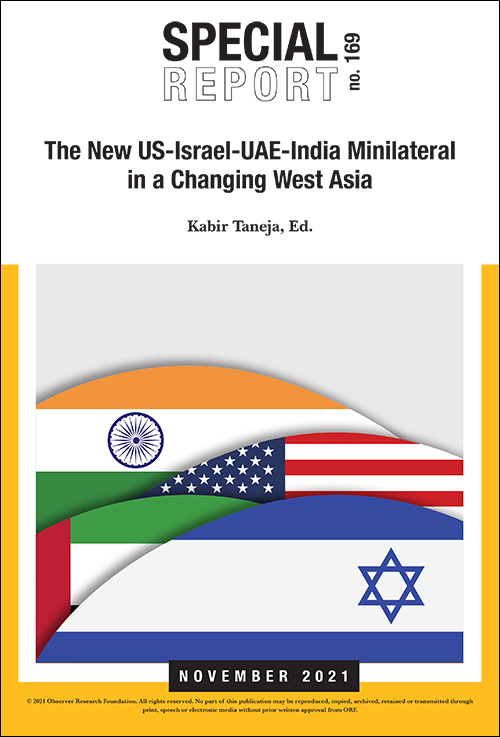
The New US-Israel-UAE-India Minilateral in a Changing West Asia​

Introduction​


The US-Israel-UAE trilateral was held in October between US Secretary of State Antony Blinken, Israel’s alternate Prime Minister and Foreign Minister Yair Lapid, and UAE’s Foreign Minister Sheikh Abdullah bin Zayed Al Nahyan. A few days later, India joined the new minilateral: External Affairs Minister S Jaishankar and his Israeli counterpart held a virtual meeting with their US and UAE equivalents during Jaishankar’s official visit to Israel. India has already hinted of a second meeting of the grouping soon.


The initial US-Israel-UAE trilateral meeting sought to discuss the issue of further operationalising and normalising the Abraham Accords, signed in September 2020 between a collective of Arab states led by the UAE, and Israel. The three also underlined the need to normalise their relations after decades of conflict, and discussed the Joint Comprehensive Plan of Action (JCPOA) or the Iran nuclear deal, which aimed to bring Tehran back into a certain level of the geopolitical mainstream. (The deal had suffered a setback after then US President Donald Trump unceremoniously exited the agreement in May 2018.)


With India stepping into the grouping, it brings its own set of strategic and geoeconomic interests to those of the Gulf states. Together, the Gulf Cooperation Council (GCC) bloc is India’s single largest trading partner. As both Saudi Arabia and the UAE move towards a post-oil era, with other Gulf states in tow, the Indian market offers itself as an attractive proposition, both as an oil consumer over the next decade, and as a general investment destination that has over 1.3 billion customers and investors alike.


India for long has maintained an impressive geostrategic balance in dealing with the three poles of power in the region: Saudi Arabia, Israel, and Iran. The Abraham Accords now offers newer and comparatively risk-free economic opportunities led by the UAE and Israel. Iran is also looking at easing tensions around these new realities, as Tehran already has better relations with the UAE and is opening channels of talks with Saudi Arabia.


This report dissects the US-Israel-UAE-India construct as all four countries appear equally keen. In the first chapter, Akshobh Giridharadas highlights the current state of India-US relations amidst the evolving nature of the historical, and often unsteady, US presence in West Asia, and the newer outlooks in the Indo-Pacific. I then write on Israel, its place within the Abraham Accords framework, and how this crucial geopolitical shift allows it more room in the geopolitical mainstream, including in its relations with the other three states in this new quadrilateral.


Mohammed Sinan Siyech follows with his section that investigates the India–UAE bonhomie, which is taking a life of its own as Abu Dhabi champions India’s interests within the Arab world. The report closes with a section authored by Navdeep Suri that delves into the drastic reorientation of New Delhi’s view of West Asia over the past years.


The aim of this report is to outline the most significant debates that are accompanying the emergence of this grouping. While all four sections utilise a linear method of interpreting the unfolding events, all four states are in this minilateral for reasons that go far beyond the Abraham Accords.


– Kabir Taneja


For Washington, the Elephant in the Room is a Dragon ​


Akshobh Giridharadas


The US-Israel-UAE-India minilateral aims to fructify a partnership in West Asia, and in October, the senior-most foreign policy representatives of the four nations sowed the seeds of the new forum. As Indian analyst C. Raja Mohan writes, “It is perhaps too early to call the new minilateral with the US, UAE and Israel the ‘new Quad’ for the Middle East. It will be a while before this grouping will find its feet and evolve.”[1]


Indeed, what is known as the ‘Quad’ has itself taken a long time to find its bearings: it started in 2007, when India, the US, Japan and Australia came together to form a Tsunami Core Group in response to the 2004 tsunami in the Indian Ocean; it dissipated soon after the first exploratory meeting on the sidelines of the ASEAN Regional Forum summit in Manila in May 2007. There was a sense of nebulousness about the Quad. But 2007 was a different time; there were talks about a peaceful China rise. A decade later, the Quad was revived as the four countries met again in Manila. By then, China had moved from Deng’s peaceful China rise to Xi’s pugnacity in the South China Sea.


This new forum for West Asia makes sense.[2] India has enhanced its strategic partnership with the US through the Quad alongside Australia and Japan, based on a mutual outlook of the Indo-Pacific. Washington’s partnership with Tel Aviv is as old as the founding of the state, and Washington and Abu Dhabi are described as “close friends and strong allies”. The signing of the Abraham Accords was the missing piece of the puzzle. This author has earlier argued that while the previous US administration under President Donald Trump “eschewed a sense of multilateralism and global involvement, and adopted a path of economic nationalism and insularity,” there was one exception—i.e., a seminal deal in the Middle East, which continues to figure in the US’s geostrategic calculations.[3]


The historic Abraham Accords, viewed as having been driven by Trump’s son-in-law and adviser, Jared Kushner, was hatched in the final months of the president’s term. The October 2021 meeting of the four nations owes its existence to these accords; without the deal, Abu Dhabi and Tel Aviv could not have taken to the public stage with one another.


While the UAE and Israel have never fought militarily, Abu Dhabi did participate in the Arab League boycott that had been in place since Israel’s founding in 1948. Since the signing of the accords, more than just a thawing of animosities, there has been an emerging synergy between Abu Dhabi and Tel Aviv. Indeed, new embassies and consulates have opened in both sides, their respective ambassadors have been appointed, the first of many new direct flights between UAE and Israel is operational, a UAE-Israel business council was created to discuss trade and commercial ties, joint MOUs have been inked between their stock exchanges; and cultural exchanges have started between their diasporic communities.


A week prior to the meeting, on 13 October, Israeli diplomats congregated at the same venue, as the US-India Strategic Partnership Forum (USISPF) hosted India’s Finance Minister, Nirmala Sitharaman in Washington D.C. On the same day, Israeli Foreign Minister Yair Lapid met with UAE Foreign Minister Sheikh Abdullah bin Zayed Al Nahya, and US Secretary of State Antony Blinken—a precursor to the West Asia partnership. As noted by ORF analyst Rajeswari Pillai Rajagopalan, the meeting was held to review the “the extent of transformation in West Asia since the announcement of the Abraham Accords.”[4]


All four states—the US, Israel, UAE, and India—have already stepped up on their cooperation in trade and investment. They have also often showed support for each other on critical political matters.


According to Ned Price, US State Department spokesperson, the four discussed “expanding economic and political cooperation in the Middle East and Asia, including through trade, combating climate change, energy cooperation, and increasing maritime security.” Other items on the agenda included people-to-people ties in science and technology, and Covid-19 relief efforts and vaccine outreach.[5]


The Joe Biden administration appears keen on building on his predecessor’s efforts in West Asia. As a region, the Middle East has been long fraught with turbulence and friction. Like its counterpart quadrilateral forum for the Indo-Pacific, the US-India-Israel-UAE partnership claims to have a minimal security agenda and is not looking at negotiating overt military deals. At the same time, however, it does seem to have strategic undertones aimed at encirclement and containment. After all, there is an elephant in the room, and it is a dragon in the form of China.


With the August US withdrawal from Afghanistan, there is a perceived vacuum in West Asia—one that Moscow, Beijing and Tehran are vying to fill. The Quad was not enough, and Washington subsequently entered the AUKUS trilateral, along with the United Kingdom and Australia, to formally consolidate a military trilateral aimed at frustrating Beijing’s expansionist ambitions in the Indo-Pacific.[6]


The emergence of the so-called “new Quad” reflects the Biden administration’s alacrity at a China containment policy. For Washington, there is a categorisation of enemies: the historical one in Iran; the cyclical one in Russia; and the new strategic one in China.[7] As Beijing increases its engagement with the UAE and Israel, Washington wants to negate Chinese presence in the region, whether through military or political means, or trade. Despite the historic and long alliance with Abu Dhabi and Tel Aviv, there is concern over Beijing’s influence in the region.


As former Indian Ambassador Navdeep Suri wrote about Chinese investments in Israel, highlighting “the new US $1.7 billion container terminal built in Haifa by state-owned Shanghai International Port Group” will boost Israel’s logistics capacity. Suri also noted that “Ashdod, Israel’s only other major port on the Mediterranean is also being upgraded by the China Harbour Engineering Company.” Chinese presence in the region has exacerbated US security concerns, given Washington’s own naval footprint.[8]


Meanwhile, in Abu Dhabi, Chinese port presence continues. Ambassador Suri points out that the Emiratis “have signed a 35-year concession agreement with China Ocean Shipping Company (COSCO) to develop a new container terminal in Khalifa Port that is situated halfway between Abu Dhabi and Dubai.” This adds to the many nebulous investments that are part of China’s flagship Belt and Road Initiative (BRI) project. On the telecommunications front, Huawei has made inroads for its 5G service for both of UAE’s service providers—i.e., Etisalat and du.


The US withdrawal from Afghanistan leaves a void, one that Pakistan is keen to leverage now that the Taliban are at the helm.[9] Islamabad wants to assist Beijing in extending the coveted China-Pakistan Economic Corridor (CPEC), bolstering China’s global footprint and thus consolidating the BRI. The new Taliban regime in Kabul has already hailed China as its “most important partner” and expressed interest in being part of the CPEC. This is something that Washington, along with Abu Dhabi, Tel Aviv and Delhi are averse to. Yet, Beijing is not the only adversary that concerns Washington. Since Iran and China signed a comprehensive strategic partnership in March earlier this year, Tehran officially became part of the BRI.


Three out of the four partners have a sense of trepidation with a perceived threat from the regime in Tehran, while the US and Israel do not share any formal diplomatic relations with the Shia-majority state. The concern of joint economic and security cooperation between China, Iran, Pakistan and Turkey has perhaps accentuated Washington’s need for such a pact.


Washington is hoping that the Abraham Accords, and subsequent engagement with UAE and Israel, will set a precedent for another of its long-term security allies, Saudi Arabia, to come to the table and normalise and formalise ties with Israel. Although several dossiers have already pointed to previous covert meetings between Riyadh and Tel Aviv.[10]


While the US has shown unwavering support for Israel, one thing consistent in all prior Democrat and Republican administrations, was the neutrality of Jerusalem and the consensus towards working for a two-state solution – that was, until Donald Trump. Trump moved the embassy from Tel Aviv to Jerusalem and displayed brazen apathy to the plight of the Palestinians.[11] Today Washington is keen to show that the fight for the Palestinian cause is not forgotten and unlike Trump, Biden continues to insist on the two-state solution.


State department officials have said the Abraham Accords does not replace a negotiated settlement. The Palestinians remain despondent with the resurgence of the Israeli right in the Bennett-Lapid government. Meanwhile, the Abraham Accords by Arab States and Washington’s lip-service towards a settlement while overlooking West Bank settlements is fait-accompli.


There is a sense of nebulousness in how this new forum will metamorphosise; after all, the Indo-Pacific Quad took over a decade to fructify. However, there is one thing the Biden administration has signaled since the exit of Trump – that Washington is once again willing to engage with other countries within the ambit of multilateral platforms.


Israel’s Three-Front Opportunity​


Kabir Taneja


After months of political and electoral uncertainty, Naftali Bennett, Israel’s former defence minister and leader of the Yamina party in June 2021 took charge of a stitched-up coalition that ousted then Prime Minister Benjamin Netanyahu. Three months after Bennett took charge, India’s foreign minister visited Israel to take an already dynamic bilateral forward. This time, the Indian visit was not only about the two countries’ bilateral relationship; it also discussed defence cooperation and diplomacy with regional and international stakeholders in West Asia.[12]


During the visit, a contingent from the Indian Air Force (IAF) took part in the Blue Flag 2021 exercise hosted by Israel, where it showcased its Mirage 2000 fighter aircraft for the first time. In 2017, India had attended the exercise with a contingent of IAF’s ‘Garud’ commandos.[13] On the sidelines of the military exercise, India joined the US, Israel, and the UAE for a foreign ministers’ minilateral. The chief of the UAE’s Air Force, Major General Ibrahim Nasser Mohammed Al Alawi, also visited Israel during this period, adding military heft to existing political and diplomatic cooperation in the region.[14] Some Israeli analysts surmised that the military exercise was a show of both international friendship, and of Israel’s strength especially aimed at Iran, its primary regional foe.[15]


As far as India is concerned, its ties with Israel has taken strides since 2014, under the governments of Prime Minister Narendra Modi and Netanyahu. The 2017 visit by Modi to Israel, the first by any Indian prime minister, broke many shackles of India’s West Asia policies. Historically, India has been steadfast in its ideations of non-alignment, advocating for the chimera-like two-state solution to the long-running Israel–Palestine issue. Such position has long been sought not only by India, but majority of the international community as well despite exerting little effort, if at all, to see it through.


The changes made by India in its approach to both Israel and Palestine were well-timed. Prior to his visit to the Jewish state, Modi hosted the president of Palestine, Mahmoud Abbas, and later in 2018 visited Ramallah in the West Bank. This latter visit does not get enough credit for successfully de-hyphenating Israel and Palestine issues in India’s diplomatic lexicon and allowing India and Israel relations, specifically in the commercial sector, to thrive.


The 2017 Modi visit was followed by Netanyahu coming to India six months later in January 2018, solidifying a new trajectory for the two states’ ties. Israel and India’s ties cover different areas of cooperation including for example, the technologies sector that works across streams including Information Technology, agriculture, and clean water management. However, defence remains the frontrunner among these different sectors. Israeli weapons have long played a crucial part in India’s military challenges, and this is seen across the country’s history of conflicts: the 1965 war with China, the 1971 war with Pakistan, and the ‘Surgical Strike’ conducted in February 2019 against terror camps inside Pakistan in response to the Pulwama terror strike a few days earlier.[16]


During External Affairs Minister S Jaishankar’s visit to Israel in October, the two countries committed to a 10-year defence cooperation plan. According to available data, Israel—now the 8th largest weapons supplier in the world—sells 45 percent of its annual defence-related products to India. Indeed, New Delhi is the single largest customer for the Israeli defence industry, with annual sales consistently going over US$1 billion beginning in 2014.[17] During the Galwan crisis between India and China in 2020, the defence ministers of India and Israel held consultations around emergency procurements. Israel consistently assured “all possible help” for India.[18]


For Israel, the minilateral with India, UAE and the US offers it both a regional and global place for its interests. The Abraham Accords deal, which seeks to normalise relations with a significant section of the Arab world, also eased pressures of conducting a political balancing act for states such as India. As briefly alluded to earlier, India has sought to balance its interests between the three poles of power in the region—the Arab world, Israel, and Iran. For Israel, the normalisation of relations with the UAE and the GCC bloc, which together is India’s largest trading partner, will be an excellent engine to access markets and industries that have not been its strong points. Other than defence, which remains transactional in nature, much of the celebrations behind the India–Israel bonhomie is yet to bear fruit. From Israel’s perspective, the international dimension of the Abraham Accords is an added benefit to what is essentially a regional deal. The trade and economic component has significant marketable capacity, with Israel being seen as a “startup nation”, as christened by authors Dan Senor and Saul Singer, and the UAE as a “scale up” nation.[19],[20]


Beyond trade and economics, the fast-paced developments in India–Israel ties particularly under Netanyahu and Modi, also have a strong ideological argument around them. This is perhaps where a certain level of discrepancy could emerge between what Israel sees as the strategic function of the Abraham Accords, and how India views its ties with the region. Iran continues to weigh heavily into Israel’s security calculus, and the Abraham Accords gives it more leverage to push Tehran towards a more moderate path when it comes to regional geopolitics in West Asia.


The Israel–Iran issue remains a heavy presence in and around the Abraham Accords construct. The 2012 attack on an Israeli diplomat in Delhi, and an IED explosion only a few feet from the Israeli embassy also in Delhi in January 2021—both alleged to be conducted by Iran—has brought India (like many other countries) in the midst of the rivalry between the two states. Israel’s new ambassador to India, Naor Gilon, called Iran the “biggest destabiliser in the region,” to which the Iranian mission in India immediately issued a response. These statements showcase the complexities of managing the increasing spillovers of West Asia’s geopolitical tussles. Gilon’s statement was in the context of the Abraham Accords itself; he said that the deal had huge potential and that in a way, the question over Iran played a significant role in the making of the accords. “One of the reasons why our relations with the Gulf countries came to the open was, among other things, the fear and shared concern from Iran,” he said.[21]


Beyond economics and trade, it is yet to be ascertained what the Abraham Accords means strategically to West Asia’s fluid geopolitics. Within the India-UAE-US-Israel framework, China remains a consistent concern across member states. There is no doubt that China is a critical economic partner today for Israel, standing only second to the US and potentially soon becoming the largest trade partner. Conversations on international politics, economics and security cannot be held without China, and as US National Security Adviser Jake Sullivan puts it, a “stiff competition” developing between the US and China across the economic and political spectrums is something most states will have to learn to navigate.[22] This is despite the fact that Israel sees itself as being firmly in the US camp.


While both India and Israel have maintained good pace in their bilateral relationship, it is perhaps premature to recognise this ‘minilateral’ as a ‘new Quad’, as popularised in the Indo-Pacific region over the past few years. Despite Israel’s interpretations, India will maintain its reviewed version of non-alignment, now known as “strategic autonomy”. While the former version may be past its expiration date both in theory and practice, it has delivered dividends for India in its approach to West Asia. Over the decades, India has managed to deal with all concerned interests robustly, while not getting pulled into the fragility of the region’s regional politics. And despite the successes of India–Israel ties, the fundamentals of “interests first” from New Delhi’s perspective should not be misinterpreted by Israel around this new minilateral in West Asia.


The View from Abu Dhabi​


Mohammed Sinan Siyech


The UAE’s primary aim in its foreign policy is to maintain status quo in its domestic political system; it also seeks to keep political control in the hands of the current ruling family that includes the crown prince of Abu Dhabi, Sheikh Mohammed Bin Zayed al Nahyan.[23] The UAE has made sure to confront any group or nation that threatens this goal, the most prominent of which is the Muslim Brotherhood, which has broadly expressed its ambitions to have Islamic rule across the Arab world.[24]


Thus, the UAE took a belligerent stand towards Mohammed Morsi, a Muslim Brotherhood figure who became the president of Egypt in 2012 and supported the successor, Fateh al Sisi, after Morsi was deposed in 2013.[25] In the same vein, the UAE was also at the forefront of the embargo against Qatar in 2017 following the latter’s decision to allow its news channel Al Jazeera to “encourage” revolutions across the Middle East.[26] Despite reconciling with Qatar in 2021, the news channel is still not allowed to broadcast in the UAE. [27]


It is this strategic calculation of its domestic and foreign policy goals that has kept the UAE close to the US, long a buyer of its oil and a guarantor of security in West Asia. The same calibrations also impelled Abu Dhabi to sign the Abraham Accords with Israel allowing the UAE to diversify its allies across the world.[28] The deal also ensured that the UAE cemented its friendship with the US, which is Israel’s closest ally. The US served as main interlocutor for the peace treaty during Donald Trump’s presidency.[29]


More recently, however, Abu Dhabi has been trying to de-escalate its conflicts and tensions by engaging with Iran, Turkey and other nations with which it has had fractious relations in the past.[30] Using this prism, analysing UAE’s presence within the four-member forum reveals certain benefits that the UAE may be hoping to derive.


An important point to reiterate regarding the meeting of the four nations is that the UAE, the US, and Israel had already met as a trilateral following the signing of the Abraham Accords. India’s inclusion in the grouping should therefore be viewed within the framework of that trilateral.[31] As the Israeli ambassador to India has noted, this minilateral would not have been possible if it were not for the accords.[32]


As such, the US has underscored cooperation with the other three on issues such as climate change, trade, and technological innovation as impetus for the new forum.[33] This falls in line with Abu Dhabi’s other goals—i.e., the continuation of economic inflow to a nation that is slowly trying to reduce dependency on oil. This was highlighted in a document released in 2021 that outlines the UAE’s foreign policy ambitions.[34] This is crucial. After all, the country has been able to continue providing generous welfare benefits to its citizens owing to its earnings from oil; a dip in these earnings could affect these benefits and thereby lead to public discontent. Thus, enhanced trade with the other three nations is expected to provide the UAE benefits in the form of economic opportunities and jobs as it attempts to recover from the massive fallout of the Covid-19 pandemic.


Another benefit for the UAE is the opportunity to procure advanced weapons such as the F-35 fighter jets from the US, with blessings from Israel who was the first operator in the region of the type. Over the past decade, Abu Dhabi has advanced its military technology and expertise, giving the mission the name, ‘Little Sparta’.[35] By interlinking itself with these three nations that also trade heavily on defence supplies, it is possible that the UAE is ensuring a constant flow of weapons to its military.


A third benefit for UAE would likely be a consensus on the definitions of “terrorism” and “extremism”, at least for the four nations. Already, the UAE, Israel, and India have similar outlooks on defining who extremists are, often painting political non-violent Islamists and Jihadists with the same brush. Indeed, the UAE along with Saudi Arabia has also long been lobbying to shut down groups like the Council of American Islamic Relation (CAIR) and the Muslim American Society (MAS), both located in the US—which have been outspoken against states like the UAE and Saudi Arabia for their actions in Yemen and other parts of the Muslim world.[36] While the US has rejected these allegations leveled by Abu Dhabi,[37] the UAE is hoping that a joint consensus by the other three could compel the US to take a less belligerent view of these Muslim groups.


More importantly, it is likely that the Arab nation is hedging its bets by ensuring that the US also supports it as much as China does. This is all the more important given how the US has taken a backseat in the affairs of the Middle East.[38] At the same time, the UAE is also hoping that India, among other nations in the region, plays a more proactive role in providing security to the UAE.


Some analysts have noted that the new minilateral forum in West Asia acts as counterweight to China. However, this is not necessarily true, given both the UAE’s and Israel’s increasing closeness with China over the last decade. [39] The UAE and China indeed now share a “comprehensive strategic partnership”.[40]


Therefore, while the new grouping is not necessarily anti-China, it is wholly possible that the UAE could use the US’s and India’s wariness of China to procure more benefits for itself. Similarly, Iran, while a threat to Israel is not a major enemy of the group, too. Indeed, the UAE has recently encouraged reconciliatory steps towards Iran; India has historically had harmonious relations with the nation as well.


Every country within this quadrilateral grouping would be driven by their own strategic calculations. For the UAE, the biggest impetus to partake in such foreign policy manoeuvres is to ensure continuity of the Zayed clan at the throne. It entered the partnership, keeping in mind the economic benefits of increased trade, access to weapons required to ensure its national security in a turbulent region, and possibly, furthering its goal of combating Muslim groups it deems as threatening to its national security.


The overarching logic, though, likely lies in the UAE hedging its economic and security bets by using the US–China and India–China rivalry to its advantage. It remains to be seen whether its goals match up with those of the others, and whether the minilateral could become a powerful force in the region, or mere diplomatic show with little consequence.


India’s Stakes​


Navdeep Suri


The emergence of a new, informal quadrilateral grouping that brings India together with UAE, Israel and the United States (US) holds considerable promise from an Indian standpoint. At the minimum, it pushes India a notch higher in its growing stature in regional and global platforms. Beyond that, taking a more expansive view, it could also create entirely new political, economic, defence, and security dynamics in West Asia.


That the first US-UAE-Israel-India meeting happened while India’s Minister of External Affairs S Jaishankar was in Tel Aviv, carried its own significance. EAM Jaishankar later described India’s ties with the three nations as “among the closest, if not the closest,”[41] a fact also borne out by a Survey of India’s Strategic Community carried out by Brookings Institution in 2019. It ranked Israel and UAE as India’s two most trusted partners in West Asia.[42]


This is not a coincidence. Prime Minister Narendra Modi has personally invested effort and energy in developing these two relationships. When he visited Abu Dhabi in August 2015, he became the first Indian prime minister to do so since Indira Gandhi in 1981 – a long gap of 34 years. Sheikh Mohammed bin Zayed al Nahyan, Crown Prince of Abu Dhabi and the de facto ruler of UAE, responded with a state visit to India in February 2016 and was soon back in January 2017 as the Chief Guest for India’s Republic Day celebrations. Prime Minister Modi returned to UAE in February 2018 and again in August 2019, when he was conferred the Order of Zayed, UAE’s highest civilian award. In that period of four years, the two countries had signed a Comprehensive Strategic Partnership Agreement and established pathways for collaboration in areas ranging from energy and investment, to defence and maritime security.[43]


A similar dynamism and sense of urgency was also imparted to India’s ties with Israel. In 2015, President Pranab Mukherjee became the first Indian head of state to visit Israel; a year later, India hosted Israeli President Reuven Rivlin. In July 2017, PM Modi became the first Indian prime minister to visit Israel and there the relationship was elevated to a strategic partnership. The momentum continued when in 2018, then Prime Minister Benjamin Netanyahu came to India—by then, a relationship that had grown quietly since the establishment of full diplomatic ties in 1992 had grown wings. India had finally shed its paranoia that ties with the Jewish state would impact its relations with key Arab states. In a relatively short span of time, Israel has become one of India’s top three suppliers of defence equipment, a major source of critical technologies, and a key partner in the agriculture sector through an extensive network of Centres for Excellence.


The Abraham Accords that formalised diplomatic ties between Israel and UAE in August 2020 was a timely catalyst for a nascent trilateral cooperation between the three countries. Meanwhile, the International Federation of Indo-Israel Chambers of Commerce (IFIICC) was launched in December 2020, with its international headquarters in Dubai. The event was attended by the Indian and Israeli heads of mission in Abu Dhabi and the UAE ambassador to India. Israel’s and India’s ambassadors to each other’s territory participated virtually, along with several leading lights of the Indian business community in UAE. The American Jewish Committee helped put together an important webinar on 14 February 2021 titled ‘India, Israel and the Gulf: New Opportunities’. The Consuls General of India and Israel in Dubai added another dimension by hosting an India-Israel-UAE business meeting at the India Pavilion at Dubai Expo on 25 October 2021. Rony Yedidia-Clein, Israel’s Deputy Chief of Mission in Delhi had indicated in October that a meeting between the three foreign ministers may take place on the side-lines of Dubai Expo. The meeting has not happened yet, at the time of writing this report.[44]


These seemingly disparate initiatives are underpinned by a powerful economic rationale. Over 500 Indian business groups have a presence in Dubai and virtually every significant Indian company has its MENA headquarters in the city. Some 23 leading Indian banks have offices at Dubai International Financial Centre and direct flight links between Dubai and Tel Aviv will allow these corporates and bankers to cover Israel more easily. Israel has been quick to open its consulate in Dubai and has started reaching out to the influential Indian business community that can serve as a bridge between the three countries. Several Dubai-based Indian businesses have already announced tie-ups with their Israeli counterparts in sectors like healthcare, pharmaceuticals, and financial services. The Dubai Multi-Commodity Centre, having carved out a niche for itself in sectors like gold, diamonds and jewellery that are of interest to both Israel and India, is also set to play a role.


The three countries also place a strong emphasis on technology and innovation. Israel’s claim as ‘Start-up Nation’ is well-established. India has surprised many by emerging as one of the primary destinations for venture capital, spawning as many as 33 unicorns during the first ten months of 2021. UAE may not be in the same league yet but there can be no doubt about its outsized ambition—from its mission to Mars and the vision behind Dubai Future Foundation and Abu Dhabi’s Hub 71, to the world’s first Ministers for the Future and for Artificial Intelligence. In addition, UAE also has abundant capital resources, including those housed in sovereign wealth funds like ADIA, Mubadala and ADQ. These offer the tantalising possibility of marrying cutting-edge technology and capital, with the market size and scale offered by a country like India. A couple of tripartite ventures are already in the pipeline and these could be the harbingers of many more to follow.


For the US, the coming together of three key partners, each with a significant defence capability, will inevitably bring a strong security dimension to the new grouping. This may not be on the cards immediately and the relevant spokespersons will make the usual statements affirming that this is essentially a non-military gathering of like-minded nations. However, as in the case of the other Quad that brought India, Japan and Australia together with the US, the desire to push back against growing Chinese influence may provide the subtext. Israel, UAE and the US also have strong concerns about Iran’s manifest influence in an arc ranging from Yemen to Lebanon, including Bahrain, Iraq and Syria in its path. This may cause some problems for India in terms of its extensive ties with Iran but Indian diplomacy has shown that it can rise to the challenge of maintaining close ties with countries that may be at loggerheads with each other. Moreover, the advantage of an informal grouping like this minilateral is that all members do not necessarily have to agree on everything.


In a tweet following the meeting, EAM Jaishankar said that the four ministers “discussed working together more closely on economic growth and global issues” and emphasised the “agreement on expeditious follow-up.” The US side stressed on the synergy between the four countries, while the Israeli statement was more expansive, highlighting the “possibilities for joint infrastructure projects in the fields of transportation, technology, maritime security, and economics and trade.”[45]


The suggestion about joint infrastructure projects holds out the exciting possibility of the kind of multi-modal India-ArabMed transport corridor that had been proposed by Prof. Michael Tanchum.[46] This could potentially link Indian ports like Mumbai with Piraeus in Greece via Jebel Ali in UAE, and by rail from there via Saudi Arabia and Jordan to Israel’s Mediterranean port of Haifa. Much of the infrastructure is already in place or is coming up rapidly and a relatively short 300-km link from Al Haditha on the Saudi-Jordan border to Beit She’an near the Jordan-Israel border could provide seamless connectivity. This could have a strategic benefit for India by bringing it closer to European markets. That India is fast-tracking its FTAs with UAE, Israel and the European Union should impart additional momentum to this project. It could also provide some of the logistics support needed to restructure supply chains and reduce the dependence of global trade on China.


For India, the emergence of this ‘new Quad’ is a welcome development, bringing tangible political and economic gains in the short term and offering the possibility of substantive strategic advantages in the future if some of the relevant pieces fall into place.


About the Authors


Akshobh Giridharadas
is a Visiting Fellow at ORF.


Mohammed Sinan Siyech is a Non-Resident Associate Fellow at ORF.


Navdeep Suri is a Distinguished Fellow at ORF.


Kabir Taneja is a Fellow at ORF.
 

The New US-Israel-UAE-India Minilateral in a Changing West Asia​

Introduction​

The US-Israel-UAE trilateral was held in October between US Secretary of State Antony Blinken, Israel’s alternate Prime Minister and Foreign Minister Yair Lapid, and UAE’s Foreign Minister Sheikh Abdullah bin Zayed Al Nahyan. A few days later, India joined the new minilateral: External Affairs Minister S Jaishankar and his Israeli counterpart held a virtual meeting with their US and UAE equivalents during Jaishankar’s official visit to Israel. India has already hinted of a second meeting of the grouping soon.

The initial US-Israel-UAE trilateral meeting sought to discuss the issue of further operationalising and normalising the Abraham Accords, signed in September 2020 between a collective of Arab states led by the UAE, and Israel. The three also underlined the need to normalise their relations after decades of conflict, and discussed the Joint Comprehensive Plan of Action (JCPOA) or the Iran nuclear deal, which aimed to bring Tehran back into a certain level of the geopolitical mainstream. (The deal had suffered a setback after then US President Donald Trump unceremoniously exited the agreement in May 2018.)

With India stepping into the grouping, it brings its own set of strategic and geoeconomic interests to those of the Gulf states. Together, the Gulf Cooperation Council (GCC) bloc is India’s single largest trading partner. As both Saudi Arabia and the UAE move towards a post-oil era, with other Gulf states in tow, the Indian market offers itself as an attractive proposition, both as an oil consumer over the next decade, and as a general investment destination that has over 1.3 billion customers and investors alike.

India for long has maintained an impressive geostrategic balance in dealing with the three poles of power in the region: Saudi Arabia, Israel, and Iran. The Abraham Accords now offers newer and comparatively risk-free economic opportunities led by the UAE and Israel. Iran is also looking at easing tensions around these new realities, as Tehran already has better relations with the UAE and is opening channels of talks with Saudi Arabia.

This report dissects the US-Israel-UAE-India construct as all four countries appear equally keen. In the first chapter, Akshobh Giridharadas highlights the current state of India-US relations amidst the evolving nature of the historical, and often unsteady, US presence in West Asia, and the newer outlooks in the Indo-Pacific. I then write on Israel, its place within the Abraham Accords framework, and how this crucial geopolitical shift allows it more room in the geopolitical mainstream, including in its relations with the other three states in this new quadrilateral.

Mohammed Sinan Siyech follows with his section that investigates the India–UAE bonhomie, which is taking a life of its own as Abu Dhabi champions India’s interests within the Arab world. The report closes with a section authored by Navdeep Suri that delves into the drastic reorientation of New Delhi’s view of West Asia over the past years.

The aim of this report is to outline the most significant debates that are accompanying the emergence of this grouping. While all four sections utilise a linear method of interpreting the unfolding events, all four states are in this minilateral for reasons that go far beyond the Abraham Accords.

- Kabir Taneja

For Washington, the Elephant in the Room is a Dragon ​

Akshobh Giridharadas
The US-Israel-UAE-India minilateral aims to fructify a partnership in West Asia, and in October, the senior-most foreign policy representatives of the four nations sowed the seeds of the new forum. As Indian analyst C. Raja Mohan writes, “It is perhaps too early to call the new minilateral with the US, UAE and Israel the ‘new Quad’ for the Middle East. It will be a while before this grouping will find its feet and evolve.”[1]

Indeed, what is known as the ‘Quad’ has itself taken a long time to find its bearings: it started in 2007, when India, the US, Japan and Australia came together to form a Tsunami Core Group in response to the 2004 tsunami in the Indian Ocean; it dissipated soon after the first exploratory meeting on the sidelines of the ASEAN Regional Forum summit in Manila in May 2007. There was a sense of nebulousness about the Quad. But 2007 was a different time; there were talks about a peaceful China rise. A decade later, the Quad was revived as the four countries met again in Manila. By then, China had moved from Deng’s peaceful China rise to Xi’s pugnacity in the South China Sea.

This new forum for West Asia makes sense.[2] India has enhanced its strategic partnership with the US through the Quad alongside Australia and Japan, based on a mutual outlook of the Indo-Pacific. Washington’s partnership with Tel Aviv is as old as the founding of the state, and Washington and Abu Dhabi are described as “close friends and strong allies”. The signing of the Abraham Accords was the missing piece of the puzzle. This author has earlier argued that while the previous US administration under President Donald Trump “eschewed a sense of multilateralism and global involvement, and adopted a path of economic nationalism and insularity,” there was one exception—i.e., a seminal deal in the Middle East, which continues to figure in the US’s geostrategic calculations.[3]

The historic Abraham Accords, viewed as having been driven by Trump’s son-in-law and adviser, Jared Kushner, was hatched in the final months of the president’s term. The October 2021 meeting of the four nations owes its existence to these accords; without the deal, Abu Dhabi and Tel Aviv could not have taken to the public stage with one another.

While the UAE and Israel have never fought militarily, Abu Dhabi did participate in the Arab League boycott that had been in place since Israel’s founding in 1948. Since the signing of the accords, more than just a thawing of animosities, there has been an emerging synergy between Abu Dhabi and Tel Aviv. Indeed, new embassies and consulates have opened in both sides, their respective ambassadors have been appointed, the first of many new direct flights between UAE and Israel is operational, a UAE-Israel business council was created to discuss trade and commercial ties, joint MOUs have been inked between their stock exchanges; and cultural exchanges have started between their diasporic communities.

A week prior to the meeting, on 13 October, Israeli diplomats congregated at the same venue, as the US-India Strategic Partnership Forum (USISPF) hosted India’s Finance Minister, Nirmala Sitharaman in Washington D.C. On the same day, Israeli Foreign Minister Yair Lapid met with UAE Foreign Minister Sheikh Abdullah bin Zayed Al Nahya, and US Secretary of State Antony Blinken—a precursor to the West Asia partnership. As noted by ORF analyst Rajeswari Pillai Rajagopalan, the meeting was held to review the “the extent of transformation in West Asia since the announcement of the Abraham Accords.”[4]

All four states—the US, Israel, UAE, and India—have already stepped up on their cooperation in trade and investment. They have also often showed support for each other on critical political matters.

According to Ned Price, US State Department spokesperson, the four discussed “expanding economic and political cooperation in the Middle East and Asia, including through trade, combating climate change, energy cooperation, and increasing maritime security.” Other items on the agenda included people-to-people ties in science and technology, and Covid-19 relief efforts and vaccine outreach.[5]

The Joe Biden administration appears keen on building on his predecessor’s efforts in West Asia. As a region, the Middle East has been long fraught with turbulence and friction. Like its counterpart quadrilateral forum for the Indo-Pacific, the US-India-Israel-UAE partnership claims to have a minimal security agenda and is not looking at negotiating overt military deals. At the same time, however, it does seem to have strategic undertones aimed at encirclement and containment. After all, there is an elephant in the room, and it is a dragon in the form of China.

With the August US withdrawal from Afghanistan, there is a perceived vacuum in West Asia—one that Moscow, Beijing and Tehran are vying to fill. The Quad was not enough, and Washington subsequently entered the AUKUS trilateral, along with the United Kingdom and Australia, to formally consolidate a military trilateral aimed at frustrating Beijing’s expansionist ambitions in the Indo-Pacific.[6]

The emergence of the so-called “new Quad” reflects the Biden administration’s alacrity at a China containment policy. For Washington, there is a categorisation of enemies: the historical one in Iran; the cyclical one in Russia; and the new strategic one in China.[7] As Beijing increases its engagement with the UAE and Israel, Washington wants to negate Chinese presence in the region, whether through military or political means, or trade. Despite the historic and long alliance with Abu Dhabi and Tel Aviv, there is concern over Beijing’s influence in the region.

As former Indian Ambassador Navdeep Suri wrote about Chinese investments in Israel, highlighting “the new US $1.7 billion container terminal built in Haifa by state-owned Shanghai International Port Group” will boost Israel’s logistics capacity. Suri also noted that “Ashdod, Israel’s only other major port on the Mediterranean is also being upgraded by the China Harbour Engineering Company.” Chinese presence in the region has exacerbated US security concerns, given Washington’s own naval footprint.[8]

Meanwhile, in Abu Dhabi, Chinese port presence continues. Ambassador Suri points out that the Emiratis “have signed a 35-year concession agreement with China Ocean Shipping Company (COSCO) to develop a new container terminal in Khalifa Port that is situated halfway between Abu Dhabi and Dubai.” This adds to the many nebulous investments that are part of China’s flagship Belt and Road Initiative (BRI) project. On the telecommunications front, Huawei has made inroads for its 5G service for both of UAE’s service providers—i.e., Etisalat and du.

The US withdrawal from Afghanistan leaves a void, one that Pakistan is keen to leverage now that the Taliban are at the helm.[9] Islamabad wants to assist Beijing in extending the coveted China-Pakistan Economic Corridor (CPEC), bolstering China’s global footprint and thus consolidating the BRI. The new Taliban regime in Kabul has already hailed China as its “most important partner” and expressed interest in being part of the CPEC. This is something that Washington, along with Abu Dhabi, Tel Aviv and Delhi are averse to. Yet, Beijing is not the only adversary that concerns Washington. Since Iran and China signed a comprehensive strategic partnership in March earlier this year, Tehran officially became part of the BRI.

Three out of the four partners have a sense of trepidation with a perceived threat from the regime in Tehran, while the US and Israel do not share any formal diplomatic relations with the Shia-majority state. The concern of joint economic and security cooperation between China, Iran, Pakistan and Turkey has perhaps accentuated Washington’s need for such a pact.

Washington is hoping that the Abraham Accords, and subsequent engagement with UAE and Israel, will set a precedent for another of its long-term security allies, Saudi Arabia, to come to the table and normalise and formalise ties with Israel. Although several dossiers have already pointed to previous covert meetings between Riyadh and Tel Aviv.[10]

While the US has shown unwavering support for Israel, one thing consistent in all prior Democrat and Republican administrations, was the neutrality of Jerusalem and the consensus towards working for a two-state solution – that was, until Donald Trump. Trump moved the embassy from Tel Aviv to Jerusalem and displayed brazen apathy to the plight of the Palestinians.[11] Today Washington is keen to show that the fight for the Palestinian cause is not forgotten and unlike Trump, Biden continues to insist on the two-state solution.

State department officials have said the Abraham Accords does not replace a negotiated settlement. The Palestinians remain despondent with the resurgence of the Israeli right in the Bennett-Lapid government. Meanwhile, the Abraham Accords by Arab States and Washington’s lip-service towards a settlement while overlooking West Bank settlements is fait-accompli.

There is a sense of nebulousness in how this new forum will metamorphosise; after all, the Indo-Pacific Quad took over a decade to fructify. However, there is one thing the Biden administration has signaled since the exit of Trump – that Washington is once again willing to engage with other countries within the ambit of multilateral platforms.

Israel’s Three-Front Opportunity​

Kabir Taneja

After months of political and electoral uncertainty, Naftali Bennett, Israel’s former defence minister and leader of the Yamina party in June 2021 took charge of a stitched-up coalition that ousted then Prime Minister Benjamin Netanyahu. Three months after Bennett took charge, India’s foreign minister visited Israel to take an already dynamic bilateral forward. This time, the Indian visit was not only about the two countries’ bilateral relationship; it also discussed defence cooperation and diplomacy with regional and international stakeholders in West Asia.[12]

During the visit, a contingent from the Indian Air Force (IAF) took part in the Blue Flag 2021 exercise hosted by Israel, where it showcased its Mirage 2000 fighter aircraft for the first time. In 2017, India had attended the exercise with a contingent of IAF’s ‘Garud’ commandos.[13] On the sidelines of the military exercise, India joined the US, Israel, and the UAE for a foreign ministers’ minilateral. The chief of the UAE’s Air Force, Major General Ibrahim Nasser Mohammed Al Alawi, also visited Israel during this period, adding military heft to existing political and diplomatic cooperation in the region.[14] Some Israeli analysts surmised that the military exercise was a show of both international friendship, and of Israel’s strength especially aimed at Iran, its primary regional foe.[15]

As far as India is concerned, its ties with Israel has taken strides since 2014, under the governments of Prime Minister Narendra Modi and Netanyahu. The 2017 visit by Modi to Israel, the first by any Indian prime minister, broke many shackles of India’s West Asia policies. Historically, India has been steadfast in its ideations of non-alignment, advocating for the chimera-like two-state solution to the long-running Israel–Palestine issue. Such position has long been sought not only by India, but majority of the international community as well despite exerting little effort, if at all, to see it through.

The changes made by India in its approach to both Israel and Palestine were well-timed. Prior to his visit to the Jewish state, Modi hosted the president of Palestine, Mahmoud Abbas, and later in 2018 visited Ramallah in the West Bank. This latter visit does not get enough credit for successfully de-hyphenating Israel and Palestine issues in India’s diplomatic lexicon and allowing India and Israel relations, specifically in the commercial sector, to thrive.

The 2017 Modi visit was followed by Netanyahu coming to India six months later in January 2018, solidifying a new trajectory for the two states’ ties. Israel and India’s ties cover different areas of cooperation including for example, the technologies sector that works across streams including Information Technology, agriculture, and clean water management. However, defence remains the frontrunner among these different sectors. Israeli weapons have long played a crucial part in India’s military challenges, and this is seen across the country’s history of conflicts: the 1965 war with China, the 1971 war with Pakistan, and the ‘Surgical Strike’ conducted in February 2019 against terror camps inside Pakistan in response to the Pulwama terror strike a few days earlier.[16]

During External Affairs Minister S Jaishankar’s visit to Israel in October, the two countries committed to a 10-year defence cooperation plan. According to available data, Israel—now the 8th largest weapons supplier in the world—sells 45 percent of its annual defence-related products to India. Indeed, New Delhi is the single largest customer for the Israeli defence industry, with annual sales consistently going over US$1 billion beginning in 2014.[17] During the Galwan crisis between India and China in 2020, the defence ministers of India and Israel held consultations around emergency procurements. Israel consistently assured “all possible help” for India.[18]

For Israel, the minilateral with India, UAE and the US offers it both a regional and global place for its interests. The Abraham Accords deal, which seeks to normalise relations with a significant section of the Arab world, also eased pressures of conducting a political balancing act for states such as India. As briefly alluded to earlier, India has sought to balance its interests between the three poles of power in the region—the Arab world, Israel, and Iran. For Israel, the normalisation of relations with the UAE and the GCC bloc, which together is India’s largest trading partner, will be an excellent engine to access markets and industries that have not been its strong points. Other than defence, which remains transactional in nature, much of the celebrations behind the India–Israel bonhomie is yet to bear fruit. From Israel’s perspective, the international dimension of the Abraham Accords is an added benefit to what is essentially a regional deal. The trade and economic component has significant marketable capacity, with Israel being seen as a “startup nation”, as christened by authors Dan Senor and Saul Singer, and the UAE as a “scale up” nation.[19],[20]

Beyond trade and economics, the fast-paced developments in India–Israel ties particularly under Netanyahu and Modi, also have a strong ideological argument around them. This is perhaps where a certain level of discrepancy could emerge between what Israel sees as the strategic function of the Abraham Accords, and how India views its ties with the region. Iran continues to weigh heavily into Israel’s security calculus, and the Abraham Accords gives it more leverage to push Tehran towards a more moderate path when it comes to regional geopolitics in West Asia.

The Israel–Iran issue remains a heavy presence in and around the Abraham Accords construct. The 2012 attack on an Israeli diplomat in Delhi, and an IED explosion only a few feet from the Israeli embassy also in Delhi in January 2021—both alleged to be conducted by Iran—has brought India (like many other countries) in the midst of the rivalry between the two states. Israel’s new ambassador to India, Naor Gilon, called Iran the “biggest destabiliser in the region,” to which the Iranian mission in India immediately issued a response. These statements showcase the complexities of managing the increasing spillovers of West Asia’s geopolitical tussles. Gilon’s statement was in the context of the Abraham Accords itself; he said that the deal had huge potential and that in a way, the question over Iran played a significant role in the making of the accords. “One of the reasons why our relations with the Gulf countries came to the open was, among other things, the fear and shared concern from Iran,” he said.[21]

Beyond economics and trade, it is yet to be ascertained what the Abraham Accords means strategically to West Asia’s fluid geopolitics. Within the India-UAE-US-Israel framework, China remains a consistent concern across member states. There is no doubt that China is a critical economic partner today for Israel, standing only second to the US and potentially soon becoming the largest trade partner. Conversations on international politics, economics and security cannot be held without China, and as US National Security Adviser Jake Sullivan puts it, a “stiff competition” developing between the US and China across the economic and political spectrums is something most states will have to learn to navigate.[22] This is despite the fact that Israel sees itself as being firmly in the US camp.

While both India and Israel have maintained good pace in their bilateral relationship, it is perhaps premature to recognise this ‘minilateral’ as a ‘new Quad’, as popularised in the Indo-Pacific region over the past few years. Despite Israel’s interpretations, India will maintain its reviewed version of non-alignment, now known as “strategic autonomy”. While the former version may be past its expiration date both in theory and practice, it has delivered dividends for India in its approach to West Asia. Over the decades, India has managed to deal with all concerned interests robustly, while not getting pulled into the fragility of the region’s regional politics. And despite the successes of India–Israel ties, the fundamentals of “interests first” from New Delhi’s perspective should not be misinterpreted by Israel around this new minilateral in West Asia.

The View from Abu Dhabi​

Mohammed Sinan Siyech
The UAE’s primary aim in its foreign policy is to maintain status quo in its domestic political system; it also seeks to keep political control in the hands of the current ruling family that includes the crown prince of Abu Dhabi, Sheikh Mohammed Bin Zayed al Nahyan.[23] The UAE has made sure to confront any group or nation that threatens this goal, the most prominent of which is the Muslim Brotherhood, which has broadly expressed its ambitions to have Islamic rule across the Arab world.[24]

Thus, the UAE took a belligerent stand towards Mohammed Morsi, a Muslim Brotherhood figure who became the president of Egypt in 2012 and supported the successor, Fateh al Sisi, after Morsi was deposed in 2013.[25] In the same vein, the UAE was also at the forefront of the embargo against Qatar in 2017 following the latter’s decision to allow its news channel Al Jazeera to “encourage” revolutions across the Middle East.[26] Despite reconciling with Qatar in 2021, the news channel is still not allowed to broadcast in the UAE. [27]

It is this strategic calculation of its domestic and foreign policy goals that has kept the UAE close to the US, long a buyer of its oil and a guarantor of security in West Asia. The same calibrations also impelled Abu Dhabi to sign the Abraham Accords with Israel allowing the UAE to diversify its allies across the world.[28] The deal also ensured that the UAE cemented its friendship with the US, which is Israel’s closest ally. The US served as main interlocutor for the peace treaty during Donald Trump’s presidency.[29]

More recently, however, Abu Dhabi has been trying to de-escalate its conflicts and tensions by engaging with Iran, Turkey and other nations with which it has had fractious relations in the past.[30] Using this prism, analysing UAE’s presence within the four-member forum reveals certain benefits that the UAE may be hoping to derive.

An important point to reiterate regarding the meeting of the four nations is that the UAE, the US, and Israel had already met as a trilateral following the signing of the Abraham Accords. India’s inclusion in the grouping should therefore be viewed within the framework of that trilateral.[31] As the Israeli ambassador to India has noted, this minilateral would not have been possible if it were not for the accords.[32]

As such, the US has underscored cooperation with the other three on issues such as climate change, trade, and technological innovation as impetus for the new forum.[33] This falls in line with Abu Dhabi’s other goals—i.e., the continuation of economic inflow to a nation that is slowly trying to reduce dependency on oil. This was highlighted in a document released in 2021 that outlines the UAE’s foreign policy ambitions.[34] This is crucial. After all, the country has been able to continue providing generous welfare benefits to its citizens owing to its earnings from oil; a dip in these earnings could affect these benefits and thereby lead to public discontent. Thus, enhanced trade with the other three nations is expected to provide the UAE benefits in the form of economic opportunities and jobs as it attempts to recover from the massive fallout of the Covid-19 pandemic.

Another benefit for the UAE is the opportunity to procure advanced weapons such as the F-35 fighter jets from the US, with blessings from Israel who was the first operator in the region of the type. Over the past decade, Abu Dhabi has advanced its military technology and expertise, giving the mission the name, ‘Little Sparta’.[35] By interlinking itself with these three nations that also trade heavily on defence supplies, it is possible that the UAE is ensuring a constant flow of weapons to its military.

A third benefit for UAE would likely be a consensus on the definitions of “terrorism” and “extremism”, at least for the four nations. Already, the UAE, Israel, and India have similar outlooks on defining who extremists are, often painting political non-violent Islamists and Jihadists with the same brush. Indeed, the UAE along with Saudi Arabia has also long been lobbying to shut down groups like the Council of American Islamic Relation (CAIR) and the Muslim American Society (MAS), both located in the US—which have been outspoken against states like the UAE and Saudi Arabia for their actions in Yemen and other parts of the Muslim world.[36] While the US has rejected these allegations leveled by Abu Dhabi,[37] the UAE is hoping that a joint consensus by the other three could compel the US to take a less belligerent view of these Muslim groups.

More importantly, it is likely that the Arab nation is hedging its bets by ensuring that the US also supports it as much as China does. This is all the more important given how the US has taken a backseat in the affairs of the Middle East.[38] At the same time, the UAE is also hoping that India, among other nations in the region, plays a more proactive role in providing security to the UAE.

Some analysts have noted that the new minilateral forum in West Asia acts as counterweight to China. However, this is not necessarily true, given both the UAE’s and Israel’s increasing closeness with China over the last decade. [39] The UAE and China indeed now share a “comprehensive strategic partnership”.[40]

Therefore, while the new grouping is not necessarily anti-China, it is wholly possible that the UAE could use the US’s and India’s wariness of China to procure more benefits for itself. Similarly, Iran, while a threat to Israel is not a major enemy of the group, too. Indeed, the UAE has recently encouraged reconciliatory steps towards Iran; India has historically had harmonious relations with the nation as well.

Every country within this quadrilateral grouping would be driven by their own strategic calculations. For the UAE, the biggest impetus to partake in such foreign policy manoeuvres is to ensure continuity of the Zayed clan at the throne. It entered the partnership, keeping in mind the economic benefits of increased trade, access to weapons required to ensure its national security in a turbulent region, and possibly, furthering its goal of combating Muslim groups it deems as threatening to its national security.

The overarching logic, though, likely lies in the UAE hedging its economic and security bets by using the US–China and India–China rivalry to its advantage. It remains to be seen whether its goals match up with those of the others, and whether the minilateral could become a powerful force in the region, or mere diplomatic show with little consequence.

India’s Stakes​


Navdeep Suri
The emergence of a new, informal quadrilateral grouping that brings India together with UAE, Israel and the United States (US) holds considerable promise from an Indian standpoint. At the minimum, it pushes India a notch higher in its growing stature in regional and global platforms. Beyond that, taking a more expansive view, it could also create entirely new political, economic, defence, and security dynamics in West Asia.

That the first US-UAE-Israel-India meeting happened while India’s Minister of External Affairs S Jaishankar was in Tel Aviv, carried its own significance. EAM Jaishankar later described India’s ties with the three nations as “among the closest, if not the closest,”[41] a fact also borne out by a Survey of India’s Strategic Community carried out by Brookings Institution in 2019. It ranked Israel and UAE as India’s two most trusted partners in West Asia.[42]

This is not a coincidence. Prime Minister Narendra Modi has personally invested effort and energy in developing these two relationships. When he visited Abu Dhabi in August 2015, he became the first Indian prime minister to do so since Indira Gandhi in 1981 – a long gap of 34 years. Sheikh Mohammed bin Zayed al Nahyan, Crown Prince of Abu Dhabi and the de facto ruler of UAE, responded with a state visit to India in February 2016 and was soon back in January 2017 as the Chief Guest for India’s Republic Day celebrations. Prime Minister Modi returned to UAE in February 2018 and again in August 2019, when he was conferred the Order of Zayed, UAE’s highest civilian award. In that period of four years, the two countries had signed a Comprehensive Strategic Partnership Agreement and established pathways for collaboration in areas ranging from energy and investment, to defence and maritime security.[43]

A similar dynamism and sense of urgency was also imparted to India’s ties with Israel. In 2015, President Pranab Mukherjee became the first Indian head of state to visit Israel; a year later, India hosted Israeli President Reuven Rivlin. In July 2017, PM Modi became the first Indian prime minister to visit Israel and there the relationship was elevated to a strategic partnership. The momentum continued when in 2018, then Prime Minister Benjamin Netanyahu came to India—by then, a relationship that had grown quietly since the establishment of full diplomatic ties in 1992 had grown wings. India had finally shed its paranoia that ties with the Jewish state would impact its relations with key Arab states. In a relatively short span of time, Israel has become one of India’s top three suppliers of defence equipment, a major source of critical technologies, and a key partner in the agriculture sector through an extensive network of Centres for Excellence.

The Abraham Accords that formalised diplomatic ties between Israel and UAE in August 2020 was a timely catalyst for a nascent trilateral cooperation between the three countries. Meanwhile, the International Federation of Indo-Israel Chambers of Commerce (IFIICC) was launched in December 2020, with its international headquarters in Dubai. The event was attended by the Indian and Israeli heads of mission in Abu Dhabi and the UAE ambassador to India. Israel’s and India’s ambassadors to each other’s territory participated virtually, along with several leading lights of the Indian business community in UAE. The American Jewish Committee helped put together an important webinar on 14 February 2021 titled ‘India, Israel and the Gulf: New Opportunities’. The Consuls General of India and Israel in Dubai added another dimension by hosting an India-Israel-UAE business meeting at the India Pavilion at Dubai Expo on 25 October 2021. Rony Yedidia-Clein, Israel’s Deputy Chief of Mission in Delhi had indicated in October that a meeting between the three foreign ministers may take place on the side-lines of Dubai Expo. The meeting has not happened yet, at the time of writing this report.[44]

These seemingly disparate initiatives are underpinned by a powerful economic rationale. Over 500 Indian business groups have a presence in Dubai and virtually every significant Indian company has its MENA headquarters in the city. Some 23 leading Indian banks have offices at Dubai International Financial Centre and direct flight links between Dubai and Tel Aviv will allow these corporates and bankers to cover Israel more easily. Israel has been quick to open its consulate in Dubai and has started reaching out to the influential Indian business community that can serve as a bridge between the three countries. Several Dubai-based Indian businesses have already announced tie-ups with their Israeli counterparts in sectors like healthcare, pharmaceuticals, and financial services. The Dubai Multi-Commodity Centre, having carved out a niche for itself in sectors like gold, diamonds and jewellery that are of interest to both Israel and India, is also set to play a role.

The three countries also place a strong emphasis on technology and innovation. Israel’s claim as ‘Start-up Nation’ is well-established. India has surprised many by emerging as one of the primary destinations for venture capital, spawning as many as 33 unicorns during the first ten months of 2021. UAE may not be in the same league yet but there can be no doubt about its outsized ambition—from its mission to Mars and the vision behind Dubai Future Foundation and Abu Dhabi’s Hub 71, to the world’s first Ministers for the Future and for Artificial Intelligence. In addition, UAE also has abundant capital resources, including those housed in sovereign wealth funds like ADIA, Mubadala and ADQ. These offer the tantalising possibility of marrying cutting-edge technology and capital, with the market size and scale offered by a country like India. A couple of tripartite ventures are already in the pipeline and these could be the harbingers of many more to follow.

For the US, the coming together of three key partners, each with a significant defence capability, will inevitably bring a strong security dimension to the new grouping. This may not be on the cards immediately and the relevant spokespersons will make the usual statements affirming that this is essentially a non-military gathering of like-minded nations. However, as in the case of the other Quad that brought India, Japan and Australia together with the US, the desire to push back against growing Chinese influence may provide the subtext. Israel, UAE and the US also have strong concerns about Iran’s manifest influence in an arc ranging from Yemen to Lebanon, including Bahrain, Iraq and Syria in its path. This may cause some problems for India in terms of its extensive ties with Iran but Indian diplomacy has shown that it can rise to the challenge of maintaining close ties with countries that may be at loggerheads with each other. Moreover, the advantage of an informal grouping like this minilateral is that all members do not necessarily have to agree on everything.

In a tweet following the meeting, EAM Jaishankar said that the four ministers “discussed working together more closely on economic growth and global issues” and emphasised the “agreement on expeditious follow-up.” The US side stressed on the synergy between the four countries, while the Israeli statement was more expansive, highlighting the “possibilities for joint infrastructure projects in the fields of transportation, technology, maritime security, and economics and trade.”[45]

The suggestion about joint infrastructure projects holds out the exciting possibility of the kind of multi-modal India-ArabMed transport corridor that had been proposed by Prof. Michael Tanchum.[46] This could potentially link Indian ports like Mumbai with Piraeus in Greece via Jebel Ali in UAE, and by rail from there via Saudi Arabia and Jordan to Israel’s Mediterranean port of Haifa. Much of the infrastructure is already in place or is coming up rapidly and a relatively short 300-km link from Al Haditha on the Saudi-Jordan border to Beit She’an near the Jordan-Israel border could provide seamless connectivity. This could have a strategic benefit for India by bringing it closer to European markets. That India is fast-tracking its FTAs with UAE, Israel and the European Union should impart additional momentum to this project. It could also provide some of the logistics support needed to restructure supply chains and reduce the dependence of global trade on China.

For India, the emergence of this ‘new Quad’ is a welcome development, bringing tangible political and economic gains in the short term and offering the possibility of substantive strategic advantages in the future if some of the relevant pieces fall into place.


About the Authors


Akshobh Giridharadas is a Visiting Fellow at ORF.


Mohammed Sinan Siyech is a Non-Resident Associate Fellow at ORF.


Navdeep Suri is a Distinguished Fellow at ORF.


Kabir Taneja is a Fellow at ORF.
 
Hallelujah India refuses to enter the US game of good guys and bad guys:

India has been under the rolling fire of US diplomacy for the past few weeks. Meetings in the framework of the quads, bilaterals, etc, etc

Bad luck for the US: India is adapting its banking system to the new situation in order to continue working with the Russians:


And launches multiple commercial links with russia:


India has every interest in playing both sides of the fence. It takes a central place on the diplomatic level and in addition will be able to get rich by playing on the dissymmetry of resources between the bloc of good guys and the bloc of bad guys.

If the Indians follow this logic to its conclusion, the US will find itself with tools that are supposed to control globalization, but which are only effective on its European allies and a few others such as Japan. The monitoring of the dollar was an extremely powerful tool of intelligence and influence. If Russia and India set up a bypass of the dollar system, US influence will be particularly weakened.
 
I think it's perfect. It means that sanctions not decided at the UN level can't be followed up. Did you notice the absence of the UN in the Ukrainian conflict? It's even the body that should settle this kind of conflict, right?

Yes, but nothing has been decided in its framework. As a result, national interests can express themselves without constraint. It is very nice to let the US, NATO, Europe and Russia express themselves without going through the UN, but of course nothing that is decided in the framework of these organizations has any legal value beyond the partners of these organizations.

Then we thought that the commercial power of all these people would make it possible to control all the consequences and to have effective sanctions in particular thanks to the dollar. Unfortunately, the Russian clearing system is in the process of making its mark with one of the most important players.

The most important thing in all this is that India will become the third party, as big as China and the US and positioned between these two. Its diplomatic position and its ability to deploy flows to third countries that only want to feed their population will make it a totally unavoidable player.

The Indian rupee will become a currency as important as the Euro, possibly at the expense of the dollar.