

MMRCA 2.0 - Updates and Discussions
- Thread starter Picdelamirand-oil
- Start date
You are using an out of date browser. It may not display this or other websites correctly.
You should upgrade or use an alternative browser.
You should upgrade or use an alternative browser.


Here you go .Pretty sure that's not the case. The CS is the govt's top bureaucrat after all.
I think you're missing the woods for the trees. Paxtan doesn't have a triad . Does that make their capability less lethal ? If & when Iran develops capabilities to assemble a N weapon it'd likely be a gravity bomb before their miniature ize it enough to be fitted into a BM. In spite of which Israel is paranoid & rightly so.That's precisely why we need to upgrade our deterrence posture. Earlier we didn't have a functional triad. Today we do.
As you correctly pointed out earlier, Pak continued to impose costs on us for years via jihadi attacks using its nukes as a shield.
Now that we've discovered their actual N threshold is much higher than we thought, we'll exploit this more often.
This is Paxtan we're talking about where in any case anything goes & the CoAS is the first among equals in the armed forces besides being the final arbiter in Paxtan .Why do you think Munir got himself crowned as CDS in Pak? To raise the stakes for India if ever there is an Op Sindoor 2.0. He now directly controls Pak nukes.
So what you're suggesting may make sense if taken at face value but then as I pointed out earlier , this is Paxtan we're talking about.
Once again you're missing the woods for the trees. Santhanam's allegations pertained to the thermonuclear tests which he claimed fizzled out. That doesn't take away from our N capabilities which we demonstrated way back with Pokhran 1 in 1974.I think a lot of it has to do with n scientist Santhanam's allegations after Pokhran 2 that our nuke was a dud. The man should've been slapped with OSA and locked away for eternity.
Are you saying China'd be okay with a Hiroshima size N bomb dropped on one of their cities but not a thermonuclear device ?
The solution is to be war ready . It's as simple as that . Nobody:s expecting you to match Chinese capabilities & capacities but at least do what's within our means .Agreed. But this raises the question of what the solution actually is. This is just an educated guess. But it seems unlikely that, as a nation, we would want to drift into even a limited or localized conflict with China at this stage. In many ways, we appear to be in a phase of strategic contemplation similar to where we were with Pakistan between roughly 2000 and 2014. Perhaps the policy makers too are not sure about the thresholds. Maybe it is all WIP in South Block. This is also because, in the end, the India–China relationship extends well beyond a purely bilateral frame. It is deeply embedded in wider regional and global alignments, supply chains, and great-power competition. As a result, geopolitical headwinds could flow in either direction, making escalation not just a two-party calculation but one with second- and third-order consequences well beyond the immediate theatre. Afterall we are still dependent on Russia for weapons to a large extent, even though we are trying to localise and diversify. Unless, India grows to a certain stature I don't expect anything brave from our policy makers with respect to China. Afterall the current Bravado towards Pakistan is a result of growth in our stature..
Are you of the view that we're actually done with all our preparations for a war with China & that this is the best we can do ? Coz that's what it looks like.
I've just highlighted the various areas where we're lacking & the solution lies in house as opposed to imports . Yet we're going about it at our own lethargic pace .
No, not at all. All I'm saying is our N doctrine is outdated for the times we live in. Demated/de-targeted warheads, moratorium on testing, NFU - all of this befits a pacifist state like Japan perhaps.Paxtan doesn't have a triad . Does that make their capability less lethal ?
Look at NoKo, their strategic signaling is something our planners could learn from. There is little doubt in anybody's mind today that they can and will use nukes, if threatened.
In our case, subtle messaging won't work against the Chinese.
In case you didn't know, Pak strategic forces were placed under their Joint COSC earlier. Munir would've needed the other two chiefs to sign-off + approval from the PM/President to press the button. Not anymore.This is Paxtan we're talking about where in any case anything goes & the CoAS is the first among equals in the armed forces besides being the final arbiter in Paxtan .
So what you're suggesting may make sense if taken at face value but then as I pointed out earlier , this is Paxtan we're talking about.
P1 was branded as a PNE by the geniuses in govt in the 1970s because the yields were apparently sub-par. We are yet to exorcise that ambivalent/coy attitude when it comes to nukes, even though we are no longer dependent on Western foreign aid to feed our population.Santhanam's allegations pertained to the thermonuclear tests which he claimed fizzled out. That doesn't take away from our N capabilities which we demonstrated way back with Pokhran 1 in 1974.
We don't know if they're de mated as of the present. At least IMO they aren't vis a vis Paxtan. I'm not sure about China.No, not at all. All I'm saying is our N doctrine is outdated for the times we live in. Demated/de-targeted warheads, moratorium on testing, NFU - all of this befits a pacifist state like Japan perhaps.
There's no way we executed Operation Sindoor without having N tipped missiles ready for launch aimed at Paxtan .
Besides you constantly see a black brief case with the security detail of the PM . If all those missiles are de mated & de targeted as you claim why's Modi's security detail running around the world with him with that black brief case in hand ?
Who knows ? They could be taking a leaf out of Paxtan. In fact both DPRK & Paxtan took a leaf out of Mao's madman theory who used it to great effect to blunt N threats by the USSR & US at different times in history. You ought to read up on it in case you haven't come across it .Look at NoKo, their strategic signaling is something our planners could learn from. There is little doubt in anybody's mind today that they can and will use nukes, if threatened.
Let me say it aloud - a N exchange is not on the cards in case of a Sino India war . It's more like Plan C with both parties. More true of us than it is of the Chinese.In our case, subtle messaging won't work against the Chinese.
Most of the staff of the NCA are from Fauji Foundation . Do you think they'd defy munira if he didn't promote himself to FM & remaining the CoAS gave a command for a N launch. That's the reason I began my previous post with this is Paxtan after all ...In case you didn't know, Pak strategic forces were placed under their Joint COSC earlier. Munir would've needed the other two chiefs to sign-off + approval from the PM/President to press the button. Not anymore.
Are you of the opinion our designs have stayed static all these years between 1974-98 or post 98 till date. I've seen reports in the public domain of Indian N scientists accessing MegaJoule in France & a similar lab in Russia to refine their designs.P1 was branded as a PNE by the geniuses in govt in the 1970s because the yields were apparently sub-par. We are yet to exorcise that ambivalent/coy attitude when it comes to nukes, even though we are no longer dependent on Western foreign aid to feed our population.
Then there's our clandestine NWP co operation with the Israelis. There are times when their Dolphin class submarines with N tipped CMs sail in the Arabian Sea under our escort.
This is so coz Israel doesn't have much of a bastion where such SSBNs of other countries normally sail until they've the necessary wherewithal & experience to sail in the high seas for deterrent patrols.
If & when the major N powers or even one of them resume testing you can be sure we'd do so too. Till then we won't rock the boat & risk jeopardizing the economy as well as general goodwill.


'HAL is a long way from international standards': Air Marshal Diptendu Choudhury (R) on Rafale deal
The international standards here means quality of the product.
Let's say you want to connect two wires one coming from a sensor to a wire coming from the PLC(Mission computer), now in India you do not have that quality of hostile environment cable jointers nor the high grade insulation of hostile environment cables. They are of low quality build, I blame the companies responsible for such low quality. When you touch the cables made in France and one Made in India you will feel the quality difference yourself.
The whole aircraft wire harness assembly requires very good standards of equipment, training to install wires, and the engineers and technicians must know the reason why the cable has been installed this way.
This is also one of the contributing reason why India is not able to develop aircraft engine. Indian engineers and technicians are good in theory but when it comes to practical implementation of that knowledge the road gets blocked.
Also when you next time go to air show in India just see the frame of Indian aircrafts. It will look worn and torn, paint will be coming out as if it has not been maintained properly. But the frame is getting old and by looking at the aircraft itself you will immediately know that it is not fit to fly due to frame issue.
These minute things are not discussed in any sphere.
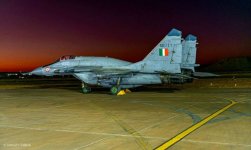
Here you have a mig 29 of the IAF look at the frame condition, they are old and now awaiting retirement. Under no circumstance they are fit to fly. Upgrading them will also not solve the problem.
hostile environment cable jointers


We don't know if they're de mated as of the present. At least IMO they aren't vis a vis Paxtan. I'm not sure about China.
There's no way we executed Operation Sindoor without having N tipped missiles ready for launch aimed at Paxtan .
Besides you constantly see a black brief case with the security detail of the PM . If all those missiles are de mated & de targeted as you claim why's Modi's security detail running around the world
But you can't deny that their signaling is effective. SoKo went running to the US for access to n reactor tech to build ssn of their own. Nokomis newly revealed ssn is believed to have extendive Chinese input. It may not be a complete hoax.Who knows ? They could be taking a leaf out of Paxtan. In fact both DPRK & Paxtan took a leaf out of Mao's madman theory who used it to great effect to blunt N threats by the USSR & US at different times in history. You ought to read up on it in case you haven't come across it .
Agree. But the game of brinkmanship has gone up a notch. Earlier, Pak came up with the Nasr, a glorified MLRS to stall our conventional Cold Start strategy.Let me say it aloud - a N exchange is not on the cards in case of a Sino India war . It's more like Plan C with both parties. More true of us than it is of the Chinese.
Now Munir is taking control of Pak nukes to make his threats appear more credible, esp to Western audiences.

Yeah the cable quality and processors used are of different standards for avionics, we have discussed this in previous pages I guess. India has to borrow these standard list from abroad. These are well proven standards after vigorous testing for years. Only ISRO is having it's own standards in some of the home built technology. Rest all imported standards.
Kindly do enlighten us all of how exactly is this low quality?The international standards here means quality of the product.
Let's say you want to connect two wires one coming from a sensor to a wire coming from the PLC(Mission computer), now in India you do not have that quality of hostile environment cable jointers nor the high grade insulation of hostile environment cables. They are of low quality build, I blame the companies responsible for such low quality. When you touch the cables made in France and one Made in India you will feel the quality difference yourself.
The whole aircraft wire harness assembly requires very good standards of equipment, training to install wires, and the engineers and technicians must know the reason why the cable has been installed this way.
This is also one of the contributing reason why India is not able to develop aircraft engine. Indian engineers and technicians are good in theory but when it comes to practical implementation of that knowledge the road gets blocked.
Also when you next time go to air show in India just see the frame of Indian aircrafts. It will look worn and torn, paint will be coming out as if it has not been maintained properly. But the frame is getting old and by looking at the aircraft itself you will immediately know that it is not fit to fly due to frame issue.
These minute things are not discussed in any sphere.
Here you have a mig 29 of the IAF look at the frame condition, they are old and now awaiting retirement. Under no circumstance they are fit to fly. Upgrading them will also not solve the problem.
View attachment 49158
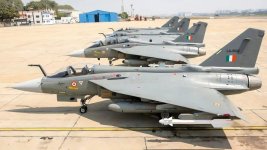
The Mig-29 on the other hand is a different topic altogether, those airframes were built in the ertswhile Soviet Union and display typical Soviet/Russian characteristics of being cheap, rugged, reliable and lacking the finesse of Western aircraft.
Kindly do enlighten us all of how exactly is this low quality?
View attachment 49179
The Mig-29 on the other hand is a different topic altogether, those airframes were built in the ertswhile Soviet Union and display typical Soviet/Russian characteristics of being cheap, rugged, reliable and lacking the finesse of Western aircraft.
Do you know for the reasons I mentioned above, the LCA MKII will be now pre stuffed fuselage to increase the quality standards, user friendly maintenance and operational ruggedness of the systems on board.


New Rafale Deal: Almost Done, Some Questions
It has been reported that the Defence Procurement Board headed by the Defence Secretary has approved the Indian Air Force’s (IAF) proposal to acquire 114 Rafale fighter jets from Dassault of France under the Multi Role Fighter Aircraft (MRFA) tender. The deal now awaits clearance from the Defence Acquisition Council headed by the Defence Minister, and finally from the Cabinet Committee on Security headed by the Prime Minister, which will finally bring the curtains down on one of the most long drawn out defence acquisitions India has been involved. And in true Indian defence procurement style, the haggling over prices will begin after that, inverting the standard commercial practice of considering a deal clinched when a price is agreed upon!
BRIEF HISTORY: CONFUSION CONFOUNDED
Readers will no doubt recall the tortuous historical developments of this acquisition process. In the face of the gathering obsolescence of the IAF’s MiG21 fleet, other ageing aircraft, and delays in the indigenous Light Combat Aircraft (LCA) project, combined with a menagerie fleet of numerous fighter types each bought as a stop-gap other than the work-horse Su-MK30i, the IAF started working in 2001 on rigorous study of fighter aircraft requirements for the medium term in sizeable numbers.
The IAF proposed a need for 126 medium-weight fighters with an option for an additional 74, and issued a call for initial offers in 2004 which, after many changes in the procurement process and the types of aircraft available from different manufacturers, finally attracted firm offers from 6 aircraft manufacturers to whom tenders were issued in 2007.
The Eurofighter Typhoon and the Dassault Rafale were shortlisted, rigorous field tests conducted, and the Rafale finally emerging in 2011 as the winner. The deal was to involve delivery of 18 fighters directly from Dassault, and the remaining 108 to be made in Hindustan Aircraft Limited (HAL), Bangalore through technology transfer. The financial and other negotiations dragged on till 2014, with the government of the day apparently worried about high cost, allegations of favouritism or worse, and all the nitty-gritty of domestic manufacture, offsets etc. Before a final decision could be taken, a new government led by the BJP was elected.
In 2015, the BJP-led government abruptly changed direction, cancelled the MMRCA tender, and announced a decision to acquire 36 Rafales, all in fly-away condition, in a government-to-government deal. In one stroke, heralding it as a master-stroke by a “decisive leadership,” it negated the schema carefully worked out over 13 years to acquire a sizeable complement of 126 fighters including substantial domestic manufacture and indigenization.
All manner of explanations were advanced by the government including shortage of funds, need for an emergency acquisition even of a limited number of fighters, lack of capability with HAL and high cost cited by it. With offsets apparently going to favoured parties with little experience in aviation manufacturing, there was a strong smell of something fishy. Anyway, 36 Rafales were delivered starting in 2018 and all entering into service with the IAF by 2022.
MRFA DEAL: FULL CIRCLE
However, the IAF fleet strength continued to dwindle, the LCA Tejas was still far from entering service, and the security situation in India’s neighbourhood was worsening. As predicted by many, including in these columns, India issued a fresh call for offers of 114 fighter jets (dropping the medium weight criterion) in 2018. Since the available options among defence majors were the same as before, the applicant were also the same, only with the Lockheed Martin F16 now appearing in a new “India-specific” avatar as the F21, and the F15-Eagle EX being added.
Since this was known, the new deal could have been negotiated as an extension of the earlier one with new terms including indigenous manufacture, technology transfer and so on. An additional development meanwhile was the acquisition process for 26 aircraft carrier based fighters for which the leading contenders were the Boeing F/A-18 and the Rafale-M (for marine). Commonality of aircraft type among both Navy and Air Force would increase the order size, simplify and reduce costs of spares, maintenance and other logistics.
A Rafale flight‑training and Maintenance, Repair, and Overhaul (MRO) facility is already operational at IAF, Ambala. All this was known or planned even in 2015 and a single deal would have substantially reduced costs and increased India’s bargaining strength in negotiations. But all this was tossed away by the “decisive government.” So here we are with a new version of the 2007 tender!
For the reasons discussed above, now being cited as recently discovered justification for the deal, the IAF and government have again settled on the Rafale. The aircraft was originally selected from 6 contenders after extensive field testing and has apparently more than satisfied the IAF during Operation Sindoor.
The new MRFA acquisition is now set to go ahead, again as a government-to-government deal cutting out all the agonizing details of a multi-vendor tender, which was never appropriate for defence contracts anyway.
It may well be signed during the forthcoming visit to India of French President Emmanuel Macron on 19-20 February 2026 for the AI Impact Summit, with the visit also expected to further cement the deepening strategic and defence partnership between France and India.
The deal is believed to involve 18 off-the-shelf Rafale fighters, followed by domestic production of the remaining 96. Compared to the F3R version, with the 13 much-debated India-specific enhancements at additional cost, the current aircraft are believed to be 90 of the F4.1 standard and 14 of the F5 standard. Total cost is estimated to be around Rs 3.25 lakh crore or $38 billion.
QUESTIONS ON FLEET MIX
Some commentators have questioned the wisdom of procuring a foreign aircraft, when a successful indigenous programme in the form of the Light Combat Aircraft (LCA) with its many variants is well underway, even if delayed. The IAF has issued firm orders for 190 Tejas Mk1A light-weight fighters with the American GE-404 engine, with a planned requirement for another 200 heavier Tejas Mk2 with the more powerful GE-414 engine.
It is argued that, with the earlier ‘stop-gap’ acquisition of 36 Rafales, there was ample space for the indigenous medium-weight Tejas Mk2 fighters, but with an additional 114 Rafales, the IAF may scale down its Tejas Mk2 requirement and abort the full-scope evolution of the indigenous progamme, even though the 5th Generation Advanced Medium Combat Aircraft (AMCA) programme is yet to unfold.
However, this anxiety may not be well-founded. The original MMRCA tender was always for 126 aircraft which the then BJP-led government pruned down to 36 Rafales for whatever reasons. The MRFA acquisition of 114 Rafales merely makes up the unnecessary deficit. Further, the much-quoted “approved strength” of 42 squadrons harks back to a past that has long receded into the sunset.
Contemporary security realities are very different and call for serious rethinking of IAF fleet composition and size. Towards that end, and considering the forthcoming rapid induction of 5-Gen fighters into the South Asian theatre, the IAF is said to be seriously considering the offer being pressed by Russia for Su-57 stealth aircraft as a 3 squadron or 54 aircraft stop-gap acquisition till the AMCA becomes reality in the mid-2030s.
NEW MODEL FOR MANUFACTURE IN INDIA?
A new model is apparently being prepared by Dassault for manufacture of over 90 Rafales in India as part of the MRFA deal. Dassault is believed to be seriously planning to manufacture as many as 24 Rafales annually at a new Dassault assembly line in Nagpur near its current joint venture facility for Falcon 2000 executive jets. This would be a first for Dassault and very much a new idea in India. Question is: is this a preferred indigenization model for atma nirbhar bharat?
Apparently this would be much more than an assembly plant. It would be a full-fledged industrial model with various parts and components being supplied by Indian industrial partners, similar to the parent Dassault plant in Merignac in France, but with major critical parts being flown in from France. The exact percentage of indigenization is still under discussion, but is believed to be in the order of 55-60 per cent or so by value, similar to that in the Russian SU30 Mk-I and even in the Tejas LCA but planned to increase to 65 per cent soon, and going up to 90 per cent in the Mk2. The capacity of 24 Rafales per year from Nagpur would double the Rafale production volume globally if, as believed to be Dassault’s plan, the Nagpur facility is fully integrated into Dassault’s global supply chain.
When successive governments in India kept increasing the FDI limit up to 100 per cent for defence manufacturing, the hope was that foreign defence majors would be tempted to set up fully-owned manufacturing plants in India taking advantage of lower costs. The catch was, of course, that no OEM would set up base in India unless it was assured of domestic orders, which is almost impossible to do in the defence sector. It appears that, with the MRFA and Rafale-Marine orders, Dassault may just have got that.
It is not known if Dassault is planning to run the new Rafale line in partnership with anyone. Tata for example is already supplying Rafale parts to Dassault. But Dassault has now raised its stake in Dassault Reliance Aerostructures Ltd (DRAL) to 51 per cent from the earlier 49%, making DRAL a Dassault subsidiary, and may well entirely buy out Anil Ambani who does not bring much to the table.
French defence firms seem to realize they have got managed to get deep stakes in the Indian defence sector. A long-term collaboration between Safran and DRDO to jointly develop an advanced engine for the AMCA 5-Gen fighter is around the corner. So Safran is working on a plan to set up a facility in India to make the around 200 M88 engines that would be needed to power the IAF Rafales. Safran is already setting up an MRO for M88 engines in Hyderabad.
However, all this does not mean India will acquire the advanced technology involved. It will not involve the kind of transfer of know-how there would have been if, say, HAL were Dassault’s partner in India. In Nagpur, Dassault would control the flow of technology, not share it, and its Indian partners would be sub-contractors, seeing only small parts of the whole package. This is a good model for Dassault or Safran. Sure, some know-how would seep into the Indian defence industrial sector. But it will not mean self-reliance for India.
It has been reported that the Defence Procurement Board headed by the Defence Secretary has approved the Indian Air Force’s (IAF) proposal to acquire 114 Rafale fighter jets from Dassault of France under the Multi Role Fighter Aircraft (MRFA) tender. The deal now awaits clearance from the Defence Acquisition Council headed by the Defence Minister, and finally from the Cabinet Committee on Security headed by the Prime Minister, which will finally bring the curtains down on one of the most long drawn out defence acquisitions India has been involved. And in true Indian defence procurement style, the haggling over prices will begin after that, inverting the standard commercial practice of considering a deal clinched when a price is agreed upon!
BRIEF HISTORY: CONFUSION CONFOUNDED
Readers will no doubt recall the tortuous historical developments of this acquisition process. In the face of the gathering obsolescence of the IAF’s MiG21 fleet, other ageing aircraft, and delays in the indigenous Light Combat Aircraft (LCA) project, combined with a menagerie fleet of numerous fighter types each bought as a stop-gap other than the work-horse Su-MK30i, the IAF started working in 2001 on rigorous study of fighter aircraft requirements for the medium term in sizeable numbers.
The IAF proposed a need for 126 medium-weight fighters with an option for an additional 74, and issued a call for initial offers in 2004 which, after many changes in the procurement process and the types of aircraft available from different manufacturers, finally attracted firm offers from 6 aircraft manufacturers to whom tenders were issued in 2007.
The Eurofighter Typhoon and the Dassault Rafale were shortlisted, rigorous field tests conducted, and the Rafale finally emerging in 2011 as the winner. The deal was to involve delivery of 18 fighters directly from Dassault, and the remaining 108 to be made in Hindustan Aircraft Limited (HAL), Bangalore through technology transfer. The financial and other negotiations dragged on till 2014, with the government of the day apparently worried about high cost, allegations of favouritism or worse, and all the nitty-gritty of domestic manufacture, offsets etc. Before a final decision could be taken, a new government led by the BJP was elected.
In 2015, the BJP-led government abruptly changed direction, cancelled the MMRCA tender, and announced a decision to acquire 36 Rafales, all in fly-away condition, in a government-to-government deal. In one stroke, heralding it as a master-stroke by a “decisive leadership,” it negated the schema carefully worked out over 13 years to acquire a sizeable complement of 126 fighters including substantial domestic manufacture and indigenization.
All manner of explanations were advanced by the government including shortage of funds, need for an emergency acquisition even of a limited number of fighters, lack of capability with HAL and high cost cited by it. With offsets apparently going to favoured parties with little experience in aviation manufacturing, there was a strong smell of something fishy. Anyway, 36 Rafales were delivered starting in 2018 and all entering into service with the IAF by 2022.
MRFA DEAL: FULL CIRCLE
However, the IAF fleet strength continued to dwindle, the LCA Tejas was still far from entering service, and the security situation in India’s neighbourhood was worsening. As predicted by many, including in these columns, India issued a fresh call for offers of 114 fighter jets (dropping the medium weight criterion) in 2018. Since the available options among defence majors were the same as before, the applicant were also the same, only with the Lockheed Martin F16 now appearing in a new “India-specific” avatar as the F21, and the F15-Eagle EX being added.
Since this was known, the new deal could have been negotiated as an extension of the earlier one with new terms including indigenous manufacture, technology transfer and so on. An additional development meanwhile was the acquisition process for 26 aircraft carrier based fighters for which the leading contenders were the Boeing F/A-18 and the Rafale-M (for marine). Commonality of aircraft type among both Navy and Air Force would increase the order size, simplify and reduce costs of spares, maintenance and other logistics.
A Rafale flight‑training and Maintenance, Repair, and Overhaul (MRO) facility is already operational at IAF, Ambala. All this was known or planned even in 2015 and a single deal would have substantially reduced costs and increased India’s bargaining strength in negotiations. But all this was tossed away by the “decisive government.” So here we are with a new version of the 2007 tender!
For the reasons discussed above, now being cited as recently discovered justification for the deal, the IAF and government have again settled on the Rafale. The aircraft was originally selected from 6 contenders after extensive field testing and has apparently more than satisfied the IAF during Operation Sindoor.
The new MRFA acquisition is now set to go ahead, again as a government-to-government deal cutting out all the agonizing details of a multi-vendor tender, which was never appropriate for defence contracts anyway.
It may well be signed during the forthcoming visit to India of French President Emmanuel Macron on 19-20 February 2026 for the AI Impact Summit, with the visit also expected to further cement the deepening strategic and defence partnership between France and India.
The deal is believed to involve 18 off-the-shelf Rafale fighters, followed by domestic production of the remaining 96. Compared to the F3R version, with the 13 much-debated India-specific enhancements at additional cost, the current aircraft are believed to be 90 of the F4.1 standard and 14 of the F5 standard. Total cost is estimated to be around Rs 3.25 lakh crore or $38 billion.
QUESTIONS ON FLEET MIX
Some commentators have questioned the wisdom of procuring a foreign aircraft, when a successful indigenous programme in the form of the Light Combat Aircraft (LCA) with its many variants is well underway, even if delayed. The IAF has issued firm orders for 190 Tejas Mk1A light-weight fighters with the American GE-404 engine, with a planned requirement for another 200 heavier Tejas Mk2 with the more powerful GE-414 engine.
It is argued that, with the earlier ‘stop-gap’ acquisition of 36 Rafales, there was ample space for the indigenous medium-weight Tejas Mk2 fighters, but with an additional 114 Rafales, the IAF may scale down its Tejas Mk2 requirement and abort the full-scope evolution of the indigenous progamme, even though the 5th Generation Advanced Medium Combat Aircraft (AMCA) programme is yet to unfold.
However, this anxiety may not be well-founded. The original MMRCA tender was always for 126 aircraft which the then BJP-led government pruned down to 36 Rafales for whatever reasons. The MRFA acquisition of 114 Rafales merely makes up the unnecessary deficit. Further, the much-quoted “approved strength” of 42 squadrons harks back to a past that has long receded into the sunset.
Contemporary security realities are very different and call for serious rethinking of IAF fleet composition and size. Towards that end, and considering the forthcoming rapid induction of 5-Gen fighters into the South Asian theatre, the IAF is said to be seriously considering the offer being pressed by Russia for Su-57 stealth aircraft as a 3 squadron or 54 aircraft stop-gap acquisition till the AMCA becomes reality in the mid-2030s.
NEW MODEL FOR MANUFACTURE IN INDIA?
A new model is apparently being prepared by Dassault for manufacture of over 90 Rafales in India as part of the MRFA deal. Dassault is believed to be seriously planning to manufacture as many as 24 Rafales annually at a new Dassault assembly line in Nagpur near its current joint venture facility for Falcon 2000 executive jets. This would be a first for Dassault and very much a new idea in India. Question is: is this a preferred indigenization model for atma nirbhar bharat?
Apparently this would be much more than an assembly plant. It would be a full-fledged industrial model with various parts and components being supplied by Indian industrial partners, similar to the parent Dassault plant in Merignac in France, but with major critical parts being flown in from France. The exact percentage of indigenization is still under discussion, but is believed to be in the order of 55-60 per cent or so by value, similar to that in the Russian SU30 Mk-I and even in the Tejas LCA but planned to increase to 65 per cent soon, and going up to 90 per cent in the Mk2. The capacity of 24 Rafales per year from Nagpur would double the Rafale production volume globally if, as believed to be Dassault’s plan, the Nagpur facility is fully integrated into Dassault’s global supply chain.
When successive governments in India kept increasing the FDI limit up to 100 per cent for defence manufacturing, the hope was that foreign defence majors would be tempted to set up fully-owned manufacturing plants in India taking advantage of lower costs. The catch was, of course, that no OEM would set up base in India unless it was assured of domestic orders, which is almost impossible to do in the defence sector. It appears that, with the MRFA and Rafale-Marine orders, Dassault may just have got that.
It is not known if Dassault is planning to run the new Rafale line in partnership with anyone. Tata for example is already supplying Rafale parts to Dassault. But Dassault has now raised its stake in Dassault Reliance Aerostructures Ltd (DRAL) to 51 per cent from the earlier 49%, making DRAL a Dassault subsidiary, and may well entirely buy out Anil Ambani who does not bring much to the table.
French defence firms seem to realize they have got managed to get deep stakes in the Indian defence sector. A long-term collaboration between Safran and DRDO to jointly develop an advanced engine for the AMCA 5-Gen fighter is around the corner. So Safran is working on a plan to set up a facility in India to make the around 200 M88 engines that would be needed to power the IAF Rafales. Safran is already setting up an MRO for M88 engines in Hyderabad.
However, all this does not mean India will acquire the advanced technology involved. It will not involve the kind of transfer of know-how there would have been if, say, HAL were Dassault’s partner in India. In Nagpur, Dassault would control the flow of technology, not share it, and its Indian partners would be sub-contractors, seeing only small parts of the whole package. This is a good model for Dassault or Safran. Sure, some know-how would seep into the Indian defence industrial sector. But it will not mean self-reliance for India.
New Rafale Deal: Almost Done, Some Questions
It has been reported that the Defence Procurement Board headed by the Defence Secretary has approved the Indian Air Force’s (IAF) proposal to acquire 114 Rafale fighter jets from Dassault of France under the Multi Role Fighter Aircraft (MRFA) tender. The deal now awaits clearance from the Defence Acquisition Council headed by the Defence Minister, and finally from the Cabinet Committee on Security headed by the Prime Minister, which will finally bring the curtains down on one of the most long drawn out defence acquisitions India has been involved. And in true Indian defence procurement style, the haggling over prices will begin after that, inverting the standard commercial practice of considering a deal clinched when a price is agreed upon!
BRIEF HISTORY: CONFUSION CONFOUNDED
Readers will no doubt recall the tortuous historical developments of this acquisition process. In the face of the gathering obsolescence of the IAF’s MiG21 fleet, other ageing aircraft, and delays in the indigenous Light Combat Aircraft (LCA) project, combined with a menagerie fleet of numerous fighter types each bought as a stop-gap other than the work-horse Su-MK30i, the IAF started working in 2001 on rigorous study of fighter aircraft requirements for the medium term in sizeable numbers.
The IAF proposed a need for 126 medium-weight fighters with an option for an additional 74, and issued a call for initial offers in 2004 which, after many changes in the procurement process and the types of aircraft available from different manufacturers, finally attracted firm offers from 6 aircraft manufacturers to whom tenders were issued in 2007.
The Eurofighter Typhoon and the Dassault Rafale were shortlisted, rigorous field tests conducted, and the Rafale finally emerging in 2011 as the winner. The deal was to involve delivery of 18 fighters directly from Dassault, and the remaining 108 to be made in Hindustan Aircraft Limited (HAL), Bangalore through technology transfer. The financial and other negotiations dragged on till 2014, with the government of the day apparently worried about high cost, allegations of favouritism or worse, and all the nitty-gritty of domestic manufacture, offsets etc. Before a final decision could be taken, a new government led by the BJP was elected.
In 2015, the BJP-led government abruptly changed direction, cancelled the MMRCA tender, and announced a decision to acquire 36 Rafales, all in fly-away condition, in a government-to-government deal. In one stroke, heralding it as a master-stroke by a “decisive leadership,” it negated the schema carefully worked out over 13 years to acquire a sizeable complement of 126 fighters including substantial domestic manufacture and indigenization.
All manner of explanations were advanced by the government including shortage of funds, need for an emergency acquisition even of a limited number of fighters, lack of capability with HAL and high cost cited by it. With offsets apparently going to favoured parties with little experience in aviation manufacturing, there was a strong smell of something fishy. Anyway, 36 Rafales were delivered starting in 2018 and all entering into service with the IAF by 2022.
MRFA DEAL: FULL CIRCLE
However, the IAF fleet strength continued to dwindle, the LCA Tejas was still far from entering service, and the security situation in India’s neighbourhood was worsening. As predicted by many, including in these columns, India issued a fresh call for offers of 114 fighter jets (dropping the medium weight criterion) in 2018. Since the available options among defence majors were the same as before, the applicant were also the same, only with the Lockheed Martin F16 now appearing in a new “India-specific” avatar as the F21, and the F15-Eagle EX being added.
Since this was known, the new deal could have been negotiated as an extension of the earlier one with new terms including indigenous manufacture, technology transfer and so on. An additional development meanwhile was the acquisition process for 26 aircraft carrier based fighters for which the leading contenders were the Boeing F/A-18 and the Rafale-M (for marine). Commonality of aircraft type among both Navy and Air Force would increase the order size, simplify and reduce costs of spares, maintenance and other logistics.
A Rafale flight‑training and Maintenance, Repair, and Overhaul (MRO) facility is already operational at IAF, Ambala. All this was known or planned even in 2015 and a single deal would have substantially reduced costs and increased India’s bargaining strength in negotiations. But all this was tossed away by the “decisive government.” So here we are with a new version of the 2007 tender!
For the reasons discussed above, now being cited as recently discovered justification for the deal, the IAF and government have again settled on the Rafale. The aircraft was originally selected from 6 contenders after extensive field testing and has apparently more than satisfied the IAF during Operation Sindoor.
The new MRFA acquisition is now set to go ahead, again as a government-to-government deal cutting out all the agonizing details of a multi-vendor tender, which was never appropriate for defence contracts anyway.
It may well be signed during the forthcoming visit to India of French President Emmanuel Macron on 19-20 February 2026 for the AI Impact Summit, with the visit also expected to further cement the deepening strategic and defence partnership between France and India.
The deal is believed to involve 18 off-the-shelf Rafale fighters, followed by domestic production of the remaining 96. Compared to the F3R version, with the 13 much-debated India-specific enhancements at additional cost, the current aircraft are believed to be 90 of the F4.1 standard and 14 of the F5 standard. Total cost is estimated to be around Rs 3.25 lakh crore or $38 billion.
QUESTIONS ON FLEET MIX
Some commentators have questioned the wisdom of procuring a foreign aircraft, when a successful indigenous programme in the form of the Light Combat Aircraft (LCA) with its many variants is well underway, even if delayed. The IAF has issued firm orders for 190 Tejas Mk1A light-weight fighters with the American GE-404 engine, with a planned requirement for another 200 heavier Tejas Mk2 with the more powerful GE-414 engine.
It is argued that, with the earlier ‘stop-gap’ acquisition of 36 Rafales, there was ample space for the indigenous medium-weight Tejas Mk2 fighters, but with an additional 114 Rafales, the IAF may scale down its Tejas Mk2 requirement and abort the full-scope evolution of the indigenous progamme, even though the 5th Generation Advanced Medium Combat Aircraft (AMCA) programme is yet to unfold.
However, this anxiety may not be well-founded. The original MMRCA tender was always for 126 aircraft which the then BJP-led government pruned down to 36 Rafales for whatever reasons. The MRFA acquisition of 114 Rafales merely makes up the unnecessary deficit. Further, the much-quoted “approved strength” of 42 squadrons harks back to a past that has long receded into the sunset.
Contemporary security realities are very different and call for serious rethinking of IAF fleet composition and size. Towards that end, and considering the forthcoming rapid induction of 5-Gen fighters into the South Asian theatre, the IAF is said to be seriously considering the offer being pressed by Russia for Su-57 stealth aircraft as a 3 squadron or 54 aircraft stop-gap acquisition till the AMCA becomes reality in the mid-2030s.
NEW MODEL FOR MANUFACTURE IN INDIA?
A new model is apparently being prepared by Dassault for manufacture of over 90 Rafales in India as part of the MRFA deal. Dassault is believed to be seriously planning to manufacture as many as 24 Rafales annually at a new Dassault assembly line in Nagpur near its current joint venture facility for Falcon 2000 executive jets. This would be a first for Dassault and very much a new idea in India. Question is: is this a preferred indigenization model for atma nirbhar bharat?
Apparently this would be much more than an assembly plant. It would be a full-fledged industrial model with various parts and components being supplied by Indian industrial partners, similar to the parent Dassault plant in Merignac in France, but with major critical parts being flown in from France. The exact percentage of indigenization is still under discussion, but is believed to be in the order of 55-60 per cent or so by value, similar to that in the Russian SU30 Mk-I and even in the Tejas LCA but planned to increase to 65 per cent soon, and going up to 90 per cent in the Mk2. The capacity of 24 Rafales per year from Nagpur would double the Rafale production volume globally if, as believed to be Dassault’s plan, the Nagpur facility is fully integrated into Dassault’s global supply chain.
When successive governments in India kept increasing the FDI limit up to 100 per cent for defence manufacturing, the hope was that foreign defence majors would be tempted to set up fully-owned manufacturing plants in India taking advantage of lower costs. The catch was, of course, that no OEM would set up base in India unless it was assured of domestic orders, which is almost impossible to do in the defence sector. It appears that, with the MRFA and Rafale-Marine orders, Dassault may just have got that.
It is not known if Dassault is planning to run the new Rafale line in partnership with anyone. Tata for example is already supplying Rafale parts to Dassault. But Dassault has now raised its stake in Dassault Reliance Aerostructures Ltd (DRAL) to 51 per cent from the earlier 49%, making DRAL a Dassault subsidiary, and may well entirely buy out Anil Ambani who does not bring much to the table.
French defence firms seem to realize they have got managed to get deep stakes in the Indian defence sector. A long-term collaboration between Safran and DRDO to jointly develop an advanced engine for the AMCA 5-Gen fighter is around the corner. So Safran is working on a plan to set up a facility in India to make the around 200 M88 engines that would be needed to power the IAF Rafales. Safran is already setting up an MRO for M88 engines in Hyderabad.
However, all this does not mean India will acquire the advanced technology involved. It will not involve the kind of transfer of know-how there would have been if, say, HAL were Dassault’s partner in India. In Nagpur, Dassault would control the flow of technology, not share it, and its Indian partners would be sub-contractors, seeing only small parts of the whole package. This is a good model for Dassault or Safran. Sure, some know-how would seep into the Indian defence industrial sector. But it will not mean self-reliance for India.
What a bunch of crap. Glosses over the part where Dassault wasn't ready to guarantee HALs product and many more point of contention b/w negotiating parties. Also glosses over the fact that the whole MRFA/MMRCA was unnecessary even in 2007 as rafale was picked and became first choice back in around 2002( not sure about exact year).
And the sheer lies that this could've been an extension of earlier deal. For that, there needs to be a deal. The "36" rafale deal was a closed one. Even marine one too. Another lie that the negotiations and tender are sudden when the negotiations have never been stopped. Another lie that similar to 2007 tender is issued. No.. there's no tender issued. There's no 6 jets in competetion. It was only about buying or not buying. Never about what to buy.
Even the F-35, Su-57 and AMCA are different category and class altogether. Who is confusing their consideration with rafale. Sure if Mk2 were on time, Rafale deal would've been impacted. But as I said, it was only about " buy or not buy".
And at last! The left and their love for Incompetence/HAL. Ah! Most of people in the forum are already aware of the points I mentioned, but what about the readers of the magazine. They will gobble up lies as information
 . As if India got self reliance through Su-30MKI.
I don't know how much our kirana industry be able to absorb from this.. I have let my doubts known in other threads too. But..HAL? Oh! Pls.
Left is the last who should comment on creating domestic ecosystem and industry. Idiots have wiped it out from W.B and have left Kerala vulnerable for the needs of 21st century.
Before asking why I am being left into this.. open the link. Website name is "Leftviews".

^ Agree, I am surprised to see @Picdelamir posting communist party's propaganda website here, just because any article contains the word Rafale does not mean you should find and post here.