I don't think comparing an older jet with LCA will be the right thing to do at this time. The Chinese are working on a new single engine jet too.
Either way, a large fleet of reasonably advanced SE fighters is always the backbone of any large air force that protects the airspace & prepares the conditions for Air Superiority & DPS aircraft to exploit. For us it was the MiG-21 at one point, going forward it will be the Mk1A & Mk2 Tejas.
Yes, just like Sweden and Taiwan, not like the Israelis or Japanese.
No, just like Israelis & Japanese.
Sweden & Taiwan don't have a Rafale or Su-30MKI equivalent. Neither do they have large Rocket Forces.
Our doctrine remains one capable of defending, and subsequentially waging an offensive war. Rocket Forces are not a defensive form of warfare - by design they are offensive.
It's not about the distance, it's about the capability of the jets in question. Air superiority is typically conducted by your best jet.
Air Superiority is not Air Defence/CAP. Air Superiority is about imposing Air Dominance on hostile airspace.
There's a reason why the intended future backbone of USAF (F-35) was designed to be single engine, and less expensive than the F-22. Even the Americans cannot afford to use F-22s for routine air defence or performing regular CAPs and/or interceptions.
That's the reason we can't afford to just replace MiG-21s with more MKIs.
Not for the role you are assuming though. LCAs are suitable for some roles, but not across the board. So the 60M you are spending on the LCA is basically 60M lost for more important roles. If given the chance, the IAF will opt for the entire air force to be just one type, and the jet would be the most capable jet possible. Low end jets are used for the more simpler run-of-the-mill missions which will be replaced by drones in the future.
Most of the choices they are make out of compulsion.
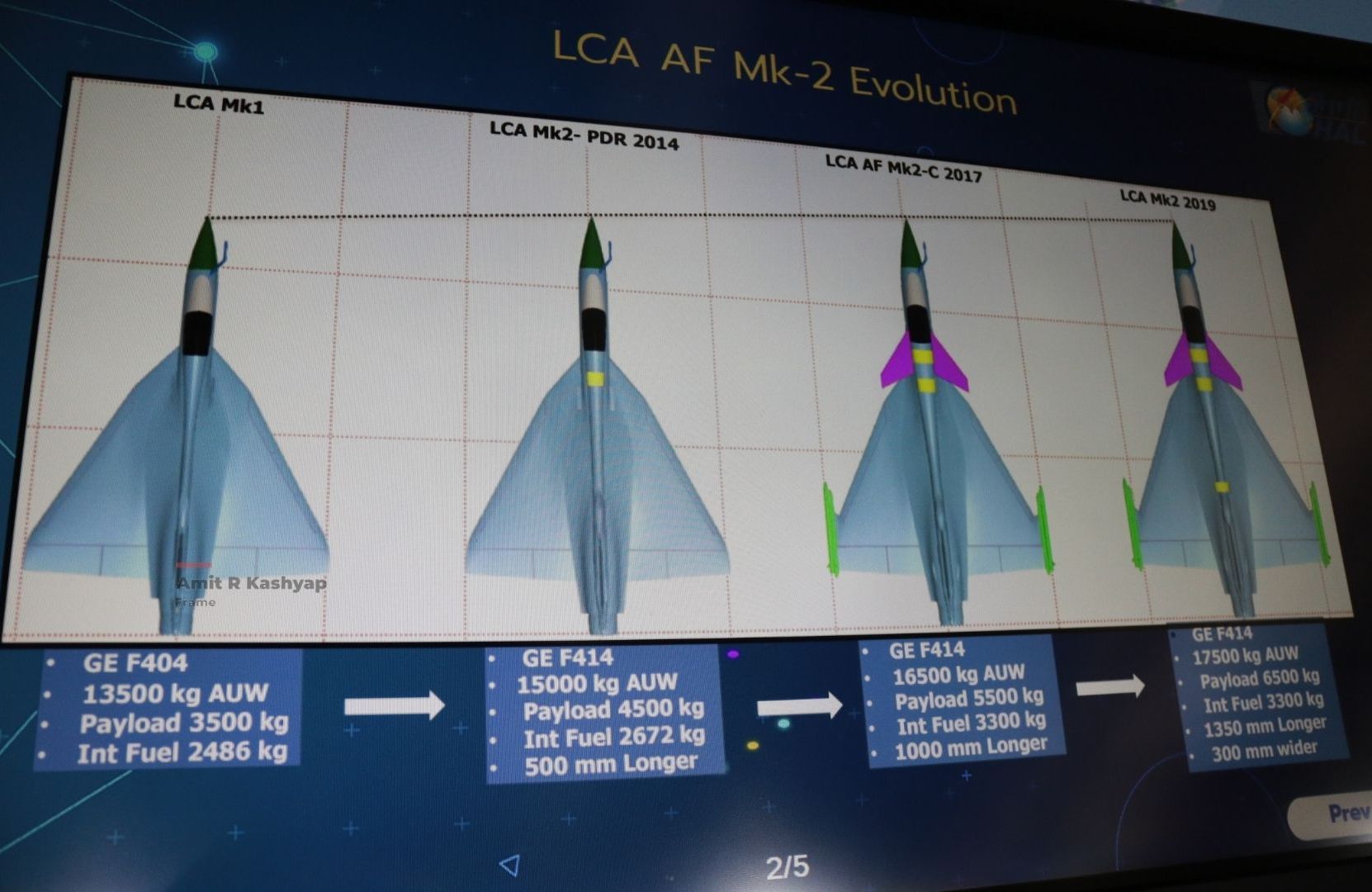
Well like I said, Mk2 is not an LCA anymore - its a medium fighter in the league of F-21...in our context, we can ask the Mk2 to perform the roles which we now ask of the Mirage-2000...which includes Deep Strike given the right circumstances i.e. unless the technological equation between Pakistan & India changes greatly, the Tejas Mk2 is very well capable of carrying out the next Balakot.
It will be equipped with the ability to perform interleaved air/ground scans via AESA (including terrain-following mode), a payload capacity that exceeds that of the M2K, and equipped with MAWS as well as an internal EW suite including SPJ...its a perfectly survivable platform.
It's only issue is likely to be range...which still allows it to acquit itself very well in the DPS role against Pakistan, just not so much against the Chinese chiefly due to the distances involved.
Like I said, the MWF iteration of Mk2 is designed to do a lot more than the original LCA Mk2 was intended for - and this is as per IAF's own wishes. Remember that the MWF iteration only took shape after IAF already realized the issues with acquiring as many foreign MMRCAs as they thought they could.
It's way harder to kill an aircraft compared to a simple missile.
Yes but by how much? With the Chinese deploying AESA radars for acquisition as well as fire control (in future, even active-seeker SAMs will have AESAs on board, not to mention infusion of GaN into mix) the tables aren't as tipped in favour of a DPSA as was the case previously. After all, the Rafale is not a VLO aircraft - and even those countries with access to F-35 like Australia are moving heavily toward investment in Loyal Wingmen like MQ-28A to penetrate airspace defended by modern IADS.
Future USAF platforms like NGAD & F/A-XX on the other hand are being built from the ground-up to work with Loyal Wingmen for both air superiority & strike missions.
It's just not going to be a safe bet (by extension, not affordable) to risk a manned platform in DPS against peer opponents like China. For a non-VLO platform like the ones we're acquiring, even more so. Diversification of Strike options is necessary not only from a cost standpoint but also a tactical standpoint.
It's because the Soviets couldn't build an aircraft that's survivable that they chose rocket forces. But the Russians are finding out the hard way in Ukraine that a rocket force is only sufficient to degrade civilian and unprotected military targets, not hardened military targets. It's the reason why the Uk AF is still flying. And without sophisticated air defences. You need to employ aircraft against hardened military targets.
The current Russian campaign is f*cked on so many levels. I doubt how much we can learn from that - considering we know full well that the Russians aren't even making full use of the assets we know they have - like Su-24s, Su-34s not to mention bombers like Tu-160, Tu-22M3 or Tu-95. Though I very much doubt how many are even serviceable, or how long RuAF can afford to keep them flying once they get into a high intensity air campaign.
There is a complete breakdown in C&C from the top - it just doesn't seem like a competent fighting force to begin with, and that's assuming they have bungled up their objectives since the beginning i.e. going easy with the Ukrainians, expecting to be greeted as liberators instead of invaders.
Regardless, as we're seeing with Mariupol now - its devolved into an Artillery War, and this is how the Russians hope to win now.
We have the same plan though. The IA builds the IRF whereas the IAF concentrates on advanced aircraft. The same with the USAF, with the ground forces expanding their RFs and the USAF working on NGAD and B-21.
Sure - as it plain to see. The only question I've had from the beginning is - how is it going to effect the force mix?
Surely, an increase in capabilities & numbers on one end of that mix can offset a decrease in the same on the other end?
A missile like Brahmos carries a 200-300Kg warhead. Rafale can carry 4 500Kg bombs in just one sortie, and still come back for more. Plus it can hit the target reliably at much longer ranges. It can also perform BDA on its own. Then Brahmos has only a 15 year life, Rafale has 50. So, you'd need at least 3 sets of orders to keep up with 1 Rafale.
Cost breakdown: 1 Rafale costs $120M. Let's assume it can carry 4 500Kg bombs at 20k each, the JDAM kind, let's also assume the warhead is 300Kg, the same as the Brahmos. And over a 10-day period, 3 sorties a day, it can drop 120 bombs, costing $2.4M. Round it off to 5M to compensate for fuel and upkeep costs over 10 days. So that totals up to $130M for explosives weighing 36000Kg.
To get the same effect, we need 120 Brahmos costing $480M. So, during operations alone, Brahmos is beat by a massive margin. Let's not forget that you still get to keep the jet, while missiles are one use. Now bring in the 50-year life cycle, where you need 360 Brahmos just to match the capabilities of 1 Rafale. Just 1 Rafale. So you can see it becoming meaningless comparison.
And this comparison only considers the bomb truck ability of the jet, not all of its other capabilties that justifies its 120M price tag.
Funny isn't it, that you believe we have the money to buy 120 Brahmos at $480M, but you want the IAF to think many times just to buy 1 Rafale to match it?
That assumes you don't lose your jet during a sortie. Assumes your air bases, aircraft shelters & runways don't get bombed, rendering all the jets useless, or at the very least greatly reduce your sortie rates. In a peer conflict, you WILL take losses to both material & infrastructure. And once you lose a jet, you lose all the potential contribution it was to make over the course of the war.
You cannot afford to put all your eggs in one basket (the basket being the AFS), that way your losses do not compound your reduction in fighting capabilities as the war progresses, as well as preparedness after the war against another opponent - Much easier to replace a battalion of missile launchers than a squadron of fighters.
There's a reason why countries that are/were comparatively poor but still have great need for offensive firepower (Soviets, then Chinese) place so much importance on investing in Rocket Forces - its because these countries could not shoulder the burden of acquiring or developing large numbers of highly survivable aircraft AND because they figured that their ORBAT cannot recover from the loss of such aircraft when it inevitably happens.
We're finding ourselves in the same boat. A distributed network of ballistic & cruise missiles will prove an important part of ensuring that we retain an offensive deep-strike capability even in the event of our own airbases being saturated with PLARF attacks.
A rocket force has its uses, but you need an advanced jet to take advantage of the damage delivered by the rocket forces. They go hand-in-hand.
Again, you're coming to it as though I proposed to replace all DPSAs with RFs. I didn't.
You mustn't forget that IA always planned to have several regiments of BrahMos GLCMs. Even when we fully expected to receive 189 MMRCAs. The Army wasn't interested in pursuing Prithvi-II's replacement and seemed happy to bank on the BrahMos regiments alone. But since then a lot has changed, the Rocket Forces as a separate unit has been floated, the development of Pralay SRBM which was in cold storage for a long while has picked up steam (i.e. received investment) and had 2 back-to-back tests. (BMs are cheaper than CMs).
You have to connect the dots & realize that the Army is well on its way to prepare an alternative that allows us to retain offensive strike capabilities that extend up to 500kms or beyond into enemy territory. This change in thinking did not happen for no reason - the notion that the IAF will be receiving fewer DPSAs than it originally planned for isn't a figment of my imagination, its a real situation and we're already facing it.
Having an MRO facility is one thing, localisation of spares is a different matter altogether. For all the stuff we don't have ToT for, even if we have the MRO facilities, a large quantity of spares are still imported.
France has promised 100% ToT on the airframe and engine versus only 60% of the F414 by the Americans, which is still behind a big wall. So even those massive numbers of LCAs and ORCAs will depend on American supplies for the next 40-50 years. Otoh, we can make spares even for other Rafale export customers.
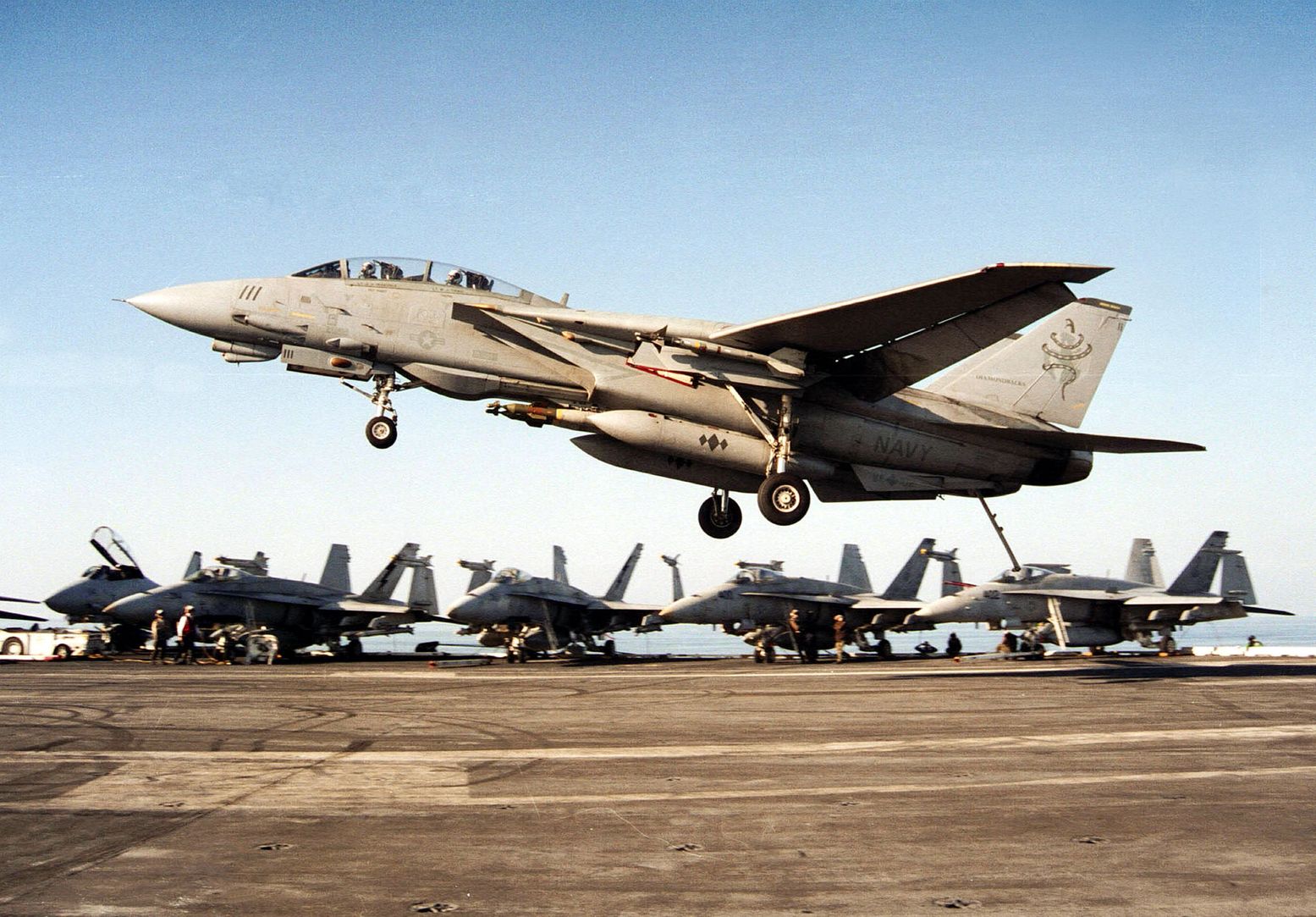
Iran has been under sanctions for 40 years. Their F-14s, Chinooks & Cobras are still flying.
Regardless, I'm not saying no to ToT - but that any meaningful levels of ToT may not be possible with the numbers we're proposing to buy.
Those are just rumours though. The IAF isn't interested in nuclear strikes.
The SFC is - otherwise we don't have a nuclear triad anymore.
And SFC doesn't have its own Air Wing, never has. Their jets will have to come from the IAF.
like our 30-year sub and artillery plan.
...which just go to show that such 'internal' plans don't amount to anything really, when you don't have an elected Govt having accountability over such plans and the spending they require.