

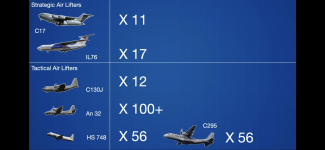
A comment on how the HS748 being replaced was more "Atmanirbhar" than C295:
Last edited:
I will say the video is just too sensationalist with very little substance...He assumes HAL & Tata can suddenly can start to make MTAs from scratch just because they have some few years of expertise of assembling certain aircrafts. He underestimate the complexity of manufacturing such big aircraft. There is a reason HAL/NAL tried to get foreign players get involved for RTA for a few years which led to nothing. Now are still debating about formatting SPV for RTA-90.
I thought the question he posed was very pertinent -- are these assembly jobs amounting to anything in terms of building capability?I will say the video is just too sensationalist with very little substance...He assumes HAL & Tata can suddenly can start to make MTAs from scratch just because they have some few years of expertise of assembling certain aircrafts. He underestimate the complexity of manufacturing such big aircraft. There is a reason HAL/NAL tried to get foreign players get involved for RTA for a few years which led to nothing. Now are still debating about formatting SPV for RTA-90.
Not really. There is nothing wrong in these JVs, these provide necessary work experience to the companies involved. But that expertise is built over time. Also expertise is not the only thing that matters when it comes to building such a platform. Financial feasibility of that project, technological feasibility, geopolitics, etc. a lot of things comes into play. Government is working towards forming an SPV for RTA for this very reason. Such projects require a lot of money, support from not just government but also the civil aviation industry of India.I thought the question he posed was very pertinent -- are these assembly jobs amounting to anything in terms of building capability?
If HS748 granted more customization ability than the C-295 assembly job, is the trend line going in the right direction?
Does GoI/MOD need to make more compromises and take risks and force a JV to happen, or will India forever be stuck on assembly jobs?

I Agree, IMO, we should see how the Chinese developed their Y-20 strategic airlifter; we have to find an international design and development partner and initially target to manufacture 40% of the airlifter in India, but we will get the full IPR of the airlifter to do any future upgrades. This will also provide jobs to high-skilled professionals, and it will bring the country's name into the club of a few elite countries that can design and develop their own airlifter.I thought the question he posed was very pertinent -- are these assembly jobs amounting to anything in terms of building capability?
If HS748 granted more customization ability than the C-295 assembly job, is the trend line going in the right direction?
Does GoI/MOD need to make more compromises and take risks and force a JV to happen, or will India forever be stuck on assembly jobs?
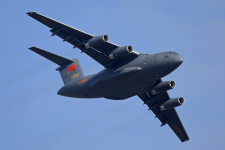
We tried that with RTA. It went nowhere. NAL tried to form JVs with foreign companies. We need our civil aviation industry players to co-operate as well for such a project to be financially feasible...Maybe we can work with the French or Russian for this eventually but time will tell..I Agree, IMO, we should see how the Chinese developed their Y-20 strategic airlifter; we have to find an international design and development partner and initially target to manufacture 40% of the airlifter in India, but we will get the full IPR of the airlifter to do any future upgrades. This will also provide jobs to high-skilled professionals, and it will bring the country's name into the club of a few elite countries that can design and develop their own airlifter.
C-295 line by TASL is already a Joint Venture between them and Airbus btw. It's the same as HS748. Anyways TASL is doing more than just assembling C-295, they are actually building some of the components here in India for it. That's manufacturing not assembly.If HS748 granted more customization ability than the C-295 assembly job, is the trend line going in the right direction?
The Indian private sector is not interested in R&D to develop a full-scale design, as it needs lots of investment, and also you don't have the guarantee that the Indian Armed Forces will give you the required order. Indian industries are ready to invest at the component level, so only the government, with the help of HAL, NAL, and DRDO, can do this. They have the capacity; the only issue with government organizations is that to buy even a pin, you need to go through the process for six months.We tried that with RTA. It went nowhere. NAL tried to form JVs with foreign companies. We need our civil aviation industry players to co-operate as well for such a project to be financially feasible..
I was talking about Cargo airlines here brother. They have to provide order for that particular aircraft in numbers as well.The Indian private sector is not interested in R&D to develop a full-scale design, as it needs lots of investment, and also you don't have the guarantee that the Indian Armed Forces will give you the required order. Indian industries are ready to invest at the component level, so only the government, with the help of HAL, NAL, and DRDO, can do this. They have the capacity; the only issue with government organizations is that to buy even a pin, you need to go through the process for six months.

Not really. There is nothing wrong in these JVs, these provide necessary work experience to the companies involved. But that expertise is built over time. Also expertise is not the only thing that matters when it comes to building such a platform. Financial feasibility of that project, technological feasibility, geopolitics, etc. a lot of things comes into play. Government is working towards forming an SPV for RTA for this very reason. Such projects require a lot of money, support from not just government but also the civil aviation industry of India.
In theory there's nothing wrong with what you're proposing. In reality that's unlikely to happen for the simple reason that the partnering co chosen for this JV with Airbus is the Tata Group.C-295 line by TASL is already a Joint Venture between them and Airbus btw. It's the same as HS748. Anyways TASL is doing more than just assembling C-295, they are actually building some of the components here in India for it. That's manufacturing not assembly.
It will take some time for TASL to join big boys club, let them grow up. Some of us like that Alpha defence guy are expecting too much from a fledgling.
TATA is doing far more localisation than HS748 ever reached. And they will be exporting fully manufactured C-295 in the long run. A private entity is always more agile to reach for opportunities. The government does not have to spoon-feed every time.I thought the question he posed was very pertinent -- are these assembly jobs amounting to anything in terms of building capability?
If HS748 granted more customization ability than the C-295 assembly job, is the trend line going in the right direction?
Does GoI/MOD need to make more compromises and take risks and force a JV to happen, or will India forever be stuck on assembly jobs?
There will be a technology transfer of up to 90% while the whole aircraft will be built in India from the 30th unit onwards in terms of man hours. Around 14,000 parts are to be indigenised by Tata at an annual rate of 4,000; only some non-Airbus components like landing gear, engine, and avionics are not being indigenised. The indigenous content for the initial 16 aircraft from Tata will be 48% and will rise to 75% for the last 24 C-295s. All aircraft feature an indigenous electronic warfare suite manufactured by Bharat Dynamics Limited and Bharat Electronics.
You missed another issue. Certification laws governing any D&D is too cumbersome. There is a reason why you got hundreds of new drone startups just after the government liberalised the law. They created a separate category outside of the civil certification just for drones.The Indian private sector is not interested in R&D to develop a full-scale design, as it needs lots of investment, and also you don't have the guarantee that the Indian Armed Forces will give you the required order. Indian industries are ready to invest at the component level, so only the government, with the help of HAL, NAL, and DRDO, can do this. They have the capacity; the only issue with government organizations is that to buy even a pin, you need to go through the process for six months.

I had tried in 2011 for a surveillance blimp. complete ToT from a US company for the blimp. Lots of small small things which we overlook.Under DGCA/CEMILAC its just impossible. Mahindra tried with their Australian partners a decade back, and they gave up after realising how hard it is with this regulation.
I had tried in 2011 for a surveillance blimp. complete ToT from a US company for the blimp. Lots of small small things which we overlook.
But just got tired. Its not just DGCA. There are 3 tracks. Compliance authority, User authority and Financing Authority. Each is a hell hole. Underlying all this is the bureaucracy.
Indian users expect you to pump all the money in R&D without support, without even covering trial costs. In this SSS did the right thing. Junk the Indian user. Sell abroad. Atleast you remain in business.
 bharatshakti.in
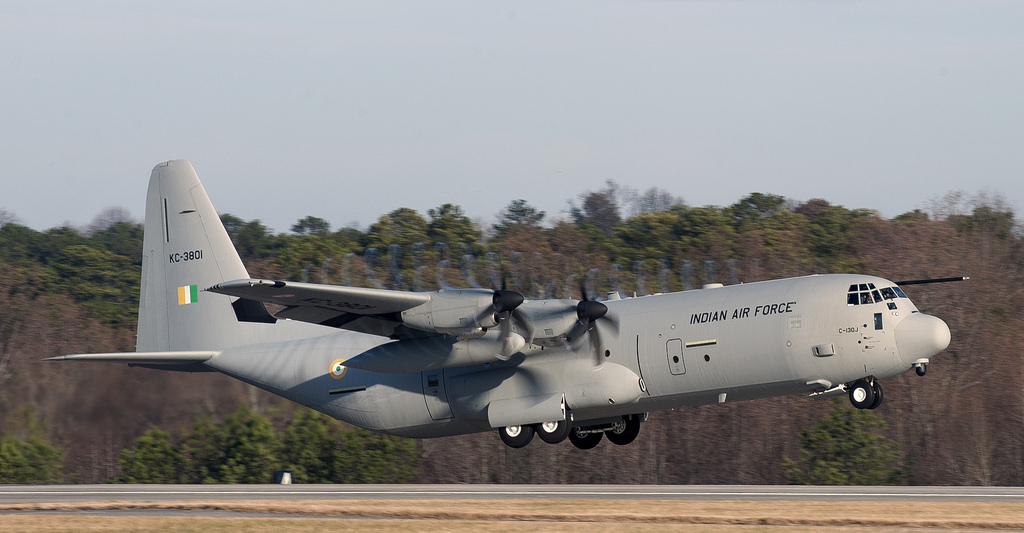
This is a rugged ac that can operate from austere airfields like ALGs on the Eastern front. No risk of FOD unlike jet transports of the KC-390 kind.LM's VP of Business Development says RFP will be out soon. Watch at 8:40 for the point.

This is a rugged ac that can operate from austere airfields like ALGs on the Eastern front. risk of FOD unlike jet transports of the KC-390 kind.
I do think we'll end up buying some more C-130Js regardless of who wins MTA.
No risk of FOD unlike jet transports of the KC-390 kind.
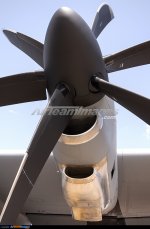
Agree. Athough, turboprops generally sit higher on the ac wings which makes them relatively safer. Also Hercules offers better redundancy as a 4 engine design.View attachment 49181
As as *turbo* prop, It has airintakes, and propellers themselves can be chipped/damaged , so *less* risk of fod, but chances are still there


