
Maritime Patrol Aircraft : P-8I Neptune, Dornier-228 : News & Discussions
- Thread starter Ashwin
- Start date
You are using an out of date browser. It may not display this or other websites correctly.
You should upgrade or use an alternative browser.
You should upgrade or use an alternative browser.


the current ordered batch of 6 is lot more advance than the ones ordered in 2009 and 2016.
Does it also includes upgrades for current fleet too?
$250 million per unit cost of the initial deal in 2009 has the same purchasing power as approximately $377.7 million in 2026.
3 Billion for 6 p8i gets 500 million per unit, which is 32.38% more per unit than the deal in 2009 inflation adjusted, more advanced sensor suite kinda helps justifying the 32.4% additional cost to a significant extent, but not to the full extent i guess.
Speaking with hopium, If the contrast potentially also includes upgrades for the current fleet, then it will be a very good deal.
I know the good stuff is classified, but I'm surprised that the forum members aren't giving it a lot of attention,
I3B2 stuff is cutting edge and a significant upgrade, Perhaps if P-8i personnel gave a brief overview, it would make sense
I've heard some Twitter rumours that these 6 might come with an integration contract for the Air Lora ALBM. Don't know how much truth there is to that though.
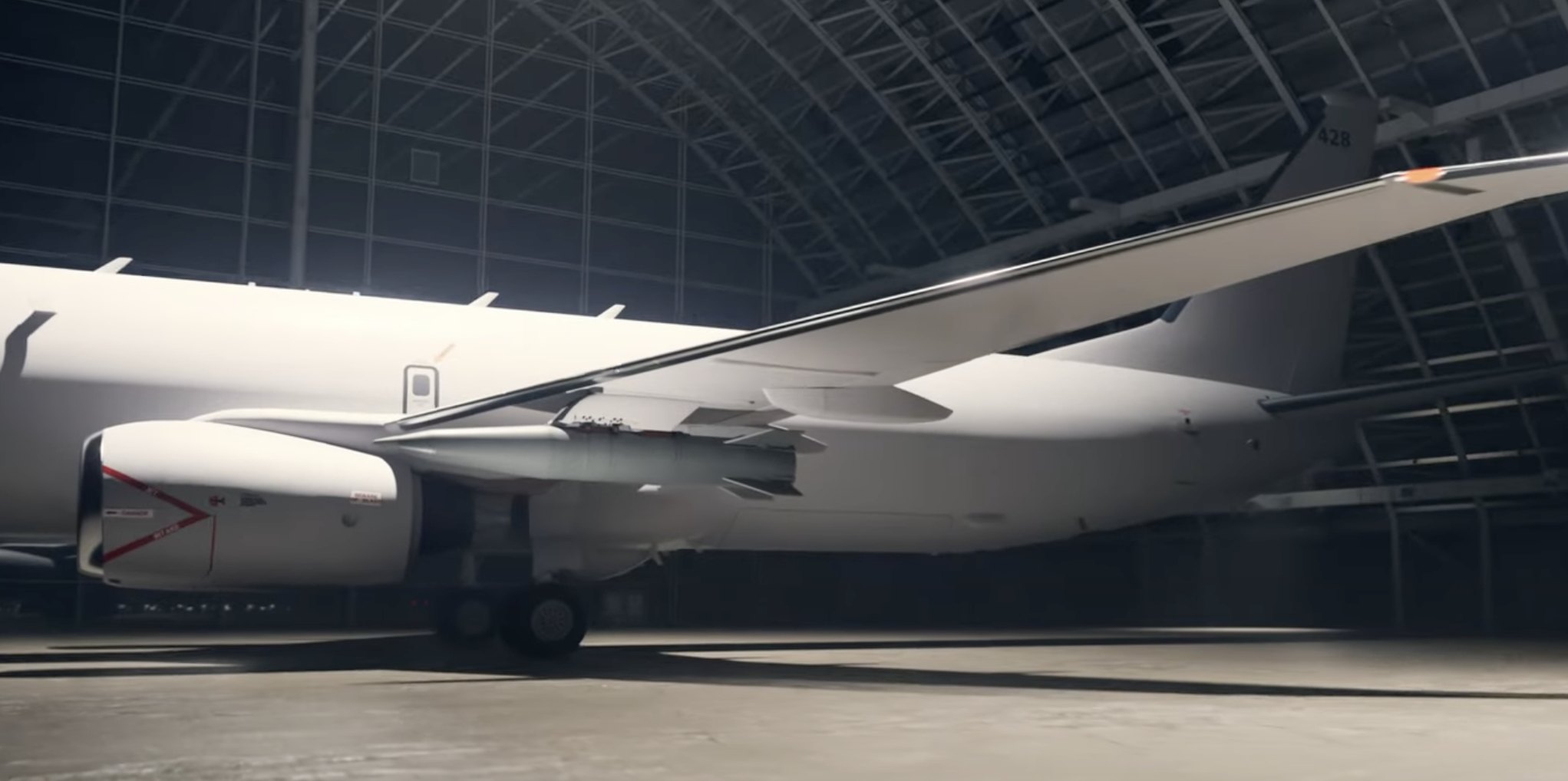


After 7 Year Delay, Indian MoD Clears 6 Additional P-8I Aircraft - Livefist
In a significant move that underscores a definitive restoration of strategic warmth between New Delhi and Washington, the Indian MoD has formally cleared a long-stalled deal for six additional Boeing P-8I long-range maritime reconnaissance/anti-submarine aircraft. The decision, finalized during...
 www.livefistdefence.com
After 7 Year Delay, Indian MoD Clears 6 Additional P-8I Aircraft
The P-8I’s journey in India began in January 2009, when India became the first international customer for the platform, ordering eight aircraft in a landmark $2.1 billion deal. This was followed by an optional order for four more in 2016. Since the first airframe landed at INS Rajali in Arakkonam, Tamil Nadu in 2013, the fleet has become a Swiss Army Knife of sorts for the Indian Navy. It replaced the venerable but aging Soviet-era Tu-142Ms, bringing with it a leap in technology that felt, in the words of crews at the time, like moving from a telegram to a smartphone.
One of the most overlooked aspects of the P-8I’s success in India is how Indian” the aircraft actually is. While built on a Boeing 737 airframe, the P-8I is distinct from the US Navy’s P-8A Poseidon. At the insistence of the Indian Navy, the aircraft includes a Magnetic Anomaly Detector (MAD) sensor, a “sting” in the tail used to detect the magnetic signature of a submarine’s hull, a feature the US version lacks. Furthermore, the aircraft is heavily integrated with indigenous systems developed by Bharat Electronics Limited (BEL) and other Indian firms. These include the Data Link II communications system, which allows the P-8I to talk seamlessly to Indian ships, submarines, and shore-based stations. It also features Indian-made Identification Friend or Foe (IFF) transponders and an indigenous speech secrecy system. This integration ensures that while the “eyes” and “ears” are American, the “brain” and “voice” of the platform are firmly Indian.
As the Indian Navy prepares to order these six additional aircraft, the maritime surveillance ecosystem in India is undergoing a broader transformation. While Boeing remains the king of the high-altitude, long-range segment, its European rival Airbus is making significant inroads on the ground in Gujarat. In Vadodara, the Tata-Airbus Final Assembly Line (FAL) for the C295 aircraft is now operational. While the C295 started as a tactical transport for the Indian Air Force, it is rapidly evolving into a maritime powerhouse.
The Ministry of Defence has already cleared plans for a specialized multimission maritime aircraft (MMMA) variant of the C295, destined for both the Indian Navy and the Indian Coast Guard. These aircraft will be equipped with an indigenous sensor suite developed by the DRDO’s Centre for Airborne Systems (CABS). The C295 will serve as a “Medium Range” partner to the P-8I. The logic is one of operational economy: the P-8I is a high-end, expensive-to-operate asset best reserved for deep-ocean hunting and strategic surveillance. The C295, built in India, will take over the bread and butter tasks, monitoring the Exclusive Economic Zone (EEZ), coastal security, and anti-piracy patrols. This ‘High-Low’ mix will allow the Indian Navy to saturate the Indian Ocean Region with persistent surveillance, ensuring that no vessel, surface or submerged, moves through these waters without being logged by an Indian sensor.
One of the most overlooked aspects of the P-8I’s success in India is how Indian” the aircraft actually is. While built on a Boeing 737 airframe, the P-8I is distinct from the US Navy’s P-8A Poseidon. At the insistence of the Indian Navy, the aircraft includes a Magnetic Anomaly Detector (MAD) sensor, a “sting” in the tail used to detect the magnetic signature of a submarine’s hull, a feature the US version lacks. Furthermore, the aircraft is heavily integrated with indigenous systems developed by Bharat Electronics Limited (BEL) and other Indian firms. These include the Data Link II communications system, which allows the P-8I to talk seamlessly to Indian ships, submarines, and shore-based stations. It also features Indian-made Identification Friend or Foe (IFF) transponders and an indigenous speech secrecy system. This integration ensures that while the “eyes” and “ears” are American, the “brain” and “voice” of the platform are firmly Indian.
As the Indian Navy prepares to order these six additional aircraft, the maritime surveillance ecosystem in India is undergoing a broader transformation. While Boeing remains the king of the high-altitude, long-range segment, its European rival Airbus is making significant inroads on the ground in Gujarat. In Vadodara, the Tata-Airbus Final Assembly Line (FAL) for the C295 aircraft is now operational. While the C295 started as a tactical transport for the Indian Air Force, it is rapidly evolving into a maritime powerhouse.
The Ministry of Defence has already cleared plans for a specialized multimission maritime aircraft (MMMA) variant of the C295, destined for both the Indian Navy and the Indian Coast Guard. These aircraft will be equipped with an indigenous sensor suite developed by the DRDO’s Centre for Airborne Systems (CABS). The C295 will serve as a “Medium Range” partner to the P-8I. The logic is one of operational economy: the P-8I is a high-end, expensive-to-operate asset best reserved for deep-ocean hunting and strategic surveillance. The C295, built in India, will take over the bread and butter tasks, monitoring the Exclusive Economic Zone (EEZ), coastal security, and anti-piracy patrols. This ‘High-Low’ mix will allow the Indian Navy to saturate the Indian Ocean Region with persistent surveillance, ensuring that no vessel, surface or submerged, moves through these waters without being logged by an Indian sensor.



Indian Navy joins US-led 'Sea Dragon' submarine-hunting exercise
NEW DELHI: The Indian Navy has deployed a P-8I long-range maritime patrol aircraft to Guam to participate in the US-led multinational anti-submarine warfare (AS
The two-week drill involving maritime patrol aircraft from key Indo-Pacific partners including the QUAD members brings together two US Navy P-8A Poseidon aircraft, one P-8I from the Indian Navy, two P-8A aircraft from the Royal Australian Air Force, one P-8A from the Royal New Zealand Air Force and a P-1 maritime patrol aircraft from the Japan Maritime Self-Defense Force.

Inspection of P8I Aircraft
The contract for the Inspection (Depot Level) of P8I Long-Range Maritime Reconnaissance Aircraft for Indian Navy under Buy Indian category with 100% Indigenous Content, valued at Rs 413 crore, was signed with Boeing India Defense Private Ltd, a wholly owned Indian subsidiary of Boeing, in the presence of senior officials of the Ministry of Defence. This contract will ensure Depot level maintenance of P8I fleet at in-country MRO (Maintenance, Repair, and Overhaul) facility, which is in line with Government of India’s commitment to Aatmanirbhar Bharat and Make-in-India.
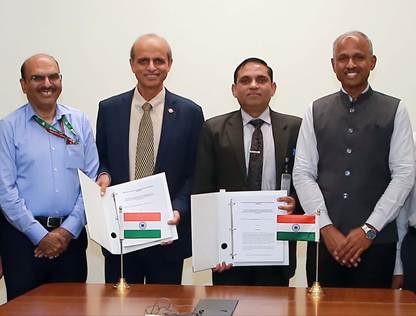
The contract for the Inspection (Depot Level) of P8I Long-Range Maritime Reconnaissance Aircraft for Indian Navy under Buy Indian category with 100% Indigenous Content, valued at Rs 413 crore, was signed with Boeing India Defense Private Ltd, a wholly owned Indian subsidiary of Boeing, in the presence of senior officials of the Ministry of Defence. This contract will ensure Depot level maintenance of P8I fleet at in-country MRO (Maintenance, Repair, and Overhaul) facility, which is in line with Government of India’s commitment to Aatmanirbhar Bharat and Make-in-India.

$3.5 Billion Bet: India Pushes Through P-8I Spy Aircraft Deal with US | Exclusive
India has decided to proceed with the acquisition of six P-8I Poseidon Maritime Reconnaissance aircraft from the U.S., despite significant price increases attributed to supply-chain issues., India News, Times Now
The note for the Cabinet Committee on Security, chaired by Prime Minister Narendra Modi, should be ready by May, highly-placed sources said.
"We have been waiting for a long while. We have also been negotiating with them, but the costs are what they are. And they (Boeing) are selling them to others at roughly the same price. So, there is nothing that can really be done. The supply-chain issues are very much there," sources added.
While the P8I will go through, the Stryker armoured vehicle under discussion between India and the USA is "off," sources said as the armed forces do not seem keen on it. The Army is also keen on a limited number of US Javelin anti-tank missiles, some of which have come as part of the emergency purchases.

$3.5 Billion Bet: India Pushes Through P-8I Spy Aircraft Deal with US | Exclusive
India has decided to proceed with the acquisition of six P-8I Poseidon Maritime Reconnaissance aircraft from the U.S., despite significant price increases attributed to supply-chain issues., India News, Times Nowwww.timesnownews.com
The note for the Cabinet Committee on Security, chaired by Prime Minister Narendra Modi, should be ready by May, highly-placed sources said.
"We have been waiting for a long while. We have also been negotiating with them, but the costs are what they are. And they (Boeing) are selling them to others at roughly the same price. So, there is nothing that can really be done. The supply-chain issues are very much there," sources added.
While the P8I will go through, the Stryker armoured vehicle under discussion between India and the USA is "off," sources said as the armed forces do not seem keen on it. The Army is also keen on a limited number of US Javelin anti-tank missiles, some of which have come as part of the emergency purchases.
1. P8I, along with more MH60R and Chinooks are the Jizya i am happy to pay.
2. Stryker shitstorm avoided, good. But what happens with the Wheeled APC/IFV requirements?
3. Hopefully some corrupt army officer is dragged on the road and his kids killed. Either the one who purchased additional Spike under EP is corrupt or the one who signed the Javelin EP is. Someone is and I personally hope the worst for the bloodline of that person.
There are no viable alternatives to these platforms. Its better to pay for these than Stryker.1. P8I, along with more MH60R and Chinooks are the Jizya i am happy to pay.
2. Stryker shitstorm avoided, good. But what happens with the Wheeled APC/IFV requirements?


