

The unwillingness of atmanirbharta folks to pin blame on DRDO for batch 2 delays is fascinating.
LCA Tejas Mk1 & Mk1A - News and discussions
- Thread starter Ashwin
- Start date
-
- Tags
- indian defence forum
You are using an out of date browser. It may not display this or other websites correctly.
You should upgrade or use an alternative browser.
You should upgrade or use an alternative browser.


So GE is not responsible? All hail Uncle Sam as per you. All fault lies in DRDO, HAL or IAF, right?
The unwillingness of atmanirbharta folks to pin blame on DRDO for batch 2 delays is fascinating.
Thankfully now HAL has rightfully imposed penalities on GE for engine delays.

Why would it be DRDOs fault?The unwillingness of atmanirbharta folks to pin blame on DRDO for batch 2 delays is fafascinating.
As per news reporting DRDO was given retired LSP-1 which blocked them on integrating it in time while giving equipment to Israel was prioritized.
"Hindustan Aeronautics Limited (HAL) lacks spare Tejas Mk1A airframes for testing, as the nine aircraft produced are currently dedicated to certifying the Israeli ELM-2052 AESA radar. This bottleneck..."
i d r w .org/upgraded-uttam-aesa-fcr-awaits-flight-trials-on-tejas-mk1a-as-engine-shortages-delay-testing/?utm_source=chatgpt.com
Maybe read the tweet and reply? Its about radar.So GE is not responsible? All hail Uncle Sam as per you. All fault lies in DRDO, HAL or IAF, right?
Thankfully now HAL has rightfully imposed penalities on GE for engine delays.
2nd batch also wont happen because DRDO didnt certify Uttam in time.
Dont be idiotic by quoting BS source.Why would it be DRDOs fault?
As per news reporting DRDO was given retired LSP-1 which blocked them on integrating it in time while giving equipment to Israel was prioritized.
"Hindustan Aeronautics Limited (HAL) lacks spare Tejas Mk1A airframes for testing, as the nine aircraft produced are currently dedicated to certifying the Israeli ELM-2052 AESA radar. This bottleneck..."
i d r w .org/upgraded-uttam-aesa-fcr-awaits-flight-trials-on-tejas-mk1a-as-engine-shortages-delay-testing/?utm_source=chatgpt.com
BEL or Astra MW gave the reason as issues from DRDO. Which is the same issue with maritime radar which Israel got contract. Check AESA radar thread.
Dont shift goalposts. You said batch 2. Its understood batch 1 was missed due to technical maturity.The unwillingness of atmanirbharta folks to pin blame on DRDO for batch 2 delays is fascinating.
Dont be idiotic by quoting BS source.
BEL or Astra MW gave the reason as issues from DRDO. Which is the same issue with maritime radar which Israel got contract. Check AESA radar thread.
What? Im talking about batch 2 only, the tweet is talking about batch 2. Batch 1 is a gone case already.Dont shift goalposts. You said batch 2. Its understood batch 1 was missed due to technical maturity.
GitHub - Trigodil/tejas-inlet-analysis: First-principles inlet aerodynamic and thermal failure analysis of the HAL Tejas Mk1, investigating the 2025 Dubai Airshow incident. Dedicated to Wing Commander Namansh Syal. Preprint — submitted to AIAA Journal of Propulsion and Power. (From a class 12 student)
This paper presents a first-principles aerodynamic and thermodynamic analysis of the Tejas Mk1 inlet system in response to that loss. Using published engine specifications, NASA exhaust survey data for the F404 family, flight timeline reconstruction from open-source footage, and corrected atmospheric conditions for the incident site, a cumulative thermal-aerodynamic failure chain is developed.
The analysis demonstrates that the lateral intake geometry, while adequate under standard operating conditions, exhibits compounded vulnerability under sustained high-G aerobatic maneuvering in hot, humid environments. The bifurcated side-inlet configuration imposes specific boundary-layer ingestion penalties under negative-G attitudes that a chin or diverterless supersonic inlet (DSI) geometry would not encounter. A flight-timeline-based thermal accumulation model shows that compressor stall margin was progressively eroded throughout the display sequence, with the final negative-G maneuver acting as a threshold event within an already degraded propulsion system rather than an isolated mechanical cause.
The analysis does not assert definitive causation — that determination requires access to flight recorder and telemetry data held by the Court of Inquiry — but establishes a physically consistent and evidence-supported pathway to compressor instability under the documented conditions. The paper concludes with proposed inlet redesign alternatives for the Tejas Mk2 and future LCA variants.
Inlet Aerodynamic Limitations and Thermal Failure Analysis of the HAL Tejas Mk1
Abstract
On November 21, 2025, Wing Commander Namansh Syal of the Indian Air Force was killed when a HAL Tejas Mk1 light combat aircraft was lost during an aerobatic display at Al Maktoum International Airport, Dubai World Central. He did not eject. The aircraft impacted the ground at approximately 14:10 hrs local time following an unrecovered descent from a low-altitude negative-G maneuver. A Court of Inquiry was immediately ordered by the IAF.This paper presents a first-principles aerodynamic and thermodynamic analysis of the Tejas Mk1 inlet system in response to that loss. Using published engine specifications, NASA exhaust survey data for the F404 family, flight timeline reconstruction from open-source footage, and corrected atmospheric conditions for the incident site, a cumulative thermal-aerodynamic failure chain is developed.
The analysis demonstrates that the lateral intake geometry, while adequate under standard operating conditions, exhibits compounded vulnerability under sustained high-G aerobatic maneuvering in hot, humid environments. The bifurcated side-inlet configuration imposes specific boundary-layer ingestion penalties under negative-G attitudes that a chin or diverterless supersonic inlet (DSI) geometry would not encounter. A flight-timeline-based thermal accumulation model shows that compressor stall margin was progressively eroded throughout the display sequence, with the final negative-G maneuver acting as a threshold event within an already degraded propulsion system rather than an isolated mechanical cause.
The analysis does not assert definitive causation — that determination requires access to flight recorder and telemetry data held by the Court of Inquiry — but establishes a physically consistent and evidence-supported pathway to compressor instability under the documented conditions. The paper concludes with proposed inlet redesign alternatives for the Tejas Mk2 and future LCA variants.
Key Findings
- The Tejas Mk1 bifurcated lateral inlet configuration produces compounding DC60 distortion under high-AoA and negative-G conditions not adequately mitigated by the fixed-geometry splitter plate diverter
- A lumped-parameter thermal accumulation model, calibrated against NASA F404 exhaust data (TM-88273), demonstrates that the 1–4 s recovery intervals between aerobatic maneuvers are insufficient for thermal dissipation given the F404's 30–45 s thermal time constant
- Stall margin analysis using the reduced-order model shows threshold failure onset consistent with the documented flight profile
- The Mk1A's documented 3% pressure recovery improvement via the three-door AAID system constitutes implicit acknowledgment of a pre-existing Mk1 inlet performance deficit
- Three redesign alternatives are evaluated and ranked: DSI configuration, chin/ventral intake, and rear-shifted lateral intake


GitHub - Trigodil/tejas-inlet-analysis: First-principles inlet aerodynamic and thermal failure analysis of the HAL Tejas Mk1, investigating the 2025 Dubai Airshow incident. Dedicated to Wing Commander Namansh Syal. Preprint — submitted to AIAA Journal of Propulsion and Power. (From a class 12 student)
Inlet Aerodynamic Limitations and Thermal Failure Analysis of the HAL Tejas Mk1
Abstract
On November 21, 2025, Wing Commander Namansh Syal of the Indian Air Force was killed when a HAL Tejas Mk1 light combat aircraft was lost during an aerobatic display at Al Maktoum International Airport, Dubai World Central. He did not eject. The aircraft impacted the ground at approximately 14:10 hrs local time following an unrecovered descent from a low-altitude negative-G maneuver. A Court of Inquiry was immediately ordered by the IAF.
This paper presents a first-principles aerodynamic and thermodynamic analysis of the Tejas Mk1 inlet system in response to that loss. Using published engine specifications, NASA exhaust survey data for the F404 family, flight timeline reconstruction from open-source footage, and corrected atmospheric conditions for the incident site, a cumulative thermal-aerodynamic failure chain is developed.
The analysis demonstrates that the lateral intake geometry, while adequate under standard operating conditions, exhibits compounded vulnerability under sustained high-G aerobatic maneuvering in hot, humid environments. The bifurcated side-inlet configuration imposes specific boundary-layer ingestion penalties under negative-G attitudes that a chin or diverterless supersonic inlet (DSI) geometry would not encounter. A flight-timeline-based thermal accumulation model shows that compressor stall margin was progressively eroded throughout the display sequence, with the final negative-G maneuver acting as a threshold event within an already degraded propulsion system rather than an isolated mechanical cause.
The analysis does not assert definitive causation — that determination requires access to flight recorder and telemetry data held by the Court of Inquiry — but establishes a physically consistent and evidence-supported pathway to compressor instability under the documented conditions. The paper concludes with proposed inlet redesign alternatives for the Tejas Mk2 and future LCA variants.
Key Findings
- The Tejas Mk1 bifurcated lateral inlet configuration produces compounding DC60 distortion under high-AoA and negative-G conditions not adequately mitigated by the fixed-geometry splitter plate diverter
- A lumped-parameter thermal accumulation model, calibrated against NASA F404 exhaust data (TM-88273), demonstrates that the 1–4 s recovery intervals between aerobatic maneuvers are insufficient for thermal dissipation given the F404's 30–45 s thermal time constant
- Stall margin analysis using the reduced-order model shows threshold failure onset consistent with the documented flight profile
- The Mk1A's documented 3% pressure recovery improvement via the three-door AAID system constitutes implicit acknowledgment of a pre-existing Mk1 inlet performance deficit
- Three redesign alternatives are evaluated and ranked: DSI configuration, chin/ventral intake, la2// rear-shifted lateral intake
This 3 door Aidd design is adopted from Naval LCA. Hope something is cooked up for Mk2.
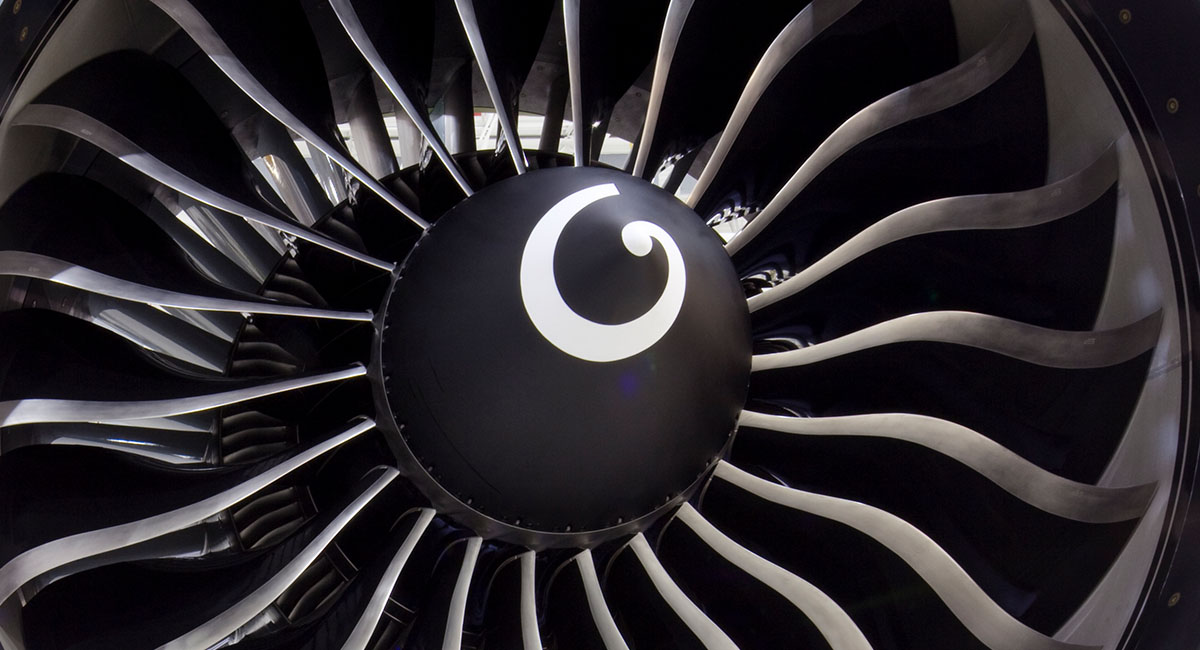
GE Aerospace signs contract with Indian Air Force to help establish an In-Country Depot for F404-IN20 Engines | GE Aerospace News
Facility will enhance in-country repair and overhaul infrastructure supporting sustainment and availability of F404-IN20 engine that powers the Tejas LCA aircraft fleet New Delhi
GE Aerospace today announced a contract with the Indian Air Force (IAF) to establish an in-country depot facility for the F404 -IN20 engines that power IAF’s Light Combat Aircraft Tejas fleet. The facility will be set up by the IAF with technical inputs from GE Aerospace and is expected to help India’s indigenous defense sustainment effort. Once operational, the facility will eliminate the need to depend on the overseas repair centers, significantly improving turnaround times.
The depot facility will be owned, operated, and maintained by the Indian Air Force with GE Aerospace providing technical inputs, training, support staff, and the supply of necessary spares and specialized equipment. This collaboration marks the next step in the four decade-long partnership between GE Aerospace and the IAF.
"Our commitment to supporting India’s armed forces continues to guide our collaboration and partnership in expanding local sustainment capabilities of the Tejas fleet," said Rita Flaherty, Vice President of Sales and Business Development for Defense & Systems at GE Aerospace. "Through the upcoming depot facility, we will support the availability of the F404-IN20 engines for the Indian Air Force, ensuring they have ready access to cutting-edge technology to power their defense needs.”
GE Aerospace is committed to developing India’s aerospace ecosystem, spanning design, development, manufacturing, and sustainment for both commercial and military aviation. For example, 150 engineers have passed out of the company’s local two-year Edison Engineering Development Program which develops engineering leaders. Several skilling initiatives over ten years have helped train over 5000 people with core manufacturing skills at the company’s Pune factory. In September 2025, the GE Aerospace Foundation, in partnership with United Way, launched Next Engineers at Bengaluru, the four-year college and career readiness program that will help 4000 young engineering aspirants.
Other than the Tejas, GE Aerospace engines also power the Indian Navy's P-8I maritime patrol aircraft and MH60R helicopters, as well as the Indian Air Force’s AH-64 Apache helicopters, while LM2500 marine gas turbines provide the power for the INS Vikrant aircraft carrier and the P-17 Shivalik Class frigates.

I though the accident was due to mostly pilot error as one US Ex Airforce pilot assessed, mind you an F16 was lost in a very similar incident trying to do the same manuever.GitHub - Trigodil/tejas-inlet-analysis: First-principles inlet aerodynamic and thermal failure analysis of the HAL Tejas Mk1, investigating the 2025 Dubai Airshow incident. Dedicated to Wing Commander Namansh Syal. Preprint — submitted to AIAA Journal of Propulsion and Power. (From a class 12 student)
Inlet Aerodynamic Limitations and Thermal Failure Analysis of the HAL Tejas Mk1
Abstract
On November 21, 2025, Wing Commander Namansh Syal of the Indian Air Force was killed when a HAL Tejas Mk1 light combat aircraft was lost during an aerobatic display at Al Maktoum International Airport, Dubai World Central. He did not eject. The aircraft impacted the ground at approximately 14:10 hrs local time following an unrecovered descent from a low-altitude negative-G maneuver. A Court of Inquiry was immediately ordered by the IAF.
This paper presents a first-principles aerodynamic and thermodynamic analysis of the Tejas Mk1 inlet system in response to that loss. Using published engine specifications, NASA exhaust survey data for the F404 family, flight timeline reconstruction from open-source footage, and corrected atmospheric conditions for the incident site, a cumulative thermal-aerodynamic failure chain is developed.
The analysis demonstrates that the lateral intake geometry, while adequate under standard operating conditions, exhibits compounded vulnerability under sustained high-G aerobatic maneuvering in hot, humid environments. The bifurcated side-inlet configuration imposes specific boundary-layer ingestion penalties under negative-G attitudes that a chin or diverterless supersonic inlet (DSI) geometry would not encounter. A flight-timeline-based thermal accumulation model shows that compressor stall margin was progressively eroded throughout the display sequence, with the final negative-G maneuver acting as a threshold event within an already degraded propulsion system rather than an isolated mechanical cause.
The analysis does not assert definitive causation — that determination requires access to flight recorder and telemetry data held by the Court of Inquiry — but establishes a physically consistent and evidence-supported pathway to compressor instability under the documented conditions. The paper concludes with proposed inlet redesign alternatives for the Tejas Mk2 and future LCA variants.
Key Findings
- The Tejas Mk1 bifurcated lateral inlet configuration produces compounding DC60 distortion under high-AoA and negative-G conditions not adequately mitigated by the fixed-geometry splitter plate diverter
- A lumped-parameter thermal accumulation model, calibrated against NASA F404 exhaust data (TM-88273), demonstrates that the 1–4 s recovery intervals between aerobatic maneuvers are insufficient for thermal dissipation given the F404's 30–45 s thermal time constant
- Stall margin analysis using the reduced-order model shows threshold failure onset consistent with the documented flight profile
- The Mk1A's documented 3% pressure recovery improvement via the three-door AAID system constitutes implicit acknowledgment of a pre-existing Mk1 inlet performance deficit
- Three redesign alternatives are evaluated and ranked: DSI configuration, chin/ventral intake, and rear-shifted lateral intake
I'll link the clip here for reference.
Although I didn't particularly like the simple intake design of the tejas didn't know that it also contributed to this incident until this report. Hope we can make a new better redesigned intakes for the tejas mk2.

GitHub - Trigodil/tejas-inlet-analysis: First-principles inlet aerodynamic and thermal failure analysis of the HAL Tejas Mk1, investigating the 2025 Dubai Airshow incident. Dedicated to Wing Commander Namansh Syal. Preprint — submitted to AIAA Journal of Propulsion and Power. (From a class 12 student)
Inlet Aerodynamic Limitations and Thermal Failure Analysis of the HAL Tejas Mk1
Abstract
On November 21, 2025, Wing Commander Namansh Syal of the Indian Air Force was killed when a HAL Tejas Mk1 light combat aircraft was lost during an aerobatic display at Al Maktoum International Airport, Dubai World Central. He did not eject. The aircraft impacted the ground at approximately 14:10 hrs local time following an unrecovered descent from a low-altitude negative-G maneuver. A Court of Inquiry was immediately ordered by the IAF.
This paper presents a first-principles aerodynamic and thermodynamic analysis of the Tejas Mk1 inlet system in response to that loss. Using published engine specifications, NASA exhaust survey data for the F404 family, flight timeline reconstruction from open-source footage, and corrected atmospheric conditions for the incident site, a cumulative thermal-aerodynamic failure chain is developed.
The analysis demonstrates that the lateral intake geometry, while adequate under standard operating conditions, exhibits compounded vulnerability under sustained high-G aerobatic maneuvering in hot, humid environments. The bifurcated side-inlet configuration imposes specific boundary-layer ingestion penalties under negative-G attitudes that a chin or diverterless supersonic inlet (DSI) geometry would not encounter. A flight-timeline-based thermal accumulation model shows that compressor stall margin was progressively eroded throughout the display sequence, with the final negative-G maneuver acting as a threshold event within an already degraded propulsion system rather than an isolated mechanical cause.
The analysis does not assert definitive causation — that determination requires access to flight recorder and telemetry data held by the Court of Inquiry — but establishes a physically consistent and evidence-supported pathway to compressor instability under the documented conditions. The paper concludes with proposed inlet redesign alternatives for the Tejas Mk2 and future LCA variants.
Key Findings
- The Tejas Mk1 bifurcated lateral inlet configuration produces compounding DC60 distortion under high-AoA and negative-G conditions not adequately mitigated by the fixed-geometry splitter plate diverter
- A lumped-parameter thermal accumulation model, calibrated against NASA F404 exhaust data (TM-88273), demonstrates that the 1–4 s recovery intervals between aerobatic maneuvers are insufficient for thermal dissipation given the F404's 30–45 s thermal time constant
- Stall margin analysis using the reduced-order model shows threshold failure onset consistent with the documented flight profile
- The Mk1A's documented 3% pressure recovery improvement via the three-door AAID system constitutes implicit acknowledgment of a pre-existing Mk1 inlet performance deficit
- Three redesign alternatives are evaluated and ranked: DSI configuration, chin/ventral intake, and rear-shifted lateral intake
This is just speculation. Ignore.

GE Aerospace signs contract with Indian Air Force to help establish an In-Country Depot for F404-IN20 Engines | GE Aerospace News
Facility will enhance in-country repair and overhaul infrastructure supporting sustainment and availability of F404-IN20 engine that powers the Tejas LCA aircraft fleet New Delhiwww.geaerospace.com
GE Aerospace today announced a contract with the Indian Air Force (IAF) to establish an in-country depot facility for the F404 -IN20 engines that power IAF’s Light Combat Aircraft Tejas fleet. The facility will be set up by the IAF with technical inputs from GE Aerospace and is expected to help India’s indigenous defense sustainment effort. Once operational, the facility will eliminate the need to depend on the overseas repair centers, significantly improving turnaround times.
The depot facility will be owned, operated, and maintained by the Indian Air Force with GE Aerospace providing technical inputs, training, support staff, and the supply of necessary spares and specialized equipment. This collaboration marks the next step in the four decade-long partnership between GE Aerospace and the IAF.
"Our commitment to supporting India’s armed forces continues to guide our collaboration and partnership in expanding local sustainment capabilities of the Tejas fleet," said Rita Flaherty, Vice President of Sales and Business Development for Defense & Systems at GE Aerospace. "Through the upcoming depot facility, we will support the availability of the F404-IN20 engines for the Indian Air Force, ensuring they have ready access to cutting-edge technology to power their defense needs.”
GE Aerospace is committed to developing India’s aerospace ecosystem, spanning design, development, manufacturing, and sustainment for both commercial and military aviation. For example, 150 engineers have passed out of the company’s local two-year Edison Engineering Development Program which develops engineering leaders. Several skilling initiatives over ten years have helped train over 5000 people with core manufacturing skills at the company’s Pune factory. In September 2025, the GE Aerospace Foundation, in partnership with United Way, launched Next Engineers at Bengaluru, the four-year college and career readiness program that will help 4000 young engineering aspirants.
Other than the Tejas, GE Aerospace engines also power the Indian Navy's P-8I maritime patrol aircraft and MH60R helicopters, as well as the Indian Air Force’s AH-64 Apache helicopters, while LM2500 marine gas turbines provide the power for the INS Vikrant aircraft carrier and the P-17 Shivalik Class frigates.
Its not the first time Tejas has done that manoeuvre. Its that, the altitude was too low to have a decent chance of making a recovery.
Pilot error.
Personally don't know that how true this article is but how fkd are we really if said deal actually takes place?
I don't think the rafale, neither the f4 or even f5 and f3 have what it takes to have an edge against these jets, pakistan will have first fire advantage against us, it would be difficult to engage with their jets in the near future.
One thing is absolutely clear however, we should never compare our capability with what pakistan has in their arsenal, our metric should always be china who can mass produce on an near unrivalled industrial scale, china can just sell them any platform pakistan require to level the playing field or give them an edge against us.
I don't think the rafale, neither the f4 or even f5 and f3 have what it takes to have an edge against these jets, pakistan will have first fire advantage against us, it would be difficult to engage with their jets in the near future.
One thing is absolutely clear however, we should never compare our capability with what pakistan has in their arsenal, our metric should always be china who can mass produce on an near unrivalled industrial scale, china can just sell them any platform pakistan require to level the playing field or give them an edge against us.
Personally don't know that how true this article is but how fkd are we really if said deal actually takes place?
I don't think the rafale, neither the f4 or even f5 and f3 have what it takes to have an edge against these jets, pakistan will have first fire advantage against us, it would be difficult to engage with their jets in the near future.
One thing is absolutely clear however, we should never compare our capability with what pakistan has in their arsenal, our metric should always be china who can mass produce on an near unrivalled industrial scale, china can just sell them any platform pakistan require to level the playing field or give them an edge against us.
Technically, we have no need to match whatever small quantity of conventional wonder weapons Pakistan aquires.
There's many other ways to counter the aquired capabilities & minimize the effectiveness of those aquired capabilities that doesn't require us to buy a foreign stealth jet.
Also your post is in the wrong thread.
which thread would be more apt?Technically, we have no need to match whatever small quantity of conventional wonder weapons Pakistan aquires.
There's many other ways to counter the aquired capabilities & minimize the effectiveness of those aquired capabilities that doesn't require us to buy a foreign stealth jet.
Also your post is in the wrong thread.
Pakistan air force threadwhich thread would be more apt?
LCA Tejas performed well in
Dog Fights with F 18 of Australia
Dog Fights with F 18 of Australia
Once again it proves why IAF pilots are the best. @OptimistLCA Tejas performed well in
Dog Fights with F 18 of Australia
Growlers don't dogfight, but LCA would intercept if that was the exercise, Normally it has top cover to intercept opponents, They are too valuable to be left unsupported
Though the Growler has better radar and missiles, So I don't know the rules of the exercise
Though the Growler has better radar and missiles, So I don't know the rules of the exercise
Last edited: