Labour, Land Law and Tax Reforms : Updates

India, 135 Other Nations Agree On Landmark Global Corporate Tax Deal​

A group of 136 countries on Friday set a minimum global tax rate of 15 per cent for big companies and sought to make it harder for them to avoid taxation in a landmark deal that US President Joe Biden said levelled the playing field.

The deal aims to end a four-decade-long "race to the bottom" by setting a floor for countries that have sought to attract investment and jobs by taxing multinational companies lightly, effectively allowing them to shop around for low tax rates.

Negotiations have been going on for four years and while the costs of the coronavirus pandemic gave them additional impetus in recent months, a deal was only agreed when Ireland, Estonia and Hungary dropped their opposition and signed up.

Moreover the 15 per cent floor agreed is well below a corporate tax rate which averages around 23.5 per cent in industrialised countries.

"Establishing, for the first time in history, a strong global minimum tax will finally even the playing field for American workers and taxpayers, along with the rest of the world," Joe Biden said in a statement.

The deal aims to stop large firms booking profits in low-tax countries such as Ireland regardless of where their clients are, an issue that has become ever more pressing with the growth of "Big Tech" giants that can easily do business across borders.

Out of the 140 countries involved, 136 supported the deal, with Kenya, Nigeria, Pakistan and Sri Lanka abstaining for now. The Paris-based Organisation for Economic Cooperation and Development (OECD), which has been leading the talks, said that the deal would cover 90 per cent of the global economy.

"We have taken another important step towards more tax justice," German Finance Minister Olaf Scholz said in a statement emailed to Reuters."We now have a clear path to a fairer tax system, where large global players pay their fair share wherever they do business," his British counterpart Rishi Sunak said.But with the ink barely dry, some countries were already raising concerns about implementing the deal.

The Swiss finance ministry demanded in a statement that the interests of small economies be taken into account and said that the 2023 implementation date was impossible, while Poland, which has concerns over the impact on foreign investors, said it would keep working on the deal.

"INCREASED PROSPERITY"

Central to the agreement is a minimum corporate tax rate of 15% and allowing governments to tax a greater share of foreign multinationals' profits.

US Treasury Secretary Janet Yellen hailed it as a victory for American families as well as international business. "We've turned tireless negotiations into decades of increased prosperity - for both America and the world. Today's agreement represents a once-in-a-generation accomplishment for economic diplomacy," Yellen said in a statement.

The OECD said that the minimum rate would see countries collect around $150 billion in new revenues annually while taxing rights on more than $125 billion of profit would be shifted to countries where big multinationals earn their income.

Ireland, Estonia and Hungary, all low tax countries, dropped their objections this week as a compromise emerged on a deduction from the minimum rate for multinationals with real physical business activities abroad.

"NO TEETH"

But some developing countries seeking a higher minimum tax rate say their interests have been sidelined to accommodate the interests of richer countries like Ireland, which had refused to sign a deal with a minimum tax rate higher than 15 per cent.

Argentine Economy Minister Martin Guzman said on Thursday that the proposals forced developing countries to choose between "something bad and something worse".

While Kenya, Nigeria and Sri Lanka did not back a previous version of the deal, Pakistan's abstention came as a surprise, one official briefed on the talks said.

India also had qualms up to the last minute, but ultimately backed the deal, they added. There was also dissatisfaction among some campaign groups such as Oxfam which said that the deal would not end tax havens.

"The tax devil is in the details, including a complex web of exemptions," Oxfam tax policy lead Susana Ruiz said. "At the last minute a colossal 10-year grace period was slapped onto the global corporate tax of 15 percent, and additional loopholes leave it with practically no teeth," Ruiz added in a statement.

Companies with real assets and payrolls in a country can ensure some of their income avoids the new minimum tax rate.

The level of the exemption tapers over a 10-year period. The OECD said that the deal would next go to the Group of 20 economic powers to formally endorse at a finance ministers' meeting in Washington on October 13 and then on to a G20 leaders summit at the end of the month in Rome for final approval. There remains some question about the US position, which depends in part on domestic tax reform negotiations in Congress.

Countries that back the deal are supposed to bring it onto their law books next year so that it can take effect from 2023, which many officials have said is extremely tight. French Finance Minister Bruno Le Maire said Paris would use its European Union presidency during the first half of 2022 to translate the agreement into law across the 27-nation bloc.
 

Big Governance Reform: From Next Month, No File to Pass More Than 4 Hands​

It has taken six years for the Narendra Modi government to push this major reform through the bureaucracy, but finally, from next month, no central government file will pass more than four hands before a decision and ministries will also be able to submit e-files to each other. The idea is to speed up decision-making and usher in an executive-centric and business-oriented functional transformation of government offices by flattening the organisation and going for delegation rather than pushing files up to higher levels needlessly, a senior government official told News18.

A total of 58 ministries and departments have reviewed the “channel of submission” of files to bring it to four levels and the rest of the ministries are fast progressing in that direction and are expected to do so by next month, a senior government official said. Previously, government files would pass 6-7 levels or even 10-12, before the Modi government started a drive in 2015 to reduce the channel of submission levels to bring pace to policy decisions. Over 300 meetings at senior levels were held for about six years to achieve this.

Taking the e-route
Further, the government has rolled out the E-Office 7.0 version this month, which for the first time allows the inter-ministry transfer of files — so all ministries can now submit their proposals online, for example, to the finance ministry, for approval. So far, ministries had an E-Office facility for intra-ministry work. All 84 ministries and departments are expected to transition to the E-Office 7.0 version in November. Over 32,000 e-files are now being created daily and India has about 25 lakh e-files at present.

What this means

A senior government official said that now, the four levels identified for the channel of submission are secretary, additional secretary or joint secretary, director or deputy secretary or undersecretary, and all other levels. The idea is that no officer in one category needs to submit files to another officer in the same category. All ministries are now adopting this methodology with suitable modifications to eliminate the need for file submission between joint secretaries and additional secretaries, and between director, deputy secretary and undersecretary.

This involves delegation of powers at appropriate levels. It is also proposed that absolutely routine matters be disposed of at just one level. An official said the exercise began in 2015 and it has taken this long for all ministries to be brought on board. “The tendency has always been in bureaucracy to push the file upwards to get more people on board. This delays decision-making,” an officer said.
 
  • Like
Reactions: SammyBoi and Gautam

PM launches two innovative customer centric initiatives of RBI

“One of the biggest touchstones of a democracy is the strength of its grievance redressal system. The Integrated Ombudsman Scheme will go a long way in that direction”

“Retail Direct Scheme will give strength to the inclusion of everyone in the economy as it will bring in the middle class, employees, small businessmen and senior citizens with their small savings directly and securely in government securities”

“Due to government’s measures, the governance of banks is improving and the trust in this system is getting stronger among the depositors”

“The decisions of the RBI also helped in enhancing the impact of the big decisions that the government has taken in recent times”

“Till 6-7 years ago, banking, pension and insurance, used to be like an exclusive club in India”

“In just 7 years, India has jumped 19 times in terms of digital transactions. Today our banking system is operational 24 hours, 7 days and 12 months anytime, anywhere in the country”

“We have to keep the needs of the citizens of the country at the center and keep on strengthening the trust of the investors”

“I am confident that RBI will continue to strengthen India's new identity as a sensitive and investor-friendly destination”​


Posted On: 12 NOV 2021 11:56AM by PIB Delhi


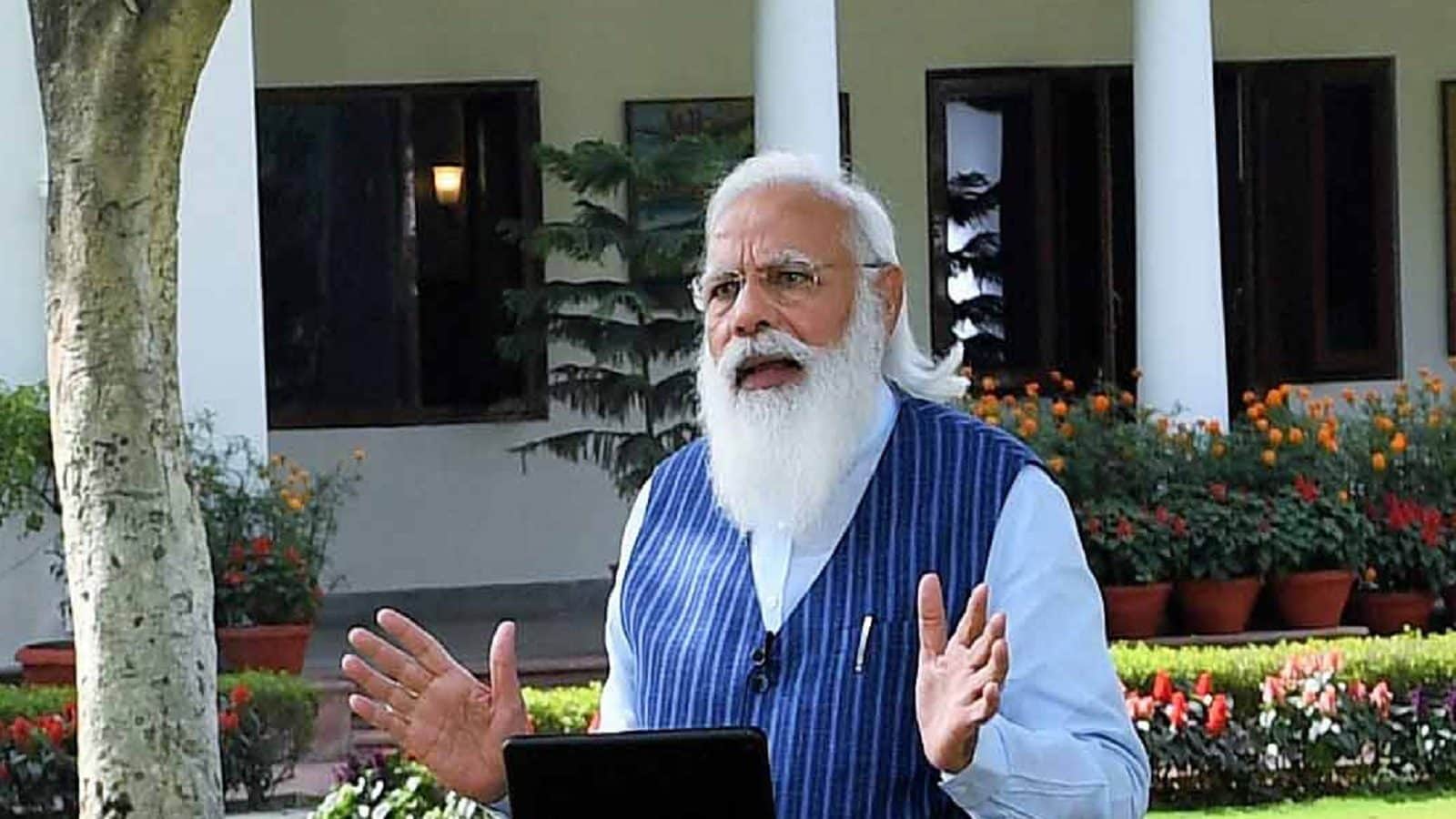
Prime Minister Shri Narendra Modi launched two innovative customer centric initiatives of RBI viz. Retail Direct Scheme and the Reserve Bank - Integrated Ombudsman Scheme, here today via video conference. The Union Minister of Finance and Corporate Affairs Smt. Nirmala Sitharaman and the Governor of the Reserve Bank of India Shri Shaktikanta Das were also present at the event.


Addressing the event, the Prime Minister praised the Finance Ministry and institutions like RBI for their efforts during the pandemic. “This period of Amrit Mahotsav, this decade of the 21st century is very important for the development of the country. In such a situation, the role of RBI is also very big. I am confident that Team RBI will live up to the expectations of the country”, the Prime Minister said.


Referring to the two schemes that have been launched today, the Prime Minister said that these schemes will expand the scope of investment in the country and make access to capital markets easier, more secure for investors. Retail direct scheme has given small investors in the country a simple and safe medium of investment in government securities. Similarly, One Nation, One Ombudsman System has taken shape in the banking sector with the Integrated Ombudsman Scheme today, he said.


The Prime Minister emphasized the citizen centric nature of these schemes. He said that one of the biggest touchstones of any democracy is the strength of its grievance redressal system. The Integrated Ombudsman Scheme will go a long way in that direction. Similarly, the Retail Direct Scheme will give strength to the inclusion of everyone in the economy as it will bring in the middle class, employees, small businessmen and senior citizens with their small savings directly and securely in government securities. As Government securities have the provision of guaranteed settlement, this gives assurance of safety to the small investor, he said.


The Prime Minister said that in the last 7 years, NPAs were identified with transparency, the focus was on resolution and recovery, Public Sector Banks were recapitalized, one after the other reforms were carried out in the financial system and public sector banks. He added, to further strengthen the banking sector, cooperative banks were also brought under the purview of RBI. Due to this the governance of these banks is also improving and the trust in this system is getting stronger among the depositors, he added.


The Prime Minister said in the past few years, in the country's banking sector reforms ranging from inclusion in the financial sector to technological integration have been carried out. “We have seen their strength in this difficult time of Covid. The decisions of the RBI also helped in increasing the impact of the big decisions that the government has taken in recent times”, he said.


The Prime Minister said till 6-7 years ago, banking, pension and insurance, used to be like an exclusive club in India. All these facilities were not accessible to the common citizens in the country, poor families, farmers, small traders-businessmen, women, dalits-deprived-backward, etc. Criticizing the earlier system, the Prime Minister said those who had the responsibility of taking these facilities to the poor never paid any attention to it. Rather, various excuses were made for not changing. It was said that there is no bank branch, no staff, no internet, no awareness, no idea what the arguments were, he lamented.


The Prime Minister said UPI has made India the world's leading country in terms of digital transactions in a very short span of time. In just 7 years, India has jumped 19 times in terms of digital transactions. Today our banking system is operational 24 hours, 7 days and 12 months anytime, anywhere in the country, Shri Modi stressed.


The Prime Minister said we have to keep the needs of the citizens of the country at the center and keep on strengthening the trust of the investors. “I am confident that RBI will continue to strengthen India's new identity as a sensitive and investor-friendly destination”. The Prime Minister concluded.


अमृत महोत्सव का ये कालखंड, 21वीं सदी का ये दशक देश के विकास के लिए बहुत अहम है।

ऐसे में RBI की भी भूमिका बहुत बड़ी है।

मुझे पूरा विश्वास है कि टीम RBI, देश की अपेक्षाओं पर खरा उतरेगी: PM @narendramodi
— PMO India (@PMOIndia) November 12, 2021

आज जिन दो योजनाओं को लॉन्च किया गया है, उससे देश में निवेश के दायरे का विस्तार होगा और कैपिटल मार्केट्स को Access करना, निवेशकों के लिए अधिक आसान, अधिक सुरक्षित बनेगा: PM @narendramodi
— PMO India (@PMOIndia) November 12, 2021

Retail direct scheme से देश में छोटे निवेशकों को गवर्नमेंट सिक्योरिटीज़ में इंवेस्टमेंट का सरल और सुरक्षित माध्यम मिल गया है।

इसी प्रकार, Integrated ombudsman scheme से बैंकिंग सेक्टर में One Nation, One Ombudsmen System ने आज साकार रूप लिया है: PM @narendramodi
— PMO India (@PMOIndia) November 12, 2021

बीते 7 सालों में, NPAs को पारदर्शिता के साथ Recognize किया गया,

Resolution और recovery पर ध्यान दिया गया,

पब्लिक सेक्टर बैंकों को Recapitalize किया गया,

फाइनेंशियल सिस्टम और पब्लिक सेक्टर बैंकों में एक के बाद एक रिफॉर्म्स किए गए: PM @narendramodi
— PMO India (@PMOIndia) November 12, 2021

बैंकिंग सेक्टर को और मज़बूत करने के लिए Co-operative बैंकों को भी RBI के दायरे में लाया गया।

इससे इन बैंकों की गवर्नेंस में भी सुधार आ रहा है और जो लाखों depositors हैं, उनके भीतर भी इस सिस्टम के प्रति विश्वास मजबूत हो रहा है: PM @narendramodi
— PMO India (@PMOIndia) November 12, 2021

बीते सालों में देश के banking सेक्टर में, financial sector में Inclusion से लेकर technological integration और दूसरे reforms किए हैं, उनकी ताकत हमने कोविड के इस मुश्किल समय में भी देखी है।

सरकार जो बड़े-बड़े फैसले ले रही थी, उसका प्रभाव बढ़ाने में RBI के फैसलों ने भी मदद की: PM
— PMO India (@PMOIndia) November 12, 2021

6-7 साल पहले तक भारत में बैंकिंग, पेंशन, इंश्योरेंस, ये सबकुछ एक exclusive club जैसा हुआ करता था।

देश का सामान्य नागरिक, गरीब परिवार, किसान, छोटे व्यापारी-कारोबारी, महिलाएं, दलित-वंचित-पिछड़े, इन सबके लिए ये सब सुविधाएं बहुत दूर थीं: PM @narendramodi
— PMO India (@PMOIndia) November 12, 2021

जिन लोगों पर इन सुविधाओं को गरीब तक पहुंचाने की जिम्मेदारी थी उन्होंने भी इस पर कभी ध्यान नहीं दिया।

बल्कि बदलाव ना हो इसके लिए भांति-भांति के बहाने बनाए जाते थे।

कहा जाता था-बैंक ब्रांच नहीं है, स्टाफ नहीं है,इंटरनेट नहीं है, जागरूकता नहीं है,ना जाने क्या-क्या तर्क होते थे: PM
— PMO India (@PMOIndia) November 12, 2021

UPI ने तो बहुत ही कम समय में डिजिटल ट्रांजेक्शंस के मामले में दुनिया का अग्रणी देश बना दिया है।

सिर्फ 7 सालों में भारत ने डिजिटल ट्रांजेक्शंस के मामले में 19 गुणा की छलांग लगाई है।

आज 24 घंटे, सातों दिन और 12 महीने देश में कभी भी, कहीं भी हमारा बैंकिंग सिस्टम चालू रहता है: PM
— PMO India (@PMOIndia) November 12, 2021

हमें देश की, देश के नागरिकों की आवश्यकताओं को केंद्र में रखना ही होगा, निवेशकों के भरोसे को निरंतर मजबूत करते रहना होगा।

मुझे पूरा विश्वास है कि एक संवेदनशील और इन्वेस्टर फ्रेंडली डेस्टीनेशन के रूप में भारत की नई पहचान को RBI निरंतर सशक्त करता रहेगा: PM @narendramodi
— PMO India (@PMOIndia) November 12, 2021

***


DS/AK


RBI issues prompt corrective action framework for NBFCs​

The Reserve Bank of India (RBI) on December 14 issued prompt corrective action (PCA) framework for non-banking finance companies (NBFCs) by introducing three risk threshold categories.

PCA refers to restrictions imposed by the banking regulator on a lender's operations if the key financial parameters of these entities fall below a certain limit. Till now, the RBI used to impose PCA only on banks. The central bank had issued the revised Prompt Corrective Action (PCA) Framework for Scheduled Commercial Banks (SCBs) on November 2, 2021.

But, with the NBFCs too growing in size and complexity, the banking regulator felt it is necessary to introduce similar framework for NBFCs as well.

"NBFCs have been growing in size and have substantial inter-connectedness with other segments of the financial system. Accordingly, a PCA framework for NBFCs has also been put in place to further strengthen the supervisory tools applicable to NBFCs," the RBI said.

The framework will apply to all deposit-taking NBFCs, excluding government companies, all non-deposit taking NBFCs in middle, upper and top layers, the RBI said.
The PCA framework for NBFCs will come into force on October 1, 2022, based on the financial position of NBFCs on or after March 31, 2022, the RBI said.

Risk thresholds

According to the RBI framework, the apex bank will impose PCA on NBFCs if there is any breach of risk threshold.

For instance, if the Capital to Risk (Weighted) Assets Ratio (CRAR) falls up to 300 bps below the regulatory minimum CRAR, Tier-1 capital ratio falls up to 200 bps below the regulatory minimum and Net NPA (non-performing assets) ratio goes beyond 6 percent, the NBFC will fall under risk threshold -1.

The RBI will then impose restrictions on various business operations and will conduct special inspections and targeted scrutiny of the company. For an NBFC under threshold-1, the RBI will impose restrictions on dividend distribution/remittance of profits; also there will be restrictions on the issue of guarantees or taking on other contingent liabilities on behalf of group companies.

Similarly, if the CRAR falls more than 300 bps but up to 600 bps below the regulatory minimum, and the tier-1 capital ratio falls more than 200 bps but up to 400 bps below the regulatory minimum and net NPA shoots up beyond 9 percent, the NBFC will fall into risk threshold-2.

For such companies, in addition to the restrictions mentioned above, the RBI will impose restrictions on branch expansion, the central bank said.

If the CRAR falls 600 bps below the regulatory minimum, the tier-1 capital ratio falls more than 400 bps below the regulatory minimum and the net NPA is greater than 12 percent, the NBFC will fall in the risk threshold-3 category.

In such cases, in addition to the mandatory actions of threshold 1 and 2, the RBI will take appropriate restrictions on capital expenditure and will impose restrictions on variable operating costs.


Once an NBFC is placed under PCA, taking the NBFC out of PCA framework or withdrawal of restrictions imposed under the PCA framework will be considered if no breaches in risk thresholds in any of the parameters are observed as per four continuous quarterly financial statements, one of which should be annual audited financial statement, the RBI said.

Also, this will be based on the supervisory comfort of the RBI, including an assessment on sustainability of profitability of the NBFC, the RBI said.
 

Union Minister Shri Giriraj Singh launches MIS portal for rankings of States/UTs in Land Acquisition Projects

This is not just an MIS portal, it is a 'Vikas Portal' of India, Says Shri Giriraj Singh. Top 3 Districts and States will be awarded based on their rankings on the portal.

Union Minister for Rural Development and Panchayati Raj Shri Giriraj Singh today launched MIS (Management Information System) portal for rankings of States/UTs in Land Acquisition Projects under RFCTLARR Act, 2013. (Right to Fair Compensation and Transparency in Land Acquisition, Rehabilitation and Resettlement Act, 2013). On the occasion, Union Minister also announced that as per the ranking and performance, the top 3 States and top 3 districts will be awarded.

Calling it a 'Vikas Portal', Shri Giriraj Singh said that this MIS portal will not show only data and figures but it will show the speed of the development in the country. He said that this portal is a result of the vision of Prime Minister Shri Narendra Modi to give impetus to the government's Gati Shakti Mission.

Expressing concern over the delayed implementation of the projects in the country, the Minister said that delay in completion of projects increases the project cost and hampers the speed of development. The Minister also said that because of the ranking available to all the States, it will be easier for them to monitor the progress of the developmental projects. Due to this, the speed of the projects will increase and the officials who are doing good work will get motivation.

The Department of Land Resources developed this MIS portal to capture information on various parameters of land acquisition, required for ranking of the State/UTs, which is a software-driven program to submit information by respective State/UTs on land acquisition for developmental projects. The portal is developed in house by the NIC team of the department with zero cost. The link to the portal is larr.dolr.gov.in

In the first phase, land acquisition under RFCTLARR Act, 2013 undertaken from 01.01.2014 onwards will be covered for ranking purposes and this will be a continuous process. The suggestions/inputs received from the States/UTs have been considered and incorporated in the parameters for rankings. Each State/UT will get marks out of a total of 140 marks. There is also the provision of the negative marking for delaying implementation.

Union Minister for State for Rural Development Shri Faggan Singh Kulaste and Sadhvi Niranjan Jyoti also motivated the States to give their best for the time-bound implementation of the land acquisition projects and contribute to the development of India.

The Secretary, Department of Land Resources, Shri Ajay Tirkey said that the portal will provide healthy competition to the States/UTs. He said that the States/UTs can share data and figures on the portal and rakings will be developed based on the data shared by the respective States/UTs. The entire ranking process is on auto mode and there will be no interference of the department in the raking process. The Secretary also said that the portal will work as a comprehensive database for the various departments.

Shri Hukum Chand Meena, Additional Secretary, DoLR gave a presentation on various parameters and criteria for the ranking process. Shri Sonmani Borah, Joint Secretary, DoLR, Shri Uma Kant, Joint Secretary, DoLR, Senior officers of the NIC and officers of various State Governments attended the event.
 
  • Like
Reactions: Gautam

New wage code from July 1: Changes in Leave, reduced in-hand salary, higher PF, 12 hours work week likely from next month​

The central government had notified four labour codes, namely, the Code on Wages, 2019, on August 8, 2019, and the Industrial Relations Code, 2020, the Code on Social Security, 2020, and the Occupational Safety, Health and Working Conditions Code, 2020 on September 29, 2020.​

New Delhi: The Modi government is likely to implement four labour codes on wages, social security, industrial relations and occupation safety, health and working conditions from July 1, as per media reports. If these labour codes are implemented, the new wage code will impact employees' working hours, salary restructuring, PF contribution, gratuity aspect and encashing of Earned Leaves among the prominent ones. Since these are now early speculations, nothing concreted should be infered till the government officially notifies the rules.

Till now, 23 states have pre-published draft rules on these laws, while the Centre has completed the process of finalising the draft rules on these codes in February 2021. The central government had notified four labour codes, namely, the Code on Wages, 2019, on August 8, 2019, and the Industrial Relations Code, 2020, the Code on Social Security, 2020, and the Occupational Safety, Health and Working Conditions Code, 2020 on September 29, 2020.

Since labour is a concurrent subject, the Centre wants the states to implement these as well in one go, as has been reported earlier.

Reduced in-hand salary after implementation of Wage Code
The government's notification on Code on Wages 2019 may reduce the take-home pay while components like PF and Gratuity might rise. This is based on the grounds that the new wage code mentions provision entailing that the employee's basic salary will be at least 50 percent of his/her net monthly CTC. Hence, if this provision comes into effect, it will mean that employees will not be able to get more than 50 percent of his/her net monthly salary in form of allowance.

Higher PF after implementation of Wage Code
This also means that there will be a consequent rise in gratuity and PF contribution of the employee. Hence, while the take home pay of the employees may be reduced, the Gratuity and PF component may rise.

12 hours work-week
Experts also believe that the new draft will impact the working hours of employees with some media reports saying that employees may be allowed a four-day workweek but they will have to work for 12 hours on those four days. The labour ministry has apparently made it clear that 48-hour weekly work requirement is a must.

Big changes in Earned Leave policy after new wage code implementation
The biggest change could be seen in cases of Earned Leave. Government departments now allows 30 holidays in 1 year, defense employees get 60 holidays in 1 year. Employees can cash up to 300 holidays on carry forward, however the Labor union is demanding to increase number of holidays to 450 in new code. At present there are 240 to 300 holidays in different departments. Employees can take these holidays in cash only after 20 years of service.
 

Basic pay, wages: Govt open to relook labour code proposals​

With the Government setting the stage to implement four new labour codes, the Ministry of Labour and Employment is open to reviewing some provisions in two of them — The Code on Wages and The Code on Social Security — that have led to concerns among employers and industry representatives, The Indian Express has learnt.
 

New Work-From-Home Rules Announced By Commerce Ministry. Details Here​

New Delhi:
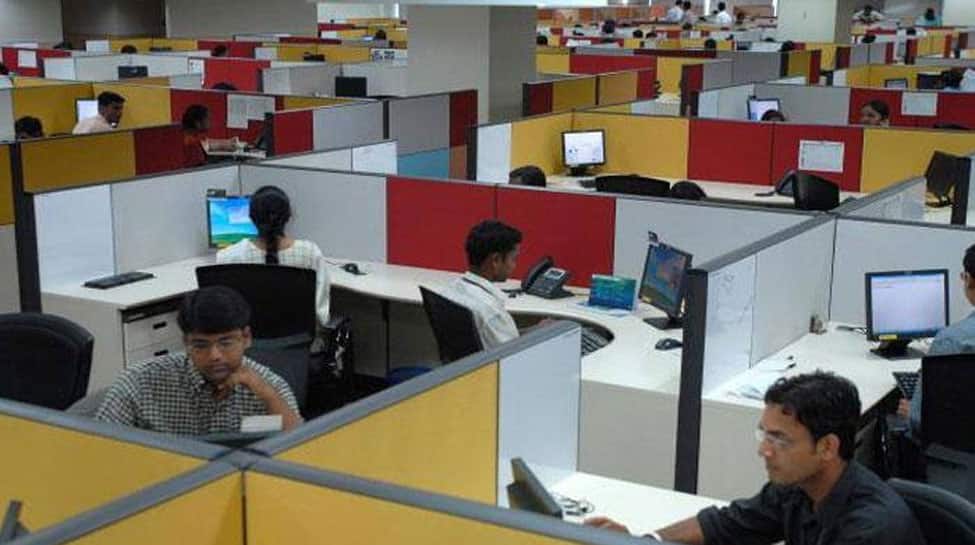
Work from home (WFH) is allowed for a maximum period of one year in a special economic zone unit and can be extended to 50 per cent of total employees, said the commerce ministry on Tuesday.

The Department of Commerce has notified a new rule 43A for WFH in Special Economic Zones Rules, 2006.

The ministry said the notification was issued on demand from the industry to make a provision for a countrywide uniform WFH policy across all Special Economic Zones (SEZs). The new rule provides work from home for a certain category of employees of a unit in SEZ.

These include employees of IT/ITeS SEZ units; employees who are temporarily incapacitated; employees who are travelling and who are working offsite, it added.

WFH may be extended to a maximum of 50 per cent of total employees, including contractual employees of the unit, it added.

"Work From Home is now allowed for a maximum period of one year. However, the same may further be extended for one year at a time by the DC on the request of units," the ministry said.

In respect of SEZ units whose employees are already working from home, the notification has provided a transition period of 90 days to seek approval.

"SEZ Units will provide equipment and secured connectivity for WFH to perform authorised operations of the units and the permission to take out the equipment is co-terminus with the permission granted to an employee," the ministry said.

61 Comments It also said that there is flexibility granted to the Development Commissioner (DC) of SEZs to approve a higher number of employees (more than 50 per cent) for any bonafide reason to be recorded in writing.