India's Foreign Policy : News, Views and Discussion

So we're perceived as not being equal partners, while being unable to counter a successful Chinese narrative despite the Chinese version not being true. If this is not a failure, then what is?
The world know now that the Chinese version isn't true. After srilanka crisis. And India did play its role effectively there and since then, we have increased our partnerships in African continent. Maldives is a case of how india used srilanka crisis to have pro Indian govt in Maldives. Before the current govt.

Once again.. we aren't the only one making moves. Even knowing the debt trap.. most of south asian and African nations need money that China gives them. We don't have the economic heft that China has. But here, we have been making inroads by helping African nations and giving them and alternative to superpower vs superpower contest.

So, you tell me if it's okay to judge fail/pass when the battle isn't over and we despite getting a bad hand have managed to push back and carve out our own space.

If you wanna compare foreign policy.. we must compare it with ourselves. The policy in past, present, and future trends.
Can't compare with a nation having autocracy, dominance and economic might we don't have right now and couldn't even think of, a decade ago.

The tag of fragile five economy doesn't do well for diplomacy. Hence you see our diplomats, policy makers emphasising the soon to be top 3 economy tag in international forums.

But then we have politicians like bhagwant mann who mocks African countries and calls name while being a sitting CM.
 
I think the Indian diplomatic core handled Bangladesh rather poorly. There were basically two games at play:

- US intervention in Myanmar: China is arming both sides of the civil war so they can strip mine Myanmar's rare earth elements (REEs). The US was looking to intervene in the guise of a "humanitarian corridor" that the Hasina government was against. The US had to do what it had to do for its own national interests wrt REEs since Hasina wasn't being co-operative. It was in India's interest to have the US displace China from Myanmar (which frankly India should have done itself) and should have diplomatically resolved things with the Hasina government. Instead, India sat on the sidelines.

- Erasing Bangladeshi history by the ISI: How many times have we seen this playbook? The mullahs erase local history. Then brainwash the youth particularly from universities to rise up against the kafirs. Iran, Bangladesh, ... any country with a moon and a star on their flag ... same playbook. And this was with ISI going back and forth from Pakistan to Bangladesh. Did the babus help fund more museums where the youth of Bangladesh can learn about their history and what Pakistan did to them and instead of being fed anti-India rhetoric and ISI propaganda? Nope, just sat on the sidelines as things deteriorate.

But to give some credit, things are improving. Op Sindoor, the drone strike in Myanmar, the fixing things in Maldives, SriLanka, etc. are welcome signs of assertiveness and progress.
I very much agree regarding Myanmar.. now this is indeed a failure of vision of our current govt with little blame on past govt. They could've and should've shown initiative and assert India's interest in the region.

Bangladesh is a story happened due to neglect starting right after 1971. Should've made sure to dismantle the pro pakistani blocks right then. By the turn of century.. it was already too late to snatch it back. But ehat can we expect from govt/beauracracy that even let radicalism ferment inside india, let alone foreign nation. Appeasement in the bones.
 
Finally we are having points of agreement. I take in your opinions about the sequence of events.
Nepal blockade happened in 2015. By then Nepal was hijacked by Chinese backed communist who went as far as changing constitution affecting a whole section of society.

India-bangladesh border exchanges happened during 2014-2019. Which eased hasinas attitude and let indian projects for connectivity start.

Who else will we support? Anti-india faction? And we didn't support by actively providing weapons of something. It was her decision to give order for shooting. Not ours. Why are you holding indian policy makers responsible for her reckless handling.

And it wasn't about diplomacy but about ISI-MSS vs our agencies. And the religious factor favors ISI. After all even if they got independence from Pakistan, they are still the people who voted to create a state based on religion. And several leaders before hasina and very anti India views.

So, in retrospect.. Nepal was communist long before current MEA corps and add BRI money on top of it.
So there is truth in the argument that our guys were quite passive in countering Chinese overtures towards Nepal. For Bangladesh, its not about supporting BNP and its gang, but being aware of being perceived of being pro-Hasina who started becoming unpopular a long time back. The Indian administration will echo its leaders - it was passive since UPA was also passive - a 10 year period of waffling along which is pretty long. When a strong leader like Modi came our MEA started following his ideas. I suspect that Modi's initial inexperience in foreign policy issues, coupled with his RSS influence, played a part in our diplomatic corps and government policy in dealing with Nepal and Bangladesh - i.e. we became blind to some aspects. Such things happen with a lot of countries - and things move accordingly.

With Maldives our policy behaved in a more mature manner. When Muizzu was acting crazy and reveling in attacking a giant India, we did not bash them too much. Then their Chinese indebted economy began skidding, and Muizzu came to his senses. So its a decent diplomatic victory, though we didn't realise the magnitude of his initial anti-India views.

I think the Indian diplomatic core handled Bangladesh rather poorly. There were basically two games at play:

- US intervention in Myanmar: China is arming both sides of the civil war so they can strip mine Myanmar's rare earth elements (REEs). The US was looking to intervene in the guise of a "humanitarian corridor" that the Hasina government was against. The US had to do what it had to do for its own national interests wrt REEs since Hasina wasn't being co-operative. It was in India's interest to have the US displace China from Myanmar (which frankly India should have done itself) and should have diplomatically resolved things with the Hasina government. Instead, India sat on the sidelines.

- Erasing Bangladeshi history by the ISI: How many times have we seen this playbook? The mullahs erase local history. Then brainwash the youth particularly from universities to rise up against the kafirs. Iran, Bangladesh, ... any country with a moon and a star on their flag ... same playbook. And this was with ISI going back and forth from Pakistan to Bangladesh. Did the babus help fund more museums where the youth of Bangladesh can learn about their history and what Pakistan did to them and instead of being fed anti-India rhetoric and ISI propaganda? Nope, just sat on the sidelines as things deteriorate.

But to give some credit, things are improving. Op Sindoor, the drone strike in Myanmar, the fixing things in Maldives, SriLanka, etc. are welcome signs of assertiveness and progress.

As you correctly said, our babus had misplaced priorities, and skewed views. Lets hope things get better soon.

I very much agree regarding Myanmar.. now this is indeed a failure of vision of our current govt with little blame on past govt. They could've and should've shown initiative and assert India's interest in the region.

Bangladesh is a story happened due to neglect starting right after 1971. Should've made sure to dismantle the pro pakistani blocks right then. By the turn of century.. it was already too late to snatch it back. But ehat can we expect from govt/beauracracy that even let radicalism ferment inside india, let alone foreign nation. Appeasement in the bones.
One reason why the BJP came to power was because the vision and policies of the previous UPA, Janata type parties had run its course - things had become pretty stale and a new outlook was welcomed.
 
  • Like
Reactions: jmaxwell_
This was expected. They will make more diplomatic relations where India has strong hold.

It's quite the opposite. Saudi-pak has been the stronghold of paks diplomatic space where India enhanced relations. The stronghold we assume to be of India's are actually historically been paks stronghold where we are increasingly countering them and building better relations.

Let's see.. whom we likely presume as our stronghold:

1. USA : Deep ties with Pakistan with active cooperation and military assistance as recent as 2016. Only after that did we see that relationship falter. The deep state ties likely to be still present.

2. Saudi: Has funded Pakistan through informal and formal loans amounting to billions and billions of dollars. Pak trains saudi soldiers. Saudi funded key military needs of pak. Islam playing big narrative role there. Only in last decade or two, there has been increase in partnership b/w India & saudi through trade and investment. (No military)

3. China: 1962 war. Pak giving aksai chin and it's role as messenger b/w US&PRC during cold war. Considered as our rival ( by us) so different diplomacy altogether.

4. Japan,Sk and other Pacific Islands: China-centric with little to do with pak or its inability to meddle in it. Strategic needs coincides.

5. Srilanka, Nepal, Bangladesh: The most believes to be our stronghold. But reality is that while people to people ties remained well..
2008 left establishment was inclined away from India given that even indian leftist are often inclined against India as an entity . Nepal was widely used by ISI and even kandhar happened from there but that's security angle. It had also always maintained particularly good relationship with Pakistan, sometimes favoring them in SAARC to counter India. It only changed after SAARC got sidelined and India's strong anti pak stance from then that nepal had to pivot towards China. Recent upheavals and more to come, part of wider deliberations. Status quo maintained with diplomacy not pak centric anymore.

Srilanka: the biggest misconception, srilanka assisted pakistan during 1971, RGs use of peace keeping force further deteriorated relationship and the civil war in srilanka further strained ties. That was also the time when Chinese with pak help made huge inroads in their diplomatic domain. Only after 2016, the change of rajapaksa govt, there was limited increase in diplomatic warmth due to BRI amd was solidified only after the economic crisis of srilanka and India's rapid response. That was the moment when India actually made inroads into srilanka with goodwill and created a positive presence there.

Some articles from yesteryears I found on Google randomly.

Many more, just need a quick search.

Bangladesh: Former East Pakistan. While got independence, the pro pak people didn't emigrate. History of bad ties with India, even after 1971 with radical leaders ( opposition party of hasina) maintaining anti-india stance.
UPA didn't have good relationship with Hasina despite her having more friendly attitude towards India. That was the time when UPA ministers had better relations with Pakistan.
Only got better after bangladesh-India border exchange was ratified in 2015. Thats govt to govt ties. People to people ties with bangladesh were never good and were more of radicalism exchange than economic and cultural prosperity like nepal.
So, hasinas period was an aberration becoz of hasina. Not our diplomatic stronghold. Even after 1971. It now goes back to previous nature of Bangladesh with yunus and radicals.
Internal vote bank politics and hasinas hate of radicals was just one roadblock.

Myanmar, Vietnam: was never a stronghold of either india or pak. Largely influenced by cold war era communism and US invasion of vietnam. China's aggressiveness in SCS has opened a small opening there but requires india to have strong navy to build better diplomatic relations. ASEAN FTA already proving to be costly and undergoing review. So, military diplomacy is the key there.

EU& Canada: Do I need to say more? Barring France, most of EU followed USA and provided pak with ample resources that it used against India. Not a stronghold and can be found as a hub for anti-india voices more than pro-india in past. Pick any publication from there, to get an idea. Colonial complex.
Only after 2020 Ukraine-russia war, subsequent pressure by US& lecture by EU and India's hard stance and Jaishankar's public rebuttals and unveiling of India's multi alignment evolution, supply chain issues arising out of Covid chain.. did EU revised it's strategy from lecturing to talking.
After then only will you see increased reciprocal diplomatic presence and exchanges on equal terms. Still ongoing and strengthening. Work in progress.. UK FTA, EFTA deal, and talks with EU. With EU itself going thru issues of its own, Indian diplomacy has done well while more gets done. Jaishankar also focused heavily on europe after 2024 with his tour.
So, never a stronghold or even positive. Recent trends shows promise.

Did I miss anyone?

 
  • Like
Reactions: screambowl
1. USA : Deep ties with Pakistan with active cooperation and military assistance as recent as 2016. Only after that did we see that relationship falter. The deep state ties likely to be still present.

2. Saudi: Has funded Pakistan through informal and formal loans amounting to billions and billions of dollars. Pak trains saudi soldiers. Saudi funded key military needs of pak. Islam playing big narrative role there. Only in last decade or two, there has been increase in partnership b/w India & saudi through trade and investment. (No military)

3. China: 1962 war. Pak giving aksai chin and it's role as messenger b/w US&PRC during cold war. Considered as our rival ( by us) so different diplomacy altogether.

Russia, Central Asia, Nepal, Bangladesh?

This is why very recently Russia gave a statement on India Russia ties.


The situation is similar to Baghdad Pact minus Iran.
Srilanka: the biggest misconception, srilanka assisted pakistan during 1971, RGs use of peace keeping force further deteriorated relationship and the civil war in srilanka further strained ties. That was also the time when Chinese with pak help made huge inroads in their diplomatic domain. Only after 2016, the change of rajapaksa govt, there was limited increase in diplomatic warmth due to BRI amd was solidified only after the economic crisis of srilanka and India's rapid response. That was the moment when India actually made inroads into srilanka with goodwill and created a positive presence there.

Sri Lankans were still mocking. They haven't learn at all. It's just they are right now fine so some of their leaders have forgotten the favors.
EU& Canada: Do I need to say more? Barring France, most of EU followed USA and provided pak with ample resources that it used against India.

They will continue to do so, and they are not strong hold.
 
Russia, Central Asia, Nepal, Bangladesh?

Already detailed on nepal and Bangladesh above. Go through it again.


Russian ties too are much to do with China and pak has little role to play there. Neither does pak alone has heft to sabotage india-russia relations alone. And that's cause Russians have some of the best diplomats due to USSR legacy. I talked about it in different thread too regarding the new saudi pact.. paks danger isn't from India but it's continuous lending of its soil to become a battleground for superpower rivalry. With US led mujhahedden against USSR, US -China now.

Central asian ties are directly related to ties with USSR ( now Russia) . With recent overtures by Chinese in solidifying their grip of there, and Russian wariness, expect some development there too but still with Russian Collab. Anyways, they were never stronghold either. Same for any future development in pak-central asia ties.. they will be directly related to Chinese , not on merit.

My take : The point is due to NAM (which was must for 1947) india didn't develop much of diplomatic presence while pak went heavy into building diplomatic relations ( turned from good to disastrous) . The main bone is that NAM wasn't ideal for 21st century, especially after attaining the nuclear status. And lack of evolution from 1991-2013 was felt in the developments worldwide. I don't know if that lack of evolution was due to lack of will or lack of Good talent in UPA circle ( maybe both) but 2014 changed it. With enhanced engagement, personally led by PM and carried on by FM ( both sushma & SJ), we finally see a different role India plays now. With a substantial voice that policy makers worldwide being attentive. And increased military-industrial capabilities are the backbone on which diplomatic posture is defined.
With enhanced engagement also comes different issues. But that's how diplomatic corps is built. Through constant experience and evolution.
A passive approach looks safe in paper but amounts to nothing.
 
Already detailed on nepal and Bangladesh above. Go through it again.

Your analysis is fine but there are lots of other facts which are lacking. It has to do with internal politics of India. Anyways now Pakistan has aggressively developed covert capability in both of these nations in the past years.

Russian ties too are much to do with China and pak has little role to play there. Neither does pak alone has heft to sabotage india-russia relations alone. And that's cause Russians have some of the best diplomats due to USSR legacy. I talked about it in different thread too regarding the new saudi pact.. paks danger isn't from India but it's continuous lending of its soil to become a battleground for superpower rivalry. With US led mujhahedden against USSR, US -China now.

Because Pak is presenting itself as a substitute to India. And it will continue to occur.

Central asian ties are directly related to ties with USSR ( now Russia) . With recent overtures by Chinese in solidifying their grip of there, and Russian wariness, expect some development there too but still with Russian Collab. Anyways, they were never stronghold either.

It was a very good strong hold and I am afraid Pakistan will expand their covert capabilities into central Asia.


Since it's under MEA
 

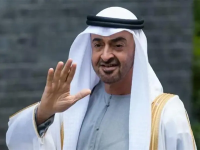
UAE President Mohamed bin Zayed Al Nahyan to visit India on Monday

Authored By Siddhant Sibbal
Published: Jan 17, 2026, 17:00 IST | Updated: Jan 17, 2026, 17:01 IST
1768678755480.png
UAE President Mohamed bin Zayed Al Nahyan is expected to arrive in Delhi on Monday.

Story highlights

The Comprehensive Economic Partnership Agreement (CEPA), signed in 2022, has been a gamechanger. It has slashed tariffs on thousands of products and boosted exports of Indian engineering goods, pharmaceuticals, and electronics, while facilitating UAE investments in India.


New Delhi: UAE President Mohamed bin Zayed Al Nahyan is expected to visit Delhi on Monday. The visit is expected to further firm up ties between the two countries. India and the United Arab Emirates (UAE) have forged one of the most dynamic bilateral partnerships in the world, blending ancient trade links with modern strategic and economic ambitions.

The relationship, rooted in centuries-old commerce across the Arabian Sea, has transformed dramatically in recent years. The Comprehensive Economic Partnership Agreement (CEPA), signed in 2022, has been a game-changer. Bilateral trade reached new heights in 2025, with non-oil trade surging to approximately $37.6 billion in the first half of the year alone, a 34% increase year-on-year, putting the two nations firmly on track to hit ambitious targets of $100 billion in non-oil trade by 2030.

The CEPA has slashed tariffs on thousands of products and boosted exports of Indian engineering goods, pharmaceuticals, and electronics, while facilitating UAE investments in India’s infrastructure, technology, and renewable energy sectors.

The UAE ranks as the seventh-largest investor in India, with cumulative foreign direct investment inflows exceeding $22 billion since 2000. Energy remains a cornerstone, with the UAE supplying vital oil and liquefied natural gas to fuel India’s growth. Recent initiatives include rupee-dirham trade settlement mechanisms and integration of digital payment systems like India’s UPI in the UAE, reducing reliance on the US dollar. Defence and security ties have deepened, with regular joint exercises and discussions on maritime cooperation.

Earlier this month, India’s army chief visited the UAE to enhance military engagement. The 3.5-million-strong Indian diaspora in the UAE forms a vital bridge, contributing significantly to both economies and earning appreciation from UAE leaders.

Looking ahead, both countries are aligning on global initiatives, including India’s upcoming BRICS presidency in 2026 and support for projects like the India-Middle East-Europe Economic Corridor.

UAE President Mohamed bin Zayed Al Nahyan to visit India on Monday
 
India will have to play this very carefully and balance the Saudi Arabia relationship.

For those that may not be aware, the UAE and Saudi Arabia are in a cold war. They are currently taking opposing sides in many conflicts:

Country / RegionSaudi PositionUAE Position
YemenSupports unified government forcesSupported Southern separatists (STC)
SudanSupports Sudanese Armed ForcesLinked to RSF paramilitaries
Somalia / SomalilandBacks Somalia’s federal governmentPartners with Somaliland / regional actors
Horn of AfricaSupport federal/state governmentsOutreach to non-central authorities (Ethiopia, breakaways)
LibyaSupports the UN process and the Tripoli-based governmentSupports Khalifa Haftar and his Libyan National Army (LNA) in the east
SyriaSupports the post-Assad governmentSupports Druze communities advocating for autonomy or secession
 
Last edited:
There is no comparison between UAE and Saudi for India, UAE is very close to India both economically and strategically while Saudi investments always remain only on paper and they sign mutual defence pact with our enemy Pakistan.